Did you know that in Japan, slurping your noodles is actually a sign of respect to the chef? It means you are enjoying the meal! If you are anything like me, you are constantly on the hunt for that perfect weeknight dinner that balances “comfort food” with “actually quick to make.”
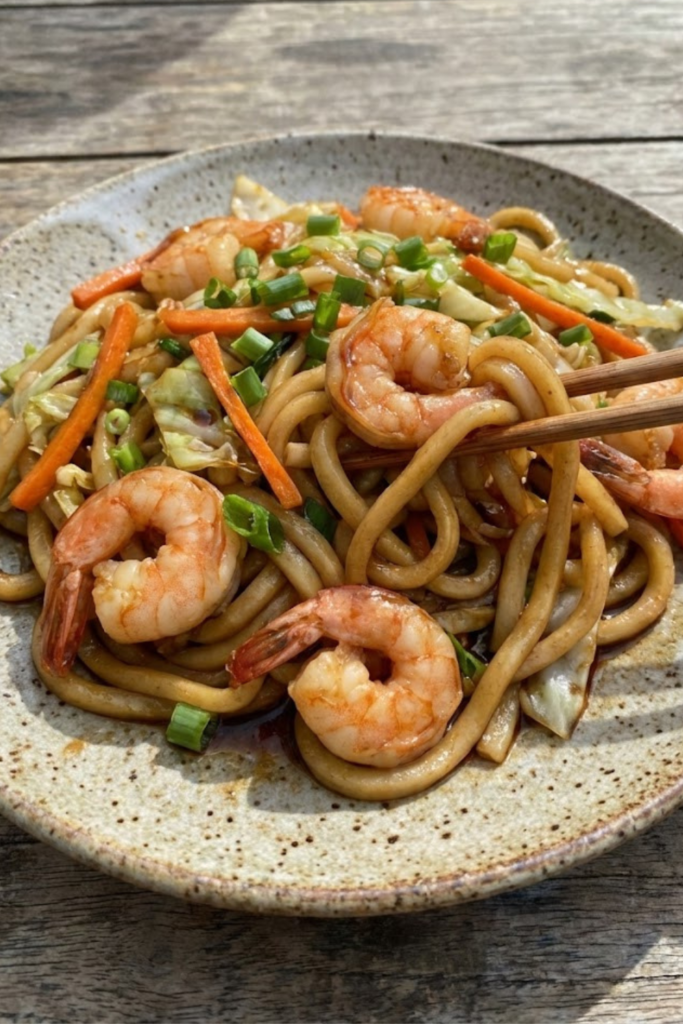
Well, stop scrolling, because this yaki udon with shrimps is about to become your new obsession! Imagine thick, chewy noodles coated in a rich, savory sauce, tossed with juicy shrimp and crisp vegetables. It is a flavor explosion that brings the taste of an Izakaya right into your kitchen. Let’s get cooking!
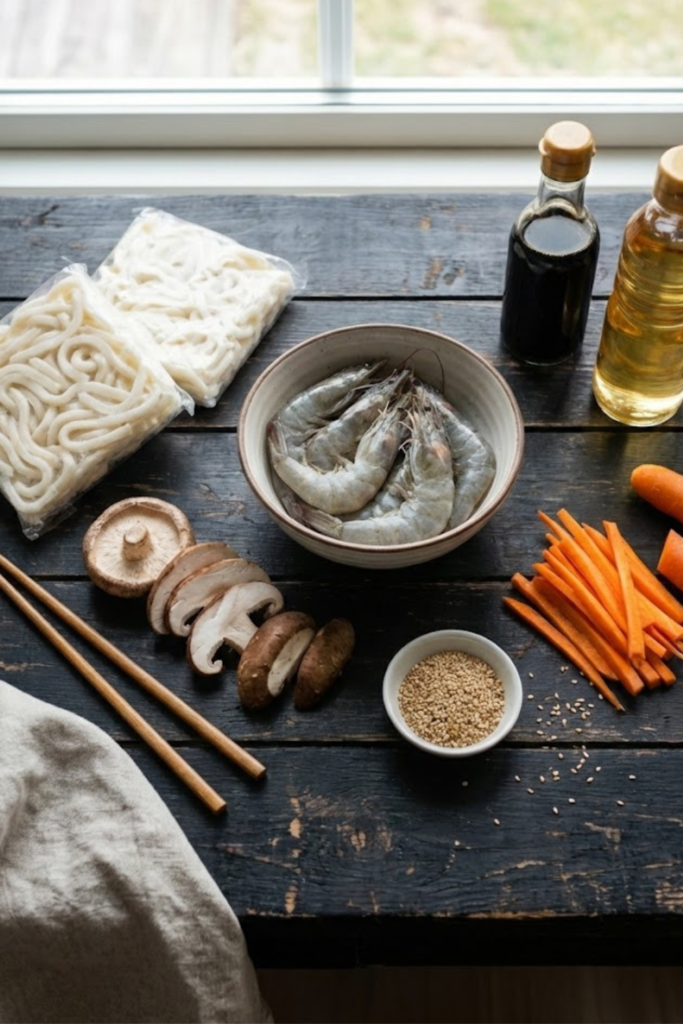
Gathering the Essential Ingredients for Authentic Yaki Udon
I have to be honest with you; the first time I tried to make yaki udon, it was a total disaster. I grabbed those vacuum-sealed noodles from the pantry aisle because they looked “convenient,” and the whole dish ended up tasting like sour dough balls. It was mushy and sad. I actually apologized to my dinner guests. But hey, you live and you learn, right?
Over the years, I’ve figured out that the secret isn’t really in being a fancy chef. It is just about buying the right stuff. Let’s break down what you actually need so you don’t make the same mistakes I did.
The Noodle Debate: Frozen is King
If you take only one thing away from this post, let it be this: buy frozen Sanuki udon noodles.
Seriously, walk right past the dried stuff and the shelf-stable packets. Those vacuum-sealed ones usually contain acid to preserve them, which gives the noodles a weird, tangy aftertaste that’s hard to wash off. Frozen udon, on the other hand, is flash-frozen immediately after being made. This preserves that chewy, bouncy texture—what the Japanese call mochi-mochi—that we all crave.
I usually find them in packs of five at the Asian grocery store. They are a total game changer for this recipe. If you can’t find them, dried is okay in a pinch, but the texture just won’t be the same.
Picking Your Shrimp
When it comes to the protein, I’m not too picky. You can use fresh or frozen shrimp, but I usually keep a bag of raw, peeled, and deveined shrimp in the freezer for quick weeknight meals.
Size matters a little bit here. I prefer medium to large shrimp (around 31/40 count). They are big enough to give you a nice bite but small enough to cook quickly in the pan. If you get them with the shells on, save those shells! I toss them in a bag in the freezer to make stock later. Waste not, want not.
The Veggie Lineup
The beauty of yaki udon is that it’s basically a fridge clean-out meal. However, for that authentic flavor, you need vegetables that add crunch.
- Cabbage: This is non-negotiable for me. Sliced green cabbage gets sweet when you stir-fry it and holds onto the sauce beautifully.
- Carrots: Julienne them (cut them into matchsticks) so they cook at the same speed as the noodles.
- Mushrooms: I love fresh shiitake mushrooms. They add an earthy, savory flavor that makes the dish feel meatier.
Just don’t cut your veggies too thick. You want everything to be roughly the same size so you don’t end up with raw carrots and burnt onions.
Aromatics are Key
Finally, don’t skimp on the garlic and ginger. I used to think I could just use the powdered stuff, but it just gets lost in the sauce. Fresh minced garlic and ginger hit the hot oil and create that restaurant smell immediately.
Grab a bunch of scallions (green onions), too. We’ll use the white parts for cooking and the green parts for a fresh garnish at the end. It adds a nice pop of color that makes you look like a pro.
Mastering the Savory Yaki Udon Stir-Fry Sauce
I used to be the person who bought those expensive bottles of pre-made “Stir Fry Sauce” at the grocery store. You know the ones—they cost like eight bucks and sit in your fridge door for three years until they turn into a solid block. Honestly, they usually taste like pure salt anyway.
When I finally started mixing my own sauce, I felt like a wizard. It is ridiculously simple, and you probably have half the stuff in your pantry already. If you want that real-deal taste, you have to step away from the pre-mixes.
The Holy Trinity of Flavor
You really only need three main players here: soy sauce, oyster sauce, and mirin. This combination is the backbone of so many delicious Japanese stir fry dishes.
Here is a tip I learned the hard way: not all soy sauce is created equal. I like to use a mix of regular soy sauce for the saltiness and a little bit of dark soy sauce for that rich, deep color. If you only use regular, your noodles might look a bit pale and sad.
The oyster sauce is what gives it that glossy, thick texture that coats the noodles. If you are vegetarian, you can totally swap this for a mushroom-based vegetarian oyster sauce. It works just as well. And then there is mirin. It adds a subtle sweetness that cuts through the salt. If you don’t have it, a pinch of sugar works, but mirin really adds a specific shine to the dish.
The Secret Umami Bomb
Okay, here is the secret ingredient that changed my life. Dashi powder.
I used to make my sauce without it, and it was fine, but it was missing that “oomph”. I saw a lady use it in a video once and decided to try it. Dashi powder is basically an instant fish stock. You just sprinkle a tiny bit—like half a teaspoon—into your sauce mixture.
It wakes up all the other flavors. It makes the seafood yaki udon taste like it came from a legit restaurant kitchen, not just my stovetop. It brings out the flavor of the shrimp perfectly. Seriously, don’t skip this if you can find it.
Don’t Drown Your Noodles
One big mistake I see people make is drowning their food. You are making stir-fry, not soup!
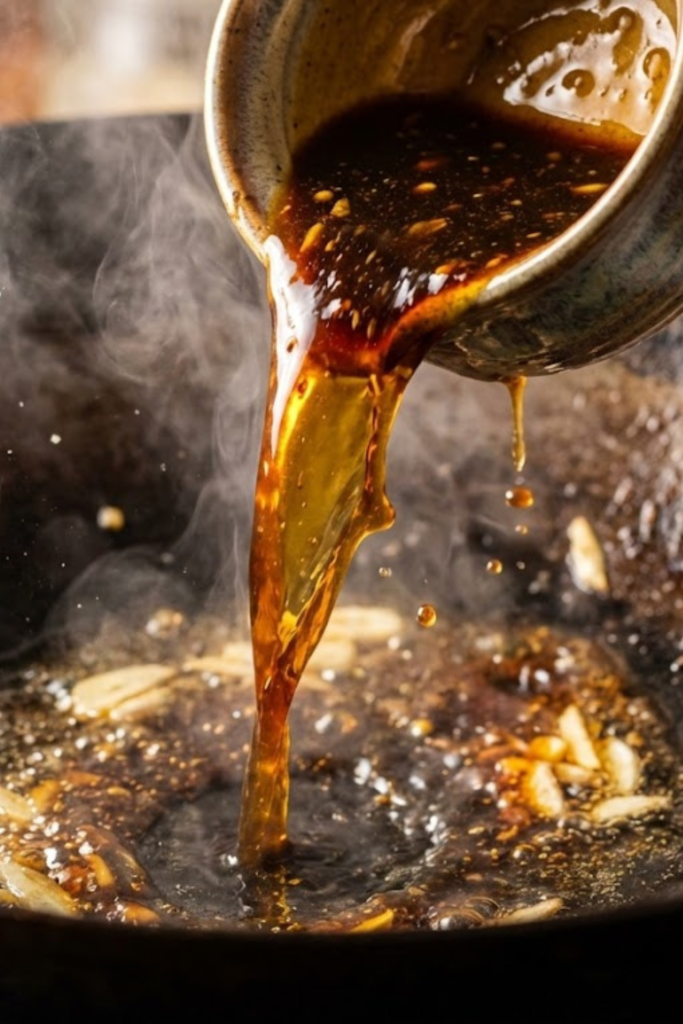
I like to whisk my sauce ingredients in a small bowl before I even turn the stove on. This way, I’m not scrambling for bottles while my garlic is burning. When you pour it in, it should sizzle and bubble up instantly.
You want just enough sauce to glaze the udon noodles and veggies. If there is a pool of liquid at the bottom of your wok, you used too much. The heat helps the sugars in the mirin and oyster sauce caramelize, making everything sticky and delicious. That’s the texture you are chasing.
Searing the Shrimp and Vegetables to Perfection
I used to be terrified of high heat. I would gently place my veggies in a lukewarm pan because I was scared of burning the house down. The result? A soggy, watery mess that tasted like boiled cafeteria food.
If you want that restaurant-quality yaki udon with shrimps, you have to get comfortable with the heat. We are looking for a stir-fry, not a stir-steam.
Crank Up the Heat
First things first, put away the extra virgin olive oil. It has a low smoke point, and it will burn before your pan gets hot enough. You need a neutral oil like canola, vegetable, or grapeseed oil.
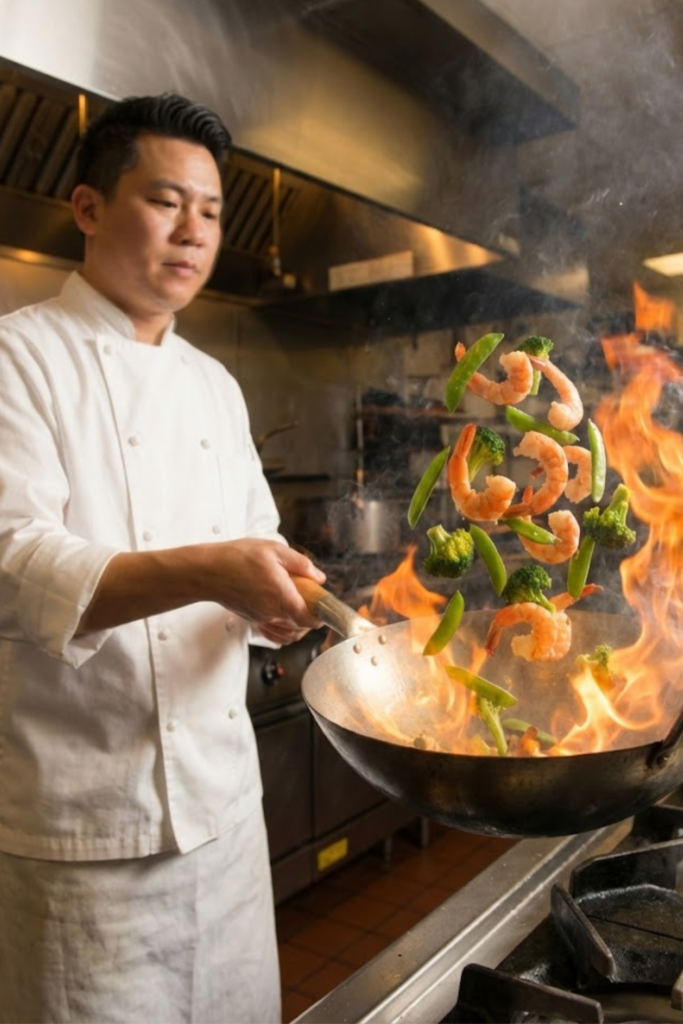
I get my wok (or a large cast-iron skillet) ripping hot. You want to see wisps of smoke coming off the oil. That is the sweet spot. This high heat creates “wok hei,” or the “breath of the wok.” It gives the veggies a slight char and a smoky flavor that you just can’t fake with low heat.
The Shrimp Strategy
Here is a mistake I made for years: cooking everything all at once. If you throw the raw shrimp in with the carrots and noodles, you are going to have a bad time. The shrimp will turn into rubber bullets by the time the carrots are soft.
I always sear the shrimp first. Season them with a little salt and pepper, throw them in the hot oil, and sear them for maybe two minutes total. As soon as they turn pink and opaque, get them out of there! Put them on a plate and set them aside. We will add them back at the very end to warm through.
Layering the Veggies
Now that your shrimp are safe, add a little more oil and go in with your hard vegetables.
- Order matters: Throw in the onions and carrots first. They take the longest to break down.
- Don’t crowd the pan: If you pile too much in, the temperature drops, and water releases.
- The Crunch Factor: You want the veggies to be “tender-crisp.”
After the carrots have softened a bit (about 2-3 minutes), I toss in the cabbage and mushrooms. They release a lot of water, so keep everything moving. Stir-frying is an active sport; you can’t walk away to check Instagram. Once the cabbage is wilted but still bright green, you are ready for the noodles.
Tossing and Plating: The Final Steps
I remember standing in my kitchen once, staring at a wok full of broken, mushy bits of wheat. I had tried to force the frozen frozen udon noodles apart with my spatula because I was too impatient to wait. It was tragic. I basically made noodle mashed potatoes.
To avoid that sadness, you have to treat the noodles right before they even hit the pan. The timing at the end happens fast, so take a deep breath and get ready.
The Noodle Rescue Mission
Here is the trick I learned: don’t toss the frozen block directly into the stir-fry. It lowers the pan temperature too much and kills that smoky flavor we worked so hard for.
Instead, I run the frozen noodle bricks under hot tap water in a colander for about 30 seconds. Or, drop them in a pot of boiling water for literally one minute. You just want them to loosen up and separate. As soon as they wiggle freely, drain them well. You don’t want extra water diluting your stir fry sauce.
The Big Toss
Now comes the fun part. Your veggies are crisp, your pan is hot, and your shrimp are waiting on the sidelines.
Toss the loosened noodles into the wok with the vegetables. Pour that savory, garlic-ginger sauce all over everything. It should sizzle loudly—that is the sound of flavor happening!
Use tongs or chopsticks to toss everything. I like to lift and drop the noodles to coat every single strand. Keep it moving for about a minute. The sauce will bubble and thicken, sticking to the noodles like magic. Finally, dump the cooked shrimp back in just to warm them up. If you cook them any longer, they get tough, and nobody wants chewy shrimp.
Garnish Like You Mean It
We aren’t done yet. Authentic Japanese street food is all about the toppings.
I always finish with a handful of chopped scallions for freshness. But if you really want to impress people, get yourself some bonito flakes (katsuobushi). These are paper-thin shavings of dried, smoked fish. When you sprinkle them on the hot yaki udon, the steam makes them move and curl. My kids call them “dancing fish flakes.” It’s a fun party trick, but it also adds a smoky, salty kick that takes the dish to another level.
Serve it immediately while it’s piping hot. I usually put a little pile of pickled ginger (beni shoga) on the side to cleanse the palate between bites. It cuts through the rich, savory sauce perfectly.
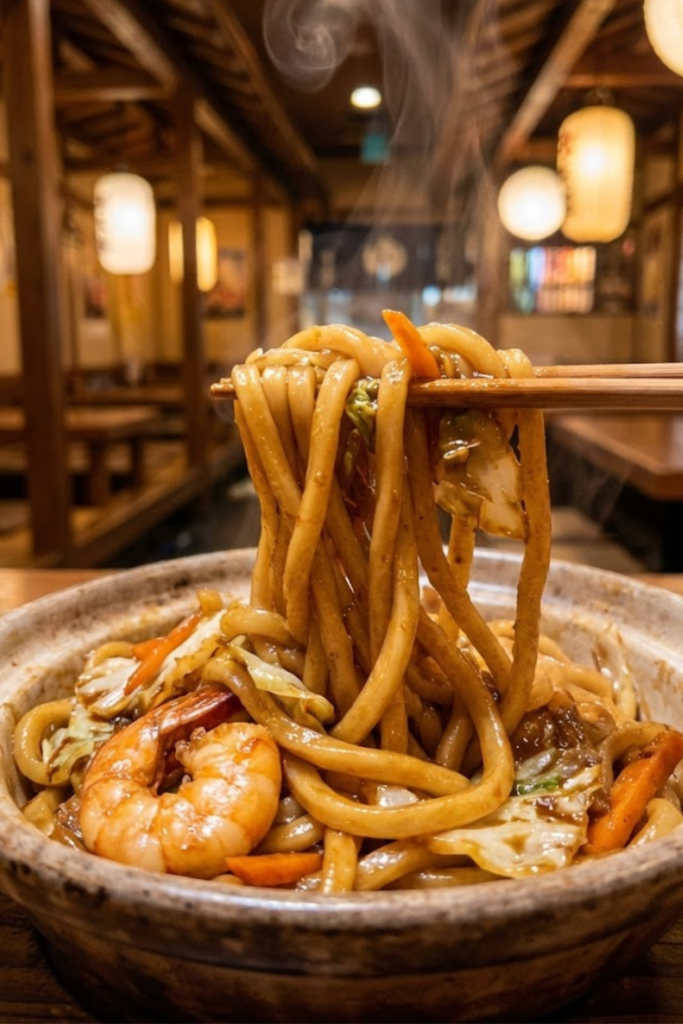
So, there you have it. You just mastered a dish that people usually pay twenty bucks for at a restaurant. Pretty cool, right?
Making yaki udon with shrimps at home isn’t just about saving money (though that’s a nice bonus). It’s about that moment when you take the first bite of those chewy noodles and realize, “Wow, I actually made this.” It’s fast, it’s packed with flavor, and it’s honestly one of the most satisfying meals you can throw together on a busy Tuesday night.
I really hope you give this a shot. Don’t stress about getting it perfect the first time. Just get that pan hot, don’t overcook the shrimp, and enjoy the process.
If you loved this recipe as much as I do, do me a huge favor: share it on Pinterest! It helps other people find these recipes and keeps the blog running. Plus, it looks great on a “Weeknight Wins” board.
Happy cooking!