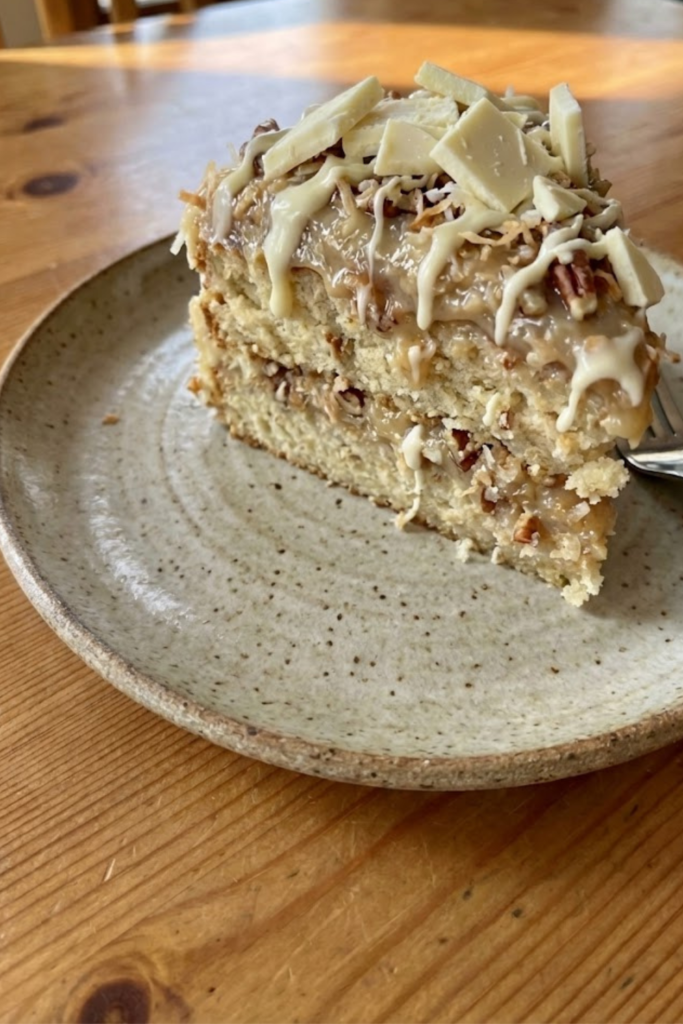
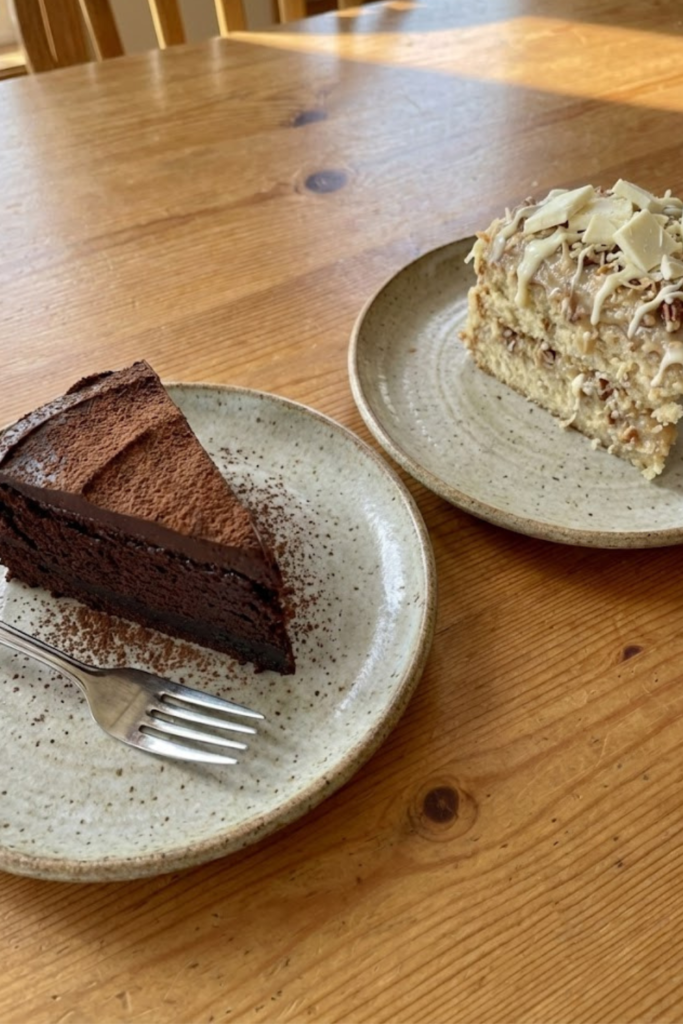
Did you know that the original German Chocolate Cake isn’t actually from Germany, but is named after an American baker named Sam German? It’s true! I still remember the first time I tried to flip this classic script in my own kitchen; I was craving that iconic, gooey coconut-pecan filling but wanted something creamier than the standard dark cocoa sponge. That’s when this White German Chocolate Cake was born. It swaps the bitterness for the sweet, buttery richness of white chocolate, creating a dessert that feels like a snowy winter dream or a light spring treat. Trust me, once you slice into these fluffy vanilla layers packed with toasted nuts, you’ll never look at the original recipe the same way again—let’s get baking!
Understanding the White German Chocolate Cake Twist
Look, I love the original. Who doesn’t? But sometimes, that dark chocolate sponge is just heavy. I remember bringing a traditional one to a summer BBQ a few years back, and it just felt… wrong. Too intense for a hot day. That’s when I started experimenting with the White German Chocolate Cake. It’s basically the lighter, dreamier sister of the classic.
It’s All About the Base
The biggest difference here is obviously the chocolate. Traditional recipes rely on that mild, sweet baking chocolate Sam German invented. But here? We are leaning hard into creamy white chocolate.
When I first tried this, I thought I could just swap cocoa powder for flour and call it a day. Nope. Huge disaster. The cake came out dry as a bone. You actually need to melt high-quality white chocolate into the batter. It gives this sticky, rich crumb that you just can’t get otherwise.
Flavor vs. Sweetness
I gotta be real with you guys. This cake is sweet. Like, really sweet. Since we don’t have the bitterness of cocoa to cut through the sugar, the flavor profile changes completely. It becomes this vanilla-forward, buttery explosion.
That’s why the coconut-pecan filling is so crucial here. In the dark version, the filling adds sweetness. In this white version? The toasted nuts actually add a necessary crunch and savory note to balance everything out. It’s a delicate dance, honestly. If you don’t toast those pecans thoroughly, you’re missing out on the flavor contrast that saves this cake from being a sugar bomb.
A Lesson I Learned the Hard Way
Let’s talk about white chocolate for a second. It is temperamental! I remember trying to melt a bowl of cheap “white morsels” in the microwave for the batter. I looked away for ten seconds to yell at my dog, and boom. Seized. Burnt. Gross.
White chocolate burns way faster than dark chocolate because of the high sugar and milk solids content. Mistakes were made, and tears were definitely shed that afternoon. So, learn from me: use a double boiler, or go slow. Low and slow is the only way to get that silky consistency we need for the batter. If you rush it, you ruin it.
Texture Talk
The texture is different too. The classic is usually a bit dense, almost like a brownie. This White German Chocolate Cake tends to be fluffier if you whip the egg whites right. It’s like eating a cloud that’s been soaked in butter. Is that a weird description? Maybe. But it’s accurate. You want that airy lift to contrast the heavy, gooey topping. It’s a stunning showstopper that works just as well for a winter holiday (hello, snowy look!) as it does for a spring brunch.
Gathering Your Ingredients for the Perfect Crumb
You know, people often say baking is a science, but I usually treat it more like a suggestion. That was my attitude until I tried to make this White German Chocolate Cake for my sister’s anniversary a few years back. I swapped a few things out because I was lazy, and let me tell you, the result was a dense, rubbery frisbee. It was embarrassing.
If you want that tender, melt-in-your-mouth texture, you have to respect the ingredients list. I’ve learned this the hard way so you don’t have to.
The Great Flour Debate
First things first, put the All-Purpose flour back in the pantry. For this recipe, we need cake flour. I used to think this was a scam by Big Flour to get me to buy more stuff, but it actually matters. Cake flour has a lower protein content, which means less gluten forms when you mix the batter.
When I used AP flour that one time, the cake came out heavy, almost like cornbread. We want a light, airy sponge that can stand up to the heavy coconut-pecan filling without collapsing or feeling like a brick in your stomach. If you absolutely can’t find cake flour, you can hack it with cornstarch, but the real deal is always better.
The White Chocolate Rule
This is the hill I will die on: Do not use white chocolate chips. Please. I am begging you.
Chips are formulated with stabilizers so they hold their shape in cookies. They don’t melt smoothly. I once tried to melt a bag of generic chips for the batter, and it turned into a weird, oily clump that refused to incorporate. It was a sad day in my kitchen.
You need to buy high-quality white chocolate baking bars—think Ghirardelli or Lindt. You want the stuff that snaps when you break it. When you melt high-quality bars, they turn into a silky liquid that folds perfectly into the batter, giving the cake that rich, vanilla-forward flavor we are chasing.
Temperature Matters (Seriously)
I’m guilty of being impatient. I’ve definitely tried to use cold eggs because I forgot to take them out of the fridge. But for this cake, your buttermilk and egg whites need to be at room temperature.
When ingredients are cold, they don’t emulsify properly with the butter. You’ll end up with a curdled-looking batter that doesn’t rise evenly. I usually set my ingredients out on the counter about an hour before I start. If I’m in a rush, I put the eggs in a bowl of warm water for ten minutes. It’s a lifesaver.
That Vanilla Flavor
Since we aren’t using cocoa powder, vanilla is the main flavor driver here alongside the white chocolate. Don’t use the fake stuff. I love using vanilla bean paste because seeing those little black specks in the white cake layers just looks so fancy and professional. It adds a depth that plain extract sometimes misses.

Mastering the Classic Coconut Pecan Filling
Okay, let’s be real for a second. The cake layers are great, but we are all here for the coconut pecan filling. That gooey, crunchy, sweet mess is what makes this cake legendary. But let me tell you, it is shockingly easy to mess up.
I have a vivid memory of standing over the stove, trying to rush this step because I was late for a potluck. I cranked the heat up, threw the eggs in, and stirred like a maniac. Five minutes later, I had… sweet scrambled eggs with coconut. It was gross. I actually cried a little bit before dumping the whole pan in the trash.
Avoid the Scrambled Eggs
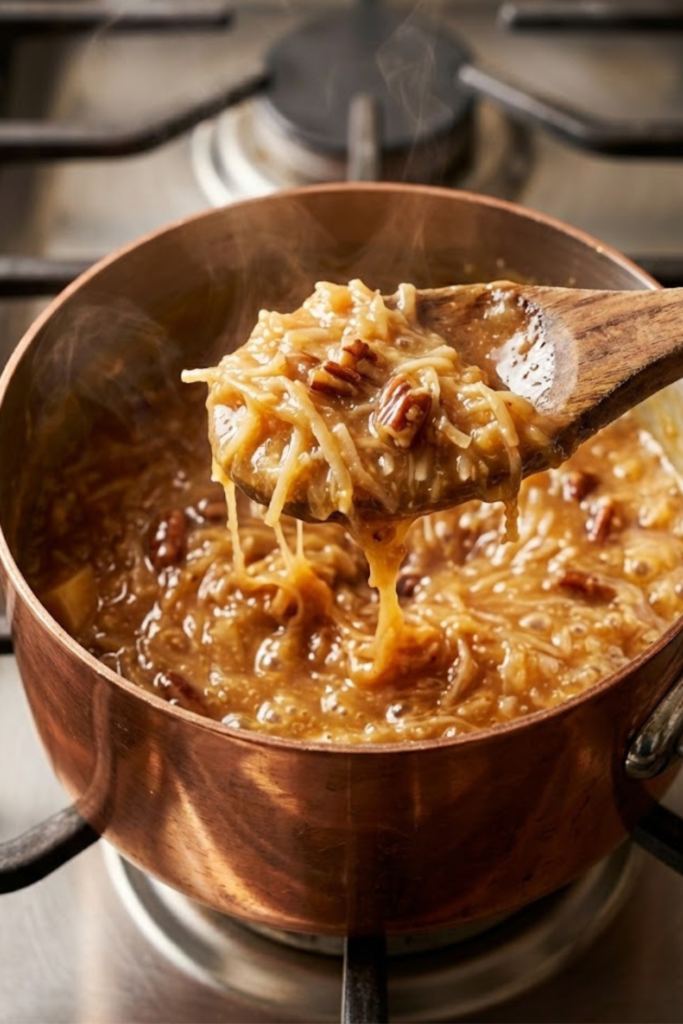
The base of this filling is a custard made from evaporated milk, sugar, butter, and egg yolks. The trick is that you cannot—I repeat, cannot—just dump the yolks into the hot liquid. You will end up with cooked bits of egg in your frosting.
I learned to whisk the sugar and yolks together first in a separate bowl. Then, when your milk and butter are hot, you pour a tiny bit of that hot liquid into the yolks while whisking constantly. This is called tempering. It gently warms the eggs up so they don’t freak out and scramble when they hit the pot. It’s an extra step, but it saves you from the “chunky custard” disaster I experienced.
Toast Those Nuts!
If you take nothing else away from this post, please listen to this: Toast your chopped pecans.
I used to skip this step because I didn’t think it mattered. I was wrong. Raw pecans are kind of waxy and bland. But when you toast them in the oven for about 5-7 minutes, they release these oils that smell amazing. It adds a savory crunch that cuts through the extreme sweetness of the filling.
I also like to toast the sweetened shredded coconut just a little bit. Not until it’s brown, but just until it’s warm and fragrant. It makes the final texture less chewy and more crisp.
The Waiting Game
Here is where I usually panic. You cook the mixture on the stove until it thickens, right? But when you take it off the heat, it might still look a little runny.
Don’t freak out like I did and keep cooking it until it’s a solid brick. The filling thickens significantly as it cools. It needs to be spreadable, not stiff. I usually pour it into a shallow bowl and stick it in the fridge for about 30 minutes to speed things up. If you try to frost the cake while the filling is still warm, your layers will slide right off. Trust me, I’ve watched a cake slow-motion slide onto the counter, and it is heartbreaking.
Step-by-Step Instructions to Bake the Cake Layers
Alright, now we are getting to the main event. Mixing the batter for these white cake layers feels a bit like a chemistry experiment, but the tasty kind. I used to just throw everything in the bowl and hit “high” on my mixer. Do not do that. You will end up with a tough cake that tastes like sad bread.
The Creaming Method
The first step is beating your butter and sugar together. And when I say beat it, I mean let that mixer run for a solid 3 to 5 minutes.
I used to stop as soon as it looked combined because I was impatient. Big mistake. You need to whip air into the butter so it turns pale yellow and gets super fluffy. This aeration is what gives the cake its lift. If you skip this, your cake will be flat and dense. I usually set a timer on my phone and walk away to wash dishes so I’m not tempted to stop early.
The “Folding” Technique
Since this is a white cake, we are using beaten egg whites to get that cloud-like texture. This is the part that used to scare me. You have to gently fold the stiff egg whites into the heavy batter.
If you stir it like you’re making soup, you knock all the air out. I learned this the hard way when my first attempt came out looking like a pancake. You want to use a rubber spatula and cut through the middle, scrape the bottom, and fold over. Be gentle! Treat the batter like a fragile baby bird. It takes a minute, but keep going until the white streaks just disappear.
Oven Watch
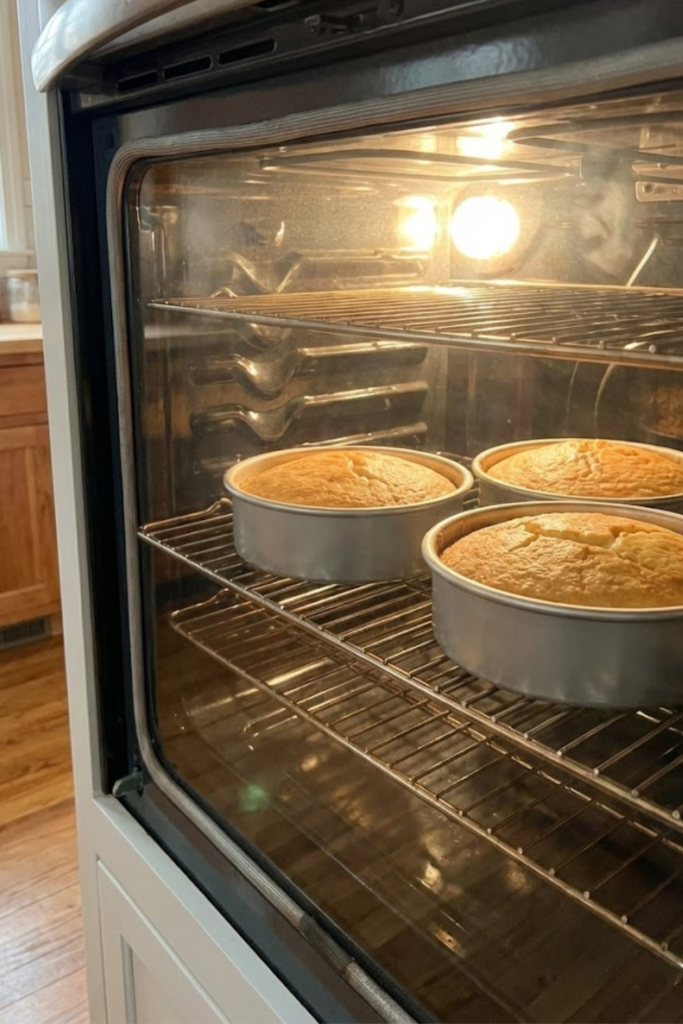
Preheat your oven properly! I bought a cheap oven thermometer a few years ago because my oven lies to me. It says 350°F, but it’s actually 325°F.
Once the pans are in, do not open the door. I know it’s tempting to peek. I am the worst at this. But every time you open the door, heat escapes, and your cake might sink in the middle. Use the oven light.
Start checking for doneness about 5 minutes before the recipe says. Stick a toothpick in the center. If it comes out with wet batter, it needs more time. If it has a few moist crumbs clinging to it, pull it out immediately! Over-baking is the enemy of moist white cake.
The Cooling Patience Test
Here is the hardest part: waiting. You have to let the cakes cool in the pans for about 10 minutes, then flip them onto a cooling wire rack.
One time, I tried to frost a cake that was still slightly warm because I was running late. The butter in the frosting melted, the layers slid apart, and it looked like a landslide. It was a disaster. Let them cool completely. Seriously. Go watch an episode of your favorite show and come back later.
Assembling and Frosting Your Masterpiece
Okay, we have made it to the finish line. The cakes are baked, the filling is cool, and your kitchen probably smells like a bakery heaven. Now comes the part that used to give me actual anxiety dreams: the assembly.
I used to just slap the layers together and pray to the baking gods that it wouldn’t fall over. One time, I brought a cake to a baby shower that was leaning so hard to the left, we had to prop it up with a stack of napkins. It was humiliating. But I’ve learned a few tricks to keep things standing straight.
The Great Leveling Act
First, look at your cake layers. They probably have a little dome on top, right? You have to cut that off.
I know, it feels wrong to cut away perfectly good cake. But if you try to stack rounded layers, your cake will wobble. I use a large serrated bread knife (or a fancy cake leveling tool if I’m feeling professional) to slice the tops off so they are perfectly flat. The best part? You get to eat the scraps right then and there. It’s the baker’s tax.
The “Dam” Method
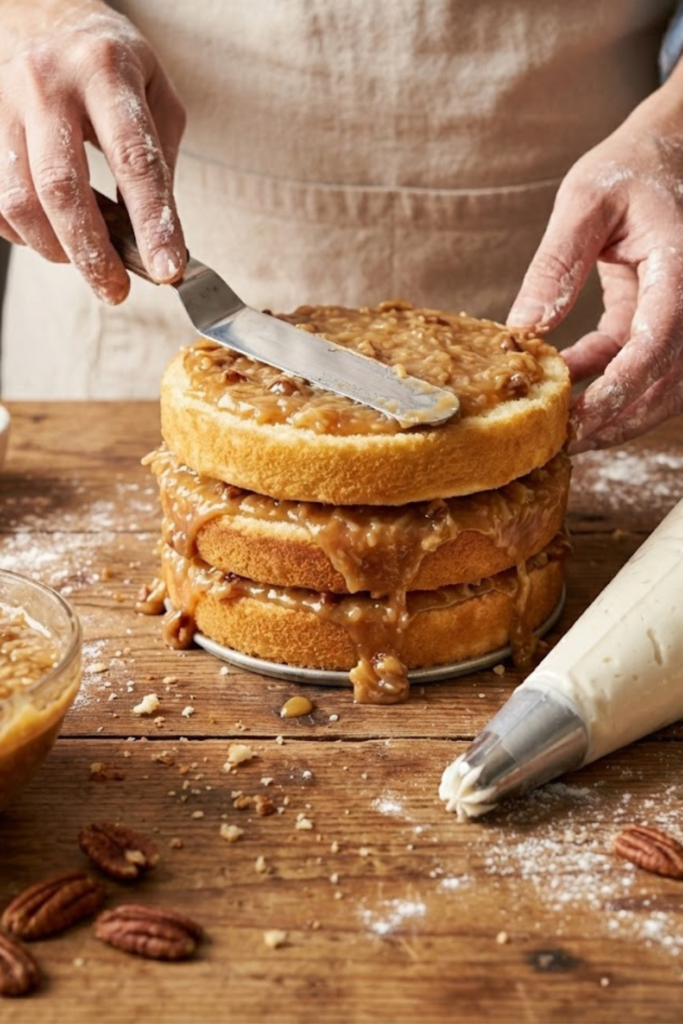
This is the secret weapon for this specific cake. The coconut pecan filling is heavy and gooey. If you just put it between the layers and squash another cake on top, it will ooze out the sides.
To stop the ooze, I make a batch of stiff white chocolate buttercream. I put it in a piping bag and pipe a thick ring (or “dam”) around the very edge of the cake layer. Then, I fill the inside of that ring with the coconut mixture. The buttercream acts like a wall that holds everything in place. Since I started doing this, my cakes actually look like cylinders instead of blobs.
Stacking and Decorating
Place your first layer down, pipe the dam, fill it, and then place the next layer on top. Repeat. When you get to the final layer, place it upside down (so the flat bottom is facing up). This gives you sharp, clean corners on top.
For the outside, I’m a big fan of the naked cake style. It’s trendy, but honestly, it’s also just easier. You spread a thin layer of buttercream all over the sides and scrape most of it off with an offset spatula, letting those beautiful layers peek through. It looks rustic and snowy.
If you want to be extra, you can do a white chocolate ganache drip down the sides. I messed this up the first time by using ganache that was too hot—it melted my frosting and pooled at the bottom. Wait until it’s room temp but still pourable. It makes the cake look like a million bucks.
We finally made it to the end. My kitchen is usually a disaster zone after baking this, and yours might be too. But honestly? It is so worth it. Mastering this White German Chocolate Cake feels like a real achievement. I still remember slicing into my first successful attempt at a family dinner. The table went completely silent after the first bite. That is the best compliment a baker can get.
The combination of that fluffy white cake texture and the rich, crunchy coconut-pecan filling is just magic. It’s sweet, it’s nutty, and it looks incredible on a dessert table. Don’t beat yourself up if your frosting technique isn’t perfect yet. My first “dam” wall collapsed, and it was a mess. But you learned how to temper eggs and properly melt white chocolate today. That is a win in my book.
If you enjoyed this recipe (or just liked reading about my kitchen failures), do me a huge favor. Pin this to your favorite Dessert Board on Pinterest. It helps me out a ton, and it keeps this recipe safe for the next time you need to impress a crowd. Now, go grab a big glass of milk and a fork. You earned it!