I’ll never forget the first time I tried to bake a cake from scratch for my daughter’s birthday. It came out looking great, but it tasted like… well, a sweetened kitchen sponge! I was devastated. But I didn’t give up! After literally dozens of failed attempts and pounds of wasted butter, I finally cracked the code.
Did you know that baking is actually chemistry, not magic? It’s true! A simple shift in temperature can ruin everything. Today, I’m sharing my absolute favorite, fail-proof method. It is incredibly soft, bursting with vanilla bean flavor, and stays moist for days. You are going to be the star of the next party, I promise! Let’s get that oven preheated and make some magic happen.
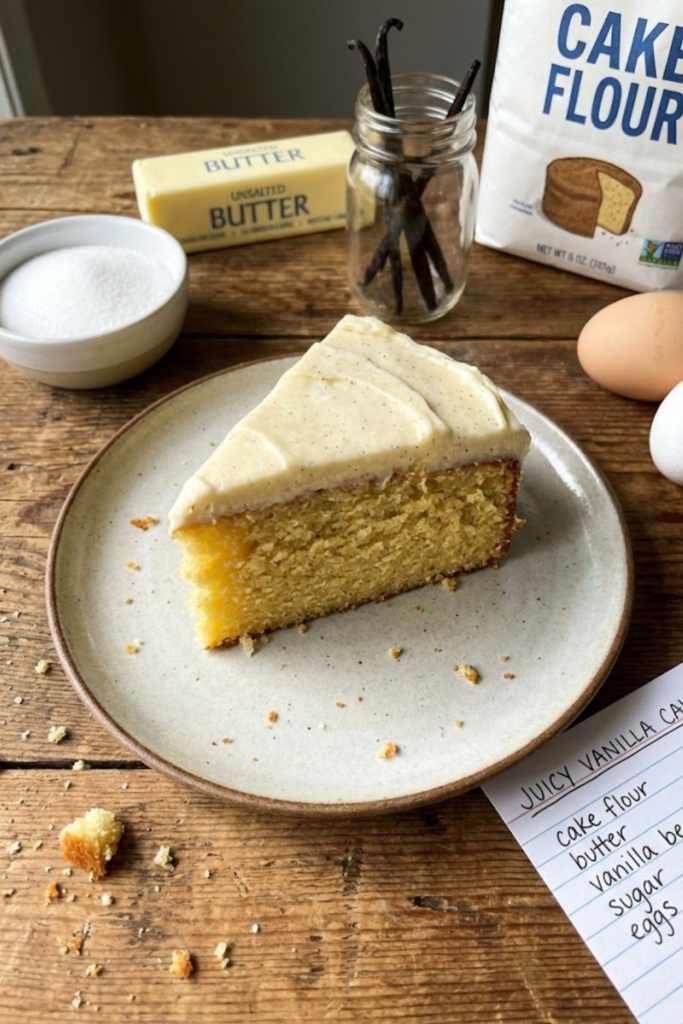
Essential Ingredients for a Tender Crumb
I have a confession to make. When I started baking, I honestly thought all white powders in the pantry were basically the same thing. I mean, flour is flour, right? Wrong. So wrong. I remember baking a birthday cake for my best friend using bread flour because I was out of the regular stuff. Let me tell you, that thing was heavy enough to anchor a small boat. We literally had to saw through it with a serrated knife. It was humiliating!
But those disasters taught me everything I know now. If you want that bakery-style moist vanilla cake, you can’t just throw whatever is in the cupboard into a bowl. The ingredients are the foundation.
The Flour Debate: Cake vs. All-Purpose
Here is the deal. All-purpose flour has higher protein content, which creates gluten. Gluten is great for chewy pizza crust, but it is the enemy of a tender cake crumb. You want structure, not a chew toy.
I almost exclusively use cake flour now. It has less protein and is milled finer. It makes the cake melt in your mouth. If you don’t have any, don’t panic! I’ve been there. You can make a cake flour substitute by measuring one cup of all-purpose flour, removing two tablespoons, and replacing them with cornstarch. Sift it a few times. It’s a total lifesaver.
The Temperature Trap
Listen to me closely because I ignored this for years: Room temperature ingredients are non-negotiable. I used to be impatient and try to beat cold butter with cold eggs. The batter would look curdled and weird, kind of like cottage cheese. Ugh.
When your dairy is cold, it doesn’t emulsify. That means it doesn’t trap air bubbles. No air bubbles means a dense, flat cake. Set your unsalted butter, eggs, and milk out on the counter about an hour before you start. If the butter leaves a slight indent when you press it but doesn’t squish completely, it’s perfect.
Fat and Flavor
Finally, let’s talk about the good stuff. Flavor. Since vanilla is the star here, please don’t use the cheap imitation stuff that tastes like chemicals. Splurge a little on vanilla bean paste or pure extract. It makes a huge difference.
Also, I like to use a mix of fats. Butter gives you that rich taste we all love, but oil is actually better at keeping cakes moist for longer. I usually swap a little bit of the butter for vegetable oil. It keeps the cake soft for days, assuming it lasts that long without being eaten!

The Reverse Creaming Method Explained
Okay, hold your horses. I know what you are thinking. “Reverse creaming? That sounds way too complicated.” I thought the exact same thing! For years, I stuck to the traditional method—you know, beating the sugar and butter until your arm fell off, hoping it was fluffy enough. But my cakes were inconsistent. Sometimes they had these weird tunnels in them, or they domed up like a volcano in the middle. It was so frustrating!
Then I tried the reverse creaming method, and honestly? I haven’t looked back since. It completely changed my baking game.
What is This Sorcery?
It sounds like a fancy technique reserved for French pastry chefs, but it’s actually easier than the regular way. Instead of creaming butter and sugar first, you mix your dry ingredients and then beat in the butter.
Here is why it works. When you coat the flour particles with fat (the butter) before adding any liquid, you are essentially waterproofing them. This drastically slows down gluten formation. Remember how we talked about gluten being the enemy of a tender cake? By coating the flour, you ensure the final texture is velvety and flat, rather than tough and domed. It creates a velvety texture that just melts away when you eat it.
Step-by-Step to Perfection
Here is how I do it without losing my mind. Toss your flour, sugar, and leavening agents into the bowl of your stand mixer. Turn it on low for a second just to blend them.
Next, add your room-temperature butter one chunk at a time. Mix it on low speed. You aren’t looking for fluff here. You want the mixture to look like coarse, wet sand. It usually takes about two minutes. Once it looks sandy and crumbly, you know the flour is properly coated.
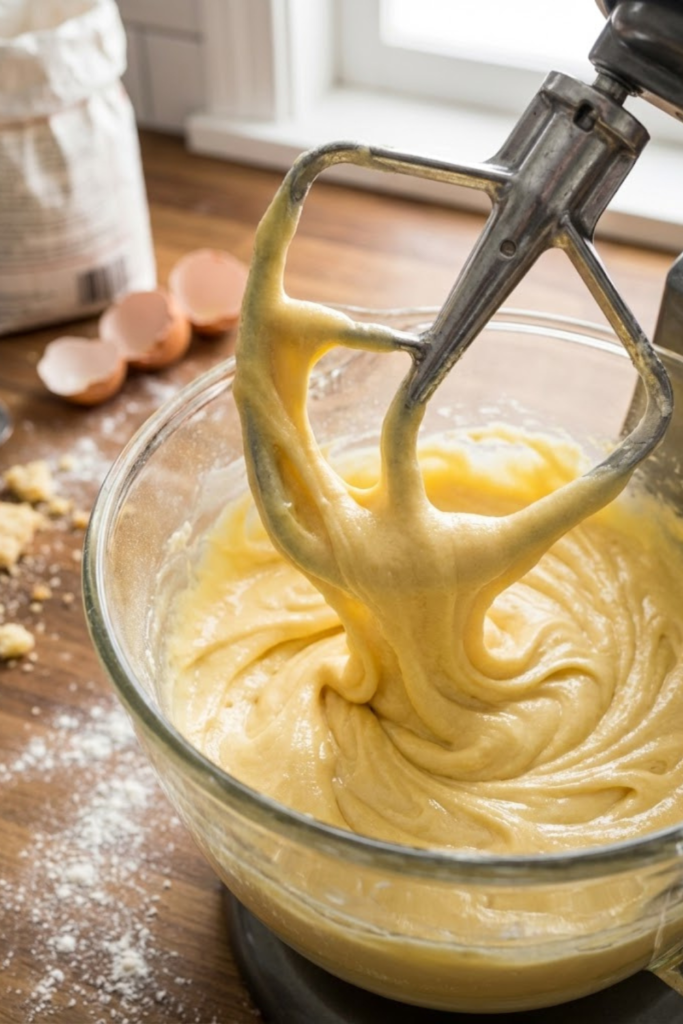
Only then do you add your liquids (eggs, milk, vanilla). Pour them in slowly while the mixer is running. The batter will look creamy and thick, almost like pudding.
Avoiding the Over-Mixing Disaster
Even with this foolproof method, you can still mess it up if you get too excited. Over-mixing batter is still a risk once the liquid hits the flour.
I have ruined a perfectly good batter by walking away to answer the phone while the mixer was running. When I came back, the batter was super elastic. The resulting cake was… rubbery. Yuck.
Once you add the wet ingredients, mix on medium speed for about 90 seconds to build a little structure, then stop! Scrape down the sides of the bowl. Give it one final stir by hand with a spatula to catch any flour hiding at the bottom. That’s it. You are done. It’s less fussy than the traditional way and yields a soft crumb every single time.
Baking Tips for Flat and Even Layers
I used to think that cake decorating was just about slapping on enough frosting to hide the mistakes. Boy, was I wrong. You can’t frost a disaster! I remember one specific catastrophe where I tried to stack two layers that looked like little hills because they had domed so much in the oven. I didn’t level them. As soon as I put the top layer on, it literally slid off the buttercream and crashed onto the counter. My dog was thrilled; I was crying.
Getting those professional-looking, flat layers starts way before the frosting comes out. It starts with how you bake them.
Don’t Trust the Non-Stick Promise
First off, never trust a pan that says it’s “non-stick.” It is lying to you. There is nothing worse than flipping a pan over and watching only half the cake come out while the other half stays clinging to the bottom for dear life.
I always, and I mean always, use parchment paper rounds. You can buy them pre-cut, but I’m cheap, so I just trace the bottom of the pan on a roll of paper and cut it out. Grease the pan, put the paper in, and grease the paper too. It might seem like overkill, but it guarantees your layer cake assembly goes smoothly later. It slides right out, perfect every time.
The Secret Weapon: Cake Strips
If your cakes always come out with a big hump in the middle, your oven is cooking the edges too fast. The outside sets before the middle is done rising, pushing the center up like a volcano.
You need cake strips. These are fabric bands you soak in water and wrap around the outside of the pan. The water keeps the metal cool, so the edges bake at the same speed as the center. The result? Perfectly flat layers that need zero trimming.
If you don’t want to buy them, you can go DIY! I’ve done this a million times: fold a long strip of paper towel to the height of your pan, wet it, and wrap it in aluminum foil. Wrap that foil snake around your pan. It works just as well and costs basically nothing.
Your Oven is Probably Lying
Here is a hard truth: the temperature on your oven display is probably wrong. Mine runs about 15 degrees hot. That’s enough to burn the edges of a moist vanilla cake while the middle is still raw batter.
Get a cheap oven thermometer and hang it inside. It’s the only way to know for sure. And please, stop opening the door to peek! Every time you open it, you lose heat and risk the cake collapsing. Use the oven light. Only open it at the very end to do the toothpick test. Stick it in the dead center; if it comes out with a few moist crumbs, pull it out. If it’s totally clean, you might have actually over-baked it a little.

Pairing and Decorating with Vanilla Buttercream
I have a love-hate relationship with frosting. I love eating it, but for the longest time, I hated making it. My early attempts were usually a disaster—either a runny mess that slid right off the cake or a stiff, sugary brick that tore the delicate crumbs apart. I once served a cake where the frosting was so sweet, my dad actually scraped it off. That’s when I knew I had to up my game.
The right frosting doesn’t just look pretty; it balances the flavor. Since we worked so hard on that moist vanilla cake, we need a topping that respects it.
The Great Debate: American vs. Swiss Meringue
Most of us grew up on American buttercream. It’s just butter, powdered sugar, and milk. It’s easy, nostalgic, and very sweet. If you have a serious sweet tooth, this is your jam. But honestly? It can be a bit gritty.
If you want to feel fancy and impress your in-laws, you need to try Swiss meringue buttercream. It involves heating egg whites and sugar before whipping them into butter. I was terrified to try it at first because it sounded so technical. But the result is silky, buttery, and not too sweet. It pairs perfectly with a classic white cake because it doesn’t overpower the vanilla bean flavor. It’s a bit more work, but totally worth the elbow grease.
The “Dirty Ice” Method
Have you ever tried to frost a cake and ended up with little brown crumbs mixed into your beautiful white frosting? I have. It looks messy and unprofessional. The secret to fixing this is the crumb coat technique.
Think of it as a primer for your walls. You apply a very thin layer of frosting all over the cake to trap those loose crumbs. It doesn’t have to look good! In fact, we call it “dirty icing” in the kitchen. Once you have that thin layer on, stick the whole thing in the fridge for 20 minutes. When you pull it out, the frosting will be hard, and you can apply your final layer of vanilla buttercream frosting smoothly without any crumbs popping up.
Simple is Best
I am not an artist. I can barely draw a stick figure, so I don’t try to pipe elaborate roses or fondant sculptures. And you don’t need to either! A simple cake often looks the most appetizing.
My go-to move? Sprinkles. I love doing a “funfetti style” decoration on the outside or just a ring of colorful sprinkles around the base. It hides a multitude of sins at the bottom edge where my frosting might be a little uneven. If you want to get a little fancy with piping nozzle types, a simple 1M star tip is foolproof. Just hold it perpendicular to the cake, squeeze, and pull up. You get cute little stars that look way harder to make than they actually are.

We made it! I know that was a lot of information to digest for a simple dessert. Honestly, looking back at my early baking days—filled with dry sponges and sunken centers—I wish someone had sat me down and explained the chemistry to me like this. It would have saved me so many tears and wasted ingredients.
Mastering this homemade vanilla cake isn’t just about following a recipe card; it’s about understanding how the ingredients talk to each other. Remember, baking is a science, but eating it is pure art. It is easy to just grab a box mix when you are busy. I get it. I’ve done it plenty of times when I was in a pinch! But there is something so satisfying about pulling a pan out of the oven, smelling that real butter and pure vanilla extract, and knowing you built that flavor from scratch.
If you try this recipe and it doesn’t come out perfect the first time, don’t beat yourself up. My first attempt at the reverse creaming method ended up with flour all over my kitchen floor because I turned the mixer on too high. It happens! The important thing is that you are in the kitchen, creating something with love. Even a slightly imperfect cake tastes better when it’s homemade.
Once you nail this base recipe, you can literally do anything with it. Add lemon zest, throw in some blueberries, or swap the vanilla for almond extract. The sky is the limit.
If you found these tips helpful and want to save this guide for your next birthday party or bake sale, please share it on Pinterest! It helps me out so much, and it keeps the recipe safe for when you need it. I’d love to see your creations, so tag me if you post them!
Now, go preheat that oven and make something delicious. You’ve got this!