Have you ever stared at a dry, sad piece of fish and wondered where it all went wrong? I definitely have! Cooking seafood used to terrify me until I stumbled upon this game-changing method. Today, we aren’t just making dinner; we are crafting a restaurant-quality experience right in your kitchen! This tuscan garlic butter salmon recipe is everything you need—creamy, savory, and packed with vibrant flavors. Did you know that 80% of home cooks overcook their salmon? We are going to fix that today. Get your skillet ready, because this sauce is liquid gold!
Selecting the Freshest Salmon for Your Skillet
Honestly, standing at the seafood counter used to give me major anxiety. I’d stare at the glass case, nodding like I knew what I was doing, while internally praying I didn’t pick a piece of fish that would poison my family. We have all been there, right?
I remember this one time I bought salmon fillets that looked a bit dull, but they were on sale. I thought, “Hey, a bargain!” Big mistake.
When I got home and opened the package, the smell hit me like a truck. It wasn’t that fresh ocean breeze scent; it was straight-up low tide. I tried to cook it anyway (don’t judge me), and the texture was mushy and gross. It completely ruined the tuscan garlic butter salmon recipe I was trying to perfect.
The “Fresh” vs. Frozen Debate
Here is a little secret the grocery stores don’t really advertise. Unless you live right on the coast and buy from a boat, that “fresh” fish in the display case was likely previously frozen and thawed out for display.
I used to think buying frozen fish was a sin. But actually, flash-frozen fish is often fresher because it’s frozen immediately after being caught.
If you can’t find vibrant, firm fish at the counter, go to the freezer aisle. I’ve found that high-quality wild caught salmon from the freezer section often tastes better than the “fresh” stuff that’s been sitting out all day. Plus, it’s usually cheaper, which helps the wallet.
The Visual Check and The Sniff Test
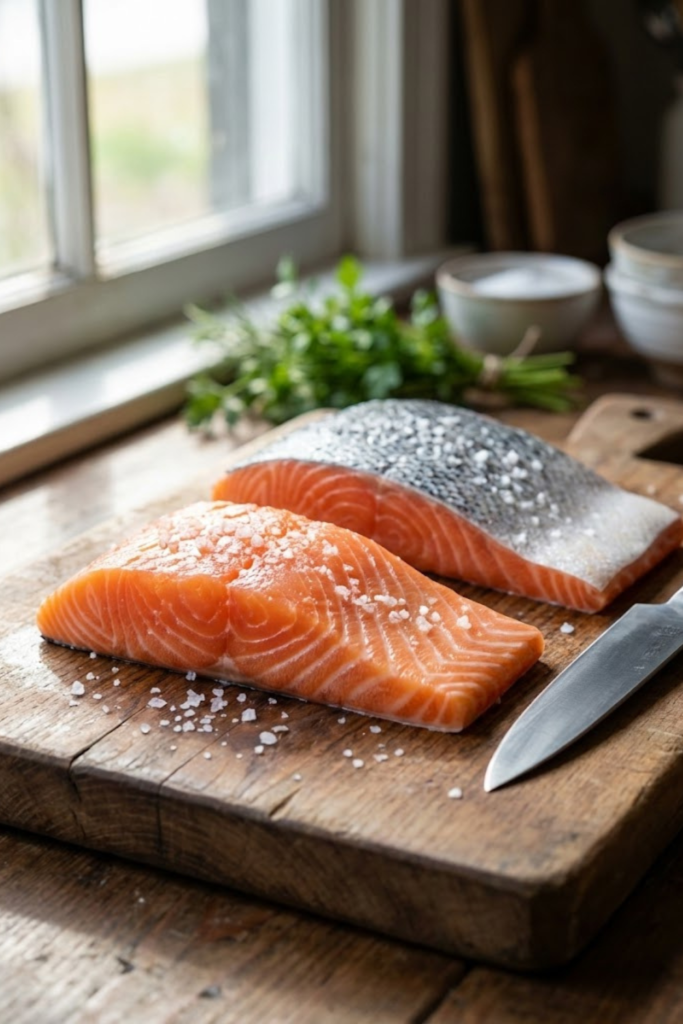
When you are picking out your main ingredient for this tuscan garlic butter salmon recipe, look for color first. You want a deep, vibrant orange or pink, depending on the variety.
If the flesh looks pale, gray, or has gaping holes in it, walk away. Gaping usually means the meat is old or was mishandled.
And please, don’t be afraid to ask the fishmonger to let you smell it. Seriously, they shouldn’t mind. Fresh fish should smell like the sea—clean and salty. If it smells “fishy” or sour, it is bad news. I learned that the hard way, and I’m never going back to funky fish.
Skin-On or Skin-Off?
For this specific dish, I strongly recommend keeping the skin on. I know some people get squeamish about fish skin, but hear me out. The skin acts as a natural barrier between the delicate meat and the hot pan.
It helps keep the fish moist and prevents it from overcooking too quickly. Plus, if you sear it right, that skin gets crispy and delicious. You can always peel it off easily after cooking if you really don’t want to eat it.
Prep is Everything
Okay, you bought the fish, now what? Do not wash it! Washing raw fish just spreads bacteria around your sink, and water is the enemy of a good sear.
Instead, take a paper towel and pat those fillets down until they are bone dry. Moisture creates steam, and steam prevents browning.
If you want that golden, restaurant-quality crust on your tuscan garlic butter salmon recipe, dryness is key. I usually lay them out on a plate lined with paper towels for a few minutes while I prep the garlic. It’s a small step that makes a massive difference in the final texture.
Mastering the Creamy Garlic Butter Sauce Ingredients
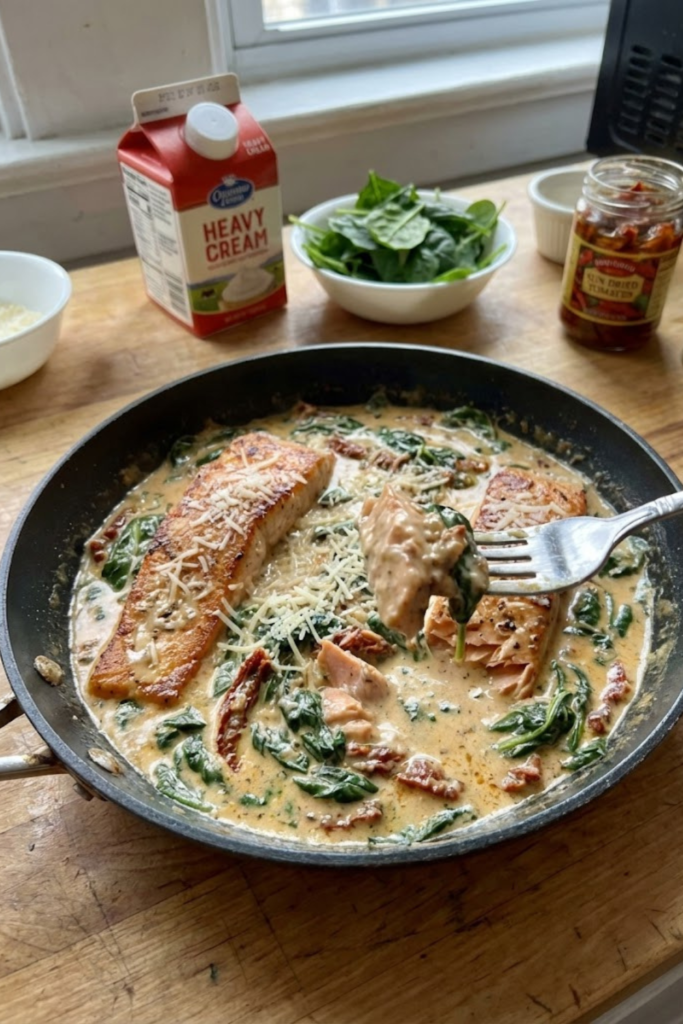
Let’s be honest, the salmon is just the vehicle for the sauce, right? I mean, I love fish, but I’m really here for that creamy, garlic-packed liquid gold. When I first started cooking this tuscan garlic butter salmon recipe, I thought I could cut corners. I tried to make it “lighter” by using skim milk instead of heavy cream.
Huge mistake.
The sauce split instantly. It looked like a science experiment gone wrong—weird watery clumps floating in grease. I was so mad I almost cried. So, lesson learned: embrace the fat. You need that heavy whipping cream to keep the sauce stable and velvety. If you are terrified of the calories, just eat a smaller portion, but do not mess with the ingredients!
The Tomato Situation
Another thing I messed up early on was the tomatoes. I bought those dry, leathery sun-dried tomatoes that come in a bag. I threw them in the pan and they stayed… well, leathery. It was like chewing on a shoe.
You have to get the ones packed in oil. They are soft, tangy, and ready to go. And here is a pro tip I learned by accident: spoon a little bit of that reddish oil from the jar directly into your skillet when you sauté the garlic. It adds this crazy depth of flavor that you just can’t get otherwise. It turns the sauce this beautiful blush color, too.
Cheese and Greens
Now, let’s talk about the parmesan. Please, I am begging you, do not use the green shaker bottle. It has this anti-caking stuff in it that makes your sauce grainy. Buy a wedge and grate it yourself. I know, it’s a pain to wash the grater, but the melt is so much smoother.
And for the spinach? I used to throw it in way too early. By the time the fish was done, the spinach had turned into slimy green mush. Gross.
You want to toss the fresh baby spinach in at the very last second. It only needs like, one minute to wilt. You want it to still look like a leaf, not seaweed.
Garlic: Measure with Your Heart
The recipe might say “two cloves,” but let’s be real. I usually smash four or five in there. I’ve never heard anyone complain about too much garlic in a tuscan garlic butter salmon recipe. Just be careful not to burn it. Burnt garlic tastes bitter and nasty, and there is no fixing it. If you burn it, just wipe the pan and start over. Trust me, it’s not worth saving.
Using these specific ingredients—real cream, oil-packed tomatoes, and fresh cheese—is what takes this from “okay” to “did you order this from a restaurant?”
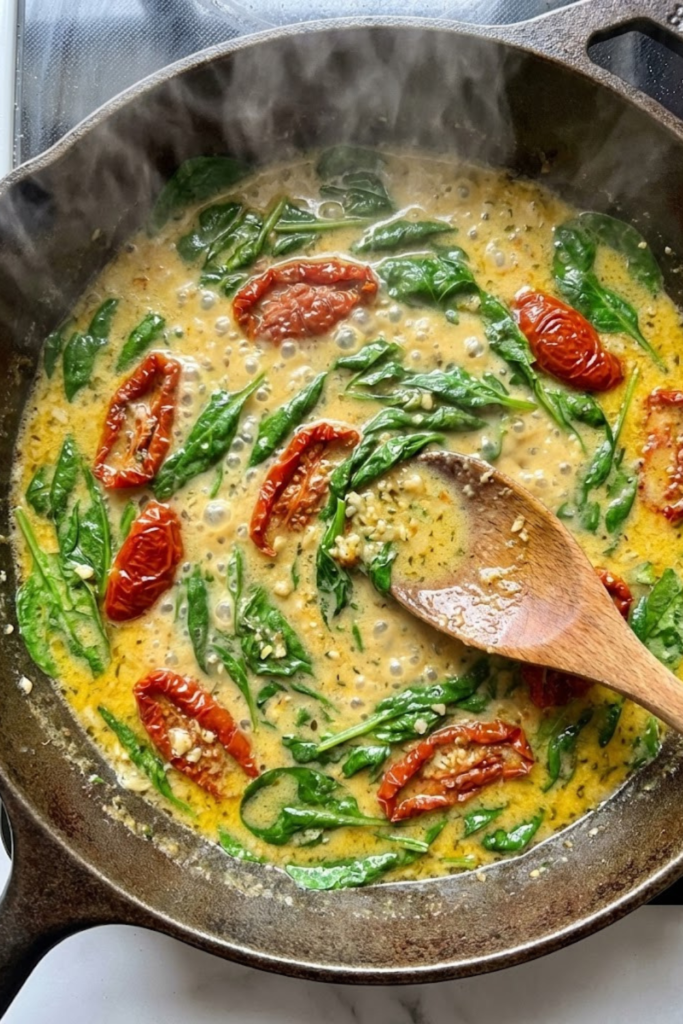
Step-by-Step Instructions for Pan-Searing Salmon
Okay, folks, this is where the rubber meets the road—or I guess, where the fish meets the skillet. I used to be terrified of searing fish. I’m not even kidding. The first time I tried to make a tuscan garlic butter salmon recipe, I basically made fish confetti. I flipped it too early, it stuck to the pan, and I ended up scraping sad little chunks of salmon off the bottom while trying not to cry. It was a disaster.
But I’ve scorched enough pans to learn a few tricks, and now I’m going to save you from that heartache. The secret isn’t magic; it’s mostly just patience and heat control.
Getting the Temperature Just Right
First off, grab your heaviest pan. A cast iron skillet is my best friend for this, but a good stainless steel one works too. You want to put that pan on the stove over medium-high heat. Not high heat—that burns the outside while the inside stays raw. And not low heat—that just steams the fish and makes it soggy.
Here is a mistake I made for years: I would put the oil in a cold pan. Don’t do that! Let the pan get hot first, then add your olive oil. You want that oil to shimmer but not smoke. If it’s smoking like a chimney, take it off the heat for a second. We want a sear, not a house fire.
The “Don’t Touch It” Rule
Once that oil is hot, carefully lay your salmon fillets in the pan, skin-side down if you kept the skin on (which you should!). It should make a satisfying psshhh sound immediately. If it doesn’t sizzle, your pan wasn’t hot enough. Take it out and wait.
Now, this is the hardest part: Do not touch it.
Seriously. Put the spatula down. Walk away if you have to. I used to be a chronic “flipper,” constantly poking and prodding the fish. That is exactly how you ruin the crust. The fish will naturally release from the pan when it’s ready. If you try to lift it and it sticks, it’s telling you, “I’m not done yet, leave me alone!”
Give it about 3 to 4 minutes on that first side. You’ll see the color of the cooked meat creeping up the side of the fillet.
Finishing the Sear and Resting
Once the skin is crispy and golden, give it a gentle flip. It should look like a restaurant dish right now. Cook the other side for another 2-3 minutes.
Here is where people mess up the tuscan garlic butter salmon recipe: they overcook it in the pan because they forget it keeps cooking after you take it out.
Take the salmon out of the pan and set it on a clean plate. Do not put it straight into the sauce yet. The meat needs to rest. It’s tempting to dive right in, but letting it sit for a few minutes allows the juices to redistribute so your fish stays moist and flaky.
While that beautiful fish is resting, that is when we build our sauce in the same pan, scraping up all those yummy brown bits left behind. That stuff is pure flavor!

Perfect Pairings and Serving Suggestions
You know that panic when the main dish is looking amazing in the pan, and suddenly you realize you have zero sides prepared? That used to be my signature move. I’d have this gorgeous tuscan garlic butter salmon recipe bubbling away, and I’d end up serving it with… plain toast. Yeah, not my finest culinary moment.
The truth is, this dish is rich. Like, really rich. Because of that creamy sauce, you need something that can either soak up the goodness or cut through the heaviness.
The Carb Lovers’ Dream
If you are not watching your waistline (and honestly, who counts calories on a Friday?), you have to go with a starch that acts like a sponge. My absolute favorite pairing is creamy mashed potatoes.
I usually make a quick batch with red potatoes while the salmon cooks. When you spoon that garlic butter sauce over the potatoes? Oh my gosh. It is heaven.
Pasta is another solid choice. I usually grab angel hair or linguine. The thin noodles get coated perfectly in the sauce. Just don’t forget to salt your pasta water! I used to skip that step, and it makes the whole meal taste flat.
Keeping it Low Carb
Now, sometimes my jeans feel a little tight, and I need to swap the pasta for something lighter. If you want low carb sides, zucchini noodles (zoodles) are surprisingly good here.
I was skeptical at first. I thought they would be watery and sad. But if you sauté them quickly in a separate pan with a little olive oil, they add a nice crunch. Plus, they make you feel way better about eating all that heavy cream.
Steamed asparagus or roasted broccoli also work great. The bitterness of the greens balances out the rich, fatty salmon perfectly. It makes for excellent weeknight dinner ideas that don’t leave you feeling sluggish.
What to Drink?
Okay, let’s talk wine. I am not a sommelier, but I know what tastes bad. Do not drink a heavy red wine with this. I tried a Cabernet once because it was the only bottle open, and it tasted like metal.
You want something crisp and acidic to cut through the dairy. A cold glass of Pinot Grigio or Sauvignon Blanc is perfect. The acid cleans your palate so every bite tastes just as good as the first one.
If you aren’t doing alcohol, a sparkling water with a big squeeze of lemon does the exact same trick. It refreshes your mouth so you are ready for more of that delicious sauce.
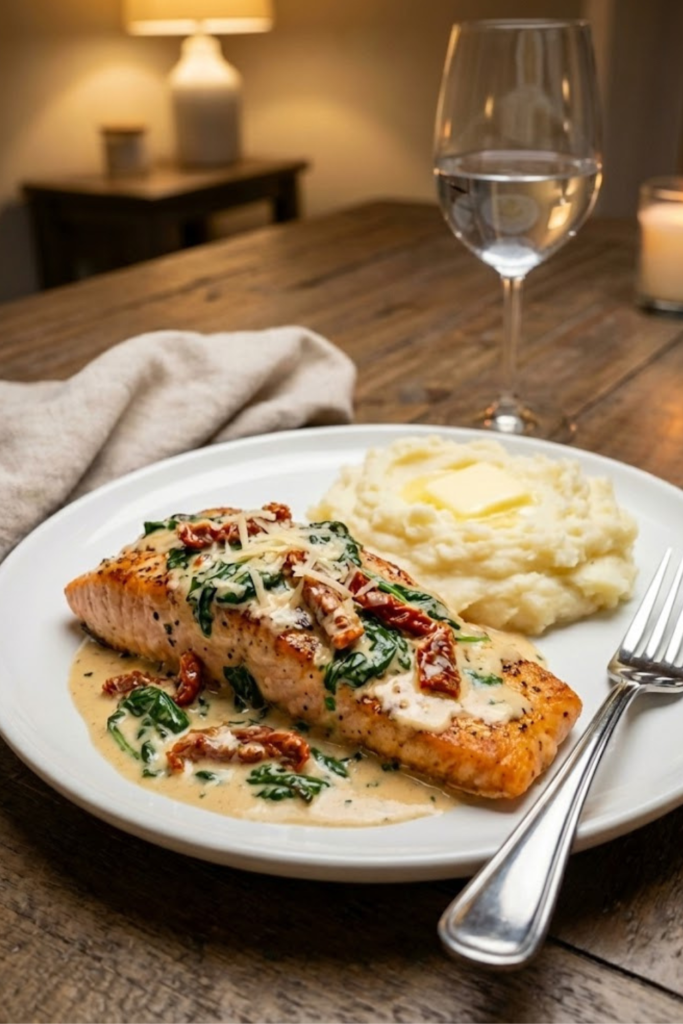
Dinner is Served!
Well, we made it! We went from staring at raw fish in the grocery store to having a restaurant-quality meal sitting right on the kitchen table. Honestly, looking at that golden sear and that creamy sauce, I always feel a little bit proud of myself. And you should too!
This tuscan garlic butter salmon recipe has saved my bacon on so many busy weeknights. It looks fancy, like you spent hours slaving away, but we both know it only took about 30 minutes. That is our little secret.
I really hope you give this a try. It’s one of those meals that brings everyone to the table—even my picky eaters who usually claim they “hate fish” seem to clean their plates when this sauce is involved.
If you make this, please, please let me know how it turned out! Did you add extra garlic? (I hope so). Did you swap the spinach for kale? I’d love to hear your twists on it.
Call to Action: If you loved this recipe, do me a huge favor and pin it to your “Healthy Dinners” or “Seafood Recipes” board on Pinterest! It helps other home cooks find it and saves you from hunting for it next time the craving hits. Snap a photo, tag me, and let’s eat!