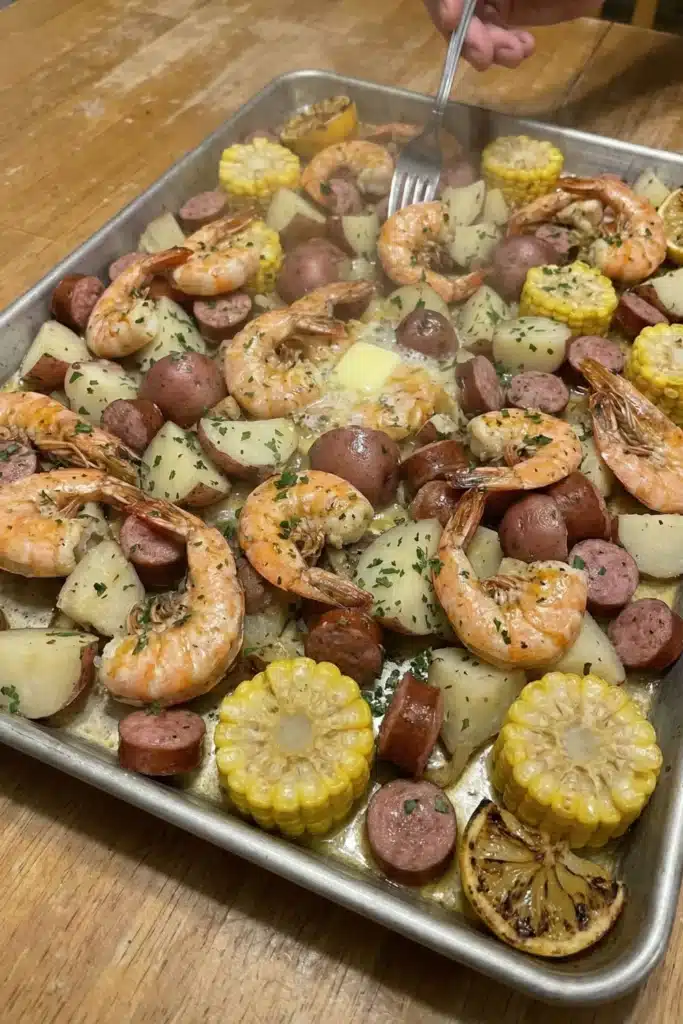
Let’s be honest for a second—I absolutely adore a traditional Low Country boil, but I dread dragging out that massive stockpot and waiting an eternity for gallons of water to boil! That is exactly why this sheet pan shrimp boil has become my absolute go-to for weeknight cravings. Did you know that oven-roasting seafood actually concentrates the flavor better than boiling it away in water? It’s true! We are talking juicy, plump shrimp, spicy Andouille sausage, and tender potatoes all mingling together in a pool of garlic butter goodness. Stick around, because I’m going to show you how to get a restaurant-quality seafood feast on the table with barely any cleanup. Let’s get cooking!
Why This Sheet Pan Method Beats the Traditional Boil
Look, I’ll be the first to admit that I used to be a total purist about seafood boils. I thought if you weren’t sweating over a massive cauldron of boiling water in the backyard, you weren’t doing it right. But let me tell you about the time I tried to pull off a traditional low country boil on a Tuesday night. It was a disaster. I waited forty minutes just for the water to boil, steamed up my entire kitchen, and ended up with a sink full of heavy, dirty dishes that I didn’t wash for two days.
That’s when I gave up and tried the sheet pan shrimp boil method, and honestly? I felt a little silly for not doing it sooner. It’s a total game changer.
Flavor That Actually Sticks
Here’s the thing that frustrated me about boiling: a lot of that expensive seasoning just washes off into the water. When you switch to oven roasted shrimp, something magical happens. Because you’re using dry heat, the spices and garlic butter actually cling to the food. The corn gets these little caramelized bits that you just can’t get from boiling water. It’s like the difference between steamed broccoli and roasted broccoli—roasted wins every time, right? The flavors intensify instead of getting watered down, making it one of those easy weeknight meals that tastes like you spent all day cooking.
Cleanup Is a Joke (In a Good Way)
I am not a fan of doing dishes. Actually, I loathe it. The beauty of this method is that you line your pan with heavy-duty foil or parchment paper. Once you’ve devoured your sheet pan shrimp boil, you just crumple up the foil and toss it in the trash. The pan stays clean!
I learned the hard way to use heavy-duty foil, though. Cheap foil rips, and then you’re scrubbing baked-on lemon juice off your pan, which defeats the whole purpose of mess free cooking.
Time Is On Your Side
Boiling a giant pot of water takes forever. Roasting? You’re done in 15 minutes. It’s fast. This method gives you time to actually sit down and enjoy a glass of wine instead of babysitting a pot. It’s efficient, delicious, and honestly, my family prefers the texture of the sausage when it’s got a little crisp to it. Give this a shot, and you probably won’t go back to the big pot method unless you’re feeding an army.

Essential Ingredients for a Classic Sheet Pan Shrimp Boil
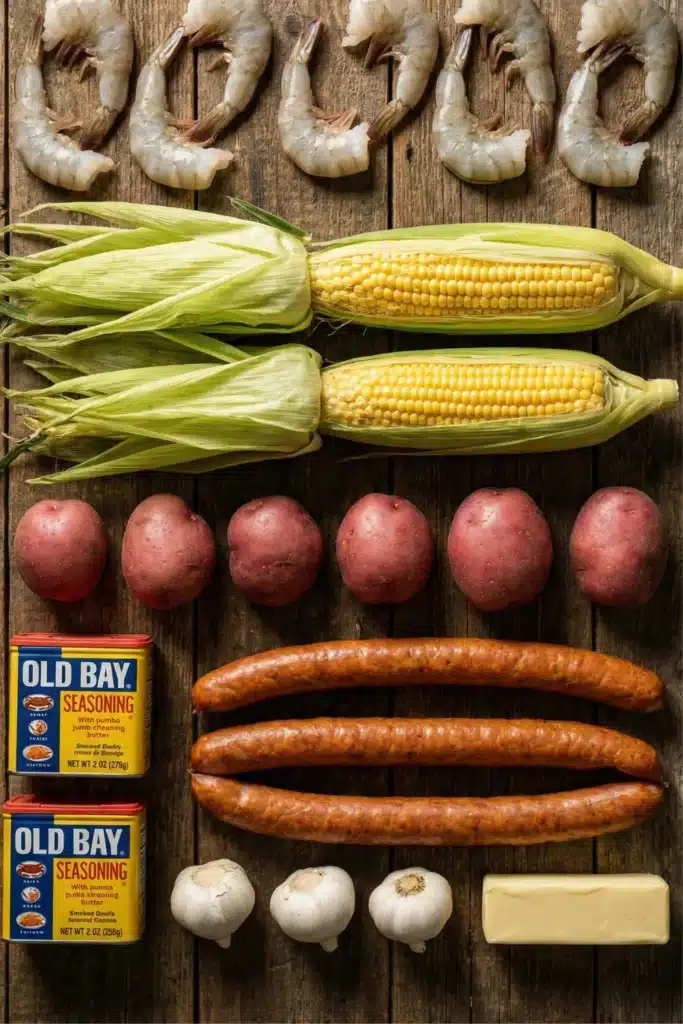
Getting the groceries right is half the battle here. I remember the first time I tried to wing a seafood boil recipe without paying attention to the details. I grabbed whatever shrimp was on sale and some random potatoes. Big mistake. The shrimp turned into rubber bullets before the potatoes were even soft. It was a chewing workout I didn’t sign up for!
Over the years, I’ve learned that since there are so few ingredients, quality really matters. You want stuff that can stand up to high heat without drying out.
The Star of the Show: Shrimp
Please, do yourself a huge favor and buy large or jumbo shrimp. I usually look for the 16-20 count bag (that means 16 to 20 shrimp per pound). If you use those tiny salad shrimp, they will be overcooked in three minutes flat.
Also, I prefer buying them easy-peel or already peeled and deveined. I’ve spent way too many hours standing over the sink peeling shrimp when I could’ve been relaxing. Keep the tails on if you want it to look fancy, or take them off if you want to shovel food into your mouth faster. I usually leave them on for the aesthetic.
Sausage Selection
For that authentic kick, you really need Andouille sausage. It’s got that smoky, spicy depth that permeates the whole pan. However, I know it can be a bit spicy for the kiddos.
If you are feeding a crowd that can’t handle the heat, kielbasa sausage is a fantastic swap. I actually made this last week with turkey sausage because that’s all I had in the fridge, and it still tasted great. Just make sure you slice them into coin shapes about half an inch thick so they get nice and brown edges.
The Veggies: Corn and Potatoes
This is where things can get tricky. Baby red potatoes are my go-to because they are waxy and hold their shape. But here is the secret sauce: you have to cut them small. I usually quarter them. If they are too big, the shrimp will be done, and you’ll still be eating raw potato. Nobody wants that crunch in a boil.
For the corn on the cob, I buy fresh ears and cut them into little wheels, maybe 3 or 4 pieces per ear. Frozen mini cobs work too, just thaw them first so they don’t release a bunch of water and steam your food instead of roasting it.
The Flavor Bomb
You can’t have a boil without Old Bay seasoning. It is non-negotiable in my house. I mix a generous amount of that with melted butter, minced garlic, and fresh lemon juice.
I used to be stingy with the butter, thinking I was being healthy. Don’t do that. You need the fat to carry the spices and coat the veggies. If you skimp on the butter, your sheet pan shrimp boil will be dry, and you’ll be sad. Be generous with the lemon, too; that acid cuts right through the richness.
Step-by-Step: How to Make Sheet Pan Shrimp Boil
I used to think “sheet pan meal” meant I could literally just dump everything onto a pan, toss it in the oven, and walk away. Well, I tried that once with this recipe, and it was a hot mess. The shrimp were rubbery, and the potatoes were hard as rocks. I learned pretty quickly that while this is an easy cleanup meal, the order of operations actually matters a lot. You have to be a little strategic if you want everything to come out perfect at the same time.
Deal With the Potatoes First
This is the most important tip I can give you. Baby red potatoes take way longer to cook than shrimp. If you put them in raw with the seafood, you are going to have a bad time.
I usually cheat and use the microwave. I poke holes in the potatoes with a fork and zap them for about 3 to 4 minutes until they are slightly tender but not mushy. This “par-baking” step ensures they finish roasting right alongside the quick-cooking shrimp. Alternatively, you can boil them for 8 minutes, but honestly, who wants to dirty a pot for that?
Get Your Hands Dirty
Next, grab a large bowl. I know, I know—I said one pan—but mixing everything in a bowl first guarantees even coating. Throw your shrimp, sausage coins, corn, and those softened potatoes into the bowl.
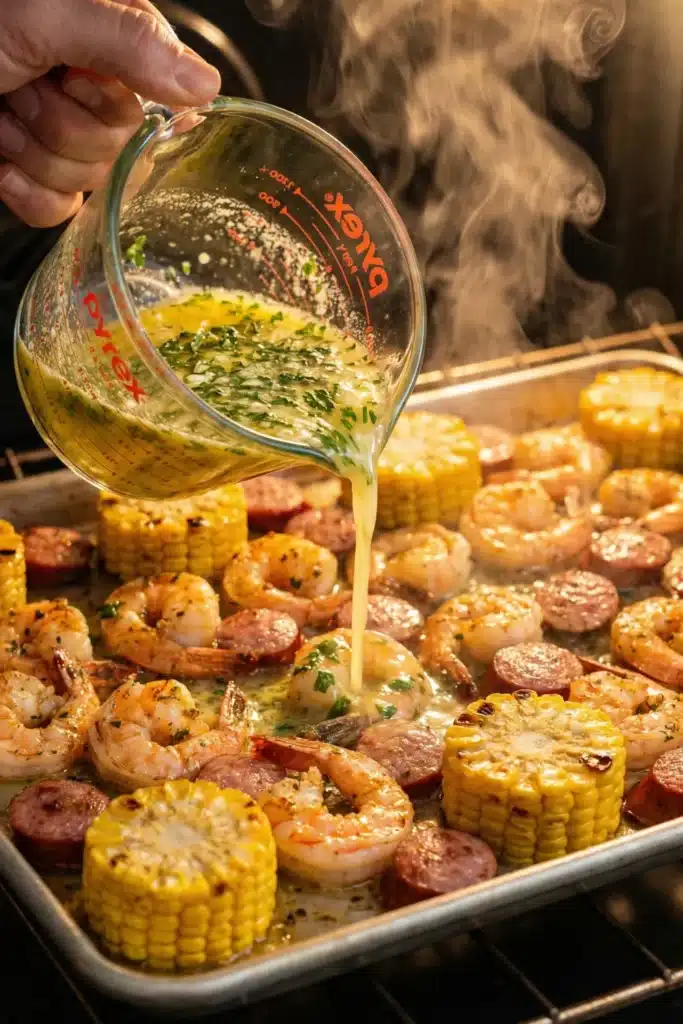
Pour that glorious garlic butter mixture over the top. Use your hands to toss it all together. Spoons just don’t do the job right. You want every single nook and cranny of that corn and shrimp coated in the spices.
The Roasting Strategy
Dump everything onto your lined baking sheet. Spread it out! If you pile the food on top of each other, it steams instead of roasts, and you miss out on those delicious browned edges.
Pop the tray into a preheated oven at 400°F (200°C). High heat is key here.
Don’t Walk Away for Long
Roast for about 12 to 15 minutes. That’s it. Keep an eye on the shrimp; once they turn pink and opaque, they are done. Overcooked shrimp are the worst, so I usually start checking around the 10-minute mark just to be safe. Once it’s out, squeeze fresh lemon over everything immediately to wake up the flavors.
Customizing Your Cajun Butter Sauce
I have a confession to make: the first time I made a cajun butter sauce, I practically melted my family’s faces off. I got a little heavy-handed with the cayenne pepper, thinking I was some kind of spice warrior. We spent the entire dinner chugging milk and wiping sweat off our foreheads. It was memorable, sure, but not exactly the relaxing dinner I had planned.
Since that “incident,” I’ve learned that the sauce is where you can really let your personality shine, but you gotta respect the power of the spice.
Dialing in the Heat
The beauty of making your own sauce is that you are in total control. If you are cooking for kids or people who think black pepper is “spicy,” you can back way off. The Old Bay seasoning already has a little kick to it, so sometimes that is enough.
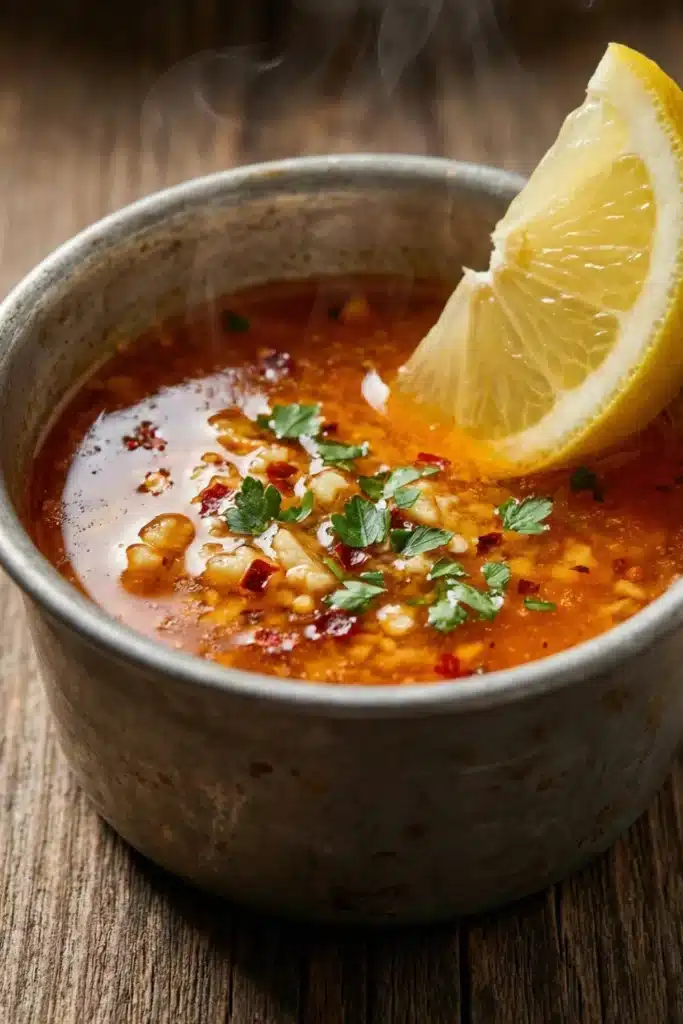
If you want to crank it up, don’t just dump in powder blindly like I did. I prefer adding red pepper flakes to the melting butter. They infuse the heat slowly rather than hitting you all at once. For a real spicy shrimp recipe, a dash of your favorite hot sauce (I love Crystal or Tabasco) adds a nice vinegar tang that cuts through the richness.
Herbs Are Not Just Garnish
Please don’t skip the fresh herbs. I used to think they were just for making the food look pretty for Instagram, but they actually change the flavor profile. Dried parsley is basically green dust—it doesn’t do much.
Fresh chopped parsley stirred in at the very end adds a grassy freshness that wakes up the heavy garlic butter. If you want to get fancy, fresh thyme or chives are amazing too. I’ve even thrown in some cilantro for a taco-night vibe, and it was weirdly delicious.
The Zest Is Best
Here is a trick I learned from a cooking class I took years ago: use the zest, not just the juice. Before you slice that lemon to squeeze over the sheet pan shrimp boil, grate the yellow skin right into your butter mixture.
The oils in the zest have a floral, intense lemon flavor that doesn’t water down your sauce like the juice does. It adds a brightness that makes the seafood taste like it was just caught. Just be careful not to grate the white pith underneath, or it’ll be bitter.
Don’t Burn the Garlic!
One major mistake to avoid: don’t overheat your garlic. If you melt the butter on the stove, add the minced garlic at the very end, just long enough to smell it. If garlic burns, it tastes acrid and ruins the whole batch. I usually just melt the butter in the microwave and stir the raw garlic in; the heat of the oven will cook it perfectly without burning it.
Serving Suggestions and Side Dishes
You might think that once the sheet pan comes out of the oven, your job is done. I used to think that too. I’d just slap the tray on the table and say, “Dinner’s ready!” But then I noticed something tragic happening. My family was leaving all that delicious, spicy garlic butter sauce at the bottom of the pan because they had nothing to soak it up with.
I realized that while this is technically a one pan meal, the supporting actors are just as important as the shrimp. You need the right sides to turn this into a full seafood feast.
The Bread Is Mandatory
I cannot stress this enough: do not forget the carbs. You need something crusty and absorbent to mop up the juices. I made the mistake once of serving soft dinner rolls, and they just disintegrated into a soggy mess.
Now, I always grab a crusty baguette or a loaf of sourdough. Slice it thick, maybe toast it for a minute so it’s warm, and serve it right alongside the pan. If you’re feeling ambitious, garlic bread is a solid choice, but honestly, there is already so much garlic in the boil that plain bread works perfectly fine. It acts like a sponge for all that flavor you worked hard to build.
Dipping Sauces: Store-Bought vs. Homemade
I am usually a “make it from scratch” kind of person, but sometimes life gets in the way. There is no shame in cracking open a bottle of cocktail sauce pairing. However, if you have five extra minutes, making your own is surprisingly easy.
I mix ketchup, horseradish, a dash of Worcestershire, and lemon juice. The jarred stuff just can’t compete with the kick of fresh horseradish. My husband loves a creamy remoulade, which is basically fancy mayonnaise with pickles and cajun spices. It adds a nice coolness that balances out the spicy Andouille sausage. And for the purists? A little extra bowl of melted butter never hurt anyone.
Keep The Sides Light
Here is a lesson I learned the hard way: don’t serve mac and cheese with a shrimp boil. I did this for a dinner party idea once, and everyone was in a food coma by 7 PM. The boil itself is rich with butter and potatoes, so you don’t need heavy sides.
You need something acid and crisp to cut through the fat. A crisp green salad with a sharp vinaigrette is perfect. Or, go classic with a vinegar-based coleslaw. The crunch of the raw cabbage against the soft, roasted potatoes is a texture match made in heaven. Avoid creamy coleslaws; they are too heavy for this meal.
Serving It “Family Style”
Half the fun of a boil is the presentation. I don’t even bother with plates half the time. I cover the table in newspaper or butcher paper and just set the baking sheet right in the middle (on a trivet, obviously—don’t burn your table).
It feels like a rustic, coastal party, even if we are just in the kitchen on a rainy Tuesday. It encourages everyone to dig in, get their hands dirty, and chat. Just make sure you have a “bone bowl” or a spot for the shrimp tails and corn cobs, or your table will turn into a boneyard fast.
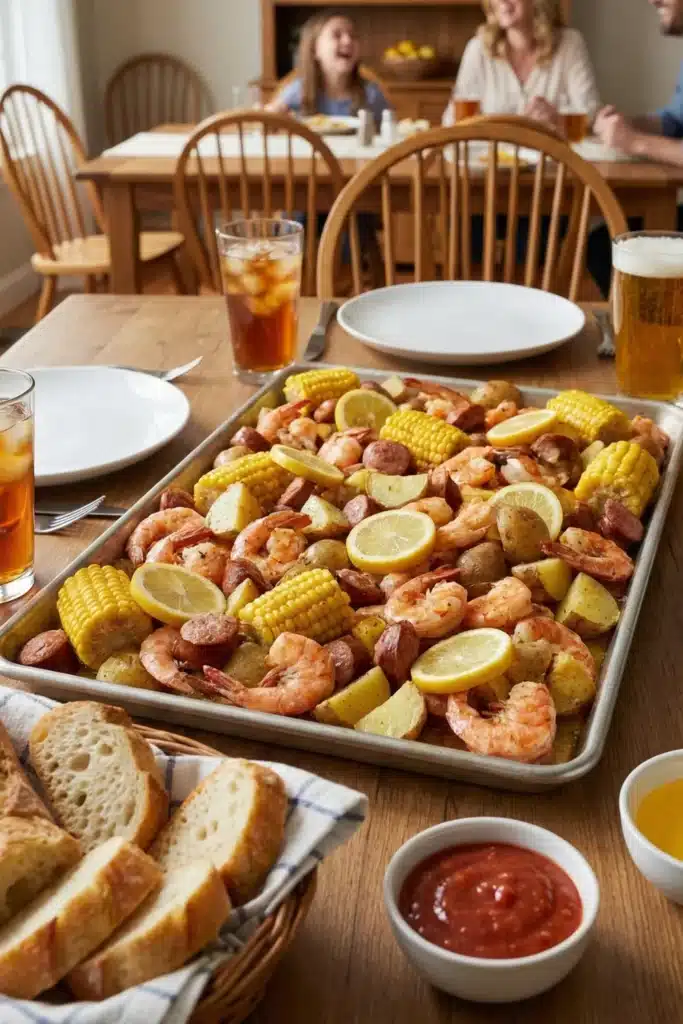
There you have it—a stunning seafood feast that looks like you slaved away for hours but actually took less than 45 minutes from fridge to table. I still remember the first time I served this to guests. They were oohing and aahing over the presentation, asking me how I managed to time everything so perfectly. I just smiled and poured more wine, conveniently forgetting to mention that the oven did 90% of the work while I was scrolling on my phone.
This sheet pan shrimp boil is proof that you don’t need a beach house or a giant pot to enjoy coastal flavors. It’s accessible, it’s fast, and it’s undeniably delicious.
The Best Part? The Clean Up
I have to circle back to this because it brings me so much joy. When dinner is done and everyone is rubbing their full bellies, you aren’t staring down a sink full of pots. You just fold up that foil or parchment paper, toss it, and give the pan a quick rinse. That is it.
For a busy parent or anyone who just values their evening sanity, this easy cleanup meal is a lifesaver. It allows you to actually enjoy the evening with your family instead of arguing about whose turn it is to wash the dishes.
Make It Your Own
Don’t be afraid to play around with this recipe. I’ve swapped the andouille sausage for turkey kielbasa, added asparagus when it was in season, and even tried it with scallops once (expensive, but worth it). Cooking should be fun, not a rigid set of rules. As long as you keep those core elements—butter, garlic, and Old Bay seasoning—you really can’t mess it up.
So, go ahead and give it a try tonight. I promise, once you smell that garlic butter hitting the hot pan, you’ll be hooked.
Share the Love!
If you enjoyed this recipe or if I saved you from ordering takeout for the third time this week, do me a solid. Please pin this recipe to your “Seafood Dinners” board on Pinterest! It helps other busy cooks find these easy weeknight meals, and it helps me keep the lights on over here. Snap a picture of your masterpiece and tag me—I’d love to see how yours turned out!