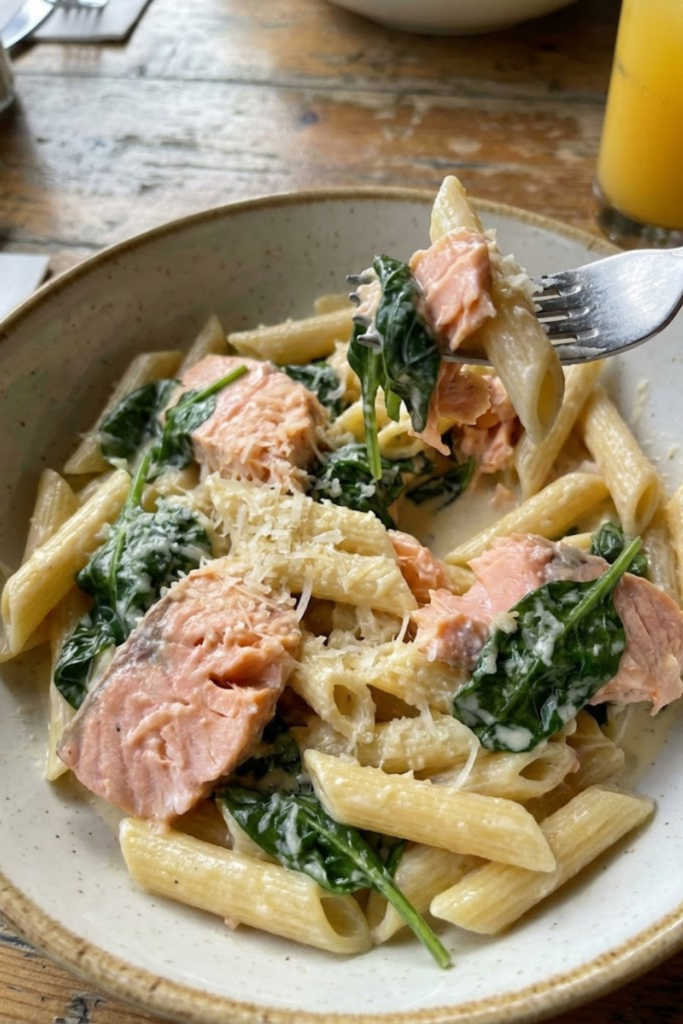
Did you know that nearly 50% of home cooks struggle to decide on dinner before 4 PM? We’ve all been there! Standing in front of the fridge, hungry and tired, wishing a gourmet meal would just appear. Well, this salmon spinach pasta dish is practically magic. It’s not just food; it’s a lifesaver on a busy Tuesday!
I remember the first time I whipped this up—I was skeptical that something so fast could taste this luxurious. But the moment that garlic hit the pan? Pure bliss! In this article, we’re going to transform simple ingredients into a restaurant-quality meal right in your kitchen. Get your forks ready, because this is going to be delicious!
Selecting the Freshest Ingredients for Your Pasta
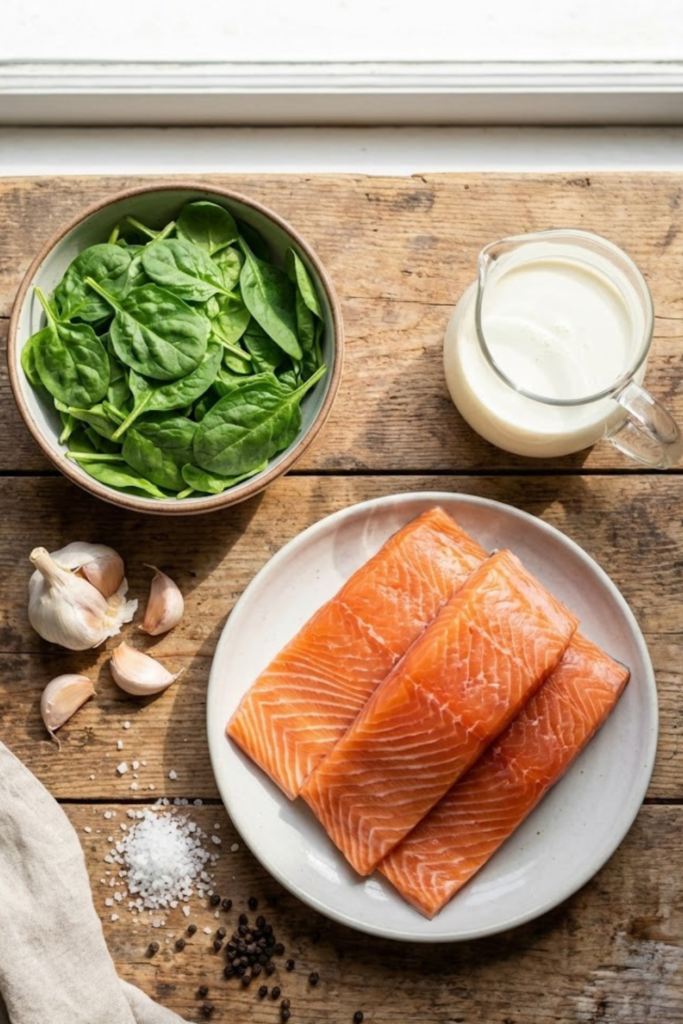
Listen, I used to grab whatever package of fish was on sale at the grocery store and call it a day. I learned the hard way that this is a recipe for disaster—literally. There was this one Tuesday back in 2018 when I tried to impress my in-laws with a seafood dinner, and the fish I bought smelled like the bottom of a pier. It was embarrassing! Since then, I’ve realized that for a really good salmon spinach pasta dish, the ingredients do about 90% of the work for you.
You don’t need to be a professional chef, but you do need to be picky. I’m going to walk you through exactly what I look for so you don’t waste your money on subpar stuff.
Choosing the Right Salmon
If there is one thing you take away from this, let it be this: smell your fish. Fresh salmon shouldn’t smell fishy; it should smell like the ocean. When I’m at the counter, I always ask for wild-caught salmon if my budget allows it. The flavor is just richer and the color is naturally vibrant, not that dyed orange stuff.
Look for fillets that are firm to the touch. If you poke it and the dent stays there, put it back! I usually aim for a center-cut fillet because it cooks more evenly than the tail pieces. Trust me, trying to cook a thin tail and a thick center at the same time is a nightmare I don’t want to revisit.
Fresh vs. Frozen Spinach
I know frozen spinach is cheap and convenient. I have a bag in my freezer right now for smoothies. But for this specific salmon spinach pasta dish, please stick to fresh baby spinach.
I tried using frozen spinach once when I was in a rush. The result? A watery, green sludge that diluted my beautiful creamy sauce. Fresh baby spinach wilts down in seconds and keeps a nice bite. It’s totally worth the extra couple of dollars.
The Dairy Situation
Here is where I see people mess up the most. They try to cut calories by using skim milk or half-and-half. Don’t do it! You need heavy cream to get that luxurious, velvety texture that clings to the pasta.
Also, do yourself a huge favor and buy a block of parmesan cheese and grate it yourself. The pre-shredded stuff in bags is coated with potato starch to keep it from clumping, which means it won’t melt smoothly into your sauce. I learned that after wondering why my alfredo always looked grainy. Grating it fresh takes two minutes and changes everything.
Pasta Shapes Matter
You might think noodles are noodles, but the shape actually matters here. I prefer using penne or fusilli for this recipe. Those little ridges and tubes are perfect for catching the creamy garlic sauce and little flakes of salmon. Long noodles like spaghetti are okay, but they don’t hold the chunky ingredients as well.
So, grab the good stuff. Your tastebuds (and your dinner guests) will thank you.
Mastering the Perfect Pan-Seared Salmon
I used to be absolutely terrified of cooking fish. I mean, it’s not cheap, and the line between “perfectly flaky” and “dry hockey puck” is razor-thin. I remember ruining a beautiful fillet back in my early cooking days because I just kept flipping it over and over again like a nervous wreck. The result was a sad, shredded mess that looked nothing like the salmon spinach pasta dish photos I saw online.
But after a lot of trial and error (and a few burnt pans), I figured out that doing less is actually more. You want that gorgeous golden crust on the outside while keeping the inside tender. It’s easier than you think, I promise.
To Skin or Not to Skin?
This is a big debate in my house. My partner loves crispy skin, but for this specific pasta recipe, I usually remove it. Since we are going to flake the fish into the creamy sauce later, a soggy piece of skin floating around just isn’t appetizing to me.
If you buy fillets with the skin on, you can sear it skin-side down first to get it crispy, then peel it off to eat as a chef’s snack (my favorite perk!). But for the actual pasta, having clean, skinless chunks makes for a much better eating experience.
The Seasoning Game
Don’t overcomplicate this part. The salmon spinach pasta dish gets so much flavor from the garlic sauce that the fish doesn’t need a complex rub. I stick to a generous pinch of coarse salt, cracked black pepper, and a little garlic powder.
I once tried marinating the salmon in lemon juice for an hour before cooking. Big mistake. The acid started “cooking” the fish before it even hit the pan, and the texture got weirdly mushy. Just season it right before you cook it. It’s fresh, simple, and lets the natural flavor shine.
The Searing Technique
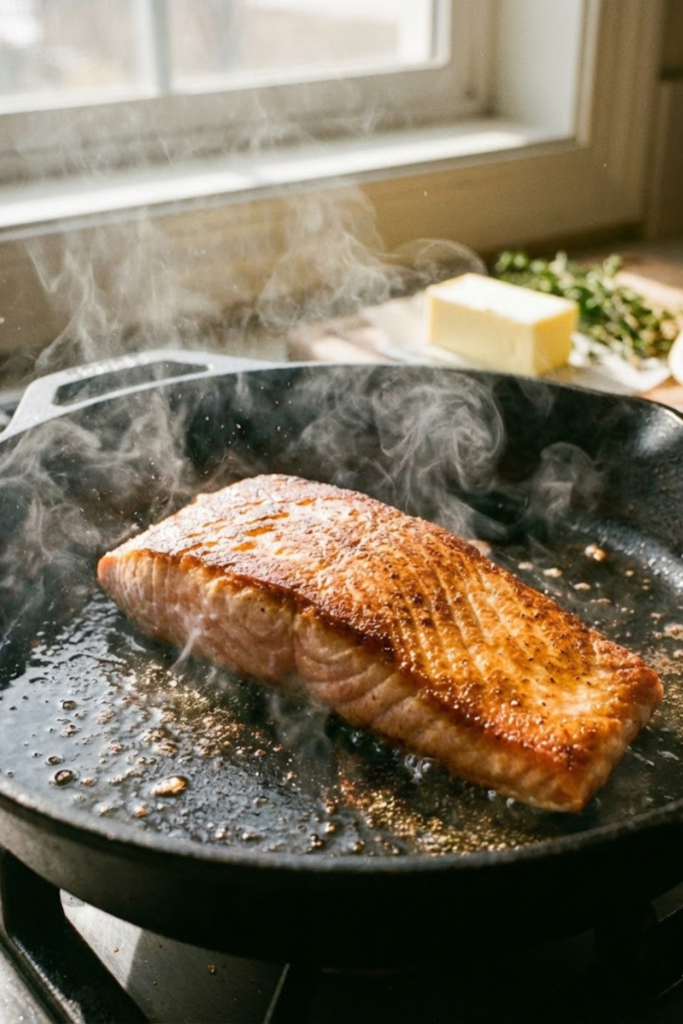
Here is the secret I learned from watching way too many cooking shows: get your pan hot. Like, really hot. I use a cast iron skillet or a heavy stainless steel pan. Add a mix of olive oil and a tiny pat of butter.
Wait until the oil shimmers and you see the first wisp of smoke. Then, lay the salmon down away from you (so you don’t get splashed). Now, here is the hardest part: do not touch it. Seriously. Put your hands behind your back if you have to.
Let it sear for about 3-4 minutes. If you try to lift it and it sticks, it’s not ready. When it releases naturally from the pan, that’s when you know you have that perfect golden crust. Flip it once, cook for another 2-3 minutes depending on thickness, and you are done.
Let It Rest
This step is skipped by so many people! Once the salmon is out of the pan, let it sit on a plate for about 5 minutes. If you flake it apart immediately, all those delicious juices run out onto the cutting board instead of staying in the fish.
While it rests, that residual heat finishes cooking the center gently. This ensures your cooking salmon pan sear technique results in moist, flavorful chunks that will absorb that creamy sauce perfectly. Trust me, patience pays off here.
Crafting the Creamy Garlic Parmesan Sauce
I have a confession to make: for years, I thought white pasta sauce only came from a glass jar. I know, gross right? The first time I tried to make a cream sauce from scratch, I ended up with a separated, oily mess that looked like something from a science experiment gone wrong. I almost cried over my stove. But once I figured out the chemistry—and it really is just simple chemistry—I realized that a homemade sauce is the heartbeat of this salmon spinach pasta dish.
And honestly, it takes less time to make this than it does to run to the store and buy a jar of the pre-made stuff.
The Flavor Foundation
Do not—and I repeat, do not—wash that pan after you take the salmon out. See those little brown bits stuck to the bottom? That is what chefs call “fond,” but I just call it liquid gold. That’s where all the deep flavor lives.
Toss a knob of butter into that same pan. Once it melts, add your minced garlic and shallots. I used to burn my garlic constantly because I had the heat too high from searing the fish. Lower the heat to medium! You just want the aromatics to get soft and fragrant, not dark brown. If the garlic burns, it gets bitter, and there’s no saving it.
Deglazing Like a Pro
This sounds fancy, but it just means “cleaning the pan with liquid.” When the garlic smells amazing, pour in a splash of dry white wine. If you don’t cook with alcohol, vegetable broth works too, but the wine adds a nice acidic kick that cuts through the heavy cream.
Scrape the bottom of the pan with a wooden spoon to lift up those salmon bits. I remember watching a cooking show where they did this and thinking it was just for show. Nope. It actually changes the color and depth of the sauce entirely.
The Creamy Factor
Now, pour in the heavy cream. I’ve had friends ask me about heavy cream substitutes like almond milk or low-fat milk. Listen, I’m all for healthy swaps, but not here. Low-fat milk will curdle when it hits the heat and the acid from the wine. Just embrace the calories for one meal; it’s worth it.
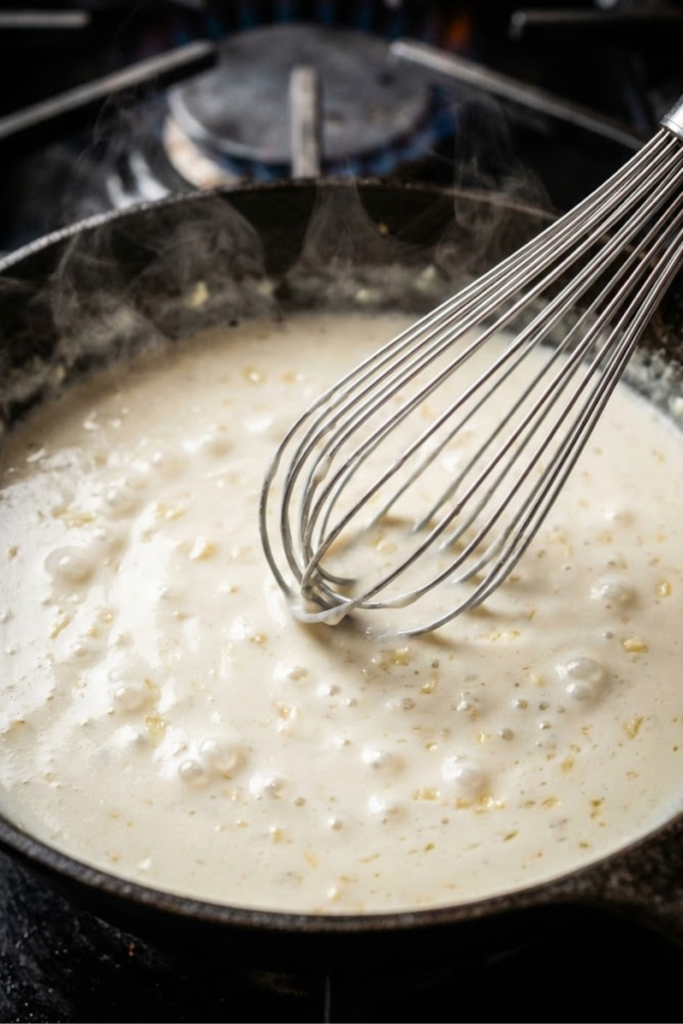
Let the cream simmer gently. You aren’t trying to boil it to death. Just let it bubble softly until it coats the back of a spoon. This usually takes about 3 to 5 minutes. If you rush this, your sauce will be runny, and nobody wants watery pasta.
The Cheese Melt
Here is the trick that changed my life. Before you add the parmesan cheese, turn the heat off.
I used to add the cheese while the sauce was boiling like a madman. The result? The cheese proteins would seize up, and the oil would separate, leaving me with a gritty, greasy sauce. By taking the pan off the heat, you let the residual warmth melt the cheese gently. Stir it in slowly. It should turn into a smooth, glossy, white dream. This parmesan cream sauce is the glue that holds the whole meal together, so treat it with a little love.
Bringing It All Together: Assembly and Serving
Okay, this is the moment of truth. You have your seared salmon resting, your sauce is looking creamy, and your pasta is draining. This is usually where I enter panic mode. I used to run around the kitchen like a headless chicken trying to get everything plated at once. But honestly? The assembly is the fun part if you just breathe.
This salmon spinach pasta dish comes together in a flash at the end, so have everything within arm’s reach.
The Magic of Pasta Water
If you have already drained your pasta and poured all that cloudy water down the sink, I am so sorry. You just poured flavor down the drain! I made this mistake for years until a chef friend yelled at me (nicely, mostly).
Before you drain the noodles, scoop out about half a cup of that starchy water. I keep a dedicated coffee mug by the stove just for this. When you toss the pasta into the sauce, add a splash of this reserved pasta water. The starch helps the sauce stick to the noodles instead of sliding off to the bottom of the bowl. It turns a good sauce into a glossy, professional-looking coating.
Folding in the Greens
Timing is everything with the spinach. If you throw it in too early, it turns into dark green slime. Nobody wants slimy spinach. I like to toss the fresh baby spinach right on top of the hot pasta and sauce.
The residual heat from the noodles and the cream is enough to wilt it perfectly in about 30 seconds. You want it to be soft but still bright green. It adds such a nice pop of color and freshness that cuts through the heavy cream.
The Gentle Toss
Now, add your flaked salmon back into the pan. Please be gentle here! I’ve been guilty of stirring too aggressively and turning my beautiful salmon chunks into a fish paste. Use a silicone spatula or tongs to carefully fold everything together.
You want those big, juicy pieces of fish to stay intact. It should look rustic and hearty, not mashed.
The Final Polish
We are almost there. Taste it. Does it need more salt? Probably. But what it really needs is acid. The richness of the cream and the salmon can be a bit heavy on the palate.
I always finish this dish with a squeeze of fresh lemon juice or a sprinkle of lemon zest garnish. It wakes the whole dish up. And if you like a little kick—which I definitely do—add a pinch of red pepper flakes heat right before serving. It adds a subtle warmth that lingers after every bite.
Grab a fork. You just made restaurant-quality food in your sweatpants.
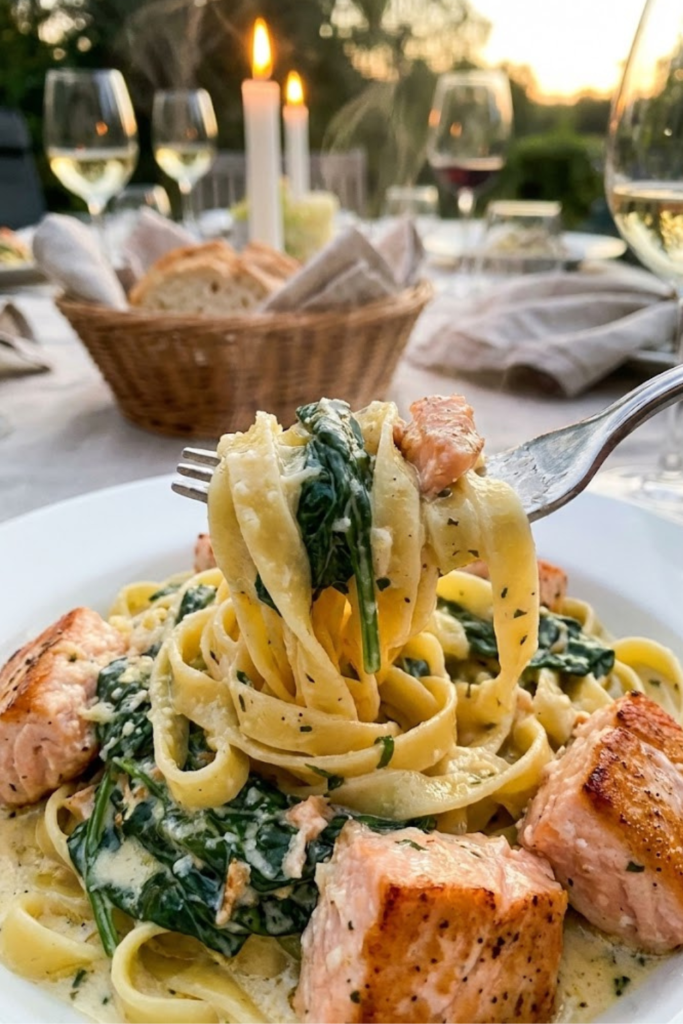
There you have it—a salmon spinach pasta dish that checks every single box: creamy, savory, healthy, and incredibly fast. It’s a recipe that proves you don’t need hours to create something spectacular!
I remember thinking that “gourmet” meant “complicated,” but this meal shattered that myth for me. It’s messy, it’s fun, and it brings people to the table. Whether you are cooking for a date night or just trying to feed hungry kids before soccer practice, this dish saves the day. I hope it becomes a regular in your weekly rotation just like it has in mine.
Don’t forget to save this recipe for later! Pin this mouthwatering dish on Pinterest so you can easily find it next time the dinner panic sets in. Happy cooking!