Did you know that nearly 40% of home cooks are intimidated by cooking fish because they’re afraid of drying it out? I used to be exactly the same! But let me tell you, this panko crusted salmon recipe is the absolute game-changer you’ve been waiting for. It locks in all that moisture while giving you a texture that is out of this world! We are talking about a buttery, flaky filet topped with a zest-infused, golden crust that snaps when you bite into it. It is fast, it is furious with flavor, and it is going to be your new go-to meal! Let’s dive into the delicious world of panko salmon.

Why You Will Fall in Love With This Panko Salmon Recipe
I remember the first time I tried to impress a date with a fancy seafood dinner. I bought expensive fillets, threw them in the oven, and somehow served panko crusted salmon that had the texture of a shoe. It was a disaster! But honestly, that embarrassing failure is exactly what pushed me to figure out how to cook fish actually worth eating.
After burning a few more dinners, I finally realized that simple is usually better. This recipe isn’t just “good for a Tuesday”; it is the kind of meal that makes you look like a pro chef, even if you’re usually just heating up nuggets.
The “I Forgot to Defrost Chicken” Savior
We have all had those days where work was a nightmare and the last thing you want to do is stand over a stove for an hour. This dish is my absolute go-to when I have zero energy left. From the moment you pull the fish out of the fridge to the moment you are taking a bite, it takes about 20 minutes.
You aren’t spending hours chopping a mountain of vegetables or watching a pot boil. It is just assemble, bake, and eat. For anyone looking for easy weeknight meals, this speed is a total lifesaver.
That Crunch Though
Let’s be real about texture because that is where the magic happens here. Regular oven baked fish can sometimes be a bit mushy or just plain boring. I used to use regular breadcrumbs, but they just got soggy and sad.
When you swap that out for Japanese panko? Game over. The panko stays incredibly crispy while the salmon underneath stays buttery and soft. It is that perfect “snap” we are all chasing. The contrast is just awesome, and the crust actually helps keep the moisture inside the fish where it belongs.
Sneaky Health Benefits
I’m not a nutritionist, but I know that most healthy dinner ideas usually taste like cardboard. Not this one. You get all those good Omega-3s from the salmon without feeling like you are on a restrictive diet.
Plus, since the fish is baked instead of fried, it isn’t dripping in grease. It is light enough that you won’t need a nap afterwards, but filling enough to stop those late-night snack cravings.
If you have been intimidated by cooking fish, this recipe is going to fix that for you. It is forgiving. Even if you leave it in a minute too long, that golden crust protects the meat. Trust me, once you try this crispy salmon, you aren’t gonna want it any other way.
Gathering the Essential Ingredients for Success
I used to think that a breadcrumb was a breadcrumb. I mean, it’s just stale toast smashed up, right? Wrong. I learned this the hard way when I tried to make this dish with that powdery stuff from the cardboard cylinder. The result was a pasty, soggy mess that slid right off the fish. It was heartbreaking!
To get that restaurant-quality crunch, you have to be picky with your grocery list. It’s not about buying the most expensive items, but buying the right ones. Let’s break down what actually matters so you don’t waste your money.
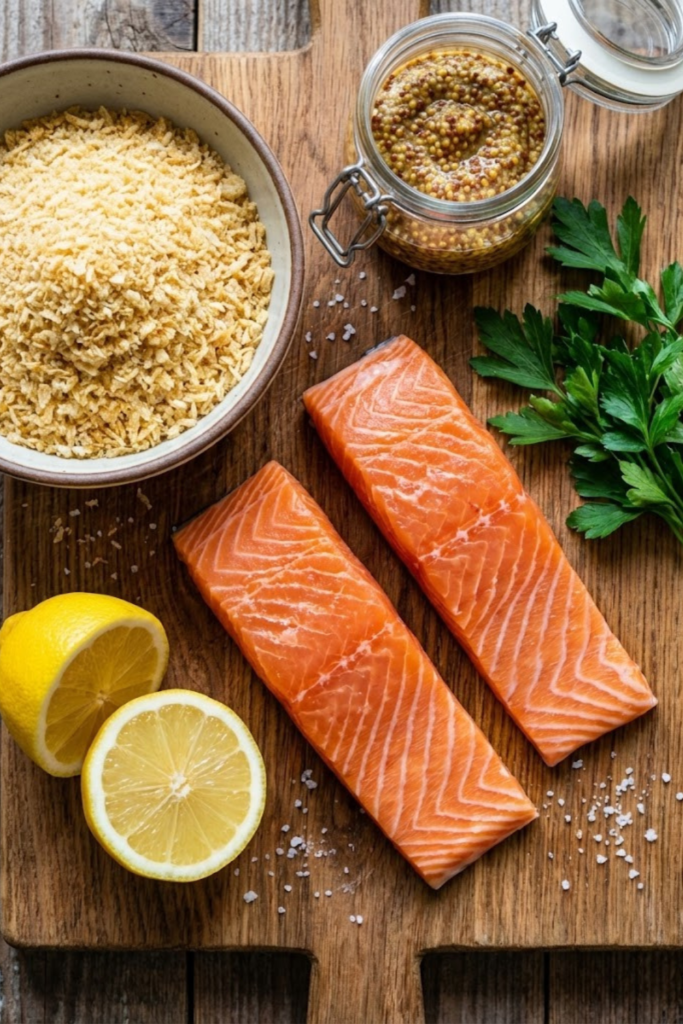
The Salmon Selection
First off, don’t feel guilty if you are buying frozen fish. Modern flash-freezing technology is actually pretty amazing. In fact, unless you live on the coast, “fresh” fish has often been previously frozen anyway.
However, I usually look for fresh Atlantic salmon fillets that are uniform in thickness. If one end is super thin and the other is thick, they cook unevenly, leaving you with one burnt end and one raw end. Ask the fishmonger for a center cut if you can. Also, I prefer skin-off for this recipe because the breading is the star, but if you leave the skin on, just don’t eat it if it gets soggy on the bottom.
The Panko Difference
This is the non-negotiable part. You must use Japanese breadcrumbs, known as Panko. Unlike regular crumbs, Panko is flakier and lighter. It absorbs less oil and stays crispier.
When I swapped to Panko, the difference was night and day. The large flakes create this jagged surface area that gets insanely crunchy in the oven. It is the secret weapon for any crispy salmon dish. If you can’t find it in the baking aisle, check the Asian foods section—it is almost always there.
The Flavor Glue
You need something to make those crumbs stick, or they will fall off as soon as you look at them. I went through a phase where I just used butter, but the crust slid right off. Now, I swear by a mix of melted butter and Dijon mustard.
Some people get grossed out by the idea of mayonnaise on fish, but honestly? It works even better than butter as a binder and keeps the fish moist. But for this specific version, a nice Dijon mustard glaze adds a tangy kick that cuts through the richness of the fish.
Seasoning is Everything
Don’t be shy with the spices. Plain breadcrumbs taste like nothing. I always mix garlic powder, dried parsley, and salt directly into the Panko.
But the real game-changer? Lemon zest. Grating fresh lemon peel into the breading mixture creates a lemon zest marinade effect without the liquid making things soggy. It brightens the whole dish up. Trust me, dull seasoning is the enemy here.
Mastering the Method: How to Bake Panko Crusted Salmon
I have a confession to make. When I first started cooking, I treated recipe temperatures like suggestions. I’d throw fish into a cold oven or crank it up to 500 degrees hoping it would cook faster. Spoiler alert: it didn’t end well. I’ve scraped enough burnt skin off pans to know that technique actually matters when cooking salmon in oven.
But don’t panic. Baking fish is actually way easier than pan-frying because you don’t have to flip it. No flipping means no falling apart! Here is how to nail it every single time without losing your mind.
The Setup is Key
Before you even touch the fish, get that oven hot. You want it at 400°F (200°C). A hot oven is crucial because we want to roast the fish, not steam it to death.
While it’s heating up, grab a rimmed baking sheet. Please, for the love of clean dishes, line it with parchment paper or foil. I once skipped this step and spent two days soaking a pan that had fish skin fused to it. It was a total nightmare. Baking sheet recipes are supposed to be easy cleanup, so don’t make it hard on yourself.
Prepping the Filet
Take your salmon out and pat it dry with a paper towel. This is a step people always skip, but if the fish is wet, the butter won’t stick. It just slides off like a slip-n-slide.
Season the fish with salt and pepper first. Then, spread your Dijon mustard mixture over the top. Think of it like frosting a cake, but a very fishy cake. Be generous with it. This layer is the glue that holds everything together.
Packing on the Crunch
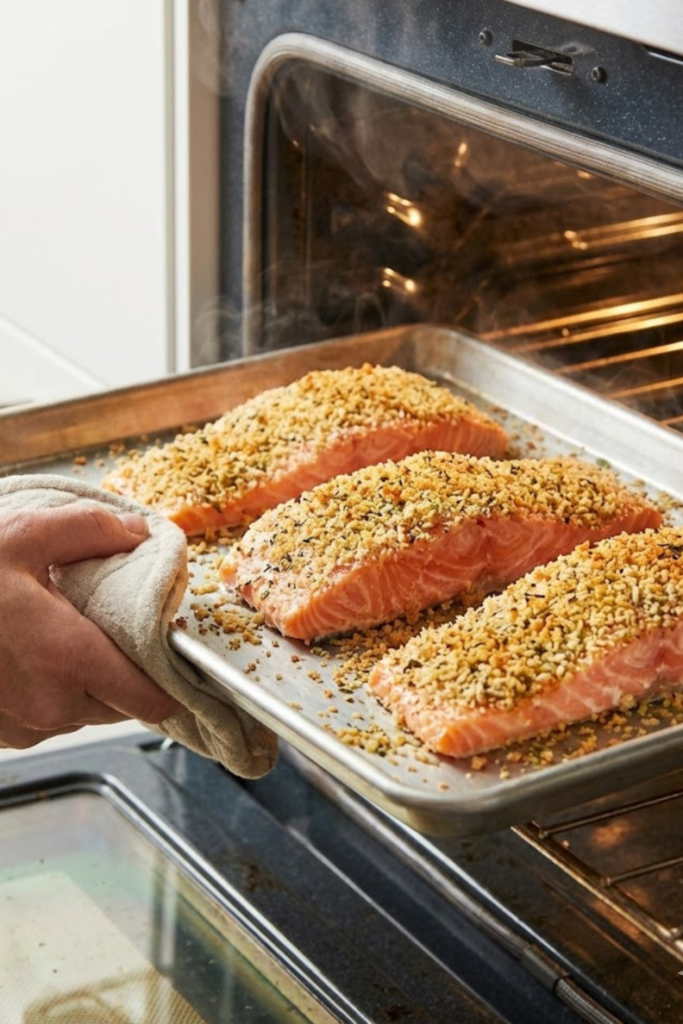
Now, take your panko mixture and press it onto the tops of the fillets. Don’t just sprinkle it lightly. I like to use my hand to gently pat it down. You want a thick, even layer.
If some falls off onto the pan, that’s fine. Those little loose crumbs turn into crunchy delicious bits that I usually steal before serving dinner.
The Bake Time
Pop the tray into the center rack. For a standard fillet, you are looking at about 12 to 15 minutes. That is it.
Here is where I messed up for years: I kept opening the oven to check. Every time you open the door, you lose heat! Just let it ride. You are looking for an internal temperature of 145°F if you want to be safe, but I usually pull it at 135°F because it keeps cooking on the hot pan.
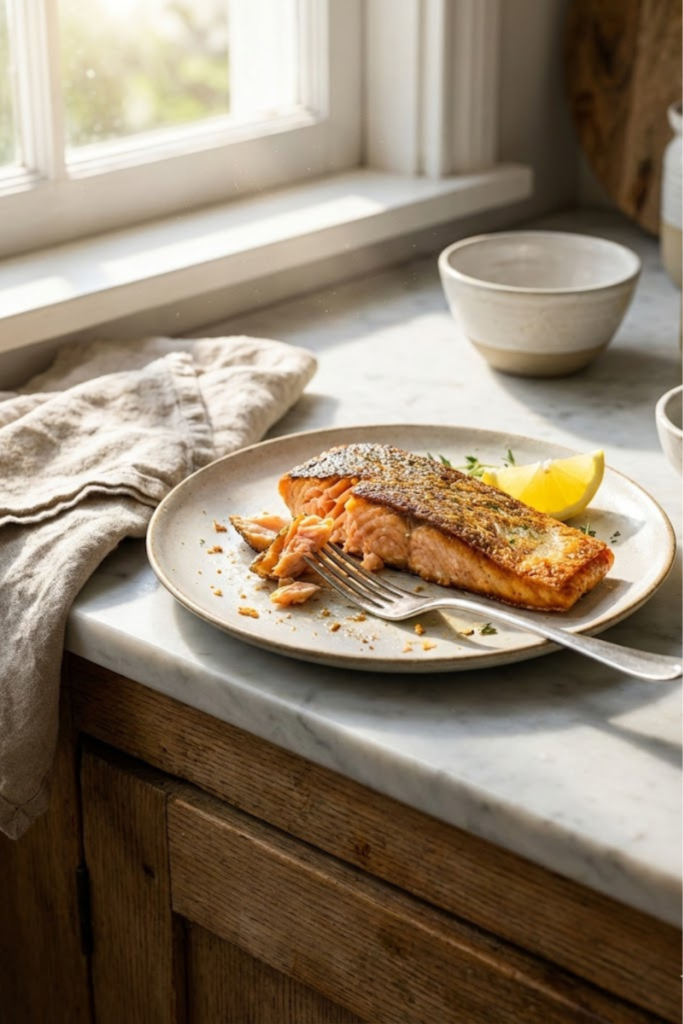
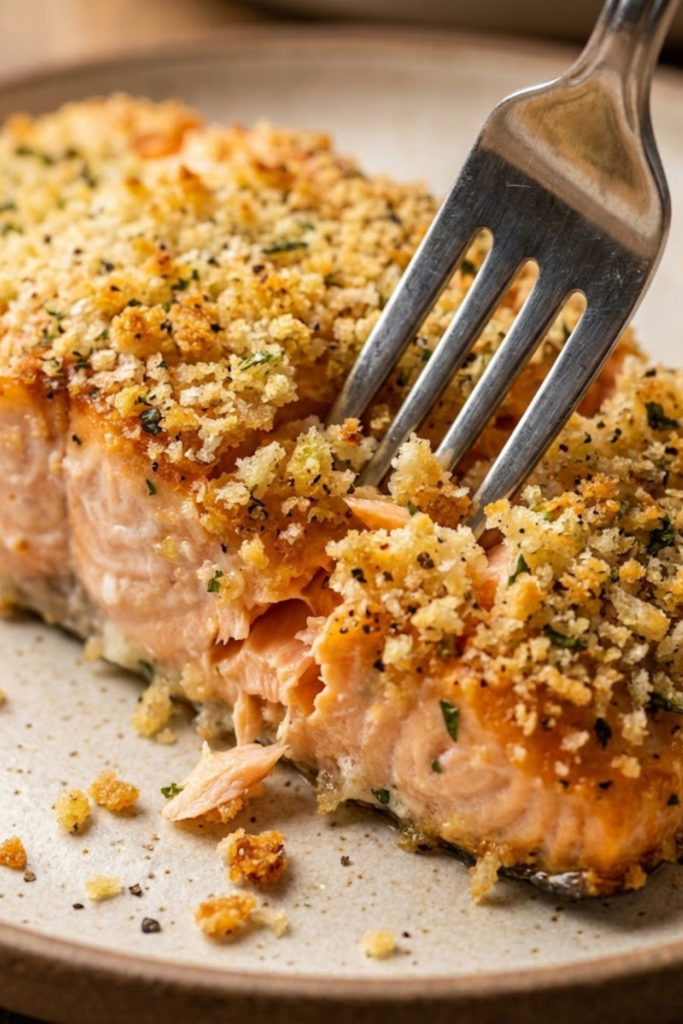
How to bake fish isn’t rocket science, but overcooking it is a crime. If the white stuff (albumin) starts oozing out everywhere, you’ve probably gone too far. When the crust is golden brown and the fish flakes easily with a fork, get it out of there immediately.
Insider Tips for the Ultimate Crispy Crust
I used to pull my salmon out of the oven and feel totally cheated. The fish was cooked perfectly, but the topping looked like wet sand. It was pale, sad, and definitely not the golden masterpiece I saw on Pinterest . It was frustrating because I followed the steps, but I was missing the little details that actually make the difference.
After ruining enough dinners, I realized that getting that perfect golden crust fish isn’t about luck. It’s about manipulating the heat and moisture. Here are the tricks I learned the hard way so you don’t have to.
The Pre-Toast Maneuver
Here is the problem: Salmon cooks really fast. Breadcrumbs cook really slow. By the time your fish is flaky and perfect, your panko is usually still white . If you leave it in longer to brown the crumbs, you dry out the fish. It’s a lose-lose situation.
The fix? Toast your panko before you put it on the fish. I grab a small skillet, toss in a little knob of butter, and stir the crumbs over medium heat for about 3 minutes until they look like golden sand. It sounds like extra work, but it guarantees that crunchy fish topping every single time .
Don’t Fear the Butter
I went through a phase where I tried to be super healthy and skipped mixing fat into the crumbs. I just sprayed them with cooking oil. Big mistake. The crumbs tasted like dry toast and burned in spots while staying raw in others.
Fat is a conductor for heat. You need to mix melted butter or olive oil thoroughly into the panko mixture until it feels like damp sand. This helps the crumbs brown evenly in the oven. If you want that rich, restaurant-style flavor, butter is the way to go . It adds a richness that olive oil just can’t match.
The Glue Factor
A common tragedy is taking a bite and having the entire crust fall off onto your lap. To prevent this, you have to press down. Don’t be gentle.
Once your binder (the mustard/mayo mix) is on the fish, pile on the crumbs and use your palm to press them firmly into the fillet. You want to create a solid layer that adheres to the fish. If you just sprinkle it on loosely, it’s going to make a mess when you try to plate it.
The Broiler Hail Mary
Okay, let’s say you forgot to pre-toast the crumbs and your timer just went off. The fish is done (145°F), but the top is still pale. Do not keep baking it!
Switch your oven to “Broil” on high. Put the pan on the top rack. But here is the warning: Do not walk away. I once walked away to grab a drink and came back to charcoal. It takes about 45 to 60 seconds to go from pale to perfect golden brown under a broiler. Watch it like a hawk. It’s a risky move, but it has saved my dinner more than once .
Serving Suggestions to Complete Your Meal
I used to be that person who put all the effort into the main dish and then completely forgot about the sides until the oven timer went off . There is nothing sadder than a beautiful piece of fish sitting next to a pile of cold, raw carrots because I mismanaged my time.
Over the years, I’ve learned that the best sides are the ones you don’t really have to think about. Since the salmon takes about 15 minutes, you need sides that match that speed so everything hits the table hot .
The One-Pan Wonder
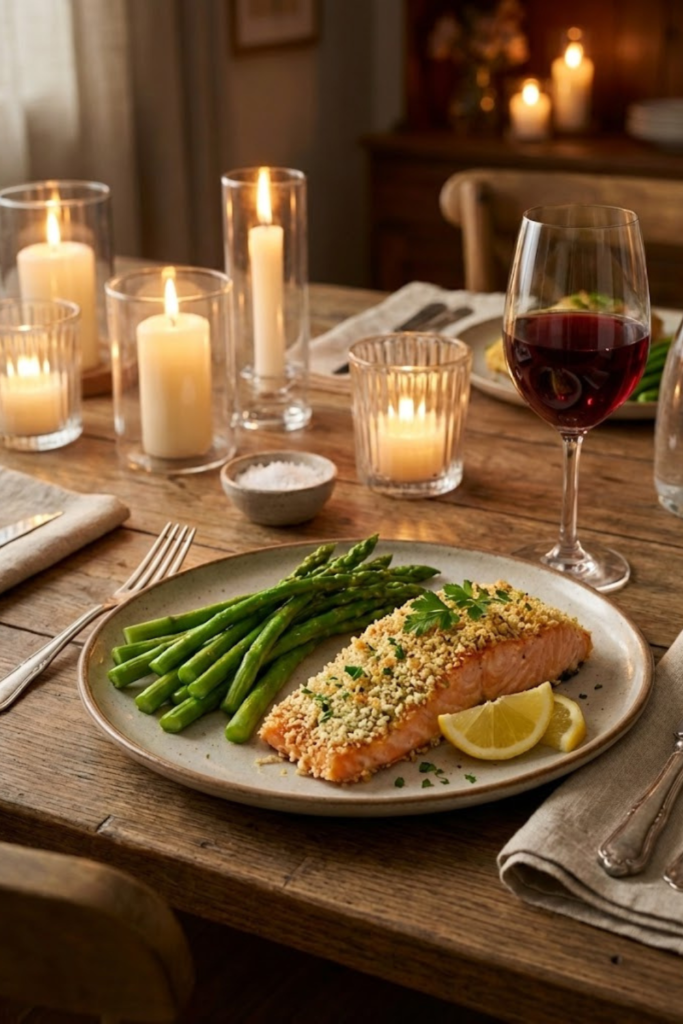
If you want to save yourself a headache, just roast your veggies on the same tray. I love doing roasted asparagus or green beans . Just toss them in a little olive oil, salt, and pepper, and arrange them around the fish.
They take about the same amount of time to cook as the salmon. It turns the whole thing into a seamless sheet pan salmon dinner . I’ve tried doing carrots this way, but I made the mistake of cutting them too thick, and they ended up rock hard when the fish was done. So stick to the softer green veggies unless you par-boil the hard ones first .
Starch Situations
For the carb lovers out there, rice is classic. But honestly? I often forget to start the rice cooker in time. That is why I keep a box of couscous in the pantry. You literally just boil water, dump the grain in, cover it, and walk away.
By the time you get the plates out, it’s fluffy and ready. Stir in some lemon juice and parsley, and you have a fancy-sounding lemon herb couscous that took zero effort. It soaks up any extra butter from the fish perfectly.
Don’t Forget the Sauce
Even though this fish is juicy, I am a sauce person. I can’t help it. A dollop of something creamy just takes it to the next level. I used to buy the bottled stuff, but making a quick tartar sauce recipe is stupid easy .
Just mix mayonnaise, chopped pickles (or relish), a squeeze of lemon, and a dash of dill. It’s tangy and cuts right through the panko crust. If you want to get spicy, mix some sriracha into mayo for a kick.
A Little Sip
If you had a long day and are treating yourself, a glass of white wine is a must. I usually grab a cheap Pinot Grigio or Sauvignon Blanc. You want something crisp and acidic to balance out the butter in the crust.
Planning the full plate doesn’t have to be stressful. Just keep it simple and let the panko crusted salmon be the star of the show.
So there you have it. You are now armed with the secret to the best panko crusted salmon of your life . It really is that simple to turn a boring fillet into a gourmet home cooking experience without the fancy price tag or the mountain of dirty dishes.
Don’t beat yourself up if your first attempt isn’t photo-ready. My first batch looked a bit messy, but it still tasted amazing . The most important thing is that you are getting a heart healthy meal on the table that actually tastes like a cheat meal.
If this recipe saved your dinner like it saved mine, do me a solid. Pin this recipe to your “Weeknight Dinners” or “Favorites” board on Pinterest . It helps you find it later when your brain is fried after work, and it helps me keep sharing these seafood recipes easy fixes with you.
Now, go enjoy that crunch!