Do you remember that familiar jingle? The one that sent you sprinting down the driveway, clutching a handful of coins? I sure do! For me, the prize was always the same: an Orange Creamsicle. That magical combination of bright, icy citrus and smooth vanilla center defined my childhood summers. But why stop at popsicles? I’ve spent months in the kitchen trying to capture that exact nostalgia in a baked good, and I finally cracked the code. This isn’t just a cake; it’s a time machine on a plate! Get your mixer ready, because we are about to bake the sunniest dessert of the year.
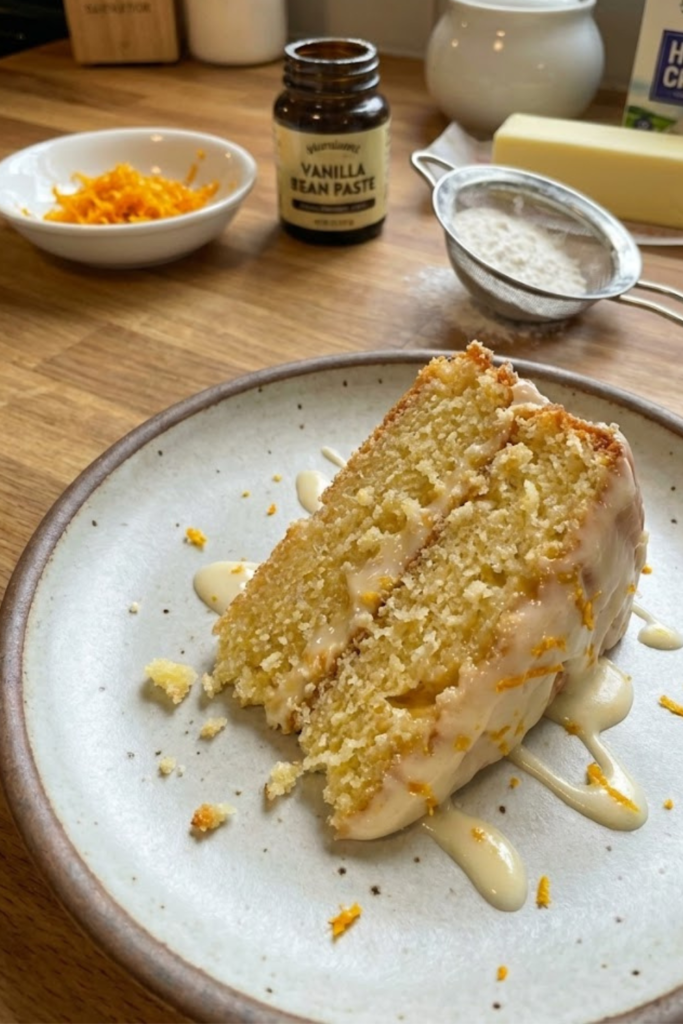
Essential Ingredients for Zesty Orange Flavor
I have to be honest with you; my first attempt at an Orange Creamsicle Cake was a total disaster. I thought I could just dump some orange juice from the carton into my batter and call it a day. Big mistake. The cake turned out dense, gummy, and barely tasted like citrus at all. It was heartbreaking! But, after a lot of trial and error (and a lot of wasted butter), I learned that getting that punchy flavor requires the right lineup of ingredients.
You really can’t cut corners here if you want that nostalgic summer taste. Baking is a science, but it’s also about feeling the ingredients. Let’s look at what you actually need to make this recipe sing.
The Real Deal: Fresh Zest vs. Extract
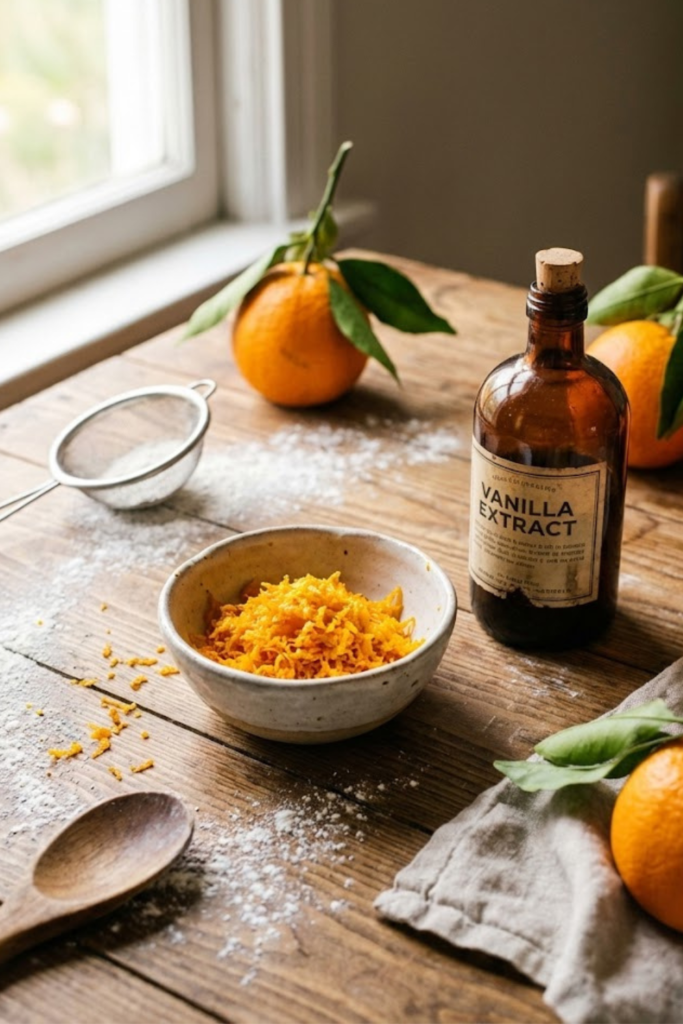
If there is one hill I am willing to die on, it is this: use fresh orange zest. Bottled stuff just doesn’t compare. When you zest a fresh orange, you are releasing those potent essential oils that live right in the skin.
Here is a little trick I learned the hard way. Don’t just throw the zest into the batter. Rub it into your sugar with your fingers first! It should look like wet sand and smell incredible. This infuses the sugar with the oils, so the flavor distributes evenly throughout your Orange Creamsicle Cake. I usually grab about three large navel oranges for this. If you want an extra kick, a tiny splash of high-quality orange extract can help, but it can’t do the heavy lifting alone.
Why Cake Flour is Non-Negotiable
I used to think all flour was the same. Spoilers: it’s not. For this recipe, you really need cake flour. All-purpose flour has a higher protein content, which leads to more gluten formation.
Gluten is great for bread, but for a cake? It makes things tough. Cake flour is milled finer and has less protein, which gives you that tender, melt-in-your-mouth crumb we are after. If you are in a pinch and don’t have any, you can make a substitute by removing two tablespoons of all-purpose flour from a cup and replacing it with cornstarch. It’s messy, but it works!
The Secret Weapon: Orange Juice Concentrate
Okay, here is the secret ingredient that changed my life. Frozen orange juice concentrate. Yup, the stuff in the tube from the freezer aisle.
Regular juice adds too much liquid without enough flavor, throwing off your liquid-to-dry ratios. But concentrate? It is pure, intense flavor without all the extra water. I let it thaw just enough to be spoonable. Adding this to your batter gives it that vibrant, “pow” of citrus that mimics the classic popsicle we all love. It adds a bit of acidity too, which helps tenderize the crumb.
Dairy Matters
Finally, make sure your butter and milk are at room temperature. I know, it’s annoying to wait. I have definitely tried to microwave cold butter and melted it into a puddle—don’t do that!
When your ingredients are the same temp, they emulsify better, trapping air for a lighter Orange Creamsicle Cake. I stick to whole milk for the fat content, but I have heard buttermilk works if you want a tangier bite. Just don’t use skim milk; we want this cake rich and creamy!
Step-by-Step Instructions for Moist Cake Layers
I used to think that following a recipe just meant throwing ingredients into a bowl and turning the mixer to “high.” Spoiler alert: that is exactly how you end up with a cake that tastes like a sweetened brick. Through many failed Sunday afternoons, I’ve learned that the method is actually just as critical as the ingredients.
If you want your Orange Creamsicle Cake to have that light, cloud-like texture, you have to treat the batter with a little bit of respect. Trust me, I’ve rushed it before, and the result was a rubbery mess that my dog wouldn’t even eat. Let’s walk through how to get this right so you don’t waste your time.
Mastering the Creaming Method
This is where most home bakers mess up, myself included. When the recipe says to cream the butter and sugar, it doesn’t mean mix it for thirty seconds until it’s combined. You need to beat that mixture for a solid four to five minutes.
I actually set a timer on my phone now because five minutes feels like an eternity when you’re staring at a mixer. You want the mixture to turn pale white and look fluffy. This process forces air into the butter, which expands in the oven. If you skip this, your cake will be dense and heavy.
The Alternating Technique
Once your wet and dry ingredients are prepped, don’t just dump them all in at once. You need to alternate adding them to the batter. I usually do this in three parts: flour mixture, then milk mixture, then flour mixture again.
If you add all the liquid at once, the batter can separate. If you add all the flour at once, you have to over-mix to get it incorporated, which develops gluten. Tough gluten is the enemy of a tender cake! I mix on the lowest speed and stop the second the last streak of flour disappears.
Temperature Control is Key
Here is a tip that totally changed my baking game. Most recipes tell you to bake at 350°F, but I actually bake my cakes at 325°F. It takes a little longer, but it’s worth it.
Baking at a lower temperature allows the cake to rise more evenly. This prevents that annoying dome shape on top that you just have to cut off later anyway. Plus, it keeps the edges from drying out before the center is cooked. Nobody wants a crunchy cake edge.
The Waiting Game
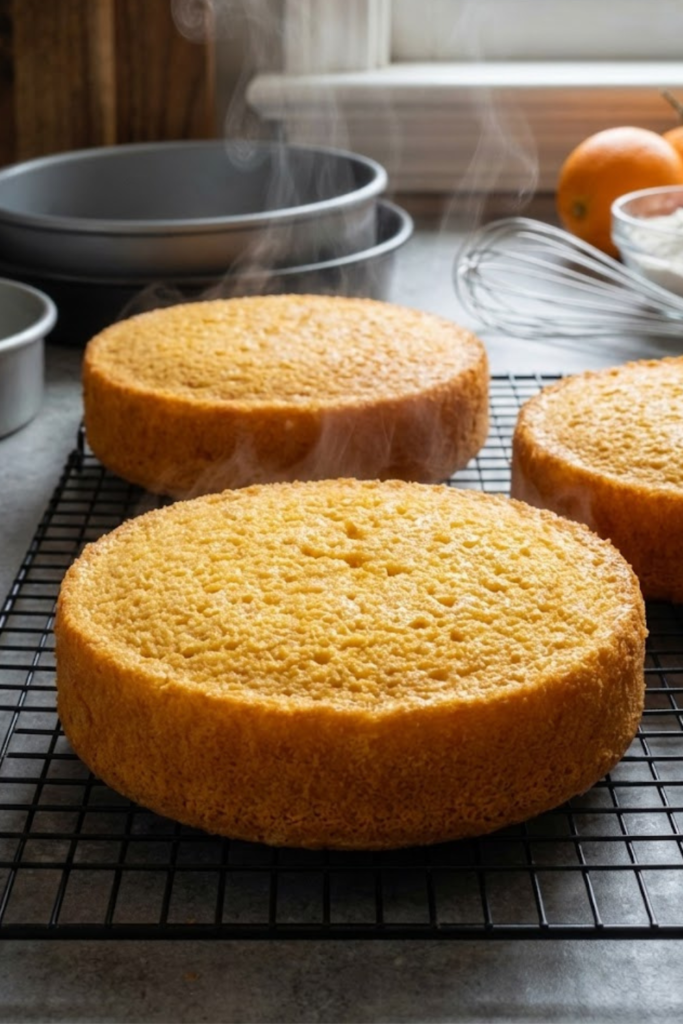
This is the hardest part for me because I have zero patience. You must let the cake layers cool in the pans for about 10 to 15 minutes before flipping them onto a wire rack. If you try to move them while they are piping hot, they will fall apart in your hands.
I’ve cried over broken cake layers before; don’t be like me. Once they are on the rack, let them cool completely. If there is even a hint of warmth when you add the frosting, your beautiful decoration is going to slide right off the side.
Whipping Up the Fluffiest Vanilla Bean Frosting
Honesty time: I am the person who eats the frosting off the cupcake and throws the cake away. Well, usually. But with this Orange Creamsicle Cake, the frosting isn’t just a topping; it is half the experience. I used to think frosting was just butter and sugar whizzed together for thirty seconds. Boy, was I wrong. My first few batches were gritty, yellow, and tasted like straight-up grease. It was gross.
After years of tweaking and testing, I finally realized that making bakery-style frosting is less about the ingredients and more about patience. You want that billowy, cloud-like texture that melts on your tongue, right? Let me show you how to get there without losing your mind.
Butter Texture Is Everything
I cannot stress this enough: your butter needs to be soft, but not too soft. If it looks greasy or shiny, put it back in the fridge! I once got impatient and microwaved my butter for ten seconds too long. It was half-melted, and I thought, “Eh, it’ll be fine.”
It was not fine. The frosting was a soupy mess that slid right off the cake. You want your butter to be cool to the touch but soft enough to leave an indent if you press it. This consistency is crucial for holding air bubbles. If the butter is too cold, you’ll get lumps. If it’s too hot, you’ll get soup. It’s a Goldilocks situation.
Why I Switched to Vanilla Bean Paste
For the longest time, I just used whatever cheap vanilla extract was on sale. Then I discovered vanilla bean paste, and my world changed. You know those little black specks you see in fancy desserts? That’s the good stuff.
Using paste gives you a robust, authentic vanilla flavor that pairs perfectly with the citrus in this Orange Creamsicle Cake. It’s a bit pricier, but for a special summer treat, it is totally worth the splurge. The flavor is deeper, richer, and honestly, it just looks prettier. If you can’t find it, a high-quality extract works, but I promise the paste is a game-changer.
The Five-Minute Rule
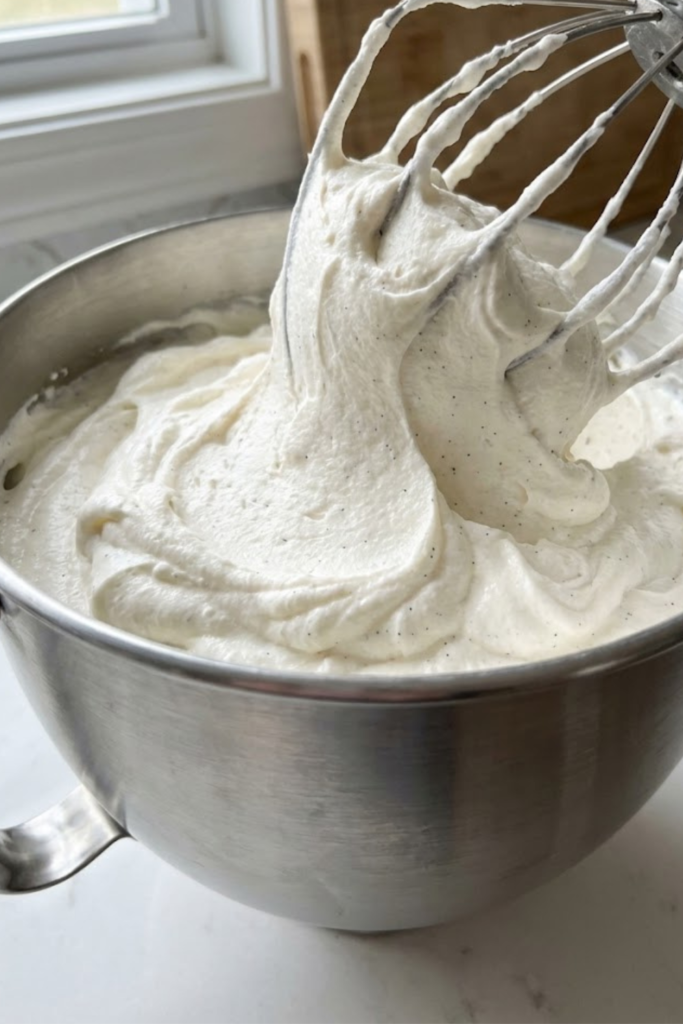
Here is the step most people skip. Once you add your powdered sugar, you need to whip that frosting on high speed for at least five minutes. I know, it sounds like overkill. You’ll be tempted to stop when it looks mixed. Don’t do it!
Set a timer and walk away (well, don’t walk too far). During this time, the magic happens. The yellow butter turns pale white, the volume doubles, and the gritty texture completely disappears. It becomes light as air. I’ve burned out a hand mixer or two in my day, but seeing that fluffy white cloud in the bowl is a serious triumph.
The Cream Cheese Twist
Sometimes, straight buttercream is just too sweet for me. If you want to cut that sweetness and add a little tang, try swapping out half the butter for a block of cream cheese.
This variation mimics the “cream” part of a creamsicle perfectly. Just make sure the cream cheese is also at room temperature, or you will end up with weird little cheese lumps in your frosting. Nobody wants that. This tangy twist balances the sugar and makes the whole Orange Creamsicle Cake feel a little more sophisticated.
Assembling and Decorating Your Creamsicle Masterpiece
I used to watch those fancy baking shows on TV and think, “How hard can it be to stack a few cakes?” Well, turns out, pretty hard. My first attempt at a layer cake looked less like a masterpiece and more like the Leaning Tower of Pisa. It was a hot mess. The layers slid around, the frosting was full of crumbs, and I ended up serving it in a bowl.
But with this Orange Creamsicle Cake, we want it to look as good as it tastes. You don’t need to be a professional pastry chef to get a clean look, but you do need a few tricks up your sleeve. Let’s build this thing without it toppling over.
The Leaning Tower of Cake
First things first, you gotta level those cakes. I used to just slap the frosting on the domed tops and pray for the best. It never worked. The cake would slide around and eventually crack down the middle.
Get yourself a long serrated knife and saw off the rounded top until the layer is perfectly flat. It hurts to cut off perfectly good cake, I know. But hey, that’s what the “chef snacks” are for, right? Eating the scraps is honestly the best part of the layer cake assembly process.
Embrace the Crumb Coat
Do not skip the crumb coat! I repeated this mistake for years because I was just too lazy and wanted to be done. If you try to do the final layer of frosting right away, bright orange crumbs will get mixed into your white vanilla frosting.
It looks speckled and dirty, not cute. Apply a very thin layer of frosting to seal everything in, then shove the whole cake in the fridge for 20 minutes. It locks those crumbs down tight. This little crumb coat tutorial step is the main difference between an amateur looking cake and a pro one.
That Drip Life
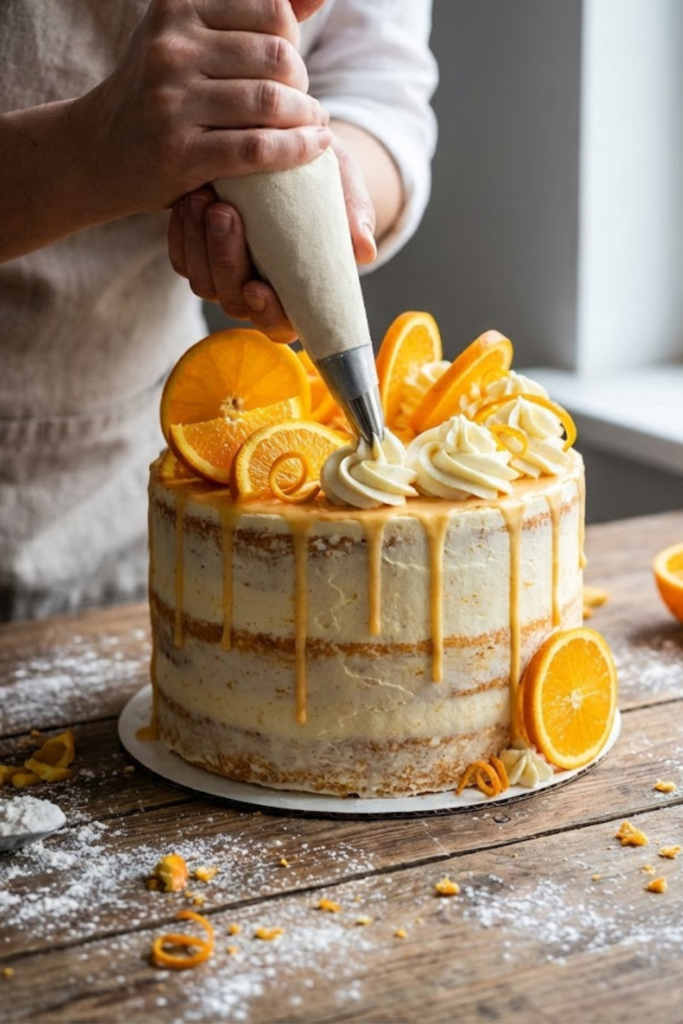
If you are feeling fancy, a white chocolate ganache drip looks amazing and adds extra sweetness. But be careful with the temperature. I once poured hot ganache on a cold butter cake and it was a total disaster.
The buttercream melted instantly, and the whole side of the cake sloughed off onto the counter. I might have cried a little. Let the ganache cool until it is the consistency of thick honey before you pour. Test a drip on the side of a bowl first; if it runs too fast, wait another five minutes.
The Final Flourish
Now for the fun part. I love using candied orange peel or fresh slices on top to hint at the flavors inside. It adds a gorgeous pop of color and, frankly, covers up any imperfections in your frosting smoothing skills.
We aren’t aiming for absolute perfection here; we are aiming for delicious. A few swirls, some sprinkles, and you are done. Your dessert presentation will look stunning, even if it is a little rustic.
Storage Tips and Serving Suggestions
I have a confession to make. There was a time in my life when I would leave a cake sitting out on the counter for three days straight, just covered with a tea towel. I know, it’s gross. But I learned my lesson the hard way when I went for a slice of Orange Creamsicle Cake and the frosting had weirdly separated and the cake was stale.
Proper storage is the only way to respect the time you put into baking. Plus, nobody wants to eat a dessert that tastes like the inside of your refrigerator. Let’s talk about how to keep this beauty fresh so you can enjoy every single crumb.
The Temperature Dilemma
Here is the thing about butter-based cakes: they are kind of high maintenance. Because of the butter and milk in the frosting, you really should store this cake in the fridge. But—and this is a big but—you cannot eat it cold.
Cold buttercream tastes like wax. It coats your tongue and ruins the flavor. I always pull the cake out of the fridge at least 30 to 60 minutes before serving. You want it to come back to room temperature so the frosting gets soft and creamy again. If you serve it rock hard, you are missing out on the whole experience.
Saving Some for Later
If you can’t finish the whole cake (though, honestly, I usually can), freezing is a great option. I like to slice the leftovers individually. Wrap each slice tightly in plastic wrap, then a layer of aluminum foil.
This method prevents freezer burn and keeps the cake moist. It is like a little gift for “future you” to find on a rainy Tuesday. Just unwrap a slice and let it thaw on the counter for an hour. It tastes just as fresh as the day you baked it. Freezing cake layers is also a lifesaver if you want to prep for a party way in advance.
What to Drink With It
Since this cake is on the sweeter side, you need something to balance it out. I personally love pairing it with a strong, black iced coffee. The bitterness of the coffee cuts right through the sweet vanilla and citrus.
If coffee isn’t your thing, a classic glass of cold milk is hard to beat. It reminds me of those after-school snacks from when I was a kid. For the adults in the room, a dry sparkling wine or prosecco goes surprisingly well with the orange notes. It makes the whole thing feel like a fancy brunch.
Break Up the Work
Don’t try to do everything in one day! That is a recipe for burnout. I almost always bake my layers the day before I plan to decorate.
Wrap the warm cake layers in plastic wrap and stick them in the fridge overnight. This actually makes the cake moister because the steam gets trapped inside. Plus, cold cake is much easier to handle and frost than fresh, crumbly cake. It turns a stressful baking marathon into a relaxing weekend project.
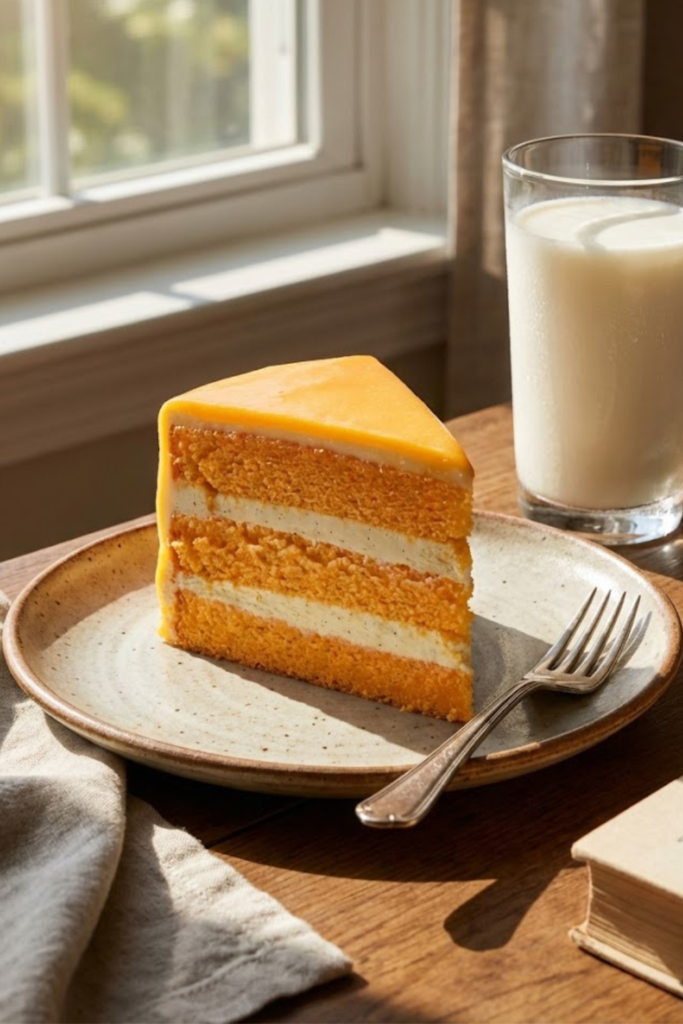
So, we have finally reached the end of our baking marathon. I have to admit, seeing this finished Orange Creamsicle Cake sitting on the counter makes all the mess worth it. There were definitely moments where I thought I curdled the batter or melted the butter too much, but that is just part of the process.
Baking isn’t about being perfect; it is about creating something that brings people together. This cake does exactly that. It is a slice of nostalgia that tastes like summer sunshine. When you cut into those bright orange layers, you are going to feel like a pro baker, even if your kitchen looks like a disaster zone (mine always does).
I really hope this recipe becomes a staple in your home like it has in mine. It is sweet, tangy, and just plain fun. If you try it out, don’t be hard on yourself if it doesn’t look like a magazine cover the first time. The flavor is what counts. Treat yourself to a big slice, pour a glass of cold milk, and enjoy the fruit of your labor. You earned it!