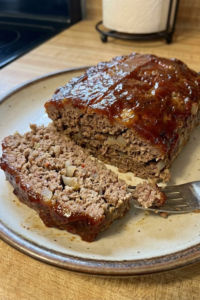
Did you know that 78% of people name meatloaf as their top comfort food? It makes total sense to me. That smell of savory beef roasting in the oven is basically a time machine back to childhood.
I still remember watching my mom make Mom’s famous meatloaf. She’d stand there mixing everything by hand, telling me that being gentle with the meat was the whole secret. Of course, I didn’t listen at first. My first few attempts at this family recipe were… total disasters. I’m talking dry, gray bricks that even the dog looked at suspiciously. I was so annoyed because I just wanted that juicy meatloaf taste I grew up with!
I eventually learned that squashing the meat like Play-Doh is exactly what destroys the texture.
In this guide, I’m sharing the actual secrets to finally getting it right. We’re going to cover the right fat ratio, the classic glaze, and why you absolutely need a milk-soak for the breadcrumbs. It’s time to fix your Sunday dinner game.
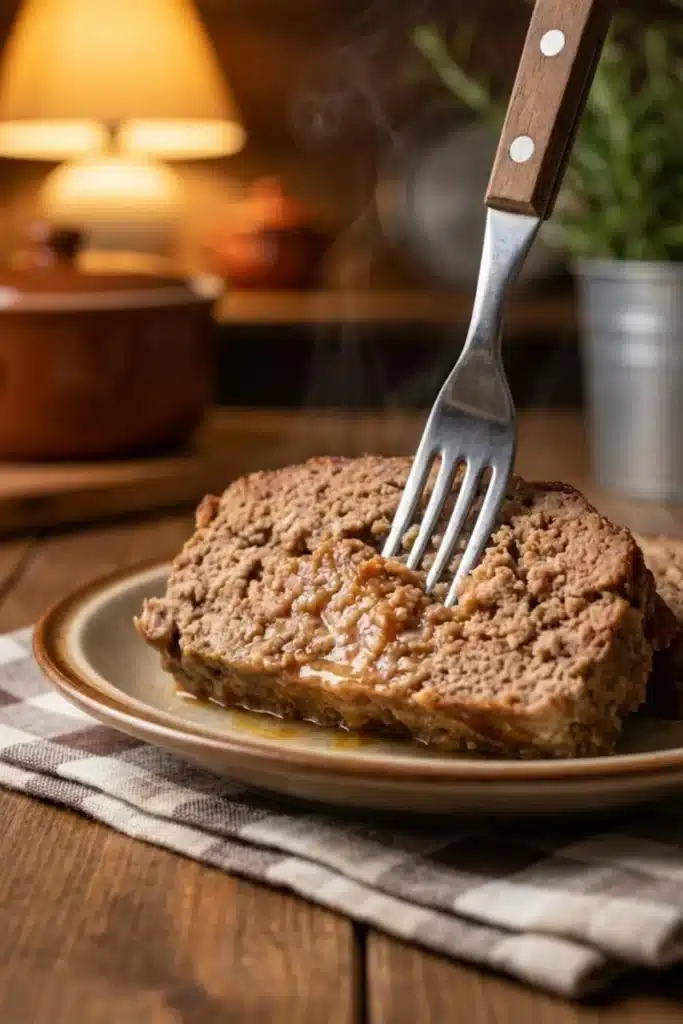
Why This is the Best Meatloaf Recipe You’ll Ever Try
I have a confession to make. The first time I tried to make meatloaf for my husband (then boyfriend), it was a total disaster. I bought the most expensive, super-lean ground beef I could find because I thought that meant “better.”
I served him a slice that was so dry, he drank three glasses of water just to get it down. I was mortified! I wanted to cry right there at the dinner table. But that “hockey puck” incident pushed me to figure out the science behind juicy meatloaf.
I realized I was doing everything wrong. I was treating the meat like a burger, and that’s just not how it works. Through a lot of trial and error (and a few more dry dinners), I found the perfect balance.
The Magic of the “Panade”
If you take one thing away from this post, let it be this: never skip the panade.
That’s just a fancy word for mixing milk and breadcrumbs (or bread) together before adding them to the meat. Most people just dump dry crumbs in and hope for the best. That is a rookie mistake!
When you soak the crumbs first, you create a gel that traps moisture inside the loaf. This panade technique prevents the proteins in the beef from shrinking too tight while they cook. It’s literally the difference between a tender slice and a doorstop.
Fat is Actually Your Friend
Remember how I said I bought super lean meat? Big mistake.
To get that melt-in-your-mouth texture, you need a little bit of fat. I strictly use an 80/20 mix for this recipe. If you go for 90/10 or leaner, you are fighting an uphill battle against dryness.
Fat renders out as it cooks, basting the meat from the inside. It creates little pockets of flavor that make the ground beef recipe taste rich and satisfying. Don’t be scared of the 20% fat content; a lot of it drips away, but the flavor stays behind.
Fresh Aromatics vs. The Jar
I used to be lazy and just shake in some onion powder and call it a day.
But here is the thing: using fresh onions and garlic adds actual moisture to the mix. As they cook down inside the loaf, they release steam. This creates natural moisture retention that you just can’t get from a jar of dried spice.
Plus, sautéing them first (we will get to that in the instructions) adds a sweetness that balances the savory beef perfectly. It takes a few extra minutes, but I promise it is worth every second.
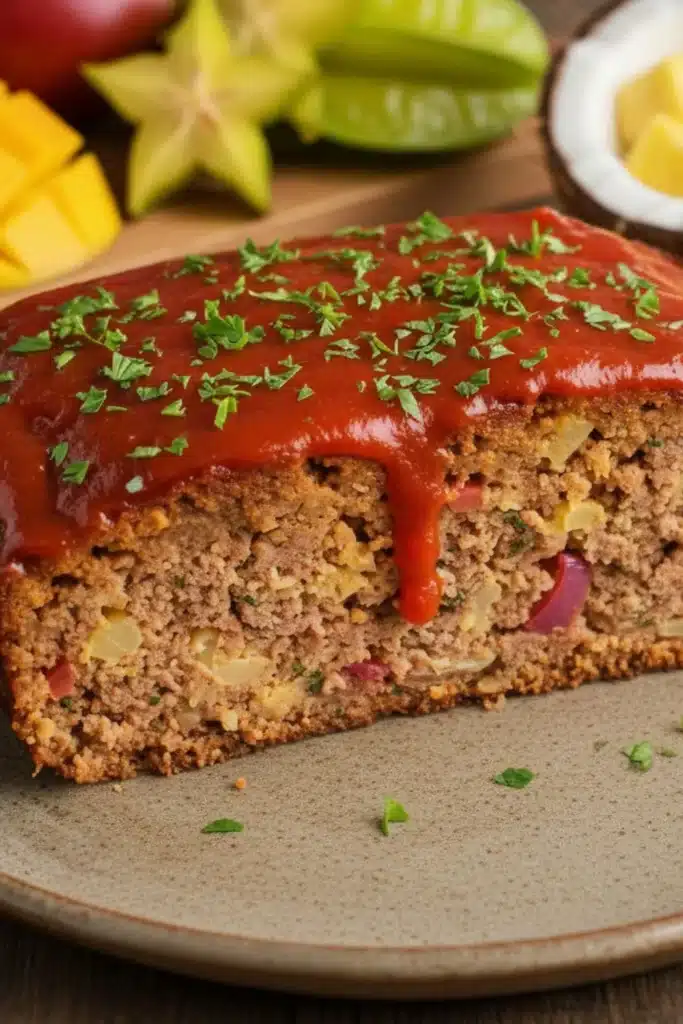
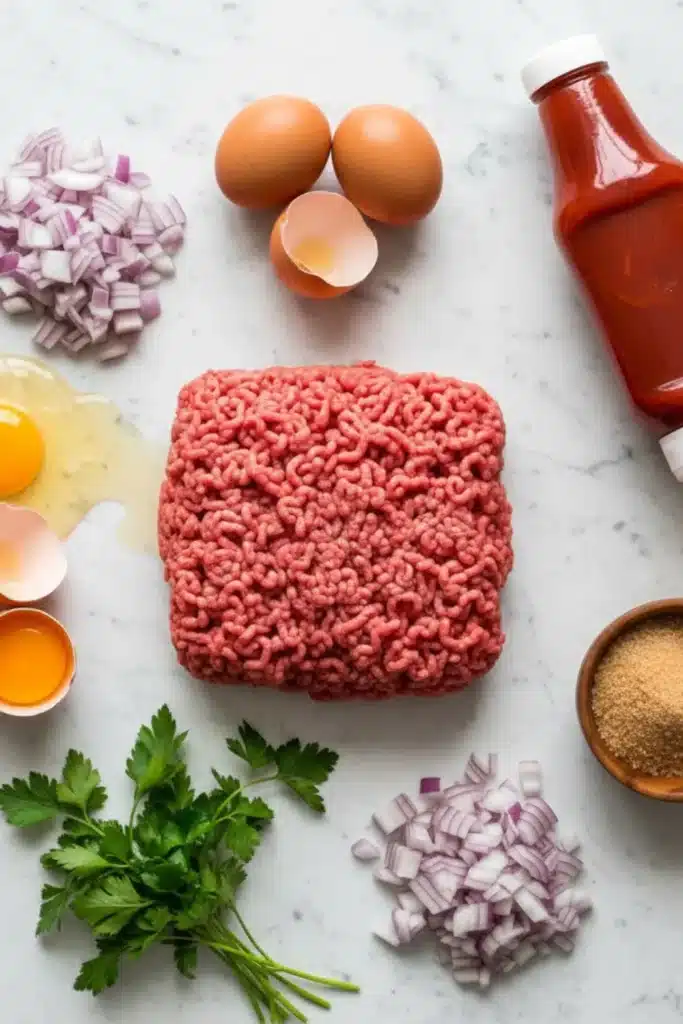
Essential Ingredients for Classic Meatloaf
You can’t build a strong house without good bricks, right? The same logic applies here. I used to think I could just throw whatever was in the back of my pantry into a bowl and call it dinner.
Spoiler alert: that is how you end up with a bland, sad dinner that your kids push around their plates.
I remember standing in the grocery aisle once, staring at all the different types of ground beef—round, chuck, sirloin—completely confused. I just grabbed the cheapest one. That was a huge error. To get that classic meatloaf taste, you have to be picky with your shopping list.
The Meat: Why 80/20 is King
I cannot stress this enough: do not buy the extra-lean beef!
I know, I know. We all want to be healthy. But if you grab the 93% lean ground beef, you are guaranteeing a dry loaf. You really need ground chuck with an 80/20 fat ratio.
The fat is what keeps the meat moist during the long bake time. If you really want to get fancy, some people do a “meatloaf mix” of beef and pork. But honestly? Good old 80/20 beef does the trick perfectly fine on its own.
The Binder: Breadcrumbs and Eggs
This is the glue that holds everything together.
For years, I used those cheap, powdery breadcrumbs from the round cardboard canister. They work, but they can make the texture a bit dense. Now, I prefer using Italian breadcrumbs or even Panko if I want a lighter texture.
If you are out of crumbs, crushed saltine crackers work in a pinch. Just make sure you have enough eggs—usually two large ones—to bind it all. If the mix feels too wet, don’t panic. It’s better to be a little wet than too dry.
The Flavor Boosters
This is where the magic happens. Plain beef is boring.
You absolutely need Worcestershire sauce. I don’t know what’s in it (anchovies? magic?), but it adds a deep, savory punch that you can’t get from salt alone.
Also, don’t skimp on the fresh herbs. I used to skip the fresh parsley because I didn’t want to chop it. Lazy, right? But that pop of green adds a freshness that cuts through the heavy meat.
The Glaze Essentials
Finally, the best part. The sticky, sweet topping.
You need a basic, thick ketchup for this. Don’t use the fancy organic stuff that’s too runny; it slides right off. You need the standard red bottle. Mix that with brown sugar and a splash of vinegar for that perfect meatloaf glaze.
Some people add mustard, but I think the brown sugar glaze combo is the ultimate crowd-pleaser. It caramelizes in the oven and becomes this sticky, irresistible layer that everyone fights over.
Step-by-Step Instructions for Perfect Meatloaf
I used to think making meatloaf was as simple as “dump everything in a bowl and pray.”
One Tuesday night, I was in a total rush—laundry was piling up, the dog was barking—so I skipped sautéing the onions. I just threw them in raw. Huge mistake. We sat down to eat, and the texture was all wrong. Crunching on a piece of raw onion inside a soft slice of meat is honestly pretty gross. My kids spent the whole meal picking little white squares out of their dinner. It was so frustrating!
That’s when I learned that skipping steps doesn’t save time; it just ruins dinner.
Prep Your Aromatics First
Please, do not skip this step. I know it’s an extra pan to wash, and I hate doing dishes as much as anyone, but you have to do it.
Sauté your chopped onions and garlic in a little butter or oil until they are soft and translucent. This does two things. First, it gets rid of that sharp, raw bite. Second, it adds a sweetness to the sautéed onions that flavors the whole loaf from the inside out. Let them cool down a bit before you mix them with the eggs, or you’ll end up with scrambled eggs in your meat mix. Yuck.
The “Claw” Mixing Technique
Here is where most people mess up. I certainly did.
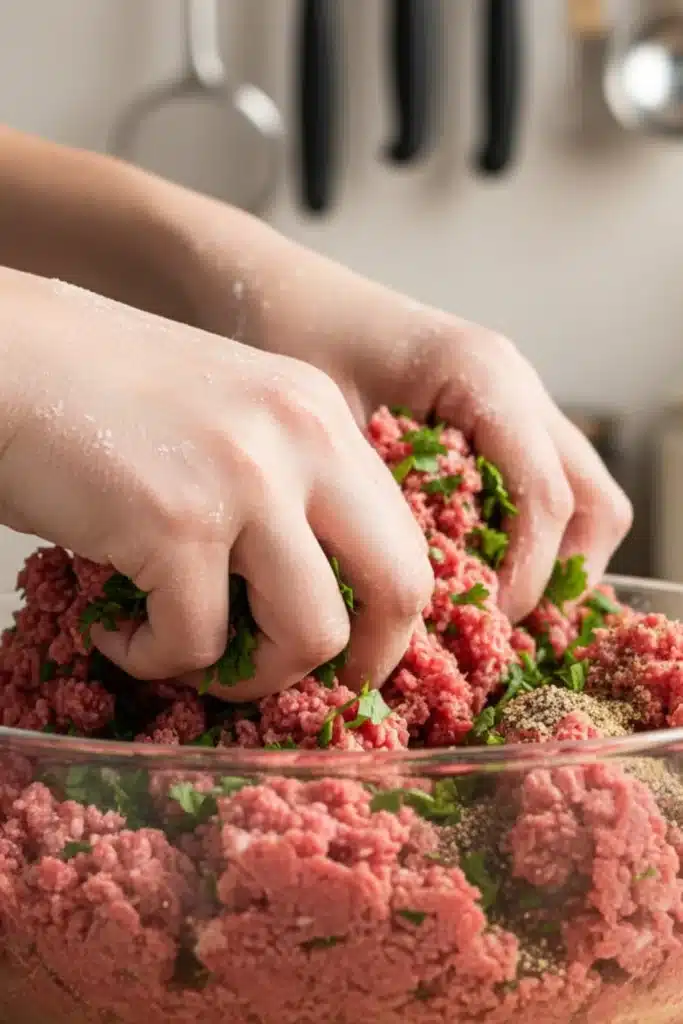
I used to knead the meat mixture like I was making bread dough. I thought I had to really mash it to get the spices distributed. Wrong! Over-working the meat creates a tough, rubbery brick.
Now, I use what I call the “claw hand.” I spread my fingers wide and gently toss the ingredients together until just combined. You want the ground beef recipe to stay loose. It’s messy, sure. My hands usually get covered in goop, but it’s the only way to keep the texture light and tender.
Ditch the Loaf Pan (Trust Me)
This might be controversial, but I stopped using a loaf pan years ago.
When you pack meat into a deep pan, it steams in its own juices. It ends up kind of grey and soggy on the sides. Instead, I form the loaf by hand on a foil-lined baking sheet. This is the secret to a better crust.
By doing a sheet pan meatloaf, hot air can circulate all around the meat. Plus, it gives you way more surface area for the glaze. And let’s be honest, the glaze is the best part.
Temperature, Not Time
I used to bake my loaf for exactly an hour because that’s what a magazine told me to do. And half the time, it was overcooked.
Ovens are weird. Yours might run hotter than mine. The only way to know it’s done is to use an instant-read thermometer. You are looking for a meatloaf internal temp of 160°F.
Once it hits 160°F, pull it out immediately! The temp will rise a little as it rests. And yes, you have to let it rest for 10 minutes. If you cut into it right away, all those delicious juices will run out onto the cutting board, and your meat will be dry.
The Secret to the Tangy Sweet Glaze
I will be completely honest with you. I am a “sauce person.” When I was a kid, I would literally lick the sticky red topping off my slice and leave the meat behind. My mom would get so mad! But seriously, a naked meatloaf is just sad. It looks unfinished. It tastes boring. The glaze is what takes this dish from “hospital food” to a proper Sunday supper.
I have ruined a few dinners by trying to be too creative with this part. I once tried to make a “gourmet” balsamic reduction instead of the classic red sauce. My family looked at me like I had three heads. My husband just asked, “Where’s the ketchup?” sadly. That was a fail. Lesson learned: don’t mess with perfection.
The Holy Trinity of Ingredients
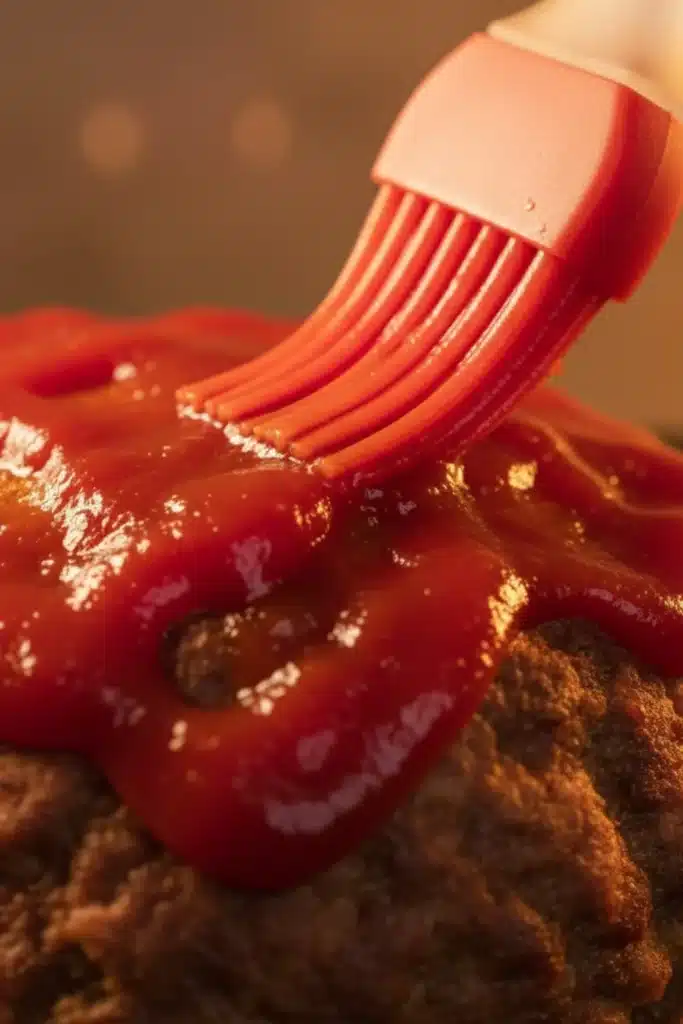
I used to try getting fancy with BBQ sauce or sriracha. But you really just need three things for a perfect meatloaf glaze: ketchup, brown sugar, and vinegar.
It sounds basic, but trust me. The ketchup topping provides that tomato base we all know and love. Then, the brown sugar melts down to create stickiness. The vinegar cuts through the sugar so it isn’t like candy. I sometimes add a dash of onion powder if I’m feeling wild. But usually, I stick to the classics.
You want the sauce to be thick. If it is too runny, it just slides off the meat and burns on the pan. I used to use a cheap store-brand ketchup that was basically red water. It was awful. Use a thick brand. When you mix in the sugar, it will feel gritty at first. That is normal. Just keep whisking it with a fork until it looks smooth.
Timing is Everything
Here is a mistake I made for years. I would dump all the sauce on the raw meat before putting it in the oven.
By the time the meat was cooked an hour later, the sauce was burnt to a crisp. It looked like black tar. Not appetizing at all. Now, I have a system that works way better. I bake the loaf naked for about 45 minutes. Then, I pull it out and brush on the brown sugar glaze. I put it back in for the last 15 minutes. This lets the sauce set without burning.
The Broiler Trick
If you want that sticky, tacky top like you get at a diner, you have to use the broiler.
After the meat is done cooking, I switch the oven to “High Broil.” I leave the pan in for maybe two minutes. Watch it like a hawk! I walked away once to fold a towel and came back to a smoke alarm screaming at me. But if you catch it right, the sugars bubble up and caramelize. It is pure magic. That sticky layer is the best part of the whole meal.
The Double Sauce Method
Okay, this is my pro tip. I always make a double batch of sauce.
I save half the sauce for right when it comes out. My youngest son refuses to eat it unless there is a “swimming pool” of sauce on his plate. So, I serve the extra on the side for dipping. It is better to have too much than not enough. Nothing is worse than running out of sauce halfway through dinner. That is a tragedy!
Serving Suggestions and Side Pairings
I have to tell you about a funny argument my husband and I have. When we first got married, I served meatloaf with… rice.
He looked at me like I had committed a crime. Apparently, in his world (and let’s be honest, in most of the world), meatloaf absolutely must be served with potatoes. I tried to defend my rice choice, but deep down, I knew he was right. There is just something about that savory meat and sauce that screams for a fluffy pile of spuds.
Since that “rice incident,” I’ve experimented with a lot of sides. Some were great, some were just okay. But I’ve learned that because meatloaf is such a heavy, rich dish, you have to be careful with what you put next to it. You don’t want the meal to feel like a brick sitting in your stomach.
The Non-Negotiable: Mashed Potatoes
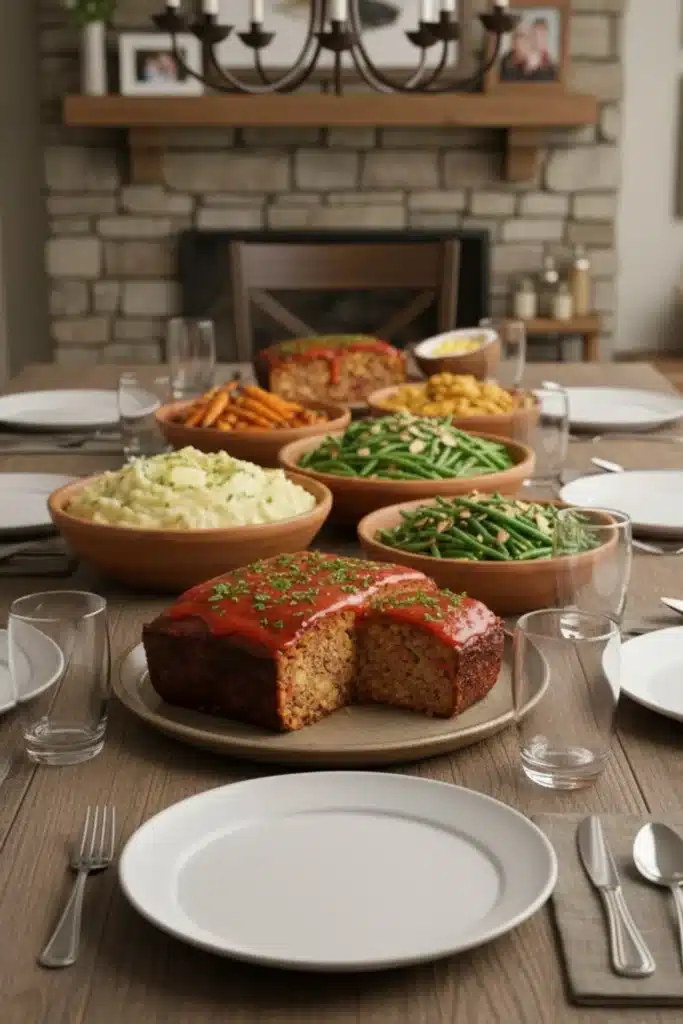
Let’s just get this out of the way. Mashed potatoes side dishes are the soulmate of meatloaf.
I used to make the mistake of using those waxy red potatoes for mashing. They turned into a gluey paste that was impossible to swallow. Now, I stick to Yukon Golds. They have this natural buttery flavor that is just incredible.
If I’m feeling lazy (which is often), I don’t even peel them. I just scrub them really well and smash them up with butter and milk. Pro tip: make a little “well” in the center of your potatoes to hold extra meatloaf sauce. It keeps everything tidy on the plate.
Something Green to Cut the Richness
You really need something fresh to balance out all that meat and starch.
For years, I just opened a can of green beans and microwaved them. It was mushy and sad. Honestly, it kind of ruined the meal. Now, I try to do fresh roasted vegetables.
My go-to is tossing some fresh green beans or asparagus with olive oil and salt. I throw them on a sheet pan and roast them while the meatloaf rests. The crunch provides a nice contrast to the soft meat. If I’m feeling fancy, I might make a green bean casserole, but usually, simple is better. A crisp arugula salad with a lemon dressing is also a game-changer if you want something lighter.
Don’t Forget the Bread
Carbs on carbs? Yes, please.
I know we already have potatoes, but you need bread to sop up that delicious glaze. I used to buy those frozen garlic knots, but they always ended up hard as rocks.
Now, I grab a loaf of crusty Italian bread or soft dinner rolls. There is nothing better than making a mini sandwich at the dinner table. It’s pure comfort food dinner vibes. Just don’t let the bread burn in the oven like I usually do!
Storage, Freezing, and Leftover Ideas
I have a confession to make. I honestly think I like meatloaf better the next day.
There, I said it. Fresh is good, but cold? It’s a whole different vibe. However, I have definitely made the mistake of leaving it in the fridge way too long. I once found a Tupperware container pushed to the back of the fridge that was… well, let’s just say it was fuzzy. It was gross. I had to throw the whole container away because I was too scared to open it.
So, please learn from my gross mistake. Leftover meatloaf recipes are amazing, but the meat only lasts about 3 to 4 days in the fridge. You really need to wrap it tight. I use foil and then put it in an airtight container. If air gets to it, it dries out faster than a puddle in July.
Freezing Without the Fuss
Freezing is a total lifesaver for busy weeks.
I used to freeze the whole cooked loaf in one big block. That was a bad idea. When I wanted to eat it, I had to thaw the entire thing just to get one slice. It took forever! I was so annoyed waiting for a giant brick of meat to defrost on a Tuesday night.
Now, I slice it up first. I wrap individual slices in plastic wrap and then put them all in a big freezer bag. This way, I can just grab one slice for a quick lunch. It is a total game-changer for make ahead meals. You can also freeze it raw, but be careful. If you freeze it raw, do not put the glaze on yet! The glaze gets weird and watery in the freezer. Freeze the raw loaf plain, then add the fresh brown sugar glaze right before you bake it.
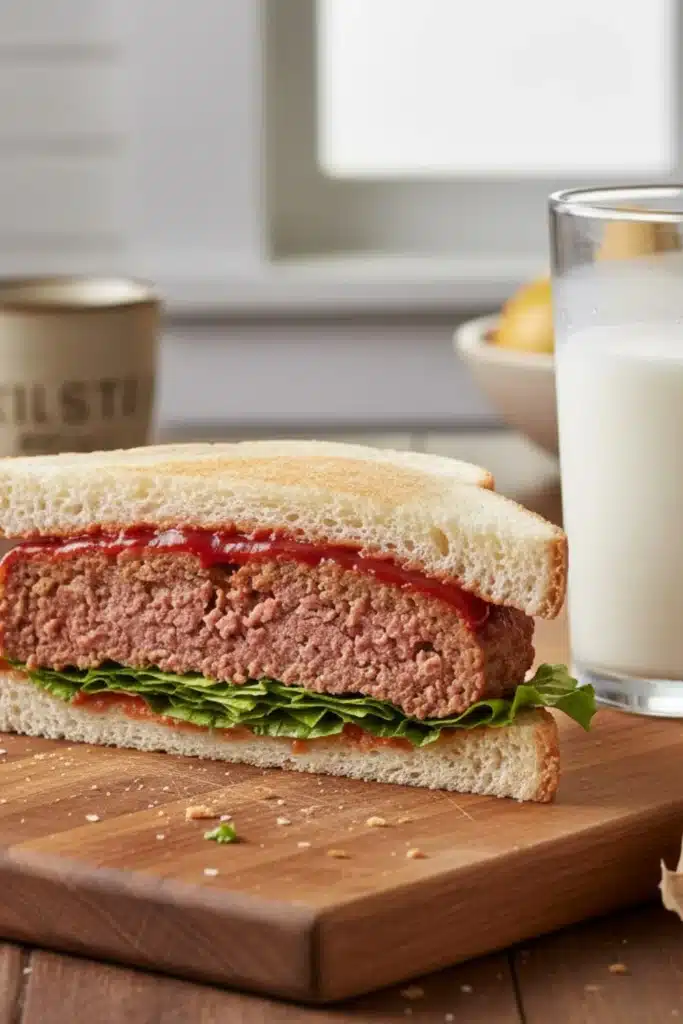
The Ultimate Leftover Sandwich
Okay, we have to talk about the sandwich. If you aren’t making a meatloaf sandwich with your leftovers, what are you even doing?
I am a total purist here. I need two slices of cheap white bread. I need a thick slab of cold meatloaf. And I need a shameful amount of mayonnaise. Maybe a slice of American cheese if I’m feeling wild. Don’t try to be healthy with whole wheat bread here; it just ruins the experience. It is the ultimate comfort food lunch.
I know some people like to fry the meatloaf slice in a pan before putting it on the bread. That is delicious, sure. But there is something about the texture of the cold, firm meat against the soft bread that just gets me every time.
Reheating Rules
If you must reheat it to eat with a fork, don’t use the microwave on high power!
It makes the edges rubbery and explodes grease everywhere. I have scrubbed many microwaves because of this. Use 50% power, or better yet, throw a slice in a skillet for a minute to get the edges crispy. So don’t let those leftovers go to waste. With groceries costing an arm and a leg these days, stretching one dinner into two or three meals is just smart.
Well, there you have it! Mastering Mom’s famous meatloaf isn’t actually rocket science . It really just takes a little patience and that special milk-bread trick we talked about. I hope this finally convinces you that meatloaf doesn’t have to be a dry, boring doorstop.
I know it might seem like a lot of steps for a simple Sunday dinner. But I promise, once you smell those onions and that brown sugar glaze bubbling away, it will all be worth it. My kids actually cheer now when I say meatloaf is on the menu, which is a miracle in itself!
Don’t be afraid to mess up a little. Cooking is messy! If your glaze drips or your loaf looks a little lopsided, who cares? It’s all going to the same place, and it’s going to taste delicious. Just remember to let it rest before you cut it, or you will regret it .
If you loved this easy meatloaf recipe, please do me a huge favor. Pin it to your “Dinner Ideas” board on Pinterest so you can find it next time! It helps me out so much and keeps the recipe safe for you .