Did you know that the Mediterranean diet has been ranked the #1 best diet overall for seven years in a row? It’s true! And honestly, once you taste this mediterranean salmon, you’ll understand exactly why people can’t get enough of it. I remember the first time I tried combining fresh dill with briny kalamata olives on a fillet—it was a total flavor explosion!
In this guide, we aren’t just cooking fish; we are creating a masterpiece that brings the sunny coast of Greece right to your kitchen table. Whether you are a total beginner or a seasoned home cook, this dish is forgiving, fast, and absolutely stunning. We will cover everything from selecting the freshest catch to nailing that crispy skin every single time. Let’s get cooking!

Choosing the Best Salmon Fillets for Your Mediterranean Feast
I’ll never forget the time I tried to impress my in-laws with a fancy seafood dinner. I walked into the grocery store, grabbed the first pack of fish I saw, and waltzed out. Big mistake. When I opened that package at home, the smell hit me like a ton of bricks—it smelled like low tide on a hot day. I tried to cook it anyway (terrible idea), and let’s just say we ended up ordering pizza.
That moment of panic taught me that making incredible Mediterranean salmon starts way before you fire up the stove. It starts at the counter.
The Wild vs. Farmed Debate
Honestly, I used to think salmon was just salmon. I was wrong. If you can swing it, wild-caught varieties like Sockeye or King salmon are absolute game-changers. King salmon is basically the butter of the sea; it’s rich, fatty, and melts in your mouth. Sockeye has this deep red color and a stronger flavor that stands up really well to bold Mediterranean herbs.
But hey, I’m not made of money, and you probably aren’t either. Farmed Atlantic salmon is usually what you’ll find on sale, and it’s totally fine! It’s actually fattier and more forgiving if you accidentally overcook it a bit. Just look for “sustainably raised” on the label if that stuff matters to you (it does to me). The main thing is getting a piece that looks appetizing.
Don’t Be Shy—Get Nosey
Here is the awkward part that you just gotta get over. You need to smell the fish. If you are at a counter with a fishmonger, ask to smell it. Seriously.
Fresh salmon should smell like the ocean—clean, salty, and mild. It should not smell “fishy” or like ammonia. If your nose wrinkles up, walk away. I’ve learned this the hard way too many times. Also, look at the flesh. It should be firm and bounce back if you poke it, not mushy. If the fillet looks like it’s separating or gaping, it’s old news.
Skin-On is Your Best Friend
I used to be terrified of fish skin. It seemed slimy and gross, so I’d always ask them to cut it off. Stop doing that! Keeping the skin on is a secret weapon for cooking perfect Mediterranean salmon.
Think of the skin as a little heat shield. It protects the delicate meat from the scorching hot pan, giving you more time to get that center perfect without drying it out. Plus, when you crisp it up right? Oh man, it’s like a salmon potato chip. Even if you don’t eat the skin, cook with it on and peel it off later. It keeps the juices locked in.
Portion Control (So You Don’t Go Broke)
When I’m planning a dinner, I aim for about 6 to 8 ounces per person. That looks like a fillet about the size of a checkbook. It’s enough to fill you up without leaving you stuffed, especially with all the sides we’re gonna add.
One specific tip: try to buy fillets that are the same thickness. If you get one thick piece and one thin tail piece, you’re gonna pull your hair out trying to cook them evenly. The thin one turns to leather while the thick one is still raw in the middle. Ask the guy behind the counter for “center-cut” pieces if they have them. It makes your life a million times easier.

Essential Ingredients for Authentic Mediterranean Flavors
You know that old saying, “you can’t make a silk purse out of a sow’s ear”? Well, that applies to cooking seafood too. You can’t make a killer Mediterranean salmon with sad, expired ingredients. I learned this lesson the hard way a few years back. I tried to whip this up using that lemon juice that comes in a little plastic plastic lemon and some dried parsley from 2015.
It was… edible. But it wasn’t good. My family ate it, but nobody asked for seconds. To get that restaurant-quality taste, you have to be picky about a few key players. It makes all the difference in the world.
The Holy Trinity: Oil, Lemon, and Garlic
Let’s start with the basics. If you are making Mediterranean salmon, the olive oil is not just a cooking fat; it’s a flavor. I used to grab whatever vegetable oil was on sale, thinking it didn’t matter. Big mistake.
You need Extra Virgin Olive Oil (EVOO). It has that grassy, peppery kick that ties everything together. I’m not saying you need to spend $50 on a bottle, but get something decent.
Then there is the garlic. Please, I am begging you, do not use the jarred stuff for this recipe. I know it’s easier! I’ve been there, tired after work, just wanting to dump a spoonful of minced garlic in the pan. But jarred garlic has this weird, vinegary funk that ruins the fresh vibe we are going for. Smash a fresh clove. Your fingers will smell for a day, but your tastebuds will thank you.
Fresh vs. Dried Herbs: The Great Debate
Here is where I usually get frustrated with recipes that call for everything fresh. Who has the budget to buy five different bunches of herbs that will just rot in the fridge? Not me.
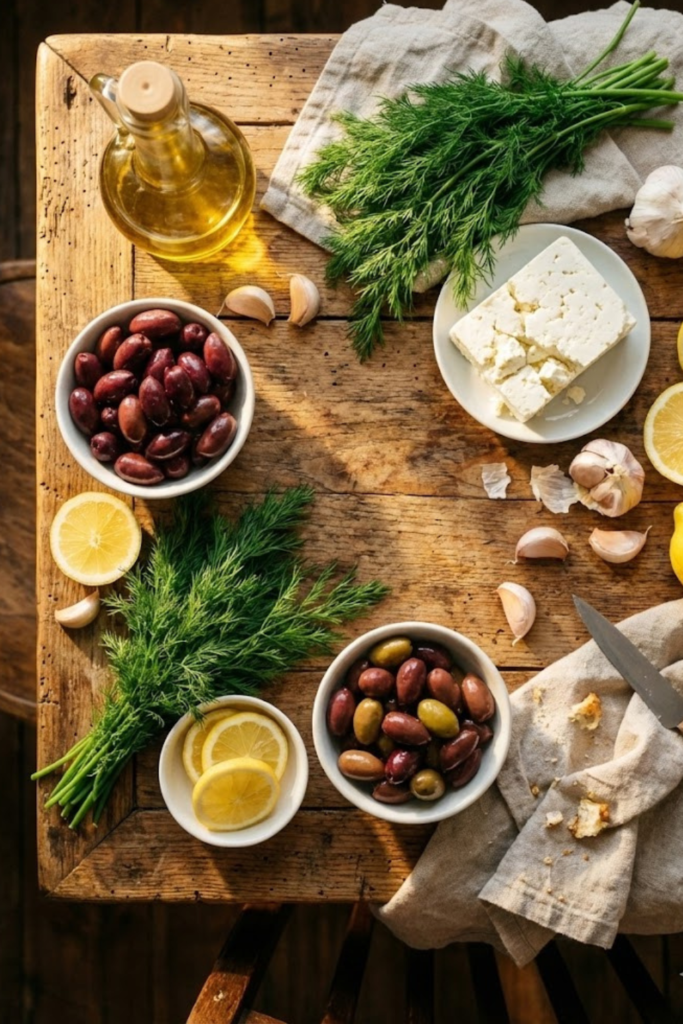
For this Mediterranean salmon dish, you can compromise. Dried oregano is actually awesome because it has a concentrated, earthy flavor. But for the dill? Go fresh. Fresh dill has a sweetness that you just don’t get from the dried stuff.
I remember once I couldn’t find fresh dill and used dried. The dish ended up tasting like a pickle jar. It was weird. If you can only buy one fresh herb, make it the dill (or parsley if you aren’t a dill fan).
The Salty Kick: Feta and Olives
This is my favorite part. The salt in this recipe shouldn’t just come from a shaker; it should come from the brine.
Let’s talk about the olives. You want Kalamata olives. They are the purple ones. I’ve tried using those bland black olives from a can, and it was just sad. They added texture but zero flavor. Kalamata olives pack a punch.
And the feta cheese! Here is a tip I wish I knew ten years ago: Buy the block, not the crumbles. The pre-crumbled stuff is coated in anti-caking agents (like potato starch) to keep it from clumping. That means it doesn’t get soft and creamy when it hits the hot salmon. It stays hard and chalky. Buying a block and crumbling it yourself takes literally ten seconds and it tastes way better.
The Veggie Squad
Finally, you need some color. Cherry tomatoes are my go-to because they burst open when they cook, creating a natural sauce for the Mediterranean salmon.
I’ve also thrown in artichoke hearts when I’m feeling fancy. I usually just buy the canned ones (quartered) because I have no idea how to prep a fresh artichoke and I’m too scared to try. Just drain them well so you don’t water down your sauce. If you get the ones marinated in oil, even better—that’s just free flavor right there.
When you combine these specific ingredients, you aren’t just making dinner; you are building layers of flavor. It turns a boring Tuesday night meal into something that tastes like a vacation.
Step-by-Step Guide: How to Pan-Sear Mediterranean Salmon
I used to be terrified of pan-searing fish. Seriously, it felt like high-stakes gambling. Would the skin stick to the pan like superglue? Would the fire alarm go off? For the longest time, my “seared” fish looked more like a salmon scramble because I’d panic and shred the fillet trying to flip it.
But once I learned a few simple tricks, everything changed. Now, making this Mediterranean salmon recipe is my favorite party trick because it looks chef-made but takes less than 20 minutes. If I can do it without burning down the kitchen, you definitely can too.
The Prep Work: Dry It Like You Mean It
Here is the number one mistake people make, and I’m guilty of doing it for years. Do not take the fish out of the package and throw it straight into the pan. If the fish is wet, it won’t sear; it will steam.
Grab a paper towel and pat that Mediterranean salmon dry. You want it tacky, not slippery. Get the skin side especially dry. Then, season it generously with salt and pepper right before it hits the pan. If you salt it too early, moisture gets drawn out, and we are back to square one.
The Pan Method: The “Don’t Touch It” Rule
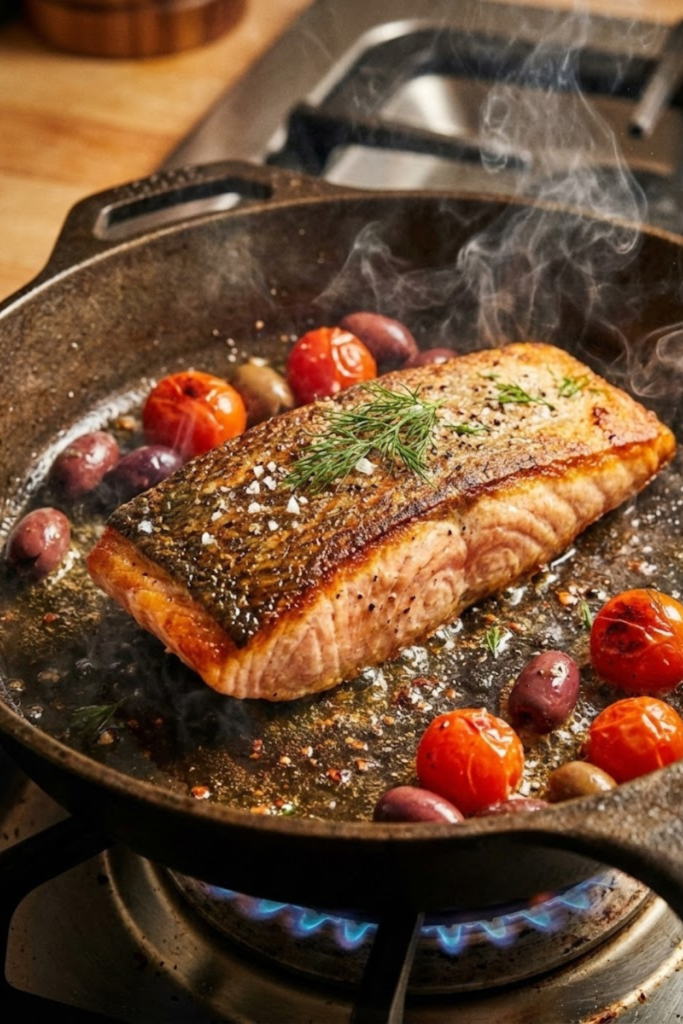
Get your skillet nice and hot over medium-high heat. I prefer cast iron because it holds heat like a champ, but a good non-stick pan works if you’re nervous. Add your olive oil and wait until it shimmers.
Place the fillets skin-side down. You’ll hear a loud sizzle—that’s the sound of flavor happening. Now, here is the hard part: Stop touching it.
The fish is going to curl up a little bit when it hits the heat. Just take a spatula and gently press it flat for ten seconds. Then, walk away. Put your hands in your pockets if you have to. If you try to move it too soon, the skin will tear. After about 4 to 5 minutes, the skin will naturally release from the pan. It’s like magic.
Making the Pan Sauce
Once the skin is crispy and golden, flip the fish. The skin should look like a potato chip. Now, turn the heat down to medium. This is where we turn plain fish into Mediterranean salmon.
I like to scoot the fish to the side of the pan (or take it out for a sec if the pan is crowded). Toss in your cherry tomatoes, garlic, and olives right into that hot oil. They will hiss and pop.
If you are feeling brave, splash in a little white wine to deglaze the pan. Use a wooden spoon to scrape up the brown bits stuck to the bottom—that’s pure flavor gold. If you don’t do wine, a squeeze of lemon juice works perfectly.
Finishing Touches
Let the veggies cook for just 2 or 3 minutes until the tomatoes start to wrinkle and burst. Finally, sprinkle your feta cheese over the top.
Here is the trick: turn the heat off but leave the pan on the burner. The residual heat is enough to soften the feta without melting it into a goopy mess. Top it with fresh dill, and serve it straight from the skillet. It’s chaotic, messy, and absolutely delicious.
Baking and Air Fryer Alternatives for Busy Nights
Look, I love the crispy skin you get from a cast-iron skillet. But let’s be real for a second. There are some Tuesday nights in 2026 where the idea of standing over a hot stove and getting splattered with oil makes me want to order takeout. I’ve been there. I remember one specific night coming home from parent-teacher conferences, totally drained, and staring at a piece of raw fish like it was a math problem I couldn’t solve.
That’s when I learned that you can absolutely make delicious Mediterranean salmon without the stress. In fact, using the oven or air fryer is often better because it frees up your hands to do other stuff, like pouring a glass of wine or helping with homework.
The Sheet Pan Method (Or: How to Avoid Doing Dishes)
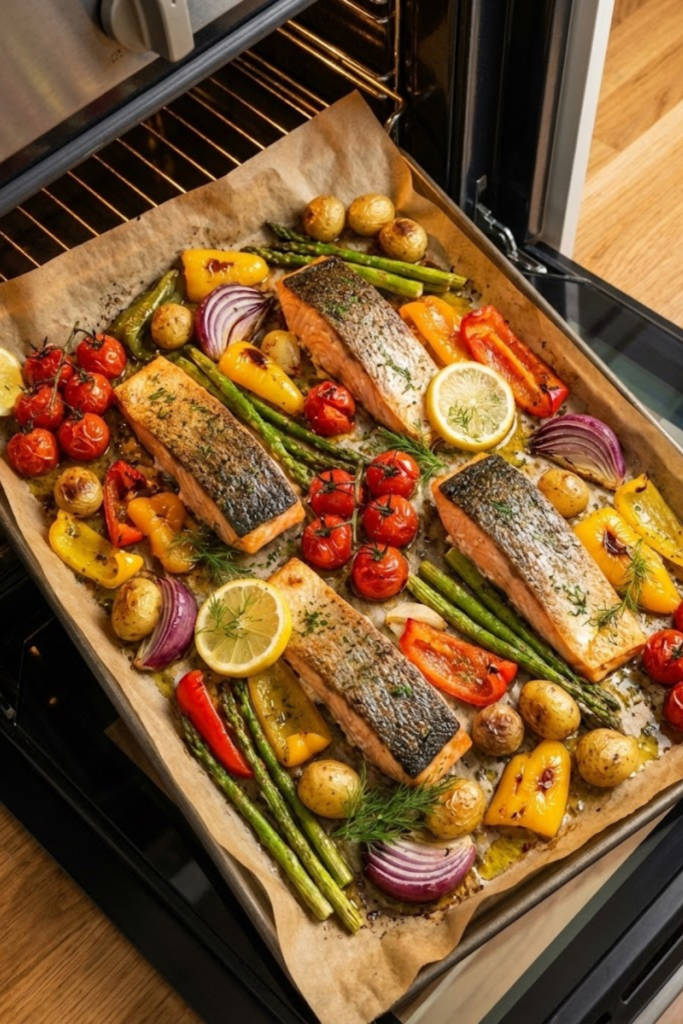
This is my “lazy” method, but it tastes like a million bucks. The beauty of a sheet pan meal is that everything cooks together. I used to think baking fish made it rubbery, but I was just cooking it too low and slow.
You want to blast it. Preheat your oven to 400°F (200°C). Toss your cherry tomatoes, olives, and artichokes in olive oil and spread them on the pan. Nest the salmon fillets right in the middle.
Roast it for about 12 to 15 minutes. That’s it. The juices from the tomatoes mix with the fish oils and create this incredible sauce right on the pan. Plus, if you line the pan with parchment paper first, cleanup takes literally thirty seconds. It is a total lifesaver for healthy dinner ideas when you are running on empty.
Foil Packets: The Flavor Lock
If you have picky eaters who hate the “smell” of fish cooking, this one is for you. I call these “flavor pockets.” Fancy chefs call it en papillote, but we don’t need to be fancy here.
You take a piece of heavy-duty foil, plop the salmon in the center, pile on your feta, herbs, and lemon, and seal it shut. It steams the fish in its own juices.
I made the mistake once of not sealing the edges tight enough. The juice leaked out everywhere and burned on the bottom of my oven. My kitchen smelled like burnt lemon for a week. Don’t do that. Crimp those edges tight! It keeps the baked salmon recipe incredibly moist, which is great if you accidentally leave it in a minute too long.
The Air Fryer Revolution
Okay, I was late to the air fryer party. I resisted buying one for years because I didn’t want another gadget on my counter. I was wrong. The air fryer is arguably the best way to cook Mediterranean salmon if you want that seared texture without the mess.
Set it to 390°F. Rub the salmon with oil and spices. Pop it in for just 7 to 9 minutes.
Be careful here, though. The air fryer moves fast. The first time I tried this, I set it for 15 minutes like an oven, and I essentially made salmon jerky. It was inedible. Check it early! When done right, you get air fryer salmon with a crispy top and a tender center, and the cleanup is a breeze. It’s honestly magic.
Perfect Side Dishes to Serve with Mediterranean Salmon
You know what’s tragic? spending twenty minutes making a beautiful piece of fish, only to serve it next to a sad, microwaveable bag of mixed veggies. I’ve been there. I once served this zesty, light Mediterranean salmon alongside heavy, garlic-mashed potatoes. It was a train wreck. The heavy potatoes totally overpowered the delicate fish, and my family looked at me like I had two heads.
That dinner taught me that the side dish is just as important as the main event. You need something that complements those bright lemon and herb flavors, not something that fights them. It’s all about balance.
Grains and Pastas: The Soak-Up Squad
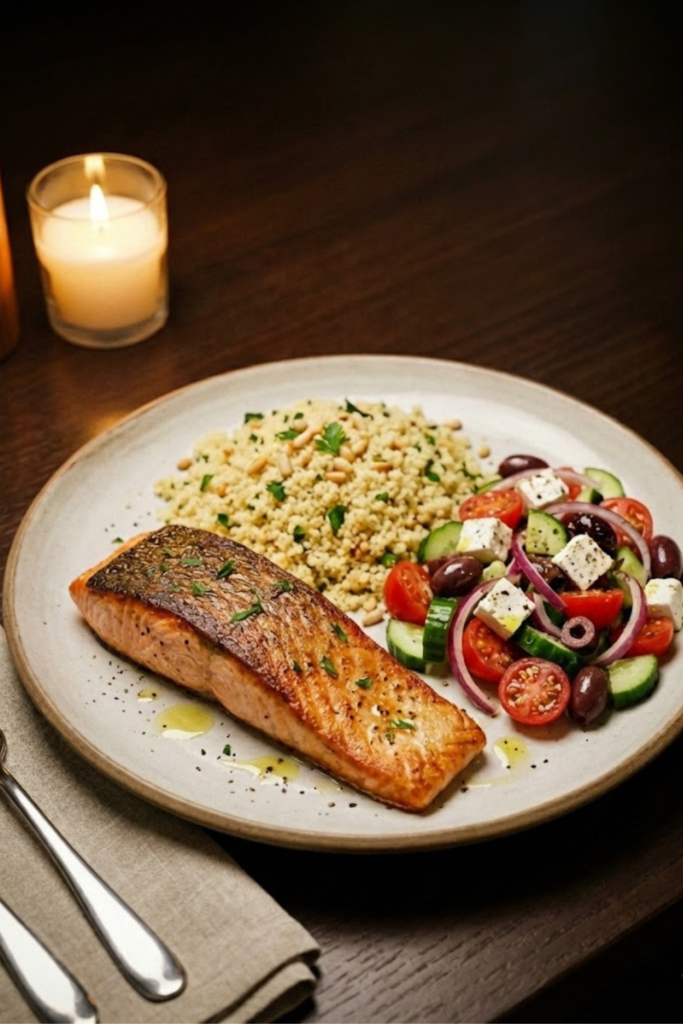
If you want to look like a pro without trying hard, go with couscous. For the longest time, I thought couscous was a fancy grain I’d mess up. Turns out, it’s just tiny pasta that cooks in literally five minutes. It is a lifesaver.
I like to make a quick lemon herb couscous. Just boil water, toss the couscous in, cover it, and turn off the heat. That’s it. It fluffs up perfectly and acts like a sponge for all those delicious pan juices from the Mediterranean salmon.
If you have a bit more time, orzo salad is another winner. I usually toss cooked orzo with a little feta and cucumber while it’s still warm. It feels a bit heartier than couscous but still keeps that light, summery vibe we are going for.
Fresh Salads and Greens
Since the salmon is rich with healthy fats and olive oil, you need some crunch to cut through it. A classic Greek salad is my go-to. I chop up cucumbers, tomatoes, and red onion into big chunks.
Here is a mistake I used to make: dressing the salad too early. If you add the vinaigrette ten minutes before serving, the cucumbers turn into a watery mess. Dress it right when you put the plates on the table. The acid from the vinegar wakes up your palate between bites of the fish.
If you aren’t a salad person, roasted asparagus is a solid backup. I just throw it on a sheet pan with a little oil and salt while the fish rests. It adds a nice pop of green to the plate without requiring a ton of effort.
A Note on Wine (Because Why Not?)
Now, I’m definitely not a sommelier. I usually pick wine based on how cool the label looks. But I have learned that you cannot drink a heavy red wine with this dish. It tastes like metal.
For Mediterranean salmon, you want a crisp white wine. A Sauvignon Blanc or a Pinot Grigio is perfect. The acidity in the wine mimics the lemon in the dish. It cleans your palate.
Pour yourself a glass while you cook. It makes the whole process feel less like a chore and more like an event. Trust me, the food always tastes better when the cook is happy.
Bringing the Mediterranean Home
To wrap this up, making this Mediterranean salmon is honestly one of the best ways to treat yourself to a meal that feels fancy but is actually incredibly simple. I used to think that “healthy eating” meant bland chicken breast and steamed broccoli every single night. I was miserable. This recipe was the lightbulb moment that showed me healthy food can actually taste like a cheat meal.
You get those heart-healthy fats (omega-3s are no joke!), the vibrant pop of the veggies, and that irresistible tangy kick from the feta and lemon. It really is a weeknight warrior that tastes like a weekend splurge.
Whether you pan-sear it to get that crispy skin or toss it on a sheet pan when you are too tired to deal with dishes, you are doing something good for your body and your tastebuds.
If you enjoyed this recipe, do me a huge favor. Pin this mouthwatering dish to your “Healthy Dinners” board on Pinterest right now! It helps other home cooks find it, and it saves you from scrolling endlessly next time you need a dinner idea.