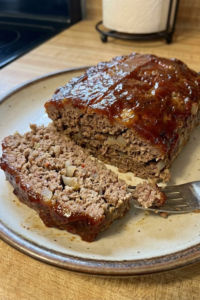
Do you remember the dry, brick-like meatloaf from the school cafeteria? Yuck! I used to dread meatloaf night until I discovered a secret weapon hiding in my pantry: oatmeal. Yes, really! Making meatloaf with oatmeal isn’t just a healthy swap; it’s the absolute key to locking in moisture and flavor like you wouldn’t believe. In this article, we aren’t just making dinner; we are reviving a classic with a modern twist that will have your family begging for seconds. Let’s banish dry beef forever and get cooking!
Why Swap Breadcrumbs for Oatmeal in Meatloaf?
Look, I have to be honest with you—I used to be a die-hard breadcrumb fan. It’s what my mom used, and it’s what her mom used, so I figured, “If it ain’t broke, don’t fix it,” right? Wrong. I remember making this massive meatloaf for a Sunday dinner a few years back, fully expecting a round of applause. Instead, what came out of the oven was basically a beef brick. It was so dry you had to chase every bite with a gulp of water! I was mortified. That was the day I decided to experiment, and let me tell you, swapping in oats was a total game-changer.
The Magic of Moisture Retention
Here is the thing about breadcrumbs: they act like a sponge, sure, but they can only hold so much liquid before they turn into mush. When you make a meatloaf with oatmeal, the oats work differently. They don’t just soak up milk; they lock in the natural juices from the beef while it cooks.
Think of the oats like tiny moisture reservoirs scattered throughout your dinner.
Instead of that juice running out onto the baking sheet (and leaving your meat dry), it stays right where you want it. The result? A slice that is incredibly tender and actually juicy.
Goodbye Gummy Texture
Have you ever bitten into a meatball or loaf that felt kind of… pasty? That is usually the breadcrumbs getting too soggy. It’s a texture nightmare!
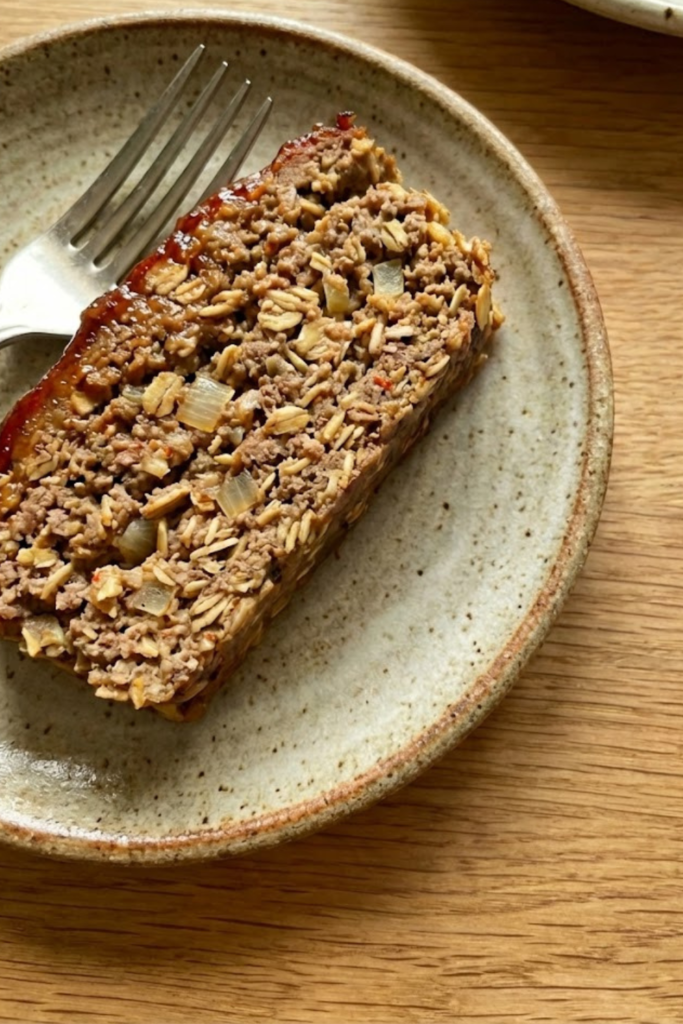
Oatmeal provides a much lighter, fluffier structure.
Because oats have a bit more bite to them—even the quick-cooking kind—they break up the density of the meat without turning into paste. My kids used to pick around the “soggy parts” of my old recipe, but with oatmeal, the texture is consistent all the way through. It just feels more like a solid, hearty meal and less like mystery meat.
A Sneaky Nutritional Upgrade
I’m not gonna lie, I love sneaking healthy stuff into food when nobody is looking. It makes me feel like a culinary ninja. By using oatmeal, you are instantly adding whole grains and fiber to a meal that is usually just a protein bomb.
And the best part? Nobody can taste the difference.
Seriously, the flavor profile doesn’t change a bit; it just tastes like savory, delicious beef. Plus, if you have friends or family with gluten issues, using certified gluten-free oats makes this dish safe for everyone to eat. It is way easier than hunting down expensive gluten-free breadcrumbs at the store, let me tell you!
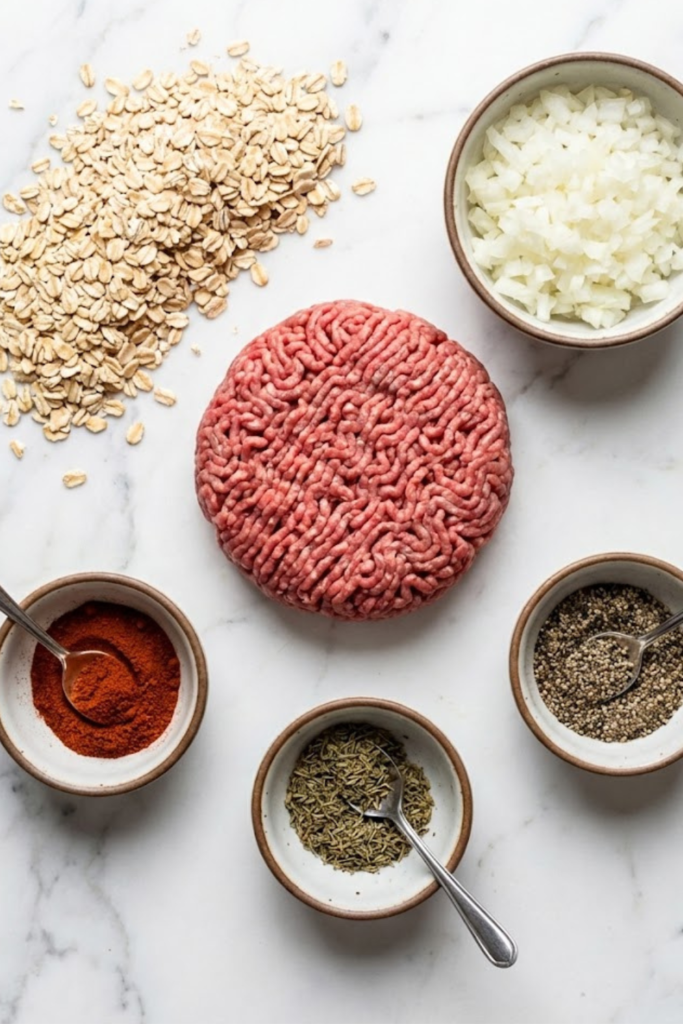
Essential Ingredients for the Perfect Loaf
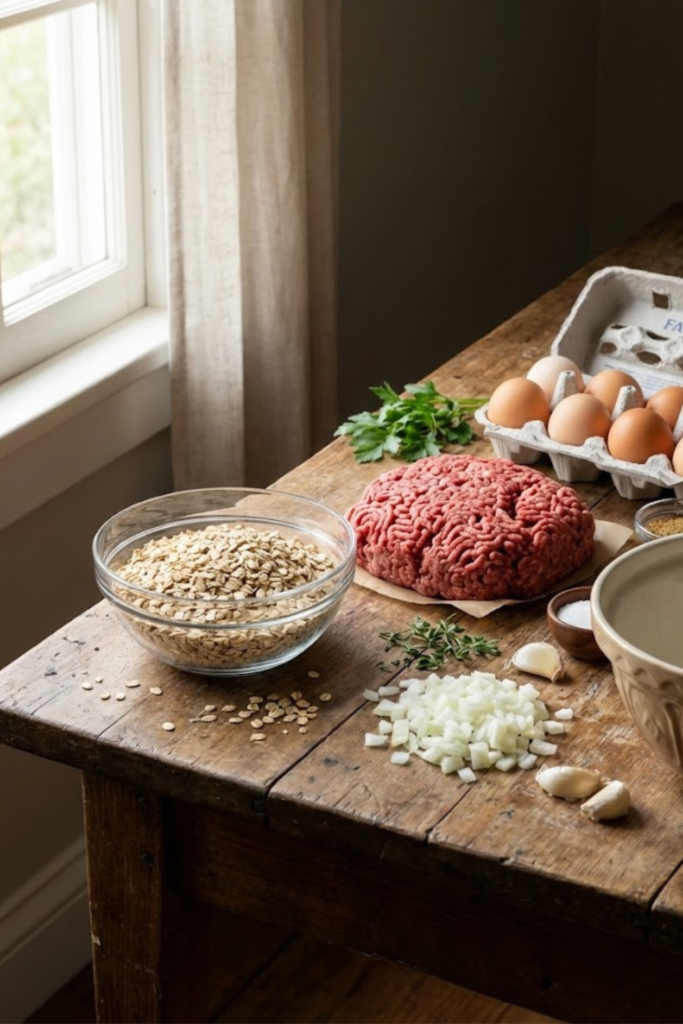
You know, for the longest time, I treated meatloaf like a culinary garbage disposal. I’d just toss in whatever ground meat was on sale, some stale crackers, and hope for the best. Big mistake! I learned the hard way that if you put garbage in, you get garbage out (or at least, a dinner that the dog won’t even touch). After years of trial and error—and honestly, a few dinners that ended with us ordering pizza—I’ve finally cracked the code on what actually belongs in a bowl of meatloaf with oatmeal.
It isn’t complicated, but you have to be picky about a few things.
The Meat Blend Matters
I remember one time I was on this huge health kick, so I bought the leanest ground beef I could find. It was like 96% lean. I thought I was being so smart.
Spoiler alert: I was not.
The loaf came out dry, crumbly, and tasted like seasoned cardboard. You need fat for flavor and moisture! For the absolute best results, you want to grab 85/15 ground beef. It’s the sweet spot. It has enough fat to keep things juicy as it renders down, but not so much that your loaf is swimming in a grease pool at the bottom of the pan. If you’re feeling fancy, doing a 50/50 mix of beef and ground pork adds a sweetness that is just to die for.
The Binder: Quick vs. Rolled Oats
Okay, this is where people get confused. Standing in the cereal aisle, staring at the canisters, wondering which one to grab for your meatloaf with oatmeal.
Here is my rule of thumb: Go for the quick-cooking oats.
Why? because they are cut smaller. When I’ve used old-fashioned rolled oats in the past, they didn’t break down enough. You’d take a bite of meat and get a distinct, chewy oat texture. It was weird. Quick oats, on the other hand, tend to “melt” into the mixture better. They act like a sponge without announcing their presence. It’s a stealthy ingredient.
Pro Tip: Do not use steel-cut oats. I made that mistake once. It was like putting gravel in our dinner. Just don’t do it.
Flavor Boosters (Aromatics)
Please, I am begging you, don’t just dump raw onion powder in and call it a day. While spices are great, fresh aromatics are better.
I like to chop up a yellow onion really fine. Sometimes, if I have an extra five minutes (which is rare, let’s be real), I’ll sauté the onions in a little butter before adding them to the meat. It takes the sharp “bite” out of the onion and adds a savory sweetness. Also, fresh parsley isn’t just a garnish! Chopping up a handful gives the loaf a fresh, herby kick that cuts through the heaviness of the meat.
The Liquid Element
You might think the eggs are enough liquid, but they aren’t. They are mostly there to glue everything together. You need actual liquid to hydrate those oats.
I always use whole milk.
The milk gets soaked up by the oats before you even mix it with the beef. If you are dairy-free, beef broth works too, but milk adds a richness that makes the final dish feel like comfort food heaven. It’s these little specific tweaks that take a recipe from “meh” to “can we have this again tomorrow?”
Step-by-Step: Mixing and Shaping Your Meatloaf
I have to confess something embarrassing. For years, I treated my meatloaf with oatmeal recipe like a science experiment gone wrong. I would throw everything into a bowl, grab a giant wooden spoon, and beat that poor meat mixture until my arm was sore. I thought I was doing a good job! I thought, “Hey, the smoother it looks, the better it’ll cook,” right?
Big mistake. Huge.
I ended up with these dense, rubbery loaves that bounced if you dropped a slice on the floor. It took me a long time to realize that how you mix is just as important as what you mix.
Soaking is Not Optional
Here is the first trick I learned after reading an old cookbook from the 50s. You cannot just throw dry oats into the meat and hope for the best.
Well, you can, but you’ll regret it.
If you toss them in dry, they spend the first twenty minutes of baking time sucking the moisture right out of your beef. It’s a disaster for juiciness. Instead, I take a small bowl and mix my oats with the milk (and beaten eggs) first. I let that sit for about 10 minutes while I chop my onions.
It turns into this weird, goopy sludge. It looks gross, I know. But that “sludge” is the secret to a moist meatloaf with oatmeal. It means the oats are already hydrated, so they fluff up instead of drying out.
The “Claw” Technique
Put the spoon away. Seriously, put it in the dishwasher.
The only tools you should use for mixing are your own two hands. I know, touching raw meat is gross. I hate the feeling of cold ground beef under my fingernails too! But it is necessary.
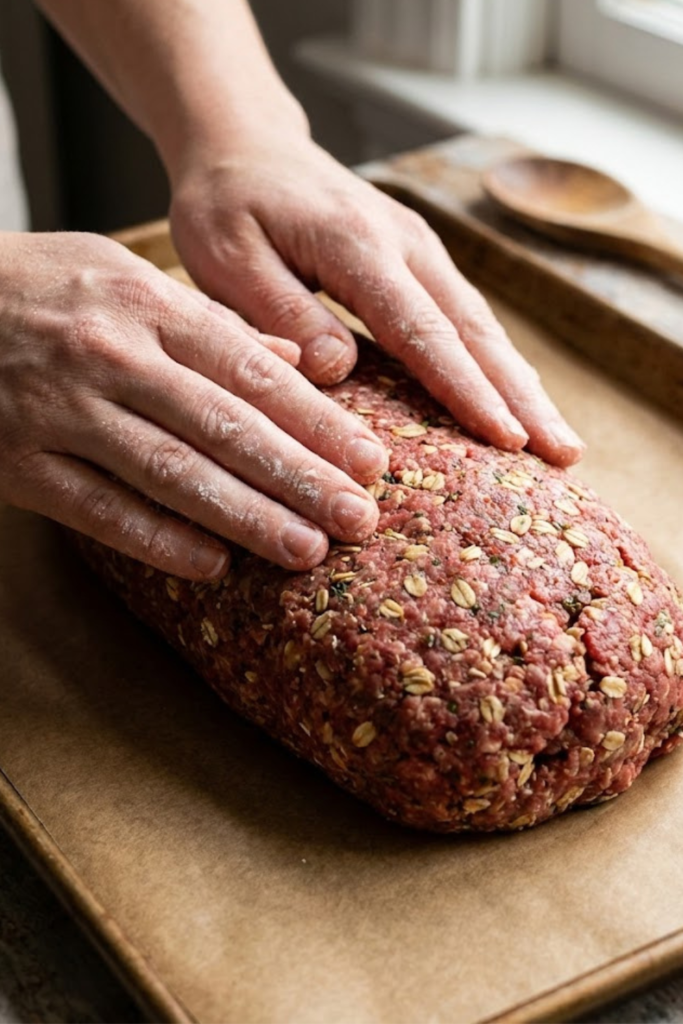
I use what I call the “claw hand.” Keep your fingers spread apart and stiff, like a rake. Gently toss the meat and the oat mixture together. You aren’t kneading dough here! You just want to combine everything until you don’t see big streaks of oats anymore.
If you overwork the meat, you break down the proteins too much. That is how you get the “school cafeteria” texture we are trying to avoid. Stop mixing the second it looks combined.
Ditch the Loaf Pan
I have a strong opinion on this: baking sheet meatloaf is superior to using a loaf pan.
When you stuff the meat into a loaf pan, it steams in its own juices. It never really gets that nice, brown crust on the sides. Plus, it’s a pain to get the grease out.
Instead, I dump my mixture onto a parchment-lined baking sheet. I use my hands to gently pat it into a loaf shape. It feels like playing with Play-Doh.
This freeform method allows the heat to circulate all around the loaf. You get those delicious, caramelized edges that everyone fights over at dinner.
The Pre-Bake Pause
Once I have my loaf shaped, I don’t throw it in the oven immediately.
I let it sit on the counter for about 10 minutes while the oven finishes preheating. This meatloaf prep time might seem like a waste, but it lets the cold meat warm up slightly. This helps it cook more evenly so the outside isn’t burnt while the inside is still raw.
It also gives those flavors—the onion, the garlic, the spices—a minute to get to know each other. It’s a small step, but it makes a difference!
Creating the Ultimate Tangy Glaze
I have a confession to make. For the first five years of my marriage, I served what I now call “naked” meatloaf. It had absolutely no sauce on top. Just a brown, sad-looking loaf sitting on a plate. I honestly didn’t know any better! My mom never glazed hers, so I didn’t glaze mine. Then, we went to a diner one night, and I ordered their special. It came out dripping in this sticky, sweet red sauce, and my mind was blown.
I realized immediately that the meatloaf sauce is not just a garnish; it is the personality of the dish.
Without it, you are just eating a giant hamburger without a bun. I went home determined to recreate that flavor, but man, did I ruin a few dinners trying to get it right.
The Holy Trinity of Ingredients
You don’t need to be a chef to make the best meatloaf glaze. In fact, if you get too fancy, it ruins the nostalgia factor. I tried using balsamic glaze and fancy mustard once. My family revolted. They wanted the classic taste.
The secret really comes down to three things: Ketchup, brown sugar, and apple cider vinegar.
I once ran out of brown sugar and tried to use regular white sugar. Do not do this. It was a disaster. The sauce didn’t get sticky; it just ran off the sides like red water. You need the molasses in the brown sugar to get that thick, caramelized finish. Mixing these meatloaf ingredients creates that perfect balance of sweet and tangy that makes your mouth water before you even take a bite.
Timing is Everything
Here is the biggest mistake I made for years. I used to dump the entire bowl of glaze onto the raw meatloaf right at the beginning.
I thought, “Let it cook together, right?”
Wrong. By the time the meat was actually done cooking inside, the sugar in the glaze had burned to a crisp on the outside. We had to scrape off a layer of black char just to eat dinner. It was embarrassing.
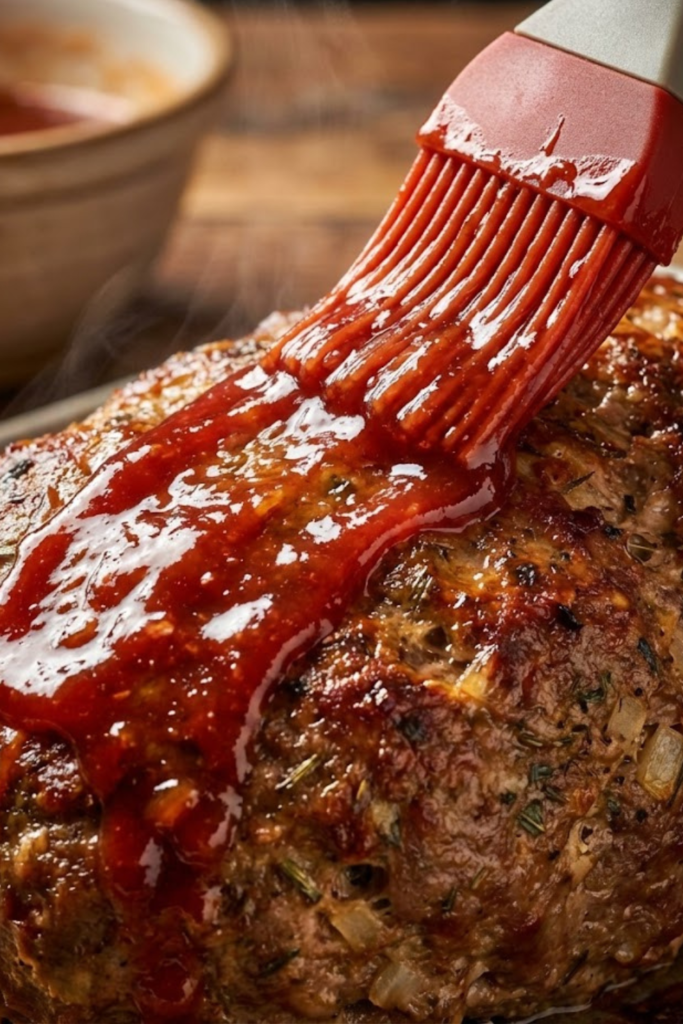
Now, I have a system. I smear just a thin layer—maybe a few tablespoons—on the raw loaf. This bakes into the crust. Then, and this is the important part, I save the rest of the tangy meatloaf glaze for the very end.
The Final 15 Minutes
When the timer goes off and you think the meat is almost done, pull it out. This is when you slather on the rest of that sauce. Be generous with it!
Put it back in the oven for just 15 minutes.
This short blast of heat warms the sauce up and makes it tacky without burning it. It comes out looking shiny and beautiful, just like that diner photo I can never forget. It’s a small extra step, but it saves your sauce from turning into charcoal. Plus, serving extra sauce on the side for dipping? That is always a pro move in my house.
Baking Time and Temperature for Juicy Results
I used to play a dangerous game with dinner. I call it “Meatloaf Roulette.” I would shove the pan in the oven, set a timer for an hour, and just pray it worked out. Sometimes we ate burnt bricks. Other times? I’d slice into the middle and see pink, raw mush.
It was humiliating!
I remember one Thanksgiving, I tried to make a fancy loaf for a potluck. I cranked the heat up to get it done faster. The outside was black, but the inside was cold. I ended up ordering pizza for everyone. I learned my lesson that day: you cannot rush a good meatloaf with oatmeal. You have to treat it with a little respect if you want it to be edible.
The Temperature Sweet Spot
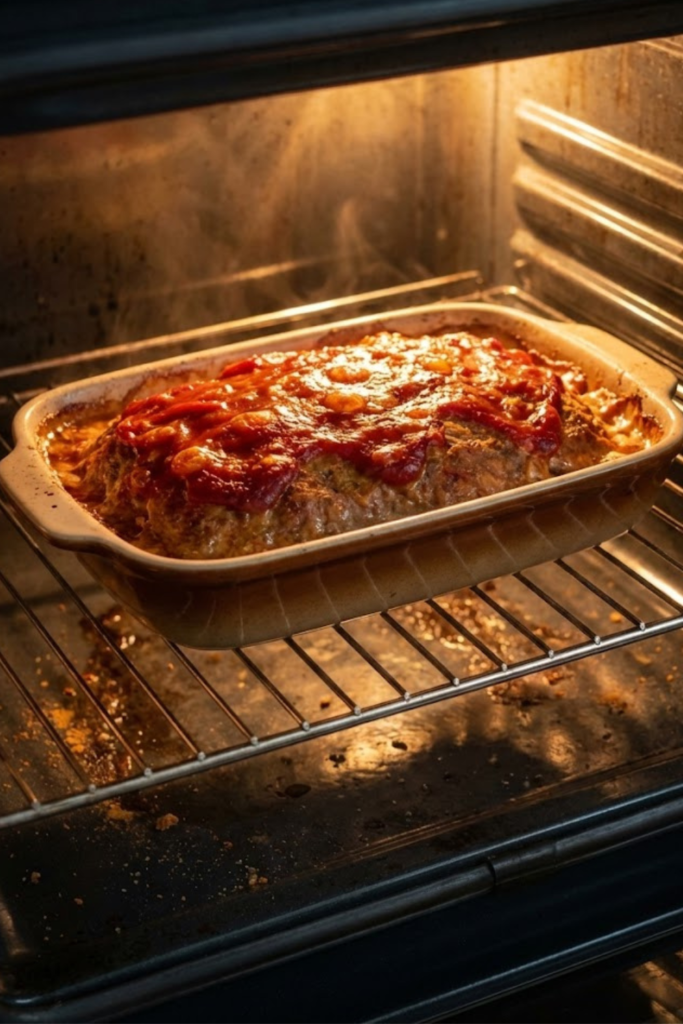
Here is the rule I live by now: 350°F (175°C).
Do not go higher.
I know, I know. You are hungry. You want to eat now. But if you crank that oven up to 400°F, you are going to dry out the oats and the beef before the center even thinks about cooking. The meatloaf cooking time at this temperature is usually about 55 minutes to an hour and 15 minutes, depending on the shape of your loaf.
It’s a slow, gentle roast.
This temperature allows the fat to render slowly, basting the meat from the inside out. It keeps everything moist. If you go too low, like 325°F, it just steams and turns gray. Stick to 350°F; it is the Goldilocks zone.
Stop Guessing (Use a Gadget)
Please, for the love of food, stop poking it with a fork to see if it’s done. That tells you absolutely nothing.
You need a meat thermometer.
I fought this for years. I thought, “Grandma didn’t use a thermometer!” Well, Grandma also overcooked her meat half the time, but we were too polite to say anything. A digital thermometer costs like ten bucks. It is worth it.
You are looking for an meatloaf internal temp of 160°F (71°C).
Stick the probe right into the thickest part of the center. If it says 155°F, pull it out! The heat carries over and finishes cooking it on the counter. This is one of those juicy meatloaf secrets that separates the pros from the amateurs.
The Hardest Part: Waiting
Okay, this is the step where I usually fail. The kitchen smells amazing. The glaze is bubbling. You are starving.
You take it out of the oven and immediately grab a knife to slice it.
Stop! Put the knife down!
If you cut into that loaf right now, all those precious juices are going to run out onto the cutting board. Your dinner will be dry as a bone in five seconds. You have to let it rest.
I tent a little piece of foil over the top and set a timer for 10 to 15 minutes. It is torture, I admit it. But during that time, the juices redistribute back into the meat fibers. When you finally slice it, the slice holds its shape and stays moist. It makes a massive difference in the texture. Just distract yourself by doing the dishes or pouring a drink while you wait.
There you have it—the foolproof guide to making the best meatloaf with oatmeal you will ever taste!
It is moist, flavorful, and hearty enough to satisfy even the pickiest eaters at your table. Don’t let the idea of oatmeal fool you; it’s the secret ingredient you never knew you needed. Give this recipe a try tonight and watch it vanish! If you loved this tip, don’t forget to pin this recipe to your Dinner Ideas board on Pinterest so you never lose it!