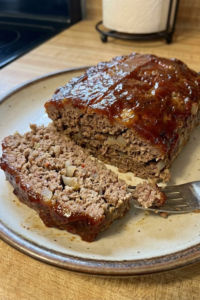
“Honestly, is there anything that screams ‘home’ quite like a thick slice of meatloaf swimming in a rich, savory sauce? I read recently that comfort foods like this can actually trigger dopamine release, and let me tell you—this recipe is pure happiness on a plate! We aren’t just making dinner today; we are crafting a hug for your stomach. While many people settle for dry loafs and packet sauce, we are diving deep into earthy flavors with a homemade meatloaf mushroom gravy that will change your life. Get your whisk ready!”
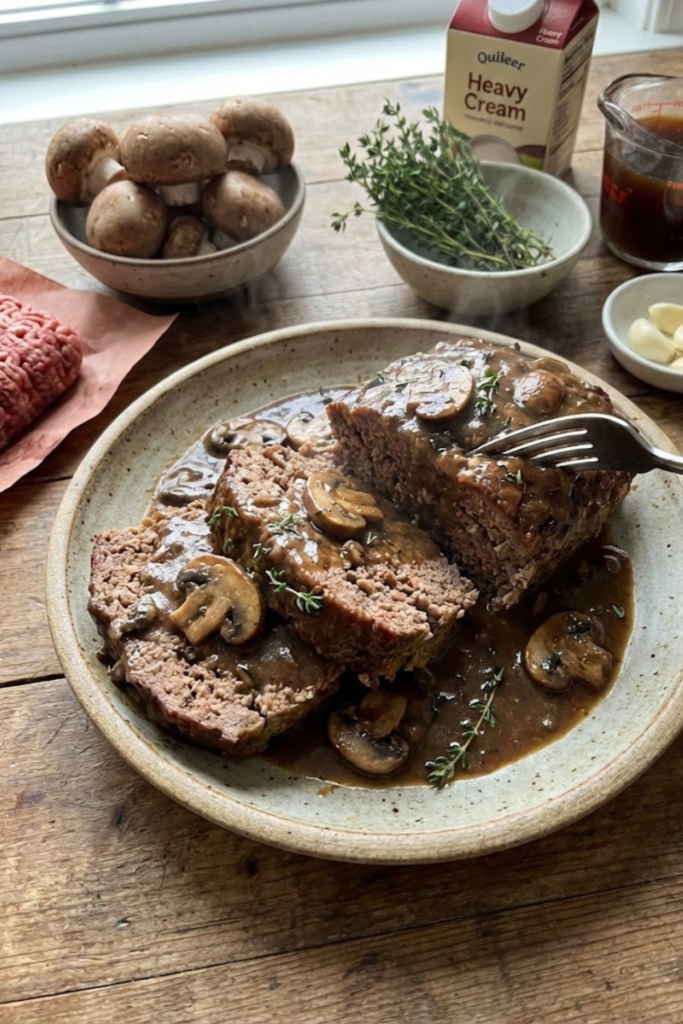
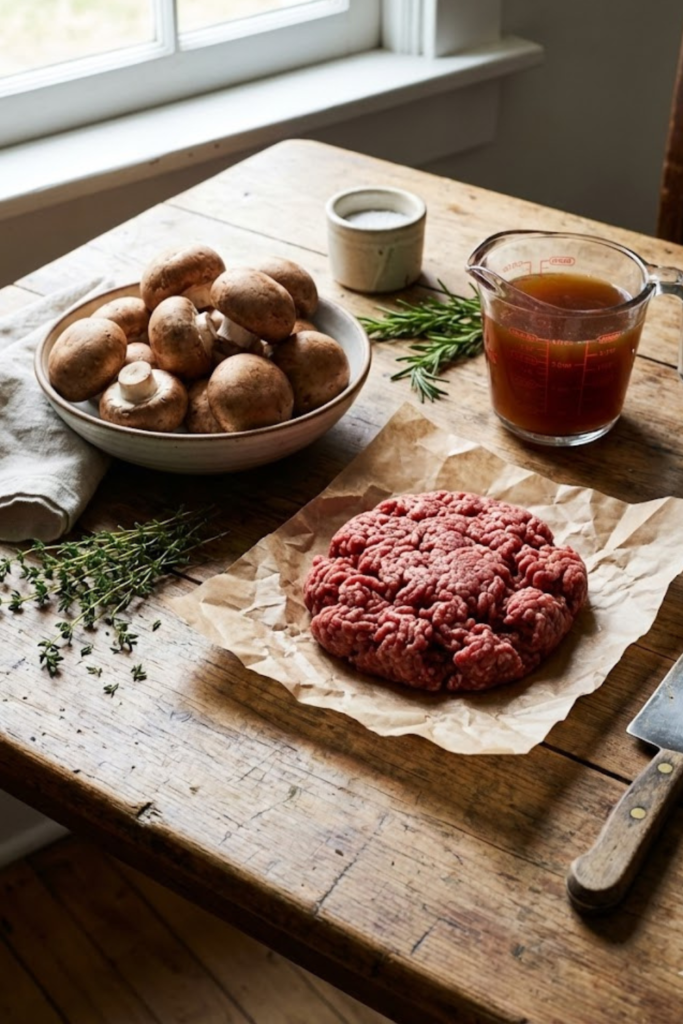
Gathering the Essential Ingredients for Savory Success
You know, I used to think meatloaf was just a way to use up whatever sad ground beef was sitting in the back of the fridge. Boy, was I wrong. I remember the first time I tried to make a proper meatloaf mushroom gravy for a dinner party; I grabbed the leanest beef I could find because I was trying to be “healthy.” The result? A dry, flavorless brick that no amount of sauce could save. It was embarrassing, honestly. But over the years, I’ve learned that the magic really is in the grocery haul. If you don’t start with the right stuff, you’re setting yourself up for a struggle.
The Meat Block: Fat is Your Friend
Let’s talk beef. When you are standing at the butcher counter, ignore the 90/10 or 93/7 lean ground beef. Seriously, walk right past it. For a meatloaf mushroom gravy that actually holds together and tastes like something, you need fat.
I always go for an 80/20 mix (80% lean meat, 20% fat). That 20% fat content renders down while the loaf bakes, keeping everything moist and carrying the flavor through the meat. If you use super lean beef, you end up with a crumbly texture that feels like eating sawdust. I’ve made that mistake enough times to know better now!
The Mushroom Medley
Now, for the star of the show: the fungi. I used to just grab those generic white button mushrooms because they were cheap. They work okay, but if you want that deep, earthy flavor, you gotta mix it up.
- Cremini Mushrooms: These are basically baby portobellos. They have a firmer texture and a meatier flavor than the white ones.
- White Button: Good for bulk, but a bit watery.
My go-to strategy is doing a 50/50 mix of Cremini and White Button. It gives you a nice variety of textures in the gravy. Also, a quick tip I learned the hard way: don’t wash your mushrooms under running water right before cooking. They act like sponges and soak up the liquid. Instead, wipe them down with a damp paper towel. It’s a pain, I know, but soggy mushrooms won’t brown, and we need that browning for flavor.
Aromatics and Herbs
Please, I beg you, put down the garlic powder. For this recipe, fresh is best. I use fresh thyme, yellow onions, and real garlic cloves. There is a huge difference in the aroma when you sauté fresh garlic versus using the dried stuff.
When I’m prepping the meatloaf mushroom gravy, I chop the onions pretty fine. Nobody wants to bite into a giant chunk of raw onion in the middle of a tender slice of meatloaf. The goal is for the aromatics to melt into the background, supporting the beef and mushroom flavors without taking over the show.
Liquids and Binders
Finally, we need to glue it all together. I use panko breadcrumbs instead of the fine, sandy ones. Panko is lighter and keeps the loaf from getting too dense.
For the gravy liquid, beef broth is standard, but if you want to feel fancy, a splash of heavy cream at the end creates that silky, restaurant-quality mouthfeel. I once tried using milk instead of cream, and it curdled slightly—total disaster. Stick to the heavy cream; it stabilizes the sauce much better.
Getting these specific ingredients might take an extra five minutes at the store, but trust me, your tastebuds will thank you later.
Mastering the Meatloaf Mix Technique
You know, the difference between a melt-in-your-mouth slice of dinner and a tough, chewy hockey puck usually happens in the first five minutes of prep. I learned this the hard way back when I thought using a stand mixer would save me time. Spoiler alert: it didn’t. I threw everything in the bowl, cranked it up to medium, and walked away. When I took that loaf out of the oven, it was so dense you could’ve used it as a doorstop. My family was polite about it, but I saw them chugging water to get it down. That was the day I realized that making the perfect base for meatloaf mushroom gravy requires a little bit of finesse and a lot of restraint.
The Gentle Hand
Here is the golden rule: treat the meat like it is fragile. When you overwork ground beef, the proteins get all tangled up and tough. It’s science, but it feels like bad luck in the kitchen.
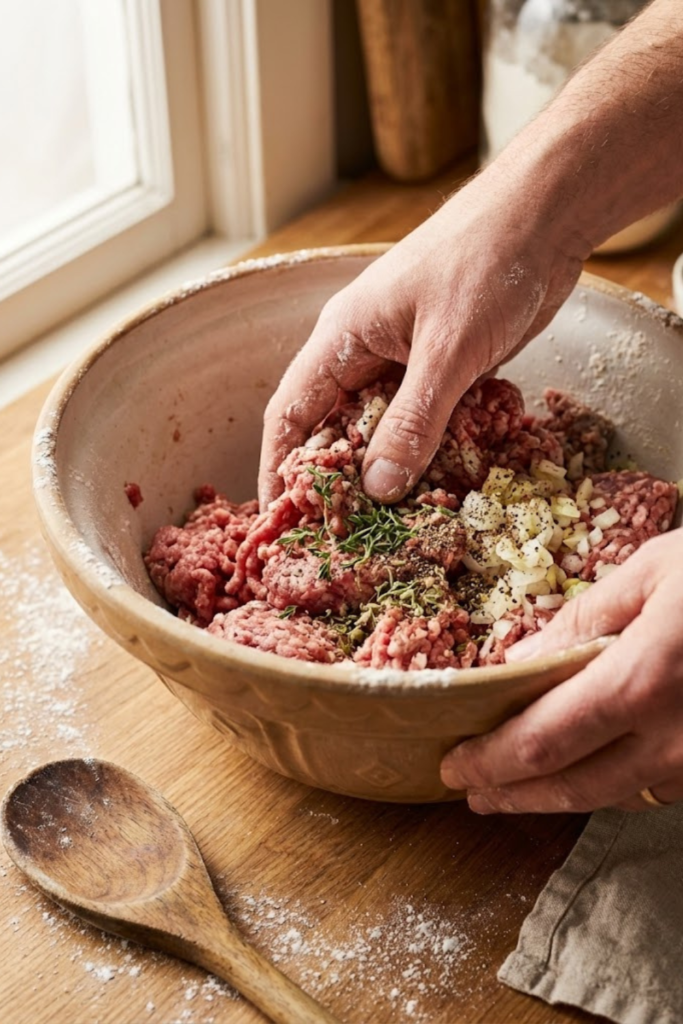
I ditched the spoons and mixers years ago. Now, I only use my hands. It’s messy, yeah, but it is the only way to feel when the ingredients are just combined. You want to stop mixing the second you don’t see big streaks of egg or breadcrumbs anymore.
Also, a weird little tip I swear by? Run your hands under cold water before you dive in. It keeps the fat in the meat from melting from your body heat while you mix. If the fat melts too early, your meatloaf ends up dry, and no amount of meatloaf mushroom gravy can fix a dry loaf.
Seasoning the Meat Correctly
One of my biggest frustrations used to be biting into a pocket of plain ground beef followed by a pocket of salty onions. It was inconsistent. I used to just dump the spices on top of the meat and hope for the best. Big mistake.
Now, I mix all my “wet” stuff and seasonings in a small bowl first. I’m talkin’ the eggs, the Worcestershire sauce, the salt, pepper, and herbs. I whisk that into a slurry before pouring it over the beef. This way, every single crumb of meat gets coated in that flavor. It makes a huge difference. When you slice into it later, the flavor is even all the way through.
Shaping: Pan vs. Freeform
Okay, we need to have a serious talk about loaf pans. I have a love-hate relationship with them. Sure, they give you that classic shape, but they also steam the meat in its own grease. It’s kind of gross when you think about it.
I’ve switched to the freeform method. I dump the mix onto a parchment-lined baking sheet and shape it into a log with my hands. This allows the heat to hit the loaf from all sides, creating this beautiful, caramelized crust that tastes amazing under the meatloaf mushroom gravy. Plus, the excess grease drains away instead of boiling the meat.
If you are worried about it falling apart, just pack it firmly (but gently!) and let it rest for a few minutes before baking. Trust me, ditching the loaf pan was the best decision I ever made for my Sunday dinners.
Creating the Perfect Mushroom Gravy from Scratch
I’ll be honest, making gravy from scratch used to terrify me. It felt like this high-stakes chemistry experiment where one wrong move meant I’d be serving a lumpy, gluey mess. I relied on those little brown powder packets for years. No shame in that game, but once you taste real, homemade meatloaf mushroom gravy, you can’t go back. The depth of flavor you get from real drippings and fresh ingredients is just on another level. I’ve burned a few pans and broken a few sauces learning this, so hopefully, you can skip my mistakes.
Sautéing the Fungi
The first step is getting the mushrooms right, and this is where I used to mess up big time. I would dump all the sliced mushrooms into the pan at once. Rookie mistake! When you crowd the mushrooms, they steam instead of browning. You end up with these rubbery, gray, squeaky things that have zero flavor.
Now, I cook them in batches if I have to. You want to hear a sizzle, not a simmer. Use a cast iron skillet if you have one; it holds heat like a champ. Let them sit for a minute without touching them. Seriously, don’t touch them! You want that golden-brown crust to form. That caramelization is essential for a rich meatloaf mushroom gravy. Once they are browned and have released their water, the flavor is concentrated and ready for the next step.
The Roux: Don’t Panic
Okay, the roux. This is just fancy talk for cooking flour in fat. After the mushrooms are browned, I usually add a little more butter to the pan because, well, butter makes everything better. Then I sprinkle the flour right over the mushrooms.
You have to stir this constantly. I mean it. If you walk away to check your phone, it will burn, and burnt flour tastes bitter and nasty. You want it to cook for about a minute or two until it smells kind of nutty. This cooks out the raw flour taste. I once didn’t cook it long enough, and the gravy tasted like uncooked dough. It was gross. This step is the thickening agent that gives the sauce that velvety texture we are after.
Simmering to Perfection
Here comes the arm workout. Grab your whisk and get ready. Slowly—and I mean slowly—pour in the beef broth while whisking like your life depends on it.
If you dump the cold broth in all at once, the flour will seize up, and you’ll get lumps. Nobody wants lumpy gravy. I usually pour a splash, whisk until smooth, pour another splash, and whisk again. It takes a minute, but it guarantees a smooth sauce.
Once all the liquid is in, bring it to a gentle simmer. You’ll see it start to thicken up beautifully. This is when I toss in the fresh thyme and a splash of heavy cream for richness. Let it bubble away until it coats the back of a spoon. If you run your finger down the back of the spoon and the line stays, your meatloaf mushroom gravy is ready for action.

Serving Suggestions and Side Dishes
You can spend hours crafting the perfect loaf, but if you pair it with the wrong sides, the whole meal feels kind of incomplete. I remember one frantic Tuesday when I realized I was out of potatoes. I tried serving this with plain white rice, thinking it would be fine. The look of disappointment on my family’s faces was real. The rice just didn’t soak up the sauce the same way, and the texture was all wrong. Lesson learned: some things are classics for a reason, and you shouldn’t mess with them.
The Classic Pairing
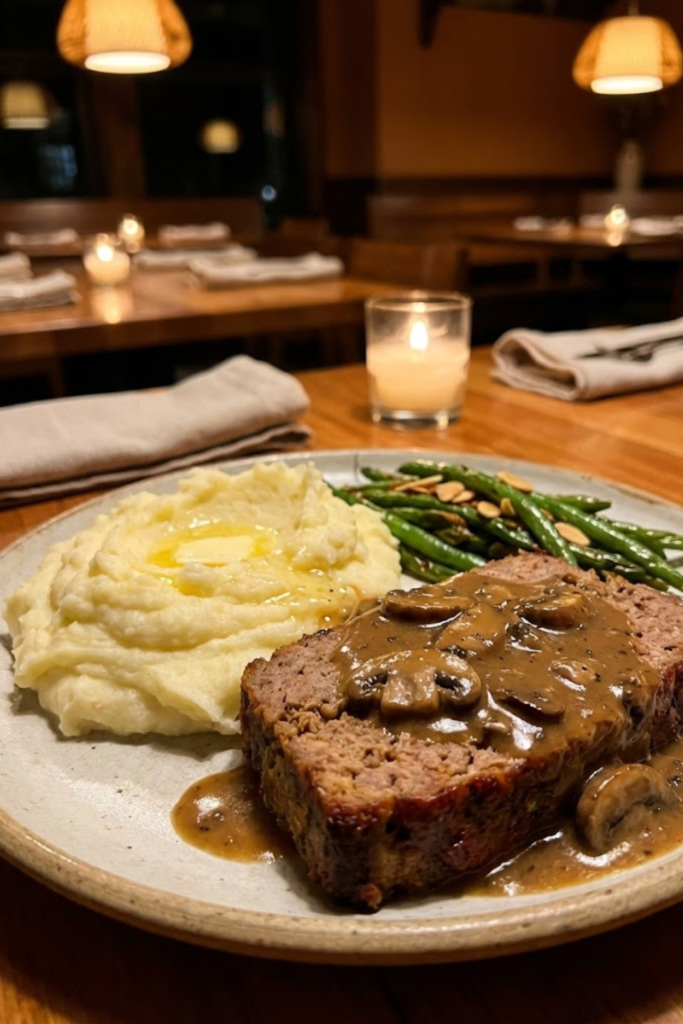
Let’s just get this out of the way: meatloaf mushroom gravy belongs with mashed potatoes. It is a non-negotiable relationship in the world of comfort food classics. You need that creamy, starchy base to catch all the savory drippings.
I like to make my potatoes a little on the rustic side, leaving the skins on for texture. If you make them too smooth, they kind of disappear under the heavy sauce. I usually whip them with plenty of butter and a splash of milk. Don’t be shy with the salt, either. Bland potatoes are a culinary crime.
Green Additions
Since the meat and potatoes are pretty heavy, you need something fresh to cut through that richness. If you don’t add a green, you’re going to need a nap immediately after dinner. I usually opt for roasted green beans or garlic asparagus.
I toss the green beans in a little olive oil and sea salt and throw them in the oven on a separate rack while the meatloaf finishes. They get these crispy, caramelized edges that add a nice crunch. Boiling them just makes them mushy, and we already have enough soft textures on the plate. If asparagus is in season, I’ll grill it quickly. The slight bitterness of the charred asparagus balances out the savory sweetness of the cooked onions in the gravy perfectly.
Plating like a Pro
We eat with our eyes first, right? I used to just slap a slice on the plate and ladle a tsunami of sauce over everything. It looked like a brown mess.
Now, I try to be a bit more intentional. I place a generous scoop of the mashed potatoes side next to the slice, not under it. This keeps the breadcrumbs on the bottom of the loaf from getting soggy too fast. Then, I ladle the gravy specifically over the meat, letting it cascade just a little bit onto the potatoes. It looks way more appetizing. Also, let the meatloaf rest for at least 10 minutes before you slice it. If you cut it too soon, it crumbles into a pile of ground beef, and no amount of pretty plating can fix that.
Storage and Reheating for Next-Day Deliciousness
I’m going to make a bold claim here: meatloaf mushroom gravy tastes better the next day. It’s like the flavors need a solid 24 hours to really get to know each other. But, and this is a big but, reheating it the wrong way can turn your glorious dinner into a rubbery disaster. I remember taking a slice to work once and nuking it in the breakroom microwave for two minutes. It exploded. There was sauce everywhere, and the meat texture was basically a tire. I ate it anyway because I was starving, but it was a sad moment. Since then, I’ve gotten pretty serious about how I handle my leftovers.
Fridge Life: The 3-Day Rule
If you are lucky enough to have leftovers, you need to store them right. Don’t just throw the whole pan in the fridge covered in foil. The air gets in and dries out the edges. I always transfer the slices into an airtight glass container.
The sauce can go in the same container if you plan to eat it soon, but it will thicken up into a gelatinous blob. Don’t freak out; that’s just the collagen from the broth doing its job. It will melt back down. Generally, cooked beef is good for 3 to 4 days. After that, you are playing a risky game with your stomach, and I don’t recommend it.
Freezing Instructions: Keep ‘Em Separated
If you are meal prepping for the future, listen up. I used to freeze the slices swimming in the gravy. Bad idea. When you thaw it, the breadcrumbs in the loaf soak up way too much liquid and turn into mush. It’s not appetizing.
Now, I freeze the meatloaf slices individually wrapped in plastic wrap, then put them in a freezer bag. I freeze the meatloaf mushroom gravy separately in a jar or a souper cube. This keeps the textures distinct. When you are ready to eat, let them thaw in the fridge overnight. It takes a little planning, but the quality difference is massive.
Reheating Without Drying Out
Okay, step away from the microwave. If you want that “just baked” taste, you have to use the oven or the stove. The microwave zaps the moisture out of the meat instantly.
For the best results, I put the slices in a small baking dish and add a splash of beef broth or water to the bottom of the dish. Cover it tightly with foil to create a little steam bath. Pop it in the oven at 350°F for about 15-20 minutes.
For the gravy, dump that gelatinous blob into a small saucepan on the stove. You’ll definitely need to whisk in a tablespoon of water or broth to loosen it up as it heats. Once it is bubbling, pour it over your warm meatloaf. It tastes exactly like it did on Sunday night.

So, there you have it—the blueprint to the dinner of your dreams. Mastering this meatloaf mushroom gravy might just make you the family favorite cook! I know it seems like a few extra steps compared to the packet stuff, but the combination of tender beef and that rich, earthy sauce is unbeatable. It is the kind of meal that makes everyone stop scrolling on their phones and actually talk at the table.
Don’t forget to pin this recipe on Pinterest to your ‘Sunday Dinner’ or ‘Comfort Food’ board so you never lose this gem! Trust me, once you make it, you’re going to want to find it again. Happy cooking!