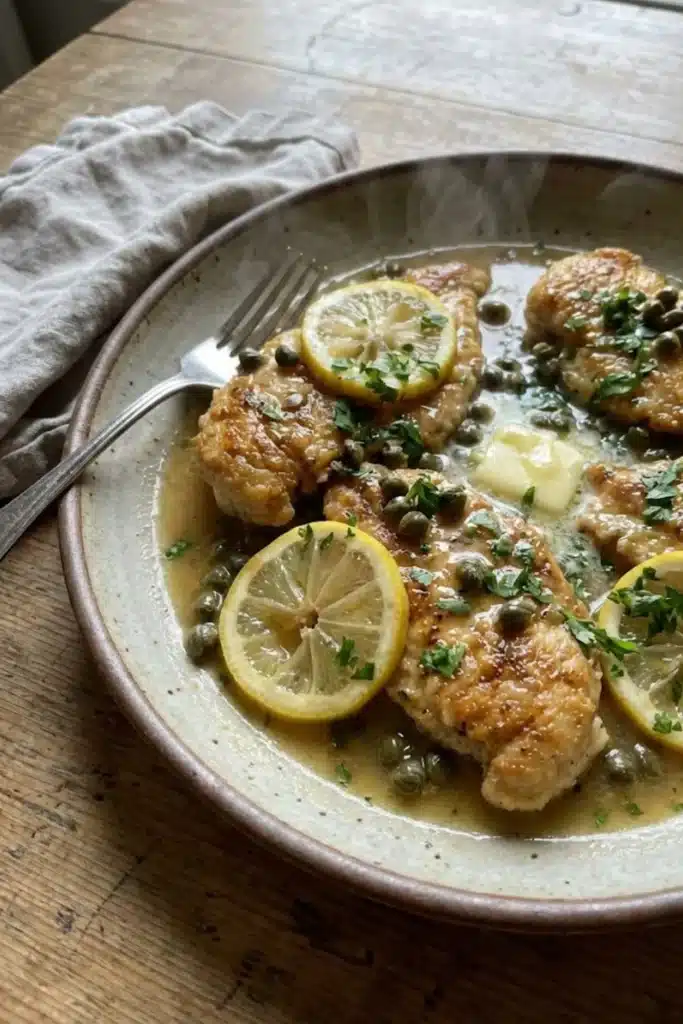
I used to think making restaurant-quality Italian food at home was a total nightmare. Wrong! Did you know that while “piccata” means “larded” in Italian, the chicken version we love is actually an Italian-American invention? It’s true! This lemon chicken piccata is going to become your new best friend. It is bright. It is briny. It is absolutely delicious! Whether you are a pro chef or just trying not to burn the house down, this recipe delivers big flavor in no time. Let’s get cooking!
Selecting the Perfect Ingredients for Piccata
Look, I used to think I could just grab whatever was on sale at the grocery store and it would turn out fine. I was wrong. I remember the first time I tried to make this dish; I bought these massive, thick chicken breasts and bottled lemon juice because I was feeling lazy. The result? Rubber chicken swimming in something that tasted like furniture polish. It was a disaster, and my family wasn’t shy about telling me so! Mistakes were made, but I learned a ton from that dinner flop.
Here is the deal on getting the goods for a killer chicken piccata.
The Chicken Situation
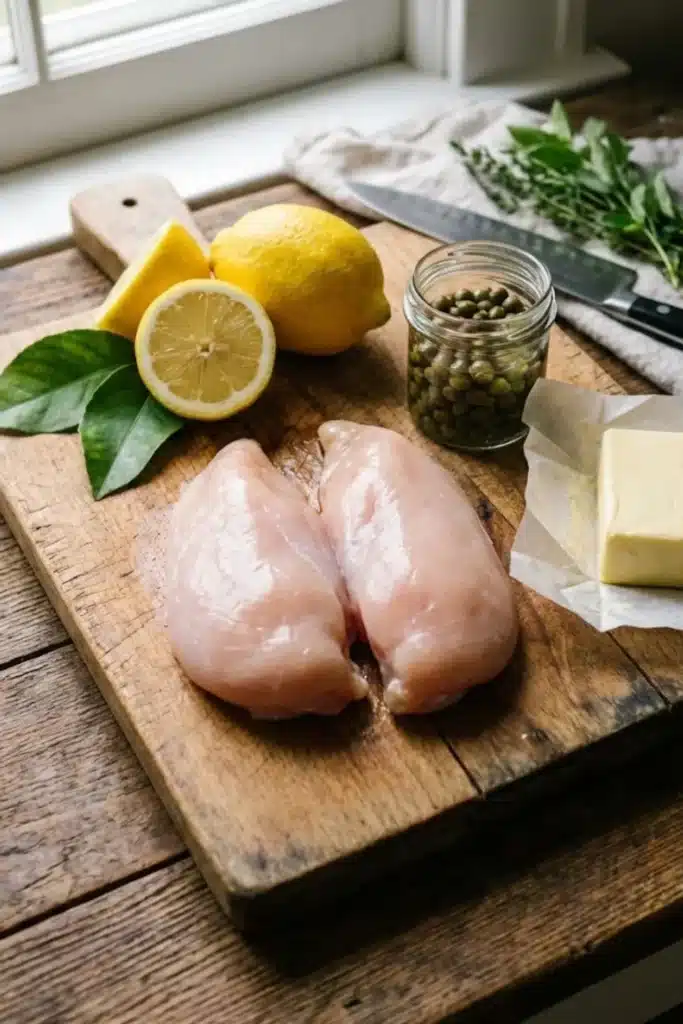
First off, you have to be picky about your poultry. I generally reach for boneless, skinless chicken breasts, but here is a pro tip I learned the hard way. Avoid those giant “woody” breasts that look like they came from a turkey. They have a weird texture that no amount of pounding can fix.
If you can find “chicken cutlets” or “thin-sliced breasts” at the store, buy them! It saves you so much prep time. It costs a little extra, but on a Tuesday night, that time saved is worth every penny. If you buy standard breasts, just know we are gonna have to butterfly them later.
The Acid Factor
Please, I am begging you, put down the little plastic yellow lemon. Just walk away from it. For a sauce this simple, the ingredients have to be real. Fresh lemon juice is non-negotiable here because it provides that bright, floral acidity that cuts through the butter.
I usually grab about three lemons. Two for juicing and one for slicing up pretty to garnish the pan. If the lemons feel hard as a rock, roll them on the counter with your palm before cutting. It wakes up the juice inside.
Capers: The Salt Bombs
When I first saw capers in a recipe, I had no idea what they were. They look like little peas, right? They are actually flower buds from a bush, pickled in brine or salt. They add this salty, briny punch that makes piccata, well, piccata.
But here is where I messed up before: I dumped them straight from the jar into the pan. Whoops. The sauce was so salty it was inedible. You have to drain them and give them a quick rinse under cold water. It washes off the excess brine so you taste the caper, not just the salt.
The Fat Combo
You might think you should just use butter, but that’s a rookie move I made often. Butter burns fast. Olive oil can take higher heat.
So, you want a high-quality olive oil for frying the chicken to get that golden crust. Then, you switch to cold, unsalted butter to finish the sauce. Why unsalted? Because those capers bring plenty of salt to the party already. Using cold butter at the very end is what makes the sauce glossy and thick. It’s a technique called “mounting” the sauce, but you don’t need to know the fancy term to get the delicious results.
Preparing the Chicken for Maximum Tenderness
Okay, let’s be real for a second. We have all eaten that one piece of chicken that was so dry it felt like chewing on a shoe. I’ve been there. I have cooked it. It’s embarrassing! But I learned that the secret to that melt-in-your-mouth texture isn’t magic; it is mostly about how you treat the meat before it even hits the pan.
Pounding It Out
If you didn’t buy the thin cutlets I mentioned earlier, you get to do my favorite part: the pounding. It is honestly great cheap therapy after a long day with the kids. But you have to be careful.
One time, I got a little too aggressive with the meat mallet and pulverized the poor chicken breast until it had holes in it. Total mess.
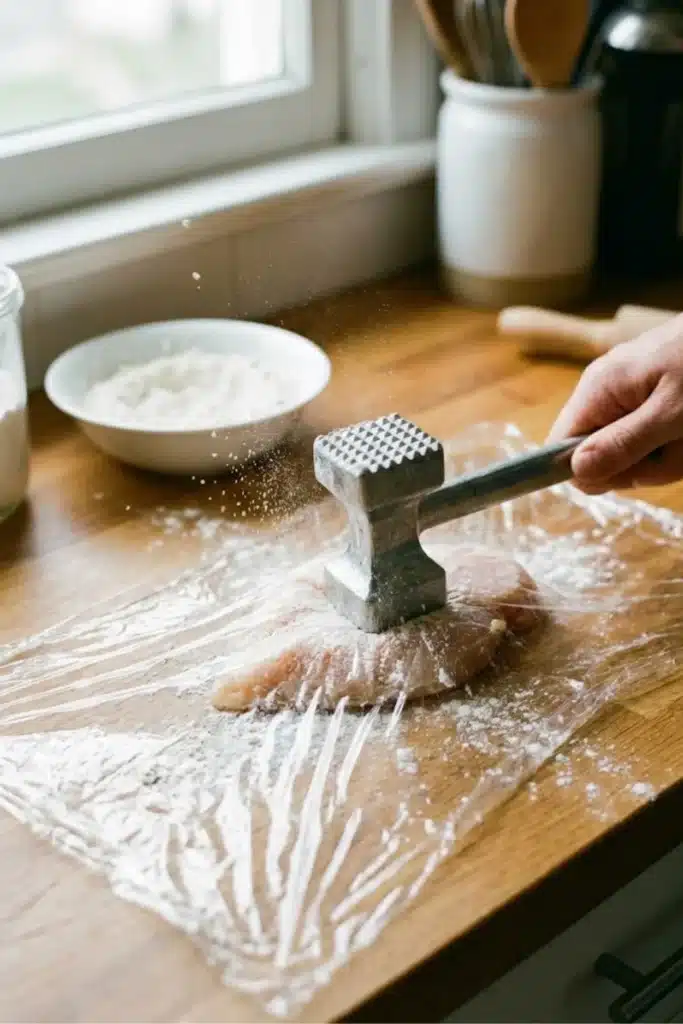
Here is the trick I swear by. Place the chicken between two sheets of plastic wrap or in a large zipper bag. This keeps raw chicken juice from flying all over your kitchen (yuck). Then, use the flat side of the mallet—not the spiky side! You want to gently pound the chicken breast until it is about a quarter-inch thick everywhere. If it is even, it cooks even.
The Seasoned Flour Coating
Now, we dredge. This creates that lovely golden crust that soaks up the lemon butter sauce later.
I used to just dip the chicken in plain flour and call it a day. The result? Bland city. You have to season the flour itself. I grab a shallow bowl and mix the all-purpose flour with a generous amount of salt and fresh cracked pepper.
Also, don’t let the chicken swim in the flour. You want a light dusting. If you pack on too much flour, it turns into a gummy paste in the pan, and nobody wants that. Shake off the excess like you mean it.
Getting the Heat Right
This is where I used to ruin everything. I’d get impatient and throw the chicken in before the oil was hot enough.
If the oil isn’t shimmering, wait. If you put the chicken in cold oil, it just absorbs the grease and gets soggy instead of searing. You want to hear a distinct sizzle the second the meat touches the pan.
Another hard lesson I learned: do not crowd the pan. I know, you want to get dinner done fast, so you jam all four pieces in at once. Don’t do it! When the pieces touch, they steam each other instead of frying. Cook in batches if you have to. It takes a few extra minutes, but the golden-brown crust is absolutely worth the wait.
Mastering the Lemon Butter Caper Sauce
Okay, the chicken is cooked and resting on a plate. Don’t touch it! Now we get to make the liquid gold. For the longest time, I was intimidated by pan sauces. I thought they required a degree in chemistry or something. But honestly? It is the easiest part of this whole chicken piccata recipe if you just follow a few simple rules.
The Magic of Deglazing
So, look at your pan. See all those brown, crusty bits stuck to the bottom? Do not scrub them off! That is called the fond, and it is literally pure flavor waiting to happen.
We need to get that stuff up, and we do that with wine. I grab a dry white wine, usually a Pinot Grigio or Sauvignon Blanc. Dry white wine for cooking is essential here; if you use a sweet wine like Moscato, dinner is gonna taste like candy chicken. Yuck.
Here is a mistake I made for years: using “cooking wine” from the vinegar aisle. Please don’t do that. It is loaded with salt and preservatives. My rule of thumb is, if I wouldn’t drink a glass of it while I’m cooking, it’s not going in the pan. Pour in about half a cup and use a wooden spoon to scrape up all those tasty browned bits. The smell hitting your face right now? incredible.
The Reduction
Let that wine bubble away for a couple of minutes. You want it to reduce by about half. This concentrates the flavor and burns off the harsh alcohol taste.
Next, I stir in the fresh lemon juice and chicken stock. Let it simmer again. Patience is key here, guys. If you rush it, the sauce will be watery and sad. You want it to thicken slightly just from the heat.
The Cold Butter Trick
This is the secret weapon. This is how restaurants get that glossy, velvety sauce that coats the spoon.
Turn the heat down to low (or even take the pan off the burner entirely). Grab your cubed, cold butter. Yes, it needs to be cold! If you add melted or soft butter, the sauce will break and look oily.
Whisk in a few cubes at a time. As the cold butter melts slowly into the warm liquid, it emulsifies. That’s just a fancy word for “getting creamy and thick.” I used to just dump all the butter in at high heat, and it was a greasy mess. Gentle swirling is the way to go.
The Final Toss
Once the sauce looks glossy and smells like heaven, stir in your rinsed capers in brine and a handful of chopped fresh parsley. The green pops against the yellow sauce, and it looks so pro.
Add the chicken back into the pan just long enough to warm it up and coat it in that sauce. Don’t let it sit there boiling, or the meat will get tough again. Just a quick bath, and you are ready to serve.

Serving Suggestions and Side Dishes
Okay, you have nailed the chicken. It is golden, saucy, and smells amazing. But now you are staring at the pan thinking, “What on earth do I serve this with?” I have been there—serving a gourmet main dish with a side of sad, microwave popcorn because I forgot to plan the sides. Don’t be me!
Here is how to round out the meal so it feels complete without becoming a headache.
The Pasta Debate
In my house, angel hair pasta sides are the undisputed king for piccata. It is thin and delicate, so it cooks in like three minutes (hello, speed!), and it wraps around the chicken perfectly. Spaghetti works too, but avoid the thick stuff like fettuccine; it just feels too heavy for this light, zesty sauce.
I usually toss the pasta with a little bit of the extra lemon butter sauce from the pan. If I ran out of sauce (it happens, I taste-test a lot!), I just toss the noodles with a little olive oil, garlic salt, and parsley. Simple is better here because the chicken is the star.
Low Carb? No Problem
Sometimes I am trying to be good and watch the carbs, or I am cooking for friends who are keto. You don’t have to miss out.
I have served this over zucchini noodles (zoodles) plenty of times, and honestly? It is really fresh and light. The trick with zoodles is not to overcook them, or they turn into mushy water strings. Just a quick sauté with garlic is all they need. Mashed cauliflower is another solid option if you want that “comfort food” vibe without the carb coma afterward.
Veggie Companions
Since the chicken and pasta are pretty beige, you need some green on that plate to make it look appetizing. My go-to is roasted asparagus sides. I just toss the spears in olive oil, salt, and pepper, and throw them in the oven while I am frying the chicken. They come out crispy and perfect right when the sauce is done.
Garlic green beans are another winner that complements the tart lemon flavor. Just steer clear of anything too sweet, like glazed carrots. The sugar clashes with the sour lemon and salty capers. Trust me on that one.
The Wine Pairing
Finally, what are we drinking? Since you already opened a bottle of white wine to make the sauce, you might as well drink it! A crisp Sauvignon Blanc pairing is my favorite because it has that grassy, citrusy kick that matches the dish. A Pinot Grigio is great too. Just avoid the oaky Chardonnays; they can taste kind of buttery and heavy against the bright lemon.

So, there you have it. You just learned how to make a restaurant-quality meal in your pajamas. It is kind of wild that such a simple chicken piccata recipe packs this much flavor, right? I used to be so scared of messing up the sauce, but once you get that cold butter swirl down, you are basically a pro chef.
I really hope this dish saves your dinner routine like it did mine. It is tangy, it is salty, and it is ready in 20 minutes. What is not to love?
If you try this and love it (which I know you will!), please share it on Pinterest! It helps me out a ton and saves the recipe so you don’t lose it in the internet abyss. Happy cooking, friends!