Laissez les bons temps rouler!” Let the good times roll! If there is one dish that screams comfort, heritage, and pure flavor volume, it’s Jambalaya. I still remember the first time I tried to make this—I ended up with a pot of spicy mush because I didn’t respect the rice-to-liquid ratio. Lesson learned! Whether you are looking for a Creole version with tomatoes or a rustic Cajun brown jambalaya, getting it right is a badge of honor. In this guide, we are going to break down exactly how to nail this Southern classic so your kitchen smells like the French Quarter. Let’s get cooking!
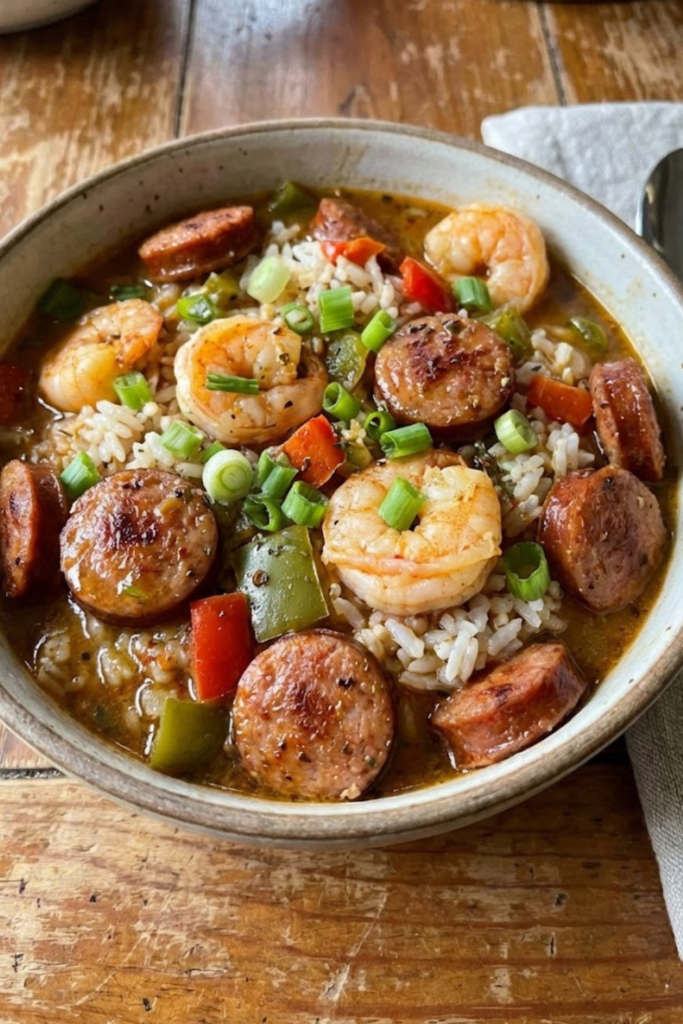
Cajun vs. Creole Jambalaya: What is the Difference?
Honest truth? For the longest time, I thought Jambalaya was just “that spicy rice thing from New Orleans.” I had no clue there were actual rules involved until I served a tomato-heavy version to a friend from the Bayou. Let me tell you, the look on his face was pure betrayal. It was awkward. That’s when I learned the hard way that there are two distinct families of this dish: Cajun and Creole. And getting them mixed up is a major rookie mistake.
The biggest difference—and the one people will fight you over—is the tomatoes. It’s pretty simple once you know it. Creole Jambalaya, which is also called “red jambalaya,” uses tomatoes. It feels a bit more like a Spanish paella, which makes sense given the history in New Orleans. On the other hand, Cajun cooking strictly forbids tomatoes in this dish. It’s known as “brown jambalaya” because the color comes from browning the meat and veggies, not a red sauce.
City vs. Country: A Tale of Two Pots
Think of it like this: Creole is city food; Cajun is country food. Creole cuisine was born in New Orleans, where access to markets and fancy ingredients like canned tomatoes was easier. It’s a bit more refined, maybe a little sweeter because of the acidity.
Cajun Jambalaya comes from the rural areas, the swamps and prairies of Louisiana. It’s rustic. It’s rougher. When I make the Cajun version, I feel like I’m really cooking, you know? You have to really work for that flavor. You don’t have the tomatoes to rely on for moisture or color. You gotta build it yourself.
The “Gratin” is Where the Magic Happens
Here is where I messed up my first few times. In the Cajun version, the flavor is 100% dependent on the “gratin.” That’s the sticky brown stuff that gets stuck to the bottom of the pot when you sear your meat.
I used to be scared of burning the pot, so I’d use a non-stick pan. Big mistake! You need a heavy pot, like a cast iron Dutch oven. You sear that Andouille sausage and chicken until it looks almost burnt. Then, you toss in your veggies (the Holy Trinity) to deglaze the pot. The moisture from the onions lifts that brown goodness up, and that is what colors your rice. If you use a non-stick pan, you don’t get the brown bits, and your rice looks pale and sad. Trust me, I’ve served sad beige rice before. It’s not a vibe.
Which One Should You Make?
If you are new to Southern comfort food, I actually recommend starting with the Creole version. The tomatoes add a safety net of moisture that makes it harder to burn the rice. But if you want that deep, smoky, punch-you-in-the-face flavor? Go Cajun. Just keep an eye on your heat. I’ve definitely scorched a batch or two by walking away to check my phone. The smoke alarm is not a kitchen timer, folks!
At the end of the day, both are delicious. It just depends on if you want that bright tomato tang or that savory, meaty richness. Just don’t serve the red kind to a Cajun grandmother unless you’re ready for a lecture!

The Holy Trinity and Essential Ingredients
I’m going to be real with you for a second. The prep work for Jambalaya is not a quick 5-minute job. There is a lot of chopping involved. I remember one Tuesday night I thought I could whip this up in thirty minutes after work. I was still chopping onions at 7:30 PM, crying my eyes out, and ordering pizza instead. Don’t be like me. Respect the prep time.
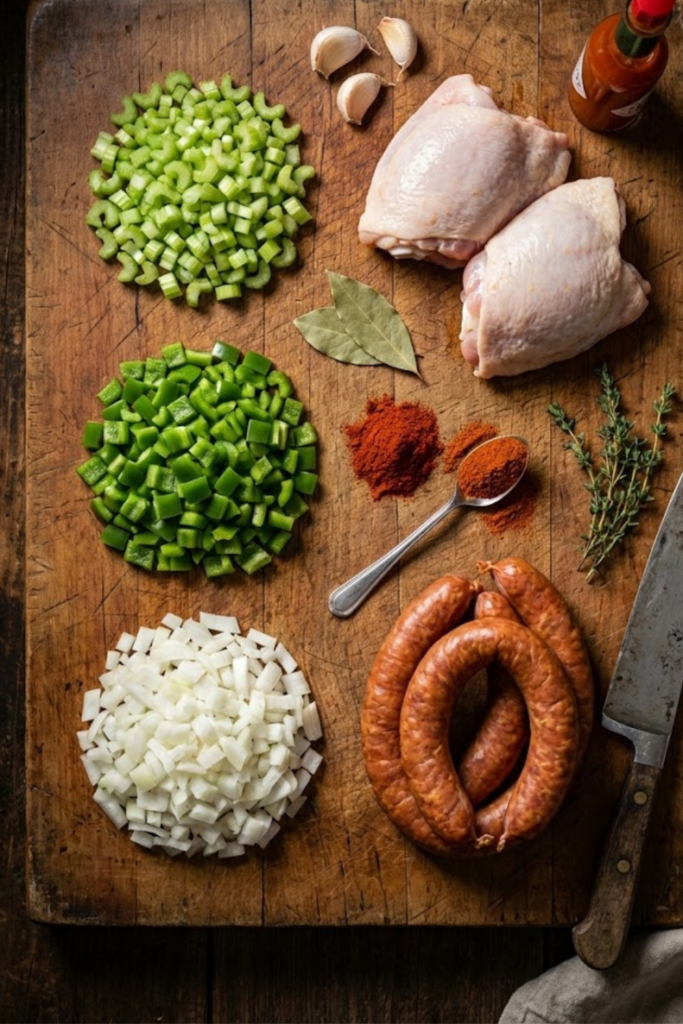
The backbone of this entire dish is what we call the Holy Trinity. If you’ve ever done French cooking, you know about mirepoix (onions, carrots, celery). Well, down in the South, carrots don’t grow as well in the swampy soil, so they swapped them for green bell peppers.
Getting the Veggies Right
The Trinity consists of onion, celery, and green bell pepper. Please, I am begging you, use green bell peppers. I went through a phase where I thought I was fancy and used red and yellow peppers because they look pretty. It was a mistake. They are way too sweet. The slight bitterness of the green pepper is essential to cut through the heavy pork fat later on.
I usually go with a 2:1:1 ratio. That’s two parts onion to one part celery and pepper. But honestly? Sometimes I just chop one of each and call it a day. Just make sure you dice them fairly small. You want them to melt into the rice, not stand out as big chunks.
The Meat Matters (A Lot)
You cannot make authentic Jambalaya with just any sausage. You need Andouille sausage. It is a coarse-grained, smoked pork sausage that is heavily spiced with garlic and pepper. It brings the smoke flavor that liquid smoke just can’t replicate.
I once tried to substitute Italian sausage because it was all I had in the fridge. It tasted fine, but it tasted like risotto, not Jambalaya. If you absolutely can’t find Andouille, get a high-quality smoked kielbasa and add extra cayenne pepper.
For the chicken, stick to chicken thighs. I used chicken breasts for years because I thought they were “healthier.” What a waste of time. Breasts dry out instantly in the pot and turn into rubber bullets. Thighs stay juicy and tender even after simmering for 25 minutes.
Liquid Gold
Here is a hill I am willing to die on: do not use water. Using water is a wasted opportunity to add flavor. You want a rich chicken stock or broth.
If you have homemade stock, use it. If not, buy the low-sodium box stuff so you can control the salt level. The sausage is already salty, and if you use salty broth plus Cajun seasoning, you’ll be chugging water all night. I learned that lesson after waking up at 3 AM with a mouth as dry as the Sahara.
The Spice Cabinet
Finally, the seasoning. You can buy those pre-made Cajun blends, and they work in a pinch. But be careful. A lot of them are 50% salt.
I prefer to mix my own so I can control the heat. You’ll need a good amount of paprika (for color), cayenne (for heat), garlic powder, dried thyme, and oregano. Toss in a couple of bay leaves while it simmers, but don’t forget to fish them out before serving. Nothing ruins a bite like choking on a stiff leaf.
Choosing the Right Rice for Jambalaya
Rice is deceptively simple. It’s just a grain, right? That’s what I used to think until I ruined a perfectly good batch of ingredients by using the wrong bag from my pantry. I ended up with a pot of gummy paste that looked more like wallpaper glue than dinner. It was heartbreaking. I had to order pizza, and my family still teases me about the “Jambalaya Porridge” incident of 2018.
The rice is the canvas for this entire masterpiece. If you get the wrong kind, it doesn’t matter how expensive your sausage is or how perfectly you chopped your veggies. The texture will be off.
Long-Grain is King
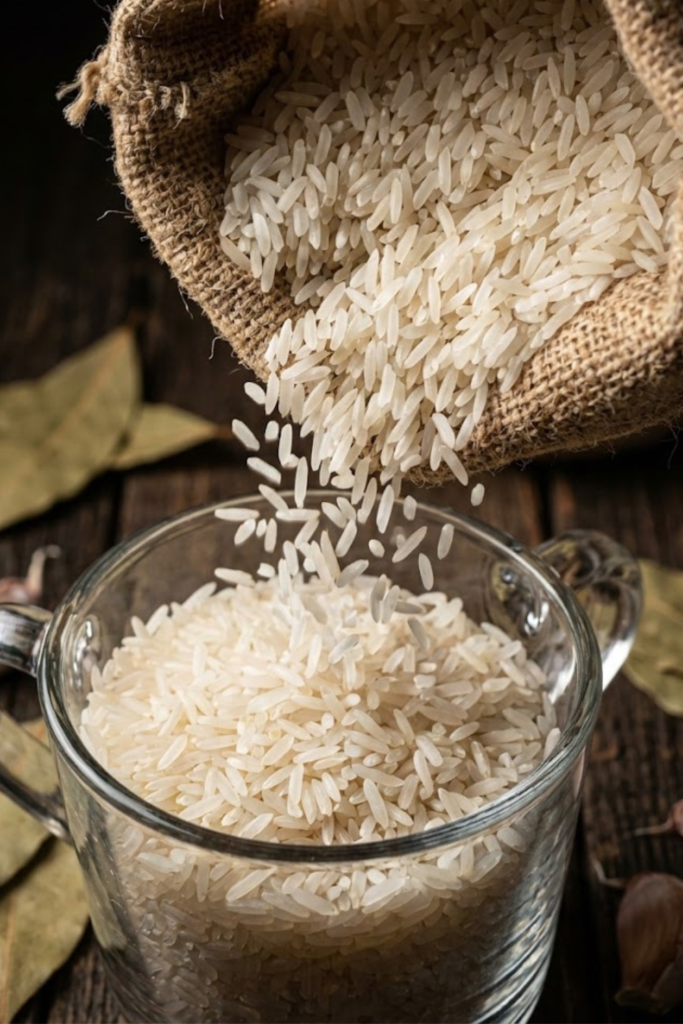
For an authentic Jambalaya, you need long-grain white rice. That is the golden rule. You want the final result to have individual grains that are fluffy and separate, not a sticky clump.
Standard American long-grain rice works great. However, if you want a pro tip that I learned from a sweet lady in a Louisiana diner, look for parboiled rice (sometimes called converted rice). This stuff is practically bulletproof. It has been partially boiled in the husk, which hardens the starch. This means it can stand up to the long simmer time without turning into mush. It separates beautifully. If you are nervous about your rice cooking skills, parboiled rice is your safety net.
I sometimes use Jasmine rice because I love the aroma, but be careful. It is softer and can get sticky if you look at it the wrong way. If you use Jasmine, cut the water back just a tiny bit.
Avoid the Mush: What NOT to Use
Please, step away from the Arborio rice. Short-grain rices like Arborio or sushi rice are bred to be sticky. They release a ton of starch, which is perfect for risotto or sushi but a disaster for this dish.
I made the mistake of thinking “fancy rice equals better meal.” Wrong. Jambalaya is a rustic, working-man’s dish. It doesn’t want fancy risotto rice. It wants utility. Using short-grain rice will give you a creamy texture that just feels wrong here. You want the rice to soak up the spicy broth, not dissolve into it.
To Rinse or Not to Rinse?
This is a hot debate. Some people say rinsing washes away nutrients; others say it’s essential. I am firmly on Team Rinse.
I always rinse my rice in a fine-mesh sieve under cold water until the water runs clear. You are washing off the excess surface starch (the dust). That surface starch is the enemy of fluffy rice. It acts like glue when it gets hot. By washing it off, you are giving yourself a better chance at those distinct, non-sticky grains. It takes two extra minutes, but it saves you a lot of grief at the dinner table.
A Note on Brown Rice
I went through a health kick a few years ago and tried to swap in brown rice 1:1. Do not do this. Brown rice still has the bran layer on it, which means it takes way longer to cook and needs more liquid.
If you try to sub it in without adjusting, you will run out of liquid before the rice is done, and you’ll be eating crunchy, undercooked grains. Nobody wants crunchy Jambalaya. If you must use brown rice, add about 25% more liquid and expect to simmer it for at least 40-45 minutes instead of the usual 20. But honestly? Just live a little and eat the white rice.
Step-by-Step Instructions for the Perfect One-Pot Meal
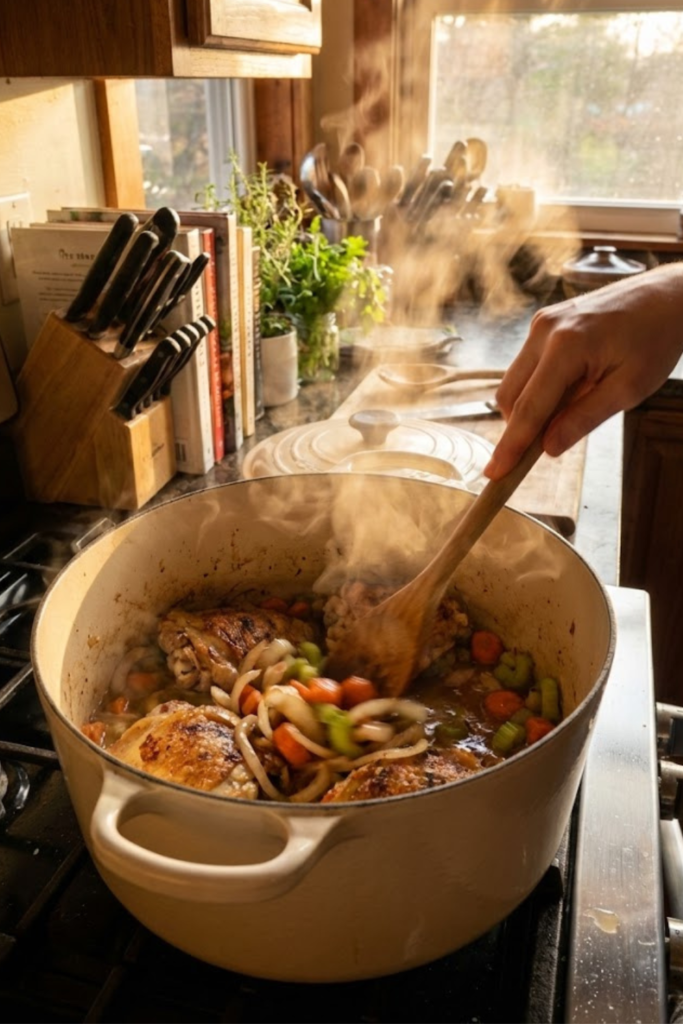
Okay, it is game time. Grab your heavy-bottomed pot—preferably a Dutch oven. I use an enameled one that I found at a thrift store years ago. It distributes heat evenly, which is critical here so you don’t end up with burnt rice in the center and raw rice on the edges.
This is a one-pot meal, which means less dishwashing later. That’s a huge win in my book. But since everything happens in one vessel, the order in which you add things is super important. You can’t just dump it all in at once and hope for the best. I tried that once with a slow cooker recipe, and let’s just say the texture was… unfortunate.
Step 1: Brown the Meat (Don’t Rush This!)
First, heat a tablespoon of oil over medium-high heat. Throw in your sliced Andouille sausage. You want to cook it until it’s nice and dark brown on both sides. This isn’t just about cooking the meat; it’s about rendering out that flavorful orange fat.
Once the sausage is browned, take it out with a slotted spoon, but leave that fat in the pot! That grease is liquid gold. Next, brown your chicken thighs in the same fat. I used to rush this step because I was hungry. Big mistake. If you don’t get a good sear now, your meat will look pale and sad later. Let it get some color.
Step 2: Sautéing the Trinity
Now, toss your chopped onion, celery, and bell pepper into the hot fat. Hear that sizzle? That is the sound of flavor. As the veggies release their water, use a wooden spoon to scrape the bottom of the pot.
You’re looking for the “fond”—those stuck-on brown bits from the meat. This is called deglazing. If you leave those bits, they will burn. But if you scrape them up, they dissolve into the veggies and create a deep, savory base. Cook the veggies until they are soft and translucent, usually about 5 to 7 minutes. Add your garlic at the very last minute so it doesn’t burn. Burnt garlic tastes bitter and nasty.
Step 3: Toasting the Rice
Here is a trick I missed for years. Before you add the liquid, stir your raw, rinsed rice directly into the veggie and oil mixture. Stir it around for about 2 minutes.
You want to coat every single grain in that spicy, fatty oil. You might even smell a slightly nutty aroma. This helps the grains stay separate later on. Add your seasonings now, too—paprika, cayenne, thyme—and let them toast for just 30 seconds to wake up the oils in the spices.
Step 4: The Simmer (No Peeking!)
Pour in your chicken broth and return the meat to the pot. Stir it well to combine everything. Bring it to a rolling boil. Once it’s boiling, reduce the heat to low—like, the lowest setting your stove has. Cover it with a tight-fitting lid.
Now, this is the hardest part: Walk away. Do not touch it for 20 to 25 minutes. I have a bad habit of wanting to “check on it” to stir it. Don’t do it! If you lift the lid, you let the steam escape. That steam is cooking your rice. If you stir it, you release starch and make it gummy. Just trust the process.
After the timer goes off, turn off the heat but leave the lid on for another 10 minutes. This allows the rice to finish steaming and absorb any leftover liquid. Then, fluff it with a fork. Perfection.
What to Serve with Jambalaya
If I’m being honest, Jambalaya is a meal in itself. It has your carbs, your veggies, and enough meat to satisfy a T-Rex. But, if you serve a bowl of it all by itself, it feels a little lonely. Plus, you need something to break up the richness. I learned this the hard way when I hosted a dinner party and served just the jambalaya. Everyone was in a food coma by 8:00 PM. It was dead silent. You need sides to keep the energy up!
The Carb on Carb Rule
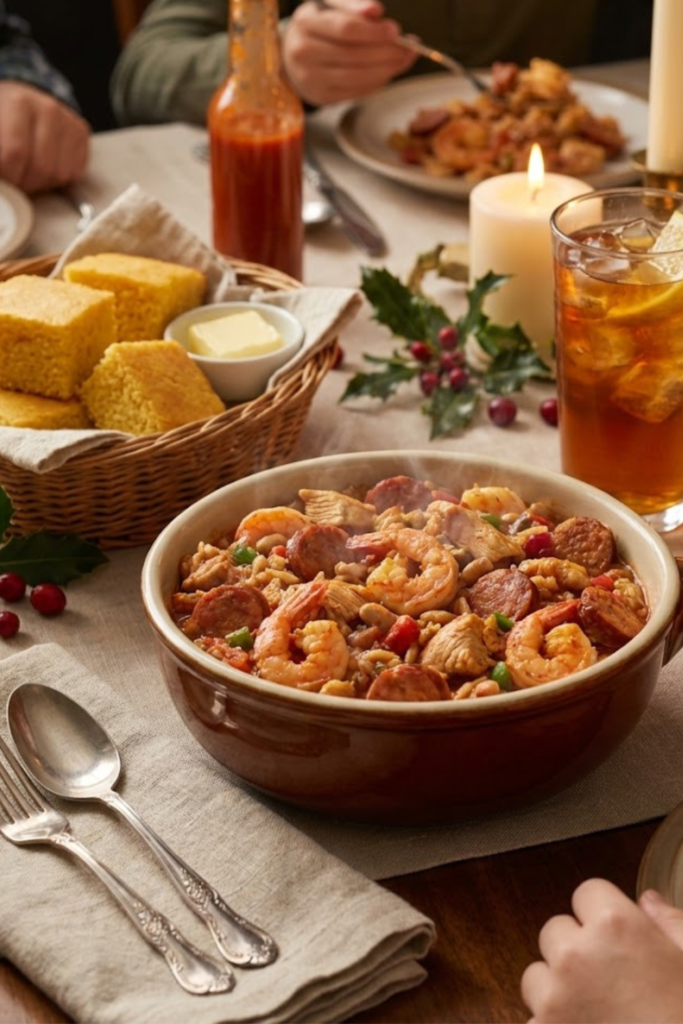
I know, adding carbs to a rice dish sounds crazy. But in the South, it is standard procedure. You need something to sop up that spicy, savory coating on the rice. Cornbread is the non-negotiable champion here.
I like to make a skillet cornbread with a little bit of honey and jalapeños mixed in. The sweetness of the corn balances the heat of the cayenne in the main dish. A crusty French baguette works too—especially if you slather it in garlic butter—but it just doesn’t hit the same as warm, crumbly cornbread.
Cutting the Richness
Because Jambalaya is so heavy and savory, you need acid. A simple green salad with a sharp vinaigrette is perfect. Do not serve a creamy ranch dressing here; it’s too much dairy. You want a vinegar slap to wake up your palate.
I also love serving collard greens or a vinegar-based coleslaw. I used to hate collards until I realized I was under-seasoning them. Cook them down with some bacon grease and apple cider vinegar. That acidity cuts right through the fat of the Andouille sausage. It’s a marriage made in heaven.
Washing It Down
What are we drinking? If it’s a Tuesday night, I’m pouring a tall glass of sweet iced tea with a lot of lemon. The sugar helps neutralize the spice burning your tongue.
If it’s the weekend, you can’t go wrong with a cold, crisp lager. You don’t want a heavy stout or a bitter IPA that fights the food. You want something clean. Or, if you are feeling fancy and want to channel those French Quarter flavors, mix up a Sazerac. Just be careful, those things are strong!
Making authentic Jambalaya is more than just getting dinner on the table; it’s about creating a vibe. It is about the smell of onions and peppers hitting the hot oil, the sound of the pot simmering, and that first bite that tastes like pure comfort. It’s a labor of love, but man, is it worth it.
Don’t be intimidated by the long list of steps or the fear of burning the rice . I’ve burned it, I’ve made it too salty, and I’ve made it too spicy to eat. It happens! But once you nail that perfect balance of fluffy rice and smoky meat, you will feel like a master chef. So, put on some jazz music, pour yourself a drink, and let the good times roll.