“There is absolutely nothing—and I mean nothing—that beats the smell of brown sugar and butter caramelizing in a cast iron skillet!” It takes me right back to a sunny yellow kitchen, watching my grandma’s hands work magic with simple ingredients. In a world of complicated pastries, this retro classic is making a huge comeback in 2026 because it delivers pure, unadulterated joy. Did you know that the “upside down” technique dates back to the Middle Ages when cakes were baked in skillets over fires? It’s true!
Whether you are a baking novice or a pro looking to reclaim that nostalgic taste, this recipe is your ticket to success. We aren’t just making a cake; we are making memories! So, grab your apron, because we are about to bake the most mouthwatering grandma’s pineapple upside down cake you have ever tasted. Let’s get baking!
The History and Magic of the Cast Iron Skillet
I’ll never forget the first time I tried to lift my grandmother’s seasoned skillet. I was about twelve years old, and I honestly thought I was going to need a wrist brace afterwards! That thing weighed a ton, but it was the holy grail of her kitchen. For the longest time, I didn’t get the hype. Why lug around a heavy piece of metal when lightweight aluminum pans existed?
Boy, was I wrong. It took me burning about three different cakes in flimsy pans to finally understand the magic. If you are serious about making Grandma’s pineapple upside down cake, you really need to make friends with heavy metal.
Why Heavy Metal Rocks
Here is the deal that nobody tells you in fancy cookbooks. The secret to that gooey, sticky, perfect top is heat retention. Cast iron skillet cake recipes work because the iron gets hot and stays hot. It doesn’t fluctuate every time you open the oven door to peek (which you shouldn’t do, by the way!).
I remember trying to make this in a glass Pyrex dish once. Big mistake. The glass took too long to heat up. By the time the cake was done, the fruit was just kind of warm and sad, not caramelized. You want the brown sugar and butter to essentially fry the pineapple while the cake bakes. That is how you get that deep, amber color that tastes like heaven.
The Seasoning Situation
Now, let’s talk about the scary part: cleaning the thing. “Don’t you dare put soap on that!” I can still hear my mom yelling that from the living room. She was right, though. A well-seasoned skillet is basically the original non-stick technology.
- Iron skillet seasoning for baking is crucial because you have to flip this cake.
- If your pan is dry and rusty, that pineapple is going to cling to the bottom for dear life.
- I’ve had moments where I flipped the pan and only the cake came out. The fruit stayed stuck to the pan. I literally cried.
If your skillet isn’t shiny and black, rub some oil on it and bake it empty for an hour. Trust me, your future self will thank you when the cake slides right out.
What If You Don’t Have One?
Look, I get it. Not everyone has a vintage heirloom hiding in the cupboard. If you are looking at retro dessert recipes 2026 and feeling left out, don’t worry. You can use a 9-inch round cake pan.
But here is a tip I learned the hard way: avoid the ones with the removable bottoms (springform pans). The butter will leak out. It will drip onto the bottom of your oven. It will smoke. Your fire alarm will go off, and your dog will bark for an hour. Just use a solid, light-colored metal pan if you have to. It won’t be quite as dark and crunchy on top, but it’ll still taste amazing.
The “Upside Down” Logic
There is a reason this method has stuck around since the Middle Ages. Back then, people didn’t have ovens with temperature dials. They cooked cakes in skillets over open fires. Pineapple upside down cake history is literally rooted in campfire cooking!
The beauty of baking it upside down is gravity. As the cake cools, all those juices from the pineapple and the butter glaze seep down into the cake. It makes it impossible to have a dry cake unless you burn it to a crisp. It’s a self-basting dessert. How cool is that? So, grab that heavy pan, give your muscles a workout, and let’s get that sugar bubbling.
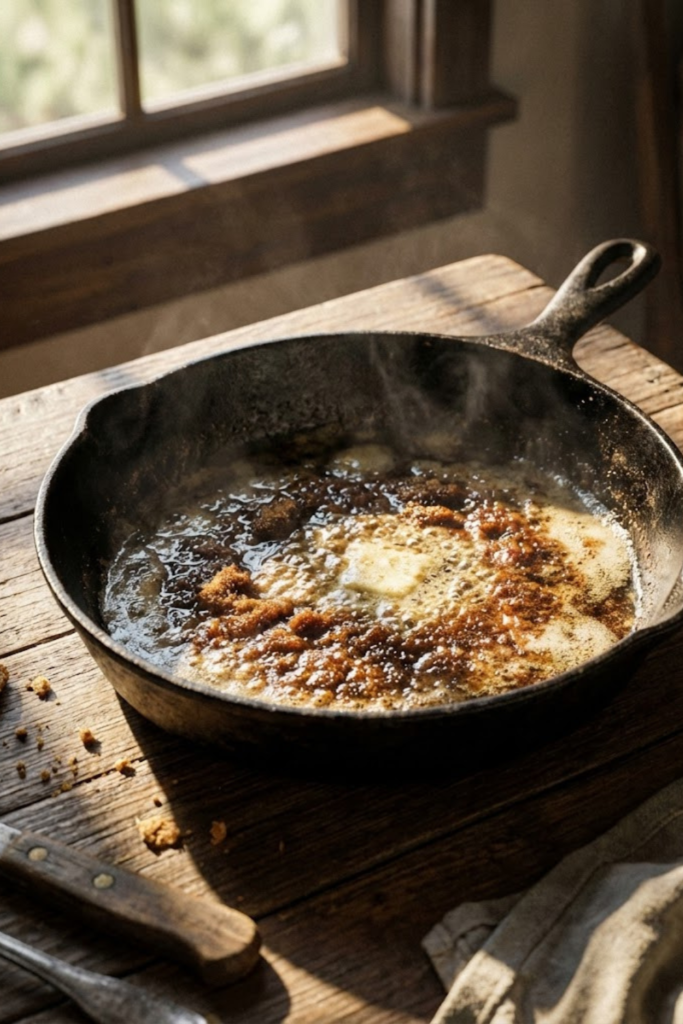
Selecting the Perfect Ingredients for That Nostalgic Taste
I used to be a total ingredient snob. If a recipe didn’t call for organic, farm-fresh produce picked by a monk on a hillside, I didn’t want it. I remember the first time I tried to upgrade my grandma’s recipe by using a fresh pineapple. I spent twenty minutes peeling and coring that prickly thing, thinking I was about to make a gourmet masterpiece.
It was a disaster.
The fresh pineapple was too fibrous, and it released so much water that the cake turned into a sad, soggy pudding. It turns out, sometimes the old ways are the best ways. When you are aiming for that specific, moist yellow cake from scratch, you have to leave your ego at the door and embrace the grocery store staples.
The Pineapple Controversy
Here is the truth that might hurt: you need the can. For best canned pineapple recipes, specifically this one, the rings are packed in syrup or juice that has already softened the fruit. This ensures that when you bite into the finished cake, the fruit matches the texture of the soft sponge.
I learned the hard way that fresh pineapple contains an enzyme called bromelain. It actually breaks down proteins. If you use it raw, it can mess with the structure of your batter, making it mushy. Plus, the canned rings are uniform. They fit perfectly in the pan. My hand-sliced fresh rings looked like a jigsaw puzzle gone wrong. Just grab the can of rings in 100% juice—not heavy syrup, that’s too sweet even for me.
That Neon Red Pop
We need to talk about the cherries. Maraschino cherries dessert recipes often get a bad rap for being “fake.” I have tried substituting fresh bing cherries or even those fancy dark cocktail cherries. They just don’t look right.
- Visual Appeal: You need that bright, radioactive red to contrast with the yellow cake. It screams “retro comfort.”
- Flavor Profile: The specific almond-like sweetness of a maraschino cherry cuts through the rich caramel.
- Texture: Fresh cherries can shrivel up in the heat. These preserved little guys hold their shape.
One time, I forgot to dry the cherries before putting them in the pan. The red dye bled all over the pineapple, and the cake looked like a crime scene. Make sure you pat them dry with a paper towel first!
Butter or Bust
There is a time and place for margarine. This is not it. The entire flavor profile of the topping relies on the reaction between the fat and the brown sugar. Margarine has a higher water content than butter. When I used it once to save money, the topping didn’t caramelize; it just kind of boiled.
You want salted butter. Yes, salted. That little bit of salt balances the intense sweetness of the brown sugar and the fruit. It gives it that salted caramel vibe that is so popular in retro dessert recipes 2026.
The Flour Factor
Finally, let’s chat about flour. I usually just grab the all-purpose bag and call it a day. But if you want a crumb that is tender enough to absorb the juices without falling apart, try a mix. I’ve found that using half cake flour and half all-purpose flour hits the sweet spot.
If you use only cake flour, the structure might be too weak to hold up the heavy fruit when you do the flip. If you use only all-purpose, it can get a little tough if you accidentally overmix it. I’ve definitely made a few rubbery cakes in my day because I was too lazy to buy cake flour. Don’t be like me. The texture is everything here.
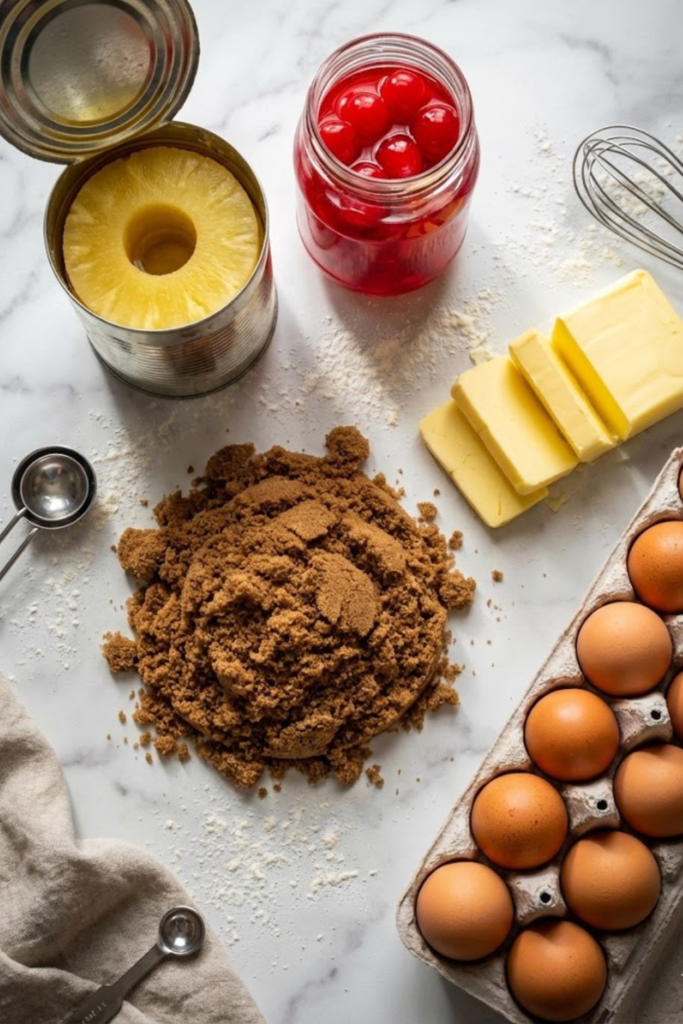
Mastering the Caramelized Brown Sugar Topping
This is it. The moment of truth. The topping is technically the bottom while you are making it, which always messes with my head a little bit. If you mess this part up, it doesn’t matter how fluffy your sponge is. The caramelized brown sugar topping is the star of the show, and honestly, it’s the only reason I run on the treadmill.
I used to think you just threw some butter and sugar in a pan and hoped for the best. Big mistake. One time, I didn’t melt the butter enough, and I ended up with these gritty, sugary sand patches on the finished cake. It was crunchy in a bad way.
The Melt Down
First things first, you need to melt that butter directly in your skillet. Don’t melt it in the microwave and pour it in. Why? Because you want the pan to be hot.
- Put the butter in the cold skillet and turn the heat to medium-low.
- Watch it like a hawk. You want it fully melted and just starting to bubble.
- If it starts turning brown, you’ve gone too far. Burnt butter is great for cookies, but for this, it makes the brown sugar glaze for cake taste bitter.
I usually swirl the pan around to coat the sides a little bit too. It helps prevent those sticky edges later on.
The Sugar Sprinkle
Once the butter is liquid gold, turn off the heat. Immediately sprinkle your brown sugar over the melted butter. Do not stir it! I repeat, do not stir it. If you stir it, it clumps up into a weird toffee rock.
Just sprinkle it evenly until the butter is covered. It will look like wet sand. This creates that smooth, gooey layer we all crave. I prefer dark brown sugar over light brown because it has more molasses, giving it a deeper, richer flavor that screams Grandma’s pineapple upside down cake.
The Art of Arrangement
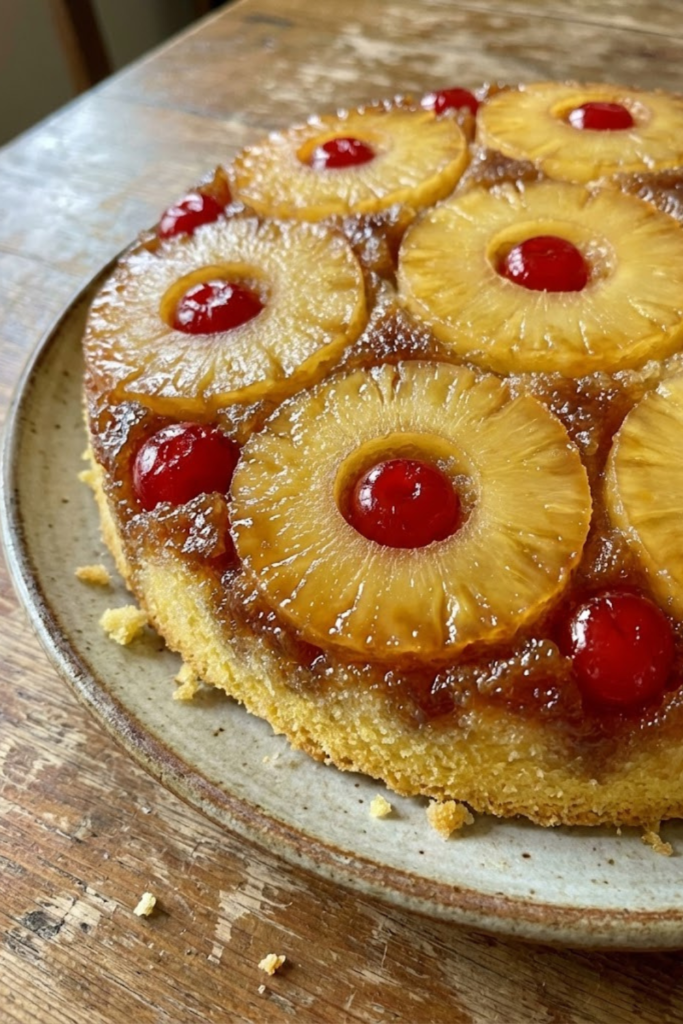
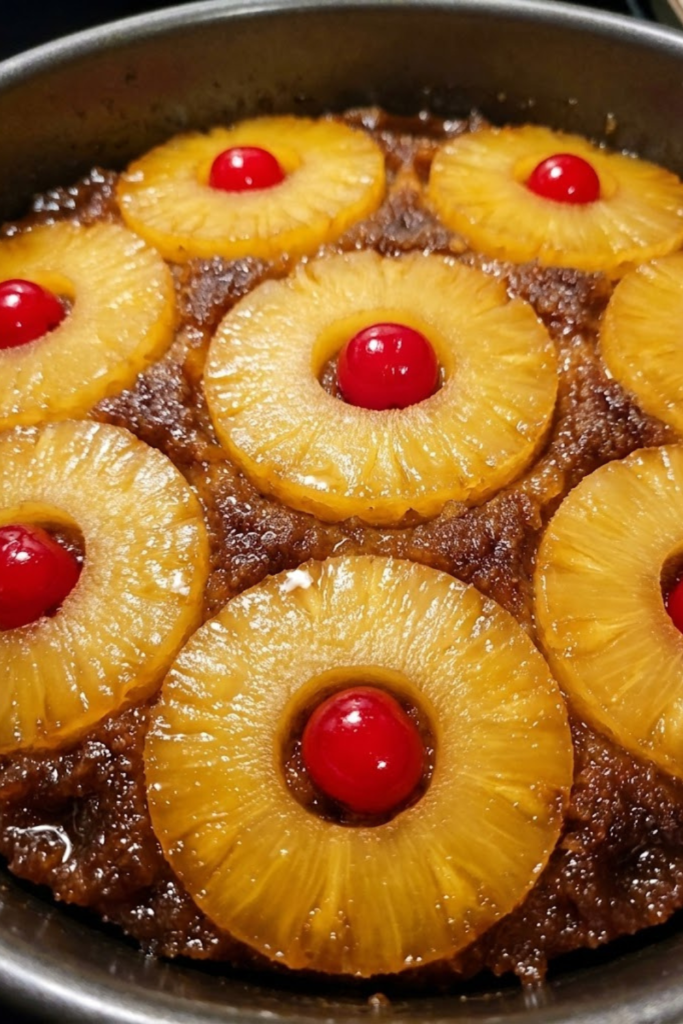
Now for the fun part—making it pretty. You want to arrange your pineapple rings in syrup (drained, obviously) in a single layer.
I usually start with one ring in the absolute center and work my way out. It’s oddly satisfying, like Tetris but with fruit. You might have to cut some rings in half to fill the gaps near the edges. Don’t leave too much empty space, or the batter will peek through and ruin the look.
And don’t forget the cherries! Place a cherry in the center of each ring and in the empty spaces between rings. It adds that pop of color that makes this a certified retro dessert recipe.
The “Press” Technique
Here is a trick I learned after my third failed cake. Once the fruit is arranged, take your fingers (or a spoon if the pan is too hot) and gently press the fruit down into the sugar paste.
You want to basically glue the fruit to the bottom. If you don’t do this, when you pour the batter, it can sneak underneath the pineapple. Then, when you flip it, your pineapples are buried under a layer of cake. We want them front and center! It’s a small detail, but it makes a huge difference in the presentation.
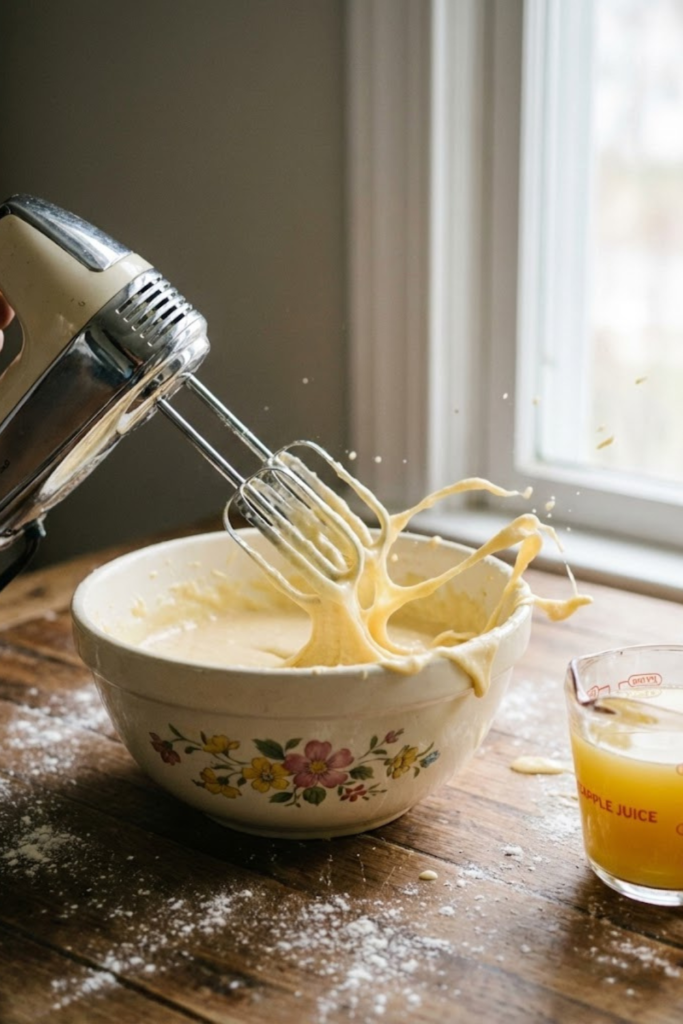
Mixing the Batter: The Secret to a Fluffy Crumb
I used to treat baking instructions like suggestions. If the recipe said “mix until fluffy,” I would give it a solid thirty seconds and call it a day. I’m impatient, okay? But with this cake, I learned that cutting corners during the mixing phase is a one-way ticket to a dense, rubbery brick.
My first few attempts at moist yellow cake from scratch were edible, but they were heavy. You could have used them as doorstops. It wasn’t until I actually watched my grandma bake that I realized I was doing it all wrong. She didn’t just mix; she coaxed the ingredients together.
The Creaming Marathon
This is the step everyone wants to skip. Don’t do it. Creaming butter and sugar isn’t just about combining them; it’s about forcing air into the butter. You need to beat them together for at least 3 to 5 minutes.
I use a stand mixer now, but I used to do it by hand with a wooden spoon until my arm felt like it was going to fall off. You want the mixture to look pale yellow, almost white, and have a texture like fluffy clouds. If it still looks like yellow sand, keep going. That air is what gives the cake its lift since the heavy fruit on top will try to weigh it down.
Temperature Tantrums
Here is a mistake I have made a hundred times: using cold eggs. I’m lazy, so I usually just grab them straight from the fridge and crack them in. When you add cold eggs to room temperature butter, the butter seizes up.
The batter starts to look like curdled milk or cottage cheese. It’s gross. And while it will technically bake, the texture won’t be right. Room temperature baking ingredients emulsify much better, creating a smooth, velvety batter. If you forgot to take the eggs out (which I do every single time), just let them sit in a bowl of warm water for five minutes.
The Secret Liquid Gold
Here is the real game-changer. Most recipes call for milk or buttermilk. But my grandma always swapped out some of the liquid for the juice from the pineapple can. Baking with pineapple juice adds this subtle tang and extra moisture that milk just can’t provide on its own.
I usually do a mix: half buttermilk for the richness and fat, and half pineapple juice for the flavor. It makes the buttermilk cake batter taste tropical without being overpowering. Just make sure you didn’t drink all the juice while you were opening the can!
The Gentle Fold
Once you add your flour, you need to chill out. Turn that mixer off. If you overwork the dough now, you develop gluten. Gluten is great for bread, but terrible for cake. We want tender, not chewy.
I switch to a spatula and fold the dry ingredients in by hand. I stop mixing the second I don’t see any more white streaks of flour. There might still be a few tiny lumps, and that is totally fine. It’s better to be under-mixed than over-mixed. Vanilla extract in baking is usually added here too—be generous with it. I measure vanilla with my heart, not a spoon.
The Bake and The Scary “Flip”
If baking is a science, then flipping a pineapple upside down cake is an extreme sport. I still get a little knot in my stomach every single time I do it. You spend all this time making the perfect caramel pattern and mixing a fluffy batter, and it all comes down to one terrifying second of gravity.
I’ve had my fair share of disasters. I once hesitated halfway through the flip—rookie mistake—and half the cake landed on the counter while the other half stayed in the skillet. My dog was thrilled; I was devastated. But don’t worry, if you follow the rules of physics (and patience), you’ll be fine.
The Oven Sweet Spot
Before you even slide that heavy pan in, check your racks. Oven positioning is something I used to ignore until I burned the bottom of three consecutive cakes. Because the sugar is on the bottom, it is closest to the heat source.
- If your rack is too low, that sugar is going to scorch before the middle of the cake is cooked.
- I always move my rack to the absolute center.
- It gives the cake enough time to rise without turning the caramel into bitter charcoal.
And please, for the love of all things sweet, do not open the oven door for at least the first 25 minutes. Preventing soggy bottom cake starts with keeping the heat consistent so the structure can set.
The Deceptive Toothpick
Testing this cake is tricky. You know the drill: stick a toothpick in, if it comes out clean, it’s done. But here is the catch. If you poke too deep and hit a pineapple slice or a cherry, the toothpick will come out wet and sticky.
I’ve been tricked by this so many times. I thought the batter was still raw, so I left it in for another ten minutes. The result? A cake so dry I needed a gallon of milk to wash it down. You have to angle your toothpick to hit just the sponge. If you see a few moist crumbs clinging to it, take it out! The cake continues to cook a little bit in the hot pan after you remove it.
The Agonizing Wait
This is the hardest part. You pull the cake out, it smells amazing, and you want to see if it worked. But you have to wait. There is a very specific window for cooling upside down cake.
If you flip it immediately while it’s piping hot, the structure is too fragile. The cake will likely break apart or slide off the fruit. It’s a hot mess, literally. But if you wait too long and let it get cold, the caramel hardens back up. Then the fruit is glued to the pan.
I set a timer for exactly 10 minutes. It’s the Goldilocks zone. The cake is firm enough to move, but the caramel is still liquid enough to release.
The Main Event: The Flip
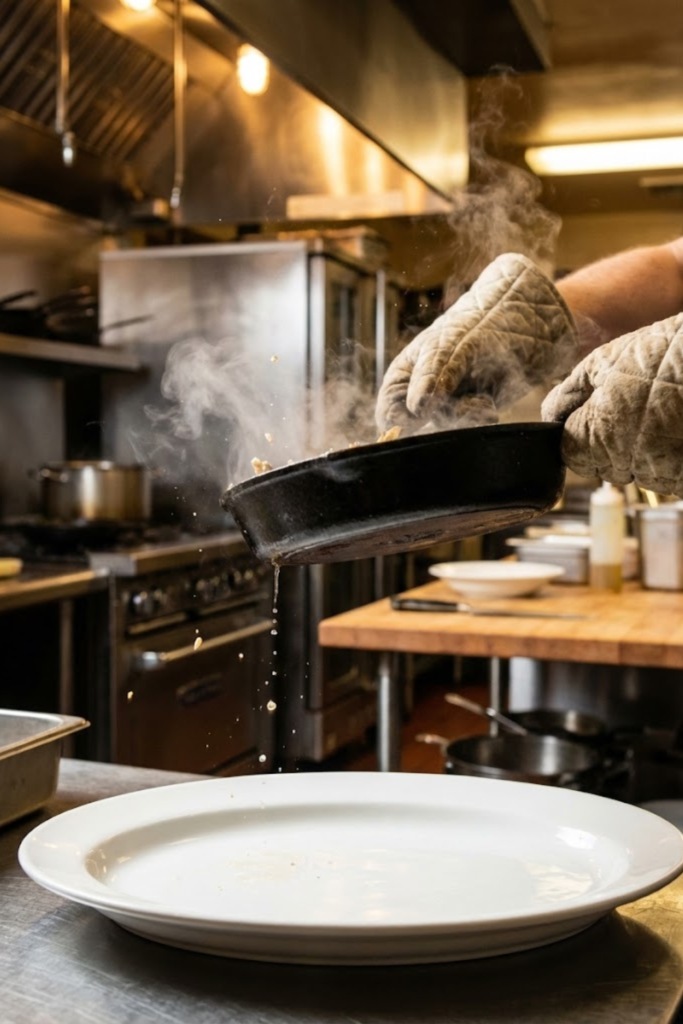
Okay, take a deep breath. You need a serving platter that is larger than your skillet. Place the platter upside down on top of the skillet. Using oven mitts (because that iron is still hot!), grab the skillet handles and the plate together. Squeeze them tight.
Now, flip it in one confident, swift motion. Do not hesitate! Once it’s over, set it down on the counter. Don’t lift the pan yet. I like to let it sit there for about a minute. This lets gravity do the work, encouraging any sticky fruit to drop down onto the cake.
Then, slowly lift the pan. If a pineapple ring sticks to the skillet, don’t panic! Just peel it off with a fork and patch it back onto the cake. The glaze hides all crimes. That reveal, seeing the golden rings and the red cherries, is the best feeling in the world.
Troubleshooting Common Upside Down Cake Mishaps
I like to pretend that every cake I bake comes out looking like it belongs on a magazine cover. But if I’m being honest with you, I have served my fair share of “rustic” disasters. I once made a pineapple upside down cake where the center was basically pineapple soup. I just scooped it into bowls, put a scoop of ice cream on top, and told everyone it was a warm fruit cobbler. Fake it ’til you make it, right?
But you don’t have to suffer through the panic I did. If your cake looks a little wonky, don’t throw it out. Most mistakes are fixable, or at least delicious enough to hide with whipped cream.
The Dreaded Soggy Center
There is nothing more heartbreaking than cutting into a beautiful cake only to find raw batter in the middle. This usually happens for two reasons. First, you might have been too excited and pulled it out too early. But more often, it’s the fruit.
If you didn’t drain your pineapple rings well enough, that extra liquid seeps into the batter. It messes with the chemistry.
- Preventing soggy bottom cake starts at the colander.
- I let my pineapple rings sit on paper towels for a good ten minutes before they go near the pan.
- If you are already in this mess, cover the cake with foil (so the top doesn’t burn) and pop it back in the oven for ten minutes.
Help, My Fruit is Stuck!
So, you did the flip. You lifted the pan. And half of your pineapple rings are still clinging to the skillet. I have screamed at inanimate objects over this. It usually happens if the pan wasn’t seasoned well or if you let it cool for too long and the sugar hardened.
This is where “spatula surgery” comes in.
- Gently pry the stuck fruit off the pan while it’s still warm.
- Carefully place it back onto the cake like a puzzle piece.
- The syrupy glaze acts like glue, so once it cools, no one will even notice.
If it looks really bad, just bury it in whipped cream. No one complains about extra whipped cream.
The Great Collapse
You peeked, didn’t you? I told you not to open the oven door! If your cake sinks in the middle, it’s usually because the door was opened before the structure set, letting a rush of cold air in.
It can also happen if you used too much baking powder. I once tried to eye-ball the measurements and ended up with a crater in my cake. High altitude baking adjustments are real, too. If you live way up in the mountains, you might need less leavening agent. There is no fixing a sunk cake, unfortunately. Just fill the hole with extra cherries and call it a “deep dish” variety.
The Burnt Sugar Crisis
Sometimes, your oven just runs hot. Or maybe you used a dark non-stick pan which conducts heat faster than light aluminum. If you smell burning sugar before the timer goes off, your topping is in trouble.
If this keeps happening to you, try lowering your oven temperature by 25 degrees next time. You can also put a baking sheet on the rack underneath your skillet to deflect some of the direct heat. Burnt sugar tastes bitter and nasty, so keep a close nose on it. If it’s just a little dark, the sweetness of the cake usually balances it out.
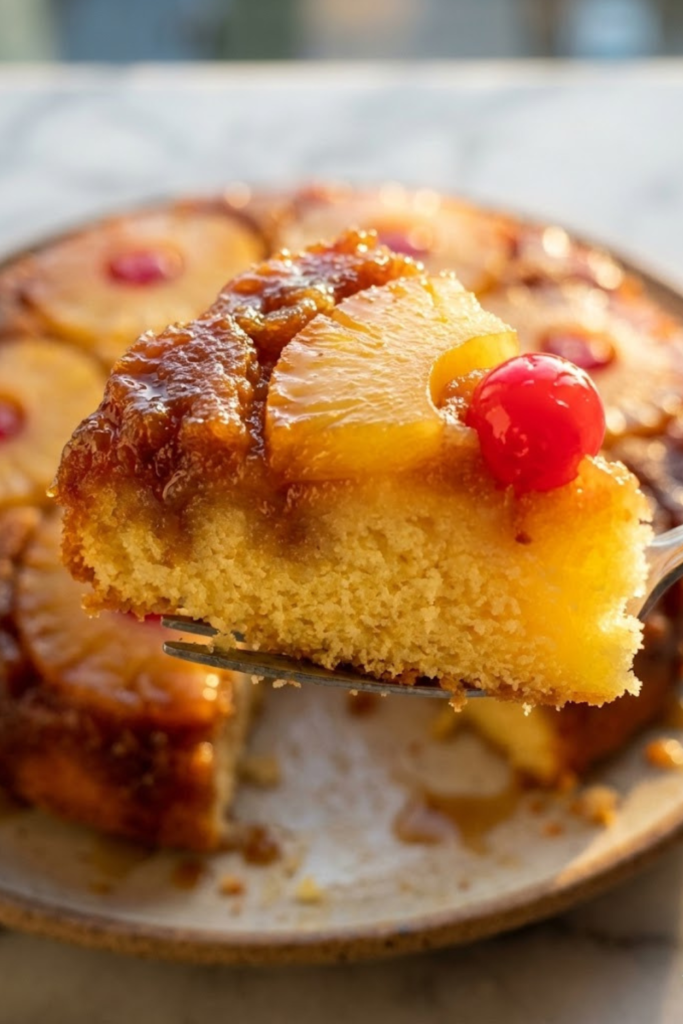
There you have it—the blueprint to recreating grandma’s pineapple upside down cake right in your own kitchen! This cake is more than just a dessert; it’s a warm hug on a plate and a delicious nod to the past. Whether you are baking for a Sunday dinner or just treating yourself on a Tuesday night, this 2026 recipe is guaranteed to bring smiles to the table.
Don’t let the “flip” scare you; embrace the rustic beauty of this classic. The caramelized edges, the burst of juicy pineapple, and that buttery sponge are worth every second of effort. Now, go preheat that oven and let the nostalgia take over!
Call to Action: Did this recipe bring back sweet memories? Pin this to your “Best Desserts of 2026” board on Pinterest and share the love with your friends!