Do you remember that smell? Walking through the mall, the scent of warm yeast and cinnamon hitting you like a cozy hug, only to realize you can’t have a single bite? I’ve been there, and it’s heartbreaking! For years, “gluten free” meant “cardboard texture,” but not anymore.
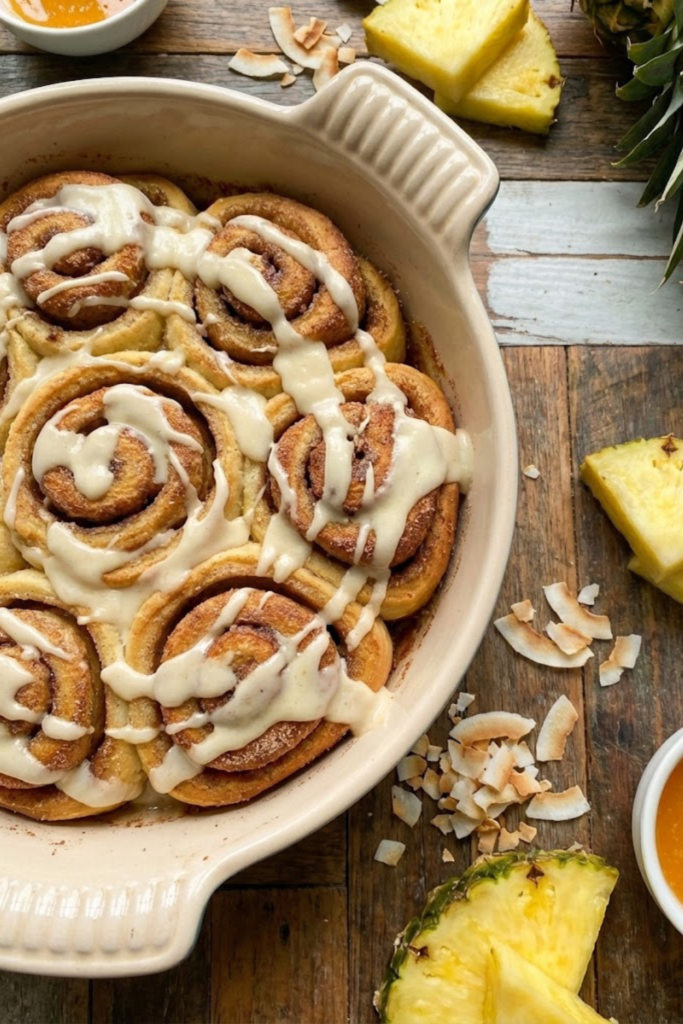
Today, we are breaking the curse. This isn’t just another dry substitute; this is the gluten free cinnamon rolls recipe that will fool your non-GF friends. Did you know that 1 in 100 people worldwide have Celiac disease? We deserve gooey, frosting-covered joy too! We are going to tackle everything from the specific flour blends to the “dental floss trick” for cutting perfect spirals. Get your apron on, because we are about to make magic happen in the kitchen!
The Secret Science Behind Fluffy Gluten Free Dough
Look, I’m gonna be real with you. The first time I tried to make a gluten free cinnamon rolls recipe, it was a disaster. I mean, we are talking about literal hockey pucks. I tried to just swap regular flour for almond flour because I saw it on Instagram, and let me tell you, that was a rookie mistake. I cried a little bit eating those dry, sad rocks. But after years of experimenting (and failing), I finally figured out the science.
It’s not magic, it’s just chemistry. And once you get it, you’ll never make a dry roll again.
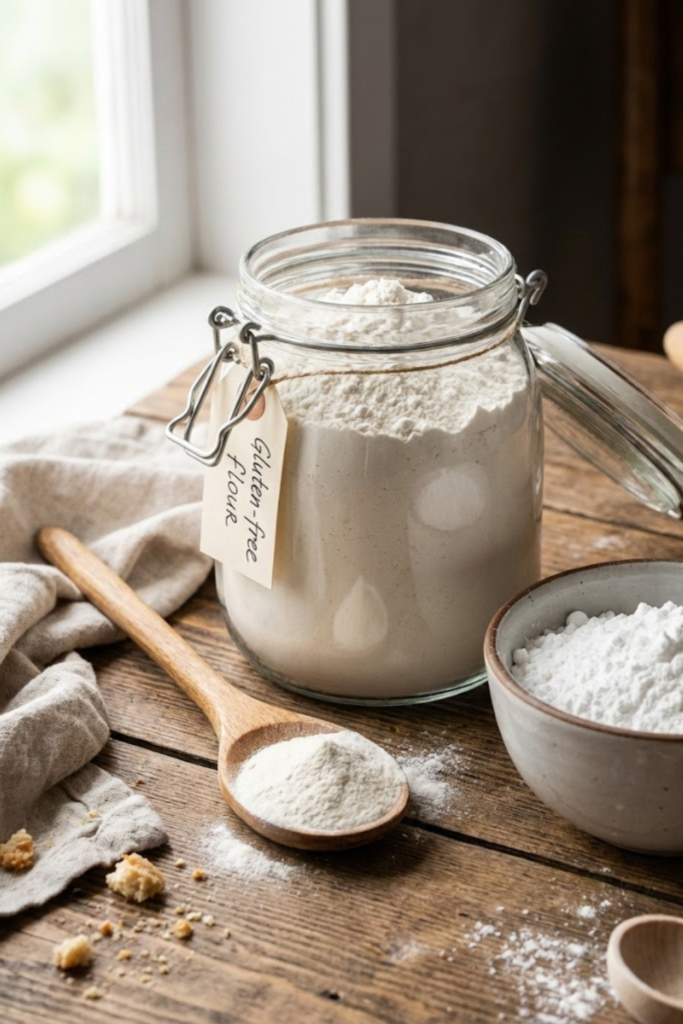
Stop Using Just One Flour
Here is the thing: wheat flour does everything. It provides structure, chew, and lift. Gluten free flours? They are lazy. They usually only do one thing well. If you use just brown rice flour, your rolls will be gritty. If you use just tapioca starch, they’ll be gummy.
You have to use a blend. For the best texture, I use a mix of a heavier grain (like brown rice flour) and lighter starches (like potato starch or tapioca). This mimics the weight and feel of wheat. Don’t try to be a hero and mix your own right away if you’re nervous; a high-quality “1 to 1” baking blend usually does the trick, but check the ingredients to make sure it has starches included.
The Glue That Holds It Together
Gluten is basically glue. It stretches. Without it, your dough is just wet sand. That is where xanthan gum comes in.
It sounds like a science experiment, I know. But this white powder provides the elasticity that gluten usually would. Without xanthan gum, your cinnamon rolls will crumble into a mess the second you look at them wrong. Most blends have it, but if yours doesn’t, you gotta add a teaspoon. It’s a non-negotiable for that bakery-style chew.
The Magic of Psyllium Husk
Okay, this was the game changer for me. Psyllium husk powder.
I know, it sounds like something your grandma takes for digestion. But in gluten free baking, it acts like a super-binder. While xanthan gum helps with structure, psyllium husk helps with pliability. This is what lets you actually roll the dough without it cracking and breaking all over your counter. It gives the dough that “squish” factor we all love.
Why Your Dough Needs a Drink
Here is where most people mess up. Gluten free flour is thirsty. Like, really thirsty.
If you make your dough look like traditional bread dough, it’s already too dry. Gluten free dough needs a much higher hydration level. It should feel softer and stickier than you think is right. If it looks dry in the bowl, it’s gonna be dry in your mouth. Don’t be afraid of the sticky! We will handle that later with parchment paper. Just trust the process and let the dough be a little w
Activating the Yeast and Preparing the Wet Ingredients
Yeast used to terrify me. I’m not even kidding. I used to look at those little packets of active dry yeast and sweat, convinced I was going to mess it up. And honestly? I did mess it up, a lot. I’ve baked plenty of bricks because I either drowned the yeast or burnt it to death. But listen, yeast is just a living thing that wants to be comfortable, kind of like us.
Once you treat it right, your gluten free cinnamon rolls recipe goes from “meh” to “oh my gosh.”
Don’t Burn Your Bugs
Here is a mistake I made for years: I thought the milk needed to be hot. I would microwave it until it was steaming and dump the yeast in. Oops.
If your milk is too hot, you kill the yeast. If it’s too cold, the yeast stays asleep. You need the Goldilocks zone. I highly recommend using a digital thermometer to check your warm milk. You are looking for about 110°F (43°C). It should feel like a warm bath, not a hot latte.
Mix your warm milk with a little sugar—yeast needs a snack to wake up—and let it sit for 5 to 10 minutes. If it doesn’t get foamy and bubbly, throw it out. Seriously. It’s dead. Don’t waste your expensive gluten free flour on dead yeast.
The Temperature Trap
While your yeast is having its bubble party, look at your other ingredients. Are your eggs cold? Is your butter straight from the fridge? Stop right there.
If you dump cold eggs into your nice warm yeast mixture, the temperature drops instantly. The yeast gets shocked and stops working. I learned this the hard way when my dough refused to rise for three hours. Make sure your unsalted butter and eggs are at room temperature before you start. It makes a huge difference in how fluffy the final roll is.
The Secret Acid Weapon
Okay, this is going to sound weird. You need to add vinegar.
Specifically, apple cider vinegar. I know, I know. You are thinking, “I don’t want my cinnamon rolls to taste like salad dressing.” They won’t, I promise! A teaspoon of vinegar helps kickstart the yeast and actually helps tenderize the crumb of the bread.
In gluten free baking, we don’t have gluten to trap air bubbles, so we need all the lift we can get. The acid reacts with the baking powder and yeast to give it that extra “oomph.” It was a total game changer for me when I started adding it.
Ditch the Dough Hook
If you are used to making regular bread, you probably instinctively grab the dough hook for your stand mixer. Don’t do it.
Gluten free dough doesn’t have the stretch that wheat dough has. If you use a hook, it just spins around in the middle and creates a hole in the dough without actually mixing anything. It’s super frustrating to watch.
Instead, use the paddle attachment. It beats air into the batter and mixes everything evenly. You want to beat the dough on medium-high speed for about 3 to 5 minutes. This hydrates the flour and builds structure. It will look like a thick, sticky batter, not a smooth ball. That is exactly what we want!

Rolling and Shaping: Mastering the Sticky Dough
This is the part where most people quit. I’m serious. Rolling out gluten-free dough is usually where dreams go to die. I used to end up with a sticky, tearing mess that looked nothing like a rectangle and everything like a topographical map of a disaster. I would get so frustrated I’d almost throw the rolling pin across the kitchen.
But take a deep breath. Dealing with sticky dough is just a skill you have to learn, and I have failed enough times to teach you exactly how to do it without crying.
Chill Out (Literally)
First off, do not try to roll this dough immediately after mixing. It’s too warm and soft. The butter is melting, and the flour hasn’t fully hydrated yet.
You need to wrap that dough in plastic wrap and stick it in the fridge. I know, waiting is the worst. I am impatient too. But giving it just 20 to 30 minutes in the refrigerator firms up the butter and makes the dough much easier to handle. If you skip this, you are going to be fighting a losing battle against a blob of goo.
The Parchment Paper Sandwich
Here is the golden rule of this gluten free cinnamon rolls recipe: never put the dough directly on the counter.
I don’t care how much flour you put down. It will stick. And adding too much extra flour makes your rolls dry and tough, which is exactly what we are trying to avoid.
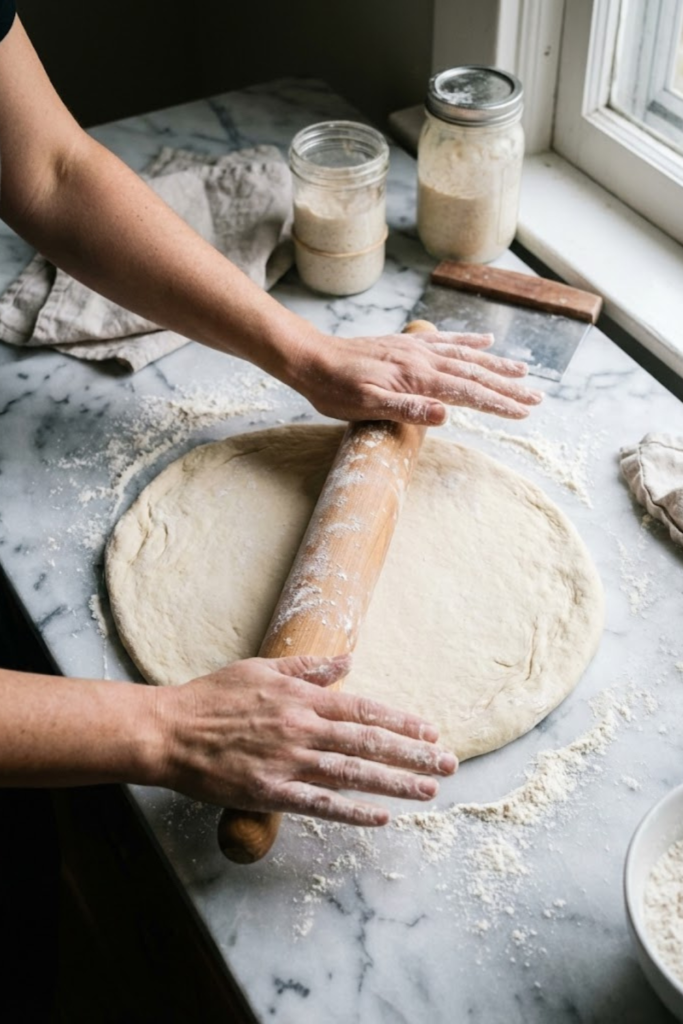
Instead, use the parchment paper sandwich method. Lay down a large piece of parchment paper on your counter. Plop your chilled dough in the middle. Then, put another piece of parchment paper on top. Now you can roll over the top paper without your rolling pin ever touching the dough! It’s genius. You can get the dough nice and thin without it tearing or getting stuck to your tools.
Getting the Perfect Rectangle
Rolling a circle is easy; rolling a rectangle is annoying. But you need a rectangle to get those perfect spirals.
While you are rolling between the paper, stop every few rolls and use your hands to square off the edges. Push the sides in with your palms or a bench scraper to keep the lines straight. You want the dough to be about ¼ inch thick. If it’s too thick, the middle won’t cook. If it’s too thin, they won’t be fluffy.
The Filling Fiasco
Now for the best part: the cinnamon sugar filling.
Here is a mistake I made a hundred times: trying to spread plain butter onto the dough. Gluten-free dough is delicate. If you try to drag a knife with butter across it, you will rip holes in your beautiful rectangle.
Instead, I like to mix my softened unsalted butter, dark brown sugar, and cinnamon in a small bowl first until it’s a paste. Then, I drop little dollops of this paste all over the dough and gently connect the dots with a spatula or my fingers. It puts way less stress on the dough. Make sure you get right to the edges, because the end pieces deserve love too!
The Cut and The Rise: Baking for Perfection
I used to ruin my cinnamon rolls at the very last second. Picture this: I had the perfect dough, the filling was spread beautifully, and I rolled it into a tight log. Then, I grabbed my sharpest knife to cut the slices.
Disaster.
The knife, no matter how sharp, just squished the log. My beautiful round spirals turned into sad, flat ovals. The filling oozed out everywhere. It was heartbreaking after all that work! But don’t worry, I found a weird bathroom staple that fixes everything.
The Dental Floss Hack
Put the knife away. Seriously. The absolute best tool for cutting raw cinnamon rolls is unflavored dental floss.
It sounds crazy, but it works better than any kitchen tool I own. You slide a piece of floss under the log, cross it over the top, and pull quickly. It slices cleanly through the dough without squishing it at all. You get perfectly round spirals every single time. Just—please, I beg you—make sure it is unflavored. I once grabbed mint floss by mistake, and let me tell you, minty cinnamon rolls are not a vibe.
Patience is a Virtue (Unfortunately)
Once you have your cut rolls in the baking dish, you might be tempted to shove them straight into the oven. Don’t do it!
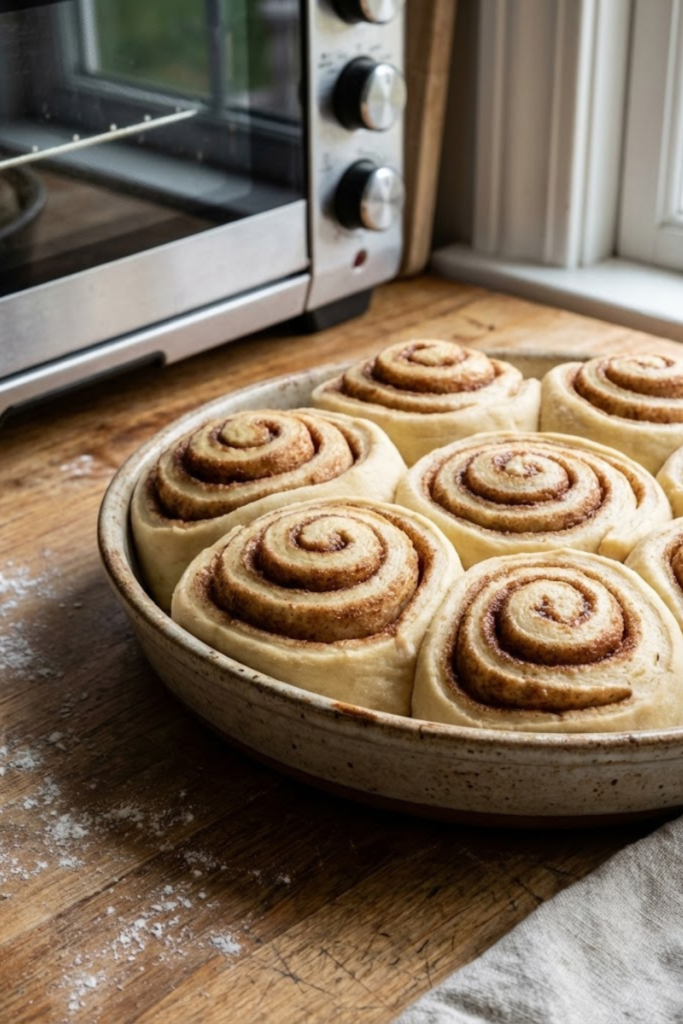
Gluten-free dough doesn’t have the same “oven spring” (that rapid expansion in the heat) that wheat dough has. If you bake them now, they will be dense and heavy. They need a second rise. Cover the dish with plastic wrap and put it in a warm spot free of drafts.
I usually turn my oven on for just one minute, turn it off, and then stick the rolls inside. Let them hang out there for about 30 to 45 minutes. They should look puffy and be touching each other. If your kitchen is cold, this might take an hour. Be patient.
The Heavy Cream Trick
Okay, this is a secret I learned from Cinnabon copycat recipes, and it works miracles for this gluten free cinnamon rolls recipe.
Right before you put the pan in the oven, pour slightly warmed heavy cream over the rolls. Yes, over the top and in between the gaps.
I know it looks like you are drowning them, but the dough soaks up that liquid while it bakes. This keeps them incredibly soft and gooey for days. Gluten-free baked goods tend to dry out fast, so this extra fat and moisture is basically an insurance policy against dry rolls. If you are dairy-free, full-fat canned coconut milk works pretty well too.
The Bake
Preheat your oven to 350°F (175°C). You want a steady heat.
Bake them for about 20 to 25 minutes. Keep an eye on them! You want them to be a light golden brown on top. If they get too dark, they will be hard. But if you take them out too soon, the centers will be raw and gummy.
I honestly use a digital thermometer to check the center roll sometimes. You want it to hit around 190°F. If the tops are browning too fast but the middle is jiggly, throw a piece of foil over the top for the last few minutes.
Cream Cheese Frosting and Storage Tips
Let’s be honest for a second. The roll is important, but we are really here for the cream cheese frosting.
I have definitely been guilty of eating half the bowl with a spoon before the rolls were even out of the oven. No shame. But a good frosting can save even a slightly dry roll, so getting this part right is crucial.
Whip It Good
I used to just mix everything with a fork and call it a day. Bad move. You end up with tiny lumps of butter that look weird and taste greasy.
You really need to use a hand mixer or your stand mixer again to whip the cream cheese and unsalted butter together first. They both need to be soft! If your cream cheese is cold, you will have lumpy frosting, and no amount of mixing will fix it. Once that is smooth, slowly add the powdered sugar and a splash of vanilla extract. Whip it until it’s light and airy. It should look like a cloud.
The Melt Factor
Here is the debate: when do you frost?
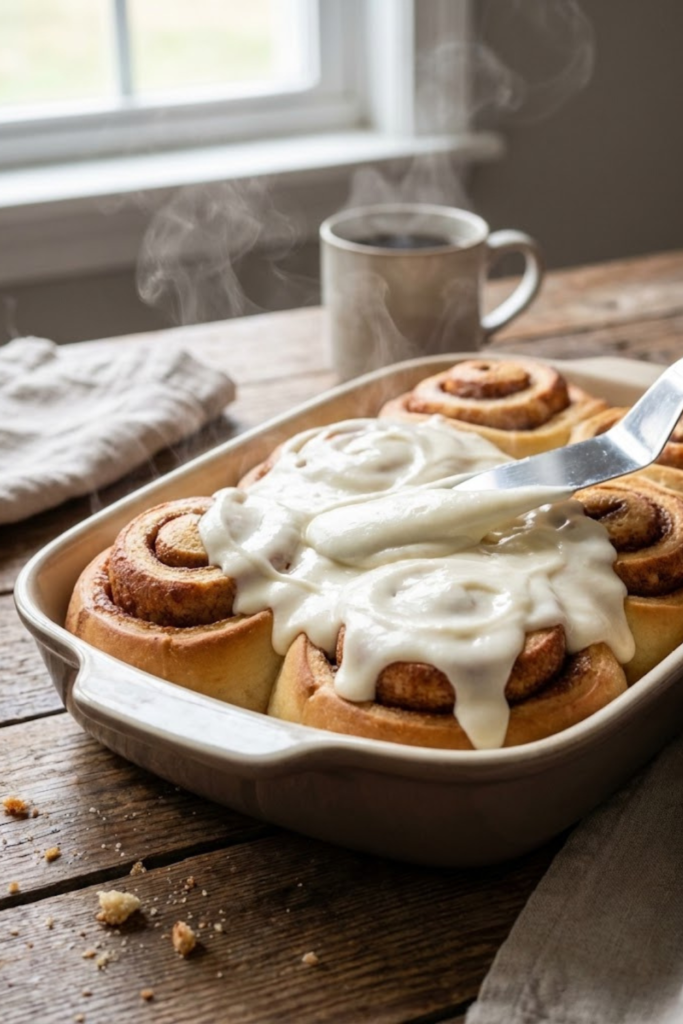
If you frost the rolls the second they come out of the oven, the frosting melts completely and turns into a glaze. It’s delicious, but it kind of disappears. If you wait until they are cold, the frosting just sits on top like a hat.
I like the middle ground. Let the rolls cool for about 10 to 15 minutes. They should be warm to the touch but not scorching. When you spread the frosting now, it melts just enough to seep into the spirals but stays thick and creamy on top. That is the sweet spot.
Saving Leftovers (If There Are Any)
Here is the hard truth about gluten-free baking: it does not age well.
A regular cinnamon roll might still be okay three days later on the counter. A gluten free cinnamon rolls recipe? By day two, it can start to feel a bit like a doorstop. Starch retrogradation (the fancy science word for bread getting stale) happens faster without gluten.
If you aren’t going to eat them all within 24 hours, do not leave them on the counter. I wrap my leftovers individually in plastic wrap and throw them in the freezer. Freezing instructions are simple: they keep perfectly for a month.
Bringing Them Back to Life
Never, ever eat a leftover gluten-free cinnamon roll cold. It will be crumbly and sad.
You have to reheat it. The microwave is actually your friend here. Zap a roll for about 20 to 30 seconds. The heat softens the starches and makes the frosting gooey again. It tastes almost 90% as good as fresh. If you want to be fancy, you can reheat them in the oven at 300°F, but honestly? When I want a cinnamon roll, I want it now, so the microwave wins.
Making this gluten free cinnamon rolls recipe might seem intimidating at first, but once you take that first warm, sticky bite, you will know it was worth every second. You don’t have to settle for dry, store-bought pastries anymore! You now have the skills to bake the ultimate comfort food right in your own kitchen.
We’ve covered everything from the science of xanthan gum to the dental floss trick, so you are ready to rock this. Remember, baking is a journey. If your first batch isn’t perfect, don’t sweat it. They will still taste amazing covered in that cream cheese icing.
If you loved this recipe, please share the love! Take a picture of your creation and pin this recipe to your Gluten Free Breakfast board on Pinterest so others can find this gooey goodness too. Happy baking!