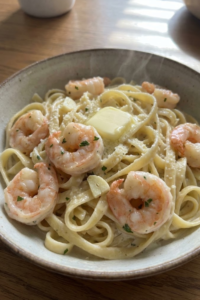
“Did you know that over 40% of home cooks accidentally turn their shrimp into rubbery tires by overcooking them?” I used to be one of them, staring at a sad plate of tough seafood and wondering where I went wrong! But let me tell you, this garlic butter shrimp pasta is the redemption arc we all need. It is fast. It is incredibly flavorful. And honestly? It feels like a cheat code for a fancy dinner!
We aren’t just tossing ingredients in a pan here; we are building a symphony of flavors with simple staples you probably already have. Whether you are rushing home from work or trying to impress a date without sweating through your shirt, this dish saves the day. Let’s dive into the buttery goodness!
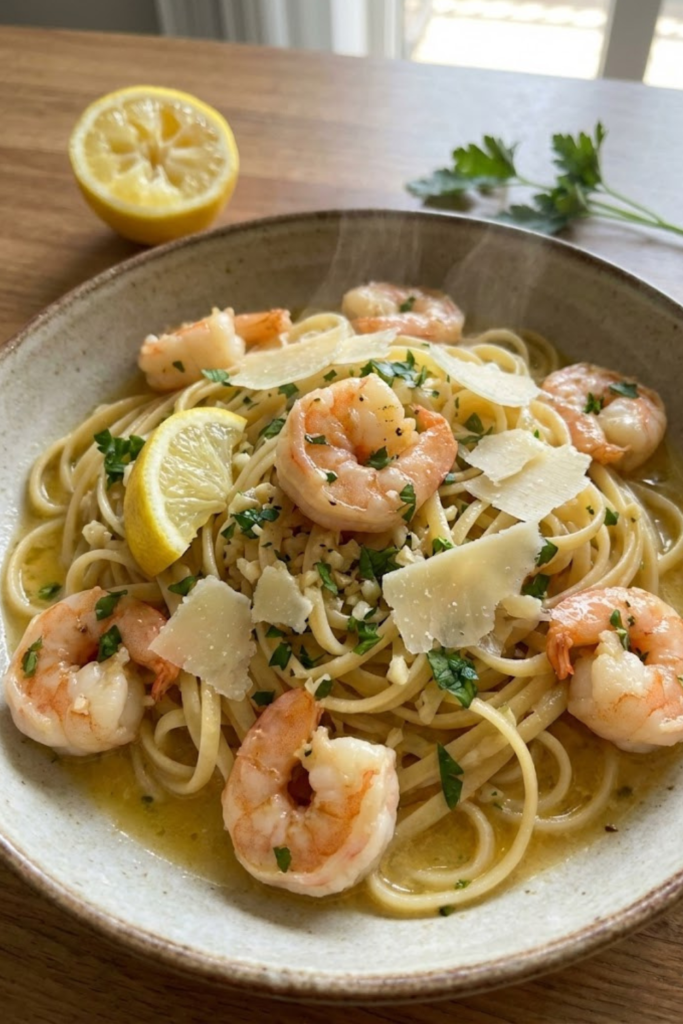
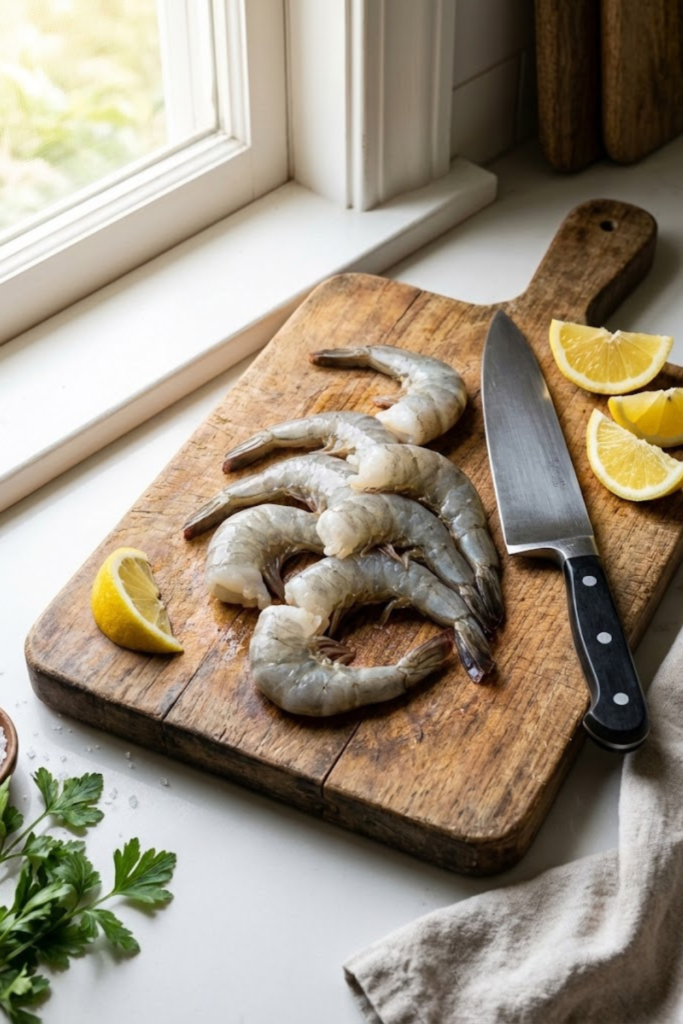
Choosing the Best Shrimp for Your Seafood Pasta
I used to be the person who stared blankly at the seafood counter for twenty minutes, terrified of making the wrong choice. I remember one specific dinner party where I bought these tiny, pre-cooked shrimp thinking I was saving time. It was a disaster. By the time I tossed them into my sauce, they had the texture of pencil erasers. I was mortified!
Through plenty of trial and error (and a few rubbery dinners), I’ve learned exactly what works. You don’t need to be a fishmonger to get this right, but you do need to know a few tricks. Let’s talk about getting the best protein for your garlic butter shrimp pasta.
The “Fresh” vs. Frozen Myth
Here is a truth bomb that blew my mind years ago: the “fresh” shrimp at the grocery store counter are usually just thawed frozen shrimp. Unless you live right on the coast and see the boat come in, that shrimp was frozen on the ship.
I used to buy the thawed stuff, thinking it was superior. Half the time, it had been sitting there for who knows how long. Now, I head straight to the freezer aisle.
Buying bags of frozen, wild-caught shrimp is actually the fresher option. They are flash-frozen immediately after catch, locking in that sweet flavor and firm texture. Plus, you can keep them in your freezer for a rainy day. It is a total game changer for last-minute meals.
Size Matters: Decoding the Numbers
Have you ever seen those numbers on the bag, like 21/25 or 31/40? I used to ignore them, but they are super important. These numbers tell you how many shrimp make up a pound. The smaller the number, the bigger the shrimp.
For a hearty pasta dish, stay away from the high numbers (like 51/60). Those are salad shrimp, and they cook way too fast for a hot skillet. They will dry out before you can say “dinner is served.”
I always grab the 21/25 count (jumbo) or 26/30 count (extra large). They are meaty enough to get a nice sear on the outside without turning into mush on the inside. You want a bite that stands up to the noodles.
Shell-On or Peeled?
This is where I get a bit lazy, I’ll admit it. Buying shell-on shrimp is cheaper, and the shells are awesome for making a quick seafood stock if you have the time. But on a Tuesday night? I just want to eat.
I usually look for “easy peel” or already peeled and deveined shrimp. Deveining is just removing that black line running down the back (the digestive tract). It’s not harmful, but it’s gritty and kind of gross. If you buy them shell-on, you gotta cut the back and pull that out.
It’s a messy job. I’ve spent too many evenings standing over the sink, picking at shrimp while my family asks when dinner is ready. Save yourself the headache and buy them cleaned if you can afford the extra couple of bucks.
The Right Way to Thaw
Please, I am begging you, do not microwave your shrimp to thaw them! You will end up with half-cooked, rubbery seafood before you even start cooking.
The best way is to put the frozen shrimp in a colander and run cold water over them for about 5 minutes. They thaw incredibly fast.
Once they are soft, you have to dry them off. This is a step I skipped for years, and my garlic butter shrimp pasta suffered for it. Wet shrimp don’t sear; they steam. Grab some paper towels and pat them down until they are super dry. That is how you get that beautiful golden color in the pan.
The Secret Science of Emulsified Garlic Butter Sauce
I still have nightmares about the first time I tried to make a “fancy” pasta sauce. I thought if I just melted a whole stick of butter and dumped it on noodles, it would taste like the restaurant version. Spoiler alert: it didn’t.
Instead of a creamy, dreamy coating, I ended up with a pool of yellow grease at the bottom of the bowl. The pasta was dry, and the shrimp were swimming in an oil slick. It was tragic. I later learned that I had broken the sauce because I didn’t understand the science of emulsification.
It sounds like a scary chemistry term, but it’s actually really simple. And getting it right is the only way to make a killer garlic butter shrimp pasta that actually sticks to the noodles.
Don’t Skimp on the Butter
Let’s be real for a second. This isn’t diet food. If you are going to eat pasta with butter sauce, you need to commit to the good stuff.
I used to buy the cheapest store-brand sticks I could find. They have a higher water content and less fat. When they melt, they just don’t have that rich mouthfeel we all crave.
Now, I grab European-style butter or at least a high-quality domestic brand. It has a higher butterfat content. Trust me, you can taste the difference. I usually go for salted butter because I like the extra punch, but if you are watching your sodium, unsalted works too. Just don’t use margarine. Please.
The Garlic Sweet Spot
There is a very fine line between “aromatic toasted garlic” and “bitter burnt mess.” I have crossed that line more times than I care to admit.
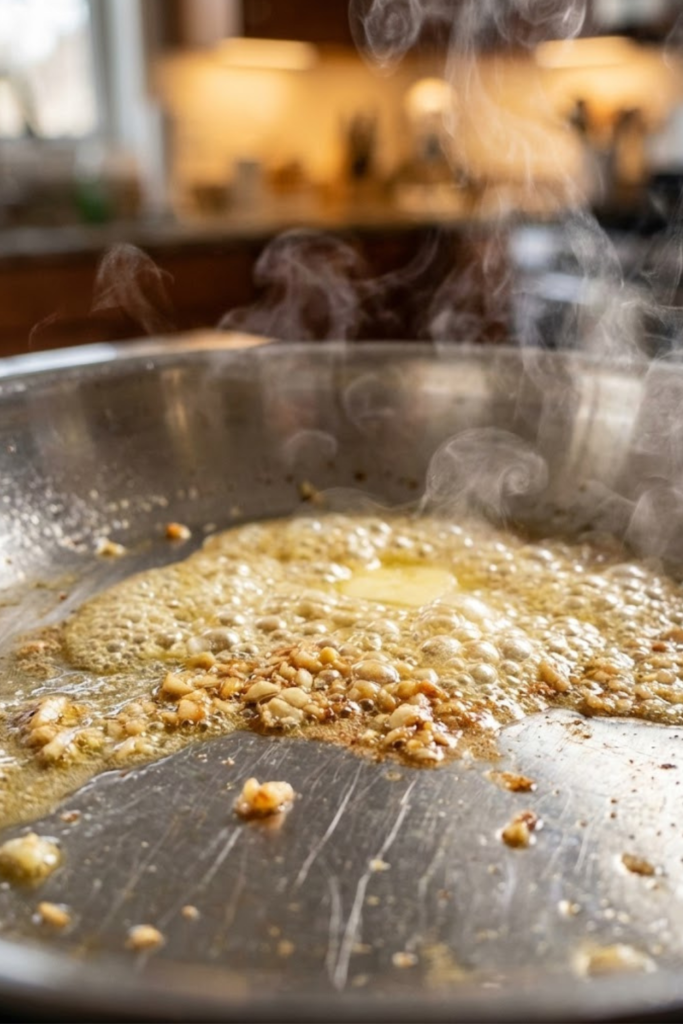
When you throw minced garlic into hot butter, it cooks incredibly fast. If you let it turn dark brown, it gets acrid and ruins the whole dish. You can’t undo that flavor.
My trick is to sauté it on medium-low heat just until I can smell it wafting through the kitchen. It usually takes about 30 seconds to a minute. Once it’s fragrant and barely golden, I immediately add the liquid (like wine or lemon juice) to stop the cooking process.
Liquid Gold: The Real Secret
Here is the tip that changed my life. The most important ingredient in this entire recipe is something you usually pour down the drain. I’m talking about the starchy pasta water.
We call it “liquid gold.” When pasta boils, it releases starch into the water. That cloudy, salty water is the glue that binds the oil (butter) and the liquid (wine/lemon) together.
When you toss your garlic butter shrimp pasta, adding a splash of this water creates a creamy emulsion. It thickens the sauce without needing heavy cream.
I used to strain my pasta in the sink and rinse it off (big mistake!). Rinsing washes away the starch and prevents the sauce from sticking. Now, I use tongs to transfer the pasta straight from the pot to the skillet, dragging a little bit of that magic water with it. If the sauce looks too oily, just add a tablespoon more of the pasta water and stir like crazy. It comes together like magic.
Pasta Shapes and Cooking Techniques
I have a confession to make: I used to be a pasta shape anarchist. I thought, “Pasta is pasta, right?” So, I would throw whatever half-empty box I had in the pantry into the pot.
One time, I tried making this dish with Rotini. It was… okay. But the sauce kind of got lost in the spirals, and the shrimp slid right off the fork. It was a messy battle to get a perfect bite.
After eating my weight in carbohydrates over the last decade, I’ve realized that the shape actually dictates the entire vibe of the meal. Especially when we are talking about garlic butter shrimp pasta.
Long vs. Short: The Great Debate
For oil-based sauces like this one, long noodles are the way to go. You want something that the olive oil and butter can coat evenly.
My absolute favorite is linguine. It’s flat enough to hold onto that silky sauce but not as heavy as fettuccine. Spaghetti works in a pinch, but linguine just feels a bit more sophisticated, you know?
Short shapes like penne or rigatoni are better for chunky tomato sauces or baked dishes where you want the cheese to get stuck inside the tube. For shrimp scampi styles, stick to the long strands. It makes twirling your fork much more satisfying.
The Al Dente Rule
If there is one hill I am willing to die on, it is this: do not overcook your noodles! There is nothing sadder than mushy pasta. It reminds me of the cafeteria food I used to eat in grade school.
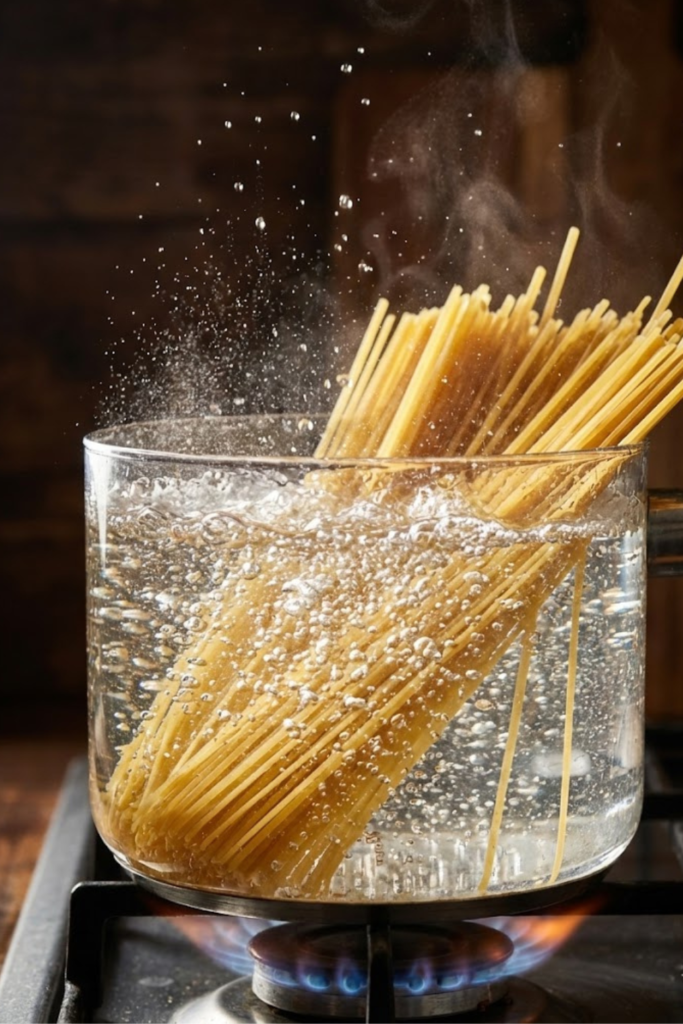
Here is the trick I learned the hard way. Look at the package directions. If it says “cook for 10 minutes,” set your timer for 9 minutes.
Why? Because we are going to toss the pasta into the skillet with the hot shrimp and butter sauce at the end. It will continue cooking in the pan for another minute or so.
If you boil it until it’s fully done, it will turn into a soggy mess when you mix it. You want it to be al dente—which literally means “to the tooth.” It should have a tiny bit of resistance when you bite into it.
Salt the Water Like the Ocean
I used to be terrified of salt. I thought if I put too much in the water, my blood pressure would skyrocket instantly. So I would add a tiny pinch, barely enough for a fairy.
The result? Bland, boring noodles.
You have to season the pasta from the inside out. This is your only chance to give the actual dough some flavor. Once it’s cooked, you can’t salt the inside of the noodle.
When that water comes to a rolling boil, throw in a generous handful of salt. It should taste salty like sea water. Don’t worry, you aren’t going to consume all of it; most of it goes down the drain. But the little bit that soaks into the linguine makes a massive difference in the final taste of your garlic butter shrimp pasta.
Step-by-Step Instructions for the Perfect Dish
Okay, deep breath. We have done the prep work, picked the right noodles, and thawed the shrimp. Now it is time to actually cook. This part moves fast, so I like to have everything measured out next to the stove. It’s what chefs call mise en place, but I just call it “not panicking while the butter burns.”
When I first started cooking, I was chaos in the kitchen. I’d be chopping garlic while the shrimp was already sizzling, and inevitably, something would get ruined. Don’t be like old me. Have your wine (for the sauce and for drinking) ready to go.
Searing the Protein Without Steaming It
Here is the biggest mistake I see people make with garlic butter shrimp pasta. They dump all the shrimp into the pan at once.
I used to do this because I was impatient. I wanted to be done. But when you overcrowd the pan, the temperature drops instantly. Instead of getting that beautiful golden-brown sear, the shrimp release water and steam themselves.
It is heartbreaking. You end up with pale, sad shrimp.
You have to cook them in batches. I usually do about half the shrimp at a time in a single layer. Give them space to breathe! Let them sizzle on one side for about 2 minutes without touching them. Seriously, hands off. Then flip them for another minute until they are pink and opaque. Then, get them out of the pan immediately.
Deglazing: The Flavor Bomb
Once the shrimp are out, look at the bottom of your pan. See those brown sticky bits stuck to the metal? That is not dirt; that is pure flavor. We call it “fond.”
If you wash the pan now, you are washing away the best part of the meal.
This is where you deglaze. I usually toss in a splash of dry white wine (Pinot Grigio is my go-to) or fresh lemon juice. As soon as the liquid hits the hot pan, it will hiss and steam. Use a wooden spoon to scrape up those brown bits. It smells incredible. This liquid becomes the base of your sauce, picking up all that caramelized seafood goodness.
The Final Toss
Now comes the moment of truth. Your pasta is drained (but you kept some water, right?), your sauce is emulsified, and your shrimp are cooked.
Dump the pasta and the shrimp back into the skillet with the garlic butter sauce. Now, toss it!
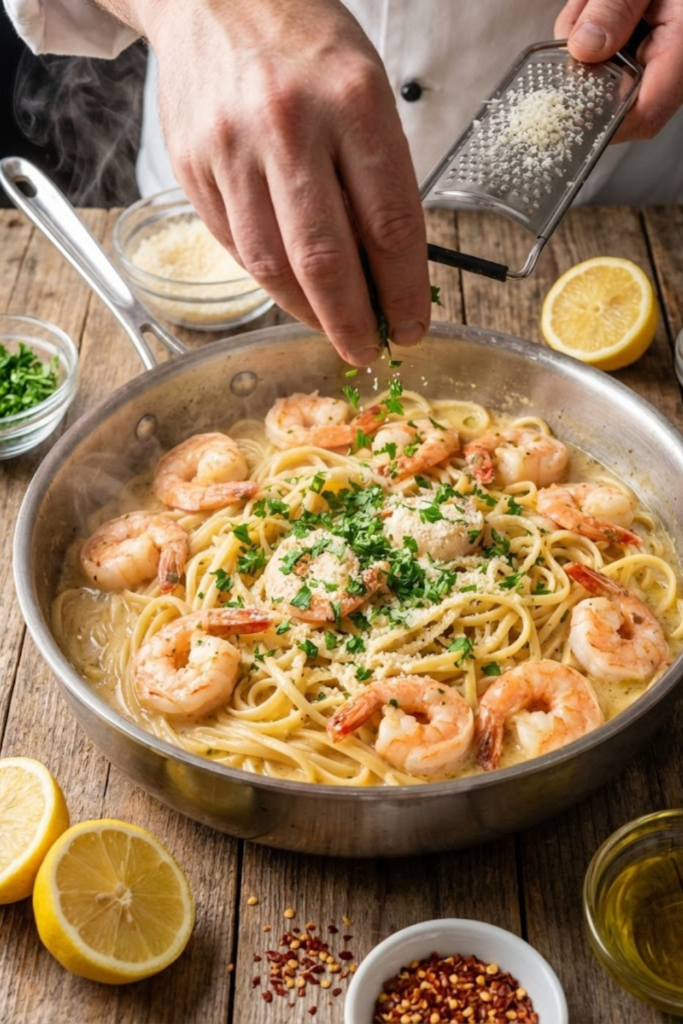
And I don’t mean a gentle stir. I mean vigorously toss it with tongs. You want to agitate the noodles so they release a little more starch and absorb the sauce. I usually do this for about a minute over low heat. The sauce should go from looking watery to looking creamy and coating every single strand of linguine.
If it looks dry, splash in a little more pasta water. It’s a feeling you get when the consistency is just right. Once it looks glossy and smells like heaven, take it off the heat immediately so the shrimp don’t get rubbery.
Flavor Variations and Dietary Substitutions
I am a creature of habit. If I find a song I like, I listen to it until I hate it. The same goes for food. I made this garlic butter shrimp pasta three times in one week once, and my family finally staged an intervention.
They loved it, but they pleaded for a little variety. That is when I started experimenting. The beauty of this recipe is that it’s basically a blank canvas. You can twist it in a dozen directions without ruining the core vibe.
Whether you are trying to impress a spice-lover or cooking for a friend with dietary restrictions, I’ve got some battle-tested adjustments for you.
Add Some Heat
I personally have the spice tolerance of a toddler. But my husband? He puts hot sauce on popcorn. It’s wild.
If you want to wake up your taste buds, add red pepper flakes. But here is where I messed up before: I used to sprinkle them on top at the end. It did nothing but add dry heat.
The trick is to add the flakes to the butter while you are sautéing the garlic. This blooms the spice and infuses the oil. Now you get a spicy garlic shrimp flavor in every bite, not just on the surface. If you are feeling brave, a teaspoon of Cajun seasoning on the raw shrimp before searing changes the game entirely.
Veggie Heavy
Sometimes I look at my plate of carbs and butter and feel a twinge of guilt. Just a small one. To make myself feel better (and healthier), I started bulking this dish up with vegetables.
My go-to is fresh spinach. It is the laziest option because you don’t even have to chop it. Just throw a few handfuls in right when you toss the pasta. It wilts in seconds.
If you want crunch, asparagus is killer here. I chop it into one-inch pieces and sauté it with the shrimp. Cherry tomatoes are also amazing; they burst open and make the sauce slightly sweet and acidic, which cuts through the rich butter.
Gluten-Free & Low Carb Options
I hosted a dinner party last year and completely forgot my best friend had gone gluten-free. Panic mode set in. I had to improvise fast.
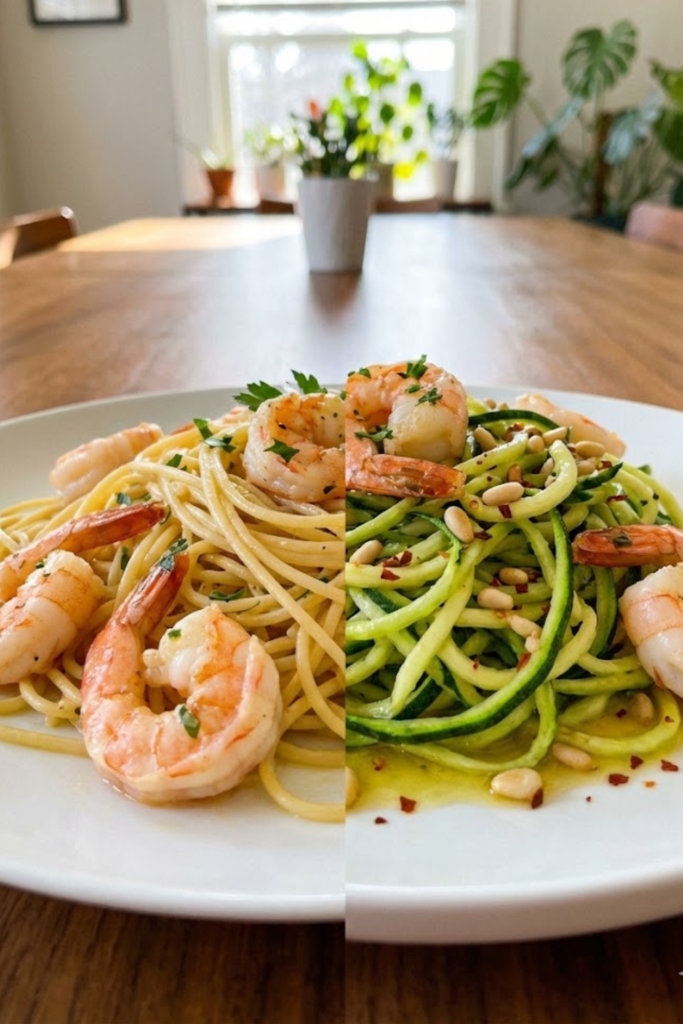
I tried using zucchini noodles (zoodles). The first time, it was a disaster. Zucchini is mostly water. When I tossed it in the hot pan, it released a flood of liquid. My creamy sauce turned into a watery soup. It was gross.
If you want to make zucchini noodles shrimp, you have to sweat the zoodles first. Sprinkle them with salt and let them sit in a colander for 20 minutes, then squeeze the water out. Or, honestly, just use a high-quality gluten free pasta substitute made from brown rice or chickpeas. They have come a long way and hold up much better in the sauce.
So, there you have it. We made it to the end without burning the house down.
I honestly used to think that making a restaurant quality dinner meant spending three hours in the kitchen and ending up with a sink full of dirty dishes. I would avoid seafood on weeknights because it felt too high-stakes. Who has the energy for complicated recipes after a long day at work? Not me.
But this garlic butter shrimp pasta completely changed my mind. It proves that you don’t need a culinary degree or a pantry full of weird ingredients to make something incredible. It is fast, it is messy in the best way possible, and it tastes like you spent a fortune.
I actually served this last week when my in-laws dropped by unannounced (scary, I know). I had twenty minutes to get food on the table. I threw this together, and my mother-in-law actually asked for the recipe. That was a major victory for me! She thought I had been slaving away all afternoon. I didn’t correct her, and I suggest you don’t either.
Whether you are cooking for a date, your chaotic family, or just treating yourself to some comfort food, this recipe has your back. It is versatile enough to add veggies if you want to be healthy, but indulgent enough to feel like a treat.
If you make this, I want to hear about it! Did you add the red pepper flakes? Did you accidentally buy the salad shrimp and learn your lesson? Let me know.
And if you want to save this life-saver of a recipe for a rainy day, please share the love. Pin this recipe to your “Weeknight Dinners” board on Pinterest so you never lose this gem. It helps me out a ton, and it ensures (oops, I mean makes sure) you always have a backup plan when hunger strikes.
Happy cooking, and enjoy that garlic breath! It is totally worth it.