Did you know that nearly half of home cooks admit to accidentally drying out their fish? I’ve been there—staring at a sad, chalky piece of fillet and wondering where it all went wrong! But those days are over. Prepare yourself for the most tender, melt-in-your-mouth Garlic Butter Baked Salmon you’ve ever tasted. It’s a total game-changer for weeknight dinners! We are talking about rich, herb-infused butter basting flaky pink meat. Yum! Whether you are a pro in the kitchen or just starting out, this guide will ensure you nail it every single time.

Why This Garlic Butter Baked Salmon Recipe Works
Look, I used to be terrified of cooking fish. Seriously. For years, I avoided the seafood aisle like it was haunted. My early attempts at salmon were… well, let’s just say they were less “gourmet dinner” and more “hockey puck.” I’d leave it in the oven way too long, terrified of undercooking it, and end up with a dry, chalky mess that even my dog wouldn’t touch. It was frustrating! But after plenty of trial and error (and a few takeout pizzas when I ruined dinner), I finally cracked the code.
This Garlic Butter Baked Salmon isn’t just another recipe; it’s the result of me finally figuring out that fish doesn’t have to be complicated. The magic here is simplicity. You don’t need a culinary degree or fancy gadgets. You just need fresh ingredients and a timer.
It’s All About that Fat Balance
Here is the thing about salmon—it is a fatty fish, but it can still dry out if you look at it wrong. The garlic butter is the real hero here. By basting the fillets in that rich, golden liquid before they hit the heat, you are adding a protective layer of moisture.
I remember the first time I tried using a heavy butter baste instead of just olive oil. The difference was night and day. The milk solids in the butter brown slightly in the oven, giving you this nutty, savory depth that olive oil just can’t compete with. Plus, garlic makes everything better. That’s just a fact of life.
The 20-Minute Lifesaver
We are all busy. I don’t know about you, but by the time 6 PM rolls around, my brain is fried. The last thing I want to do is stand over a hot stove stirring a risotto for an hour. This recipe is my go-to “emergency button” for dinner.
- Prep time: 5 minutes (mostly chopping garlic).
- Cook time: 12-15 minutes.
- Cleanup: Non-existent if you use foil.
It is honestly faster than ordering delivery. By the time the oven preheats, you’re practically done. This speed is a huge win for keeping healthy seafood recipes in your weekly rotation without feeling overwhelmed.
Health Benefits Without the “Diet” Taste
We all know we should eat more fish. Doctors and nutritionists are always going on about Omega-3 fatty acids and heart health. But let’s be real—if it tastes like cardboard, I’m not eating it.
What I love about this dish is that it feels indulgent. You are eating healthy fats and high-quality protein, but it tastes like something you’d order at a nice bistro. You get all the brain-boosting benefits of the salmon without feeling like you’re on a restrictive diet. It’s the kind of meal that makes you feel good after you eat it, not heavy or sluggish.
Versatility for the Win
Another reason this recipe has saved my bacon (or salmon?) so many times is that it goes with literally anything. I’ve served this Garlic Butter Baked Salmon with mashed potatoes when I needed comfort food. I’ve tossed it on top of a big green salad when I wanted something light.
I once made a double batch on a Sunday and used the leftovers for lunch tacos all week. It flaked perfectly and didn’t get that weird “fishy” smell that some leftovers get. It’s a workhorse recipe. Whether you are meal prepping for one or trying to impress your in-laws, this dish scales up or down without any drama. It just works, every single time.
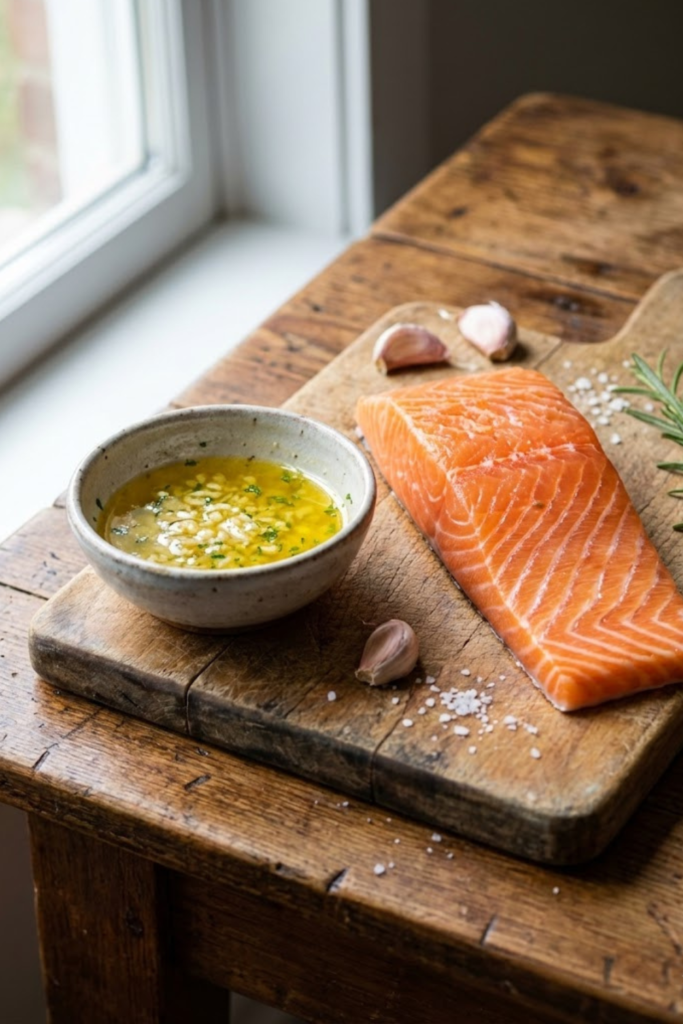
Ingredients for the Perfect Lemon Garlic Butter Sauce
I’m going to be honest with you—I used to be a “good enough” cook. You know what I mean? I’d look at a recipe calling for fresh herbs and think, “Eh, this jar of dried parsley from 2018 is basically the same thing.” Spoiler alert: it wasn’t. It really, really wasn’t.
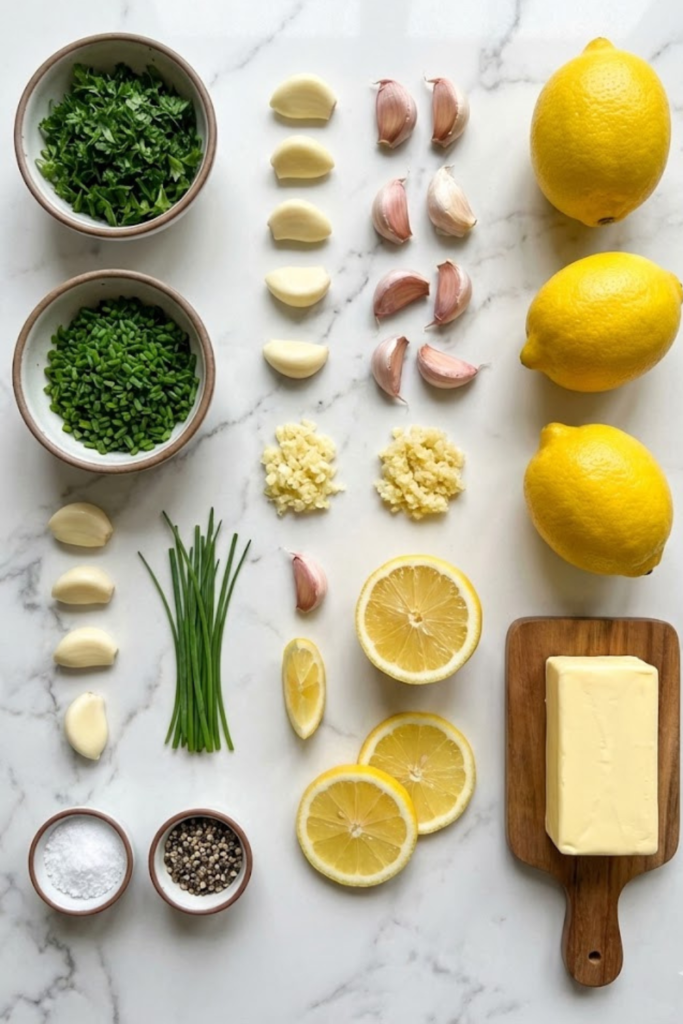
When it comes to this lemon garlic butter sauce, the ingredients are simple, but quality matters. Since there are only four or five main players here, there is nowhere for bad ingredients to hide. I learned this the hard way when I tried to make this dish for a date night using bottled lemon juice and garlic powder. Let’s just say there wasn’t a second date.
Fresh Garlic vs. The Jar Stuff
Please, I am begging you, put down the garlic powder. For this recipe to sing, you need fresh garlic cloves. I used to buy that pre-minced stuff in the jar because I hated sticky fingers, but it just tastes… sour. It lacks that spicy, aromatic punch that real garlic has.
I usually smash about 3 or 4 cloves for this. If you are a garlic fiend like me, maybe go for 5. No judgment here! The key is to mince it really fine so it melts into the butter rather than leaving you with big, raw chunks to bite into.
Why Unsalted Butter is Your Friend
This was a mistake I made for years. I always bought salted butter because, well, salt tastes good, right? But here is the problem. Different brands use different amounts of salt. If you use salted butter and then add more salt to season your fish, you might end up with a salt lick instead of dinner.
Using unsalted butter gives you total control. You can control the sodium levels and season to your exact taste. I like to melt the butter in a small saucepan first until it’s bubbly. It smells like heaven.
The Acid Factor: Fresh Lemon Juice
Okay, confession time. I used to keep one of those little plastic lemon-shaped squeeze bottles in my fridge door. I thought it was genius. But that stuff has preservatives that give it a weird, chemical aftertaste.
For a bright, zesty lemon butter sauce, you have to squeeze a real lemon. It cuts right through the richness of the butter and balances the whole dish. Plus, you can slice up the rest of the lemon to bake right alongside the salmon for a pretty presentation.
Herb Choices: Go Green or Go Home
Finally, let’s talk about the green stuff. Fresh herbs add a pop of color and freshness that dries herbs just can’t match. I usually go with a parsley garnish because it’s mild and fresh.
However, if you want to get fancy, fresh dill recipes are amazing with salmon. Dill has this unique grassy flavor that pairs perfectly with seafood. Just don’t use dried dill unless you are in a serious pinch—it loses its flavor almost instantly.
Step-by-Step: How to Bake Salmon in Foil
I used to think baking fish was some kind of dark art. I’d shove a tray in the oven, cross my fingers, and pray to the kitchen gods that it wouldn’t come out dry. Honestly, half the time I’d forget to even check the temperature until smoke was coming out. It was a disaster. But once I learned the foil packet method, everything changed. It is stupidly simple and basically foolproof.
Crank Up the Heat
First things first, get that oven hot. I usually aim for 400°F (200°C). I used to try low and slow because I was scared of burning it, but oven-roasted fish needs a bit of heat to cook quickly and stay moist. If your oven takes forever to heat up like mine does, turn it on before you even take the fish out of the fridge.
The Magic of Foil Packets
Okay, here is my favorite hack: foil packet baking. Not only does it steam the fish gently so it stays juicy, but the cleanup is a joke. I literally just ball up the dirty foil and throw it away. No scrubbing pans for twenty minutes!
I tear off a big sheet of heavy-duty aluminum foil and lay it on my baking sheet. Sometimes I’ll use parchment paper inside if I’m feeling fancy, but foil works fine. You place your Atlantic salmon fillets right in the center. Don’t crowd them; give them a little personal space.
Drown It in Butter
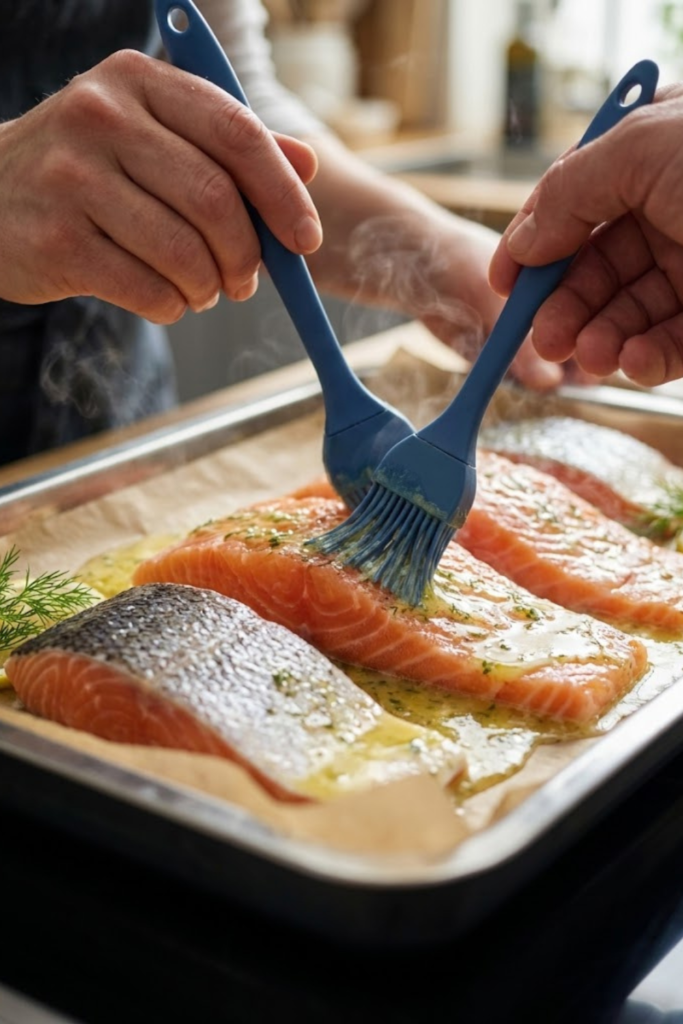
Now for the fun part. Take that garlic butter mixture we made and brush it all over the salmon. And I mean all over. I used to be stingy with the sauce, thinking I was saving calories. Big mistake. You want that flavor to seep into every crack.
If you are making a sheet pan dinner, this is where you’d toss your veggies around the fish too. Just make sure everything is coated. Then, fold the sides of the foil up and seal it tight. You are creating a little steam sauna for your fish.
The Waiting Game
Pop that tray in the oven. For a standard fillet, 12 to 15 minutes is usually the sweet spot. I learned the hard way that walking away to watch TV is dangerous. Set a timer!
If you like a little color on top, you can open the foil for the last 2 minutes and switch the oven to broil. But keep an eye on it—garlic burns fast. When the timer dings, take it out immediately. It will keep cooking a bit in the packet, so it’s better to pull it early than late. These easy weeknight meals are all about timing, but don’t stress too much. You got this.
Internal Temperature: When is Salmon Done?
I used to play a dangerous game in the kitchen called “Is it done yet?” I’d poke the fish, squint at it, maybe say a little prayer, and then inevitably leave it in for another five minutes “just to be safe.” You can guess what happened. I ended up with salmon so dry it was basically cat food. It was a tragedy.
Learning exactly when to pull the plug on cooking was the hardest lesson for me. But once I got it, my cooking for beginners anxiety completely vanished. You don’t need to guess; you just need to know what to look for.
The Old-School Flake Test
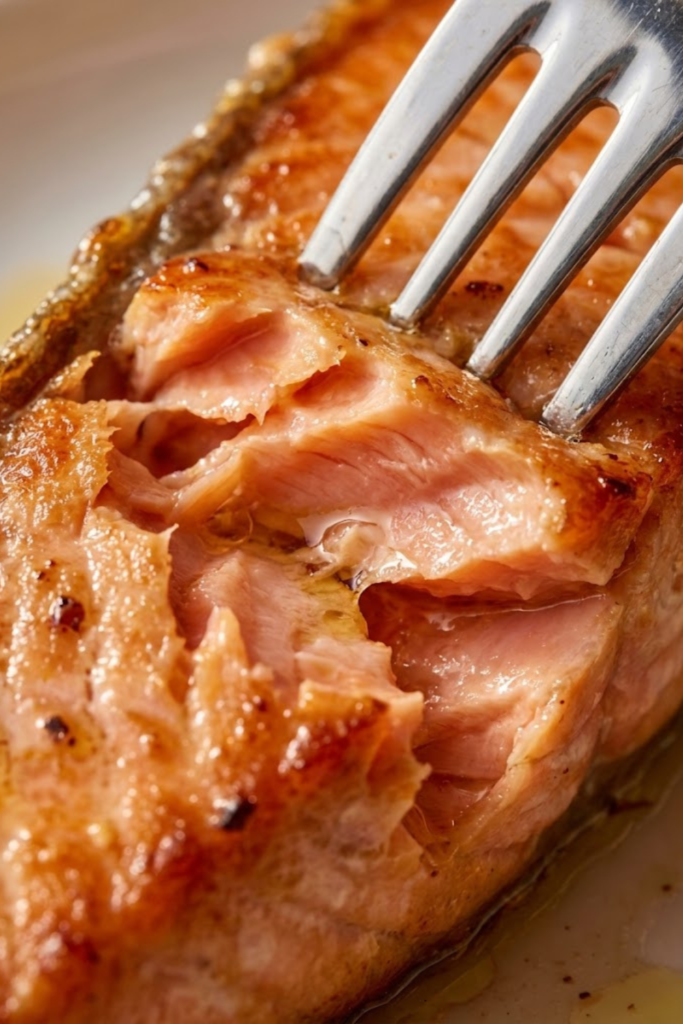
Before I owned any fancy gadgets, I relied on the fork test. It’s pretty reliable if you are paying attention. You take a fork and gently press down on the thickest part of the fillet.
If the fish resists, it’s still raw in the middle. If it falls apart into dry dust, you’ve gone too far (been there, done that). You are looking for that sweet spot where the layers separate easily with just a gentle nudge. This flaky fish texture is exactly what we are aiming for. It should look juicy inside, not chalky.
Get a Thermometer (Seriously)
Okay, here is the best advice I can give you: buy a meat thermometer. I resisted for years because I thought, “I’m not a professional chef, I don’t need that.” Wrong. It’s the only way to be 100% sure.
For meat thermometer tips, stick the probe into the thickest part of the fish. You aren’t looking for the USDA standard of 145°F immediately—that’s actually when it starts to get dry. I usually aim for an internal temperature for fish of around 125°F to 130°F. This gives you that perfect, melt-in-your-mouth medium doneness. If you prefer it more well-done, go to 135°F, but be careful.
The “Carryover” Factor
This is the science part that blew my mind. Heat doesn’t just stop the second you open the oven door. The hot baking sheet and the fish’s own internal heat keep cooking the meat for a few minutes after you take it out. This is called carryover cooking.
If you leave the salmon in the oven until it hits your target temp, it will be overcooked by the time you sit down to eat. I learned this the hard way after serving a dinner party some very sad, tough fish. Pull it out when it’s about 5 degrees under your target. Let it rest on the counter for a few minutes. It finishes cooking itself perfectly.
Trust Your Eyes
Finally, look at the color. Raw salmon is translucent and shiny. Cooked salmon is opaque and pink.
If it still looks a bit jelly-like in the center, it needs more time. But if you see white stuff (albumin) seeping out aggressively, that’s a sign the muscle fibers are contracting and squeezing out moisture. You want to catch it right before that happens. It takes practice, but trust me, you’ll get the hang of it.
Serving Suggestions and Side Dishes
I used to have a major problem with timing. I’d pull a beautiful tray of salmon out of the oven, feeling like a rockstar, only to realize I hadn’t started the rice yet. So, we’d stand around the kitchen eating cold fish while staring at a pot of boiling water. Not exactly the dream dinner scenario.
Over the years, I’ve learned to pick sides that either cook in the same amount of time or can be prepped beforehand. It saves so much stress. The goal is to get everything on the table while it’s still hot.
The Green Stuff: Roasted Vegetable Sides
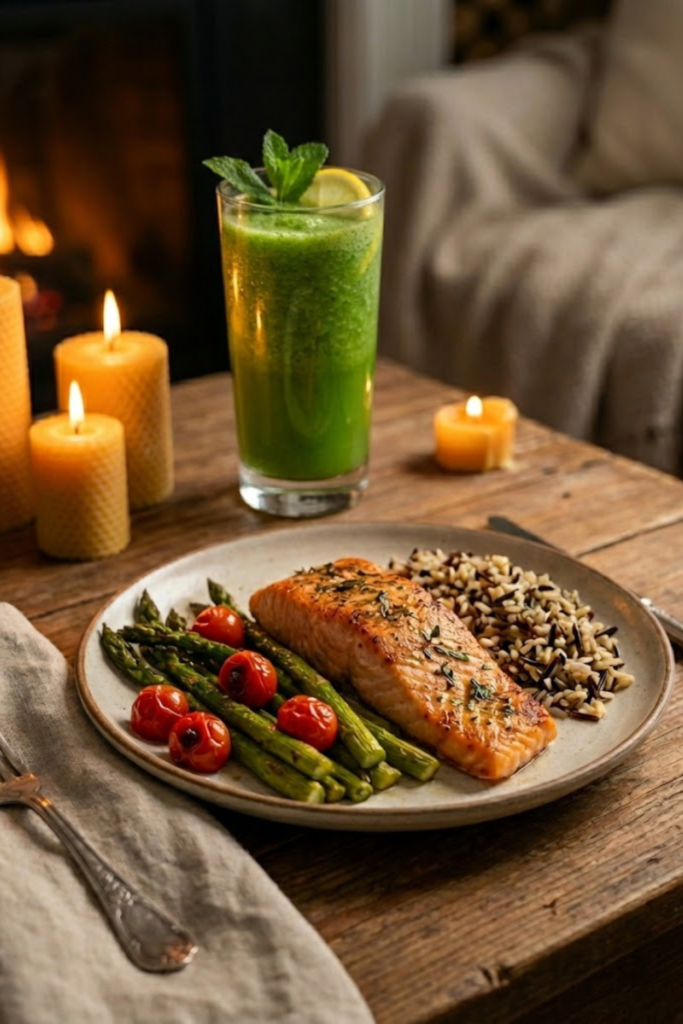
If you are lazy like me, the best move is to roast your veggies right alongside the fish. Asparagus is my absolute favorite here. It cooks in about the same time as the salmon, so you can just toss it on the sheet pan.
I used to boil broccoli until it was sad and gray. Don’t do that. Roasting it with a little olive oil and lemon zest changes the game entirely. Roasted vegetable sides like green beans or Brussels sprouts add a nice crunch that contrasts with the soft fish. It makes the meal feel complete without dirtying another pan.
Comfort Food or Low Carb?
Ideally, you want something to soak up that extra garlic butter sauce. If I’m having a rough week, I’m making mashed potatoes. There is nothing better than mixing that garlicky, lemon-infused butter into creamy potatoes.
However, if you are looking for low carb meals, cauliflower rice is a solid option. It absorbs the flavor just as well without the heavy feeling afterward. For those strictly following Mediterranean diet recipes, a simple quinoa salad with cucumbers and feta is refreshing and light.
The Pasta Route
Okay, sometimes you just need carbs. A salmon pasta pairing is one of my guilty pleasures. I’ll boil some angel hair or linguine while the fish bakes.
When the salmon is done, I toss the pasta directly in the pan juices. It coats the noodles in that rich garlic butter. It’s messy, but it’s delicious.
What to Drink: White Wine Pairing for Fish
I used to drink heavy Cabernet with everything because that’s what I had in the cupboard. But red wine kind of bullies the salmon. It overpowers the delicate flavor.
A crisp white wine pairing for fish is the way to go. A Sauvignon Blanc or a Pinot Grigio cuts through the buttery fat perfectly. It cleans your palate between bites. If you aren’t into wine, an iced tea with fresh lemon works wonders too. Just keep it light and bright!
Your New Go-To Dinner
So, there you have it. We’ve gone from fearing the fish counter to mastering one of the best easy weeknight meals out there. If I can go from burning fish sticks to making restaurant-quality Garlic Butter Baked Salmon, you can absolutely nail this recipe.
I know how easy it is to get stuck in a rut. I used to make the same chicken dish three times a week because it was “safe.” But adding this recipe to my rotation changed things. It’s fast, it’s healthy, and honestly, it just makes me feel like I have my life together—even if the rest of the house is a mess.
Don’t Be a Stranger to Seafood
I really hope you give this a shot. It’s one of those healthy seafood recipes that doesn’t feel like “health food.” It’s rich, buttery, and satisfying. Remember, the secret is in the sauce (and the thermometer!). Don’t let the fear of dry fish stop you. Just keep an eye on that temperature, and you’ll be fine.
If you mess it up the first time? Who cares. I’ve ruined plenty of dinners. You just scrape off the burnt parts or drown it in more lemon butter sauce and try again next week. That’s how we learn.
Save This for Later
I am terrible at remembering recipes. I’ll make something amazing and then forget entirely how I did it two weeks later. Don’t be like me.
If you think you’ll want to make this again—and I promise, you will—do yourself a huge favor. Pin this recipe to your “Dinner Ideas” or “Healthy Eats” board on Pinterest. That way, when it’s 5 PM on a Tuesday and you are staring at a blank fridge, you’ll know exactly what to do.
Enjoy the food, enjoy the compliments you’re going to get, and happy cooking!