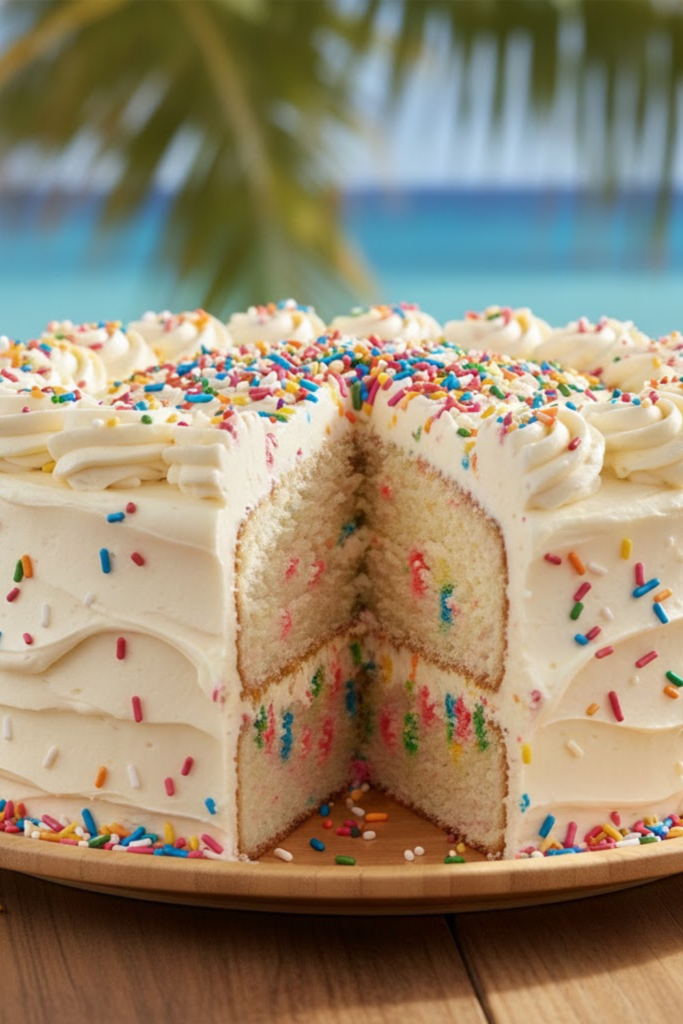
Do you remember that specific, sugary thrill of slicing into a birthday cake and seeing a kaleidoscope of colors hidden inside? I do! In fact, studies show that nostalgic comfort foods like sprinkles can actually trigger dopamine release—so really, this cake is good for your health, right? We aren’t just mixing flour and sugar here; we are crafting a memory. Forget the dry box mixes of the past. Today, we are making a homemade funfetti cake that is dense, buttery, and unmistakably joyous! I’ve failed at this recipe a dozen times so you don’t have to—no sinking sprinkles today, folks. Let’s get our hands messy and bake something magical!
Choosing the Right Sprinkles: Jimmies vs. Nonpareils
Listen, I have to be real with you for a second. The first time I tried to make a homemade funfetti cake, it was a disaster. I’m talking a total flop. I walked down the baking aisle, grabbed the cutest, tiniest rainbow balls I could find, and thought, “These are gonna look so elegant.”
Spoiler alert: They didn’t.
Instead of beautiful bursts of color, I pulled a grey, muddy mess out of the oven. The colors had bled everywhere, staining the white cake crumb until it looked like dirty dishwater. I was so frustrated I almost tossed the whole pan in the trash right then and there. But hey, you live and you learn, right? I messed up so you don’t have to. Here is what I’ve learned about picking the best sprinkles for baking so your cake actually looks appetizing.
The “Jimmies” Supremacy
If you want those classic, clean spots of color, you absolutely have to use Jimmies. You know the ones—they are the long, rod-shaped sprinkles. They are coated in a way that helps them hold their shape under heat. When you fold them into your cake batter, they stay put. They melt just enough to become soft but don’t explode their dye all over the place.
I usually stick to the multi-colored packs, but make sure you check the label. Sometimes “chocolate” jimmies are just brown dye that turns the batter weird. Stick to the rainbow ones for that classic look.
The Nonpareil Trap
Those tiny round balls I used during my “grey cake incident”? Those are called nonpareils. They are super cute for decorating the outside of a cake or on top of a cupcake. But putting them inside the batter is a rookie mistake.
Because they are so small and have no protective coating, they dissolve almost instantly when they hit moisture. That’s what causes that gross color bleed. Save the nonpareils for the top of your vanilla buttercream frosting where they belong. Trust me on this one.
Quantity and Taste Check
Another thing people mess up is the ratio. You might think “more is better,” but if you add too many, the cake gets heavy and greasy. I’ve found that about 1/2 cup of sprinkles per standard cake recipe is the sweet spot. It gives you plenty of color without weighing down the fluffy white cake.
Also, do a taste test before you bake! Seriously, open the jar and eat a spoonful. Some cheap brands taste like straight-up wax or plastic. If they taste bad raw, they are gonna taste bad in your cake. Look for sprinkles that actually taste like sugar and vanilla. It makes a huge difference in the final product.

The Science of a Moist Crumb: Sour Cream and Egg Whites
Is there anything sadder than biting into a slice of cake and realizing it’s dry? It’s basically a crime against birthdays. I remember baking a cake for my friend’s shower a few years ago, and I was so proud of how tall it looked. Then we cut into it. It was like eating a sweet, vanilla-flavored crouton. I wanted to crawl under the table. That’s when I realized that baking isn’t just throwing stuff in a bowl; it’s basically edible chemistry. If you want that bakery-style tender cake crumb, you have to stop improvising with the ingredients.
Why I Always Use Sour Cream
For the longest time, I just used milk because that’s what I had in the fridge. Big mistake. If you want a moist white cake that stays soft for days, you need fat and acid. That is exactly what sour cream brings to the party.
The acid in the sour cream actually breaks down the gluten strands in the flour. Think of it like a meat tenderizer, but for cake. It makes the texture so velvety and dense—in a good way. I’ve tried using yogurt as a substitute, and while it works in a pinch, full-fat sour cream is the king of baking science. Don’t go for the low-fat stuff; we are making cake here, not a salad.
The Egg White Dilemma
Okay, I’m gonna be honest: separating eggs is a pain in the neck. I usually end up breaking a yolk and having to fish it out with a shell. But for this recipe, using egg whites only is non-negotiable.
Here is why: yolks are yellow (duh). If you use whole eggs, your funfetti cake will look yellow, and the colorful sprinkles won’t pop as much. Plus, yolks add richness that makes the cake more like a pound cake. By using just the whites, we keep the batter bright white and the texture light as air. Pro tip: Save the yolks for a custard or carbonara so you don’t feel guilty about wasting food.
Cake Flour vs. All-Purpose
I used to roll my eyes at recipes that called for “cake flour.” I thought it was just a scam to get me to buy more stuff. I was wrong.
Cake flour has less protein than all-purpose flour (usually around 8% vs 10-12%). Less protein means less gluten formation. If you use regular flour, your cake might end up tough or rubbery. If you absolutely can’t find it, you can make a cake flour substitute by taking out two tablespoons of AP flour and adding two tablespoons of cornstarch, but the real stuff is always better.
Don’t Be Lazy with Temperature
This is the hill I will die on. You cannot use cold ingredients. I know, it’s annoying to wait for butter and eggs to come to room temp. I’ve tried to rush it by microwaving the butter, and I ended up with a greasy puddle.
When your room temperature ingredients are all the same temp, they emulsify perfectly. This traps air bubbles that expand in the oven. If your dairy is cold, the batter curdles, and you get a weird, uneven texture. Just set them out an hour before you start. It’s worth the wait.
Mastering the Reverse Creaming Method
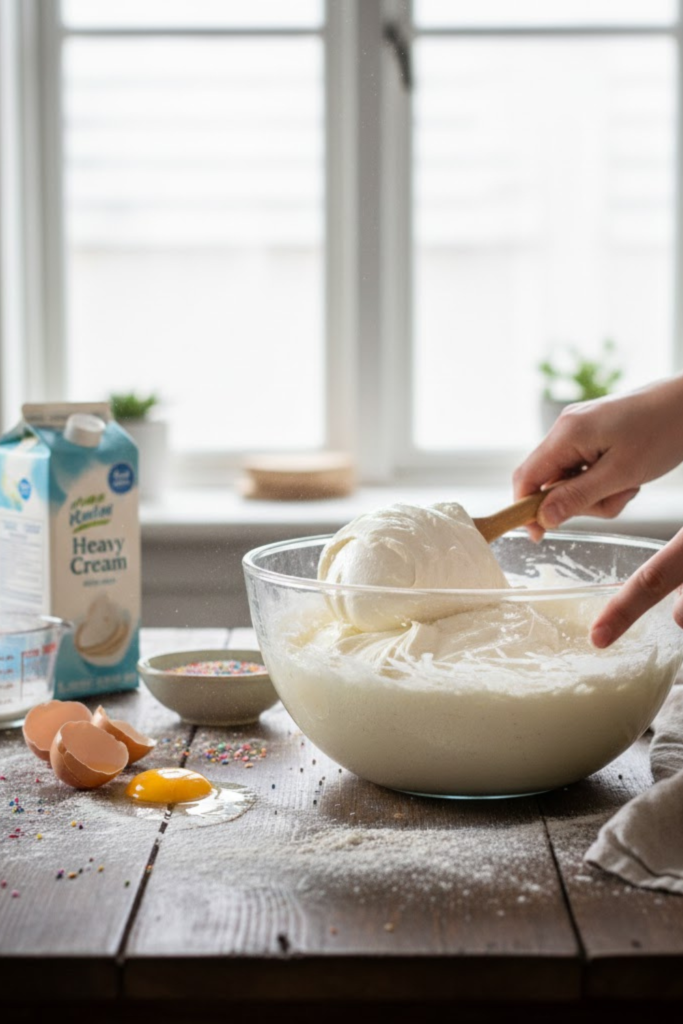
You know how sometimes you do something the same way for years just because that’s how you were taught? That was me with baking. I always started by beating the butter and sugar together until my arm felt like it was gonna fall off. It’s the classic way, right? Well, a few years ago, I tried to make a wedding cake for my cousin (ambitious, I know). The layers came out with these huge domes on top. I had to slice off half the cake just to get them flat enough to stack!
I was so annoyed at wasting all that cake. That’s when I stumbled upon the reverse creaming method, and honestly? It’s a total game-changer.
What on Earth is Reverse Creaming?
It sounds fancy, but it’s actually super simple. Instead of mixing butter and sugar first, you mix the butter directly into the dry ingredients (flour, sugar, baking powder). You do this before you add any liquid.
I know, it feels wrong. The first time I did it, I thought I was ruining the batter. But here is the baking science behind it: when you coat the flour particles with butter fat first, you are physically preventing them from soaking up too much liquid later. This limits gluten development, which is exactly what we want. Less gluten means a softer, more tender cake crumb that literally melts in your mouth.
The “Sandy” Texture
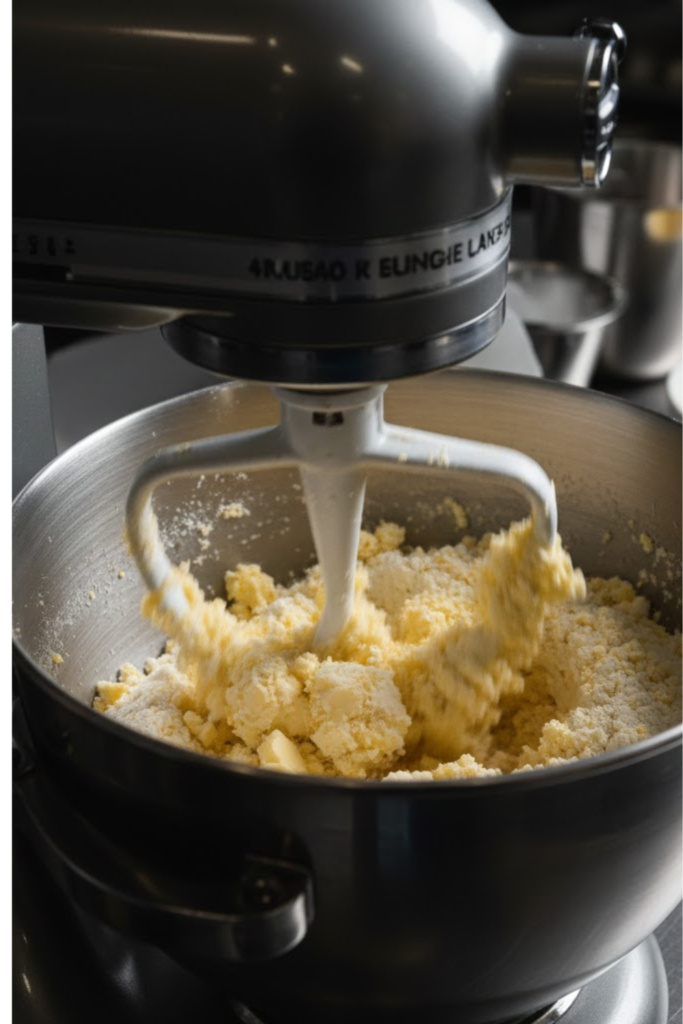
So, what are you looking for? You want to mix the butter and flour until it looks like coarse, wet sand. It shouldn’t be a smooth paste yet.
I usually use my stand mixer with the paddle attachment on low speed for this. If you see big chunks of butter, keep going. But if it starts looking like dough, you’ve gone too far. It’s a delicate balance, but once you see that sandy texture, you are ready for the wet ingredients. This technique is the secret to that dense, velvety butter cake texture you get at high-end bakeries.
Say Goodbye to the Dome
The best part about this method? My cakes finally come out flat. Because we aren’t beating a ton of air into the butter at the start, the cake doesn’t rise aggressively and then sink.
This makes layer cake assembly so much easier. No more sawing off the top of your cake with a bread knife and praying it’s level. You get nice, flat layers that stack perfectly. Just make sure you don’t over-mix once you add the milk and egg whites.
Once the liquid is in, mix on low just until it’s combined. If you beat it to death now, you undo all the good work and end up with a tough cake. I usually stop the mixer early and finish folding by hand just to be safe. It’s the best way to get that professional look without tearing your hair out.
Baking Temperature and Cooling Secrets
I used to think my oven had a personal vendetta against me. Seriously, there was a dark period in my baking life where every single cake I made came out burnt on the bottom and raw in the middle. It was tragic. I’d be sitting on the kitchen floor, staring at a blackened disk of what was supposed to be a birthday party masterpiece, wondering where I went wrong.
I blamed the recipe. I blamed the pan. But it turns out, I just didn’t understand how heat works. If you want consistent results, you have to stop trusting that little dial on your oven.
Your Oven is Lying to You
Here is a hard truth: most ovens are off by at least 15 to 25 degrees. Mine runs hot, so if I set it to 350°F, it’s actually blazing at 375°F. That’s why my cakes were burning.
The best $10 I ever spent was on an oven thermometer. It hangs right on the rack and tells you the actual temp. You need to bake this funfetti cake at exactly 350°F (175°C). If it’s too cool, the cake won’t rise. If it’s too hot, the outside crusts over before the inside is done. Do yourself a favor and get a thermometer. It saves so much heartache.
The Toothpick Test (Done Right)
We all know the toothpick trick, right? But I used to do it wrong. I’d open the oven door every five minutes to check, letting all the heat escape. This causes the temperature to drop and can make your cake sink in the middle.
Wait until the minimum baking time is up before you even think about opening that door. For this recipe, that’s usually around 30 minutes. Poke the center with a toothpick. You aren’t looking for it to be bone dry. You want a few moist crumbs attached. If it comes out totally clean, you might have actually over-baked it. A few crumbs mean it’s perfect and will finish setting as it cools.
The Cooling Rack Danger Zone
This is where patience is key, and I am terrible at patience. I once tried to flip a hot cake out of the pan because I was in a rush. It fell apart into a million steaming pieces.
You have to let the layers cool in the pan for about 10 to 15 minutes. This allows the structure to firm up just enough so it doesn’t break. But don’t leave it in there too long! If you leave it for an hour, the steam gets trapped and the crust gets soggy. After 15 minutes, flip it onto a cooling rack to cool completely.
My Secret Freezer Trick
Want to know how bakeries get their cakes so moist? They freeze them. It sounds weird, but I swear by it.
Once your layers are at room temperature, wrap them tightly in plastic wrap. Really tight. Then, pop them in the freezer for at least an hour or even overnight. This locks in the moisture. Plus, frosting a cold, firm cake is a million times easier than frosting a room-temp one. You won’t get nearly as many crumbs in your vanilla buttercream frosting. It makes the whole cake decorating process feel way less stressful.

Whipping Up the Perfect Vanilla Buttercream
I used to think buttercream was just mixing butter and sugar until it looked like frosting. Boy, was I wrong. My first few attempts were yellow, heavy, and tasted like eating a stick of butter coated in sand. It was gross. I remember making a batch for a bake sale and watching a kid lick the frosting off a cupcake and then make a face. Humble pie, right?
Since then, I’ve learned that making fluffy frosting is more about technique than ingredients. If you want that cloud-like texture that pipes perfectly, you have to treat your buttercream with respect. Here is how to get that bakery-quality topping without losing your mind.
It Starts with the Butter
This might sound obvious, but the butter matters. I usually grab whatever is on sale, but for frosting, I splurge a little. If you use cheap butter with high water content, your frosting can break or get weepy. And please, for the love of all things sweet, use unsalted butter.
This gives you total control over the salt level. If you use salted butter, you’re stuck with whatever the factory decided was enough salt, and it can taste weirdly savory. Also, make sure it’s room temperature! If it’s too cold, you’ll get lumps. If it’s melted, you’ll get soup.
The Step You Want to Skip (But Shouldn’t)
Sifting. I know, it’s a pain. It makes a mess. I hate doing it. But have you ever bitten into a cupcake and crunched on a lump of dry sugar? It ruins the whole vibe.
Take the extra five minutes to sift your confectioners sugar before you add it to the mixer. It makes sure the frosting is silky smooth. Plus, it aerates the sugar, which helps with volume. Just do it. Your future self will thank you.
Beat It Until It’s Pale
Here is the real secret: you aren’t whipping it enough. Most people mix until the sugar is combined and then stop. That’s why their buttercream is yellow and heavy.
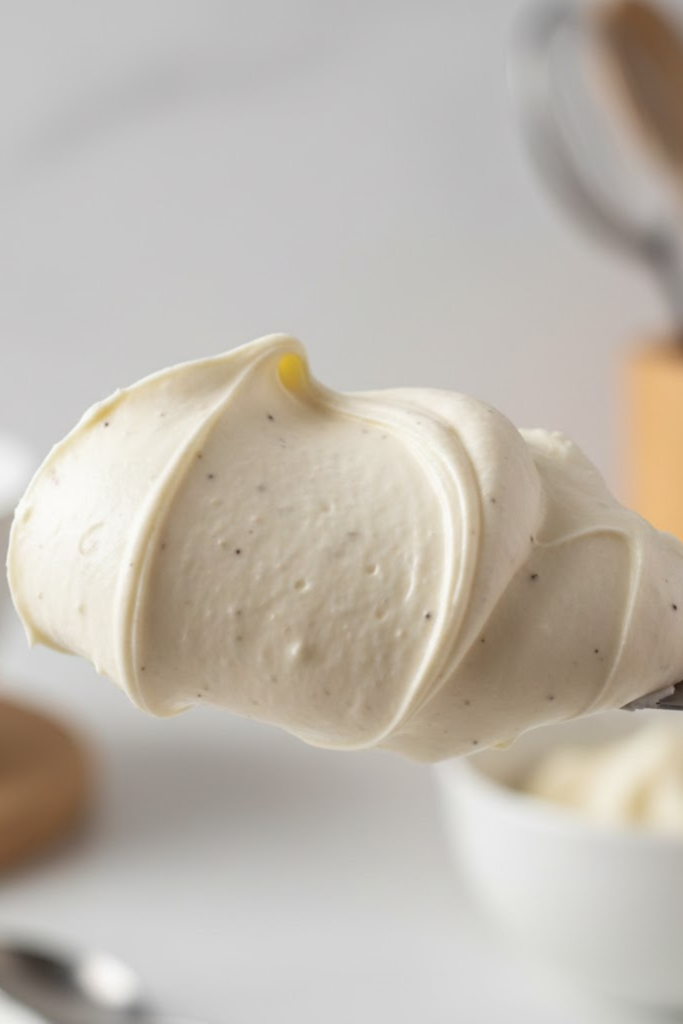
You need to let that mixer run. I’m talking about beating the butter and sugar on medium-high speed for at least 5 to 7 minutes. Watch it transform. It will go from yellow to a pale, almost white ivory color. This process forces air into the fat structure, creating that American buttercream consistency that holds its shape but melts on your tongue. It creates the perfect canvas for your rainbow sprinkles.
Don’t Forget the Salt
American buttercream is sweet. Like, tooth-achingly sweet. To balance that out, you need salt. I add a pinch of fine sea salt and a splash of heavy cream at the very end. The salt cuts through the sugar, and the cream makes it luscious.
It’s that little extra something that makes people ask, “What is in this?” giving you that pro baker status.
We finally made it to the finish line! I hope your kitchen counter is covered in a fine dusting of flour and you have a little bit of vanilla buttercream frosting smudged on your nose. That’s the sign of a good day.
We covered a lot ground today, didn’t we? From picking the right rainbow sprinkles so your batter doesn’t turn grey, to mastering that fancy reverse creaming method for the perfect crumb. I know baking from scratch can feel like a huge project compared to grabbing a box mix, but I promise, one bite of this moist white cake and you will know it was worth every single second.
This cake is more than just sugar and flour; it’s a centerpiece for memories. Whether it’s for a birthday party, a graduation, or just because it’s a Tuesday, you made something special.
If you found these tips helpful—and I really hope you did—please take a second to share the love. Go ahead and Pin this recipe to your “Favorite Desserts” or “Birthday Ideas” board on Pinterest. It helps me out big time and ensures you never lose this recipe when the next celebration rolls around. Now, go grab a fork and enjoy a slice!