There is no breakfast quite like a stack of golden, syrup-drenched French toast!” It’s the ultimate comfort food. But let’s be real for a second. Have you ever bitten into a slice that was burnt on the outside and soggy—like, raw egg soggy—on the inside? I have, and it is the worst! +2
They say breakfast is the most important meal of the day, but I say it should be the most delicious. In this guide, I’m going to show you exactly how to avoid the “soggy bread” disaster and achieve that restaurant-quality crunch right in your own kitchen. Grab your whisk; let’s get cooking!
Selecting the Best Bread for French Toast
Look, I used to think bread was just bread. You grab whatever is sitting on the counter, dip it in eggs, and hope for the best, right? Wrong. I learned this the hard way back when I tried to impress my in-laws with a fancy breakfast.
I used flimsy, sliced white sandwich bread. You know the kind I’m talking about. As soon as that bread hit the custard mixture, it disintegrated. It literally fell apart in my hands. It was humiliating! I ended up serving them what looked like scrambled eggs mixed with wet dough.
So, if you want a French toast recipe that actually holds up, you gotta stop treating the bread as an afterthought. It is the foundation. If the foundation is weak, the whole house falls down (or in this case, turns into mush).
Why Bread Density Matters
Here is the thing about density. You need a bread that can act like a sturdy sponge.
If the crumb is too tight or the slice is too thin, it won’t soak up enough of that delicious custard. But if it’s too airy and soft? It turns into a soggy mess the second it hits the pan. I’ve found that the sweet spot is bread that has a tight enough crumb to hold structure but is soft enough to absorb flavor.
This is why standard sandwich bread is usually a no-go. It’s sliced way too thin. You want to aim for slices that are between 3/4 inch to 1 inch thick. Trust me on this. Anything thinner dries out; anything thicker stays raw in the middle.
The Heavy Hitters: Brioche and Challah
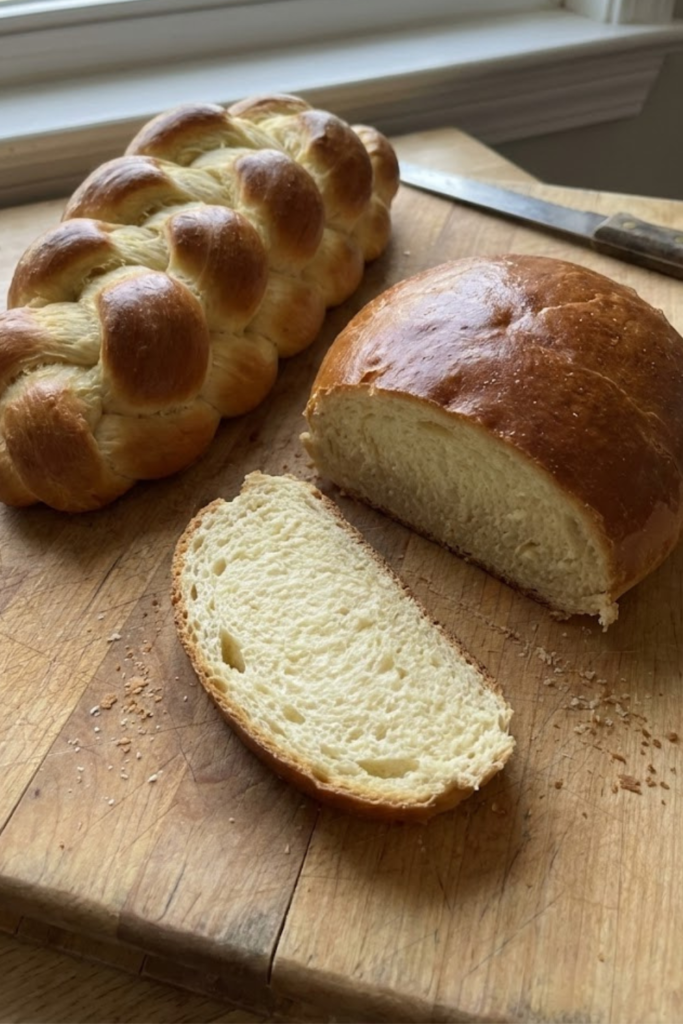
If you asked me what the absolute best bread is for this, I’d scream “Challah!” from the rooftops. Challah is an egg-based yeast bread that is braided. Because it already has eggs in the dough, it pairs perfectly with the custard. It gets this rich, golden crust that is just unbelievable.
Brioche is a close second. It’s super buttery and rich. When you use Brioche for your French toast recipe, it tastes almost like a dessert.
- Brioche: High butter content, very rich, soft texture.
- Challah: Egg-rich, slightly firmer than brioche, gorgeous golden color.
- Texas Toast: A decent budget option if you can’t find the fancy stuff. It’s cut thick, which helps.
I remember trying to use a baguette once because I thought, “Hey, it’s French, right?” Bad move. The crust was so hard it cut the roof of my mouth, and the inside barely soaked up any liquid. Stick to the soft, enriched breads.
The “Stale” Secret
Okay, here is the secret that changed my life. You actually want your bread to be a little bit stale.
I know, it sounds weird. Who wants to eat stale food? But think about a dry sponge versus a wet sponge. A dry sponge soaks up water instantly. A wet sponge just pushes water around.
If your bread is fresh out of the oven, it’s too moist. It won’t drink up that egg mixture. I usually buy my loaf a day or two before I plan to cook. I slice it up and leave it on a wire rack on the counter overnight.
If you forgot to plan ahead (we’ve all been there), you can cheat. Just pop your slices in the oven at 275°F for about 10 minutes. You aren’t trying to toast them, just dry them out a little. This little step makes the difference between a soggy center and that perfect, creamy, custard-like texture we are all chasing.
Avoiding the “Soggy Bottom”
One last tip I picked up after many failed Sunday mornings. Don’t over-soak!
If you are using fresh bread, it only needs a quick dip. In and out. If you are using that stale Challah I told you about, you can let it swim for a few seconds longer. You gotta feel it out. It should feel heavy but not falling apart.
Get the bread right, and honestly, the rest of the French toast recipe pretty much cooks itself.
The Perfect Custard: Eggs, Milk, and Aromatics
You can have the most expensive loaf of Brioche in the world, but if your dip is boring, your breakfast is going to be boring. I used to think the custard part was just “whisk some eggs and milk until it looks yellow.”
Boy, was I wrong. I remember serving a batch to my kids once, and they asked why their toast tasted like an omelet. That was a low point. I had accidentally made “scrambled eggs on toast” because I didn’t know what I was doing. The secret to a killer French toast recipe lies in the balance. It’s gotta be rich and creamy, not egg-heavy and sulfurous.
The Golden Ratio
Here is the rule I live by now, and I swear it works every single time. It is all about the ratio of eggs to dairy.
If you use too many eggs, you get that rubbery, “eggy” texture. If you use too much milk, the bread never sets, and it stays soggy.
My magic formula is 1/4 cup of milk for every single egg.
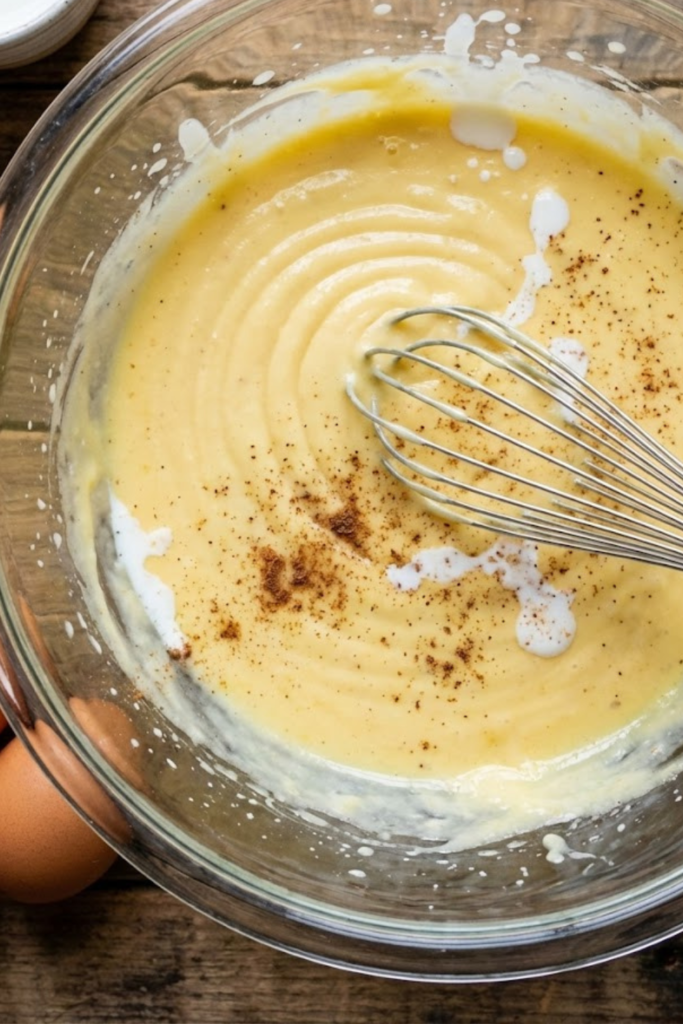
Write that down! If you are cooking for a crowd and use 4 eggs, you need 1 cup of milk. It’s that simple. This ratio creates a custard mixture that is thick enough to coat the bread but thin enough to soak in. It cooks up into a velvety texture that is honestly just divine.
Choosing Your Dairy
Now, let’s talk about the milk. Please, I am begging you, do not use skim milk. Just don’t do it. Skim milk is basically water lying about being milk.
For the best flavor, you want fat. Fat equals flavor. I usually stick with whole milk because it’s what I have in the fridge for the kids. But if it’s a holiday or I’m feeling fancy? I’ll swap half the milk for heavy cream.
Using heavy cream makes the custard so much richer. It gives you that restaurant-style decadence. If you want a non-dairy option, almond milk or oat milk works okay, but just know it won’t be quite as rich.
Spicing It Up
Flavor is where you can really mess up or really shine. A plain egg wash is just sad. You need aromatics to wake it up.
Obviously, you need ground cinnamon. That’s a given. But the real game-changer? Fresh nutmeg. I started grating a little fresh nutmeg into my bowl a few years ago, and my husband asked what the “secret ingredient” was. It adds this warm, nutty depth that cinnamon just can’t do alone.
Also, vanilla extract. Don’t be shy with it. I pour in a good splash—probably a teaspoon per two eggs.
And here is the mistake I see people make all the time: they forget the salt.
It sounds crazy to put salt in a sweet breakfast, right? But you need a pinch of salt to balance out the sugar and the maple syrup you’re gonna drown this in later. Without salt, the sweetness falls flat. Just a small pinch makes all the other flavors pop.
Whisk it all together until the cinnamon is totally broken up. No one wants to bite into a clump of dry cinnamon powder!
How to Cook French Toast Perfectly Every Time
I have a confession to make. For years, I ruined breakfast. I would spend all this time whisking the eggs and buying nice bread, only to burn the heck out of it in the pan.
I was impatient. I’d crank the stove up to “High” because I was hungry and wanted to eat now. The result? A slice of bread that looked like charcoal on the outside but was still cold and raw on the inside. It was gross. I finally learned that cooking a great French toast recipe is a marathon, not a sprint. Okay, maybe a 5K.
If you want that restaurant-quality caramelized crust without the soggy middle, you have to respect the heat.
Choosing Your Weapon (The Pan)
First things first, let’s talk about hardware. You can’t just use any old flimsy pan.
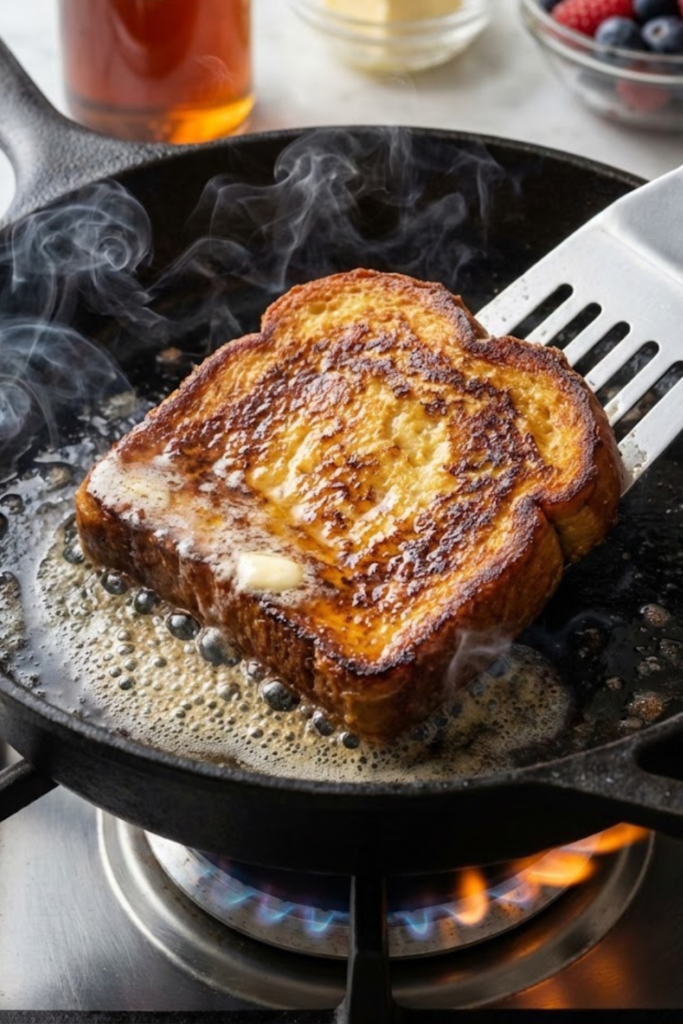
I swear by my cast iron skillet. It holds heat like a champ and gives you that crispy, golden-brown edge that non-stick pans just struggle to achieve. When you drop the bread in, you want a consistent temperature, and cast iron delivers that.
However, if you are terrified of sticking (I’ve been there), a good non-stick griddle is fine. The benefit of a griddle is you can cook four or five slices at once. If you have a big family, this is a lifesaver so you aren’t stuck at the stove while everyone else eats.
The Butter and Oil Hack
Here is a trick I learned from a diner chef that blew my mind.
I used to cook with just butter. But butter has a low smoke point. By the time my second batch went in, the butter was black and smoking, making the toast taste bitter.
Then I tried just oil. The toast cooked fine, but it lacked that rich, buttery flavor we all crave.
The solution? Use both.
Throw a pat of salted butter into the pan, but add a splash of neutral oil (like canola or vegetable oil) with it. The oil prevents the butter from burning, while the butter gives you the flavor. It is the best of both worlds.
controlling the Heat
This is where 90% of people mess up. Do not touch that “High” setting!
You want to cook over medium heat. Maybe even medium-low if your stove runs hot. The goal is to cook the egg custard inside the bread before the outside gets too dark.
Place your soaked slices in the pan. You should hear a gentle sizzle, not an angry roar. If it’s popping and spitting at you, turn it down!
Cook it for about 3 to 4 minutes on the first side. Don’t touch it! I know you want to peek, but let the crust form. When you flip it, it should be a deep, golden brown. Cook for another 3 minutes on the other side.
The Finger Test
How do you know it’s actually done in the middle?
Give the center of the toast a little poke with your finger. If it feels squishy and wet, it needs more time. It should feel firm and spring back slightly.
If the outside is getting too dark but the inside is still mushy, don’t panic. Just pop the slices on a baking sheet and finish them in a 350°F oven for 5 minutes. This is actually a great way to keep the first batch warm while you finish the rest, anyway.
Mastering the heat is the difference between a sad, soggy breakfast and a French toast recipe that makes you look like a hero.
Creative Toppings and Serving Suggestions
Okay, we have done the hard work. The bread is fried, the kitchen smells like heaven, and now comes the fun part. The toppings! honestly, this is where you can take a great French toast recipe and turn it into something your family talks about for weeks.
I used to be a purist. I thought, “Just give me the syrup and leave me alone.” But then I went to a brunch spot a few years ago that served their toast with caramelized bananas, and my life changed forever. I realized I had been living in a boring, syrup-only box.
Don’t get me wrong, syrup is king. But sometimes you gotta shake things up to keep breakfast exciting.
The Classics for a Reason
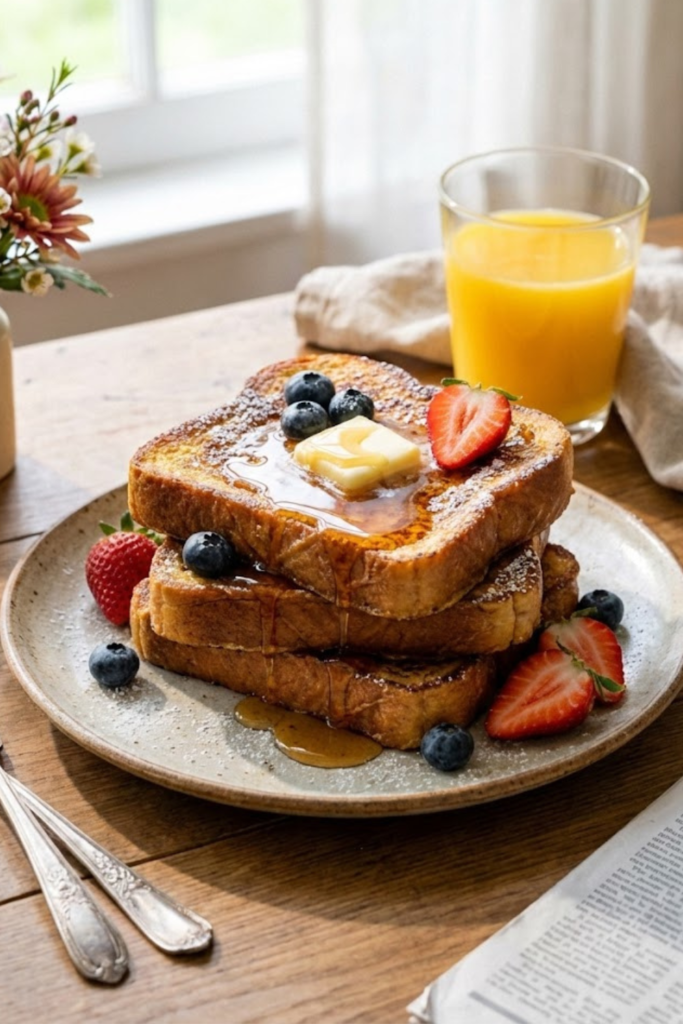
Let’s start with the basics because you can’t build a house without a floor. You absolutely need maple syrup.
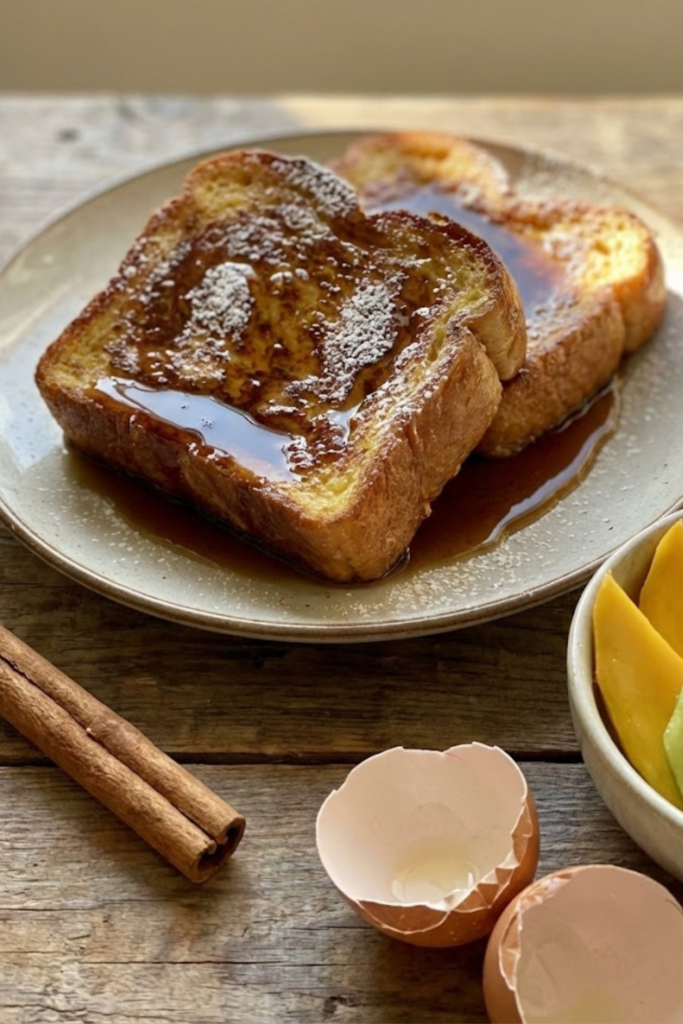
Please, for the love of breakfast, do not use that fake “pancake syrup” made of corn syrup and artificial caramel color. It just tastes like sugar water. Splurge on the real Grade A maple syrup. It has that woody, rich flavor that pairs perfectly with the cinnamon.
Pro tip: Warm your syrup up in the microwave for 15 seconds before pouring it. Putting cold syrup on hot toast cools everything down way too fast. It’s a rookie mistake I made for years!
And don’t forget a dusting of powdered sugar. It’s messy, sure (I always end up with sugar on my black shirt), but it makes the plate look like it came from a professional kitchen.
Fruit and Freshness
Since this dish is basically bread soaked in custard and fried in butter, it is heavy. Like, “need a nap immediately” heavy.
That is why I love adding fresh berries. Strawberries, blueberries, or raspberries add a nice pop of acidity that cuts through the richness. It makes you feel a little less guilty about eating dessert for breakfast, right?
If you have an extra five minutes, try caramelized bananas. Slice a banana, throw it in the pan with a little brown sugar and butter after the toast is done. It gets gooey and sweet. It’s insane.
Adding Some Crunch
Texture is everything. You have the soft bread and the creamy center, so you need a little crunch to balance it out.
I love to sprinkle on some chopped pecans or walnuts. If you toast the nuts in a dry pan for a minute first, they taste even better. My kids actually love it when I sprinkle a little granola on top. It sounds weird, but that oat crunch works so well with a fluffy French toast recipe.
The Savory Twist
Okay, hear me out. Not everyone has a sweet tooth in the morning.
Sometimes, I skip the sugar and vanilla in the egg mixture and go savory. I’ll top the toast with crispy bacon, a slice of ham, or even melted gruyère cheese. Think of it like a Monte Cristo sandwich without the second slice of bread.
It sounds crazy if you’ve only ever had sweet toast, but savory French toast with a runny fried egg on top? That is a weekend brunch game changer.
So, there you have it. Making a restaurant-quality French toast recipe isn’t actually magic . It just takes the right bread (seriously, get the Brioche), a solid custard ratio, and a little bit of patience at the stove .
I hope you give this a shot this weekend. I used to settle for the soggy, flat toast because I thought I couldn’t do any better. But you absolutely can. You deserve the crispy, custardy goodness that you usually only get at a diner .
Don’t stress if the first slice comes out a little dark or a little funny looking. That happens to the best of us! Just eat that one yourself (I call it the “chef’s tax”) and serve the pretty ones to your family . They won’t know the difference, and you get a snack while you cook.
If you found this guide helpful, do me a huge favor. Pin this recipe to your “Breakfast Ideas” board on Pinterest! It helps other people find the recipe, and it saves it for you so you don’t have to go hunting for it next Sunday morning.
Now, go grab that syrup and dig in!