Do you remember that smell? The one that filled your grandma’s kitchen on a Sunday afternoon? Pure, caramelized heaven! I recently tried to recreate that magic, and let me tell you, store-bought mixes just don’t cut it. Did you know this classic skillet cake has been a staple since the 1920s? It’s time to bring it back! We are going to make an easy pineapple upside down cake from scratch that is so moist and flavorful, it will become your new family tradition. Let’s get that butter melting!
The Magic of the Caramelized Topping
I’ll be honest with you—the topping is the only reason I eat this cake. The sponge is great, sure, but that sticky, gooey, caramelized fruit layer? That is where the magic happens. I remember the first time I tried to make this on my own. I thought I was being fancy by using a springform pan. Big mistake. Huge.
The butter and sugar melted, leaked right out of the bottom, and burned all over the floor of my oven. My smoke detector went off, my dog started barking, and I was left with a dry, sad cake. It was a mess. But I learned a valuable lesson that day: the equipment you use for the topping matters just as much as the ingredients.
Choosing Your Weapon: Skillet vs. Cake Pan
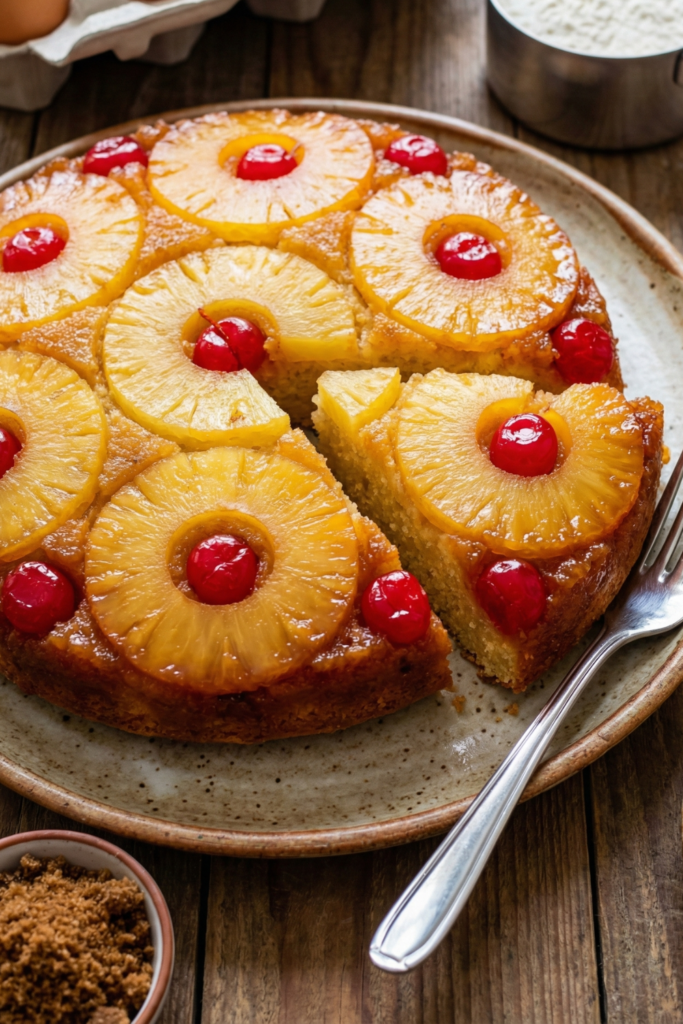
If you have a cast-iron skillet, use it. Seriously, go grab it right now. The heavy iron retains heat like nothing else, which helps the brown sugar glaze bubble up and turn into that candy-like coating we all crave. It essentially fries the pineapple in butter and sugar.
If you don’t have a skillet, don’t worry. A solid 9-inch round cake pan works fine. Just please, for the love of clean ovens, do not use a pan with a removable bottom. You want a solid vessel to hold all that liquid gold.
The Butter and Sugar Chemistry
Here is the deal with the glaze. You can’t just throw cold butter and sugar in the pan and hope for the best. You need to melt the unsalted butter first. I like to do this right in the skillet while the oven preheats. Once it’s melted, I sprinkle the brown sugar evenly over the top.
- Pro Tip: Use dark brown sugar instead of light. The extra molasses gives it a deeper, richer flavor that pairs perfectly with the acidity of the pineapple.
You want a thick, sludge-like consistency. It shouldn’t be watery. If it looks too thin, you might have used too much butter or not enough sugar. It’s not an exact science, but you’ll know it when you see it. It should look like wet sand.
Drying the Fruit (Don’t Skip This!)
This is the step everyone skips, and it drives me crazy. Pineapple rings are full of juice. If you take them straight from the can and plop them into the sugar, that juice releases during baking. The result? A soggy, mushy top that slides off the cake.
Take your pineapple slices and lay them out on paper towels. Pat them dry. You don’t need to squeeze the life out of them, just get the surface moisture off.
When you arrange the fruit, get creative! I usually do one ring in the center and circle the rest around it. Place a maraschino cherry in the center of each ring. And hey, if you want to fill in the empty gaps with crushed pineapple or walnuts/pecans, go for it. This is your cake.
Once the fruit is down, don’t touch it. Pour the batter over it gently so you don’t mess up your beautiful design. It’s satisfying to see it come out perfect later.
Creating the Perfect Buttery Sponge
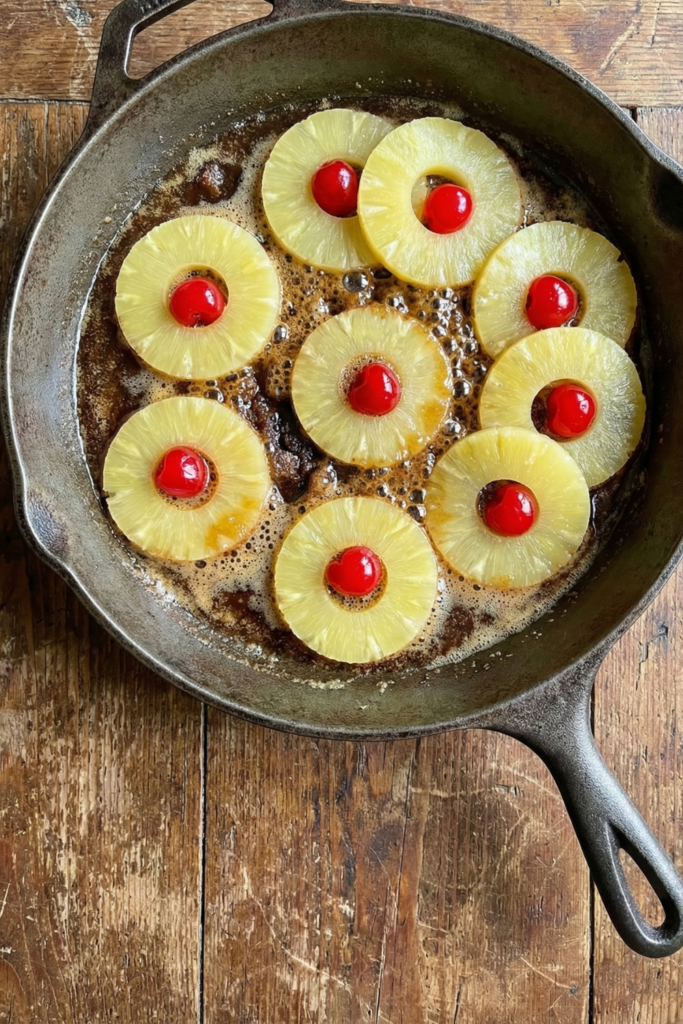
Okay, we got the pretty part done. Now we have to talk about the actual cake. I used to think the fruit topping would hide a dry, flavorless sponge. I was wrong. I once served a cake that looked like a magazine cover but tasted like a sweet hockey puck. It was embarrassing.
To make a truly easy pineapple upside down cake from scratch that people actually want to eat, the sponge needs to be tender. It needs to hold up the heavy fruit but still melt in your mouth.
The Dry Stuff Matters
I know, I know. Sifting flour is a pain. I hate washing the sifter afterwards because the flour gets stuck in the mesh. It’s annoying. But listen to me: you have to do it.
If you dump your all-purpose flour straight from the bag into the bowl, you’re going to have a dense cake. I learned this the hard way when my “light and airy” cake turned out like a brick. Sifting the flour, baking powder, and salt together breaks up lumps and aerates the mixture. It makes a huge difference.
The Butter Situation
Here is where most people mess up. Your butter needs to be at room temperature. Not “I microwaved it for 10 seconds and now it’s half melted” temperature. It needs to be soft enough to leave a dent when you poke it.
- Why it matters: When you beat soft butter with granulated sugar, you are trapping air bubbles.
- The mistake: If the butter is cold, it won’t hold air. If it’s melted, the batter will be greasy.
I usually leave my butter out on the counter the night before. If I forget (which happens a lot), I put it in my bra… just kidding. Or am I? Anyway, beat that butter and sugar until it looks pale yellow. It should take about 3 to 5 minutes. Don’t rush it.
The Secret Liquid Weapon
You have that empty can of pineapple sitting there with juice left in the bottom. Do not pour it down the sink! That juice is liquid gold.
Most vanilla cake recipes call for milk. But for this easy pineapple upside down cake from scratch, I swap half the liquid for pineapple juice. It bumps up the tropical flavor and the acidity helps tenderize the crumb.
Add your eggs one at a time—also room temperature, please! Then alternate adding the flour mixture and your liquids (juice and milk or sour cream). Mix just until the flour disappears. If you overmix it now, you undo all that work we did with the butter.
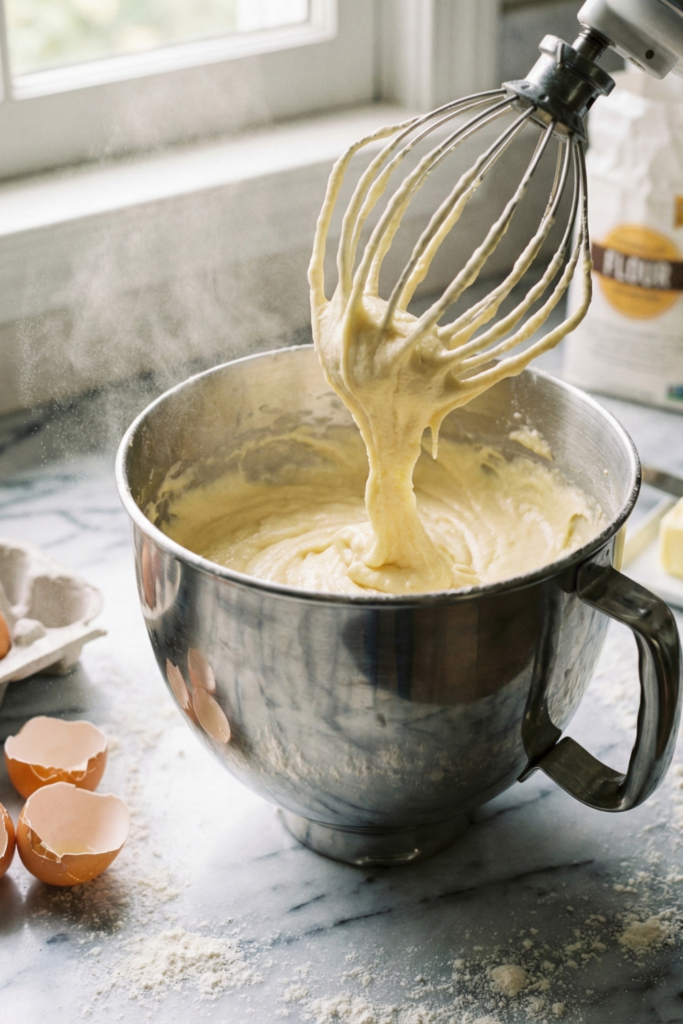
The batter should be thick and creamy, smelling like vanilla extract and sweet butter. Now we are ready to put it all together.
Assembly and Baking for Success
Alright, this is the moment of truth. We have our skillet looking like a work of art with the fruit, and we have our fluffy batter ready to go. Now we have to combine them without ruining everything.
It sounds dramatic, but I have ruined this step before. I once poured the heavy batter straight from the mixing bowl right onto the center of the pan. It hit the fruit with such force that my beautiful ring of pineapples drifted apart like continents separating. The cherries ended up buried somewhere near the crust. It was a disaster.
The Gentle Approach
Don’t just dump the batter in. You worked too hard on that arrangement.
Grab a large spoon or a rubber spatula. Scoop the batter and gently dollop it over the fruit in patches. Think of it like spackling a wall, but tastier. Once you have mounds of batter covering most of the fruit, then you can gently spread it out to the edges.
You want to make sure the batter touches the sides of the pan. This seals the fruit in. If you leave gaps, the bubbling sugar syrup will erupt up the sides and make a sticky mess on the top of your cake. I’ve spent way too much time scrubbing burnt sugar off my oven floor because I was sloppy here.
Oven Temperature Games
Pop that bad boy into the oven. We are baking at 350°F (175°C).
Here is a mistake I see people make all the time: putting the rack too low. Because this is an easy pineapple upside down cake from scratch, the sugar is on the bottom, closest to the heat source. If your rack is on the bottom rung, that sugar is going to scorch before the middle of the cake is cooked.
Put the rack right in the middle. It gives the best air circulation.
The “Is It Done Yet?” Anxiety
Baking times are more like suggestions than rules. Most recipes say 45 minutes, but my oven usually takes about 50 to 55 minutes.
Around the 30-minute mark, you might panic. The top of the cake (which will eventually be the bottom) might look like it’s getting too dark. This happens because of the brown sugar bubbling up the sides. Don’t freak out.
If the top is getting dark golden brown but the center is still jiggly like Jell-O, you need the “tent” trick. Grab a piece of aluminum foil and loosely place it over the skillet. This stops the browning but keeps the heat in to finish cooking the middle.
I learned this after serving a cake that was burnt on the outside and raw in the middle. My guests were polite about it, but I wanted to crawl under the table.
The Toothpick Test
Do not trust your eyes. Use a toothpick. Poke it right in the center—the thickest part.
- Wet batter on the stick? It needs more time.
- Clean or just a few moist crumbs? Get it out of there immediately.
Overbaking makes the sponge dry, and we want moist cake. Once it passes the toothpick test, pull it out and set it on a wire rack. Now, the hardest part begins: waiting.
The Art of the Flip
This is it. The moment that makes or breaks the whole experience. Honestly, flipping a cake is the most stressful thing I do in the kitchen. It’s scarier than frying chicken. I still get butterflies in my stomach every single time I grab those oven mitts.
I remember the first time I tried to flip a skillet cake. I was young and impatient. I didn’t wait for it to cool. I just grabbed the pan, threw a plate on top, and flipped. Hot pineapple juice went everywhere—all over my arms, the counter, the floor. It was a disaster. I learned a painful lesson that day: sugar burns are no joke.
The Waiting Game
You have to let the cake rest. But this is tricky because you can’t wait too long. It’s a total Goldilocks situation.
If you flip it right out of the oven, the cake is too fragile. It will break apart, and you’ll have hot syrup running down your elbows. But if you wait until it’s completely cold, the caramel hardens. The fruit will stick to the pan like superglue.
You need to wait exactly 10 to 15 minutes. Set a timer. Do not touch it. I usually use this time to clean up the flour mess I made earlier or just pace around the kitchen nervously.
The Inversion Technique
Okay, the timer went off. It is go time. Here is how you do it without having a heart attack:
- Run a knife around the edge. Just a quick swipe to make sure the sides aren’t stuck.
- Pick the right platter. It needs to be flat and bigger than your pan. If you use a plate with a curved rim, the cake might break.
- The commitment. Place the serving platter upside down over the skillet or cake pan. Put one hand firmly on the plate and the other (wearing an oven mitt!) under the pan.
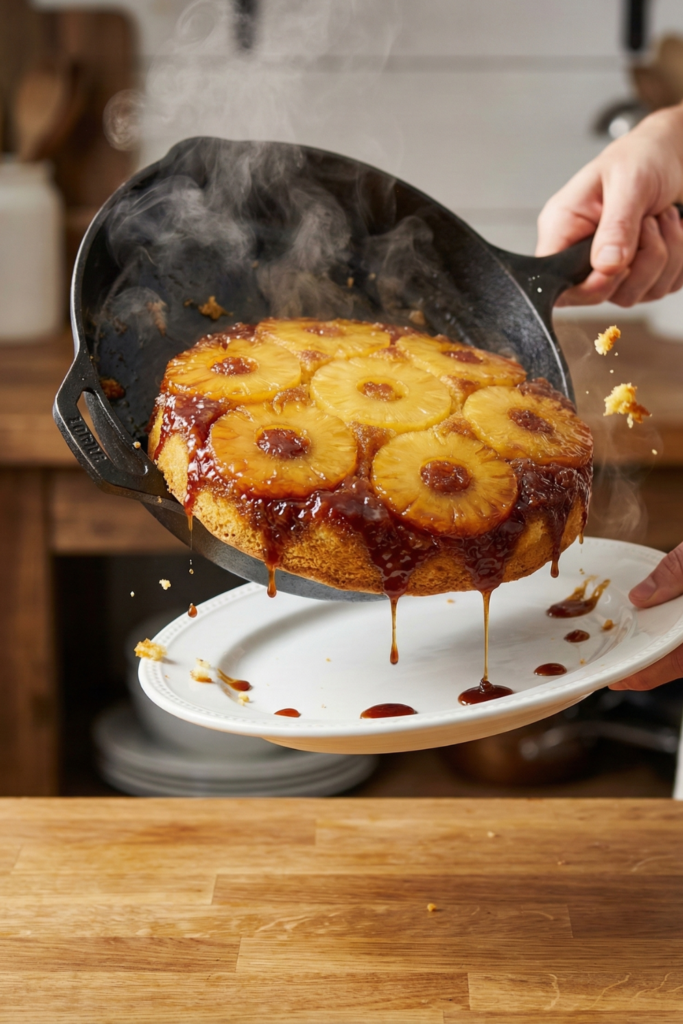
- The Flip. Take a deep breath. On the count of three, flip the whole thing over in one confident motion. One, two, three, flip!
Set it down on the counter. But wait! Do not lift the pan yet.
Leave the pan upside down on the plate for about a minute. This lets gravity pull all that sticky, yummy glaze down onto the cake. You might hear a “schlopp” sound. That is the sound of victory.
Damage Control
You lift the pan, and… oh no. A pineapple ring is still stuck to the bottom of the skillet.
Don’t panic. This happens to the best of us. Just grab a fork or a small spatula, carefully peel the fruit off the pan, and place it back where it belongs on the cake. The caramel is sticky enough that it acts like glue.
Once you patch it up, no one will ever know. If it looks a little messy, just tell everyone it’s “rustic.” People love rustic desserts. It sounds fancy, but it really just means “I made a mistake, but it still tastes good.”
This easy pineapple upside down cake from scratch is resilient. Even if it cracks a little, that buttery flavor makes up for everything. Serve it warm, maybe with a scoop of vanilla bean ice cream melting into the center. It’s the best thing you’ll eat all year.
Storage and Freezing Instructions
I’m going to be real with you—in my house, this cake rarely lasts 24 hours. My family usually devours it while it’s still warm. But let’s pretend, for a second, that you have some self-control. Maybe you baked it for a party, or maybe you just live alone and don’t want to eat a whole cake in one sitting (though I wouldn’t judge you).
Because this easy pineapple upside down cake from scratch is loaded with fruit, it behaves differently than a standard chocolate cake. The moisture from the pineapple is a blessing for flavor, but a curse for storage.
The Countertop Dilemma
You can leave this cake out at room temperature, but only for a day or two. Since the fruit is wet, it can make the sponge soggy if it sits out too long.
I usually keep it on the platter and cover it loosely with foil or a cake dome. If your kitchen is hot or humid, skip the counter. The sugar in the glaze can start to weep and get messy.
The Fridge is Your Friend
If you want it to last up to 5 days, put it in the fridge. But here is the trick: you have to seal it up tight. I use an airtight container.
Cold air dries out cake faster than anything. If you just throw it on a plate uncovered, it will absorb the smell of that leftover onion from last night’s dinner. Nobody wants onion-flavored pineapple cake. That sounds gross.
Freezing for Later
Can you freeze it? Yes, you absolutely can. I actually love finding a slice of this in the back of my freezer on a rainy Tuesday. It feels like a gift from my past self.
Don’t freeze the whole cake unless you have to. Slice it up first. Wrap each individual slice in plastic wrap, then wrap it again in aluminum foil. This double-layer armor protects it from freezer burn. It should stay good for about 3 months.
How to Reheat
This is important. This cake is 100% better warm. The butter in the sponge solidifies in the fridge, making the cake feel dense.
When you are ready to eat, unwrap a slice and pop it in the microwave for about 15 to 20 seconds. It wakes up the butter and makes the caramel gooey again. It tastes just like it came out of the oven.
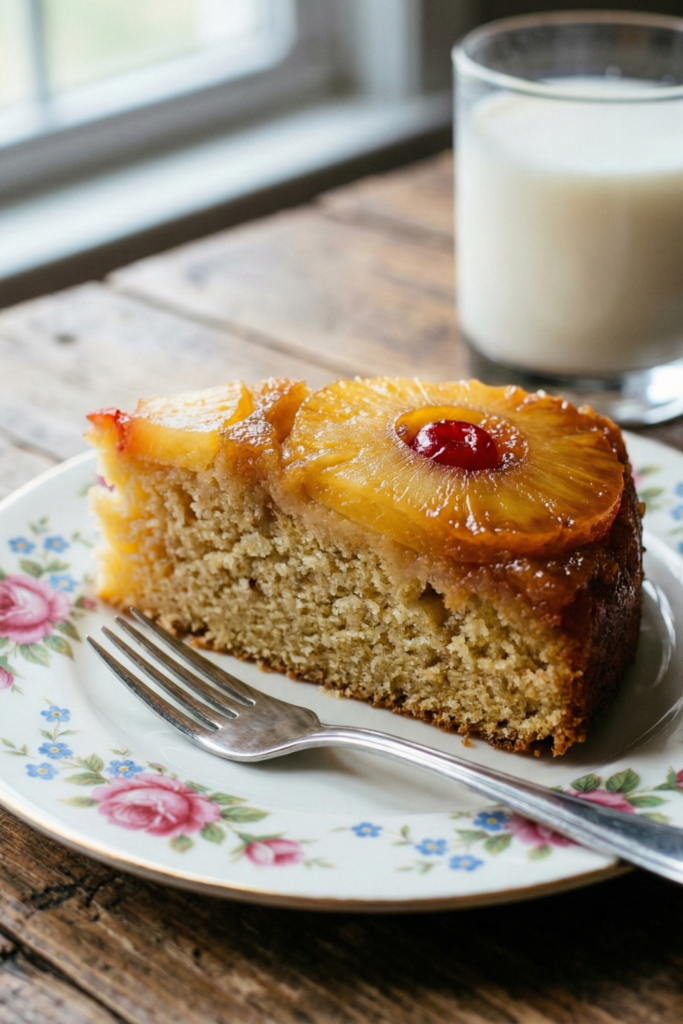
We made it! We survived the caramel, the mixing, and the terrifying flip. Making an easy pineapple upside down cake from scratch isn’t just about baking; it’s about bringing back a classic. It’s nostalgic comfort food at its finest.
Whether you used a fancy skillet or that old cake pan from the back of your cupboard, I bet your kitchen smells amazing right now. I hope this recipe becomes a staple in your home like it is in mine. There is nothing quite like that first bite of warm, buttery sponge and sweet pineapple.
If you enjoyed this recipe or if my mistakes helped you avoid your own, please share this post on Pinterest!. It helps other bakers find us. Now, go grab a fork and dig in. You earned it!