Do you know that specific heartbreak of biting into a “delicious” looking gluten-free pastry, only to have it crumble into dry, tasteless dust in your mouth? I do. I have cried over wasted ingredients more times than I care to admit! But stop the scrolling, because we are fixing that today. I am sharing my absolute favorite method for easy gluten free cinnamon rolls that actually stay soft.
Did you know that the gluten-free products market is projected to hit massive numbers by 2026? Yet, finding a decent cinnamon roll is still like finding a needle in a haystack. Not anymore! Whether you are a baking novice or a pro, this recipe is designed to be gooey, sweet, and surprisingly simple. Let’s get baking!
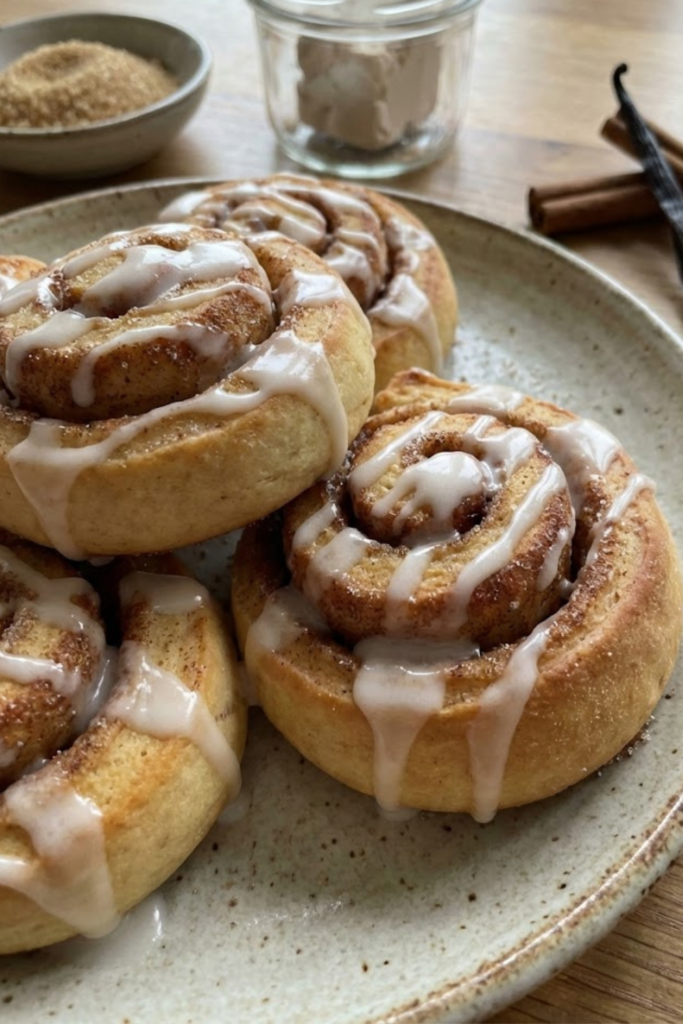
The Secret Ingredients for Soft Gluten Free Dough
Look, I’m going to be real with you for a second. My first attempt at making easy gluten free cinnamon rolls years ago resulted in something that could have legally been classified as a weapon. They were hard, dry, and honestly, they tasted a bit like cardboard that had been sprinkled with sugar. I was so frustrated I actually cried in my kitchen floor. It’s embarrassing to admit, but when you just want a soft, gooey treat and you get a hockey puck, it hits you right in the feels.
But after tossing out way too many batches and wasting expensive flour, I finally figured it out. The trick isn’t magic; it’s chemistry. And you don’t need a degree to get it right, just the right stuff in your bowl.
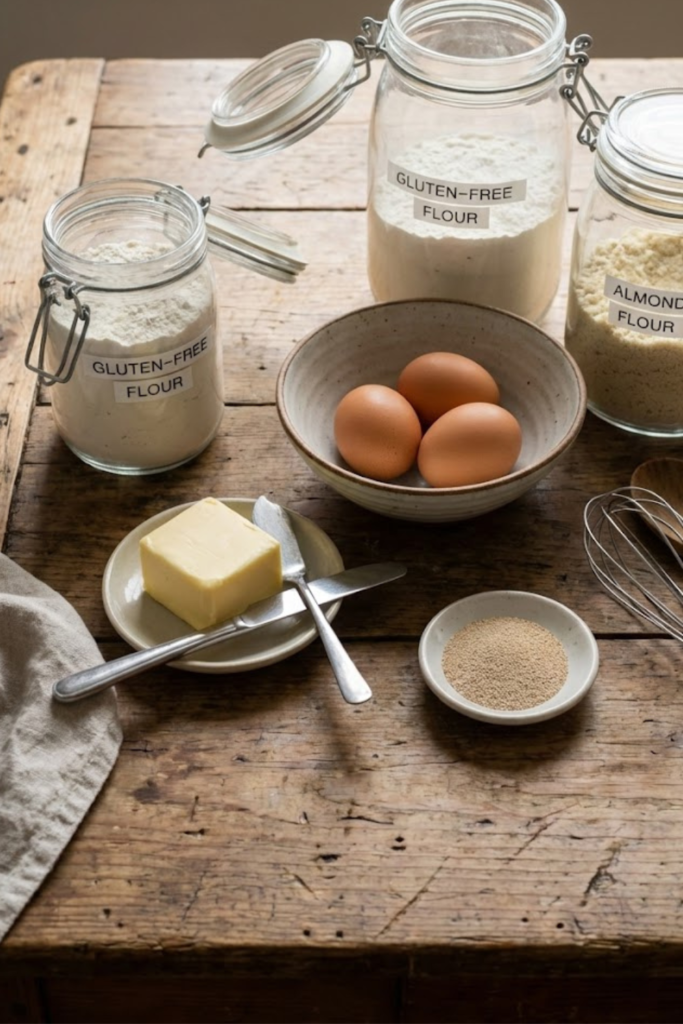
The Flour Blend Actually Matters
You cannot just grab any bag of rice flour and hope for the best. I tried that, and it was a disaster. To get that pillowy texture, you need a high-quality gluten free flour blend that already contains xanthan gum. Xanthan gum is the “glue” that replaces gluten. Without it, your rolls will crumble faster than a sandcastle. If your blend doesn’t have it, you gotta add a teaspoon yourself. It’s sticky stuff, but it saves the day.
Why I Switched to Instant Yeast
For the longest time, I used active dry yeast because that’s what my grandma used. Big mistake for gluten-free baking. Our dough is heavier and lacks the structure of wheat dough, so it needs a powerful kick to rise. Instant yeast (or rapid rise) starts working immediately. It gives these easy gluten free cinnamon rolls that beautiful puffiness before the structure sets in the oven. Trust me, making this swap changed everything for my Sunday mornings.
The Weird Acid Trick
Okay, stay with me here. One of the ingredients I swear by is a teaspoon of apple cider vinegar. I know, it sounds gross to put vinegar in a dessert. But you won’t taste it! The acid helps the yeast thrive and actually softens the protein in the flour. It breaks down that gritty texture we all hate.
Warmth is Your Friend
Gluten-free dough hates the cold. I learned this the hard way when I used milk straight from the fridge and my dough just sat there, looking sad and flat.
- Milk: It needs to be warm to the touch (about 110°F).
- Eggs: Please let them come to room temperature.
If you dump cold eggs into warm butter and milk, everything curdles and looks chunky. We want a smooth, happy batter. If you forget to take the eggs out (I do this constantly), just pop them in a bowl of warm water for 5 minutes. Works every time.
These ingredients are the difference between a dry disappointment and the softest breakfast you’ve had in ages.
Mastering the Dough: The One-Bowl Method
When I first started baking without gluten, I treated the dough exactly like I treated regular wheat dough. Spoiler alert: that was a huge mistake. I stood there kneading it on the counter, adding more flour because it was sticking to my hands, and I felt so proud. Then I baked them. They were dense rocks that could’ve broken a window.
I learned the hard way that making easy gluten free cinnamon rolls requires you to unlearn almost everything you know about bread making. This isn’t a “knead until smooth” situation. It is a sticky, messy affair, and that’s exactly how we want it.
Ditch the Dough Hook
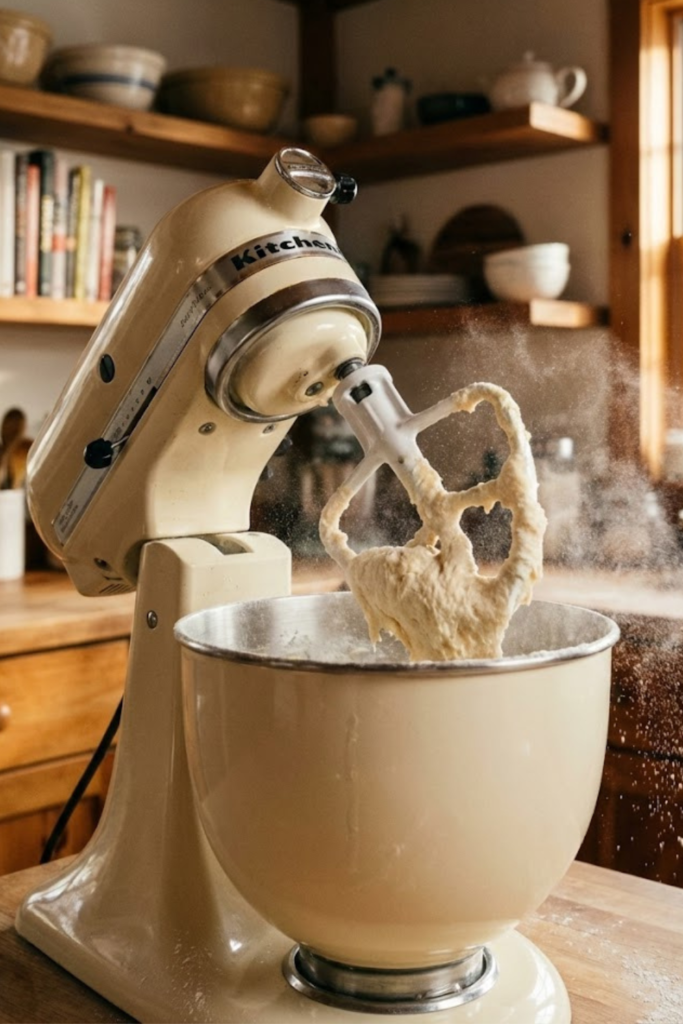
If you have a stand mixer, you probably instinctively reach for the dough hook when making bread. Don’t do it! Gluten-free dough doesn’t have the elasticity to climb the hook. It just gets pushed around the bowl like a sad lump.
I always use the stand mixer paddle attachment. It mixes the ingredients thoroughly without needing the dough to be stretchy. If you don’t have a stand mixer, a strong arm and a sturdy wooden spoon work, too. But be warned, this dough is thick! It takes some muscle to get it smooth. I usually let the mixer run on medium-high for about 3 to 5 minutes. You want to beat some air into it.
The Texture Should Scare You (A Little)
Here is the part that freaks everyone out. When you look into the bowl, the mixture shouldn’t look like bread dough. It should look more like a really thick cake batter or sticky cookie dough.
If you can pick it up with your hands without it sticking to you like glue, you have added too much flour. I remember panic-adding cup after cup of flour because the recipe said “dough,” and in my head, dough meant smooth balls.
- Don’t add extra flour.
- Let it be sticky.
- Trust the process.
The gluten free dough consistency relies on high hydration. The flour needs lots of liquid to hydrate properly, otherwise, you get that gritty texture. If it looks like a hot mess, you are probably doing it right.
The “Turned-Off Oven” Trick
Once mixed, your dough needs a cozy spot to rise. Since our house is usually freezing (I’m always cold), I use my oven as a proofing box. I turn the oven on to the lowest setting for exactly two minutes, then turn it off.
I shove the bowl in there with a damp towel over it. This creates a warm, draft-free place for proofing dough. You aren’t looking for it to double in size like wheat bread—it doesn’t have the structure for that. You just want it to look puffy and smell yeasty. About 45 minutes usually does the trick. If you let it go too long, it might deflate, so keep an eye on it!
Rolling and Filling Without the Mess
I have a confession to make. The first time I tried to roll out gluten-free dough, I ended up scraping it off my countertop with a spatula while crying. It stuck to the counter, it stuck to the rolling pin, and it stuck to my hands. It was a sticky disaster zone. I learned the hard way that you cannot handle this dough like regular dough. It’s softer, stickier, and frankly, a bit more high-maintenance.
But I figured out a system that keeps my counters clean and my sanity intact. If you follow this, making easy gluten free cinnamon rolls becomes actually fun, not a chore.
The Parchment Paper Sandwich
This is the single most important tip I can give you. Do not—I repeat, do not—try to roll this dough out directly on a floured surface. You will regret it.
Instead, I use the “sandwich method.”
- Lay down a large piece of parchment paper.
- Plop your dough in the middle.
- Place another piece of parchment paper on top.
Now you can roll over the top paper without anything sticking to your rolling pin! It’s genius. I aim for a rectangle that is roughly 12×9 inches. It doesn’t have to be perfect; rustic is a style, right? Once it’s rolled out, peel off the top layer of paper. If the dough feels too warm or sticky, pop the whole sheet in the fridge for 10 minutes. It makes it way easier to handle.
The Butter Situation
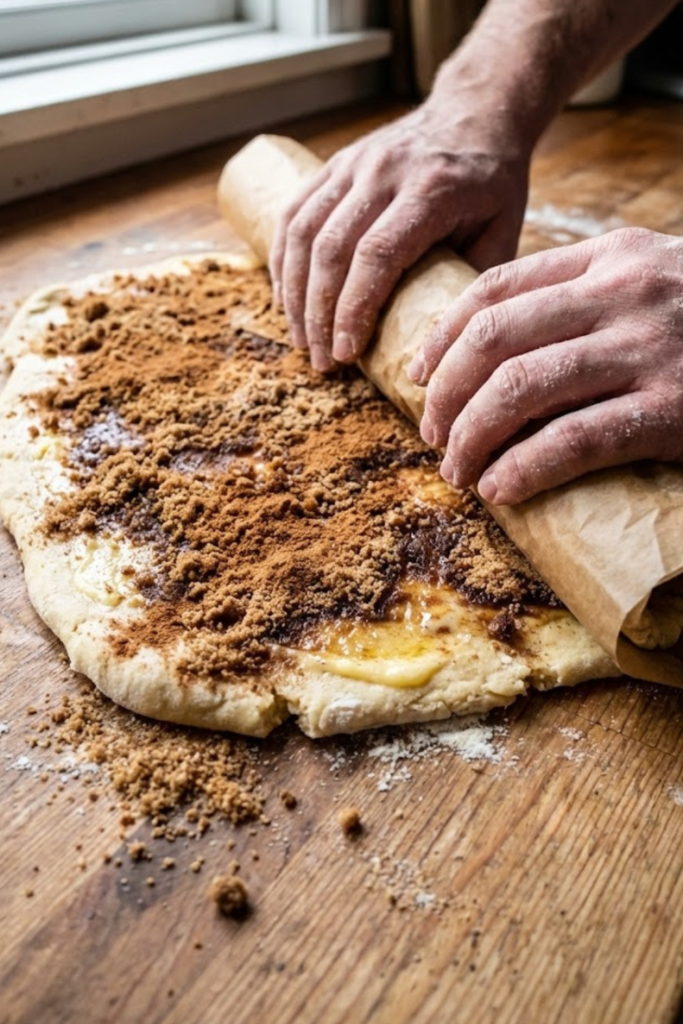
For the filling, your butter needs to be soft, not melted. If you use melted butter, it runs everywhere and makes a greasy puddle in the bottom of your pan. I usually smear about 6 tablespoons of very soft butter all over the dough, leaving a little border at the top edge so the roll can seal.
Then comes the best part: the cinnamon sugar. I don’t measure this strictly anymore, but I am generous. I use a mix of brown sugar and high-quality cinnamon. Pack it on there. You want every bite to be gritty and sweet.
The Dental Floss Hack
Okay, rolling it up is tricky. Use the bottom sheet of parchment paper to help you lift and roll the dough into a log. It’s like rolling sushi. Once you have your log, do not reach for a knife.
Even the sharpest knife will squish your soft log into ovals. Instead, grab a piece of unflavored dental floss cutting trick (mint flavor is a weird surprise you don’t want).
- Slide the floss under the log.
- Cross it over the top.
- Pull quickly.
It slices through the dough cleanly without squishing it. It is so satisfying to watch!
Let Them Snuggle
When you put them in the baking dish, don’t give them too much personal space. I used to space them out so they looked neat, but the edges got crispy and hard.
Now, I pack them in so they are lightly touching. As they rise and bake, they force each other to grow up instead of out. This keeps the moisture locked inside, giving you that soft, pillowy texture we are all chasing.
Baking to Golden Perfection
We have arrived at the moment of truth. You have mixed, rolled, and sliced your way to this point. The hard work is done, but don’t check out just yet! I ruined a perfect batch of easy gluten free cinnamon rolls last Christmas because I got distracted by a Hallmark movie and let them burn. It was tragic. My kids still make fun of me for the “charcoal rolls.”
Baking gluten-free dough is a bit different than regular flour. It doesn’t brown as quickly, but when it turns, it turns fast. You have to be a bit of a helicopter parent with your oven.
The “Oven Spring” is Real
Here is a mistake I used to make constantly: I would get impatient and shove the pan in before the oven was fully preheated. Big mistake.
You need that initial blast of heat—I set mine to 375°F (190°C)—to create what bakers call “oven spring.” This is when the yeast goes crazy one last time and puffs up the dough before the crust sets. If the oven is too cool, the butter melts out before the dough rises, and you end up with a greasy, flat mess. I always let my oven preheat for at least 20 minutes before baking.
Use Your Eyes, Not Just the Timer
I tell people this all the time: recipes are guidelines, not laws. My oven runs hot; yours might run cool. So, while the recipe says 20-25 minutes, you need to rely on your senses.
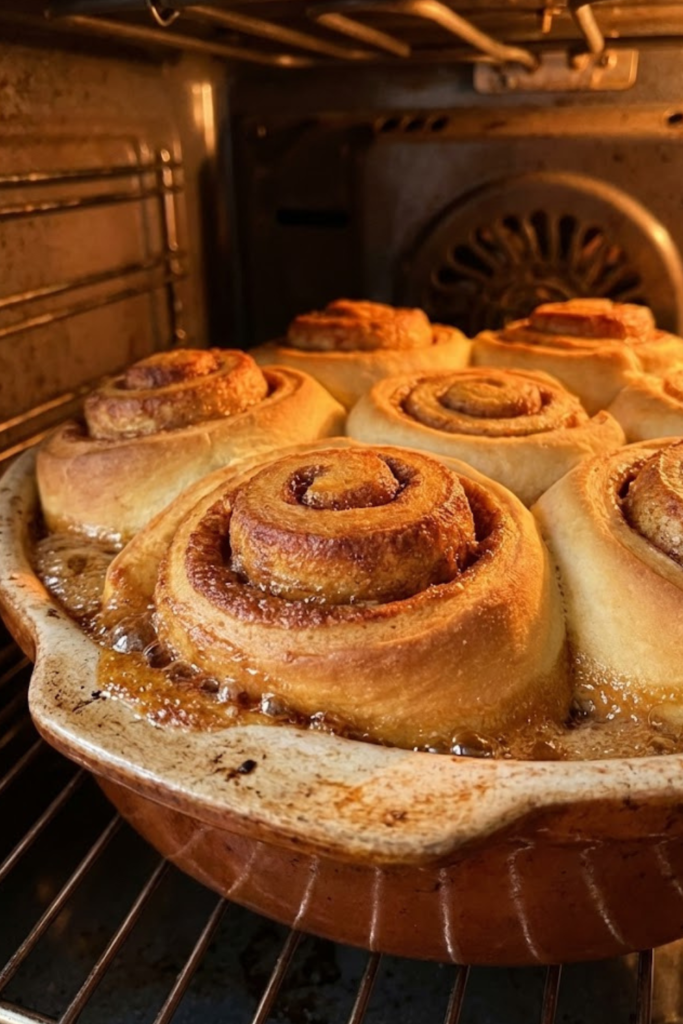
I start checking around the 18-minute mark. You are looking for a golden brown crust on top. Not pale yellow, but a deep, rich gold. If they are still pale, they will be doughy inside. And nobody wants raw dough.
If you notice the tops are getting brown too fast but the center looks jiggly, don’t panic! Just grab a piece of aluminum foil and tent it loosely over the pan. This stops the browning but keeps the heat in so they can finish cooking.
The Touch Test
How do you know they are actually done? The dreaded “gummy center” is the enemy of gluten-free baking. I used to pull them out when they looked pretty, only to cut into raw batter in the middle.
Now, I do the touch test. Open the oven and gently press the center of a roll in the middle of the pan.
- If it stays dented: It needs more time.
- If it springs back: It is ready to go.
The filling should be bubbling like crazy, and the smell… oh man, the fresh baked aroma will be filling your entire house. It’s better than any candle you can buy.
The Hardest Part: Walking Away
This is going to hurt to hear, but you cannot eat them yet. I know, I know! You want to rip one apart immediately. But if you cut into a gluten-free cinnamon roll the second it comes out of the oven, the texture will be gummy.
The starches need time to “set” as they cool. It’s annoying, but it’s science. Let the pan sit on a wire rack for at least 15 to 20 minutes. This rest period is the difference between a gooey, fluffy roll and a sticky, gummy mouthfeel. Use this time to whip up your frosting while you wait.
The Ultimate Cream Cheese Frosting
Let’s be honest: are we here for the bun, or are we here for the frosting? In my house, the roll is basically just a delivery vehicle for the icing. I used to think any old glaze would do—you know, powdered sugar and water mixed in a mug. But once I made real cream cheese icing recipe, I couldn’t go back. That tangy, rich flavor cuts through the sugar and balances everything out.
However, I have definitely ruined a batch or two by being impatient. There is nothing worse than lumpy frosting that looks like cottage cheese. It doesn’t taste bad, but it sure isn’t pretty.
Temperature is Everything
I cannot stress this enough: your butter and cream cheese must be soft. Not “I microwaved it for 10 seconds and the center is molten lava while the rest is hard” soft. I mean room temperature soft.
If you try to beat cold cream cheese, you will get tiny little lumps that will never, ever go away. I’ve stood there with a hand mixer for 20 minutes trying to beat them out, and it never works.
- Take the dairy out when you start making the dough.
- Let it sit on the counter.
- If you forget (I always do), cut it into small cubes and let it sit for 15 minutes. It softens faster that way.
The Secret Flavor Boosters
Sugar is great, but sugar with depth is better. I used to just dump powdered sugar in and call it a day. It was cloyingly sweet. Now, I add two things that change the game: a pinch of salt and a splash of vanilla bean paste.
The salt wakes up your taste buds and cuts the heavy sweetness. And vanilla bean paste? It gives you those fancy little black specks that make it look like you bought these easy gluten free cinnamon rolls at a high-end bakery. If you don’t have paste, regular extract is fine, but treat yourself if you can!
To Frost Hot or Cold?
This is a huge debate in the baking world. Some people wait until the rolls are completely cold so the frosting sits nicely on top. I say, life is too short for that.
I like to frost my rolls while they are still warm—not piping hot, but warm. The heat from the rolls melts the bottom layer of the frosting, allowing it to seep down into the spirals. You get this gooey, sticky mess that is absolutely divine. It becomes part of the roll rather than just sitting on top.
Need Dairy Free Options?
Since we are already doing the gluten-free dance, I know many of you avoid dairy, too. I’ve had to make these for friends with dairy allergies, and luckily, it’s an easy swap.
You can grab a vegan butter stick and a tub of plant-based cream cheese (the almond-based ones are usually the best texture). They whip up surprisingly well! Just be careful with the sugar; sometimes the vegan cream cheeses are softer, so you might need a little more powdered sugar to get the right consistency. It still makes for a killer homemade glaze.
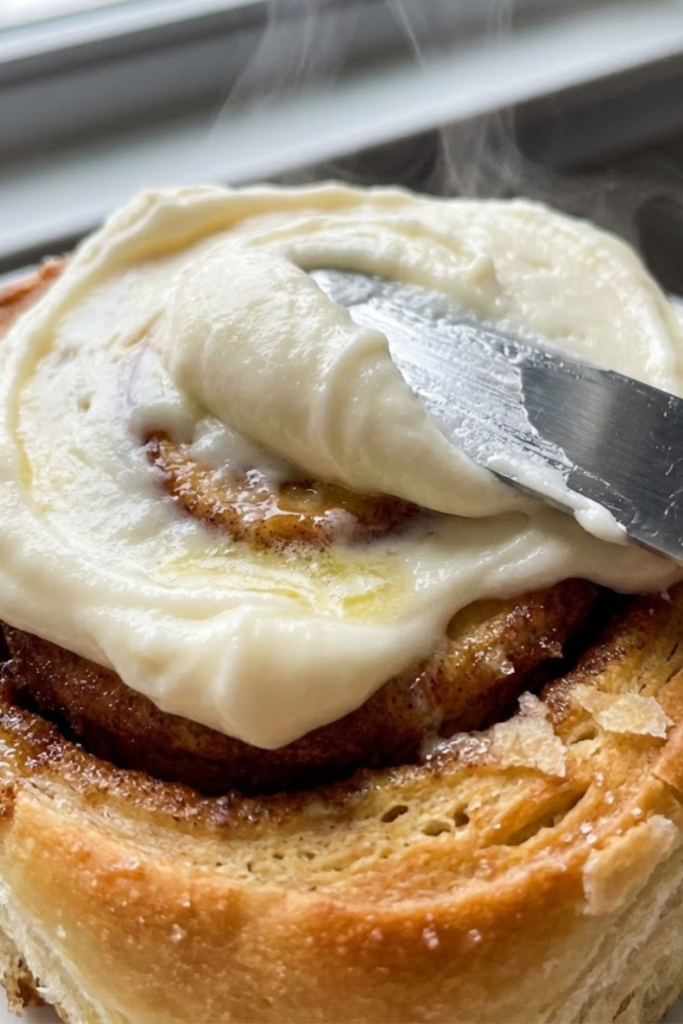
Making easy gluten free cinnamon rolls doesn’t have to be a scary science experiment anymore. We have all been there—staring at a bowl of dry, crumbly dough and wondering where it all went wrong. But now you know the secrets! By using the right flour blend with xanthan gum, activating your instant yeast with warm ingredients, and letting that dough rise in a cozy spot, you are going to get results that actually taste like the real deal.
Seriously, when you pull that pan out of the oven and the fresh baked aroma hits you, you won’t even miss the gluten. Whether you are baking for a holiday morning or just because you need some gluten free comfort food on a rainy Tuesday, this recipe has your back. So, put on your apron, trust the sticky dough, and get ready for the best breakfast of your life. You’ve got this!