Did you know that carrots were originally used in cakes during the Middle Ages because sweeteners were scarce and expensive? It’s true! But today, we aren’t just looking for sweetness; we are looking for flavor. I used to be terrified of baking from scratch. The flour clouds! The sinking centers! It was a mess. But this easy carrot cake changed everything for me. It is forgiving, robust, and absolutely exploding with warm spices. Whether you are a total novice or a seasoned baker, this batter comes together in minutes. No mixer required! Let’s dive into the moistest, most vibrant dessert you’ll make all year.
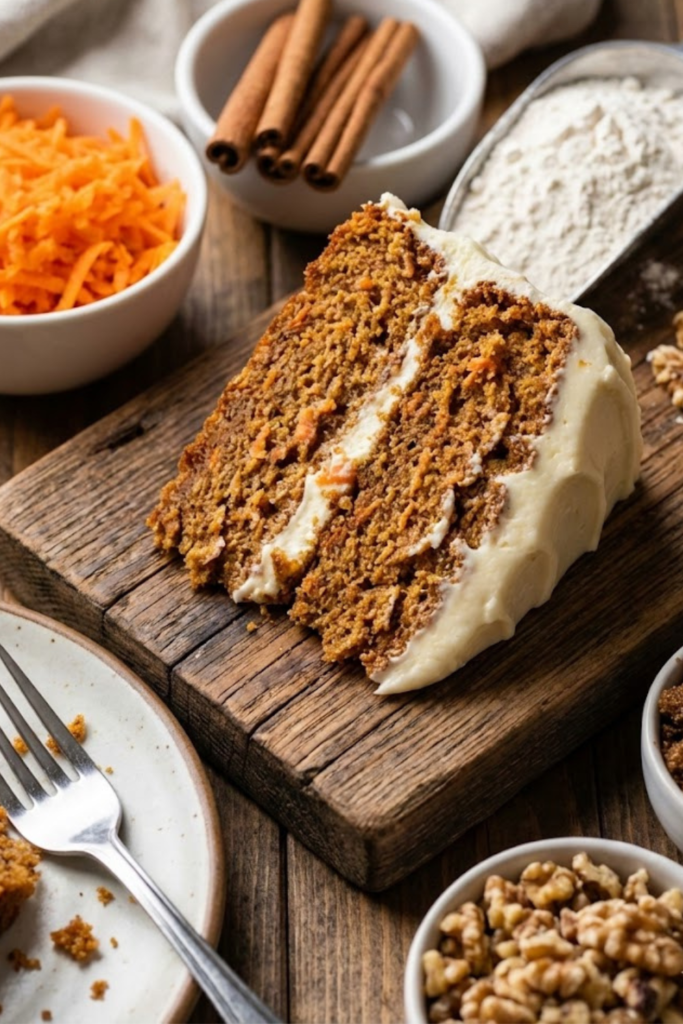
Essential Ingredients for a Moist Carrot Cake
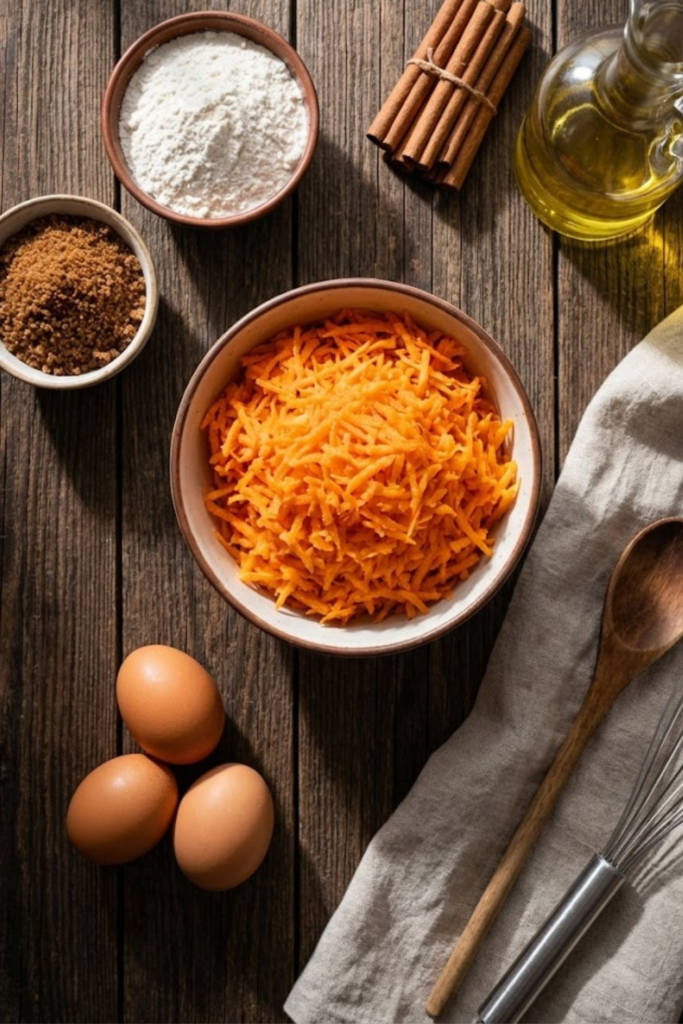
I have a confession to make. The first time I ever attempted a carrot cake, I was feeling incredibly lazy. I was at the grocery store, staring at the produce section, and I saw those bags of pre-shredded matchstick carrots. I thought, “Jackpot! That saves me 10 minutes.”
Spoiler alert: It ruined the cake.
The cake came out dry, and the carrot pieces were like little hard twigs that never softened up in the oven. It was a total disaster, and I was so frustrated I almost swore off baking forever. But through that flop, I learned that with this easy carrot cake, the magic is actually in the specific ingredients you choose. You can’t just throw whatever in a bowl and hope for the best.
The Deal with Fresh Carrots
Here is the hill I will die on: you have to grate your own carrots. Those bagged ones are covered in preservatives and are dried out to keep them from rotting.
When you grab a fresh carrot and run it down a box grater, it releases a ton of water. That liquid is gold. It steams into the batter while it bakes, which is exactly how you get that super soft, melt-in-your-mouth texture.
If you skip this step, you’re basically making sweet carrot bread. Grab the big carrots, peel ‘em, and get an arm workout. It’s worth it.
Oil vs. Butter: The Great Debate
Most people think butter is the king of baking. Usually, I’d agree with you. But for a moist carrot cake, vegetable oil (or canola oil) is actually the secret weapon.
Here is the thing I learned the hard way. Butter is solid at room temperature. If you use butter, once the cake cools down, the fat solidifies, and the cake feels denser. Oil stays liquid.
This means your cake stays soft on the counter and even softer in the fridge. I’ve had cakes that actually tasted better on day three because the oil kept everything so juicy. Just trust me on this one.
Sugar and Spice
You need brown sugar. Don’t try to swap it all for white sugar. Brown sugar has molasses in it, which attracts moisture and makes the crumb super tender. I usually do a mix, but the brown sugar is doing the heavy lifting for texture.
And for the spices? Don’t be stingy!
I used to be scared of over-spicing, but flour soaks up flavor like crazy. You need a heavy hand with the cinnamon and a nice kick of nutmeg. Sometimes I throw in ginger if I’m feeling fancy. It gives it that warm “hug in a bowl” vibe we are all looking for.
The Egg Situation
Finally, let your eggs hang out on the counter for a bit. Cold eggs hit room-temperature oil and seize up, making the batter look curdled and weird.
If you forget (which I do, literally 90% of the time), just put the eggs in a bowl of warm water for 5 minutes. It’s a game-changer for getting a smooth batter without overmixing.
Kitchen Tools You Need (And What You Don’t)
Listen, when I first started baking, I was convinced I needed every gadget in the aisle. I’m talking about cherry pitters, avocado slicers, and a stand mixer that cost more than my first car. I thought, “If I don’t have the gear, I can’t make the cake.”
I was wrong.
Actually, one of the best things about this easy carrot cake is that it is surprisingly low-maintenance. You don’t need a heavy-duty mixer to get the job done. In fact, if you use a hand mixer, you might actually overwork the batter and end up with a tough cake. I’ve done it, and it was a rubbery mess.
Here is the specific gear you actually need to pull this off without losing your mind.
The Box Grater: The Real MVP
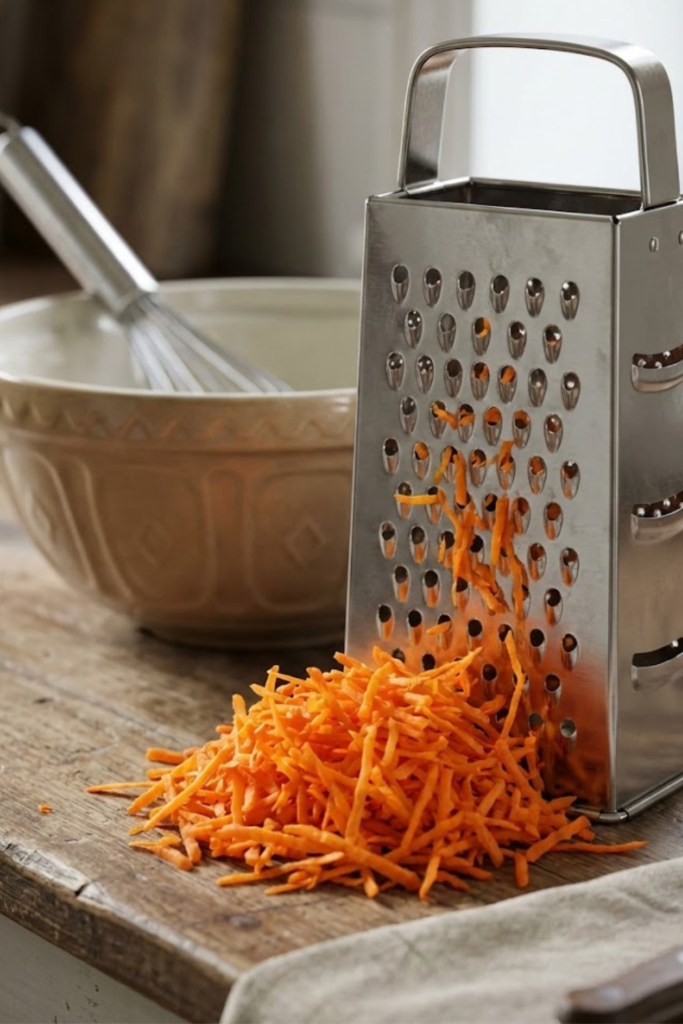
I mentioned earlier how much I hate pre-shredded carrots. So, you need a grater. But don’t go out and buy a fancy food processor just for this.
I once tried to use a food processor to “grate” my carrots because I was feeling lazy. I held the button down too long. Instead of nice shreds, I ended up with wet carrot mush. It was gross. The moisture balance was totally off, and the cake didn’t rise right.
Just use a standard, stainless steel box grater. Use the side with the large holes. Watch your knuckles, though! I have scraped my thumb more times than I care to admit. It stings, but hey, blood, sweat, and tears go into good baking, right? (Okay, maybe not the blood).
Mixing Bowls: Keep It Simple
You really only need two bowls. One for the dry stuff (flour, salt, spices) and one for the wet stuff (oil, sugar, eggs).
I used to use just one bowl and dump everything in together. I thought I was being efficient. But then I’d bite into a slice of cake and get a mouthful of bitter baking soda that didn’t get mixed in properly. It was nasty.
Separating them allows the baking powder and spices to get distributed evenly before they hit the liquid. You don’t need fancy ceramic bowls; the cheap plastic ones work just fine.
Baking Pans and The Parchment Paper Rule
For this recipe, you can use a 9×13 sheet pan or two 9-inch round cake pans.
If you are a beginner, stick to the 9×13 pan. It is way easier to frost, and you don’t have to worry about leveling layers.
Now, here is a mistake I made for years: I just greased the pan and prayed. Sometimes the cake came out, sometimes half of it stayed stuck to the bottom. I cried over a broken cake once before a potluck. It was tragic.
Use parchment paper. Cut it to fit the bottom of your pan. It guarantees the cake releases perfectly every single time. It is a non-negotiable step for me now.
The Wire Rack
You might think you can just let the cake cool on the stove. I used to do that. But the heat from the pan gets trapped underneath, and the bottom of the cake gets soggy.
A wire cooling rack lets air circulate underneath. It stops the cooking process and keeps the crumb texture perfect. If you try to frost this easy carrot cake while it’s even a little bit warm, the frosting will slide right off. I’ve watched my frosting melt into a puddle on the counter. It’s heartbreaking. Patience is the hardest tool to use, but it’s the most important one.
Step-by-Step Instructions: Mixing the Batter
I used to think mixing was the easiest part of baking. I mean, you just stir it, right?
Boy, was I wrong.
I remember clearly the time I made a cake for my sister’s birthday. I used a electric mixer and beat that batter like it owed me money. I wanted it to be smooth. The result? It was tough. Like, really chewy. It wasn’t a fluffy cake batter; it was more like sweet bread. I learned that day that how you mix is just as important as what you mix.
Here is how to get it right without stressing out.
The Dry Ingredients First
First things first, grab your medium bowl. Dump in your flour, baking powder vs soda (you need both for this recipe), salt, and spices.
Now, take a whisk and give it a really good stir.
I used to skip this and just dump everything in the main bowl. Bad idea. I ended up with pockets of salty flour in the finished cake because the baking soda clotted. Whisking acts like sifting—it breaks up clumps and makes sure the leavening agents are everywhere. It’s a small step, but it makes a huge difference in the rise.
The Wet Mix
In your large bowl, whisk together the oil and sugars. It’ll look like wet sand at first. That is normal.
Then, add the eggs one at a time.
I know, it’s annoying to crack them individually. I used to just crack them all in at once to save time. But adding them one by one allows the mixture to emulsify properly. You want it to look creamy and smooth before the flour touches it. This base is what makes this easy carrot cake so rich.
The Folding Technique (Put the Mixer Away!)
Okay, this is the most critical part. Unplug your mixer. Put it away. You do not need it anymore.
Pour the dry ingredients into the wet ones. Switch to a rubber spatula.
You want to gently fold the flour in. “Folding” just means scraping the bottom of the bowl and flipping the batter over the top. Do this until you see just a few streaks of flour left.
Then, dump in your fresh grated carrots (and walnuts if you’re using them).
Continue folding batter gently until everything is just combined. If you overmix here, you develop gluten. Gluten is great for pizza crust, but terrible for cake. We want tender, not chewy. Stop mixing the second the flour disappears!
The Bake
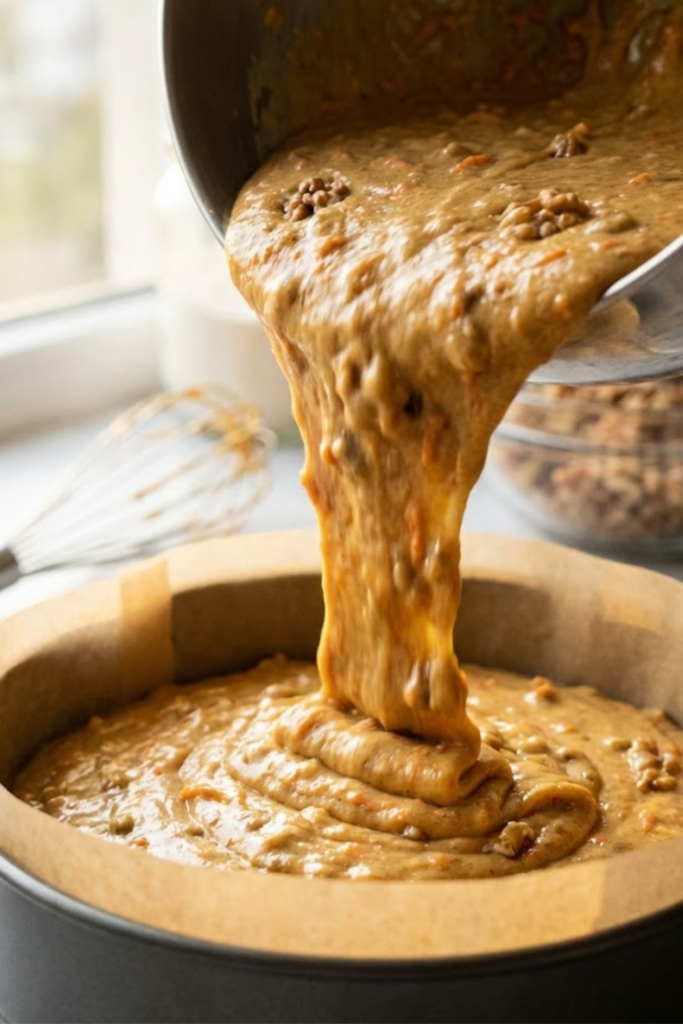
Pour the batter into your prepared pan. Pop it into the oven.
Now, here is the hard part: Do not open the oven door.
I am guilty of this. I always want to peek. But every time you open the door, heat escapes, and your cake might sink in the middle. It’s tragic.
Start checking for doneness about 5 minutes before the timer goes off. Use the toothpick test. Stick a toothpick in the center. If it comes out with wet batter, it needs more time. If it comes out with just a few moist crumbs, it is perfect.
Also, press the center gently with your finger. If it springs back immediately, it’s done. If your finger leaves a dent, give it another few minutes.
Mastering the Cream Cheese Frosting
I have a love-hate relationship with frosting. I love eating it, obviously. But making it? That used to be a different story.
I remember the first time I made cream cheese frosting for a party. I was rushing, as usual. I grabbed the block of cream cheese straight from the fridge and threw it in the bowl with the butter. I turned the mixer on high.
The result was a disaster. It looked like sweet cottage cheese. There were tiny little lumps of cold cheese everywhere that refused to blend in. I tried to fix it by mixing it longer, but the frosting just got runny. I was so embarrassed I almost scraped it all off and served the cake naked.
Here is how to get that silky, bakery-style topping without having a meltdown in the kitchen.
Temperature Matters (Don’t Ignore This!)
The most critical rule here is temperature. Both your butter and your cream cheese need to be at room temperature.
Not “kinda soft.” Not “melted in the microwave for 10 seconds.” I mean, leave them on the counter for a couple of hours.
If the butter is too warm, your frosting will be soupy and won’t hold its shape. If the cream cheese is too cold, you get the lumpy mess I described earlier. You should be able to press your finger into the brick of cheese and leave a dent without any resistance. It’s annoying to wait, but it makes the difference between tangy frosting that spreads like a dream and a lumpy nightmare.
Sifting Powdered Sugar
I am going to be honest: I hate sifting. It makes a mess, and sugar dust gets everywhere.
For the longest time, I skipped this step. I thought, “The mixer will break up the clumps.”
It does not.
If you don’t sift your powdered sugar, you will end up with tiny, hard rocks of sugar in your frosting. It ruins the smooth texture. Get a fine-mesh sieve and push the sugar through it. It takes three extra minutes, but it guarantees a powdered sugar frosting that is perfectly smooth.
The Vanilla Extract Secret
Do not skimp on the vanilla. Since this frosting is mostly fat and sugar, it needs a strong flavor to balance it out.
I used to buy the cheap imitation vanilla because it was a few dollars cheaper. Big mistake. It tastes like chemicals. Splurge on the real vanilla extract. You can really taste the difference in a simple recipe like this.
Also, add a tiny pinch of salt. It sounds weird, but it cuts the sweetness just enough so your teeth don’t hurt after one bite.
Application: Patience is Key
I mentioned this before, but it bears repeating because I have ruined so many cakes this way.
Do not frost a warm cake.
I know it smells amazing. I know you want to eat it now. But if the cake is even slightly warm, the butter in the frosting will melt. You will end up with a sad, sliding mess of glaze instead of fluffy frosting.
Wait until the cake is cool to the touch. Then, pile that frosting on top and use a spatula to swirl it around. Imperfection is key here; those swirls catch the light and look delicious.

Customizing Your Easy Carrot Cake
I used to be a total purist about recipes. I thought if I changed one single thing, the baking police would come kick down my door. I was terrified to deviate from the instructions on the back of the flour bag.
But honestly? That is a boring way to bake.
Once I got comfortable with this easy carrot cake base, I realized it is sturdy enough to handle some serious experimentation. You can really make it your own. I’ve had some successes, and I’ve had some “interesting” failures that my dog wouldn’t even eat. Here is how to customize this cake without ruining it.
The Great Raisin and Nut Debate
In my house, raisins are a controversial topic. I love them; my husband acts like I put gravel in the batter.
If you are on team walnut carrot cake, don’t just throw raw nuts in there. I learned this trick from a bakery down the street: toast your walnuts or pecans in a dry pan for 5 minutes first. It makes them crunchier and brings out this nutty, buttery flavor that raw nuts just don’t have.
If you add raisins, soak them in hot water for ten minutes before draining and adding them. I used to skip this, and the raisins would suck moisture out of the cake. Soaking them keeps them plump and juicy inside the crumb.
A Tropical Twist (Read This Warning!)
I went through a phase where I wanted everything to taste like a beach vacation. I decided to make a pineapple carrot cake.
I dumped a whole can of crushed pineapple into the batter.
Big mistake.
The cake was so wet it literally fell apart when I tried to take it out of the pan. It was basically pudding. If you want to add pineapple, you must drain it. Squeeze it with a paper towel. You want the flavor, not the juice. Adding shredded coconut is safer, but it adds sweetness, so maybe cut back the sugar by a tablespoon or two.
Playing with Spices
Cinnamon is the classic choice, but don’t be afraid to get weird with the spice variations.
One time, I was out of nutmeg and used cardamom instead. It was incredible. It gave the cake this floral, citrusy note that made everyone ask, “What is that secret ingredient?”
Just be careful with cloves. I once added a teaspoon of ground cloves thinking it would be like pumpkin spice. It tasted like I was eating a scented candle. A little goes a long way with the strong stuff!

Storage and Freezing Tips
I used to be the person who just threw a tea towel over a cake and left it on the counter for three days. I thought, “It’s cake, it’ll be fine.”
Well, with homemade carrot cake, that is a dangerous game.
Because we used cream cheese frosting, this cake actually has to live in the fridge. I learned this after leaving a cake out during a humid summer day. By the evening, the frosting had started to slide off, and honestly, I was worried about food poisoning. Dairy does not like room temperature for too long.
Here is how to store your hard work so it tastes just as good on day four.
The Fridge Rules
You need to keep this cake cold, but the fridge is also a moisture thief. Cold air dries things out fast.
If you just shove the whole cake in there uncovered, it will taste like stale cardboard by the next morning. I’ve done it, and it was tragic to throw away half a cake.
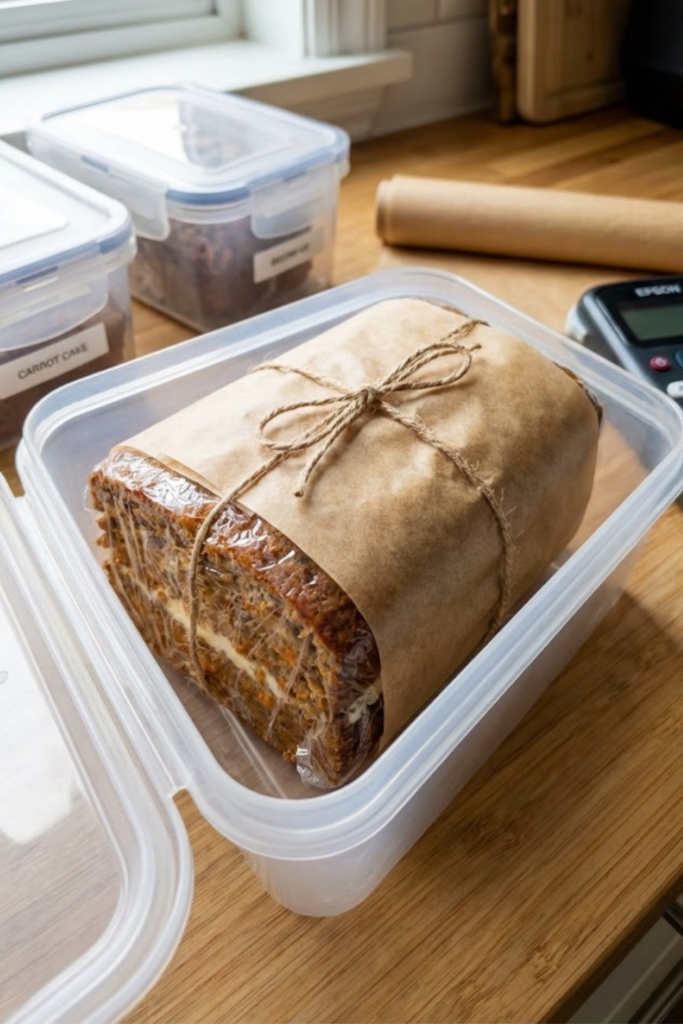
If you have a cake carrier with a lid, use it. If not, wait until the frosting gets cold and hard, then gently drape plastic wrap over the cut sides. You want to seal the crumb so the air can’t get to it.
Actually, I think this cake tastes better cold. The frosting gets firm, and the cake stays dense and fudgy. It’s the perfect midnight snack.
Freezing Slices for Later
Sometimes I bake a whole sheet pan and realize I cannot possibly eat it all (though I try). Freezing carrot cake is actually super easy, and it saves you from throwing leftovers away.
Don’t freeze the whole thing unless you have to. I like to freeze individual slices.
Wrap each slice tightly in plastic wrap. I mean tight. Then, wrap it again in aluminum foil. This double layer protects it from freezer burn. I found a slice in the back of my freezer three months later, thawed it on the counter, and it tasted fresh. It was a glorious surprise on a Tuesday night.
The Make-Ahead Strategy
If you are baking for a holiday or a birthday, stress is your enemy. I have had meltdowns trying to bake and frost on the same day while guests are arriving.
You can bake the cake layers a day in advance.
Let them cool completely on the cooling rack. Then wrap the naked layers in plastic wrap and leave them at room temperature overnight. This actually helps the moisture distribute evenly. The next day, just whip up your frosting and assemble. It makes the day of the party so much more chill.
So, there you have it. We went from muddy carrots and broken cakes to the best carrot cake 2026 has to offer.
I know it seems like a lot of steps—grating the carrots, waiting for the eggs to warm up, resisting the urge to open the oven door. But I promise, that first bite of moist, spiced cake with the tangy frosting makes every second of prep worth it. You are going to look like a baking genius, and nobody needs to know how easy it actually was.
This recipe has saved me at so many potlucks and family dinners. It is reliable, robust, and honestly, just really delicious.
If you loved this recipe, please share it! Pin this recipe to your “Best Desserts” board on Pinterest now and save it for your next celebration!