Have you ever ordered salmon at a restaurant and wondered, “How on earth do they get that skin so shattered-glass crispy?” I used to ask the same thing! In fact, a recent culinary survey noted that over 60% of home cooks are intimidated by cooking fish because they fear the dreaded “soggy skin” disaster. But guess what? We are fixing that today. I’m going to walk you through my foolproof method for crispy salmon with roasted red pepper sauce that is actually easier than ordering takeout. Get your skillet ready, because this meal is about to become your new weeknight obsession!

Choosing the Best Salmon Fillets for Pan Searing
I have to confess something embarrassing. For years, I used to just walk up to the seafood counter and point at whatever pink slab was on sale, thinking it was all the same. Big mistake. I remember one Tuesday specifically—I bought these thin, sad-looking tail pieces because they were cheaper. By the time I got a “sear” on them, they were dry as a bone and had the texture of a shoe. My kids literally refused to eat it, and we ended up ordering pizza. That was a moment of pure kitchen frustration, let me tell you.
But through all those failures, I’ve learned that 90% of the battle is won before you even turn on the stove. If you want that restaurant-quality pan seared salmon recipe to actually work, you have to be picky at the grocery store.
Wild-Caught vs. Farmed: The Real Talk
There is a lot of noise out there about which fish is “better.” Here is my take as a home cook who has to watch a budget. Wild-caught Sockeye or King salmon has a beautiful, deep red color and a robust flavor, but it is lean. Because it doesn’t have much fat, it goes from “perfect” to “overcooked” in a blink of an eye.
Honestly? I often prefer farmed Atlantic salmon for this specific recipe. It has a higher fat content, which makes it much more forgiving if you accidentally leave it in the pan a minute too long. The richness also pairs incredibly well with the acidic kick of the roasted red pepper cream sauce. Don’t feel guilty about buying the farmed stuff; it yields a juicy, melt-in-your-mouth result that is hard to mess up.
The Cut Matters
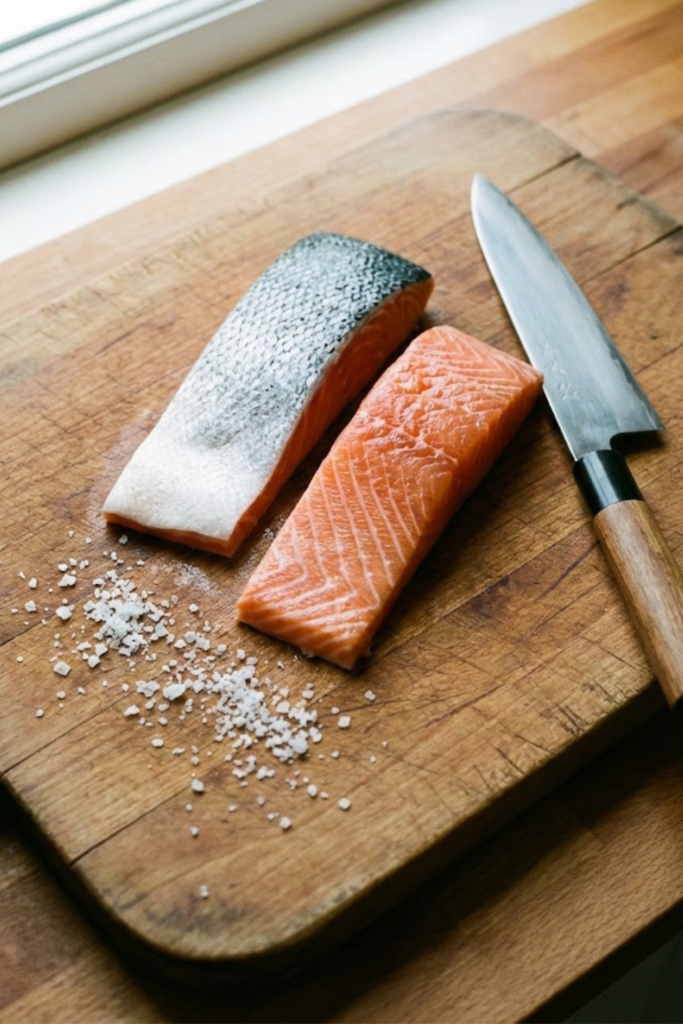
When you are staring at the display case, look for center-cut fillets. You want pieces that are uniform in thickness, usually about an inch and a half thick. Avoid the tail sections if you can.
Why? Because tail pieces are thin and taper off to nothing. They will cook way faster than the thicker parts, leaving you with an uneven mess. I learned this the hard way when serving a dinner party where half the guests got perfect fish and the others got fish jerky. It was not my finest hour.
Skin-On is Non-Negotiable
I know some people get a little weirded out by fish skin. But for crispy salmon, the skin is essential. It acts like a protective barrier between the delicate meat and the hot pan. Plus, when it gets golden brown and crunchy? It’s basically the “bacon of the sea.”
Even if you don’t plan on eating the skin (though you really should), cooking with it on keeps the juices locked in. Just tell the fishmonger, “Leave the skin on, please!”
Prep It Right
Here is a secret that changed my life: moisture is the enemy of the sear. Before you even think about seasoning, take a few paper towels and pat those fillets dry. I mean really dry.
If the fish is wet, the water has to evaporate before the browning can start. Instead of searing, your fish just steams in its own juices. You end up with gray, soggy skin instead of that satisfying crunch. It’s a small step, but it makes a massive difference in your weeknight seafood dinner.
Mastering the Crispy Skin Technique
I used to have actual nightmares about fish sticking to the pan. You know the feeling, right? You go to flip your beautiful fillet, and half of it decides to stay glued to the bottom of the skillet while you are left holding a mangled, sad-looking mess. It is heartbreaking, and honestly, I’ve ruined more than one “romantic” dinner date that way. But after a lot of trial and error (and scrubbing burnt skin off pans), I finally figured out the code.
Getting that glass-like crispy fish skin hacks usually promise isn’t actually magic; it’s just patience and heat control.
The Hot Pan Anxiety
First things first, get your pan hot. Like, really hot. I used to be scared of burning the house down, so I’d keep the heat too low. That was a rookie mistake.
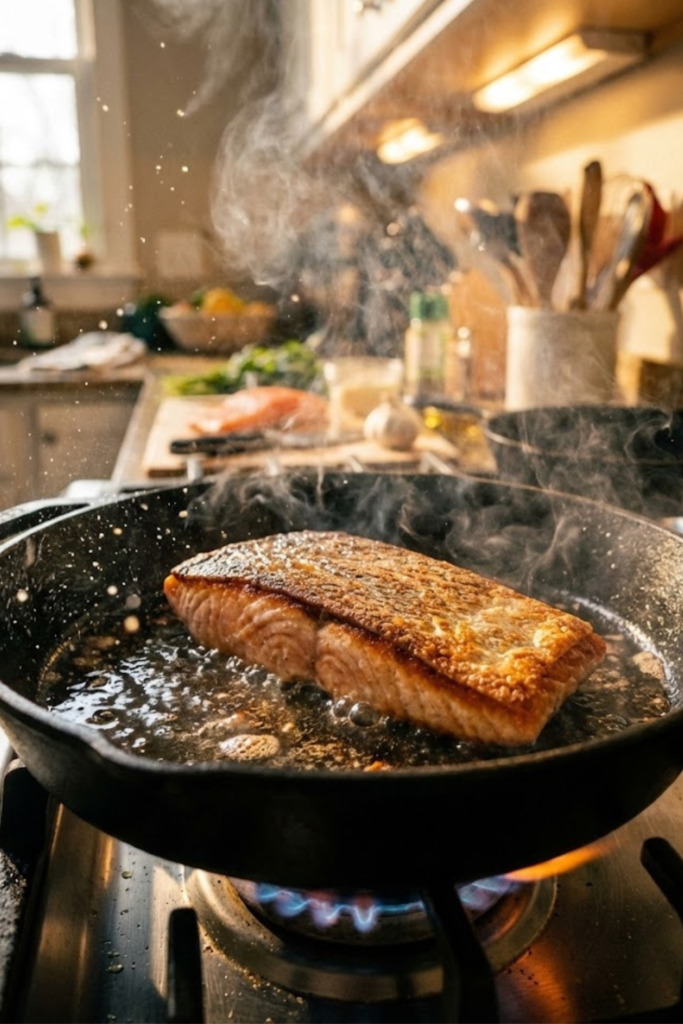
You need to use a heavy-bottomed pan, ideally stainless steel or a well-seasoned cast iron skillet. Pour in your oil—I like avocado oil because it handles heat well—and wait until it shimmers and just starts to smoke a tiny bit. If the oil isn’t hot enough, the skin will stick immediately. It’s gotta hit that heat to sear instantly.
The Magic 10-Second Press
Here is the trick that changed my life. As soon as you lay that salmon into the pan (skin-side down, obviously), it’s going to try to curl up on you. The skin reacts to the heat and tightens, pulling the edges up.
Don’t just watch it happen! Grab your fish spatula and gently press down on the fillet. Hold it there for about 10 seconds. This keeps the skin flat against the hot surface, which is the only way to get that even, golden-brown crust across the whole piece. If you skip this, you get crispy edges and a soggy middle. Nobody wants a soggy middle.
Patience is Your Best Friend
Now comes the hardest part: doing absolutely nothing. Once you’ve done the press, you need to step away. Don’t nudge it, don’t peek underneath, and definitely don’t try to flip it too early.
I usually let my cast iron skillet fish cook undisturbed for about 4 to 5 minutes on medium-high heat. You will see the color of the salmon change from translucent pink to opaque orange, moving up the side of the fillet.
Here is the golden rule I tell everyone: if the fish sticks when you try to slide the spatula under it, it’s not ready. Seriously, the pan will “release” the fish when the skin is perfectly crisped. If you have to force it, you are going to tear it. Just wait another minute. It’s tough to wait, but the crunch is worth it.
Crafting the Creamy Roasted Red Pepper Sauce
I went through a phase where I thought everything had to be made from scratch to be “good.” I remember spending an hour roasting red peppers over my gas stove flame, trying to get the skin black, and then sweating them in a plastic bag. It was a disaster. I burned my fingers peeling them, there were seeds all over my floor, and honestly? It tasted exactly the same as the ones from the jar.
Lesson learned: save your sanity. The key to this roasted red pepper cream sauce is realizing that high-quality jarred peppers are actually your best friend.
The “Cheater” Ingredient
So, grab a jar of roasted red peppers from the grocery store. I prefer the ones packed in water rather than oil, as it gives you more control over the flavor later. Make sure you drain them really well in a colander.
If you don’t drain them, your sauce ends up watery and sad. I made that mistake once and it just ran all over the plate like soup. Not appetizing.
Flavor Boosters
While the peppers are the star, they need help to sing. I always toss in two cloves of fresh garlic—don’t use the pre-minced stuff in the jar, it tastes metallic.
You also need a bridge between the sweet peppers and the rich cream. That’s where smoked paprika comes in. Just a half teaspoon gives it this incredible, savory depth that makes people think you cooked it all day. And don’t forget a squeeze of lemon juice. The acid cuts through the fat and wakes up the whole dish.
The Blender Disaster
Here is a very specific warning born from a messy experience. When you are ready to puree your peppers and garlic, be careful with your blender.
One time, I threw hot sautéed garlic and peppers into my blender, put the lid on tight, and hit “high.” The steam pressure blew the lid off. I ended up with bright orange sauce on my ceiling, my cabinets, and my dog. It was a nightmare to clean.
Now, I always use a food processor or an immersion blender. If you must use a standard blender, take the little center cap out of the lid to let steam escape and cover it with a towel. Safety first, right?
Getting the Texture Right
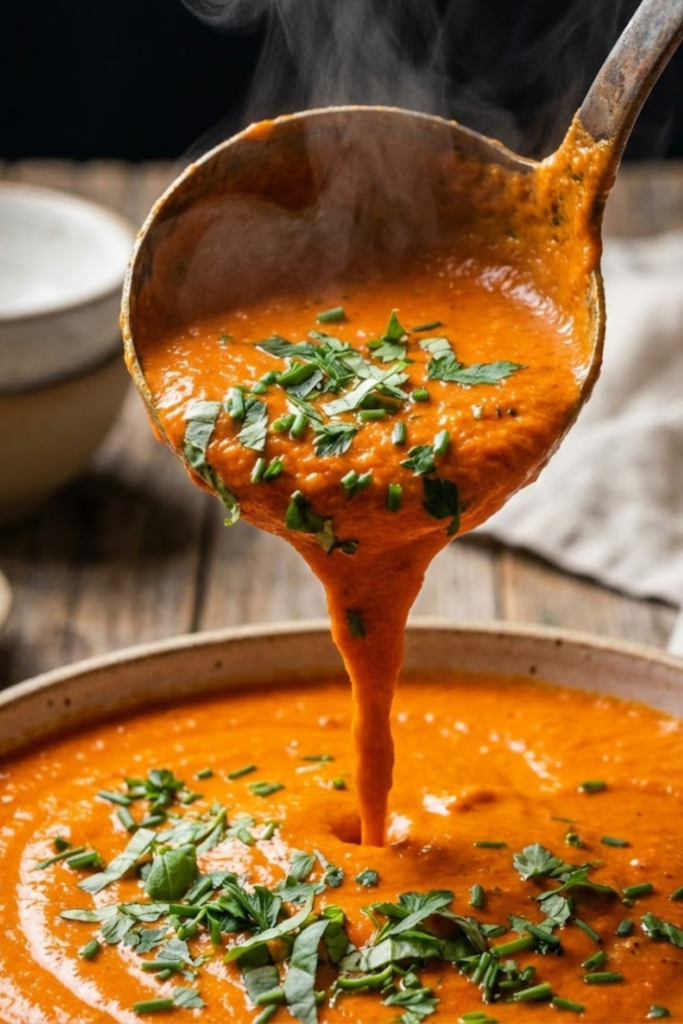
Once the base is smooth, pour it into a small saucepan on low heat. This is when you stir in your heavy cream. If you are dairy-free, full-fat coconut milk works surprisingly well as heavy cream alternatives.
Stir it gently until it’s warm, but do not let it boil! If it boils, the cream might break and separate, looking curdled. Just get it steaming hot. I like to finish it with fresh basil right at the end for a pop of color. This sauce is so good I’ve been known to eat it with a spoon while standing at the stove.
Plating and Serving Suggestions
You know what used to drive me crazy? I’d spend forty minutes cooking a beautiful meal, only to slop it onto a plate and have it look like a school cafeteria lunch. My family didn’t care—they were just hungry—but I wanted that “wow” factor. It took me a while to realize that we eat with our eyes first.
Presentation isn’t just for fancy chefs with tweezers. It actually affects how you experience the textures you worked so hard to create, especially with this pan seared salmon recipe.
Save the Crunch: The “Swoosh” Method
Here is the biggest mistake I see people make. Do not, I repeat, do not pour the sauce over the fish!
If you drizzle that hot liquid over the skin you just spent ten minutes crisping up, it turns soggy in seconds. All that effort wasted. Instead, put a generous ladle of the roasted red pepper cream sauce in the center of the plate first.
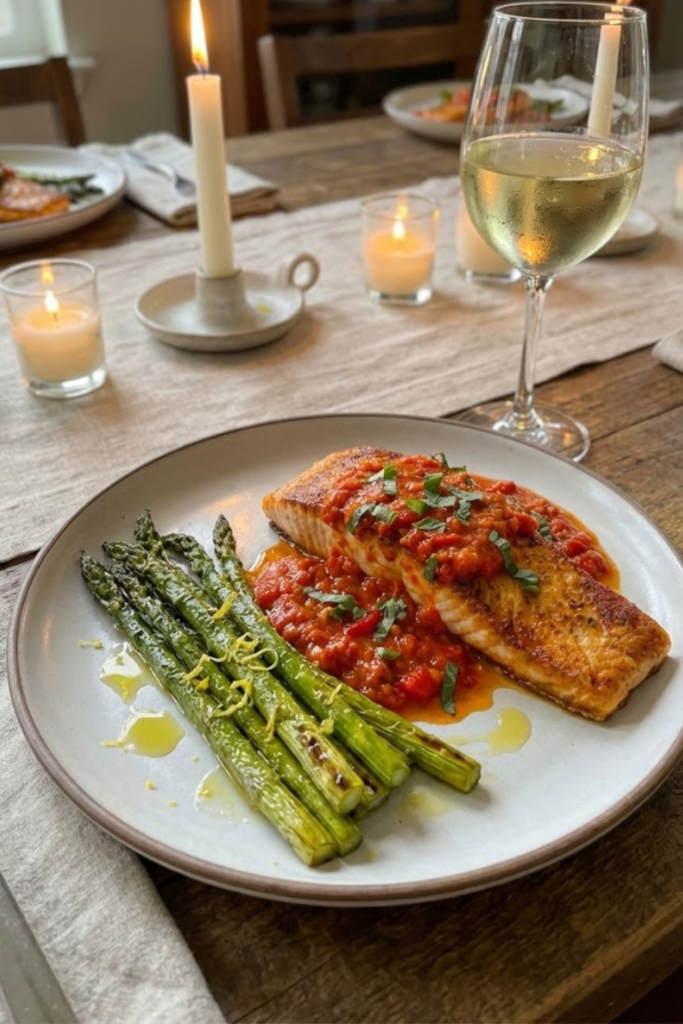
Take the back of your spoon and do a little “swoosh” to spread it out. Then, place the salmon fillet right on top, skin-side up. This keeps the skin shattering-glass crispy while the meat rests in the flavorful sauce. It looks professional, and it tastes better.
Balancing the Plate
Since this dish is pretty rich thanks to the cream and the fatty fish, you need sides that lighten things up. I used to serve this with heavy pasta, and we all needed a nap immediately after dinner. Not ideal for a Tuesday night.
Now, I almost always go for a roasted asparagus side dish. The slight bitterness of the char on the asparagus cuts right through the creamy sauce. If you are really hungry, mashed potatoes and salmon are a classic combo, but try to keep the potatoes fluffy and light.
For a summer vibe, a cold quinoa salad pairing with lemon vinaigrette works wonders. It adds a nice grain texture without weighing you down.
The Wine Situation
I am not a sommelier, but I know what I like. For years, I just drank whatever red was open on the counter. But red wine with this dish can taste a little metallic.
Because of the acidity in the peppers and the richness of the salmon, you want a crisp white wine. A white wine pairing for salmon like a Sauvignon Blanc or a dry Pinot Grigio is perfect. The acidity cleans your palate between bites so the sauce doesn’t feel too heavy.
The Final Touch
Don’t skip the green stuff! A plate of orange fish on orange sauce can look a little… monochromatic.
Tear up some fresh basil leaves or chopped parsley and scatter them over the top. The fresh basil garnish adds a peppery scent that hits you before you even take a bite. It’s a tiny detail, but it makes the whole plate pop. Plus, it hides any imperfections if your sear wasn’t 100% perfect (we won’t tell anyone).
Look, I get it. Cooking fish on a Tuesday night feels ambitious. For the longest time, I thought easy gourmet meals at home were a lie told by people who didn’t have kids or laundry piles. But once you master that heat control and hear that distinct snap of the crispy skin, you are going to feel like a total rockstar in your own kitchen. Truly.+2
We’ve covered a lot today, from picking the right fillet to not exploding your blender (you’re welcome for that tip). You are officially ready to make this weeknight seafood dinner. It is fast, it is full of flavor, and it is one of those healthy dinner ideas 2026 is going to be full of.+4
If this guide helped you conquer your fear of the skillet, do me a huge favor. Pin this recipe to your “Dinner Ideas” board on Pinterest!. It helps other home cooks find us and keeps the kitchen disasters to a minimum. Now, go eat!.