I’ll be honest—I used to think salmon was boring! That was until I discovered these Crispy Honey Garlic Salmon Bites. Seriously, did you know that over 80% of home cooks say the sauce is the secret to loving seafood? It’s true! This dish isn’t just food; it’s an experience. We are talking about tender salmon cubes coated in a sticky, sweet, and savory glaze that will make your tastebuds dance. Whether you are looking for a quick weeknight dinner or a meal prep superstar, this recipe is a game-changer. Let’s get cooking!
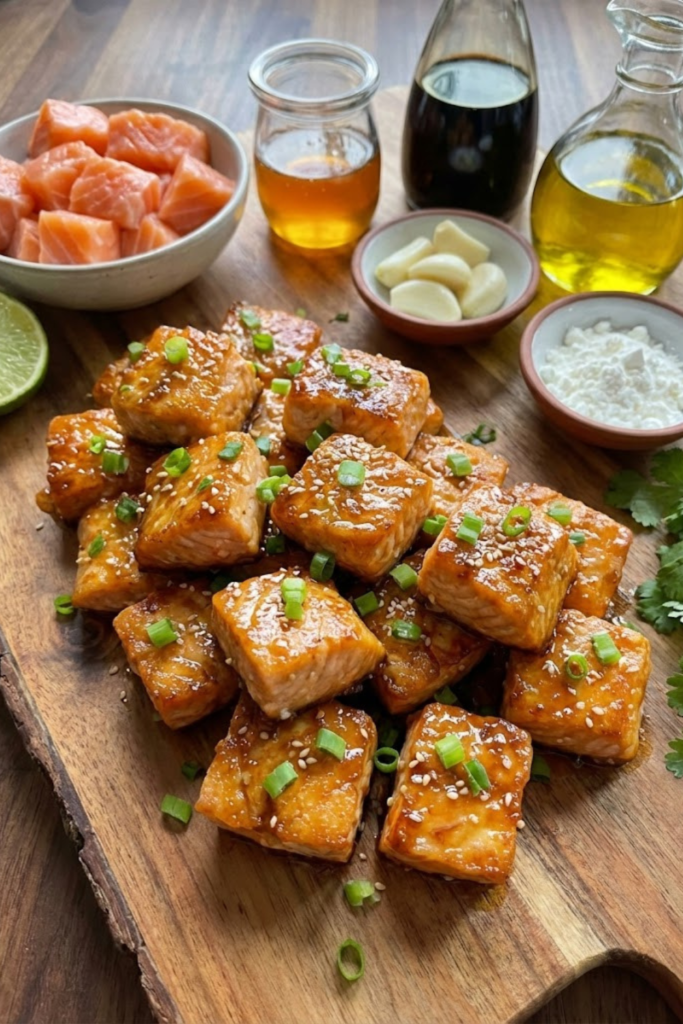
What You Need for the Perfect Honey Garlic Glaze
I’ll be real with you—I’ve ruined more pans of sauce than I care to admit . There was this one Tuesday night back in the day where I tried to swap fresh garlic for the powdered stuff because I was feeling lazy. Big mistake. The whole dish tasted like salty cardboard, and my kids definitely let me know about it . Lesson learned: shortcuts usually end up in the trash can. If you want that sticky, restaurant-quality honey garlic sauce, you have to respect the ingredients. It’s not just about tossing things in a pan; it’s about balance.
The Salmon Situation
First things first, let’s talk fish. I used to buy those frozen blocks of salmon that look like pink bricks. They work in a pinch, sure. But for this recipe? You really want fresh, sushi-grade salmon if you can swing it . The texture is just buttery and holds up better to the heat.
If you must use frozen, thaw it completely in the fridge overnight. Trying to cook half-frozen fish is a nightmare I don’t wish on anyone. It releases too much water and steams the fish instead of searing it. Nobody likes soggy salmon .
The Crisp Factor
Here is a trick I learned the hard way. Do not use flour for the coating. Just don’t do it. Cornstarch is the secret weapon here . It creates this super light, crispy shell that grabs onto the sauce without getting gummy.
I remember trying flour once, and it turned into a gloopy mess the second the sauce hit the pan. Frustrating? Absolutely. But cornstarch gives you that satisfying crunch that stays crunchy .
Aromatics and The Sauce
Please, for the love of food, use fresh garlic and ginger . I know peeling garlic is annoying, but the jarred stuff just has this weird, metallic aftertaste. You need that punchy, spicy kick that only fresh cloves provide.
When mixing your honey garlic sauce, I always recommend low-sodium soy sauce. Regular soy sauce can get way too salty once the glaze reduces and thickens . You can always add salt, but you can’t take it out. Trust me, I’ve tried scooping salt out of sauce—it doesn’t work.
Also, quality honey matters. Use the real stuff, not the corn syrup blend in a bear bottle. It caramelizes better and gives you that perfect sticky finish we are chasing.

Prepping Your Salmon Fillets for Maximum Crispiness
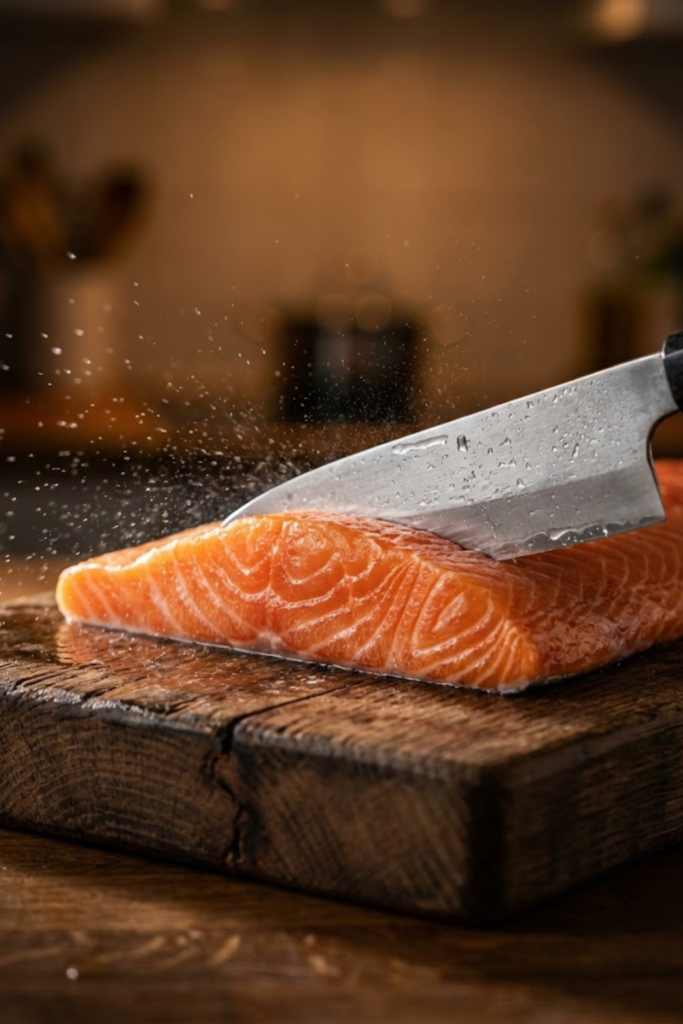
I have a confession to make. The first time I tried to prep salmon for bites, I basically butchered the poor fish. It looked like it had been through a shredder by the time I was done with it . I was trying to rush, and I didn’t have the right tools. It was a disaster. But hey, you live and you learn, right? Preparing the salmon fillets correctly is actually 90% of the battle here.
Skin On or Off?
For these bites, you gotta take the skin off. I know, crispy salmon skin is delicious, but in this recipe, it just gets weird and chewy inside the sauce.
If you aren’t comfortable using a knife to slice the skin off, ask your fishmonger to do it. Seriously, they do this all day. I used to be too proud to ask, and I’d end up wasting half the fish trying to do it myself . Save yourself the headache.
Size Matters
You want to cut your salmon into 1-inch cubes. Uniformity is the name of the game here. If you have some tiny pieces and some giant chunks, you’re going to have a bad time. The small ones will turn into rubber, and the big ones will be raw in the middle .
I try to keep them consistent so they all cook at the same speed. It makes the frying process so much smoother.
The Pat Down
This is the hill I will die on. You must dry your fish. I mean, really dry it. Moisture is the enemy of the crisp . If your salmon is wet when you toss it in the cornstarch, it won’t crisp up; it will just steam.
I use a ridiculous amount of paper towels to pat down every single side of the cubes. It feels wasteful, but it’s necessary. I learned this after serving a batch of soggy, sad salmon to my friends. Never again .
Seasoning Layer
Don’t rely on the glaze for all your flavor. Season the raw fish directly with salt, pepper, and a little paprika before you even look at the cornstarch.
I like to toss the cubes in the seasoning first to make sure every bite has flavor, not just the outside coating. It makes a huge difference in the final taste.
Pan-Seared vs. Air Fryer Salmon Bites: Which is Better?
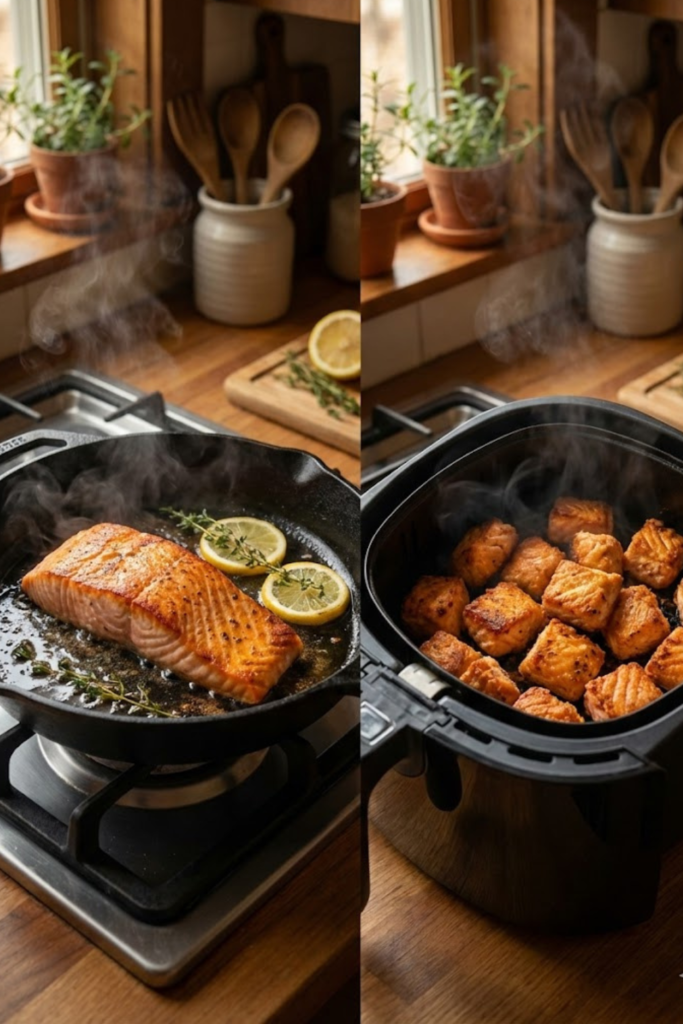
I used to be a total snob about my kitchen tools. I swore up and down that if you didn’t cook fish in a heavy cast iron skillet, you weren’t really cooking . Then, I bought an air fryer on Black Friday because it was on sale, and honestly? I kind of ate my words. Both methods have their place, but they definitely give you different vibes.
The Skillet Method
There is something magical about cast iron cooking. You get that aggressive sear that you just can’t replicate with blowing hot air . But let me tell you about the time I set off the smoke alarm three times in one night making this. My dog was barking, the kids were screaming, and I was frantically waving a towel at the ceiling fan . It was chaos.
If you want that restaurant-quality char, use the skillet. Just make sure your hood fan is on high! You need to get the oil hot—shimmering hot—before the fish touches the pan. And don’t touch it! Let it sear undisturbed for a minute or two to get that crust .
Air Fryer Instructions
Now, if you want to keep your sanity and your kitchen cool, the air fryer is your best friend. I was skeptical, but air fryer recipes are a lifesaver on busy Tuesdays.
The best part? You use way less oil. I just spray the basket, toss the bites in, and let it rip at 400°F for about 7 to 9 minutes . They come out surprisingly crispy without the grease splatter all over my stove.
However, I messed this up the first few times by dumping the whole bowl in at once. Big mistake. They just steamed into a sad, soggy pile . You have to cook them in a single layer with space between them. Air needs to circulate!
Checking Doneness
Whether you fry or air fry, please don’t overcook them. Salmon cubes cook fast. Like, really fast. I usually check one by pulling it apart with a fork; if it flakes easily and looks opaque, get it off the heat immediately . It will keep cooking a bit while it rests. There is nothing worse than rubbery fish balls for dinner .
Mastering the Sticky Honey Garlic Sauce
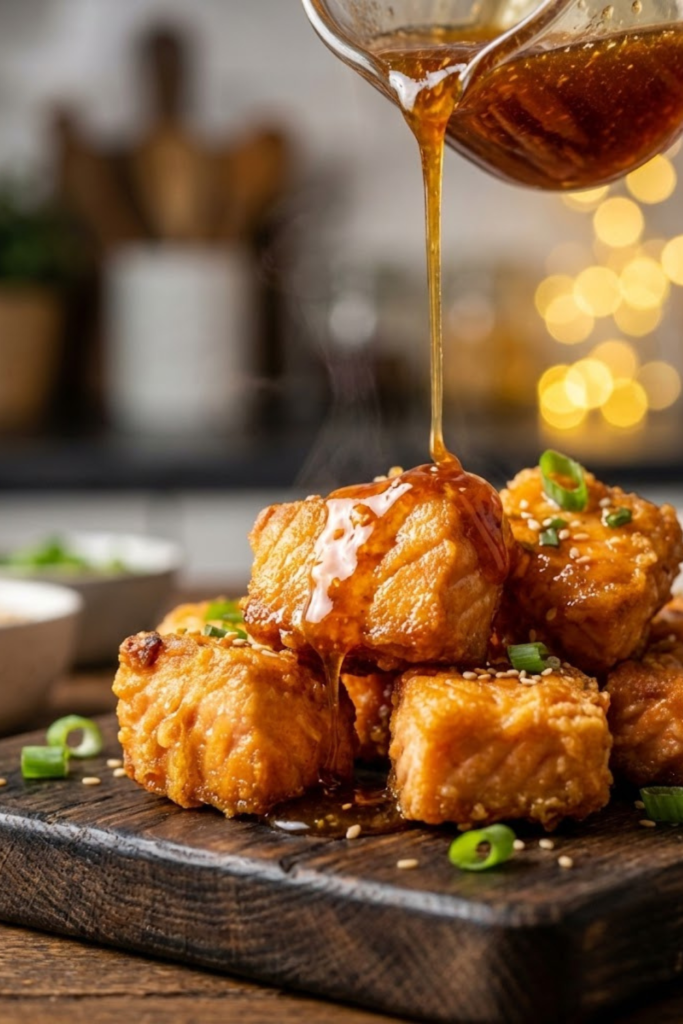
You know that saying, “the sauce is the boss”? In my kitchen, that is the absolute truth. I used to think the salmon was the star of the show here, but let’s be real. We are all here for that sticky glaze that coats your fingers and makes you want to lick the plate .
But getting that sauce right wasn’t always a walk in the park for me. I distinctly remember the first time I tried to make a glaze like this. I got distracted by a phone call and walked away from the stove. When I came back, the honey had turned into black, smoking hard candy fused to my favorite pan . It took three days of soaking to get that pan clean. So, lesson number one: do not walk away.
Simmering Technique
The trick to a glossy honey garlic sauce is patience. You have to let it simmer. I used to crank the heat up to high just to get it done faster, but that just burns the garlic and makes the soy sauce bitter.
Keep the heat on medium-low and let it bubble gently. You want it to reduce slowly so the flavors concentrate. It should coat the back of a spoon. If it runs off like water, it’s not ready yet .
Thickening Agents
Sometimes, no matter how long I simmer, the sauce just stays too thin. It happens. This is where a cornstarch slurry saves the day.
But here is where I messed up before: do not dump dry cornstarch directly into the hot pan. It will clump up immediately, and you will be fishing white lumpy balls out of your dinner. Mix a teaspoon of cornstarch with a little cold water first, then pour it in . It thickens up like magic in seconds.
Adding Acid
This sauce is sweet. Like, really sweet. If you don’t balance it out, it can be too much after a few bites. I learned that adding a splash of acid makes all the Asian inspired flavors pop.
I usually squeeze in a little fresh lemon juice or a dash of rice vinegar right at the end. It cuts through the sugar and makes the sauce taste brighter. It’s a small step, but it makes a huge difference .
Tossing to Coat
Timing is everything here. Do not toss your crispy salmon into the sauce until you are literally ready to put it on the table.
If you toss it too early and let it sit, that beautiful crispy coating we worked so hard on will turn to mush . I wait until everyone is sitting down, then I do a quick toss in the pan to ensure full coverage—oops, I mean to make sure every piece is covered—and serve it immediately. That way, you get the sticky sauce and the crunch .
Serving Ideas: Rice Bowls, Salads, and Veggies
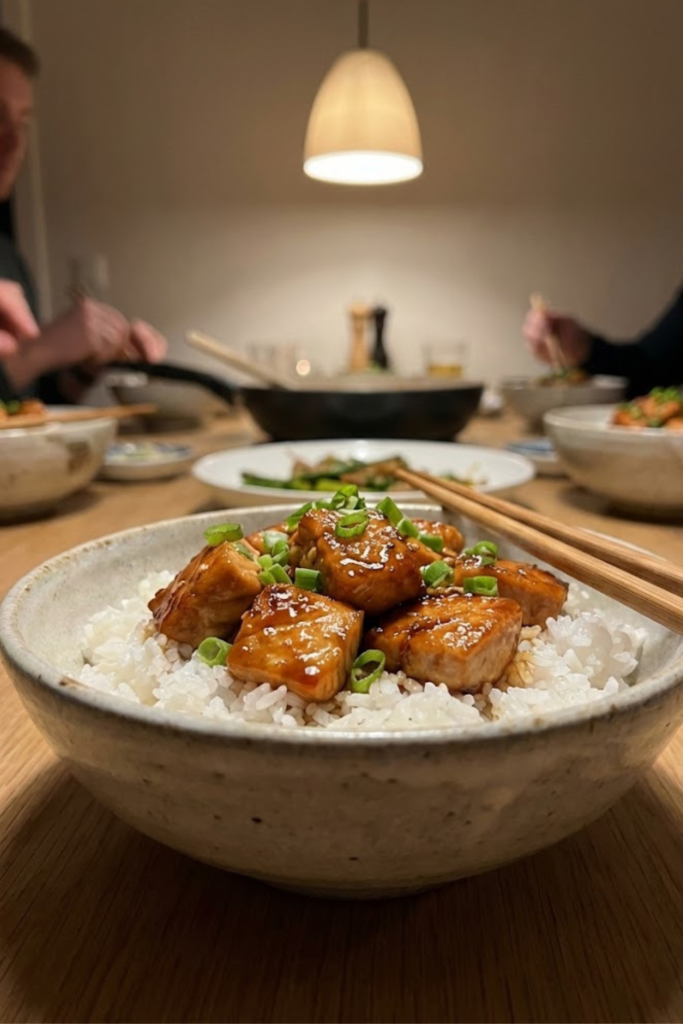
I’ll admit it—half the time, these salmon bites don’t even make it to a plate. I have a bad habit of standing over the stove and eating them right out of the pan with a fork, burning my mouth in the process . But when I actually manage to act like a civilized adult and serve a real dinner, I’ve found that how you serve this dish makes a huge difference. You can turn a simple snack into a full-blown seafood dinner.
Carb Pairings
For me, nothing beats a classic rice bowl. I usually go with fluffy jasmine rice because it acts like a sponge for that extra sauce. I tried using brown rice once to be “healthy,” but my kids looked at me like I had committed a crime. The nutty flavor just distracted from the glaze .
If you are watching your carbs or doing the keto thing, cauliflower rice works, I guess. But honestly? Treat yourself to the white rice. It’s worth it.
Green Sides
You need something green on the plate to make yourself feel better about all that honey, right? Steamed broccoli is my go-to side. There is just something about the way broccoli florets trap the honey garlic sauce that is pure magic .
I’ve also done roasted asparagus, which adds a nice charred flavor. Just don’t overcook the veggies. You want a little crunch to contrast with the tender fish. I once served mushy zucchini with this, and the texture of the whole meal was just… sad .
Garnish Game
Do not skip the garnish! I used to think garnishes were just for fancy restaurants, but they actually add flavor. A sprinkle of toasted sesame seeds adds a nutty crunch that finishes the dish perfectly.
And sliced green onions? Essential. They add a fresh, sharp bite that cuts through the sweetness of the glaze. Plus, they make the dish look like you tried way harder than you actually did .
Meal Prep Storage
If you are into meal prep salmon, this recipe is a winner. But here is a tip from experience: let the salmon cool down completely before you put the lid on your container. If you seal it while it’s hot, condensation builds up, and your crispy coating turns into sludge by lunchtime the next day .
I store these in glass airtight containers. They stay good for about 3 days. Any longer than that, and the fish starts to get a little… funky. Nobody wants to be that person heating up old fish in the office microwave .
I really hope you give these sticky, savory bites a try this week. They truly transformed how my family views seafood nights! I went from begging my kids to eat fish to having them ask for seconds, which feels like a major victory in my book .
Remember, cooking doesn’t have to be perfect. You might burn the garlic once or twice, or maybe your sauce gets too thick—it happens! The important thing is that you are in the kitchen making something delicious.
If you loved this recipe as much as I did, please share the love. Pin this recipe to your Pinterest board so you never lose it! Happy cooking!