Do you remember the first time you dunked a chocolate sandwich cookie into a cold glass of milk? Pure magic, right?! That is exactly the vibe we are channeling today, but we are taking it up a notch—or ten. I’ve baked a lot of cakes in my time, but this cookies cream cake oreo frosting is the one that gets requested for every single birthday. It’s nostalgic! It’s creamy! Did you know that over 450 billion Oreo cookies have been sold since they were introduced? That is a lot of cookie love. We are going to harness that obsession into a moist, show-stopping dessert. Grab your apron, friend; things are about to get delicious!
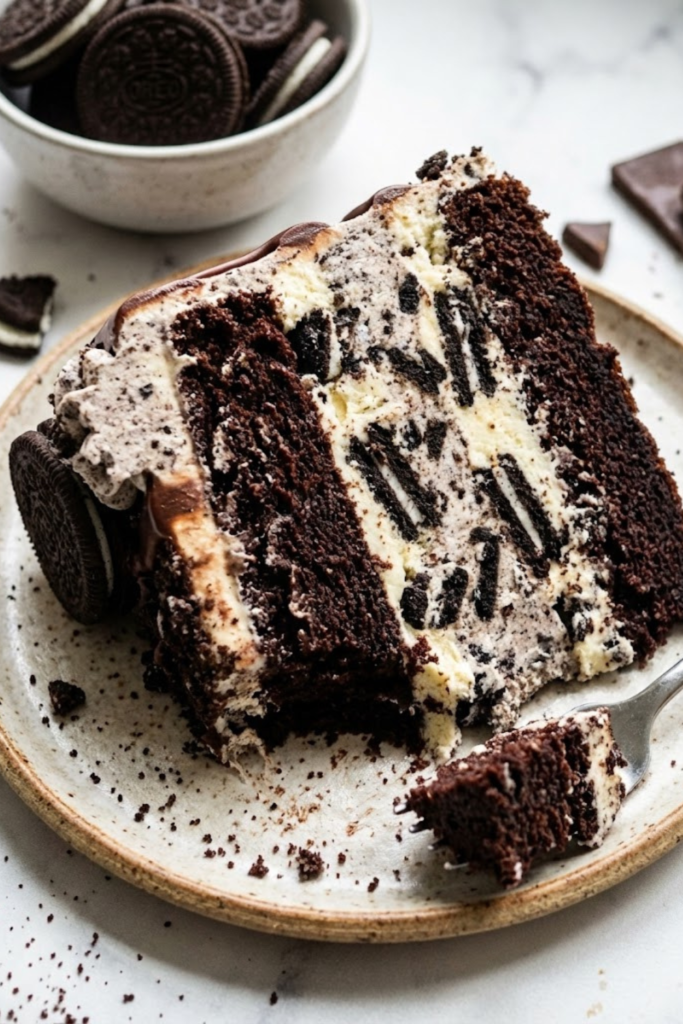
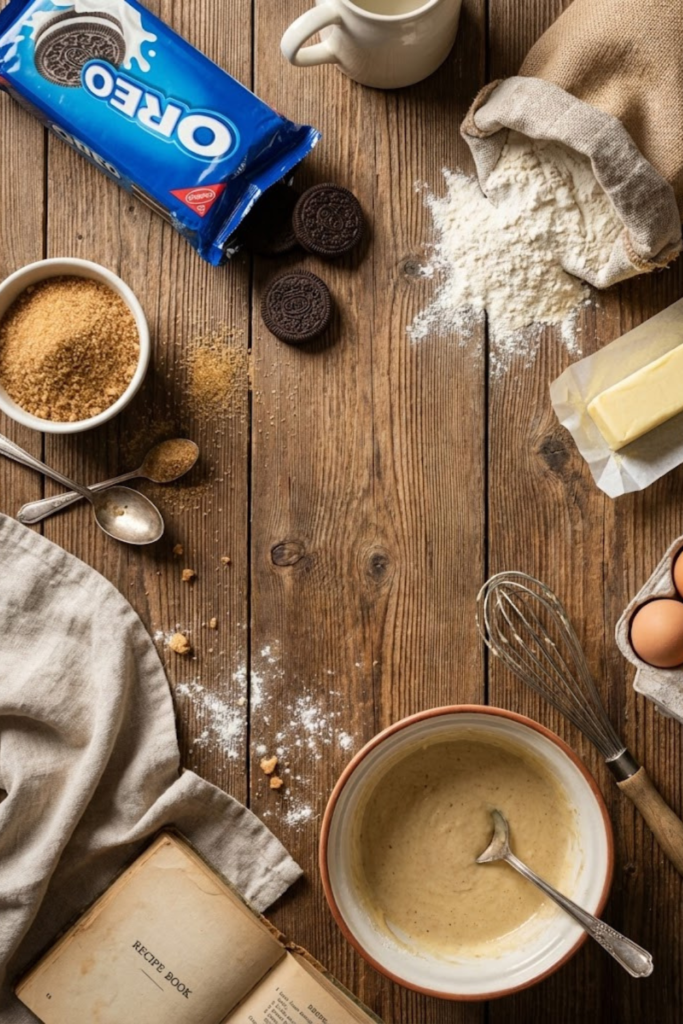
Gathering Your Ingredients for the Perfect Crumb
Honestly, I used to think I could just throw whatever was in my pantry into a bowl and pray for a miracle. Spoiler alert: that is not how baking works! I remember one time I tried to make a cookies cream cake oreo frosting recipe with cold butter and expired baking powder. The cake came out flat as a pancake and tasted like sad cardboard. It was a total disaster, and I ended up eating raw cookie dough out of frustration. But hey, we live and we learn, right?
Now, I’m pretty strict about my setup before I even preheat the oven. Getting your ducks in a row makes the whole process smoother and way less stressful.
Flour Power: Cake vs. All-Purpose
You might be tempted to just grab that bag of all-purpose flour sitting in the back of your cupboard. Don’t do it! For this cake, I swear by cake flour. It has less protein, which means less gluten forms when you mix the batter.
That is the secret to that soft, tender crumb we all want. If you only have all-purpose, you can hack it by taking out two tablespoons of flour per cup and adding two tablespoons of cornstarch. It’s not perfect, but it gets the job done in a pinch.
The Chocolate Situation
Let’s talk cocoa. Regular cocoa powder is fine, but if you want that deep, dark look that matches the cookies, you need Dutch-process cocoa. It is treated with an alkali to neutralize its acidity. This gives it a smoother flavor and that rich, dark color.
I once accidentally used natural cocoa powder with a recipe calling for Dutch-process, and the reaction with the baking soda was all wrong. The cake tasted soapy. Yeah, gross. Stick to the Dutch-process for this cookies cream cake oreo frosting masterpiece.
Temperature Matters (Like, A Lot)
This is the hill I will die on: room temperature ingredients are non-negotiable. If your buttermilk and butter are cold, they won’t emulsify with the sugar properly. You’ll end up with a clumpy, curdled batter that bakes unevenly.
I usually set my dairy out on the counter about an hour before I start. If I forget (which happens more than I’d like to admit), I cut the butter into small cubes to help it warm up faster. Just don’t microwave it! Melted butter changes the texture completely.
The Oreo Stash
Finally, the star of the show. You are going to need more Oreos than you think. I always buy the “Family Size” pack because, let’s be real, I’m going to eat at least five while I’m baking.
You need enough for the cake batter and the frosting. I made the mistake once of just buying a standard pack, and I ran out before I could finish the decoration. I had to run to the store covered in flour. Not my best look. Grab the big pack, save yourself the headache, and get ready to bake the best cookies cream cake oreo frosting cake ever.
Baking Moist Chocolate Oreo Cake Layers
I used to think that baking was a race to the finish line. I’d crank my stand mixer up to the highest speed and just blast through the recipe because I wanted to eat cake now. Big mistake.
I ended up with chocolate sponges that were tough enough to build a retaining wall with. It was honestly embarrassing to serve them to friends. Learning to slow down and treat the batter gently changed everything for my baking game.
The Magic of the Creaming Method
You really gotta start by beating your butter and sugar together until they look pale and fluffy. This usually takes about 3 to 5 minutes on medium speed. Do not skimp on this time!
This step drives air bubbles into the fat, which acts as a natural leavener. If you rush this, your cake layers will turn out dense and heavy. Trust me, I’ve tried to cut corners here and it never ends well.
Once you start adding eggs, do it one at a time. Scrape down the bowl constantly. If you don’t, you’ll find pockets of unmixed butter at the bottom later, which is super annoying.
Easy Does It With the Flour
When it’s time to add the dry ingredients and the buttermilk, turn that mixer down to low. We are just trying to combine things, not beat them into submission.
I like to alternate between the flour mixture and the buttermilk, starting and ending with the flour. This prevents the gluten from overdeveloping. Overdeveloped gluten equals a rubbery cake, and nobody wants that.
folding in the Good Stuff
Here is where I usually mess up if I’m not paying attention. Put the mixer away for this part. You need to fold in the crushed Oreos by hand using a rubber spatula.
If you use the mixer, you will crush the cookies into dust and the whole batter will turn a weird, unappetizing grey color. We want nice, distinct chunks of cookie in there. Be gentle, like you’re tucking the cookies into bed.
Pan Prep is a Lifesaver
I can’t tell you how many times I’ve had a beautiful cake stick to the bottom of the pan. It is heartbreaking. I used to just grease and flour the pans, but it’s not foolproof.
Now, I always use parchment paper rounds in the bottom of my cake pans. You can buy them pre-cut or just trace your pan on a sheet of parchment and cut it out. It guarantees the cake pops right out without falling apart.
The Oven Situation
Ovens are notorious liars. My oven tells me it’s at 350°F, but my internal thermometer says it’s actually 325°F. If you bake this at the wrong temp, the rise will be all wonky.
Invest in a cheap oven thermometer so you know exactly what’s going on in there. And whatever you do, don’t open the oven door to peek until the timer is almost up! The rush of cold air can cause the cake to sink in the middle.
The Hardest Part: Waiting
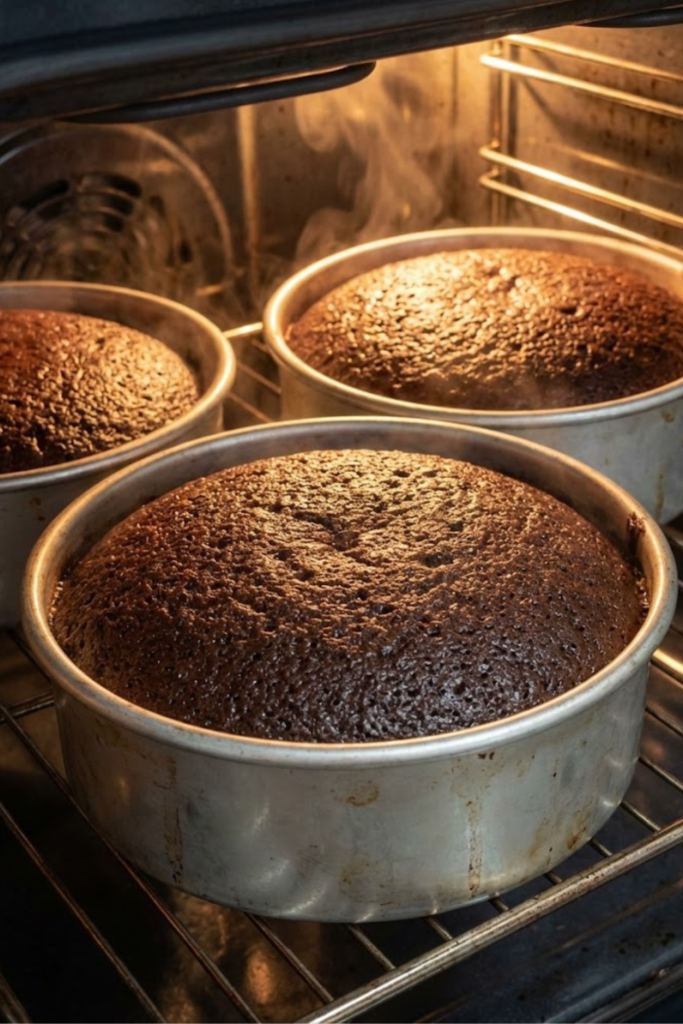
Once the cakes are baked, you have to let them cool completely. I know, it smells amazing and you want to assemble it immediately. But if you put the cookies cream cake oreo frosting on warm cake layers, it will slide right off.
I once watched a top layer slide off a warm cake and splatter onto the kitchen floor in slow motion. I might have cried a little bit. Let them cool in the pan for 10 minutes, then flip them onto a wire rack to finish cooling.
Patience is key here. If you are in a rush, pop the layers in the fridge for a bit to speed things up. It makes them easier to handle anyway.
Whipping Up the Velvety Oreo Buttercream
I used to think frosting was just the stuff you slap on top to hide the burnt edges of a cake. Boy, was I wrong. The first time I tried to make a proper cookies cream cake oreo frosting, I ended up with a gritty, grey sludge that tasted like pure butter and disappointment. I didn’t sift my sugar, and I definitely didn’t crush my cookies enough.
It clogged my piping tip immediately. I spent twenty minutes trying to poke a toothpick through the nozzle while my husband laughed at me from the living room. It was frustrating, to say the least. But through all those failures, I’ve learned a few tricks that make this process way easier.
Getting the Butter Just Right
The temperature of your butter is everything here. If it is too cold, you will get lumps that refuse to mix in. If it is too melted, your frosting will be a soupy mess that slides right off the cake.
I aim for what I call “cool room temp.” You should be able to press your finger into the stick and leave a dent, but it shouldn’t feel greasy. I usually take my unsalted butter out of the fridge about 45 minutes before I start.
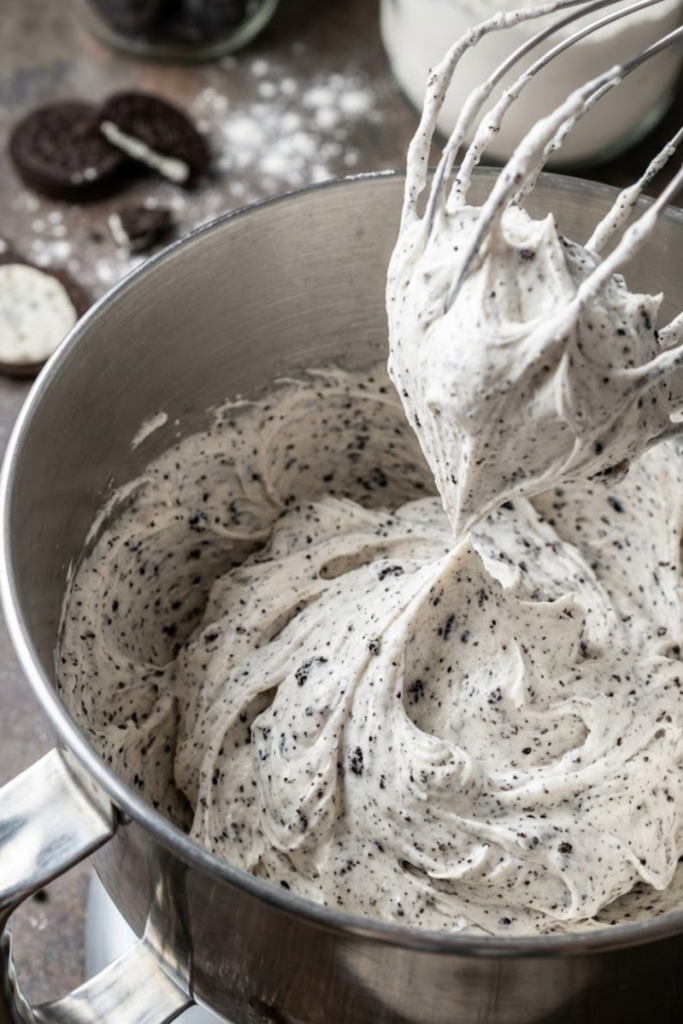
Throw it in your stand mixer with the paddle attachment and beat it for a good 5 minutes. Seriously, set a timer. You want it to look pale, almost white. This aeration makes the buttercream light and fluffy instead of heavy and dense.
The Powdered Sugar Storm
Okay, I hate sifting. It’s messy, it’s boring, and my hand always cramps up. But you have to do it.
If you skip this step, you are guaranteed to have little balls of sugar in your frosting. I learned this the hard way when a friend asked why my frosting was “crunchy.” Talk about mortifying.
Add the powdered sugar slowly, about a half cup at a time, with the mixer on the lowest speed. If you turn it up too high, you will disappear into a cloud of white dust. I’ve had to wipe sugar off my kitchen cabinets more times than I can count.
The Oreo Dust Situation
Here is the most critical part for this cookies cream cake oreo frosting. You cannot just smash the cookies in a bag with a rolling pin. Well, you can, but don’t come crying to me when your piping bag gets stuck.
You need those cookies to be fine dust. I throw mine in a food processor and pulse them until there are zero large chunks left. It should look like black sand.
If you don’t have a food processor, you can use a blender or really go to town with a rolling pin, but be thorough. Sift the cookie crumbs if you plan on using a fine piping tip. It sounds like overkill, but it saves so much headache later.
Bringing It All Together
Once the sugar and butter are happy, it’s time to add the heavy whipping cream. This is what gives the frosting that luxurious, ice-cream-like texture. Add it one tablespoon at a time.
Beat it on high speed for another 3 minutes. It should look creamy and voluminous. Finally, fold in your cookie dust by hand or on the lowest speed.
Don’t forget a pinch of salt and a splash of vanilla extract! It cuts through the sweetness so you don’t feel like your teeth are rotting out. Now, try not to eat it all straight from the bowl.
Assembly and Decoration Techniques
Okay, real talk. This is the part of the process where I usually start sweating. You spend all this time baking perfect layers and making that fluffy frosting, and now you have to build the thing without it toppling over.
I actually cried on my kitchen floor once because my layers slid apart five minutes before guests arrived. It looked like the Leaning Tower of Pisa, but made of chocolate and sadness. I tried to stick it back together with toothpicks, but the damage was done. Since that catastrophe, I’ve learned that structure is everything.
Leveling Up (Literally)
Do not try to stack domed cakes! It won’t work. The layers will wobble, and your cookies cream cake oreo frosting will squish out the sides.
I used to just guess and slice the top off with a steak knife. It was always crooked. Now, I use a long serrated bread knife. The trick is to get down on eye level with the cake.
Spin the cake turntable slowly while you gently saw back and forth. You want a flat, even surface. Those scraps you cut off? Those are the chef’s tax. Dip them in a little leftover frosting and enjoy your life.
The Magic of the Crumb Coat
If you take nothing else away from this, please listen to this advice: do not skip the crumb coat. I used to think it was a waste of time. “I’ll just put a thick layer on and cover the crumbs,” I told myself.
Wrong. You end up with black cake crumbs streaking through your beautiful white frosting. It looks messy.
The crumb coat is just a thin layer of frosting that seals everything in. Apply it, smooth it out as best you can with an offset spatula, and then—this is crucial—put the cake in the fridge.
Let it chill for at least 20 minutes. The frosting needs to get hard. Once it sets, you can apply your final coat of cookies cream cake oreo frosting without pulling up any loose bits of cake.
Piping Like a Pro (Or Faking It)
You don’t need to be a pastry chef to make this look good. My hands shake way too much for intricate designs. I rely on the “messy but on purpose” look.
I use a large open star tip for piping. You just squeeze, stop, and pull up. It creates these cute little dollops that look super professional.
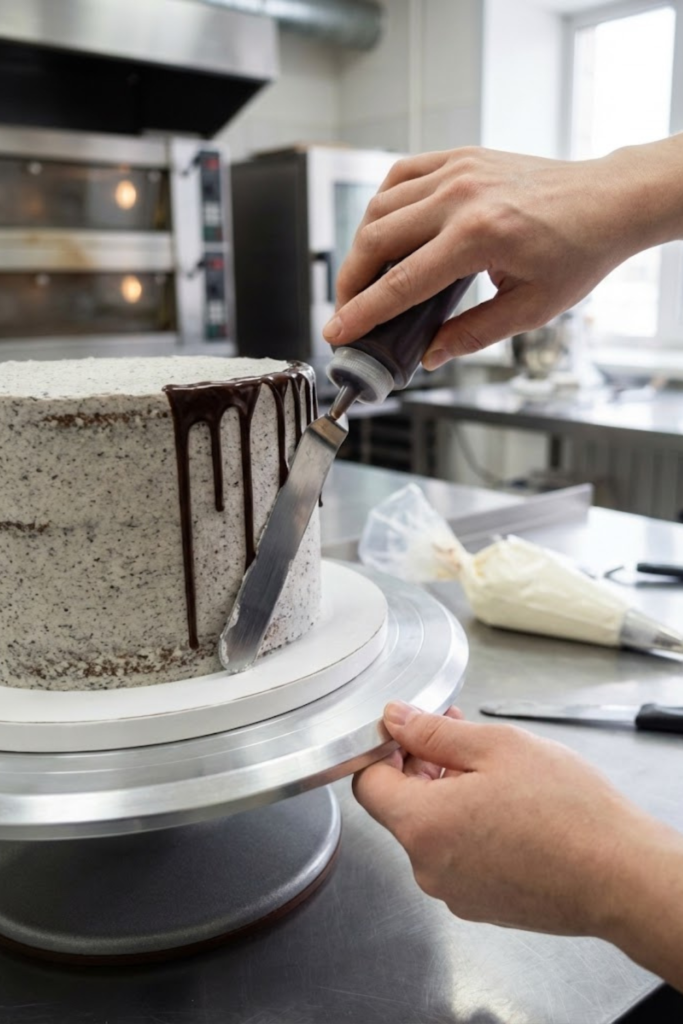
If you are feeling fancy, a chocolate ganache drip is a game changer. But be careful with the temperature! If the ganache is too hot, it will melt your buttercream and create a river of destruction.
I test a single drip on the back of the cake first. If it runs all the way to the bottom board, it’s too thin. Let it cool for another five minutes.
Storing Your Masterpiece
Once your masterpiece is done, you gotta protect it. I have a cake carrier that I guard with my life.
If you are making this ahead of time, keep it in the fridge. The butter in the frosting keeps it stable when cold. But please, bring it back to room temperature before serving!
Cold cake tastes dry, and cold buttercream feels like eating a stick of butter. I usually take it out about two hours before the party starts. That way, it’s soft, creamy, and ready to devour.
There you have it—a total showstopper that tastes just like your favorite childhood cookie, but in fluffy cake form! Making this cookies cream cake oreo frosting might leave your kitchen a little messy, but that first bite is worth every single crumb . I hope you have a blast making this. If this recipe made your mouth water, don’t forget to share it on Pinterest so you can find it for your next celebration!