Have you ever wondered what it would taste like to bite directly into a cloud? I’m willing to bet it tastes exactly like this cake! Seriously, I am obsessed. There is something magical about the combination of airy sponge and rich coconut flavor that just transports you straight to a beach chair.
“Life is short, eat the cake,” they say—and with over 18 pounds of coconut products consumed by the average enthusiast annually (okay, maybe that’s just me), we are doing our part! This isn’t just a dessert; it’s a mood. Whether you are baking for a summer potluck or just need a pick-me-up on a rainy Tuesday, this coconut cloud cake is your ticket to paradise. Let’s get baking!

Gathering Ingredients for the Fluffiest Texture
Look, I have to be real with you for a second. The first time I tried to make a Coconut Cloud Cake, it was a total disaster. I grabbed whatever was in my pantry, thinking I could just swap things out willy-nilly. Spoiler alert: I baked a brick. It was heavy, dense, and honestly, a little embarrassing to serve.
I was so frustrated! But after crying over spilled milk (literally), I learned that for this specific recipe, the ingredients you choose are everything. It’s not just about flavor; it’s about the science of baking. So, let me save you the headache and walk you through what you actually need.
Why Flour Choice Is Non-Negotiable
Here is where I messed up big time. I used all-purpose flour because, well, it says “all-purpose,” right? Wrong. For a true Coconut Cloud Cake, you really need cake flour.
Cake flour has a lower protein content, usually around 7-9%, compared to the 10-12% in all-purpose flour. Less protein means less gluten forms when you mix the batter. Less gluten means a tender, airy crumb rather than a chewy bread-like texture. If you want that melt-in-the-mouth feel, don’t skip this.
The Canned vs. Carton Debate
This is a hill I am willing to die on. Do not use the coconut milk found in the refrigerated dairy aisle! That stuff is great for your morning smoothie, but it is way too watery for baking.
You need canned, full-fat coconut milk. The fat content is what gives this cake its moisture and richness without weighing it down. I once used the “lite” version to save calories, and the cake ended up dry and crumbly. Just treat yourself to the full-fat version; it makes a huge difference.
Extracts and Flavorings
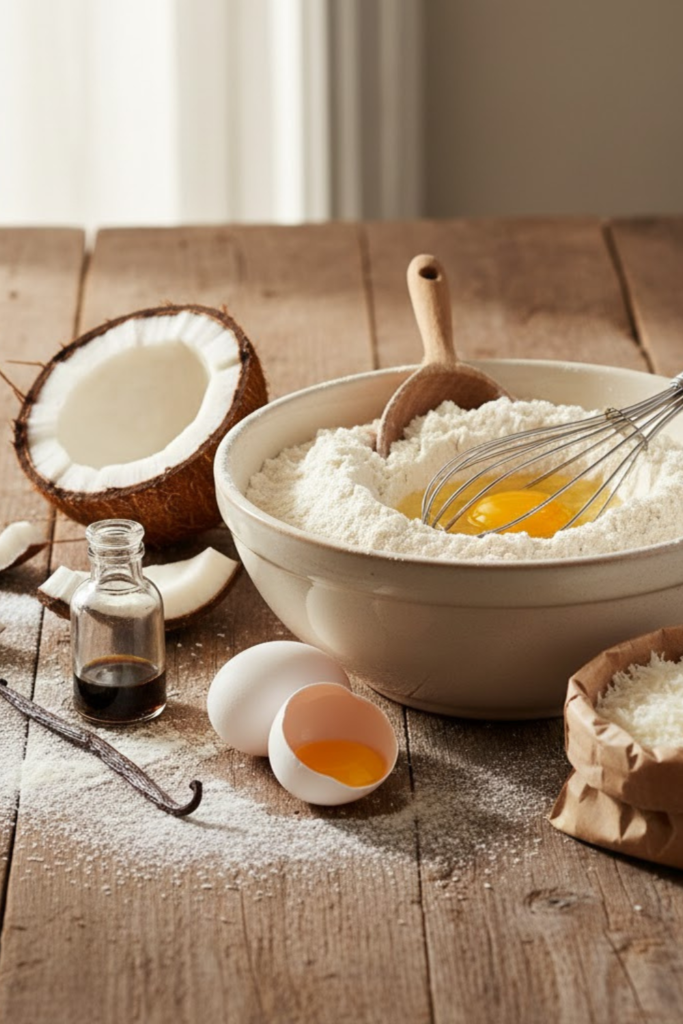
Vanilla is great, but we are going for a tropical vibe here. I like to use a high-quality coconut extract paired with vanilla bean paste. The vanilla rounds out the flavor, while the coconut extract gives it that punch.
Be careful though! Coconut extract is strong. If you add too much, your beautiful cake will taste like suntan lotion. Trust me, I’ve been there, and it is not tasty. A teaspoon is usually plenty to get that vibe without going overboard.
The Egg White Situation
Finally, let’s talk about eggs. This recipe relies on whipped egg whites for volume, kind of like a sponge cake. Cold eggs are easier to separate, but room-temperature egg whites whip up much better.
My trick? I separate them while they are cold, then let the whites sit on the counter for about 30 minutes while I prep everything else. It’s a small step, but it helps get those stiff peaks we need for the structure.
Mixing the Batter: The Secret to Airiness
I have a confession to make. I used to think mixing cake batter was just about muscle power. I’d turn my mixer up to high speed and let it rip until everything looked smooth. I thought I was being efficient. But when I pulled my first Coconut Cloud Cake out of the oven, it had the texture of a rubber tire. It was tragic. I literally bounced a piece off the counter to show my husband.
That’s when I learned that air is an ingredient, just like flour or sugar. If you beat it up too much, you lose all the fluffiness. So, grab your spatula, and let’s do this right.
The Creaming Conundrum
You might have heard of the “reverse creaming” method, where you mix fat into dry ingredients first. Honestly? I skipped that for this recipe. It made the crumb a bit too velvety and dense for what I wanted. For a true “cloud” texture, we need to stick to the traditional method of creaming butter and sugar until it’s pale and fluffy.
And I mean pale. It should look almost white. This process punches millions of tiny air bubbles into the fat. These bubbles are going to expand in the oven. If you rush this step, your Coconut Cloud Cake will fall flat. I usually set a timer for 5 minutes because I get impatient and try to stop too early.
Whipping the Meringue
Here is the game-changer. We are going to whip those egg whites we separated earlier. You want “stiff peaks.” This means when you pull the whisk up, the egg whites stand straight up like a little mountain and don’t flop over.
I remember once I got distracted by a phone call and over-whipped them until they looked dry and chunky. Disaster. Keep an eye on them! You want them glossy and stiff, not dry. This meringue is what gives the cake its lift without making it heavy.
The Art of the Fold
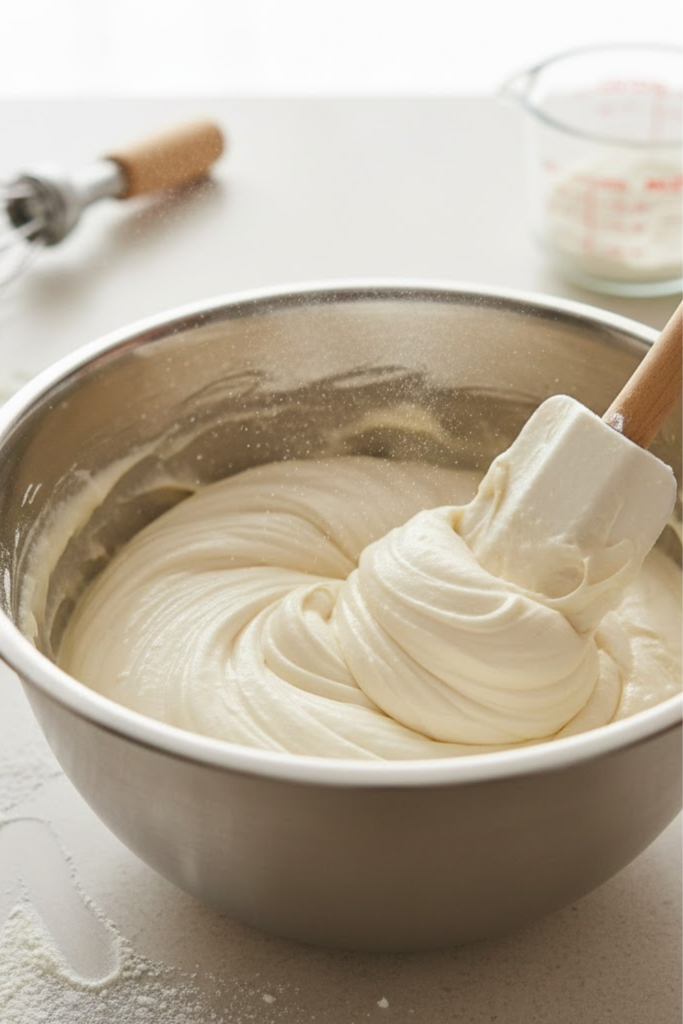
Okay, put the mixer away. Seriously, unplug it. The final step requires a gentle hand. You are going to “fold” the egg whites and the shredded coconut into the batter.
Imagine you are tucking the batter into bed. Cut through the middle with a rubber spatula, scrape the bottom, and flip it over the top. Turn the bowl and repeat. It feels slow, and it can be frustrating when you just want to get it in the oven. But every aggressive stir pops those precious bubbles we worked so hard to create.
I usually add the shredded coconut right at the end. If you dump it in too early, it can weigh things down. Just fold until you don’t see streaks of white anymore. Then stop! Walk away. Your batter is ready, and it should look light, almost like a mousse.
Baking and Cooling Your Coconut Layers
I used to trust my oven dial implicitly. If I set it to 350°F, I assumed it was actually 350°F inside. Talk about being naive! I ruined so many cakes before I realized my oven was a total liar. It ran hot, and my poor Coconut Cloud Cake layers were turning into crispy, dark brown frisbees on the outside while staying raw in the middle.
It was heartbreaking to toss those ingredients in the trash. So, let’s talk about how to get that perfect golden bake without the drama .
The Oven Thermometer Is Your Best Friend
Here is the best five bucks you will ever spend: an oven thermometer. Seriously, buy one. Delicate white cakes are super sensitive to heat. If the temp is too high, the outside cooks too fast. If it’s too low, the cake won’t rise properly.
I hang mine right in the center of the rack. You’d be shocked at how much the temperature swings. Once I started monitoring the actual heat, my cakes went from “meh” to bakery-level. It’s a small tool, but it saves so much heartache .
Testing for Doneness
Okay, the timer goes off. Now what? Don’t just jab a toothpick in the center immediately. I like to look at the edges first. The cake should be pulling away slightly from the sides of the pan.
If it looks ready, I do the toothpick test. Stick it in the center. It should come out with a few moist crumbs attached, not wet batter. If it’s totally clean, you might have overbaked it slightly, but it’s probably salvageable. If it’s wet, give it another 2-3 minutes. But don’t open the door too often! You let all the heat out, and the cake could sink. I learned that lesson when my “soufflé” collapsed into a pancake .
The Patience of Cooling
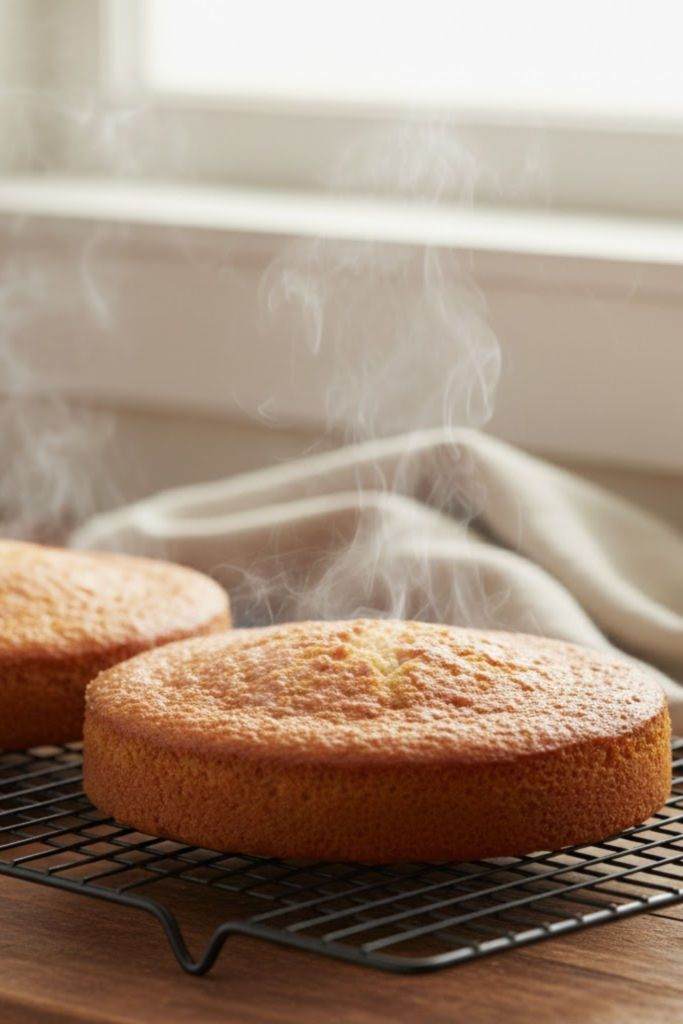
This is the hardest part for me. I want to frost and eat the cake now. But you have to let the layers cool in the pan for about 10 minutes. Then, flip them onto a wire rack to cool completely.
I once tried to frost a warm cake because I was running late for a party. The butter in the frosting melted instantly, and the layers slid off each other like a landslide. It was a disaster. The cake needs to be cool to the touch. If you feel even a hint of warmth, walk away. Go fold some laundry or something .
Flash Freezing for the Win
Here is a pro tip I wish I knew years ago. Once the layers are cool, wrap them in plastic wrap and stick them in the freezer for about 30 minutes. This is called “flash freezing.”
Chilled cake layers are so much easier to handle. They are firmer and don’t crumb as much when you are spreading the frosting. It makes the whole layer cake assembly process feel way less fragile. Plus, it locks in the moisture. Just don’t forget about them in there for a month, or they might get freezer burn .
Whipping Up the Dreamy Coconut Cream Frosting
I used to be a “more sugar is better” kind of baker. I’d dump bags of powdered sugar into a bowl with some butter and call it a day. The result? A frosting so sweet it made my teeth ache just looking at it. It totally overpowered the delicate flavor of the cake.
For this Coconut Cloud Cake, we need something that feels like a cloud, not a brick of sugar. I learned the hard way that the frosting needs to complement the sponge, not suffocate it. After a few failed experiments (and a very messy kitchen), I found the sweet spot.
Buttercream vs. Whipped Cream
This was a huge internal debate for me. Traditional American buttercream is sturdy, but it’s heavy. Whipped cream is light, but it can weep and melt if you look at it wrong. I remember bringing a whipped cream cake to a summer picnic once. By the time we cut it, it looked like a sad, melting puddle .
So, I compromise. I make a stabilized whipped cream using a bit of mascarpone cheese or cream cheese. It gives the frosting enough structure to hold up between the layers but keeps that airy texture we want. It’s tangy, creamy, and doesn’t taste like you’re eating a stick of butter.
The Toasting Trap
Toasting the coconut for the garnish seems easy, right? Wrong. Shredded coconut goes from “perfectly golden” to “burnt charcoal” in about 3.5 seconds. I can’t tell you how many trays of coconut I’ve had to toss because I got distracted by a text message.
Stand by the oven. Do not walk away. Do not check your phone. Stir it every minute. The smell of toasted coconut flakes is heavenly, but the smell of burnt coconut lingers in your house for days. Trust me on this one.
Finding the Flavor Balance
Here is a secret weapon that sounds weird but works: salt. You need a pinch of fine sea salt in your frosting . Coconut and sugar are both very sweet. Without salt, the frosting can feel one-dimensional.
I add the salt right at the beginning when whipping the cream. It cuts through the sweetness and makes the coconut flavor actually pop. It’s like the difference between watching TV in standard definition versus 4K.
Consistency Check
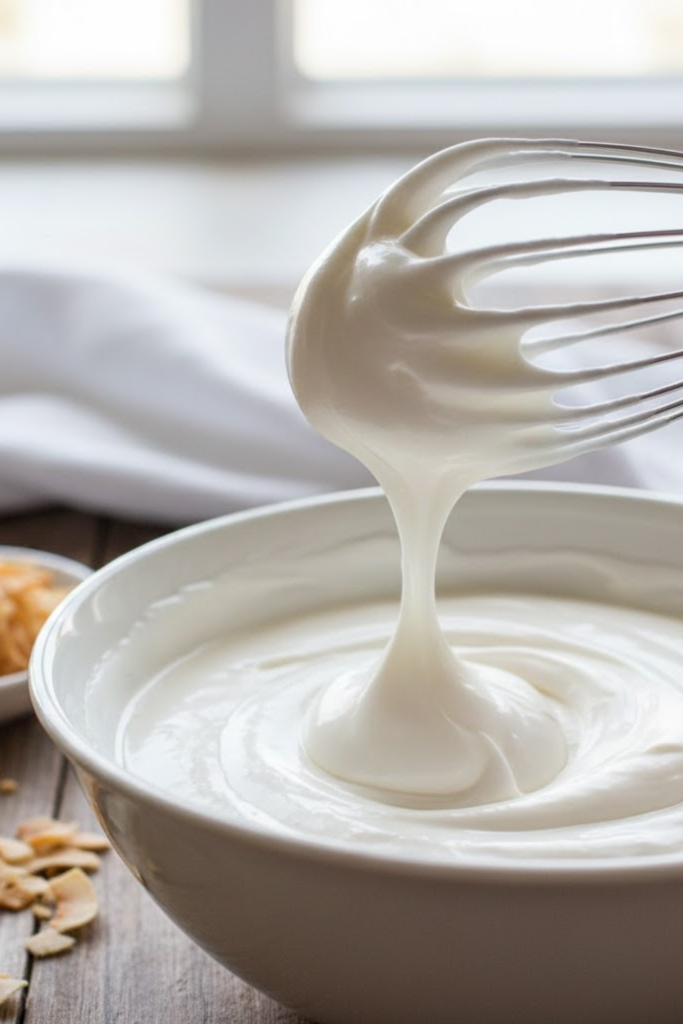
Getting the texture right is tricky. If you under-whip, it slides off the cake. If you over-whip, you basically make sweetened coconut butter. I’ve done both.
Stop the mixer when you see firm peaks that hold their shape but still look smooth. If it starts looking grainy or curdled, you’ve gone too far. If that happens, you can sometimes save it by folding in a little un-whipped cream by hand, but it’s a gamble. Better to stop early and finish by hand than to ruin the batch .
Assembling and Decorating Your Tropical Masterpiece
I used to think stacking a cake was the easy part. You just slap the layers together and cover them in frosting, right? Wrong. My first attempt at a layer cake looked more like the Leaning Tower of Pisa than a dessert. It was lopsided, bulging in the middle, and honestly, it looked like a toddler made it.
I remember driving to a potluck with that cake in the passenger seat. I hit one pothole, and the top layer literally slid off. It was devastating . I arrived with a deconstructed cake and a bruised ego. But after many messy attempts, I’ve learned that layer cake assembly is more about structure than art.
Leveling the Playing Field
First things first, you have to level your cakes. Most cakes come out of the oven with a little dome on top. If you try to stack rounded cakes, they will wobble.
I used to try to “fill in the gaps” with extra frosting. Bad idea. That just creates slippery pockets where the cake can slide. Get a long serrated knife and saw off the very top of the dome to make it flat. I usually eat these scraps immediately as a “chef’s tax.” It’s the best part of the job, honestly .
The Magic of the Crumb Coat
This step is annoying, but you cannot skip it. A crumb coat is a thin layer of frosting that traps all the loose crumbs. If you try to slather on all the frosting at once, you will pull up bits of cake.
I learned this the hard way when I made a cake for my sister. The white frosting was speckled with brown crumbs. It looked dirty and messy. Now, I apply a thin layer, then chill the cake for 20 minutes. It locks everything down so your final layer of frosting glides on perfectly smooth. It’s a total game-changer for cake decorating tips .
The Snowball Effect
Now for the fun part: the coconut! We want this Coconut Cloud Cake to look like a big, fluffy snowball. I take handfuls of sweetened shredded coconut and gently press them into the sides and top of the freshly frosted cake.
Warning: this is messy. You will find coconut on your floor, in your shoes, and probably in your hair for days. I usually put the cake stand presentation on a large baking sheet to catch the fallout. It saves me from sweeping the kitchen five times in one hour. But the result is so worth it; it covers up any imperfections in your frosting instantly .
Serving a Slice of Paradise
When you cut into this, use a sharp, warm knife. Run it under hot water and wipe it dry between cuts. It gives you those clean, bakery-style slices.
I love serving this with fresh fruit to cut the sweetness. Slices of mango or pineapple look beautiful on the plate and really drive home those tropical dessert ideas. It turns a simple cake into a fancy plated dessert. My friends always ask if I bought it from a bakery, and that is the best feeling in the world .
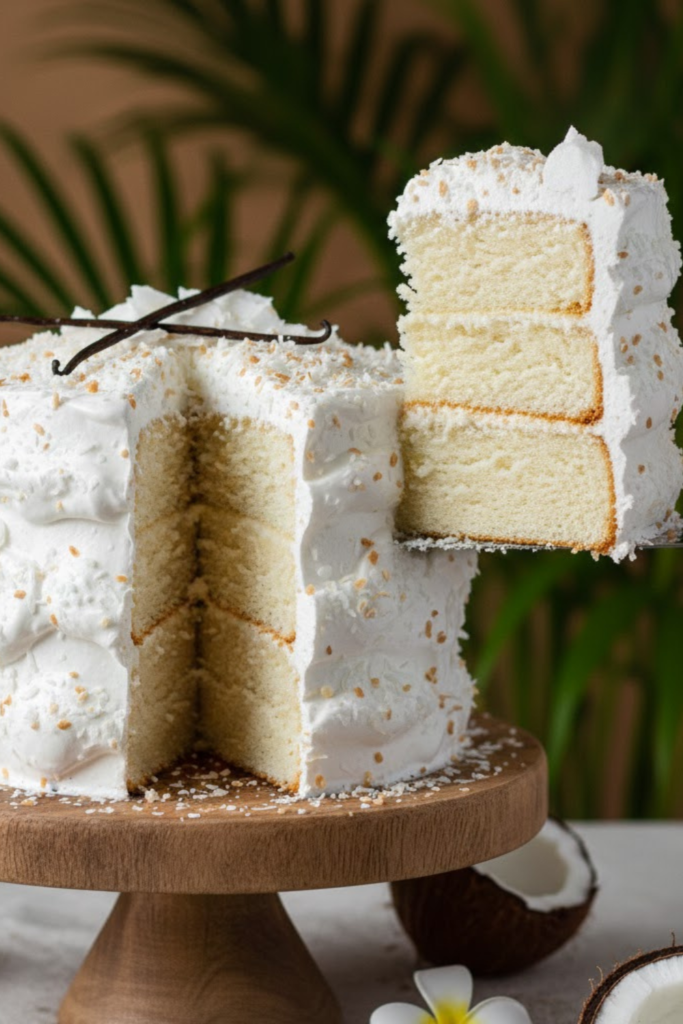
There you have it—a Coconut Cloud Cake that is as fun to make as it is to eat! This recipe truly captures the essence of a tropical getaway in every bite. I hope you enjoy the fluffy texture and creamy sweetness as much as my family does.
I know baking from scratch can feel a little intimidating, especially with all the talk of egg whites and folding. But trust me, once you take that first bite of airy sponge and rich coconut cream, you’ll know it was worth every second of effort. It’s not just a cake; it’s a little slice of heaven on a plate.
If you tried this recipe, let me know in the comments below! I’d love to hear how it turned out for you. And if you want to save this little piece of paradise for later, please pin this recipe to your Dessert board on Pinterest! It helps more people find the recipe and keeps it safe for whenever the craving strikes .