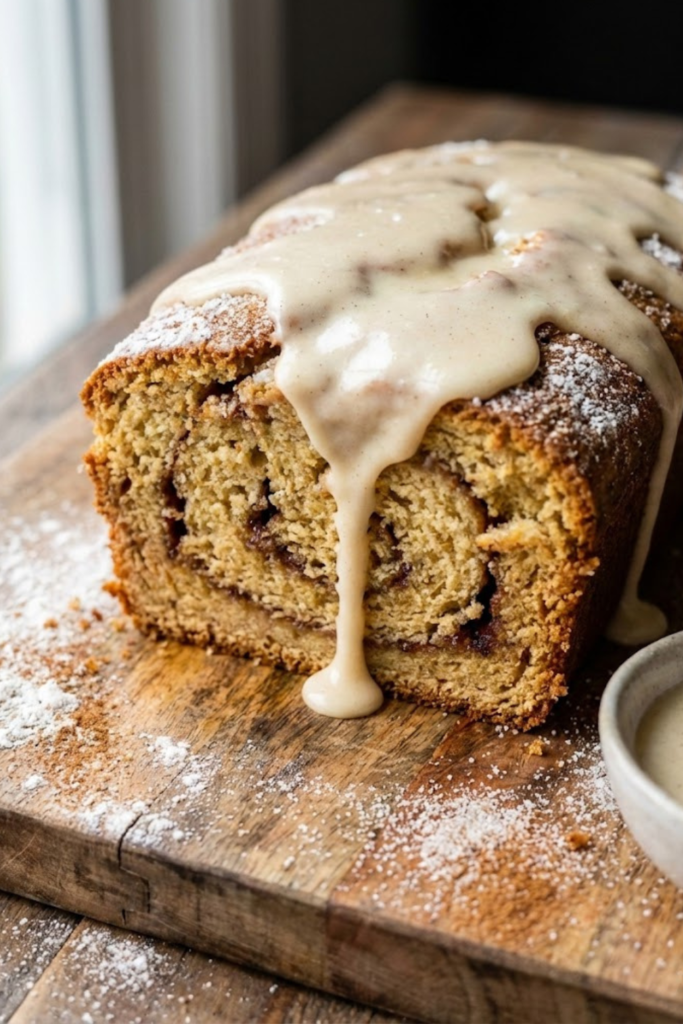
Honest talk: sometimes you just need a cinnamon roll, like, right now. But who has the patience for yeast to rise, punch it down, and rise again? Not me! That is exactly why this cinnamon roll quick bread is going to change your life. I remember the first time I tried to make traditional rolls for a Sunday brunch; I woke up at 5 AM and was still stressed. Never again! This recipe gives you all that gooey, sugary bliss with the ease of a simple loaf cake. It is moist, sweet, and absolutely perfect for your morning coffee. Let’s get baking!
Why You Will Love This No-Yeast Alternative
I have a bit of a confession to make. Even after years of baking for my family, yeast still kind of scares me. There is nothing more heartbreaking than waiting three hours for dough to rise, only to find out the water was two degrees too hot and you’ve killed the yeast. It’s a total flop. That is exactly why I am obsessed with this no yeast cinnamon bread. It takes all the stress out of the equation. You get that warm, spicy aroma filling your kitchen without the anxiety of wondering if your dough is actually going to grow.
Ditching the Yeast Anxiety
If you have ever been intimidated by traditional baking, this recipe is your new best friend. We are swapping out the biological leavening (yeast) for chemical leavening, which is just a fancy way of saying baking powder.
I remember the first time I tried to make “real” cinnamon rolls for a PTO meeting. I woke up at 4:00 AM. 4:00 AM! By the time they came out of the oven, they were hard as rocks because I had overworked the dough. I cried. With this quick bread recipe, you literally just mix the wet stuff, mix the dry stuff, and shove it in the oven. It is made to be simple. No kneading, no proofing, and definitely no crying.
The Cake vs. Bread Debate
You need to know what you are getting into here. Since we aren’t using yeast, the texture is different than a sticky bun you’d get at the mall. Think of it more like a really moist coffee cake or a dense pound cake.
- It’s sturdy: You can slice it thick and toast it without it falling apart.
- It’s moist: Thanks to the sour cream (we’ll get to that later), it doesn’t dry out instantly.
- It’s sweet: The sugar is in the batter, not just the swirl.
I actually prefer this texture for my morning coffee because it feels like a treat, but it’s substantial enough to keep me full until lunch.
Pantry Staples to the Rescue
Another reason this recipe saves my life on a regular basis is that I never have to run to the store for it. I’m terrible at meal planning. Half the time, I look in the cupboard and realize I forgot to buy the specialty ingredients.
But this loaf? It uses stuff you probably have right now. Flour, sugar, eggs, milk. If you don’t have buttermilk, you can just sour some regular milk with vinegar. I’ve done that dozens of times and nobody ever notices the difference. It is super versatile like that.
Perfect for Any Schedule
The best part is the speed. Quick bread recipes are called “quick” for a reason. You can decide you want this at 8:00 AM and be eating it by 9:15 AM.
I’ve made this for unexpected guests, for sick neighbors, and honestly, just because it was a rainy Tuesday and I wanted the house to smell like cinnamon. It works for breakfast, it works for dessert, and it is definitely a hit as a midnight snack. Just don’t blame me if you end up eating the whole loaf in one sitting—it happens to the best of us!

Essential Ingredients for the Perfect Loaf
Okay, let’s raid the pantry. I am a firm believer that you don’t need fancy, expensive stuff to make something that tastes like a million bucks. This cinnamon roll quick bread is proof of that. However, the specific ingredients you choose—and how you treat them—make a massive difference in whether your loaf comes out like a soft pillow or a brick. I learned this the hard way after trying to swap skim milk for buttermilk once. Spoiler alert: it was a disaster.
The Dry Stuff: Flour and Leavening
First things first, let’s talk about flour. You want standard all-purpose flour here. I once tried this with bread flour because I ran out of the regular stuff, and it came out way too chewy. We want tender, not tough.
Also, please measure your flour correctly! This is the hill I will die on. If you just shove your measuring cup into the bag and scoop, you are packing the flour down. You could end up with 20% more flour than the recipe calls for, which dries everything out.
- My tip: Fluff the flour in the bag with a spoon, scoop it gently into the cup, and level it off with a knife.
Don’t forget the baking powder. Since we aren’t using yeast, this is the engine that makes the bread rise. Check the expiration date on the bottom of the can. I used expired baking powder last Thanksgiving and served a flat, dense cake. It was embarrassing.
The Secret to Moisture: Sour Cream
This is the MVP of the recipe. Sour cream or a thick Greek yogurt adds fat and acidity. That acidity breaks down the gluten strands in the flour, which makes the crumb super tender.
I have tried using regular milk instead, but the batter ends up too runny and the swirl sinks to the bottom. Stick to the thick stuff. And honestly? Use the full-fat version. We are making cinnamon bread, not a salad. The fat adds richness that you just can’t fake with the low-fat options.
The Sweet Swirl Components
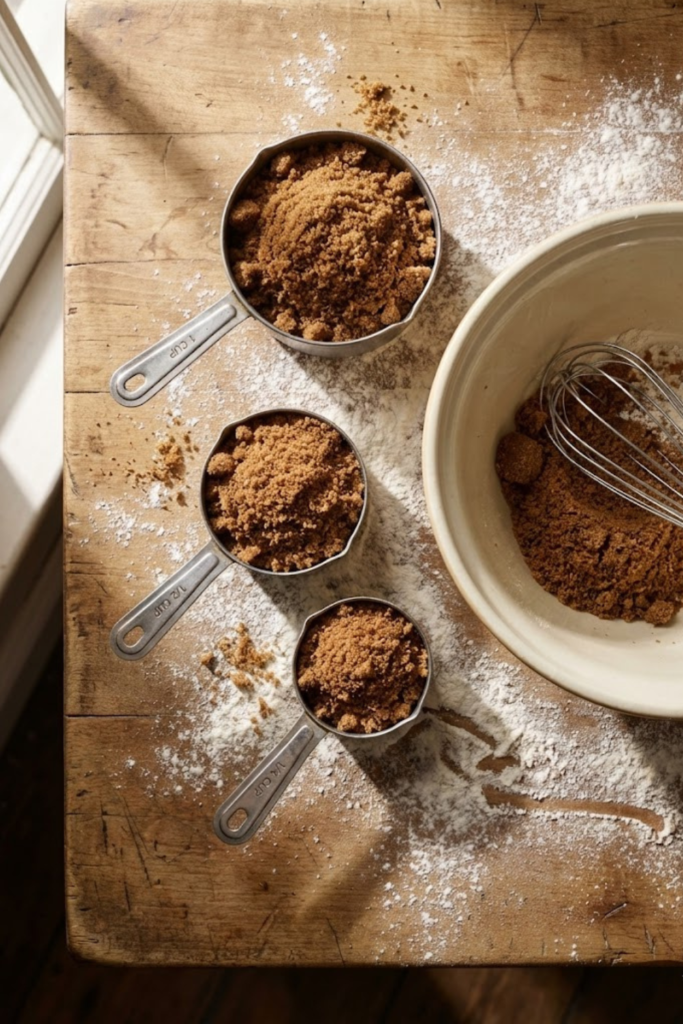
For that gooey center, you need brown sugar. You can use white sugar if you are in a pinch, but you will miss out on that deep, caramel-like flavor. Brown sugar has molasses in it, which keeps the filling moist and sticky.
I like to mix my cinnamon and sugar in a small bowl before I even start the batter. If you try to sprinkle them separately, you get weird clumps of plain cinnamon that are super bitter. Trust me, nobody wants a mouthful of dry cinnamon powder.
Temperature Matters
Here is a mistake I used to make constantly: using cold eggs and butter. When you mix cold eggs into melted butter, the butter seizes up and gets chunky. It looks gross, like curdled milk.
- Set your eggs and sour cream on the counter about 30 minutes before you start.
- If you forget (which I do 90% of the time), just put the eggs in a bowl of warm water for 5 minutes.
Using room temperature ingredients helps everything mix together smoothly, creating a nice, uniform emulsion. That’s just a fancy word for a smooth batter that bakes evenly!
How to Make the Cinnamon Sugar Swirl
This is the fun part. The swirl is the absolute soul of this recipe. If you don’t get this right, you just have a plain vanilla cake, and nobody got out of bed for that. I used to think the swirl was just about dumping cinnamon and sugar into the middle, but there is actually a bit of an art to it. My first few attempts looked more like a muddy mess than a pretty bakery loaf.
Mixing the Filling
First, you need to make your cinnamon sugar filling. I like my cinnamon flavor to punch me in the face, so I go heavy on the spice.
- The Ratio: I usually do about a half-cup of brown sugar to a full tablespoon of cinnamon.
- If you skimp on the cinnamon, the sugar just tastes sweet and flat.
I also like to add a tiny pinch of flour to the sugar mixture. I learned this trick from a friend who runs a bakery. The flour helps the sugar grip the batter so it doesn’t melt into a giant, sticky puddle at the bottom of your loaf pan. It keeps the swirl right where you want it.
The Layering Game
Don’t just pour all the batter in at once! I made that mistake when I was rushing once, and I tried to push the sugar down from the top. It didn’t work.
You want to think of this like a lasagna.
- Pour about half of your batter into the greased pan and smooth it out.
- Sprinkle almost all of your brown sugar cinnamon swirl mixture over that layer. Cover it completely.
- Top it with the rest of the batter.
- Sprinkle the last little bit of sugar on top for a crunchy crust.
Getting that second layer of batter on top of the loose sugar can be tricky. It tends to slide around. I usually dollop spoonfuls of batter all over the sugar first, then gently connect the dots with a spatula.
The Knife Swirl Technique
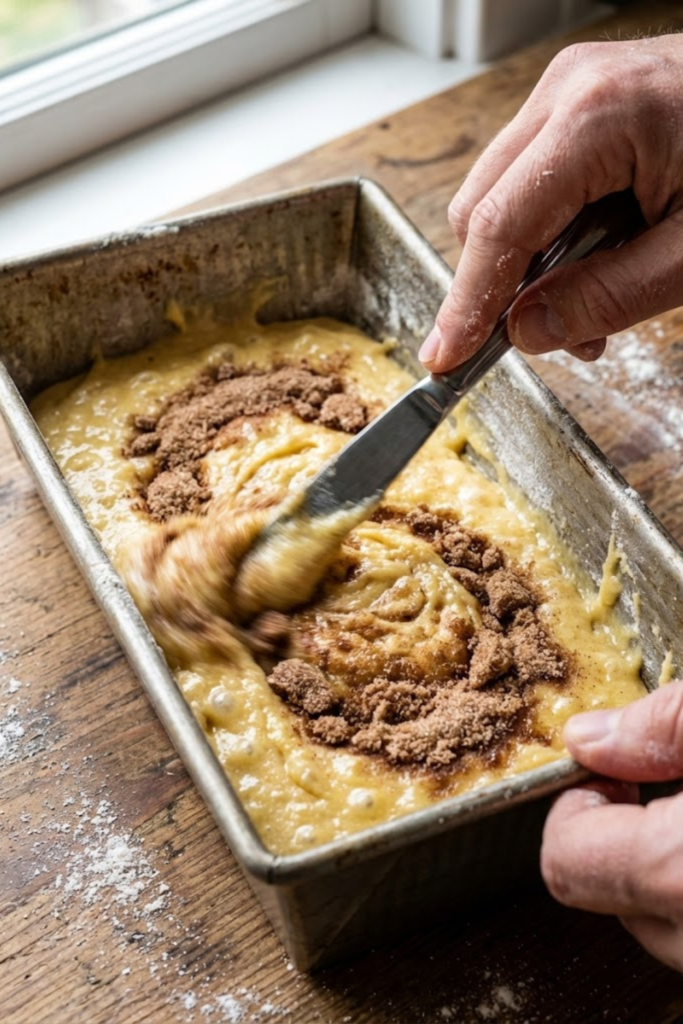
Now, grab a butter knife. This is where you create that beautiful marble effect. Plunge the knife into the batter until you hit the bottom of the pan.
Drag the knife in a zigzag pattern from one end of the pan to the other. Do it once or twice. Stop there.
- The Mistake: If you keep swirling, you will just mix the cinnamon into the batter completely. You want distinct ribbons of sugar, not a light brown cake.
- Less is definitely more here. It’s hard to resist playing with it, but put the knife down!
Preventing the “Flying Crust”
Have you ever sliced into a loaf and the top half separates from the bottom half? We call that the “flying crust” in my house. It happens because the sugar creates a solid barrier that prevents the top batter from sticking to the bottom batter.
To fix this, I take my knife and do a few up-and-down plunging motions after I do the swirl. This drags a little bit of the batter through the sugar layer, acting like a staple to hold the two halves together. It saves you from having your slice fall apart right when you try to butter it. It’s a total game-changer.
Baking Tips for a Moist Interior
I have baked my fair share of bricks. I’m not even joking. There was a time when I made a loaf so dry that my husband asked if he should put butter on it or use it as a doorstop. It was humiliating. Baking is weird because you can follow the instructions perfectly and still end up with something that tastes like cardboard. Over the years, I’ve learned that the difference between a moist pound cake texture and a dry sponge usually comes down to a few tiny habits.
The Danger of Overmixing
If you take only one thing away from this post, let it be this: do not beat the batter to death.
Here is the science-y part made simple. Flour contains gluten. When you mix flour with wet ingredients, that gluten starts to form strands. Think of them like rubber bands.
- If you mix a little bit, the strands are soft and tender.
- If you mix a lot, those rubber bands get tight and tough.
When I add my dry ingredients to the wet ones, I use a spatula and fold it gently. I stop mixing the second I don’t see any more white streaks of flour. If there are a few tiny lumps left, that is totally fine! They will bake out. Overmixing batter is the number one reason quick bread recipes turn out tough. Treat the batter like it’s fragile.
Finding the Right Spot
Your oven has hot spots. It just does. If you put your loaf pan on the very top rack, the heat rising from the bottom will scorch the top of your bread before the middle is even warm.
I always stick to the center rack. It gives the air a chance to circulate evenly around the pan.
- Also, check your oven temperature. My oven runs about 15 degrees hot.
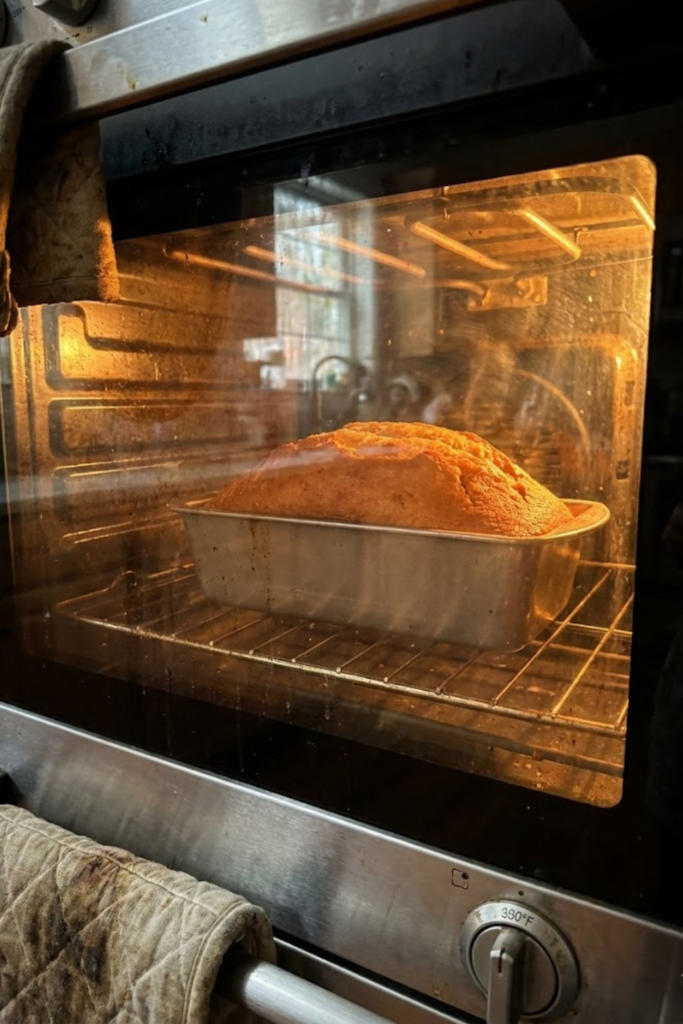
- I bought a cheap oven thermometer to hang inside, and it saved my baking life. If your recipe says 350°F and your oven is actually at 370°F, you’re going to have a burnt crust and a raw center.
The Truth About the Toothpick
We all know the “toothpick test,” right? Stick it in, pull it out. But here is where people mess up. They wait until the toothpick comes out bone dry.
If the toothpick is clean, your bread is already overbaked. As the loaf cools on the counter, it continues to cook from the residual heat.
- What you want: A toothpick with a few moist crumbs clinging to it.
- What you don’t want: Wet, shiny batter (too raw) or a perfectly clean stick (too dry).
Mastering toothpick test baking is really about confidence. It feels wrong to pull it out when it’s not “clean,” but trust me, it’s the secret to that soft texture.
The Foil Trick
Since this loaf has a lot of sugar and fat, it likes to get brown. Fast. Sometimes, I look through the oven window after 25 minutes and the top looks golden and delicious. But I know for a fact the inside is still liquid goo.
Don’t panic. Just grab a piece of aluminum foil and loosely tent it over the top of the pan. This shields the crust from the direct heat so it doesn’t burn, but it lets the heat keep cooking the middle. I usually have to do this for the last 15 or 20 minutes of baking. It’s a lifesaver.
The Crowning Glory: Cream Cheese Glaze
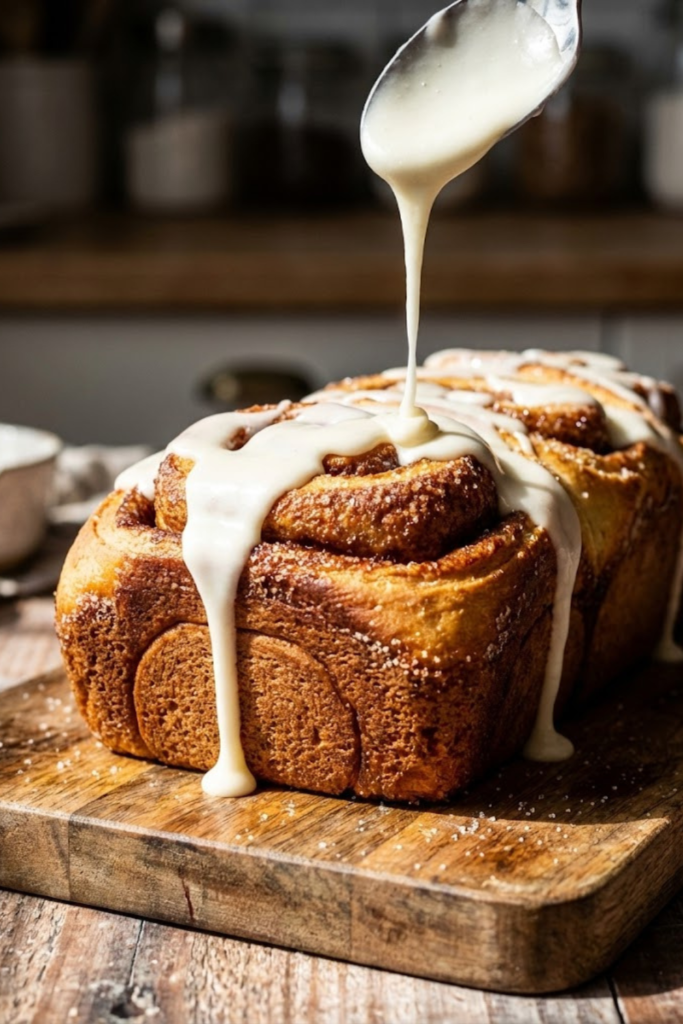
Let’s be real for a second. The bread itself is good, but the cream cheese glaze recipe is why we are all here. It is the stuff that makes you lick your fingers when nobody is looking. I used to think the glaze was just an afterthought, but I realized it actually serves a very important purpose. It covers up all the ugly parts of the loaf! If your top got a little too brown or cracked weirdly, the glaze hides the evidence perfectly. It’s my favorite baking hack for when things don’t go exactly as planned.
The Lump Situation
You have to use softened cream cheese. I cannot stress this enough. I was lazy once—I admit it—and tried to beat cold cream cheese directly from the fridge with powdered sugar.
It was a total disaster. The mixture looked like lumpy cottage cheese, and no matter how hard I whisked, the little white chunks wouldn’t go away. I ended up putting it in the microwave out of frustration, which just made it a hot, oily soup.
- My rule: Leave the cream cheese brick on the counter for at least an hour before you start.
- If you can press your finger into it easily, it is ready to go.
Finding Your Consistency
Some people like a thin vanilla icing drizzle that runs down the sides, while others want a thick frosting. I am definitely on team “thick frosting.” I want that layer to be substantial.
When you are mixing the powdered sugar and cream cheese, add the milk very slowly. I’m talking one teaspoon at a time.
- It is shockingly easy to ruin the texture.
- One second it’s too thick, you add a splash of milk, and suddenly it’s water.
- You can always add more liquid, but you can’t take it out once it’s in there.
Also, sift your powdered sugar if you have the patience. I usually skip this step because I hate washing the sifter, but if your sugar is clumpy, you will notice it in the final texture.
The Patience Test
This is the hardest part of the entire recipe. You have just pulled this amazing smelling cinnamon roll quick bread out of the oven. You want to glaze it immediately and eat it. Don’t do it.
If you pour the glaze on a hot loaf, it will melt. It turns into a clear, sticky syrup that soaks into the bread and disappears. It still tastes good, but you lose that beautiful white topping.
- Let the loaf cool for at least 30 to 45 minutes.
- It can still be warm, but it shouldn’t be hot.
Flavor Tweaks
While the classic glaze is just cream cheese, sugar, and milk, I like to get fancy sometimes. I always add a pinch of salt to cut the sweetness. It makes the cream cheese taste tangier.
If you aren’t a fan of cream cheese (which is wild to me, but I respect it), you can swap it out. A simple maple glaze made with maple syrup and powdered sugar is a fantastic sweet bread glaze alternative. It gives it a more autumnal vibe. But honestly, nothing beats the tang of cream cheese against the spice of the cinnamon. It is a match made in heaven.
Storage and Freezing Instructions
Let’s be honest for a second. Will you actually have leftovers? In my house, a loaf of this usually lasts about 24 hours before my teenagers devour it like locusts. But, on the off chance that you have some self-control (teach me your ways), you need to store this properly. There is nothing worse than going for a slice of cake the next day and finding out it has turned into a crouton. I’ve lost too many good loaves to bad storage, so let’s avoid that.
The Counter vs. The Fridge
Here is the dilemma. This bread has a cream cheese glaze. technically, food safety rules say you should refrigerate cream cheese. However, I am going to tell you what I actually do.
- If my kitchen is cool (like in winter), I leave it on the counter in an airtight container for up to 2 days.
- If it is the middle of July and my kitchen is a sauna, it goes in the fridge.
Here is the catch: the refrigerator is where moisture goes to die. Refrigerating bread accelerates the staling process. It makes the texture dense and kind of gummy. So, if you do put it in the fridge, just know you are trading texture for food safety. It’s a tradeoff.
The Freezer is Your Friend
I used to think freezing bread would ruin it. I was wrong. Freezing quick breads is actually the best way to keep them fresh if you aren’t going to eat them immediately.
My biggest mistake? Freezing the entire loaf solid.
- I did this once and then wanted just one slice for breakfast.
- I had to thaw the whole massive loaf on the counter for hours, slice it, and then—you guessed it—I couldn’t refreeze it.
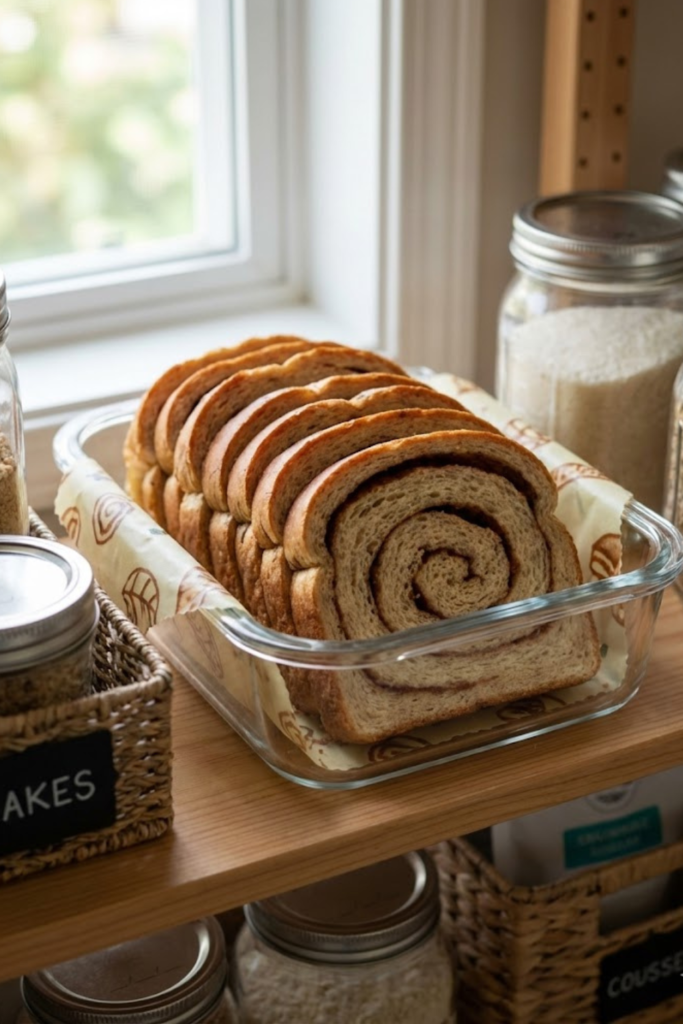
Now, I slice the bread first. I wrap each slice individually in plastic wrap and then toss them all into a big freezer bag. It is a bit of work on the front end, but it is worth it. You can just grab a slice whenever the craving hits.
Parchment Paper Hacks
If you are too lazy to wrap slices individually (I feel you), use parchment paper. Cut little squares of paper and stick them between the slices before you freeze them.
- This prevents the slices from freezing together into one giant, inseparable brick.
- You can just snap one off without needing a chisel.
Bringing it Back to Life
Please, I beg you, do not eat this cold from the fridge. The butter in the batter solidifies when it’s cold, making the bread taste dry even if it isn’t. Reheating cinnamon bread is the secret to making leftovers taste fresh.
I pop a slice in the microwave for exactly 15 seconds. That is the magic number.
- It warms the crumb just enough to make it soft again.
- It slightly melts the glaze so it gets gooey and sticky.
If you want a little crunch, the toaster oven is great, but be careful. The sugar in the swirl can burn really fast. I scorched a slice last week because I walked away to pour coffee. Keep an eye on it!
Final Thoughts on Your New Favorite Treat
There you have it—your ticket to cinnamon bliss without the hassle of wrestling with yeast. This cinnamon roll quick bread has honestly saved me on so many weekends where I wanted something special but just didn’t have the energy for a three-hour baking project. It is the best of both worlds. You get the smell, the taste, and the gooey sugar, but you can actually sleep in a little bit. That is a win in my book.
The Sunday Morning Solution
I used to think that “from scratch” meant it had to be complicated. If I wasn’t sweating over a mixer, was I even really baking? This recipe taught me to get over myself. Baking should be about comfort, not stress.
When you pull this loaf out of the oven, and the whole house smells like a bakery, nobody is going to care that you used baking powder instead of yeast. They are just going to care that you fed them something amazing. I make this for my family at least once a month now. It has become our little tradition to eat warm slices while we act lazy on the couch.
Don’t Be Afraid to Experiment
Once you nail the basic recipe, you can start having fun with it. I have ruined a few batches trying to get too creative, but I have also found some winners.
- Add Nuts: I love throwing a handful of chopped pecans into the swirl mixture. It gives it a nice crunch.
- Fruit: One time, I added diced apples to the batter. It made the bread super moist, almost too moist, so if you do that, bake it for an extra 10 minutes.
- ** Raisins:** My kids hate raisins, so I am forbidden from using them, but if you like them, soak them in warm water first so they don’t burn.
Just remember, baking is a science, but it’s also an experiment. If it flops, you still have warm sugar and dough. It’s hard to be mad at that.
Share the Love (and the Calories)
I usually end up giving half the loaf away to my neighbor because if I keep it in the house, I will eat the entire thing. It’s dangerous. But seriously, food is meant to be shared.
If you make this cinnamon roll quick bread, I want to see it! I want to see your messy swirls and your dripping glaze.
- Did your sugar sink to the bottom? (Mine does half the time).
- Did you burn the crust? (Scrape it off, nobody will know).
Pin this recipe on Pinterest so you don’t lose it! It really helps me out when you share these recipes, and it helps you find it again when the craving hits at 10 PM on a Tuesday. Happy baking, friends!