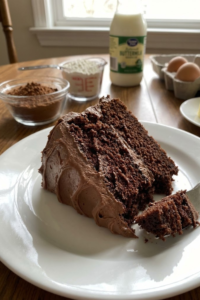
I still remember the first time I bit into a slice of caramel toffee crunch cake—it was at a chaotic family potluck, and the room practically went silent. There is something magical about the combination of buttery sponge and the sharp, sweet snap of toffee that just stops you in your tracks! If you’ve been searching for a dessert that balances creamy textures with an addictive crunch, you have found your holy grail.
This isn’t just another cake; it is a labor of love that pays off in every single forkful. We are going to dive deep into creating a moist base, a rich sauce that you’ll want to eat with a spoon, and that signature crunch that makes this recipe unforgettable. Let’s get baking!
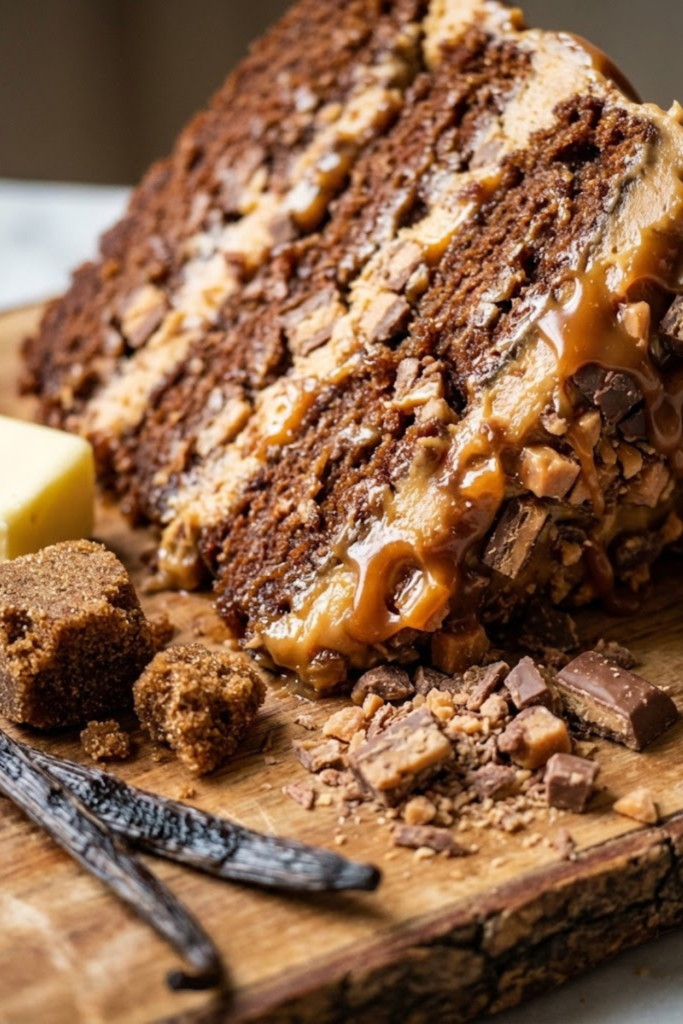
Gathering the Essential Ingredients for Toffee Perfection
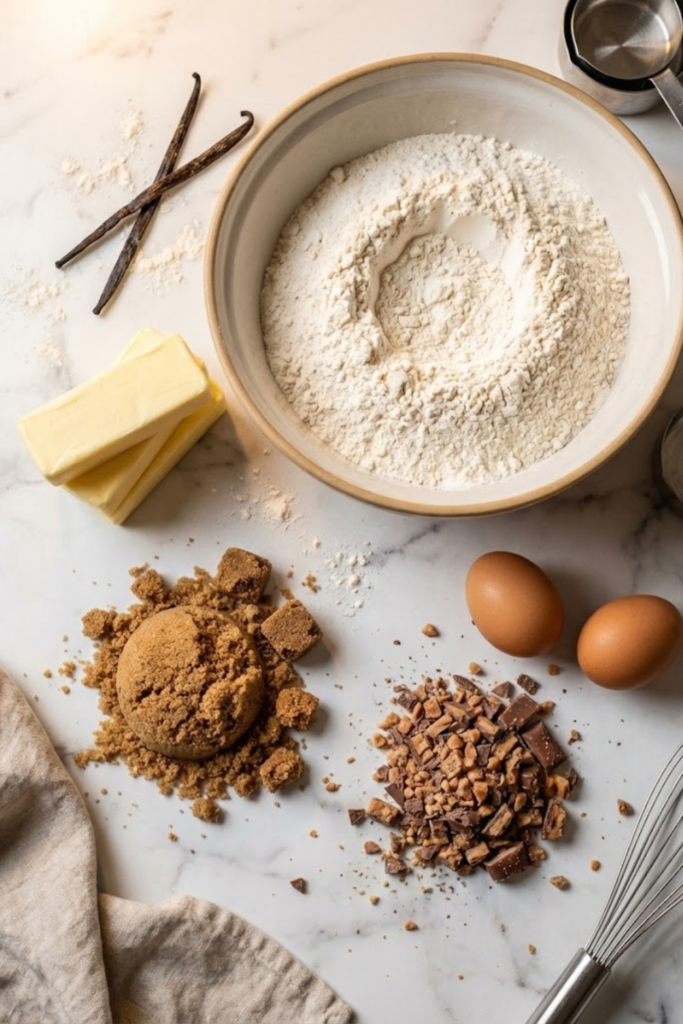
Look, I’ve been there. You want to jump straight to the mixing part because, let’s be honest, that’s when the kitchen starts smelling amazing. But if you mess up the grocery run, this Caramel Toffee Crunch Cake isn’t gonna turn out right. I remember one time, about five years ago, I tried to cut corners by using margarine instead of real butter for the sponge. Total disaster. The cake tasted like plastic and didn’t rise, it was a hot mess. So, grab your shopping list and let’s get this right the first time.
The Flour Debate: Cake vs. All-Purpose
First off, let’s talk flour. A lot of folks think all flour is created equal, but that is just not true. For the softest crumb in your Caramel Toffee Crunch Cake, you really want to grab cake flour. It has a lower protein content (usually around 7-9%) compared to all-purpose flour, which means less gluten forms. Less gluten means a tender, melt-in-your-mouth texture.
If you absolutely can’t find it, you can make a substitute by removing two tablespoons of all-purpose flour from each cup and replacing it with cornstarch. Sifting is non-negotiable here! It aerates the flour and gets rid of those annoying lumps. I’ve skipped sifting before when I was in a rush, and I ended up with weird flour pockets in my slice. Not appetizing.
Temperature Matters: The Butter Situation
This is where I see most people trip up. Your butter needs to be at room temperature, which is actually cooler than you think—around 65°F to 70°F. If it’s glistening or melting, it’s too warm.
If the butter is too soft, it won’t hold the air bubbles when you cream it with the sugar. Those air bubbles are what give the cake its lift. I usually take my butter out of the fridge about an hour before I start. If you press it with your finger, it should make an indent but not slide right through.
The Sticky Stuff: Caramel and Crunch
For the caramel sauce, do not try to save calories here. You need heavy cream with at least 36% milk fat. I once tried using half-and-half because it was all I had in the fridge, and the sauce was runny and sad. It never thickened up properly.
For the toffee bits, you have two choices. You can buy a bag of Heath bits (the “Bits ‘o Brickle” kind are great), or you can smash up some candy bars yourself. I honestly prefer smashing them myself. It’s therapeutic after a long week! plus, you get those big, uneven chunks that look so rustic on top of the Caramel Toffee Crunch Cake. Just make sure you aren’t using the ones with chocolate coating for the inside of the batter, or they might sink.
Dairy Considerations
Lastly, check your sour cream or buttermilk. Full-fat is the way to go. The acid in these ingredients tenderizes the gluten and adds a subtle tang that cuts through the sweetness of the caramel. It’s a game changer for moisture. If you use low-fat, the cake can dry out faster than a sidewalk in July.
Baking the Moist Vanilla Sponge Base
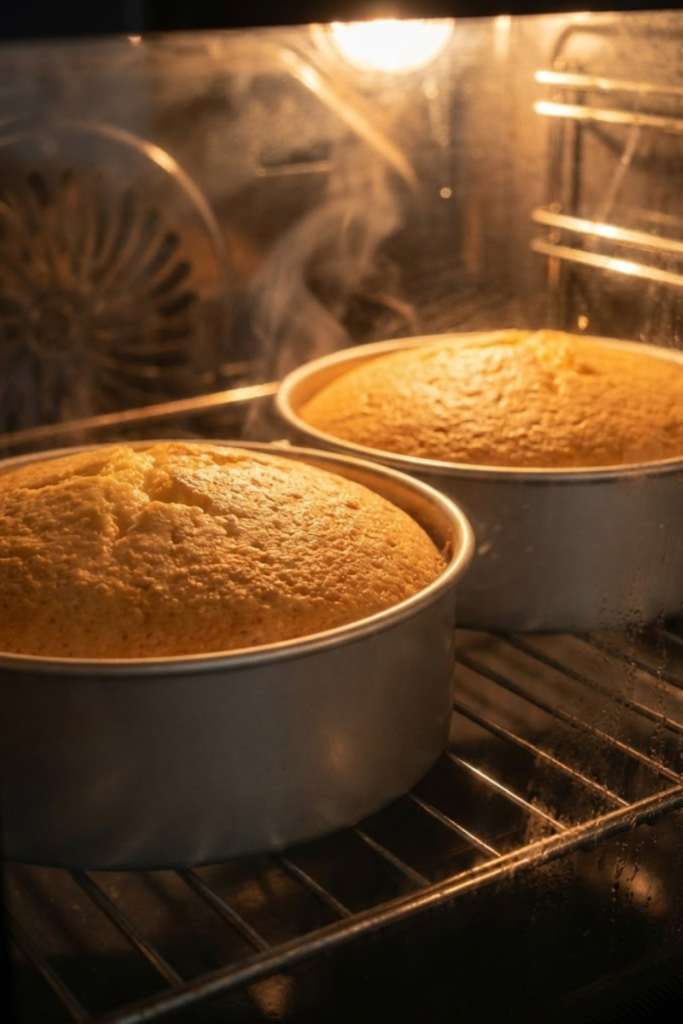
I used to think that baking a cake was just about throwing ingredients into a bowl and hoping for the best. Boy, was I wrong. I remember the first time I tried to make a sponge for this Caramel Toffee Crunch Cake, I rushed the process. The result? A dense, rubbery puck that tasted okay but felt like chewing on a yoga mat. It was heartbreaking to toss those expensive ingredients in the bin, but lesson learned. Baking is science, and the order of operations really matters.
The Creaming Method: Patience is Key
If there is one hill I will die on, it’s the creaming method. You need to beat your room temperature butter and sugar together until the mixture is pale yellow and fluffy. And when I say beat it, I mean let that mixer run for a solid 4 to 5 minutes.
Most people stop after two minutes when it looks “mixed.” Don’t do that. You are physically forcing air into the butter, which expands in the oven to give you that lift. If you skimp on this step, your Caramel Toffee Crunch Cake will be heavy. I usually set a timer on my phone and walk away to clean a dish, otherwise, I get impatient and stop too soon.
The delicate Dance of Wet and Dry
Once your eggs are added (one at a time, please!), you have to change your strategy. This is where things can go wrong fast. When you add the flour, you are activating the gluten.
If you mix it like you did the butter, you’ll end up with bread, not cake. I always use the alternating method: add a third of the flour mixture, then half the milk, then flour, then the rest of the milk, and finish with flour. Start and end with dry ingredients.
And here is the trick: mix on the lowest speed possible just until the flour disappears. Sometimes I even finish mixing by hand with a spatula just to be safe. It’s better to have a tiny streak of flour left than to overwork the batter.
Pan Prep and the Lying Oven
Let’s talk about your oven. It’s probably lying to you. My oven beeps to say it’s at 350°F, but my internal thermometer reads 325°F. It drives me nuts!
If you bake this cake at the wrong temperature, it might rise too fast and crack, or sink in the middle. Get an oven thermometer; they are cheap and save so much heartache.
Also, prepare your pans like you’re preparing for battle. I don’t care how “non-stick” your pan claims to be. Butter the pan, put a round of parchment paper in the bottom, and butter the paper.
I learned this the hard way when half my cake stuck to the bottom of the pan right before a party. There were tears. Now, I never skip the parchment. It guarantees your layers come out perfect every single time.
Mastering the Homemade Salted Caramel Sauce
I’ll be honest with you—making caramel used to scare the living daylights out of me. The first time I tried it, I turned my back for exactly five seconds to yell at my dog, and suddenly my kitchen was filled with black smoke. The smell of burnt sugar lingers for days, trust me. But for this Caramel Toffee Crunch Cake, you can’t just buy that jarred stuff from the ice cream aisle. It’s too thin and honestly tastes mostly like corn syrup. We need the real deal here: rich, buttery, and slightly dangerous liquid gold.
Once you get the hang of it, making caramel is actually pretty empowering. You just need to respect the heat.
Melting the Sugar: Don’t Touch That Spoon!
Here is the golden rule of caramel making: put the spoon down. Seriously, don’t even look at it. When you are melting the sugar for your Caramel Toffee Crunch Cake, stirring is the enemy. If you stir, the sugar crystals clump together and you end up with a gritty sauce instead of a smooth one.
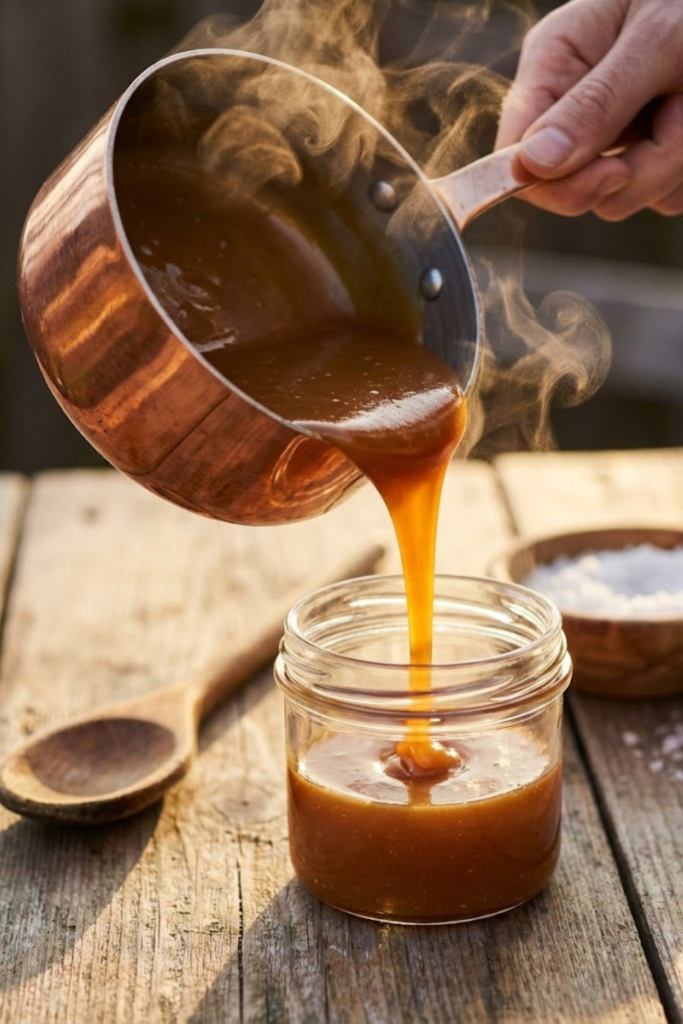
I just put the sugar and water in my heavy-bottomed saucepan over medium heat and let it do its thing. If I see it melting unevenly, I gently swirl the pan. That’s it. You have to watch it like a hawk, though. It goes from “clear bubbles” to “perfect amber” to “burnt nightmare” in the blink of an eye. I usually aim for a deep amber color, like an old copper penny. That’s where the flavor lives.
stopping the Crystallization
One pesky little problem with homemade caramel is crystallization. This happens when a stray sugar crystal on the side of the pot falls back into the melted sugar, causing a chain reaction. It ruins the whole batch.
To stop this, I keep a cup of water and a pastry brush next to the stove. As the sugar boils, I periodically brush down the sides of the pot with the wet brush. It washes any rogue crystals back down before they can cause trouble. I learned this trick from a baking class I took years ago, and I haven’t had a grainy batch since. It’s a small step, but it saves you from having to start all over again.
The Danger Zone: Adding the Butter and Cream
Okay, this is the part where you need to be brave. Once your sugar is that beautiful amber color, you’re going to turn off the heat and add your butter and heavy cream. Prepare yourself, because it is going to bubble up violently.
I’m talking steam, hissing, and expanding to three times its volume. It looks like a science experiment gone wrong. Do not panic! Just grab your whisk—now you can use it—and whisk furiously. The mixture might seize up for a second and look chunky, but just keep whisking. The residual heat will melt everything back into a smooth, glossy sauce. If you hesitate here, the separation can be hard to fix.
getting the Right Consistency
After the drama of the bubbling subsides, stir in your sea salt and vanilla. Now comes the hardest part: waiting. You cannot pour hot caramel onto a cake. It will melt your buttercream and slide right off, taking your toffee bits with it.
I usually make the sauce for my Caramel Toffee Crunch Cake a few hours ahead of time. It needs to cool completely to room temperature. It will thicken significantly as it cools. You want it to be like the consistency of thick honey—pourable, but slow. If it gets too stiff, you can zap it in the microwave for ten seconds, but generally, room temp is the sweet spot for that perfect drip down the side of the cake.
Creating the Signature Toffee Crunch Topping
I have a confession to make: I used to be a texture hater. I wanted my desserts soft, uniform, and predictable. But then I served a “soft” cake at a dinner party, and my best friend asked if she needed a straw to eat it. Ouch . That moment changed my baking life. For this Caramel Toffee Crunch Cake, the topping isn’t just a garnish; it is the main event. Without that snap, you are just eating a lot of sugar and flour.
The Art of the Crush: Step Away from the Blender
Here is a mistake I see all the time. People buy beautiful hard toffee or make homemade honeycomb, and then they pulse it in a food processor. Don’t do it! . I tried this once thinking I was being efficient, and I ended up with toffee dust. It dissolved into the frosting instantly and looked like dirty snow.
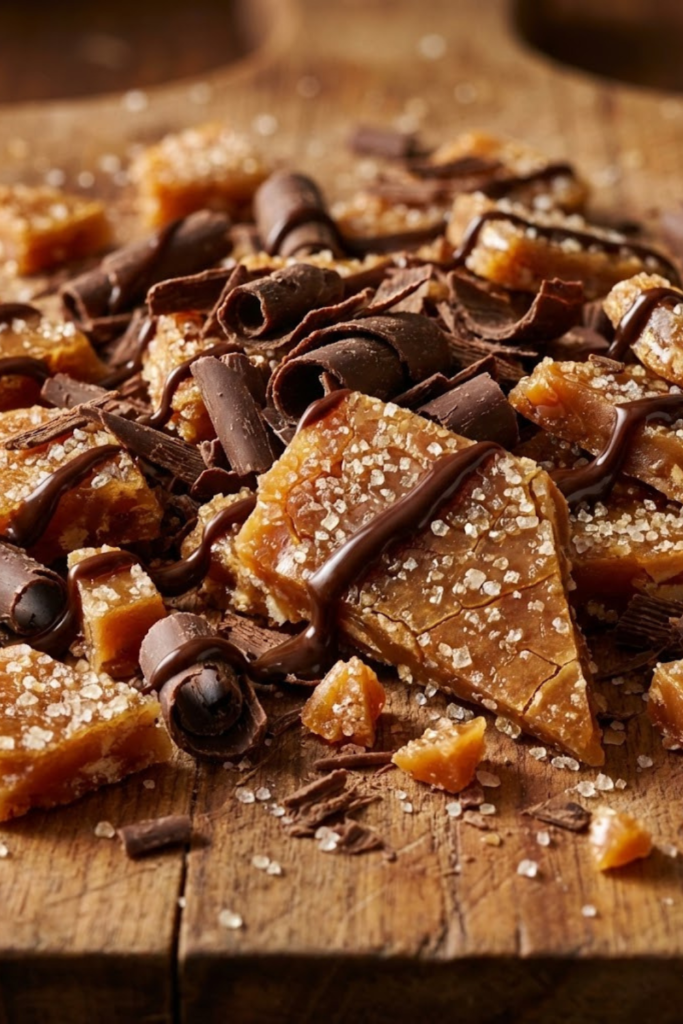
For the best Caramel Toffee Crunch Cake, you need variety. I grab a sturdy zip-top bag, throw the toffee inside, and go to town with a heavy rolling pin. It is honestly the best stress relief after a long week . You want some big, jagged shards that will stick in your teeth a little, mixed with that fine dust that coats the buttercream. It’s messy, but it’s worth it.
Toasting Pecans: The Nose Knows
If you are adding pecans to your crunch mix—and you really should—please toast them. Raw pecans can be waxy and bland. I toss mine in a dry skillet over medium heat.
Here is the trick: do not walk away. Nuts go from raw to burnt in about thirty seconds. I learned this the hard way when I set off my smoke detector three times in one month . Trust your nose. The second you smell that nutty aroma, take them off the heat immediately. That toasted flavor adds a savory note that balances the sweetness of the caramel perfectly.
Gravity Checks and Chocolate Drizzles
One time, I tried to press my crunch mixture onto the sides of a cake in a hot kitchen. It was a disaster. The heavy toffee bits just slid down the side of the cake, leaving sad trails of frosting behind them . It was humiliating.
Now, I always pop the frosted cake in the fridge for about 15 minutes before decorating. The buttercream needs to be firm enough to hold the weight of the candy. And for the final touch? I like to drizzle a little melted dark chocolate over the whole thing.
The bitterness of the dark chocolate cuts right through the sugar. It stops the Caramel Toffee Crunch Cake from being “hurts your teeth” sweet. Just melt a handful of chips in the microwave—go slow, 15 seconds at a time—and flick it over the top with a fork. It doesn’t have to look perfect; messy looks delicious .
Assembling Your Layered Masterpiece
I used to look at those perfect bakery cakes in windows and think there was some kind of wizardry involved. My early attempts at layer cakes? They looked more like the Leaning Tower of Pisa than anything edible. There is nothing more heartbreaking than watching your beautiful Caramel Toffee Crunch Cake slowly slide apart because you rushed the assembly. It’s a nail-biter. But over the years, I’ve learned that structural integrity is just as important as flavor.
Leveling: The Foundation is Everything
Here is a hard truth I had to learn: your cakes are not flat when they come out of the oven. They have domes. If you try to stack domed cakes, you are asking for a disaster.
I used to try to “fill in the gaps” with extra frosting, but that just makes the cake unstable and wobbly. You need to get a long serrated knife—like a bread knife—and saw off the rounded tops of your cooled cake layers. It feels wasteful to cut off perfectly good cake, but that’s your chef’s snack! Eat the scraps. You need those surfaces to be flat as a board so your Caramel Toffee Crunch Cake stands tall and proud.
The “Dam” Method
Since we are filling this cake with that gooey salted caramel sauce we made, you can’t just spread it on like peanut butter. If you do, the weight of the top layers will squish the caramel right out the sides. I learned this the hard way when I brought a cake to a potluck and it was oozing sticky liquid all over the platter before we even cut it. It was a mess.
To fix this, you need to pipe a “dam” or a ring of stiff buttercream around the very edge of the cake layer first. This creates a wall. Then, you pour the caramel inside the wall. The buttercream holds the liquid in place, so you get that beautiful cross-section when you cut it, without the mess.
The Ugly Phase: Crumb Coating
Do not try to frost the cake perfectly in one go. You need to do a “crumb coat” first. This is a thin, messy layer of frosting that seals in all the loose crumbs.
If you skip this, you will end up with brown cake crumbs swirled into your white frosting, and it won’t look clean. Apply a thin layer all over, and then—this is crucial—put the whole cake in the fridge for 30 minutes. You want that base layer to be hard to the touch before you add the final thick coat of frosting.
The Final Flourish
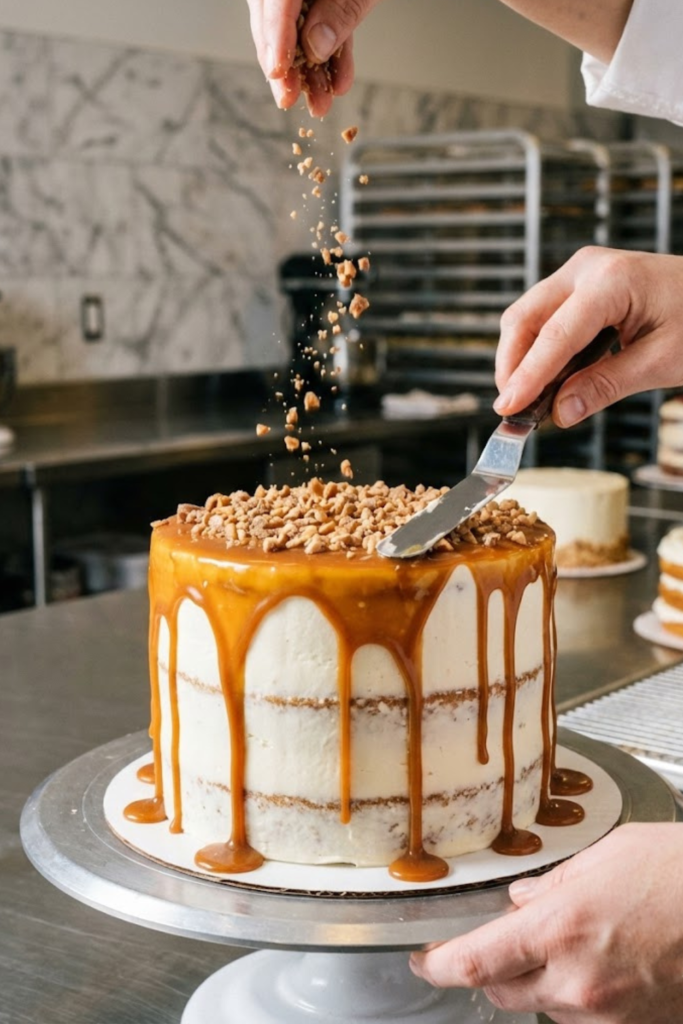
Once your final layer of frosting is on, take a handful of your toffee shards and press them into the bottom third of the cake or pile them on top. There is no “wrong” way to do this.
If you are doing the caramel drip, test the consistency on the back of a spoon first. If it runs too fast, let it cool for five more minutes. If it’s too thick, warm it up with your hands. Pouring it straight from the jar usually leads to a puddle at the bottom, so take your time. Building a Caramel Toffee Crunch Cake takes patience, but when you slice into those distinct layers, you’ll know it was worth the fuss.
The Sweet Victory
Look, I’m not gonna lie to you. After making this Caramel Toffee Crunch Cake, your kitchen is probably going to look like a sugar bomb went off. I usually find bits of toffee under my cabinets for weeks after I bake this beast . My sink is usually piled high with sticky bowls, and there is probably flour on my nose. But when you finally sit down, kick your feet up, and take that first bite? It is pure magic. The way the salty caramel cuts through the sweet sponge is honestly life-changing.
It’s a labor of love, for sure. This isn’t a “dump and stir” recipe you whip up in ten minutes. It takes time, patience, and a little bit of courage to work with hot sugar. But seeing the look on your friends’ faces when you bring this out? That is the real payoff. I brought this to a potluck last month, and I didn’t even get a slice because it vanished so fast.
The “Next Day” Secret
Here is a little secret that might surprise you: this cake actually tastes better the next day. I know, I know—fresh cake is best, right? Usually, yes. But with this Caramel Toffee Crunch Cake, something special happens overnight.
The caramel sauce seeps a little further into the sponge, and the flavors really have time to get to know each other. If you have the willpower to wait, wrap the cake box in plastic wrap and let it sit in the fridge. Just remember to take it out about an hour before serving . Cold cake kills the flavor of the butter; you want it room temp to get that melt-in-your-mouth texture.
Also, a quick tip on leftovers (if you have any): don’t leave this out on the counter for more than a day or two . Because of the heavy cream in the caramel and the dairy in the frosting, it’s safer in the fridge. I usually slice up the leftovers and freeze individual slices. It’s the best midnight snack you’ll ever have.
Share the Love
I really hope you give this recipe a shot. It has become a staple in my house for birthdays and bad days alike. If you do make it, don’t stress about it looking perfect. The best cakes are the ones that look a little messy and taste like home.
If you enjoyed this recipe and want to save it for your next special occasion, please share it on Pinterest! It helps me out a ton and helps other bakers find their next challenge . Happy baking, my friends!