I still remember the first time I tried to bake a cheesecake. It was a disaster! Water baths, cracked tops, hours of cooling… honestly, who has time for that? That’s when I fell in love with the Burnt Basque Cheesecake. It breaks all the rules!
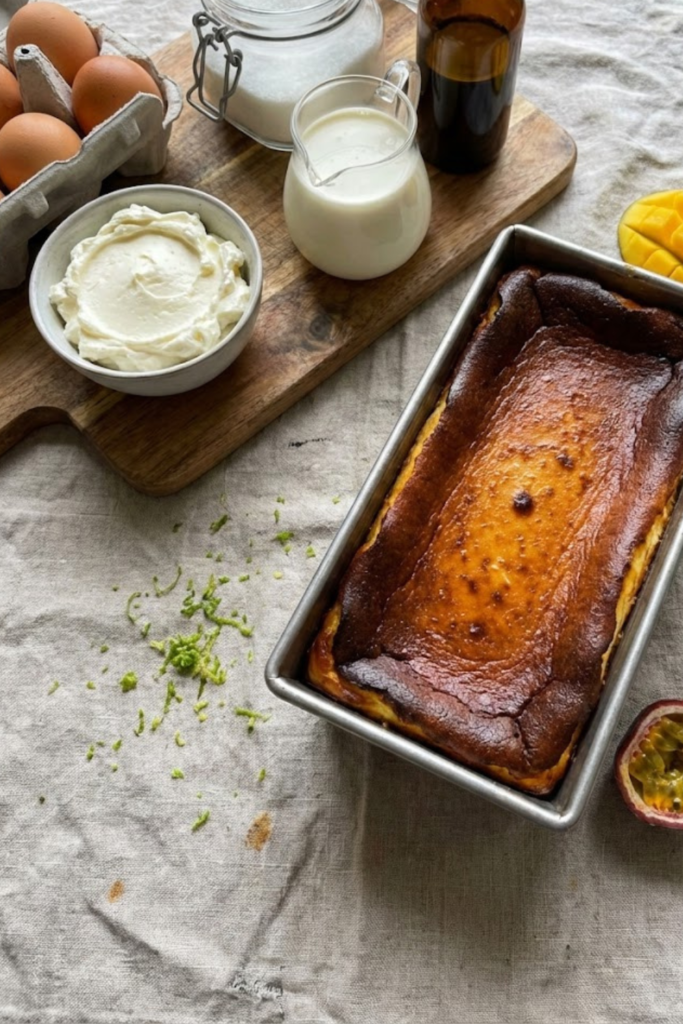
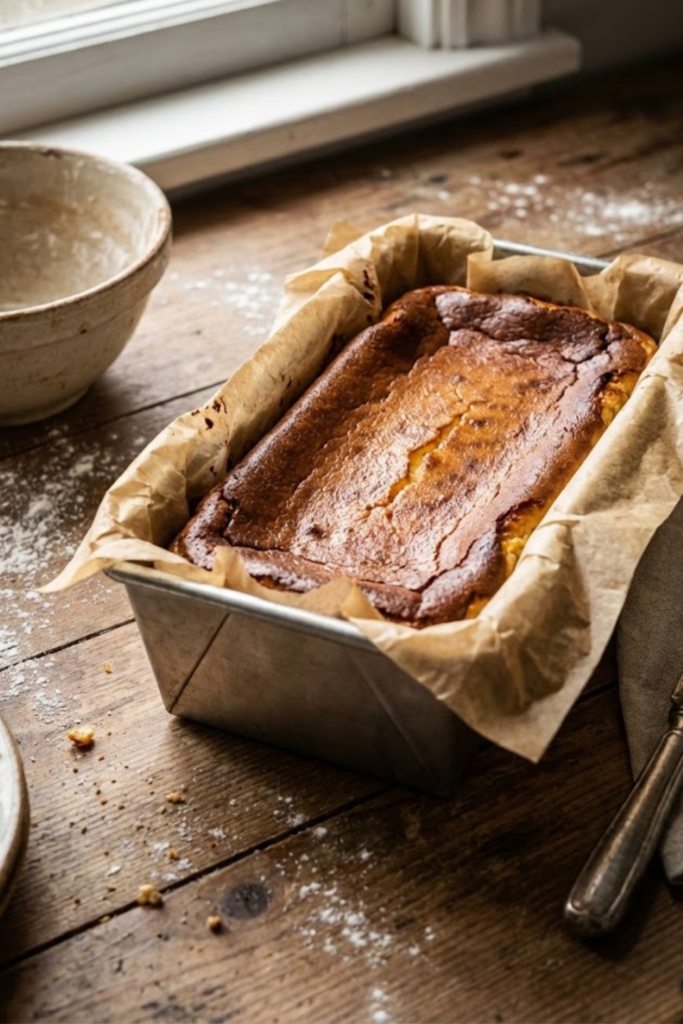
This recipe takes that iconic, rustic dessert and scales it down for the trusty loaf pan sitting in your cabinet. No springform pan required! Whether you’re baking for a small dinner party or just treating yourself (no judgment here!), this burnt basque cheesecake in a loaf pan delivers that dreamy, creamy center and deeply caramelized crust without the fuss. It’s perfectly imperfect, and that’s exactly why we love it. Let’s get baking!
Why Bake Basque Cheesecake in a Loaf Pan?
I have to be real with you for a second. The first time I tried to make a traditional cheesecake, it was a total hot mess. I bought a fancy springform pan that cost way too much money, and guess what? It leaked butter all over the bottom of my oven.
Smoke everywhere. The fire alarm went off, the dog was barking, and I was just standing there with a half-baked, soggy crust . It was honestly embarrassing.
That’s when I stumbled upon the magic of baking a burnt basque cheesecake in a loaf pan. It sounded weird at first, like trying to fit a square peg in a round hole, but man, was I wrong. This method completely changed my weekend baking game.
Small Batch, Big Flavor
Here is the thing about standard cheesecake recipes: they are huge. Unless you are feeding a football team, a 9-inch cake is just too much food. I hate throwing away leftovers, and cheesecake does not stay good forever .
Using a loaf tin baking approach solves this problem instantly. It creates the perfect small batch dessert for a family of four or just a couple of hungry people. You get about 6 to 8 thick slices, which is the sweet spot. No waste, no guilt, just good cake.
The Texture Magic
There is actually a scientific reason why the loaf pan works better here. Because the pan is narrow and deep, the batter sits higher than it would in a wide round pan.
This is crucial for that signature texture. The heat blasts the top, creating that dark, bitter caramelized crust we are looking for. But because the cake is thicker, the heat takes longer to penetrate the middle.
The result? You get a super creamy texture in the center that is almost molten, while the outside is firm and toasty . It is a contrast that is hard to get right in a wider pan without overcooking the whole thing.
No Fancy Gear Required
Let’s be honest, specialty kitchen gadgets are annoying to store. I barely have room for my coffee mugs, let alone a springform pan I use twice a year.
This loaf pan cheesecake recipe uses the standard 9×5 metal loaf pan you probably already have for making banana bread . You line it with parchment paper, dump in the batter, and throw it in the oven.
There is no water bath needed. No wrapping things in foil. No praying to the baking gods that it won’t crack. In fact, we want it to crack! It is supposed to look rustic and homemade.
I’ve learned that the simpler the process, the more likely I am to actually bake. And this method is as simple as it gets.
Essential Ingredients for the Perfect Loaf
You might think cheesecake is complicated, but the beauty of the Basque burnt cheesecake is its simplicity. There are only a handful of ingredients here. However, I’ve learned the hard way that because the list is so short, you can’t really hide behind fancy flavors. If one ingredient is off, the whole thing falls flat.
I remember standing in the grocery aisle once, staring at the low-fat options, thinking I was being healthy. Spoiler alert: I wasn’t. I made a cake that tasted like sweetened rubber. So, let’s talk about what you actually need to grab.
The Cream Cheese Situation
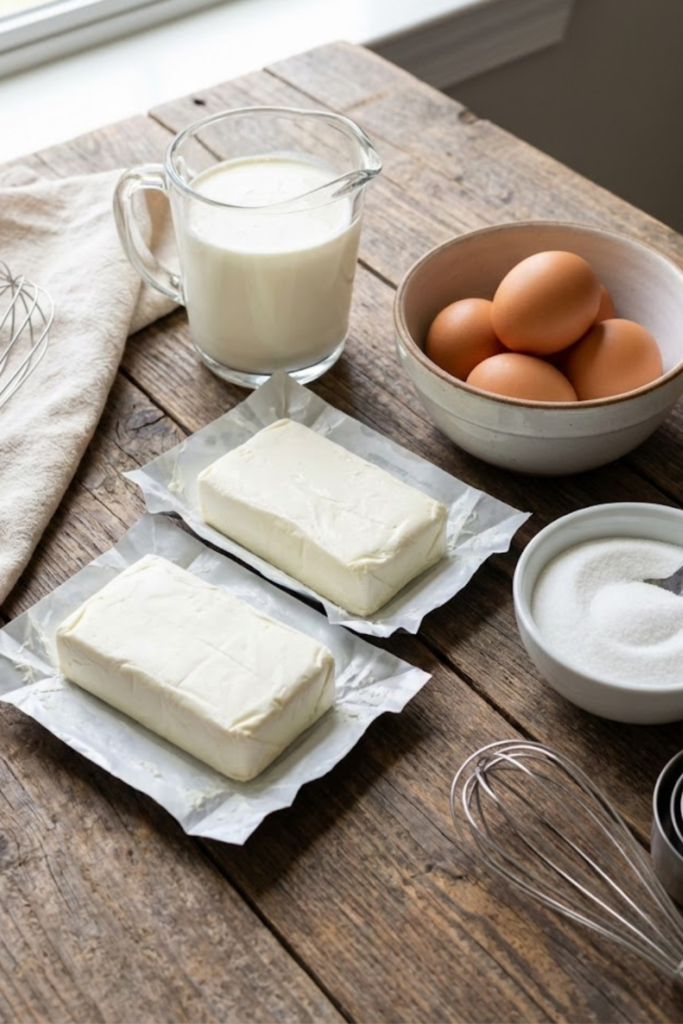
First off, you need full-fat cream cheese. Do not look at the light version. Do not look at the whipped tub stuff. You want the bricks. The fat is what gives this cake that luxurious, silky mouthfeel we are chasing.
Here is the biggest secret I can give you, and I need you to listen close: room temperature ingredients are non-negotiable .
I once tried to rush the process and threw cold blocks of cheese into my mixer. I beat it for ten minutes, sweating over the bowl, but the lumps just wouldn’t go away. The result? A grainy cheesecake that looked like it had measles.
Leave your cheese on the counter for at least two hours before you start. If you press it with your finger, it should make a dent easily.
The Heavy Hitters: Cream and Eggs
Next up is the liquid. You want heavy whipping cream (or double cream if you’re in the UK). Please don’t try to swap this for half-and-half or milk to save calories. This cake relies on the high fat content to set properly without turning into a puddle.
For the eggs, I usually use large ones. They act as the glue holding everything together. Just like the cheese, make sure these aren’t ice cold from the fridge, or they will shock the batter and make it curdle.
Flavor and Structure
Sugar is pretty straightforward—just regular granulated sugar works best. But don’t skimp on the vanilla extract. Since we aren’t using a crust, the vanilla does a lot of heavy lifting to flavor the batter. Use a good quality paste if you can afford it; seeing the little specks is always a nice touch.
Finally, the flour. This recipe is super forgiving. You only need a tiny bit of all-purpose flour to help stabilize the mixture.
If you are cooking for friends with allergies, this is an easy gluten-free option to adapt. I’ve swapped the flour for cornstarch (cornflour) plenty of times, and honestly? I can barely tell the difference. It still comes out creamy and delicious.
Step-by-Step: Mixing the Batter
Okay, grab your apron. This is the part where things start to look good. Mixing the batter sounds easy enough, but I have learned that how you mix is just as important as what you mix.
I used to just dump everything into a bowl and turn the mixer on high. I thought I was being efficient. But all I ended up with was a batter full of air bubbles that made my cheesecake crack in weird places, not the cool rustic way we want .
Getting That Smooth Base
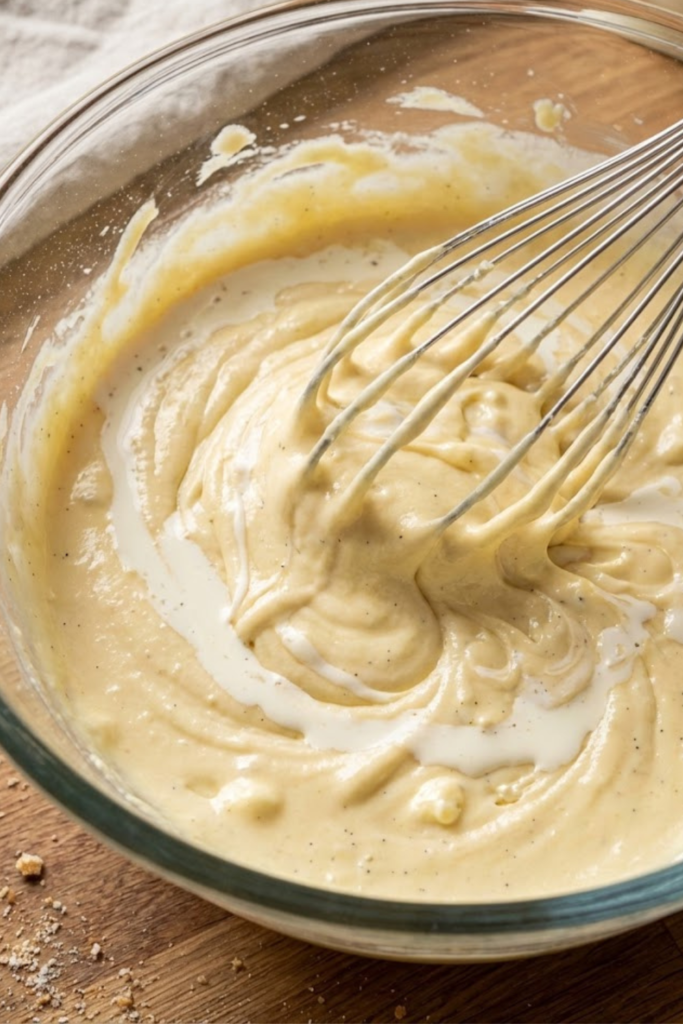
Start by putting your soft cream cheese and sugar in a large bowl. I like to use an electric mixer for this, but a stand mixer with a paddle attachment works great too.
Beat them together on medium speed. You aren’t trying to whip air into it like a sponge cake. You just want to smash that sugar into the cheese until the grains disappear.
I remember once I was too lazy to find my mixer and tried to do this with a wooden spoon. My arm felt like it was going to fall off, and I still had lumps. Don’t be a hero; use the power tools . Keep going until you have a completely smooth batter. It should look creamy and luscious.
The Egg Drop
Now, turn your mixer speed down to low. This is crucial. We are going to start incorporating eggs, but you have to do it one at a time.
Crack one in, mix until it is just gone, and then stop. Scrape down the sides of the bowl. Seriously, scrape the bowl! I used to skip this step, and I’d find hidden pockets of unmixed cream cheese at the bottom later. It was tragic.
Repeat this for each egg. This patience helps maintain the emulsion so the fat and liquid don’t separate. It is a simple baking technique, but it makes a huge difference in the final texture.
Bringing It All Together
Once the eggs are in, the mixture will look a bit looser. Now, slowly pour in the heavy cream and vanilla while the mixer is running on low.
Watch out for splashback. I ruined a good t-shirt once because I poured the cream too fast and it went everywhere. Learn from my laundry mistakes .
Finally, we need to add the flour (or cornstarch). I highly recommend sifting it in. Even though it is a small amount, flour loves to clump up. Sifting guarantees a lump-free mixture.
Fold this in gently by hand or give it a quick buzz with the mixer just until you can’t see white streaks anymore. Stop immediately! Overmixing now will make the cake tough, and we want it meltingly tender.
The batter should be pourable, thick, and silky. It is going to look tempting, and yes, I always steal a little taste from the beater. It’s the best part of being the baker.
The Art of the “Burn”: Baking Temperature & Timing
I have a confession to make: I have trust issues with my oven. For years, I was told that burning food meant I had failed. If I saw a dark edge on a cookie, I panicked.
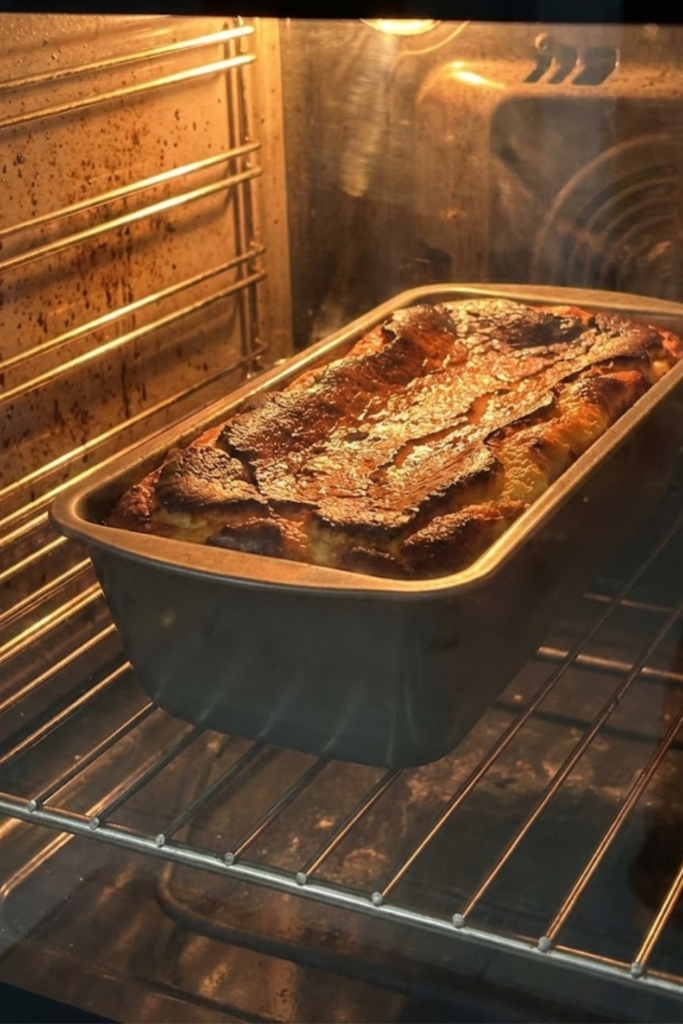
So, the first time I made this, my brain was screaming at me to take it out. The top was getting dark, practically black, and I was sweating. But I learned that with high temperature baking, you have to ignore your instincts and trust the process . This is the one time where “burning” dinner is actually the goal.
Crank Up the Heat
If you are used to making New York-style cheesecakes, you know they like a low, gentle oven. They are high maintenance. This recipe is the total opposite.
We are going to blast this thing. Preheat your oven to 400°F (200°C). We need that intense heat to create the famous burnt cheesecake surface. It’s actually called the Maillard reaction, which is a fancy way of saying “browning makes things taste good.”
I remember setting my oven to 350°F out of habit once. I waited forever, but the top just stayed a sad, pale yellow. It tasted fine, but it lacked that bitter, caramel note that balances the sugar. Don’t be afraid of the dial; turn it up high.
The Parchment Paper Hack
Now, let’s talk about the pan. Getting a cheesecake out of a loaf tin can be a nightmare if you don’t prep it right.
Grab a big sheet of parchment paper. Here is the trick: crumple it up into a ball, then uncrumple it. Seriously, wreck it. This makes the paper flexible so it fits into the corners of the pan easily.
You want the parchment paper lining to stick up over the edges of the loaf pan. This creates handles for you to lift the cake out later.
I used to try to cut precise corners and fold it like I was wrapping a Christmas present. It was a waste of time. The messy, crinkled paper gives the sides of the cheesecake that cool, rustic texture we are going for. It’s supposed to look messy!
The Jiggle Test
This is the scariest part. How do you know when it is done?
You are looking for a very specific caramelized top. It should be a deep, dark brown—almost black in spots. But here is the kicker: the middle should still be moving.
When you shake the pan gently (use mitts!), the center should wobble like a bowl of Jell-O. If it is firm, you have overcooked it.
I made the mistake of baking one until it was solid once because I was scared of raw eggs. It turned into a brick. The residual heat will continue cooking the center as it cools, setting it into that perfect custard.
If the top is getting too dark before the middle wobbles, you can tent a piece of foil over it loosely. But honestly? I rarely do. I like it dark.
Cooling and Serving Your Masterpiece
I am the kind of person who constantly burns the roof of their mouth on hot pizza because I just cannot wait. But with this cheesecake, patience is not just a virtue; it is a requirement.
I once pulled a loaf out of the oven, smelled that sweet caramelized sugar, and immediately tried to slice it while it was still warm. Big mistake. The whole thing collapsed into a puddle of goo . It tasted amazing, sure, but it looked like soup, not a slice of cake.
You have to let this thing cool completely. It needs adequate setting time. Leave it in the pan on a wire rack until the metal is cool to the touch. This usually takes about two hours. It feels like torture to stare at it, I know, but trust me on this one.
To Chill or Not to Chill?
Once it reaches room temperature, you have a serious choice to make.
If you like your cheesecake super soft, almost like a custard, you can go for room temperature serving. It will be a bit messy and slump over on the plate, but oh so creamy.
Personally? I like to stick it in the fridge for at least 4 hours, or even overnight. This chilling time firms up the texture and turns it into something dense, rich, and fudge-like . Plus, cold cheesecake for breakfast is a top-tier life choice.
Refrigerating it also makes it way easier to get out of the pan. Just grab those parchment paper handles we made earlier and lift. It should pop right out.
The Perfect Slice
Slicing cheesecake can be tricky because the knife likes to stick to the creamy center. I used to just hack away at it and end up with ugly, jagged pieces.
I learned a trick from a chef friend that changed my life. Run your sharpest knife under hot water, dry it off with a towel, and then cut. The heat melts through the butterfat like magic .
Here is the annoying part: you need to wipe the knife clean after every single cut. If you don’t, you end up with crumbs smeared everywhere.
For serving, this cake is rich enough to stand on its own. But if I am feeling fancy, a fresh berries topping—like raspberries or strawberries—cuts through the heaviness perfectly. Or, if it has been a long week, a glass of Pedro Ximénez sherry makes for an incredible dessert pairing.
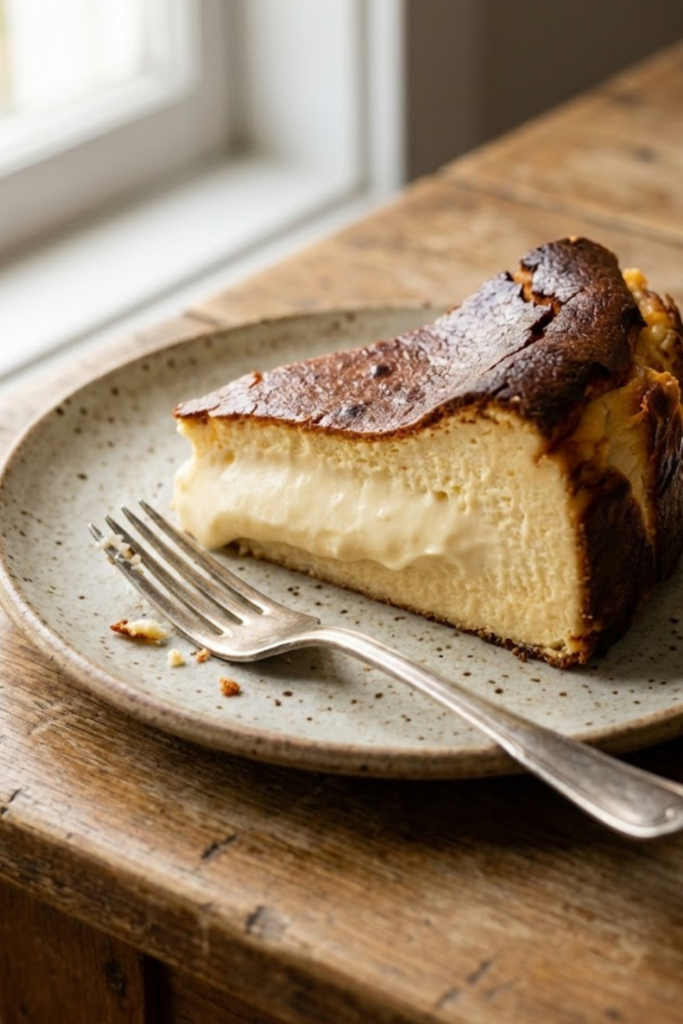
I have to tell you, figuring out this burnt basque cheesecake in a loaf pan has been one of my favorite kitchen discoveries. It really proves that you don’t need fancy equipment or a culinary degree to make something incredible.
For the longest time, I avoided making cheesecake because I thought it was too high-maintenance. But this recipe strips away all the scary stuff—the water baths, the cracking fears, the huge pans—and leaves you with just the good stuff. You get that unreal contrast between the bitter, dark crust and the sweet, creamy cheesecake texture inside .
It is the perfect easy dessert recipe for when you want to impress someone but don’t have the energy for a three-day baking project. It’s rustic, messy, and absolutely delicious.
If you give this a shot, I’d love to see how yours turns out (especially how dark you dared to go!). And if you found this guide helpful, please do me a huge favor and pin this recipe to your “Best Desserts” board on Pinterest. It helps other home bakers find it and saves you from hunting for it later when the craving hits!
Happy baking, friends!