Did you know that salmon is the second most consumed seafood in the US, yet 40% of home cooks admit they are intimidated by cooking it? Let’s change that statistic right now! I used to be terrified of overcooking fish—ending up with something closer to a hockey puck than dinner. But this brown sugar spiced salmon changed the game for me. It’s sweet, it’s spicy, and it’s undeniably juicy. Whether you are meal prepping for a busy week or trying to impress a date, this recipe hits all the right notes. We are going to dive into the best spice blend, cooking methods, and how to get that “restaurant-quality” crust right in your own kitchen!
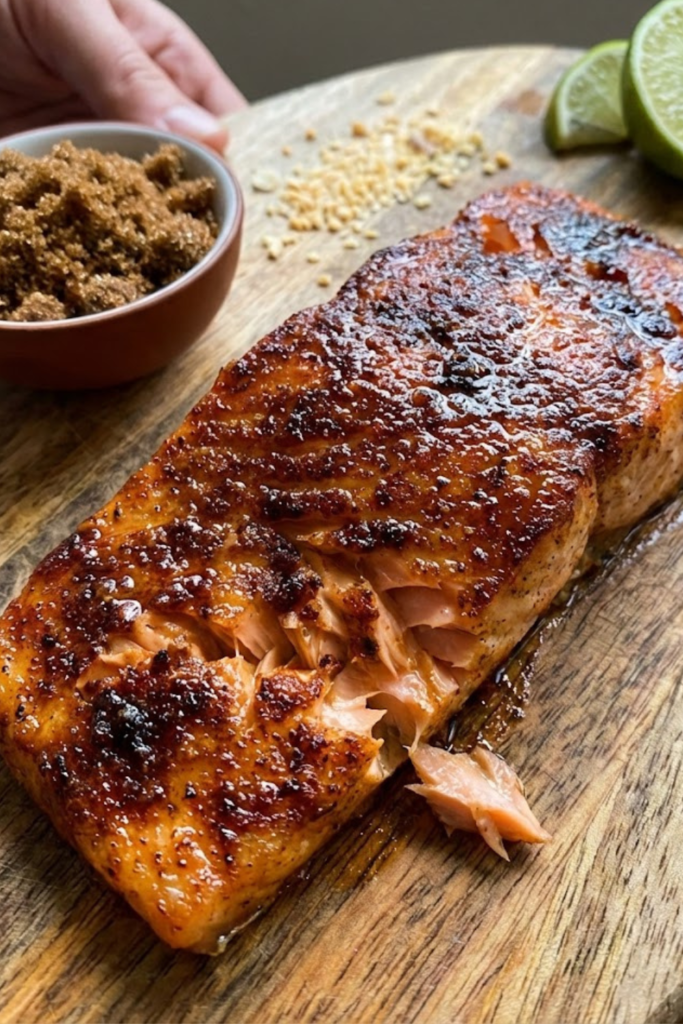
Choosing the Best Salmon for Baking or Searing
I still remember the first time I tried to make a fancy fish dinner. I walked up to the seafood counter, totally overwhelmed, and just pointed at the cheapest pink thing behind the glass. Big mistake. I ended up with a piece of fish so dry it could’ve passed for cardboard. I was so frustrated I almost swore off cooking seafood entirely! But after years of trial and error (and eating a lot of mediocre dinners), I’ve figured out exactly what to look for so that never happens to you.
You don’t need to be a professional chef to pick good fish. You just need to know what to look for.
Wild-Caught vs. Farm-Raised: The Great Debate
People often preach that wild-caught is always better, but I’m gonna be honest with you. For this brown sugar spiced salmon recipe, I actually prefer farm-raised Atlantic salmon. I know, I know—it sounds controversial.
Here’s why: farm-raised salmon usually has a higher fat content than wild varieties like Sockeye or Coho. That extra fat is a lifesaver when you are baking or searing with sugar. As the brown sugar caramelizes, that fat renders down and keeps the meat incredibly moist.
Wild salmon is delicious, don’t get me wrong. But it is super lean. If you bake it even one minute too long, it dries out fast. I’ve ruined a beautiful (and expensive) piece of Sockeye because I turned my back to grab the salt. If you do go wild, watch it like a hawk. For a juicy, forgiving result that melts in your mouth, stick with the fattier cuts.
Skin-On or Skin-Off?
Always buy skin-on. Even if the thought of fish skin grosses you out, keep it on during cooking. Think of the skin as a built-in heat shield for the meat.
When you are searing or baking at high temps to get that spice crust perfect, the skin protects the delicate flesh from burning on the bottom. Plus, it holds the fillet together. I can’t tell you how many times I’ve tried to flip a skinless fillet only to have it break into sad little chunks. It’s heartbreaking.
You can easily slide a spatula between the skin and the meat after it’s cooked. It usually peels right off if you don’t want to eat it. But keeping it on while cooking keeps all those juices locked inside.
The “Sniff and Poke” Test
This is the part where you might look a little weird at the grocery store, but trust me, it’s worth it. You have to check for freshness.
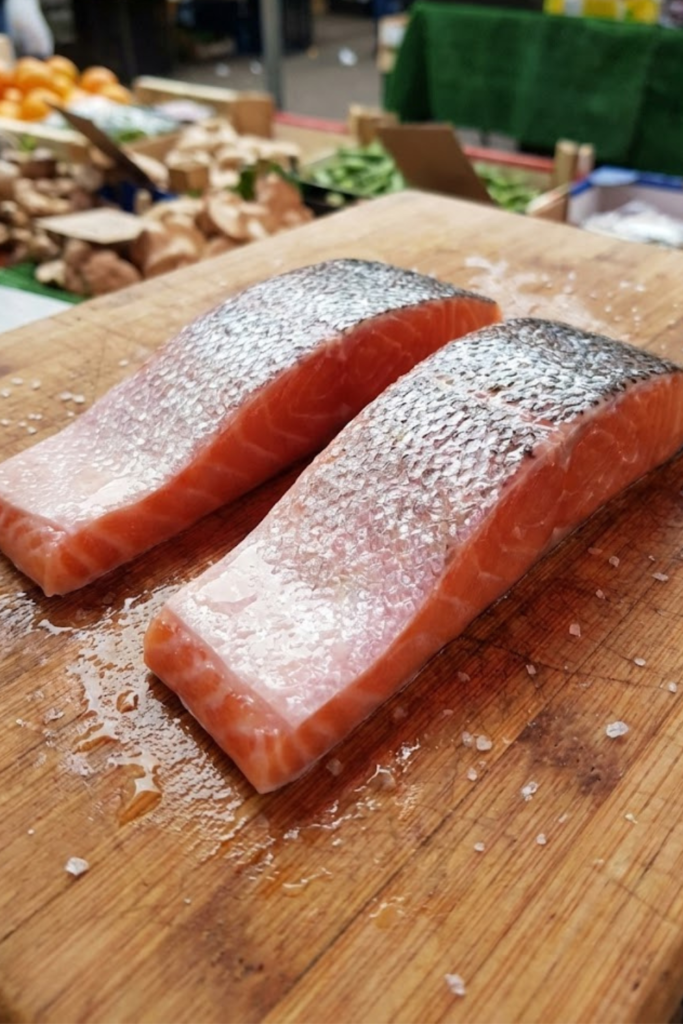
First, the smell. Fresh fish should smell like the ocean—salty and clean. If you catch a whiff of ammonia or a strong “fishy” odor, walk away fast. That fish is past its prime.
Second, look at the texture. The meat should look firm and bright. If you see “gaping”—those little separations between the muscle flakes—it means the fish is old. I like to ask the fishmonger to press on the fillet. If the meat bounces back immediately, it’s fresh. If the fingerprint indentation stays there? No thanks.
Quick Checklist for the Store:
- Color: Look for vibrant deep pink or orange, not pale or gray.
- Moisture: The fish should look moist and shiny, not slimy.
- Cut: Try to get center-cut fillets; they are thicker and cook more evenly than the thin tail pieces.
Getting the right main ingredient is half the battle won. Once you have a quality piece of fish, the spice rub does the rest of the work!
The Secret Brown Sugar Spice Rub Ratio
I have to confess something embarrassing. The first time I tried to make a sweet glazed salmon, I basically just dumped a cup of sugar on the fish and threw it in the oven. I thought I was being a culinary genius.
The result? It tasted like fish candy. It was sickly sweet and honestly kind of gross. I remember sitting there trying to scrape the topping off so I wouldn’t waste the expensive protein underneath. It was a total dinner fail.
That’s when I realized that a great brown sugar spiced salmon isn’t about the sugar; it’s about the balance. You need enough heat and salt to punch through that sweetness.
Why Dark Brown Sugar is the MVP
For the longest time, I just used whatever sugar was in my pantry. Usually, that was light brown sugar. It works, sure. But if you want that deep, sticky, molasses-like crust, you need to use dark brown sugar.
Dark brown sugar has more molasses in it. This higher moisture content helps the rub stick to the salmon fillets better without needing a ton of oil. Plus, the flavor is richer and more complex. It gives you that “restaurant-quality” look that makes people think you slaved away for hours.
If you only have light brown sugar, don’t panic. You can still use it! But next time you’re at the store, grab the dark stuff. It’s a total game changer for this recipe.
Balancing the Heat
This is where people get scared. I used to be terrified of spicy food. But you need spice here to counteract the sugar.
My go-to blend relies heavily on chili powder. It provides a warm, earthy background flavor that isn’t too sharp. Then, I add a pinch of smoked paprika. That smoky note mimics the flavor of a grill, even if you are just baking it in your oven on a Tuesday night.
If you like a real kick, add a dash of cayenne pepper. Just be careful. I once shook the cayenne bottle too hard and ruined a whole batch of rub. Start small. You can always add more heat, but you can’t take it out once it’s on the fish.
The Savory Elements You Can’t Skip
You cannot forget the salt and garlic. This is the biggest mistake I see home cooks make. They focus so much on the “spiced” part that they under-salt the food.
For the garlic, use garlic powder, not fresh garlic. This is a lesson learned the hard way. Fresh garlic burns very quickly at the high temperatures needed to cook salmon. Burnt garlic tastes bitter and acrid. Garlic powder stands up to the heat and blends perfectly with the sugar.
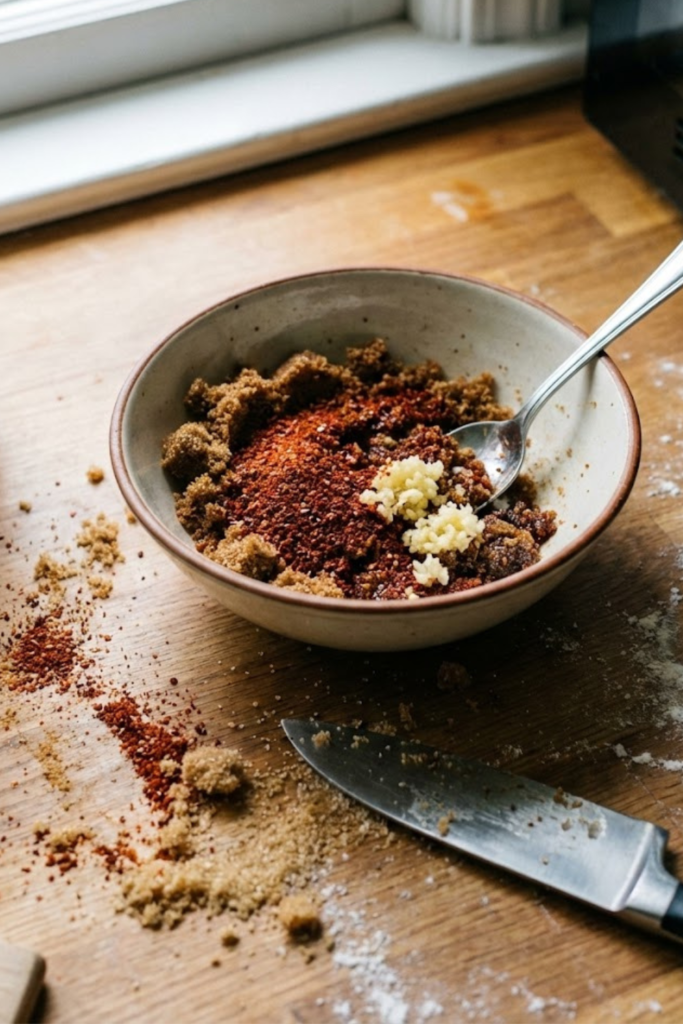
My “Golden Ratio” for the Rub:
- 4 parts Dark Brown Sugar (The glue and the sweet)
- 1 part Chili Powder (The earthy base)
- 1 part Garlic Powder (The savory punch)
- 1/2 part Sea Salt (To make flavors pop)
Mix this up in a small bowl before you even touch the fish. Taste a tiny bit of the mixture on your finger. It should taste sweet first, then salty, with a warm finish at the end. If it hits all those notes, your salmon is going to be legendary.
Step-by-Step: How to Make Brown Sugar Spiced Salmon
I used to think cooking fish required some sort of magic touch or a degree from culinary school. I was wrong. The truth is, getting that perfect, flaky texture is actually easier than cooking a chicken breast, provided you follow a specific order of operations.
I’ve had my fair share of disasters where the fish stuck to the pan or the topping slid right off. Those nights usually ended with me ordering pizza. But over time, I locked down a routine that works every single time.
Prep Work: The Step You Can’t Skip
If you take only one thing away from this post, let it be this: dry your fish!
Seriously, take a paper towel and pat those salmon fillets dry on all sides. I used to skip this because I was lazy and didn’t want to waste paper towels. Big mistake.
If the surface of the fish is wet, the moisture creates steam when it hits the heat. Steam is the enemy of a caramelized crust. Instead of that nice, sticky glaze, you end up with a soggy, gray mush. Nobody wants that. Get the fish as dry as possible so the oil and spices can actually do their job.
The Rub Down
Now, things are going to get a little messy. Don’t try to use a spoon for this part; you need to use your hands.
Drizzle a little olive oil or melted butter over the fillets first. This acts as the glue. Then, take your brown sugar spice mixture and pack it onto the top of the salmon.
Don’t just sprinkle it like fairy dust. I mean, really press it in there. You want a thick layer of flavor. I usually end up with sticky sugar fingers, but that’s just part of the fun, right? Make sure you cover the entire surface, edge to edge.
The Cooking Method: Oven vs. Pan
You have two main choices here, and I have messed up both of them before finding the sweet spot.
The Oven Method (My Favorite for Weeknights): This is the easiest way to avoid the “fishy house” smell. Preheat your oven to 400°F (200°C). Place the salmon on a baking sheet lined with parchment paper (cleanup is a breeze this way).
Roast it for about 12-15 minutes. The high heat melts the sugar quickly, creating a glaze while keeping the inside tender. It’s pretty much foolproof.
The Pan-Sear Method: If you want crispy skin, the pan is better. But be warned: sugar burns fast. If you sear it skin-side down first, flip it carefully for just a minute or two on the sugar side. I’ve blackened many fillets this way by getting distracted.
For most of us just trying to get dinner on the table, the oven is the safer bet. It gives you consistent results without the stress of managing a hot skillet.
Pro Tip: If you want the top to be extra bubbly and crisp, switch your oven to “Broil” for the last 60 seconds of cooking. But do not walk away! I once walked away to pour a drink and set off the smoke detector. Stand there and watch it bubble, then pull it out immediately.
Common Mistakes That Ruin Spiced Salmon
I’ll never forget the dinner party where I almost set off the fire alarm. I was so confident. I had my brown sugar glaze perfectly mixed, and I cranked the oven up to “nuclear” because I wanted dinner done fast. About ten minutes later, smoke was pouring out of the oven vent. My beautiful salmon looked like charcoal briquettes.
It was embarrassing, but I learned a valuable lesson that night. Cooking with sugar requires a little bit of finesse. You can’t just blast it with heat and hope for the best. There are a few traps that are super easy to fall into, but luckily, they are just as easy to avoid once you know they exist.
Burning the Sugar (The Carbon Crunch)
This is the most common mess-up with this recipe. Sugar burns at a much lower temperature than protein cooks. If you have your oven rack too close to the heating element, or if you set the temperature way too high (like 450°F+), the sugar will turn black and bitter before the fish is even cooked through.
It’s heartbreaking to see a beautiful fillet ruined by a burnt crust. The fix is simple. Keep your oven at a steady 400°F. This is the sweet spot where the sugar melts and bubbles into a glaze without scorching.
Also, keep an eye on it! I admit, I get distracted by my phone or the TV while cooking. But with sweet and spicy salmon, you need to peek through the oven door during those last few minutes. If the edges start looking too dark, pull it out immediately.
The Tragedy of Overcooking
There is nothing sadder than dry salmon. It gets chalky and gets stuck in your teeth. For years, I overcooked my fish because I was scared of eating it raw. I’d leave it in “just to be safe” for an extra five minutes.
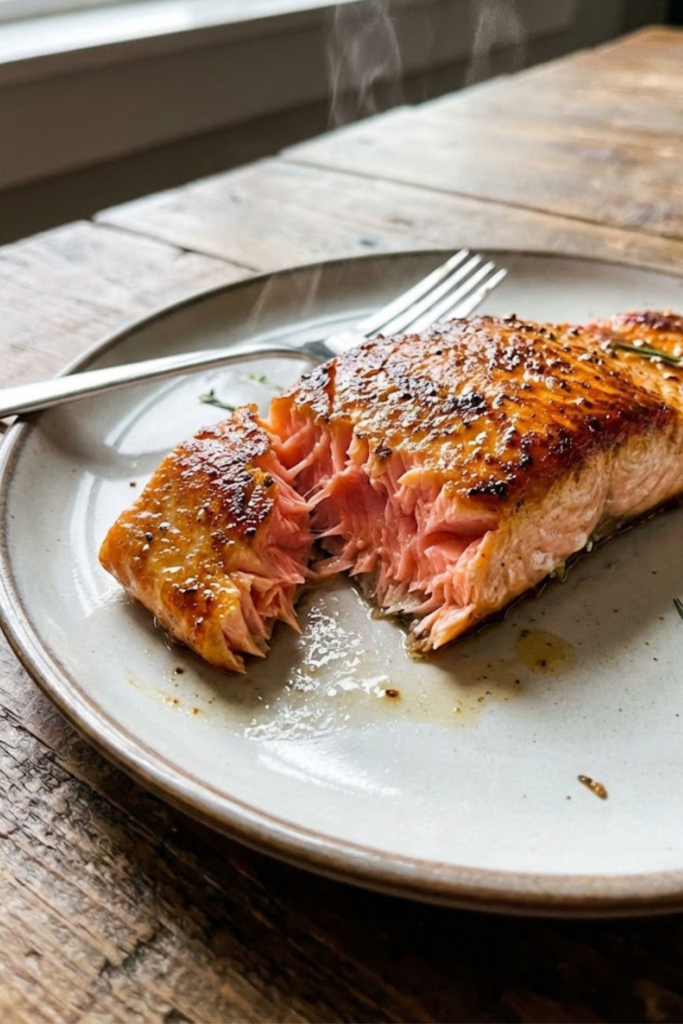
That extra five minutes is what kills the texture. Salmon continues to cook even after you take it out of the oven—this is called carryover cooking. If you cook it until it looks completely done in the pan, it’ll be overdone by the time it hits your plate.
Please, do yourself a favor and buy a meat thermometer. It’s cheap and it saves dinner. You want to pull the salmon out when the internal temperature hits about 125°F to 130°F. It might look slightly underdone in the very center, but the residual heat will finish the job while it rests. This is how you get that buttery, flaky salmon texture that melts in your mouth.
Overcrowding the Pan
I’m guilty of this one when I’m meal prepping. I try to cram five or six fillets onto one small baking sheet because I don’t want to wash two pans. I get it, doing dishes is the worst.
But here is the problem: when fish cooks, it releases moisture. If the fillets are touching each other, that moisture gets trapped. Instead of roasting and getting those nice crispy edges, the fish ends up steaming in its own juices. You lose all that texture we worked so hard for with the spice rub.
Give your fish some personal space. There should be at least an inch between each fillet. If you are making sheet pan salmon for a big family, just use two pans. It’s worth the extra minute of scrubbing to have food that actually tastes roasted, not boiled.
Quick Fixes for Common Fails:
- Burnt Topping: Scrape it off gently with a knife and add a squeeze of fresh lemon juice to mask the bitter taste.
- Dry Fish: Flake it up and mix it with a little mayo or Greek yogurt to make a salmon salad sandwich.
- Soggy Bottom: Serve it over rice so the juices soak into the grains—call it a “sauce” and no one will know!
Serving Suggestions and Pairing Ideas
I’ve definitely been that person who spends all their energy making a perfect main dish, only to look up and realize I have absolutely nothing to go with it. I remember serving this gorgeous brown sugar spiced salmon once with nothing but a bag of plain tortilla chips because I forgot to buy rice. It was… memorable, but I wouldn’t recommend it.
The thing about this recipe is that the flavor profile is strong. You’ve got that sticky, sweet glaze and the heat from the chili powder. You don’t want sides that are going to fight for attention. You want things that are going to play nice and soak up all that extra sauce.
Vegetables That Cut the Sweetness
Since the salmon is rich and sugary, I always like to pair it with something green and slightly bitter or fresh. It balances everything out so you don’t feel like you’re eating dessert for dinner.
Roasted asparagus is my go-to. I just toss the spears in a little olive oil, salt, and pepper, and throw them on the same baking sheet as the fish. They cook in about the same amount of time, which means fewer dishes for me to wash later. That is always a win in my book.
If asparagus isn’t in season, try garlicky green beans. The savory garlic punch works so well with the sweet fish. Steamed broccoli is another solid option if you want to keep things super healthy and simple. Just don’t overcook the veggies; you want that crunch to contrast with the tender, flaky salmon.
The Best Carbs for the Job
Now, let’s talk about the fun stuff—the carbs. You need something to catch the drippings. If you serve this on a bare plate, all that delicious melted brown sugar butter just goes to waste. That is a tragedy.
My absolute favorite pairing is fluffy jasmine rice. It’s slightly floral and sticky enough to hold onto the sauce. Plus, the white rice acts like a blank canvas for the spices. If you want to be a little healthier, quinoa works too, though it’s a bit nuttier.
For a comfort food vibe, try garlic mashed potatoes. I know, fish and mash sounds a bit weird if you aren’t British, but the creamy texture with the spicy, caramelized fish is actually insane. Just trust me on this one.
A Little Something to Sip
I am definitely not a wine snob. I usually pick bottles based on how cool the label looks. But I have learned that with sweet and spicy salmon, you need a drink that is crisp and cold.
A glass of Pinot Gris or Sauvignon Blanc cuts right through the richness of the glaze. You want something with high acidity to cleanse your palate between bites. If you prefer red, grab a light Pinot Noir. Avoid heavy Cabernets; they will overpower the fish and make the spices taste metallic.
The “I’m Tired” Dinner Menu:
- Main: Brown Sugar Spiced Salmon
- Side 1: Bag of frozen microwave steam-fresh broccoli (no shame here!)
- Side 2: Instant white rice
- Drink: Ice cold water with lemon
It doesn’t have to be fancy to be delicious. The salmon does all the heavy lifting, so you can chill out with the sides.
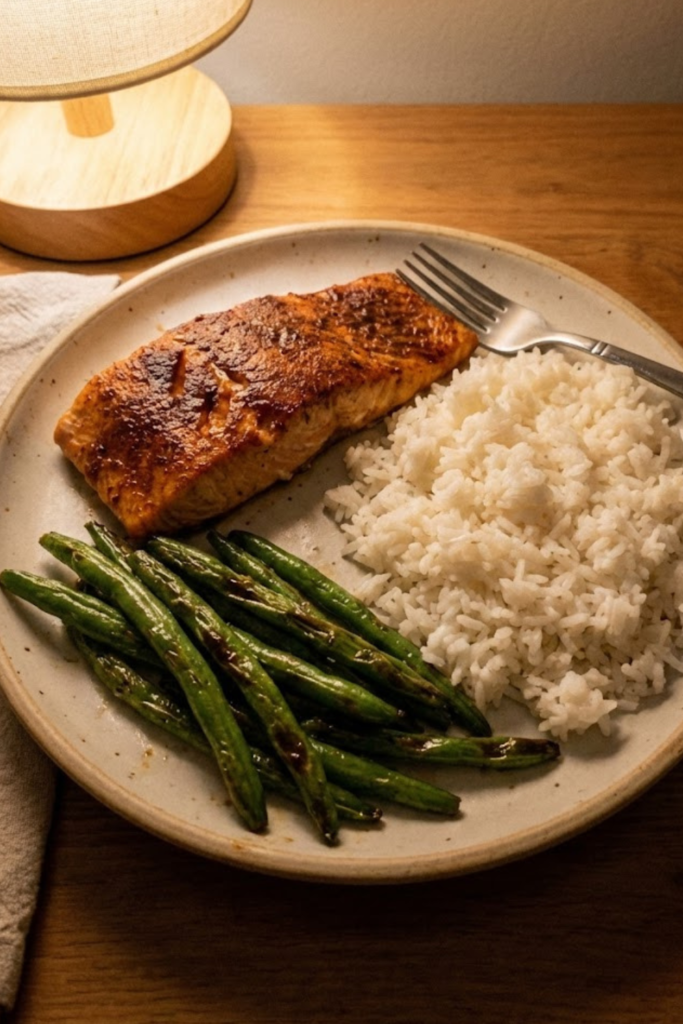
Cooking seafood doesn’t have to be intimidating. We’ve covered everything from choosing the right fatty fillets to mastering that perfect brown sugar spice rub ratio, ensuring you get a sticky caramelized crust without the stress. Whether you need a quick weeknight dinner or a meal to impress guests, this brown sugar spiced salmon delivers big flavor in just 20 minutes. Don’t let the fear of dry fish stop you; just grab your meat thermometer and give it a try! If you found this guide helpful, please pin this recipe to your Dinner Ideas board on Pinterest to save it for later—I’d love to see your creations!