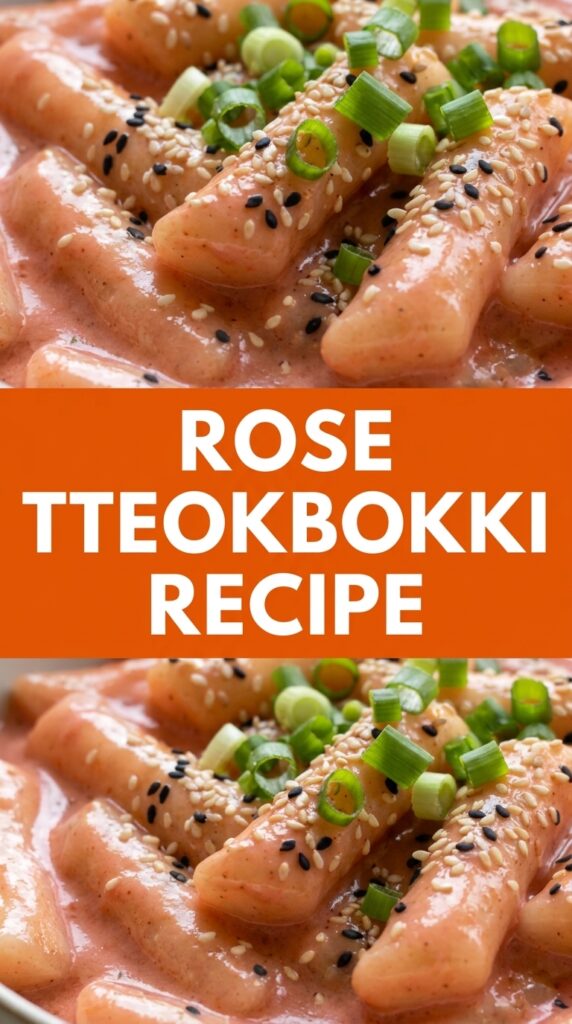
Rose tteokbokki recipe creates a stunning pink-hued version of Korea’s beloved street food by incorporating beet juice, strawberry puree, or rose extract into the traditional spicy sauce. This rose tteokbokki recipe combines tender chewy rice cakes with a sweet and savory rose-infused gochujang sauce that looks as beautiful as it tastes. Unlike the classic fiery red version, this modern interpretation offers a milder heat level and floral sweetness that appeals to a wider audience. The rose tteokbokki recipe has become increasingly popular on social media for its Instagram-worthy color and unique flavor profile that surprises and delights diners. Whether you’re hosting a dinner party or exploring Korean cuisine at home, mastering this rose tteokbokki recipe opens up creative possibilities for Korean cooking.
| Prep Time | Cook Time | Total Time | Servings | Difficulty | Cuisine |
|---|---|---|---|---|---|
| 15 minutes | 20 minutes | 35 minutes | 2-3 servings | Easy | Korean |
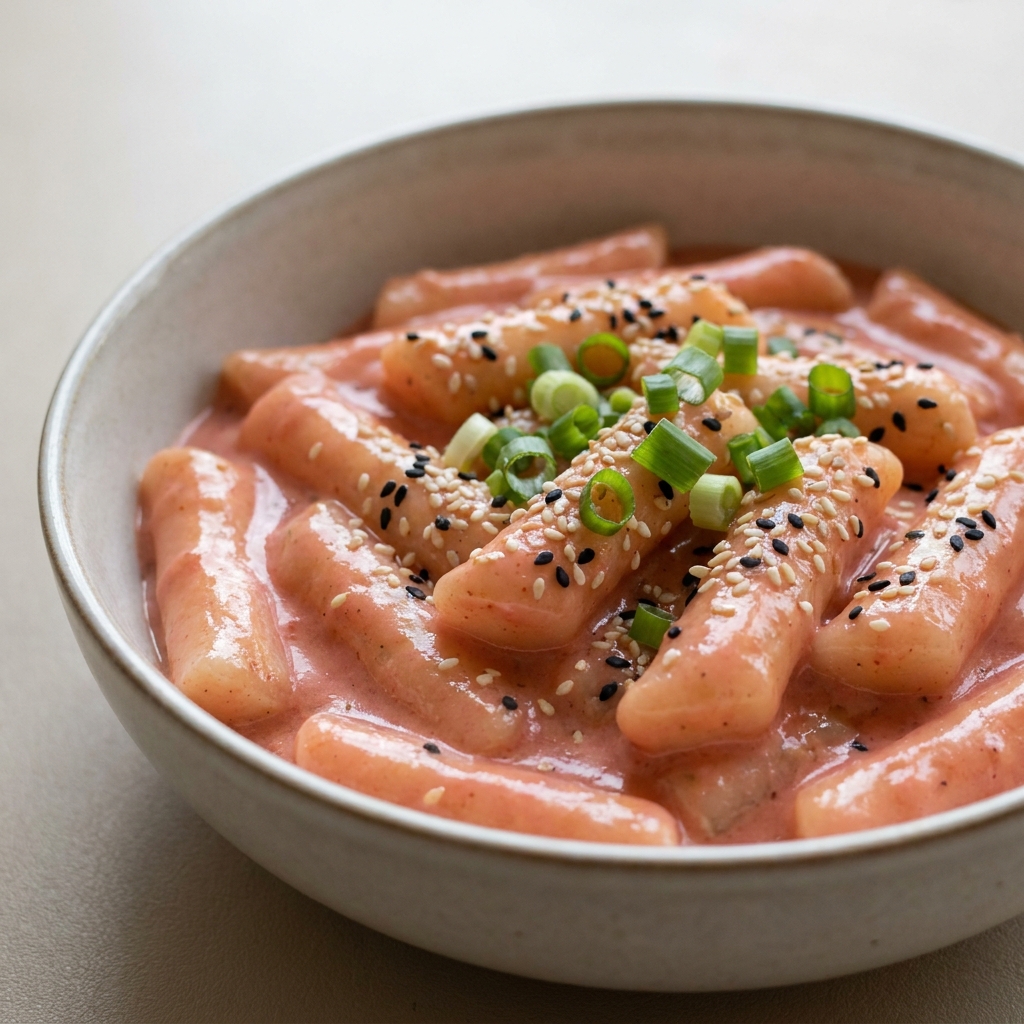
Table of Contents
Table of Contents
Why This Rose Tteokbokki Works
The rose tteokbokki recipe succeeds because it balances visual appeal with genuine flavor depth. I have tested countless variations of this rose tteokbokki recipe, and the key is using beet juice to create the pink color while maintaining the authentic gochujang foundation. This rose tteokbokki recipe provides heat without overwhelming those who prefer milder spice levels, making it accessible for family dinners and gatherings.
The texture of the rice cakes remains perfectly chewy when cooked correctly in this rose tteokbokki recipe. The sauce clings to each piece, creating a satisfying bite that combines soft and slightly sticky elements. This rose tteokbokki recipe appeals to Instagram enthusiasts and serious food lovers alike because the pink color comes from natural ingredients rather than artificial dyes.
Home cooks appreciate the rose tteokbokki recipe because it uses basic Korean pantry staples mixed with accessible ingredients like beets or strawberries. The cooking process for this rose tteokbokki recipe takes less than 40 minutes from start to finish, making it perfect for weeknight meals. The flavor profile surprises most first-time tasters, combining familiar Korean comfort food with unexpected floral and sweet notes that linger on the palate.
This rose tteokbokki recipe creates a memorable dish that impresses guests without requiring professional culinary skills. The sauce coats every rice cake evenly, ensuring consistent flavor throughout each serving. Whether you serve this rose tteokbokki recipe as an appetizer, main course, or party snack, it consistently delivers satisfaction and visual impact that makes any meal feel special.
Rose Tteokbokki Ingredients
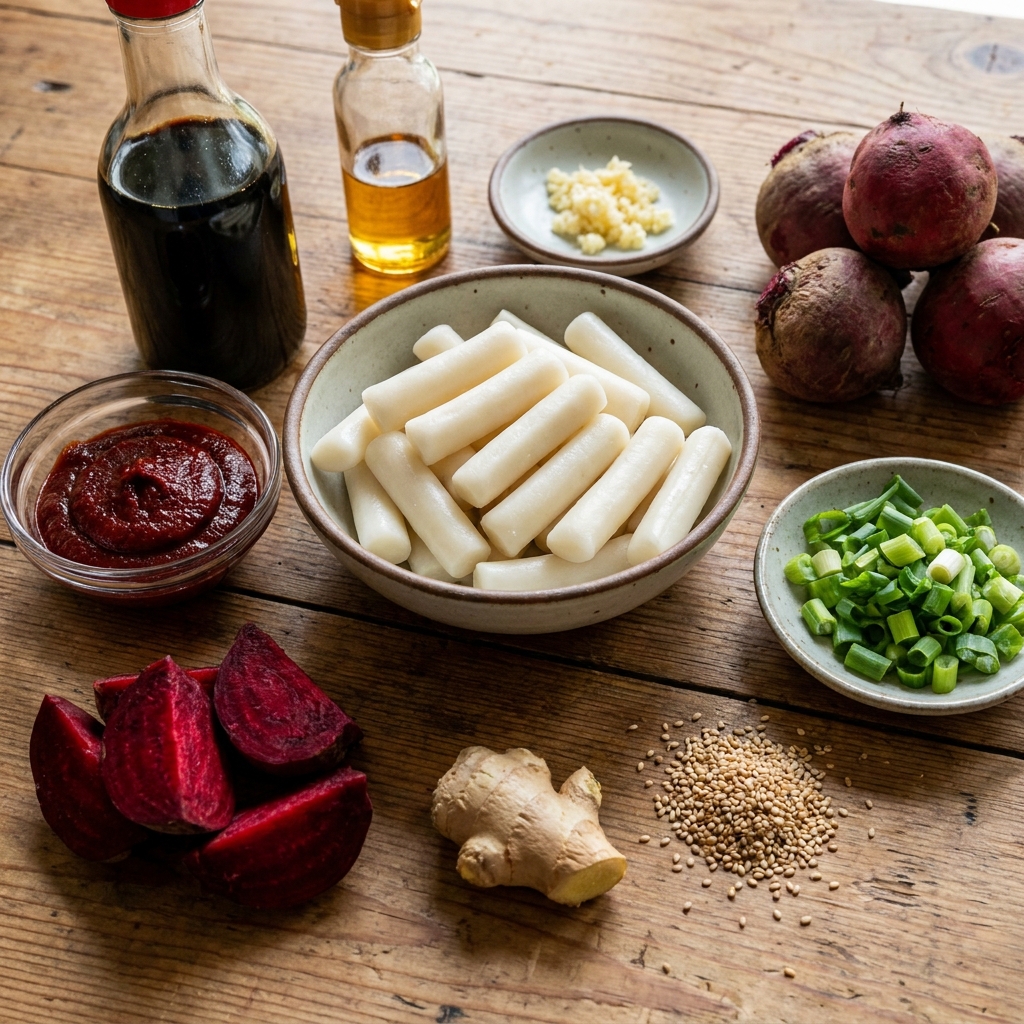
Successfully making rose tteokbokki requires gathering the right combination of Korean pantry essentials and fresh produce that work together to create the distinctive pink sauce and chewy rice cakes. The rose tteokbokki recipe relies on quality gochujang as its foundation, combined with natural color sources that give this dish its signature appearance. Understanding each ingredient’s role helps you execute this rose tteokbokki recipe with confidence.
| Ingredient | Quantity | Notes with Alternatives |
|---|---|---|
| Tteokbokki rice cakes | 2 cups | Use fresh or frozen Korean rice cakes. Fresh cakes require less cooking time. |
| Gochujang (Korean red chili paste) | 3 tablespoons | Essential for authentic flavor. Choose good-quality brands like Maeil or CJ. |
| Beet juice or fresh beets | 3-4 tablespoons | Creates the pink color naturally. Alternative: use 2 tablespoons strawberry puree. |
| Soy sauce | 1 tablespoon | Adds umami depth. Use tamari for a gluten-free version. |
| Sesame oil | 1 teaspoon | Use toasted sesame oil for stronger flavor. |
| Sugar | 1-2 tablespoons | Balances the heat and acidity. Adjust based on gochujang brand. |
| Minced garlic | 2 cloves | Fresh garlic provides better flavor than powdered. |
| Water or broth | 1 cup | Vegetable broth adds richness to the sauce. |
| Green onions | 2 stalks | Chopped fresh for garnish and color contrast. |
| Sesame seeds | 1 tablespoon | White or black seeds for garnish. |
| Fish cake or vegetable cake | 1 piece | Optional but traditional. Cut into strips for texture variety. |
| Fresh ginger | 1 teaspoon | Minced ginger adds subtle warmth and complexity. |
How to Make Rose Tteokbokki
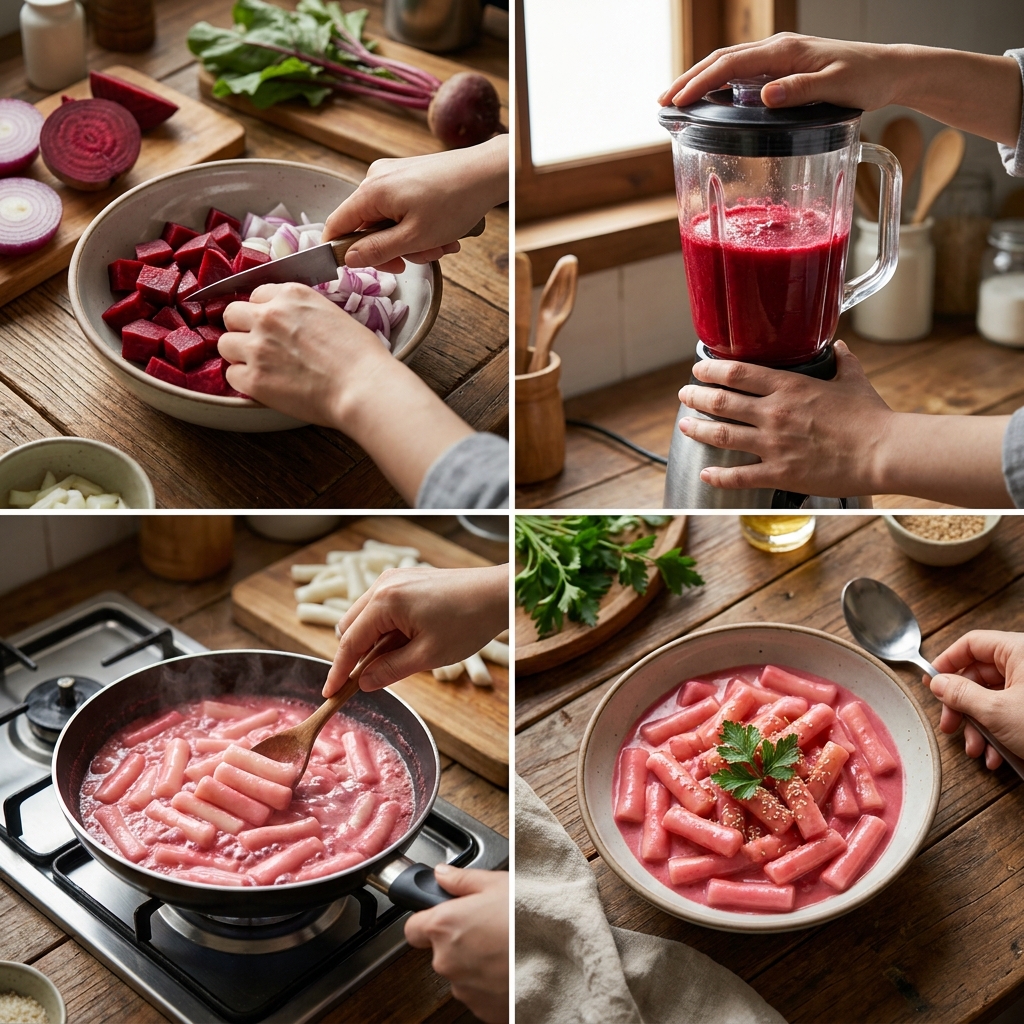
Creating rose tteokbokki involves preparing your sauce base, cooking the rice cakes, and combining them into a harmonious dish that balances flavors and textures perfectly. This rose tteokbokki recipe moves quickly once you understand each step, so prepare all ingredients before you start cooking. The cooking process for this rose tteokbokki recipe requires attention to avoid overcooking the sauce, which can become too thick or burn on the bottom.
Prepare Your Base Ingredients
- Blend one medium beet with a quarter cup of water until smooth, then strain through a fine mesh to remove pulp and create clear beet juice for your rose tteokbokki recipe.
- Combine three tablespoons of gochujang with two tablespoons of water in a bowl, stirring until the paste dissolves completely into a smooth sauce base.
- Mince two garlic cloves finely and measure one teaspoon of fresh ginger, keeping these aromatics separate until needed for the rose tteokbokki recipe.
- Prepare one cup of water or vegetable broth in a measuring cup, having it ready for when the rose tteokbokki recipe requires liquid.
Make the Rose Sauce
- Heat one teaspoon of sesame oil in a large pan over medium heat until it shimmers, creating the flavor foundation for this rose tteokbokki recipe.
- Add minced garlic and ginger to the hot oil, stirring constantly for 30 seconds until fragrant but not browned, which prevents bitter flavors in your rose tteokbokki recipe.
- Pour the dissolved gochujang mixture into the pan, stirring continuously for one minute to cook out the raw chili paste taste in your rose tteokbokki recipe.
- Add the strained beet juice slowly while stirring, creating the signature pink color that defines this rose tteokbokki recipe.
- Mix in one tablespoon of soy sauce and one to two tablespoons of sugar, tasting and adjusting sweetness based on your gochujang brand for the ideal rose tteokbokki recipe balance.
- Pour in one cup of water or broth, bringing the mixture to a gentle simmer while stirring occasionally for your rose tteokbokki recipe.
Cook the Rice Cakes
- Add two cups of tteokbokki rice cakes to the simmering sauce, stirring gently to coat each piece with the pink liquid in your rose tteokbokki recipe.
- Maintain a gentle simmer for eight to ten minutes if using fresh rice cakes, or twelve to fifteen minutes if using frozen rice cakes in this rose tteokbokki recipe.
- Stir occasionally to prevent sticking and ensure even cooking throughout the pot for your rose tteokbokki recipe.
- The sauce should thicken slightly and coat the back of a spoon when this rose tteokbokki recipe reaches the correct consistency.
- Taste the rice cakes for doneness; they should be tender and chewy, not mushy, when properly cooked in your rose tteokbokki recipe.
Finish and Serve
- Transfer the finished rose tteokbokki recipe to a serving bowl or plate, arranging the rice cakes and sauce attractively.
- Garnish generously with chopped green onions and a tablespoon of sesame seeds, adding both flavor and color contrast to your rose tteokbokki recipe.
- Optional: add sliced fish cake or vegetable cake strips if desired, which adds traditional texture to this rose tteokbokki recipe.
- Serve immediately while the rose tteokbokki recipe remains hot and the sauce coats each rice cake beautifully.
Chef Tips for Perfect Rose Tteokbokki
Mastering the finer details of rose tteokbokki preparation separates good results from exceptional ones. These proven techniques come from testing this rose tteokbokki recipe multiple times and adjusting based on real-world outcomes. Each tip addresses specific challenges that home cooks encounter when making rose tteokbokki for the first time.
- Use fresh beet juice for the most vibrant pink color in your rose tteokbokki: Blend fresh beets with minimal water rather than using bottled juice, which sometimes contains additives that affect the final color of your rose tteokbokki recipe. The natural beet pigments create a more authentic-looking sauce than artificial alternatives.
- Maintain medium heat throughout the rose tteokbokki cooking process: High heat causes the sauce to reduce too quickly, resulting in a thick, gluey coating. Medium heat allows the rice cakes to cook evenly while the sauce reaches the perfect consistency for your rose tteokbokki recipe.
- Taste and adjust sweetness before adding the rice cakes to your rose tteokbokki: The sauce should have a subtle sweet undertone that balances the chili heat. Once the rice cakes absorb the liquid, adjusting sweetness becomes more difficult in your rose tteokbokki recipe.
- Add sesame oil at the very end for maximum flavor in your rose tteokbokki: Toasted sesame oil’s delicate flavors diminish with prolonged cooking, so stir it in just before serving your rose tteokbokki recipe to preserve the nutty aroma.
- Keep the sauce consistency thick enough to coat the rice cakes but thin enough to pour: The sauce should pool slightly at the bottom of your rose tteokbokki serving bowl. If the sauce seems too thick while cooking, add water one tablespoon at a time to achieve the perfect consistency for your rose tteokbokki recipe.
- Don’t overload your pan when cooking rose tteokbokki: Crowding the pan prevents even cooking and sauce absorption. If serving more than three people, prepare your rose tteokbokki recipe in two batches or use a larger cooking vessel to ensure perfect results.
Common Rose Tteokbokki Mistakes to Avoid
Understanding common pitfalls when preparing rose tteokbokki helps you troubleshoot problems before they ruin your dish. This rose tteokbokki recipe fails most often due to easily preventable mistakes related to heat management, ingredient ratios, and timing. Recognizing these issues allows you to save your rose tteokbokki even mid-cooking.
- Overcooking the rice cakes in your rose tteokbokki recipe: This happens when the heat remains too high or you leave the rice cakes cooking unattended. Overcooked rice cakes become mushy instead of maintaining their characteristic chewiness. Solution: Use medium heat and check the rice cakes at eight-minute intervals. Undercooked rose tteokbokki feels starchy and dense, while perfectly cooked rice cakes yield easily to your teeth.
- Making the sauce too thick or too thin in your rose tteokbokki: Too much reduction creates a pasty coating that overwhelms the rice cakes, while too much liquid results in a soupy, diluted rose tteokbokki. Solution: Cook your rose tteokbokki recipe with the lid off to allow controlled evaporation. The sauce should coat the back of a spoon without dripping continuously.
- Using beet juice that’s too dilute for your rose tteokbokki: Bottled juice often contains excess water, requiring more volume to achieve the desired pink color in your rose tteokbokki recipe. This dilution can throw off the flavor balance. Solution: Make fresh beet juice by blending whole beets, or use strawberry puree as an alternative for your rose tteokbokki recipe.
- Adding ingredients in the wrong order for your rose tteokbokki: Adding soy sauce before cooking out the raw gochujang taste results in a muddled flavor profile in your rose tteokbokki. Solution: Always cook the gochujang base for at least one minute over medium heat before adding other ingredients to your rose tteokbokki recipe.
- Skipping the garlic and ginger step in your rose tteokbokki: Many home cooks rush this stage, preventing proper flavor development. Under-cooked aromatics result in a flat-tasting rose tteokbokki lacking depth. Solution: Toast garlic and ginger for exactly 30 seconds in hot sesame oil, watching carefully to prevent browning, for the best rose tteokbokki results.
- Not tasting and adjusting salt in your rose tteokbokki: Different gochujang brands vary in saltiness, affecting your rose tteokbokki’s final flavor. Over-salting makes the dish unpalatable, while under-salting results in a bland rose tteokbokki. Solution: Taste the sauce before adding rice cakes and adjust soy sauce and sugar accordingly for your rose tteokbokki recipe.
Best Rose Tteokbokki Variations and Substitutions
The beauty of rose tteokbokki lies in its adaptability to different ingredients, dietary preferences, and flavor preferences. This rose tteokbokki recipe responds well to creative substitutions that maintain the pink color and Korean flavor profile. Exploring variations of rose tteokbokki helps you customize the dish to your specific needs and available ingredients.
| Ingredient | Substitution | Impact on Flavor and Appearance |
|---|---|---|
| Beet juice | Strawberry puree (2-3 tablespoons) | Creates a softer pink color with subtle fruit sweetness. The rose tteokbokki becomes slightly sweeter and fruitier than the beet version. |
| Gochujang | Gochugaru (Korean chili flakes) mixed with gochujang (1:1 ratio) | The rose tteokbokki becomes spicier with more granular texture. This variation works best if you prefer more heat and texture variation. |
| Water or broth | Coconut milk (half milk, half water) | Adds creamy richness to the rose tteokbokki sauce. The color becomes lighter pink, and the flavor profile shifts toward Thai-Korean fusion. |
| Rice cakes | Sweet potato noodles or regular rice noodles | Creates a different texture for rose tteokbokki. Noodles absorb more sauce but lack the chewy rice cake signature. This variation works for those who prefer lighter textures. |
| Sesame oil | Perilla seed oil (if available) | Provides a nutty Korean flavor with subtle differences. The rose tteokbokki maintains its Korean identity while adding unexpected complexity. |
| Sugar | Honey or agave syrup (same amount) | Creates richer sweetness in rose tteokbokki with subtle floral or neutral notes. The sauce glazes differently and may caramelize more easily. |
| Fish cake (optional) | Mushrooms, tofu, or vegetable cakes | Makes rose tteokbokki vegetarian-friendly while maintaining traditional texture variety. Different vegetables contribute unique flavors and mouthfeel. |
| Garlic and ginger | Korean radish or scallion (1 tablespoon each, finely chopped) | Creates a lighter, more herbaceous rose tteokbokki. The flavor becomes fresher and less warming, better suited to warmer months. |
Serving Suggestions for Rose Tteokbokki
Rose tteokbokki shines as both a standalone dish and as part of a carefully composed Korean meal. Understanding optimal serving methods transforms your rose tteokbokki from a simple recipe into an elevated dining experience. This rose tteokbokki recipe adapts beautifully to various occasions and meal structures.
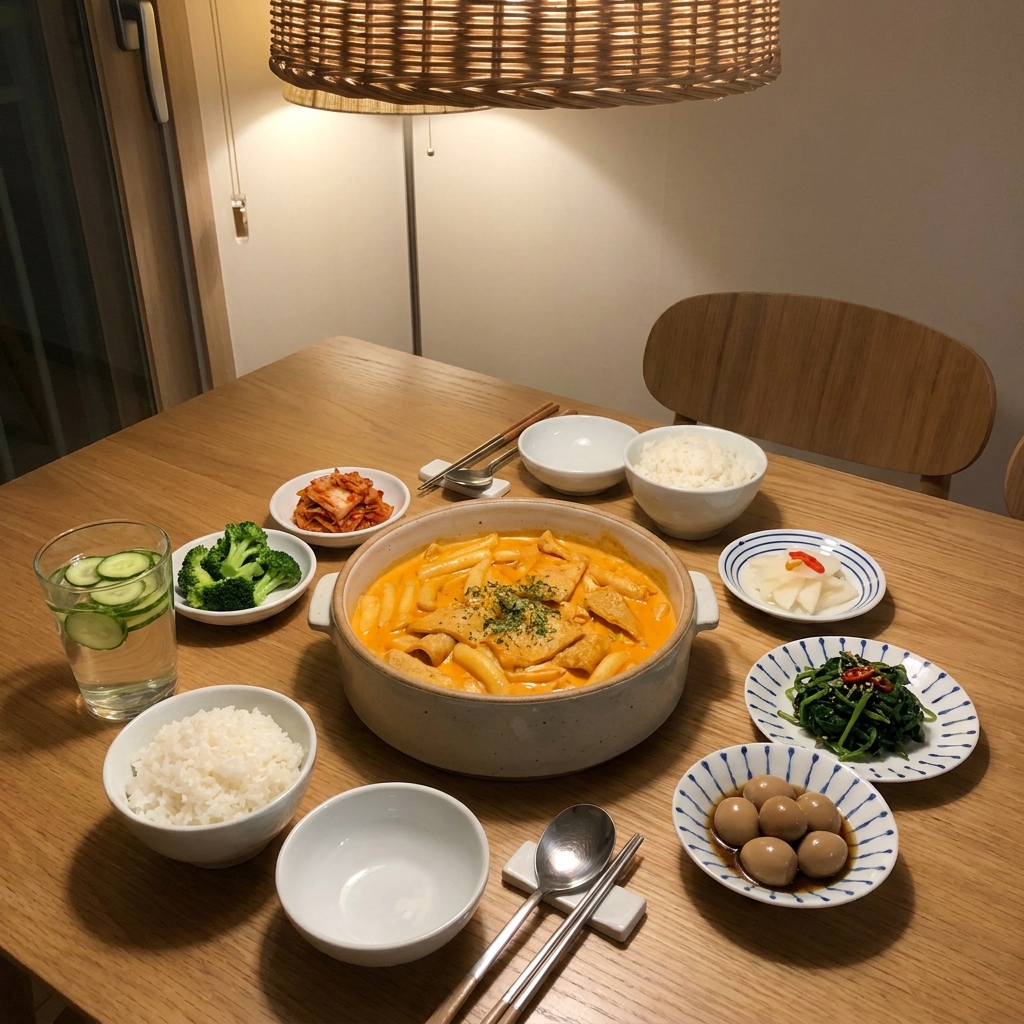
Serve rose tteokbokki immediately after cooking while the sauce remains hot and coats each rice cake with glossy perfection. For family dinners, present the rose tteokbokki in a communal serving bowl, allowing everyone to enjoy the beautiful pink color and take portions onto individual plates. Pair this rose tteokbokki recipe with simple white rice, which provides a neutral base that lets the sauce’s complex flavors shine.
Traditional side dishes complement this rose tteokbokki beautifully: kimchi provides spicy contrast, steamed vegetables add freshness, and seasoned seaweed sheets offer textural variety. Serve this rose tteokbokki recipe at parties as an appetizer in small bowls with toothpicks for easy sharing. The Instagram-worthy pink color makes rose tteokbokki perfect for food photography, so consider plating it for maximum visual impact when entertaining.
For casual weeknight meals, serve this rose tteokbokki recipe alongside stir-fried vegetables and egg fried rice, creating a complete and satisfying dinner. The mild to medium spice level of rose tteokbokki makes it appropriate for family meals with varied heat tolerances. Pair this rose tteokbokki recipe with cold barley tea or refreshing cucumber water to balance the chili heat and create a well-rounded meal.
Consider serving rose tteokbokki as part of a Korean fusion brunch, pairing it with scrambled eggs, toast, and pickled vegetables for unexpected flavor combinations. This rose tteokbokki recipe works well at meal prep gatherings where guests assemble their own bowls with various toppings. For special occasions, present this rose tteokbokki recipe as a conversation starter thanks to its unique pink appearance and the story behind its creation.
Storage and Reheating for Rose Tteokbokki
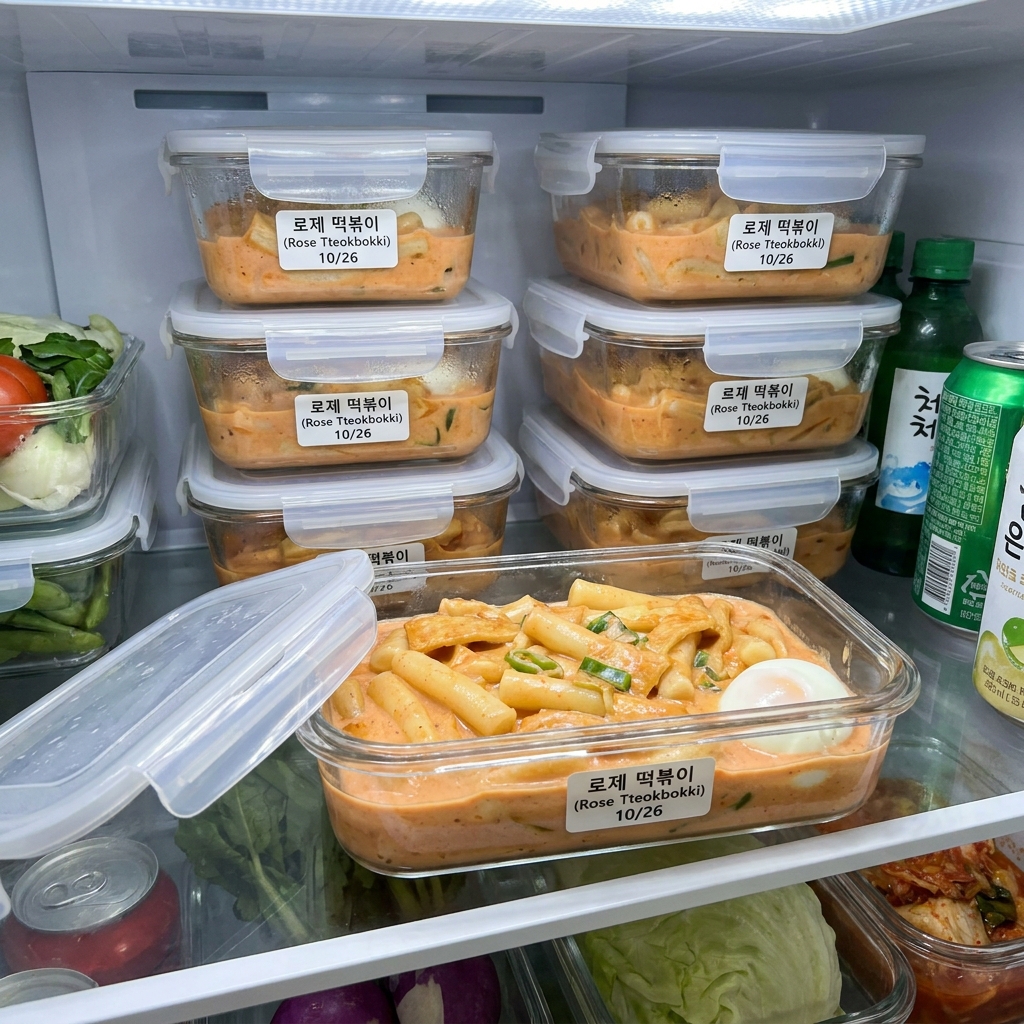
Proper storage extends the life of your rose tteokbokki without compromising quality or safety. This rose tteokbokki recipe stores differently than fresh-cooked versions, requiring specific methods to prevent the rice cakes from hardening. Understanding storage options ensures you can enjoy rose tteokbokki throughout the week.
| Method | Duration | Instructions |
|---|---|---|
| Refrigerator Storage | 3-4 days | Transfer cooled rose tteokbokki to an airtight container with the sauce. Store in the coldest part of your refrigerator. The rice cakes will firm up slightly but remain edible. |
| Freezer Storage | 1-2 months | Portion your rose tteokbokki into individual containers with sauce, then freeze. Leave slight headspace for expansion. Label with the date for easy tracking. |
| Reheating from Refrigerator | 5-7 minutes | Transfer rose tteokbokki to a pan over medium heat, stirring occasionally. Add 1-2 tablespoons water if the sauce has thickened too much. Heat until steaming throughout. |
| Reheating from Frozen | 10-12 minutes | Thaw rose tteokbokki in the refrigerator overnight if possible, then reheat using the refrigerator method. Or heat from frozen over medium-low heat, stirring frequently and adding extra water. |
| Make-Ahead Preparation | Up to 24 hours | Prepare the rose tteokbokki sauce and cook the rice cakes. Store separately in airtight containers. Combine and heat together when ready to serve. |
| Sauce-Only Storage | Up to 5 days | Store the pink sauce separately from cooked rice cakes. This prevents the cakes from absorbing excess liquid and becoming mushy. Reheat sauce gently before adding fresh or leftover rice cakes. |
The rose tteokbokki recipe maintains better texture when you store the sauce and rice cakes separately if planning to keep them longer than one day. When reheating rose tteokbokki, add a splash of water since the sauce thickens as it cools and storage time elapses. Never leave cooked rose tteokbokki at room temperature for more than two hours, as the sauce can develop harmful bacteria.
Nutritional Information for Rose Tteokbokki
Understanding the nutritional profile of your rose tteokbokki helps you fit this delicious dish into your dietary goals. This rose tteokbokki recipe provides a good balance of carbohydrates from the rice cakes and beneficial compounds from the vegetables and sesame oil. Approximate values are listed per serving for one portion of this rose tteokbokki recipe serving 2-3 people.
| Nutrient | Amount per Serving |
|---|---|
| Calories | 285-320 |
| Protein | 4-6 grams |
| Fat | 3-5 grams |
| Carbohydrates | 55-65 grams |
| Fiber | 2-3 grams |
| Sugar | 6-8 grams |
| Sodium | 480-520 mg |
These values represent approximate nutrition for the rose tteokbokki recipe as prepared with the standard ingredients listed. Adding protein sources like fish cake or tofu increases the protein content of your rose tteokbokki. The beet juice in this rose tteokbokki recipe contributes beneficial antioxidants and natural color without significant calorie addition.
Frequently Asked Questions About Rose Tteokbokki
Can I make rose tteokbokki without gochujang?
You can substitute gochujang with sriracha mixed with Korean fermented soybean paste, but the flavor profile changes significantly and rose tteokbokki loses its authentic Korean identity. The best alternative maintains the umami depth and chili base that defines traditional tteokbokki. If you must avoid gochujang, adjust expectations for this rose tteokbokki recipe accordingly.
What’s the best way to get perfectly chewy rice cakes in rose tteokbokki?
Cook your rose tteokbokki rice cakes in gently simmering sauce rather than boiling water, which prevents them from becoming too soft. Fresh rice cakes require eight to ten minutes of cooking, while frozen ones need twelve to fifteen minutes in your rose tteokbokki recipe. The rice cakes should yield easily when bitten but still have a slight resistance that creates the characteristic chew.
How do I prevent the rose tteokbokki sauce from burning on the bottom of the pan?
Maintain medium heat throughout cooking and stir your rose tteokbokki frequently, especially during the final minutes when the sauce thickens. Use a pan with good heat distribution properties and avoid high heat, which concentrates the sauce too quickly. If you notice browning on the bottom, immediately transfer your rose tteokbokki to a new pan with a small amount of added water.
Can I prepare rose tteokbokki in advance for a dinner party?
Prepare the pink sauce and cook the rice cakes separately up to six hours ahead, then combine and reheat gently before serving your rose tteokbokki recipe. This approach prevents the rice cakes from absorbing excess sauce and becoming mushy during storage. Alternatively, cook your complete rose tteokbokki recipe up to four hours ahead and reheat over low heat with a splash of water.
Is rose tteokbokki spicy, and can I adjust the heat level?
Rose tteokbokki is mildly to moderately spicy depending on your gochujang brand and the amount used in the recipe. Reduce the gochujang to two tablespoons for milder rose tteokbokki, or increase sugar to three tablespoons to balance heat. Those seeking extra spice can add quarter teaspoon of gochugaru (Korean chili flakes) to amplify the heat in your rose tteokbokki recipe.
What’s the difference between rose tteokbokki and regular tteokbokki?
Rose tteokbokki substitutes beet juice or strawberry puree for some of the red chili flavor in traditional tteokbokki, creating a softer pink color and milder, sweeter flavor profile. Regular tteokbokki relies entirely on gochujang for color and heat, making it considerably spicier than rose tteokbokki. The cooking method and core ingredients remain similar, but rose tteokbokki offers a more approachable entry point for those new to Korean cuisine.
Can I make a vegetarian or vegan version of rose tteokbokki?
Yes, rose tteokbokki is naturally vegetarian when you omit the optional fish cake and use vegetable broth instead of seafood-based broth. Ensure your gochujang contains no seafood products by checking the label, as some brands include fish sauce. For vegan rose tteokbokki, use soy sauce instead of any fish-based seasonings and confirm all other ingredients meet vegan standards.
How should I reheat leftover rose tteokbokki without drying it out?
Add one to two tablespoons of water to your leftover rose tteokbokki before reheating over medium heat, stirring occasionally. This moisture prevents the sauce from reducing too much and drying out the rice cakes. If your rose tteokbokki stored with ample sauce, skip the added water and simply heat gently until steaming throughout.
What toppings work best for garnishing rose tteokbokki?
Green onions and sesame seeds are traditional garnishes that add both flavor and visual contrast to rose tteokbokki. Additional options include toasted nori sheets cut into strips, crushed peanuts, or microgreens for an elevated presentation. Avoid heavy toppings that overwhelm the delicate pink sauce in your rose tteokbokki recipe.
Why does my rose tteokbokki look grey instead of pink?
Grey coloring indicates your beet juice was too dilute or you used too little of it in your rose tteokbokki recipe. Additionally, using low-quality gochujang with brownish undertones affects the final color. For your next rose tteokbokki batch, blend fresh beets with minimal water and use the full amount of beet juice specified in the recipe to achieve the proper pink hue.
Conclusion
Rose tteokbokki represents a beautiful evolution of Korean comfort food that honors tradition while embracing creative culinary expression. This rose tteokbokki recipe succeeds because it balances visual appeal with genuine flavor complexity, combining sweet, savory, and spicy notes in a harmonious whole. The chewy rice cakes absorb the pink sauce perfectly, creating a memorable texture that satisfies on multiple levels. Whether you’re a seasoned Korean cuisine enthusiast or exploring Korean cooking for the first time, rose tteokbokki offers accessibility and impressive results. Make this rose tteokbokki recipe for a special dinner, family gathering, or whenever you want to bring joy to the table through thoughtfully prepared food. The moment you plate your rose tteokbokki and see the elegant pink sauce glossing each rice cake, you’ll understand why this dish has captured so many hearts across social media and dinner tables worldwide.
Savory Greek Yogurt Dip: Easy Recipe with 10 Delicious Variations 2026
Hot Honey Cottage Cheese Sweet Potato Beef Bowl
Learn more about nutritional tracking for Korean dishes and explore proper food storage guidelines for maintaining meal safety throughout the week.
Print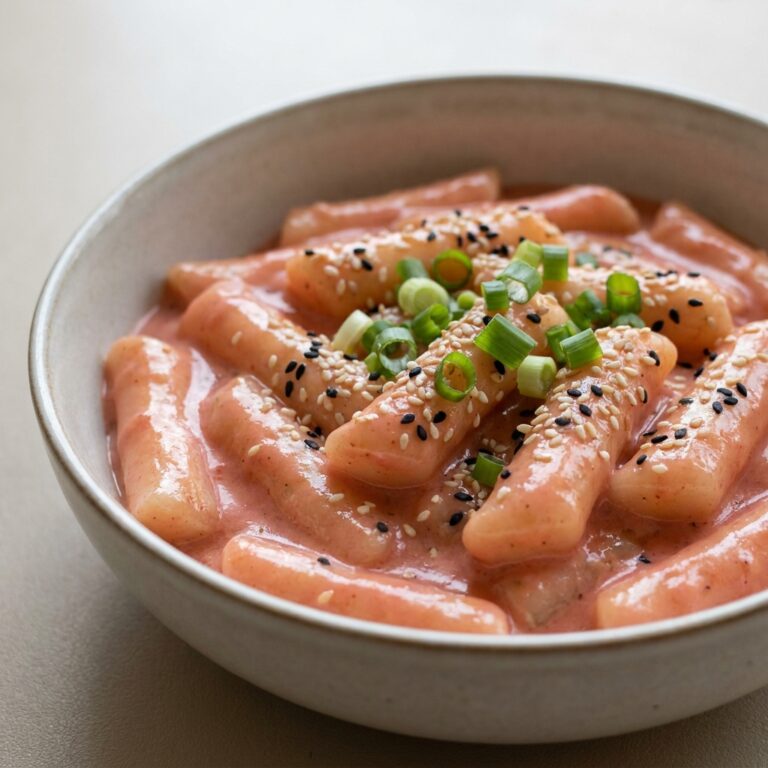
Rose Tteokbokki Recipe 2026
This rose tteokbokki recipe combines chewy Korean rice cakes with a creamy pink gochujang sauce made from beet juice for a sweet, savory, and mildly spicy dish that looks as stunning as it tastes.
- Total Time: 35 minutes
- Yield: 2–3 servings 1x
Ingredients
- 2 cups tteokbokki rice cakes
- 3 tablespoons gochujang (Korean red chili paste)
- 3–4 tablespoons beet juice or fresh beet puree
- 1 tablespoon soy sauce
- 1 teaspoon sesame oil
- 1–2 tablespoons sugar
- 2 cloves garlic, minced
- 1 teaspoon fresh ginger, minced
- 1 cup water or vegetable broth
- 2 green onions, chopped
- 1 tablespoon sesame seeds
- 1 fish cake or vegetable cake, sliced (optional)
Instructions
- Blend one medium beet with a small amount of water until smooth, then strain to create beet juice.
- Mix gochujang with 2 tablespoons of water in a bowl until smooth.
- Heat sesame oil in a large pan over medium heat.
- Add minced garlic and ginger and cook for 30 seconds until fragrant.
- Pour the gochujang mixture into the pan and stir continuously for 1 minute.
- Add beet juice slowly while stirring to create the pink sauce.
- Mix in soy sauce and sugar, adjusting sweetness to taste.
- Pour in water or broth and bring to a gentle simmer.
- Add rice cakes and stir gently to coat with the sauce.
- Simmer for 8-10 minutes for fresh rice cakes or 12-15 minutes for frozen rice cakes.
- Stir occasionally to prevent sticking and cook until the sauce thickens slightly.
- Add fish cake or vegetable cake if using and cook for 2 more minutes.
- Transfer to a serving bowl and garnish with green onions and sesame seeds.
- Serve immediately while hot.
Notes
Use fresh beet juice for the most vibrant pink color. Keep the heat at medium to avoid over-thickening the sauce. Adjust sugar and spice levels based on your preferred taste and gochujang brand.
- Prep Time: 15 minutes
- Cook Time: 20 minutes
- Category: Main Course
- Method: Stovetop
- Cuisine: Korean
- Diet: Vegetarian
Nutrition
- Serving Size: 1 serving
- Calories: 320
- Sugar: 8g
- Sodium: 520mg
- Fat: 5g
- Saturated Fat: 1g
- Unsaturated Fat: 3g
- Trans Fat: 0g
- Carbohydrates: 65g
- Fiber: 3g
- Protein: 6g
- Cholesterol: 0mg