Did you know that meatloaf is actually one of the most searched “comfort foods” in America every single year? Honestly, I totally get it. For me, meatloaf with tomato soup glaze is more than just a meal; it’s like a warm hug after a long Tuesday of teaching eighth graders. I remember the first time I tried to make this back in my early twenties—it was so dry it could’ve been used as a brick for a patio! But after years of practice, I’ve figured out how to make it perfectly juicy every single time. In this article, we’re going to talk about why that canned soup is actually a secret weapon and how you can avoid the “meat-brick” disaster I experienced.
Why Tomato Soup is the Secret to a Perfect Glaze
I’ve spent a lot of my life trying to find shortcuts that actually work, especially on those nights when I’ve got a stack of history papers to grade and a hungry family staring at me. Let me tell you, the first time I made meatloaf with tomato soup glaze, I was a total skeptic. I thought using a can of soup was something people only did in the 1950s because they didn’t have better options. Boy, was I wrong! The reason this works so well isn’t just because it’s easy; it’s because of the science behind that condensed red liquid. It has a way of clinging to the meat that other sauces just can’t match.
It Stays Where You Put It
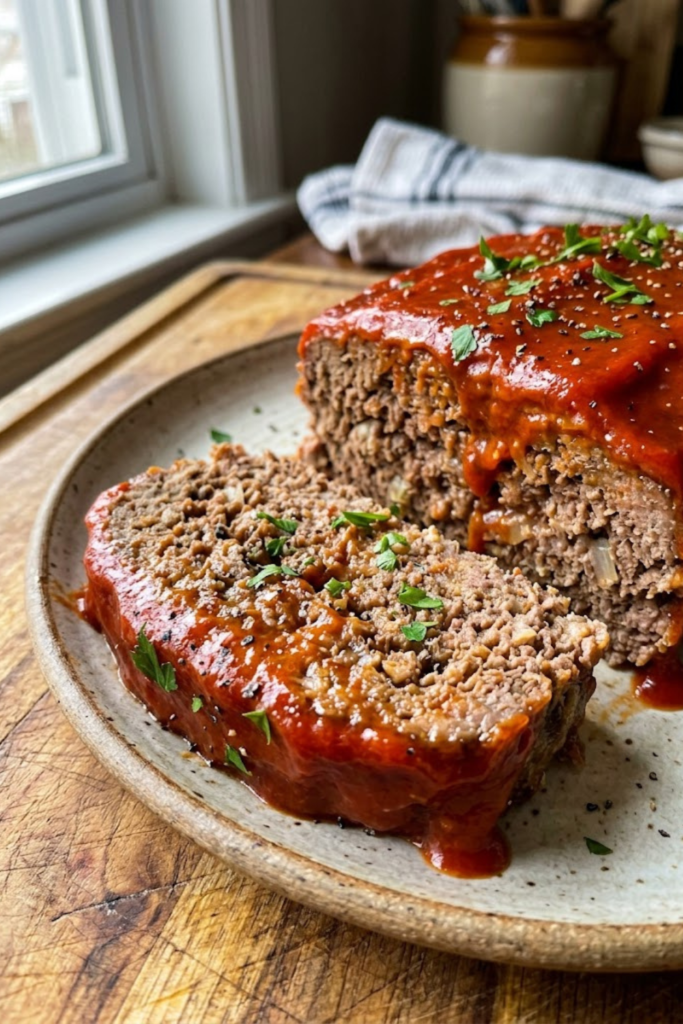
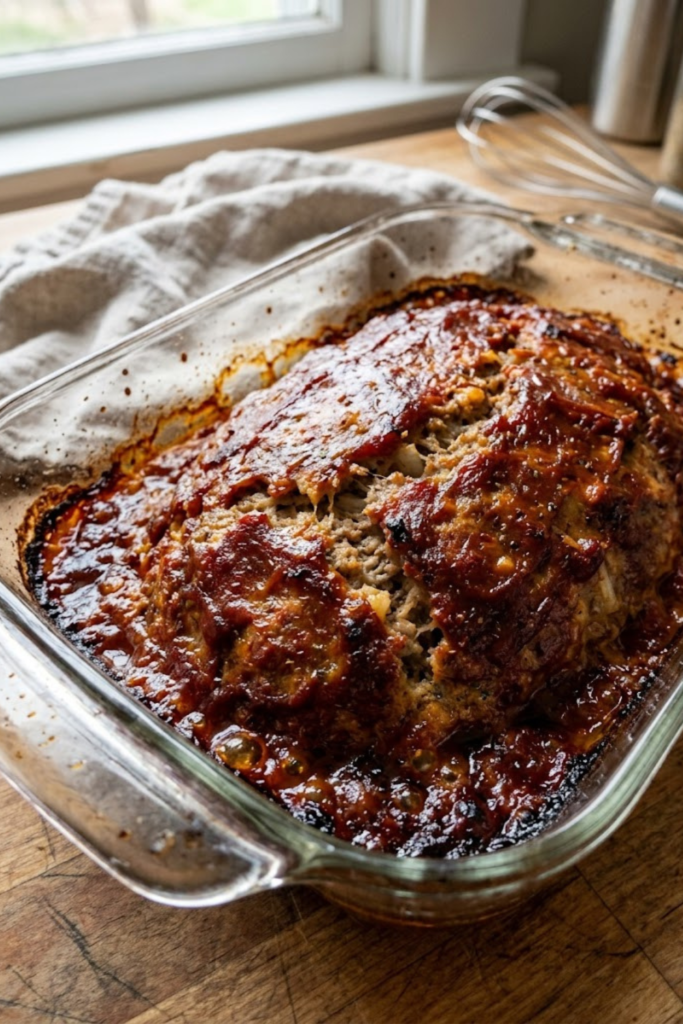
One of the biggest problems with making a good meatloaf is that the sauce often just slides right off the sides and pools at the bottom of the pan. If you use a thin tomato sauce, it just disappears or makes the bottom of the meat soggy. The condensed soup is thick enough to sit right on top. As it bakes, the water evaporates and leaves behind this thick, candy-like coating. I once tried to make a glaze with just tomato paste and water, and it was a total disaster—it was way too sour and didn’t have that “stick-to-your-ribs” feel. The soup has just enough thickeners in it to stay put and create a beautiful red crust that looks great on the plate.
The Perfect Balance of Sweet and Tangy
Ketchup is the classic choice for most people, but I find it can be a bit too sugary for a main course. If you want a meatloaf with tomato soup glaze that tastes balanced, the soup is the way to go. It has a savory depth that ketchup lacks. Plus, when it mixes with the juices from the ground beef, it creates a flavor that is purely “home.” My kids usually complain if things are too spicy or too “weird,” but they never complain about the soup glaze. It’s got that mild, comforting taste that everyone can agree on. It’s not too bold, but it isn’t boring either.
A Secret Moisture Boost
Here is a little trick I learned from my grandmother: don’t just put the soup on top! I always save about a quarter of the can to mix right into the meat with my breadcrumbs. This makes sure that the meatloaf stays juicy even if you accidentally leave it in the oven five minutes too long because you were distracted by a phone call. It keeps the inside from getting that crumbly, dry texture that makes meatloaf get a bad reputation in some circles. Using the soup both inside and out is the real pro move for a perfect dinner. It’s the best way to get a result that isn’t a dry brick.
Choosing the Right Meat and Binders
When I’m not standing in front of a whiteboard trying to explain history to a room full of teenagers, I’m usually in my kitchen trying to figure out why my dinner didn’t turn out right. One thing I learned early on is that your meatloaf with tomato soup glaze is only as good as the meat you start with. If you walk into the grocery store and just grab the first package of ground beef you see, you might be setting yourself up for a dry, sad meal. Trust me, I’ve done it, and my family just looked at their plates and asked for extra water because it was so hard to swallow. It was pretty embarrassing.
Why the 80/20 Rule Matters
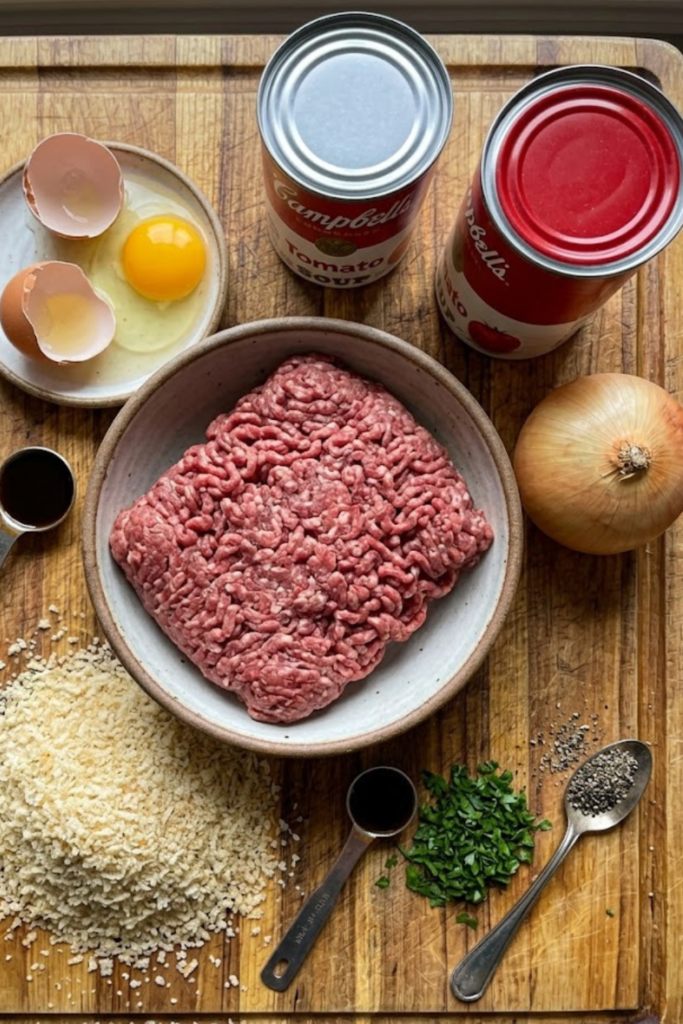
You might see that ground beef labeled “extra lean” and think you’re doing yourself a favor. Stop right there! For a really good loaf, you need fat. I always go for the 80/20 ground beef. That 20% fat is what keeps the meat tender while it’s sitting in the hot oven for an hour. If you go too lean, the meat fibers just tighten up and get tough as they cook. I tried using the 95% lean stuff once because it was on sale, and the meatloaf ended up so dry it actually crumbled when I tried to slice it. It was like eating a savory sponge. Not good at all. If you want to get a bit more flavor, you can even mix in some ground pork.
Finding the Right Binder
Now, you can’t just have a big pile of meat. It needs something to hold it together so it doesn’t just turn into a pile of loose beef on your plate. I’m a huge fan of Panko breadcrumbs. Regular breadcrumbs are fine, but they can be a little heavy and make the meatloaf feel dense, almost like a brick. Panko has these big, airy flakes that keep the texture light. I also throw in a splash of milk and an egg. The milk helps soak into the crumbs and keeps everything hydrated from the inside out. It’s like the glue that makes sure your meatloaf with tomato soup glaze stays in one piece when you’re serving it to your guests.
Hands Off! Don’t Overwork It
This is the biggest mistake I see. You get in there with your hands and you just squeeze and mash the meat like you’re playing with clay. Don’t do that! You want to gently fold the ingredients together until they are just combined. If you overwork the meat, the proteins get all tangled and the result is a rubbery texture that is hard to chew. I usually just use my fingers like claws to lightly toss it all together in the bowl. It should feel loose and soft, not like a solid, packed ball. Taking it easy with the mixing makes a huge difference in how the final dish feels when you take that first bite.
How to Apply the Glaze for Maximum Flavor
Applying the glaze is honestly the most satisfying part of the whole process. It’s kind of like when I finally get to put those gold star stickers on a student’s paper after they’ve worked really hard on a project. But you can’t just slap it on whenever you feel like it. If you put that meatloaf with tomato soup glaze in the oven right at the start, you’re asking for a lot of trouble. Most of us have been there before—you pull the pan out and the top is black and burnt while the inside is still basically raw. It’s a huge bummer and it makes the whole house smell like a toasted marshmallow gone wrong.
Timing is Everything
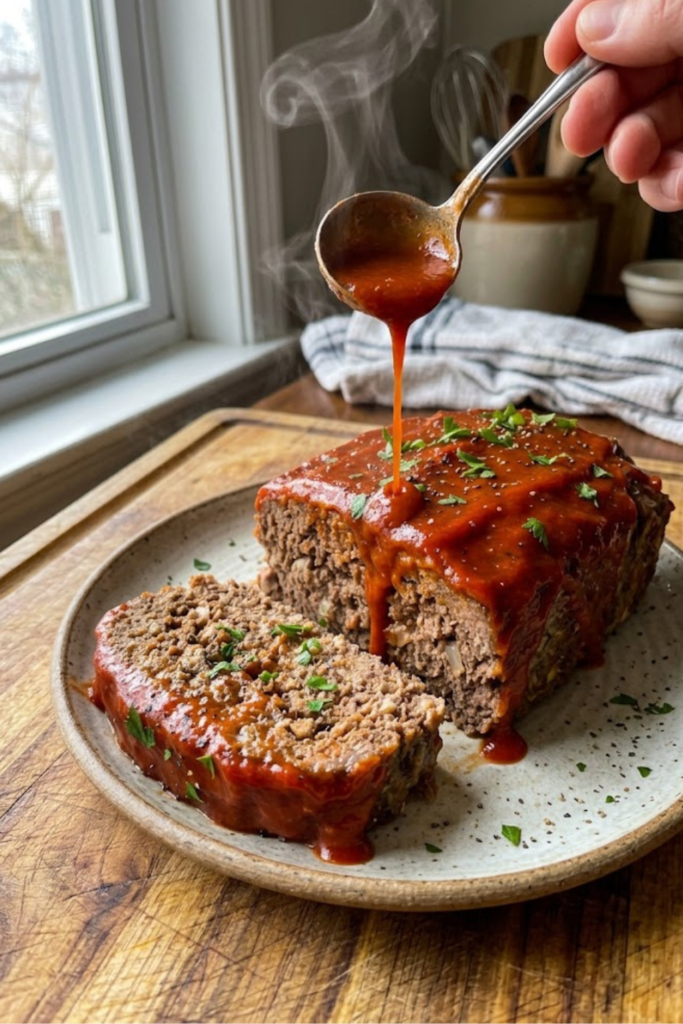
I usually wait until there’s about 20 minutes left on the timer before I even touch the soup can. My oven usually takes about an hour to cook a standard loaf, so at the 40-minute mark, I pull it out. The meat is mostly firm by then, which means the glaze won’t just run off and disappear into the fat at the bottom of the pan. You want that meatloaf with tomato soup glaze to sit right on top like a thick, red blanket. If you do it too early, the sugars in the soup will caramelize too fast and turn into a bitter, dark mess. It’s all about patience, which is something I try to teach my eighth graders every single day, even if they don’t always want to listen.
The Secret Double-Layer
If you really want to be the hero of the dinner table, don’t just glaze it once. I like to do what I call a “base coat” at the 40-minute mark, let it bake for ten minutes, and then pull it out and hit it with a second layer for the final ten minutes. This builds up a thick, tacky texture that is just incredible. It makes the meatloaf look like it came out of a professional kitchen instead of my slightly messy one. Most people just do a thin layer and call it a day, but that second coat is what really makes the flavor pop. It’s like putting two coats of paint on a wall; it just looks better and stays put much longer.
Tweaking the Flavor
While the soup is great on its own, I usually stir in a spoonful of brown sugar and a tiny splash of cider vinegar. The sugar helps it get that shiny, glass-like look, and the vinegar cuts through the heaviness of the beef. It makes the meatloaf with tomato soup glaze taste like you spent hours on a fancy sauce when you really just opened a can and stirred it for ten seconds. Sometimes I even add a bit of dry mustard if I’m feeling brave that night. Just don’t go overboard—keep it simple and let the oven do the heavy lifting for you while you relax.
Bringing the Comfort Home
At the end of a long day, there really isn’t anything quite like a slice of meatloaf with tomato soup glaze to make everything feel a bit more manageable. I’ve spent years tweaking this recipe, usually while trying to ignore the mountain of ungraded essays on my dining room table. What I’ve learned is that great cooking doesn’t have to be fancy or expensive. It just needs to be made with a bit of care and the right ingredients. This dish has become a staple in my house because it’s reliable, and in a world that feels pretty chaotic sometimes, a reliable dinner is worth its weight in gold.
Why This Recipe Works Every Time
The reason this meatloaf with tomato soup glaze stands out is because it hits all those nostalgic notes without being a total grease-bomb. By choosing the right meat-to-fat ratio and being careful not to overwork the mix, you get a texture that is light but still filling. And of course, that soup glaze is the real star. It provides that perfect hit of sweetness and tang that makes you want to go back for a second slice. I’ve tried many different versions over the years, but I always come back to this one because it’s the most consistent. It’s the kind of meal that makes the whole house smell amazing, which is a nice change from the smell of old gym bags and floor wax I deal with at school.
The Best Sides for a Perfect Meal
To really round out the experience, I usually serve this with a big pile of garlic mashed potatoes and maybe some roasted green beans. The potatoes are great because they can soak up any extra glaze that drips off the meat. If I’m feeling a bit lazy—which, let’s be honest, is most Thursdays—I’ll just throw some frozen corn in a pot with a little butter. The sweetness of the corn actually goes really well with the tomato soup topping. It’s a simple, classic plate of food that everyone from my youngest nephew to my picky father-in-law will actually eat without complaining.
Making the Most of Leftovers
If you are lucky enough to have any left over, you have to try making a sandwich the next day. I take a cold slice of the meatloaf with tomato soup glaze, put it on some white bread with a little extra mayo, and it’s basically the best lunch ever. It’s almost better the second day because the flavors have had more time to hang out together in the fridge. My fellow teachers are always jealous when they see me pulling that out of the breakroom microwave. It’s a great way to make sure nothing goes to waste while also giving yourself a little treat during a busy workday. If you enjoyed this recipe and found these tips helpful, please share this post on Pinterest so your friends can try it too!