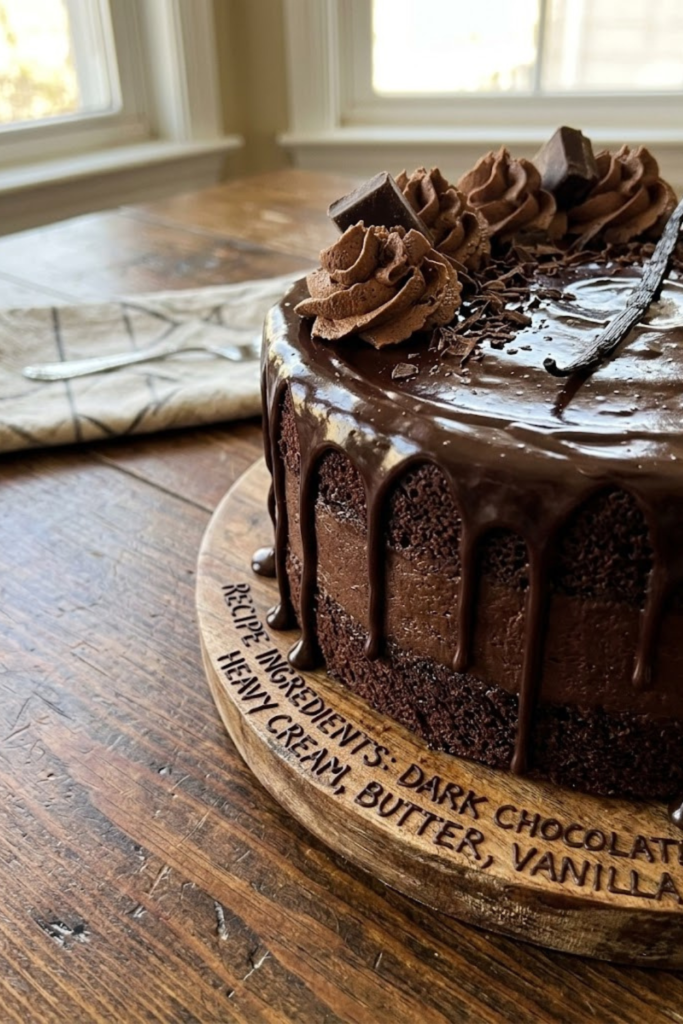
“A cake is a canvas, but the drip is the soul,” a famous pastry chef once told me, and honestly? They weren’t lying! Did you know that over 60% of home bakers rank the “perfect drip” as their most-wanted skill this year? I remember my first attempt at a chocolate drip cake; it looked more like a chocolate soup disaster than a masterpiece. But don’t worry! We are going to break down the science of ganache, the importance of temperature, and the little tricks that make your cake look like it came from a high-end bakery. Whether you are a total newbie or a seasoned pro, let’s get those drips looking sharp and delicious.
Choosing the Best Chocolate for Your Drip
I’ve spent years in my kitchen trying every brand of chocolate you can find at the local grocery shop. I used to think all chocolate was basically the same, but boy, was I wrong! If you want that perfect, smooth look on your cake, picking the right bar is the most important step. It’s like picking the right paint for a house; if you start with the cheap stuff, the final result just won’t look right. I remember my first few cakes looked okay, but the chocolate felt “off.” It didn’t have that mirror-like shine I saw in magazines. That is when I started paying attention to what was actually inside the wrapper.
Couverture vs. Standard Chocolate Chips
Most people reach for a bag of chocolate chips because they are easy to find and cheap. I did this for a long time too! But here is a little secret: chocolate chips are made to hold their shape during baking. They have stabilizers in them that stop them from melting into a perfectly smooth liquid. This can make your drip look lumpy or way too thick. You’ll be standing there wondering why your ganache looks like chunky mud instead of a waterfall.
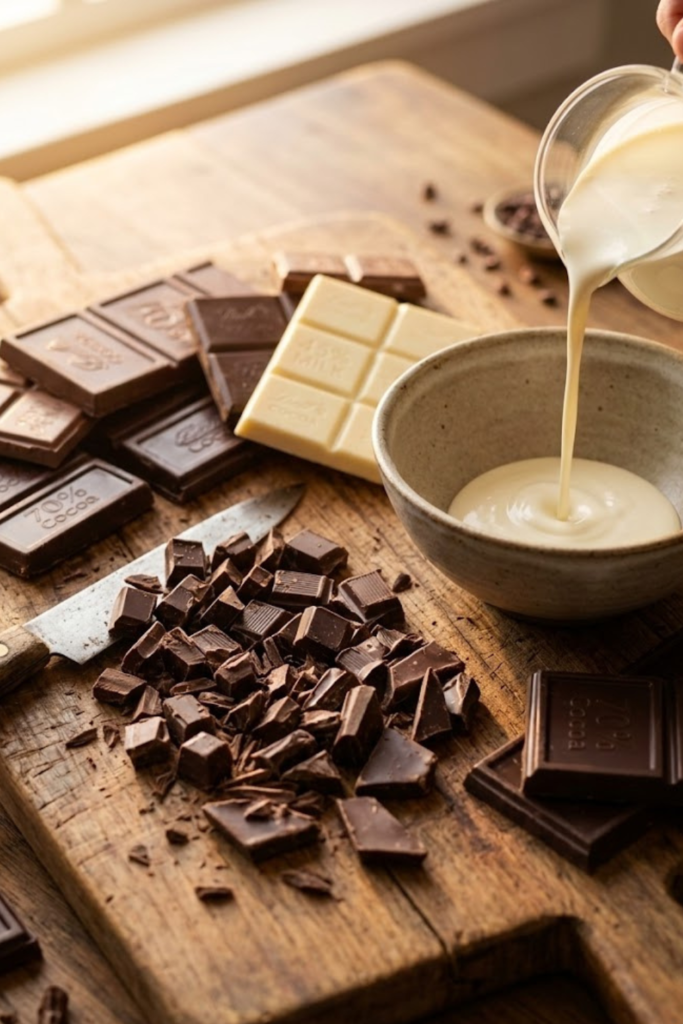
Instead, I always tell people to use “couverture” chocolate. This is just a fancy name for high-quality chocolate that has a higher amount of cocoa butter. Because it has more fat, it melts down like silk. If you can’t find that, don’t panic. Just buy a high-quality chocolate bar from the candy aisle—the kind you’d want to eat for a snack—and chop it up into small bits.
Why the Cocoa Percentage is a Big Deal
When you look at the wrapper, you’ll see numbers like 55%, 72%, or even 90%. I usually stick to something between 50% and 60% for a dark chocolate drip. This is the sweet spot. If the percentage is too high, the ganache gets very stiff and might even crack when you try to cut a slice.
I remember one time I used a 90% dark chocolate bar because I thought it would look “extra dark.” It was so bitter and thick that it wouldn’t even flow down the side of the cake! It just sat there like a dark brown blob. For milk chocolate, just keep in mind you’ll need less cream because it already has a lot of milk solids and sugar.
Fat Content and That Bakery Shine
We all want that shiny, glossy finish that makes people say “wow” when you bring the cake out. That shine comes from the fat. Using a chocolate with a high cocoa butter content helps a lot. Sometimes, if my chocolate looks a bit dull, I’ll stir in a tiny knob of room-temperature butter at the very end. It’s a simple trick I learned from an old baking book years ago. Just stir it in gently until it disappears. This makes the drip look rich and professional without being too difficult for a home baker.
Mastering the Ganache Consistency
I remember the first time I tried to make a chocolate drip. I thought, “Hey, it’s just chocolate and cream, how hard can it be?” Well, I ended up with a cake that looked like it had been through a muddy rainstorm. The chocolate just slid right off the buttercream and pooled at the bottom of the stand. It was a total mess, and I felt like a failure in my own kitchen. But that’s how we learn, right? I’ve made hundreds of these since then, and I’ve found that getting the feel for your ganache is what makes or breaks the whole look. It’s all about finding that middle ground where the chocolate is thick enough to stay on the cake but thin enough to flow.
The 1:1 Magic Ratio
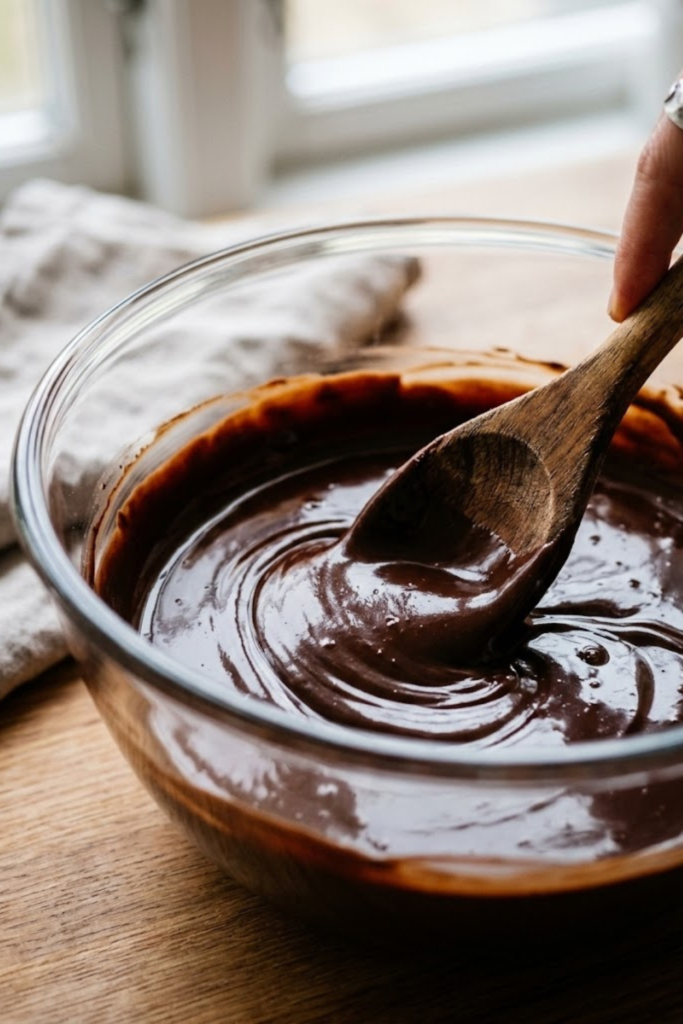
For most of my cakes, I stick to what I call the 1:1 ratio. This means if you use 100 grams of chocolate, you use 100 grams of heavy cream. It’s a simple starting point that works most of the time for a standard dark chocolate. But here is something I learned the hard way: not all chocolate acts the same. If you are using a very dark chocolate with a high cocoa count, it might end up way too thick. If that happens, I usually just add a tiny splash of warm cream to thin it out. You want it to look like thick, warm honey when you lift your spoon. If it runs off like water, it’s too thin, and you need to add a bit more chopped chocolate to save it before you start pouring.
Why Your Thermometer is Your Best Friend
I used to try and guess if the chocolate was ready by touching the side of the bowl. Don’t do that! My hands are always cold, so I was always wrong. Now, I always use a cheap digital thermometer to be sure. You want the ganache to be right around 90°F (about 32°C) when you start the drip. If it’s 100 degrees, it’s going to run way too fast and reach the bottom of the cake before it has a chance to set. If it’s 80 degrees, it’ll be too gloopy and won’t give you those pretty, thin drips. Taking the temperature takes the stress out of the whole process.
Stirring for a Mirror Finish
The way you stir matters more than you might think. I used to use a whisk because I wanted to get it done fast. Big mistake! A whisk adds air, and air creates tiny bubbles. Those bubbles stay in the chocolate and make your drip look bumpy and cheap. Now, I use a small rubber spatula and I stir in very small circles right in the middle of the bowl. It takes a bit longer, but the result is a smooth, glassy finish that looks like you bought it from a fancy bakery. It’s these little habits that really change how the final cake looks.
The Secrets to a Perfectly Chilled Cake
I used to be so impatient when it came to baking. I thought that as soon as I finished smoothing the frosting, I could just get right to the fun part and start the drip. I was so wrong! One Saturday morning, I was making a birthday treat for my nephew. I had just finished the vanilla buttercream and was feeling pretty good about myself. I poured my warm chocolate right on top, and instead of those cute little drips you see on TV, the whole side of the cake just started to melt. The frosting literally slid off the cake along with the chocolate. It looked like the cake was crying! I had to scrape the whole thing off and start over. It was a huge waste of time and expensive butter.
The Cold Shock Trick
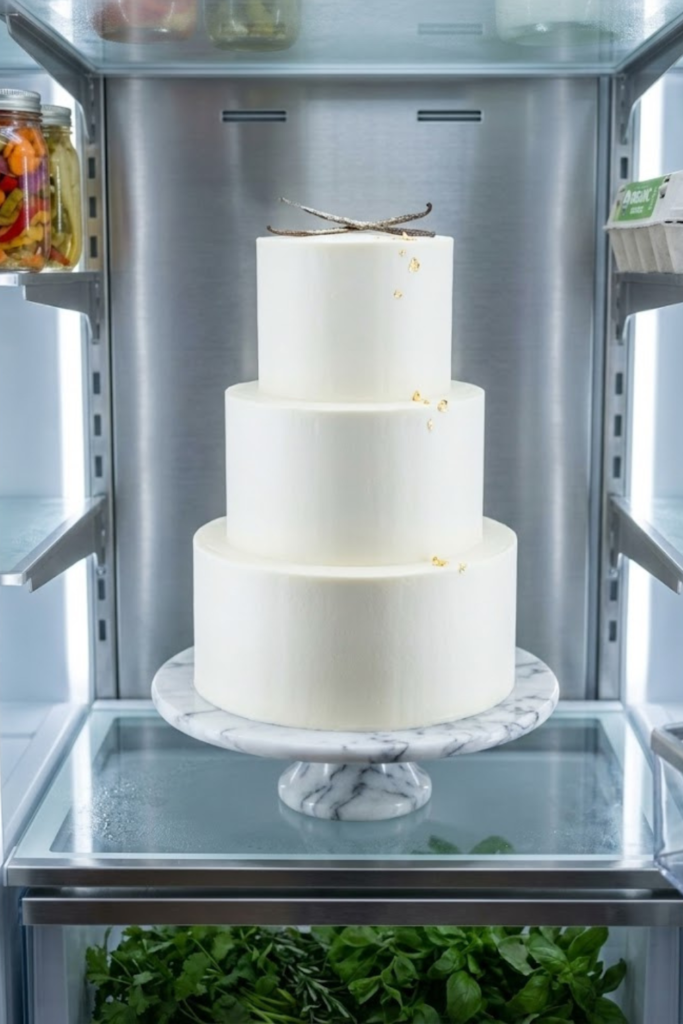
The big secret I wish someone had told me back then is that your cake needs to be cold. Like, really cold. I usually leave mine in the fridge for at least an hour before I even think about touching the chocolate. When that warm ganache hits a cold cake, it stops in its tracks. Think of it like a car hitting the brakes. If the cake is room temperature, there is nothing to stop the drip from going all the way down to the plate. But if the buttercream is firm and chilled, the chocolate starts to thicken up the moment it touches the surface. This is how you control the length of your drips. If you want short ones, make the cake even colder. It took me a few tries to get the timing right, but now it is just part of my routine.
Fixing the ‘Sweat’ Problem
Sometimes, when you take a cake out of a cold fridge, it starts to get tiny water droplets on the side. We call this “sweating.” If your cake is too wet, the chocolate won’t stick; it will just slide off like rain on a window. If I see this happening, I just take a clean paper towel and very gently dab the surface. You don’t want to mess up your smooth frosting, so you have to be very careful! Once the surface is dry and cold, you are ready for the best part of making a chocolate drip cake.
Getting the Base Ready
Before the cake goes in the fridge for its “big chill,” make sure your buttercream is as smooth as you can get it. Any big bumps or holes in the frosting will make your drips look wiggly and uneven. I use a metal scraper to get those sides flat. It takes a bit of practice to get it perfect, but even a “good enough” job looks way better once the chocolate covers it. Just remember: chill first, drip second. Your future self will thank you for not having to clean up a melted chocolate puddle on the floor!
Application Techniques: Spoon vs. Squeeze Bottle
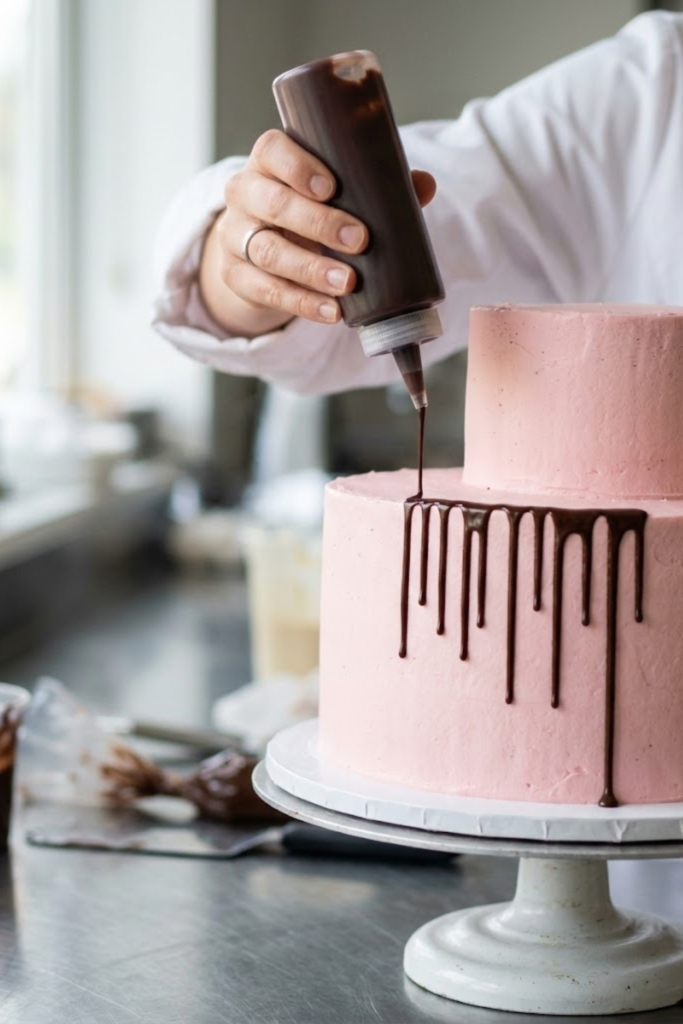
I’ve spent a lot of time standing at my kitchen island, looking at a finished cake and wondering which tool to grab. When I first started out, I didn’t have any fancy gear or special gadgets. I just used a regular soup spoon from my kitchen drawer. I thought that’s how all the big-name pros did it! Using a spoon is a great way to start because you probably already have ten of them in your house right now. It gives the cake a more “homemade” and cozy look that people really love. I like to call it the rustic style because it isn’t meant to be perfect. You just take a little bit of ganache on the tip of the spoon and gently push it over the edge. The trick I found is to do one drip at a time. If you try to pour the whole thing at once, you lose control fast. One time, I slipped and half a cup of chocolate dumped down the side. I tried to fix it with a paper towel, but it just made a big brown smear. Lessons learned!
Why the Squeeze Bottle Changed My Life
After a year of using spoons, I finally bought a cheap plastic squeeze bottle. It changed everything for me and my cakes. If you want those perfect, even drips that look like they were made by a machine, this is the way to go. It feels a lot more like drawing a picture than baking. You can control exactly how much chocolate goes into each drip, which is great for making them all the same length. But, there is a catch you should know about. If your chocolate is too thick, it gets stuck in the nozzle. I’ve actually had the top pop off a bottle before because I was squeezing way too hard. Chocolate went everywhere—my face, the walls, and even the ceiling! It was a disaster to clean up. Now, I always make sure to test the flow on a plate before I ever touch the cake. It’s a simple step that saves a lot of headache.
Filling the Top Without the Mess
Once you finish the drips around the edge, you have to fill in the top of the cake. This is where most people mess up and get frustrated. They pour too much in the middle and the weight of the chocolate pushes the side drips down even further, making a big puddle on the board. I usually do the edges first, let them set for a minute in the fridge, and then come back to fill the center. Using a small spatula to spread it out to the edges helps keep things looking neat. It doesn’t have to be perfect, but you want it to look intentional. Whether you pick the spoon or the bottle, just remember to take your time. I tell my students all the time: baking isn’t a race. A slow hand usually makes a much prettier cake in the end. Just breathe and enjoy the process.
Bringing It All Together
Looking back at my journey, I’ve realized that a chocolate drip cake is more than just a dessert; it’s a lesson in patience. I used to think that baking was all about following a recipe to the letter, but I’ve learned that it’s really about how you react when things go a bit sideways. Whether your chocolate is a bit too thick or your drips go a little too far down the side, the most important thing is that you keep trying. I still remember the look on my daughter’s face when I finally brought a “perfect” cake to her birthday party. She didn’t care about the tiny air bubbles I was worried about; she just thought it was the coolest thing she had ever seen. That’s the real goal of baking—making people feel special.
We’ve covered a lot of ground today, and I hope you feel a lot more confident than when we started. Just keep those main points in mind as you head into the kitchen. First, spend those extra couple of dollars on the good couverture chocolate or a nice bar from the store; it really makes a huge difference in how the final product looks and tastes. Second, don’t forget that 1:1 ratio and the magic of the 90°F temperature. If you get the heat right, most of your problems will just disappear. And please, for your own sake, don’t skip the time in the fridge! A cold cake is the best friend you have when you are trying to control where that chocolate goes.
If things don’t go perfectly the first time, don’t be too hard on yourself. I’ve been doing this for years and I still have days where my ganache acts like it has a mind of its own. Just take a deep breath, maybe add a little more cream or chocolate to fix the thickness, and try again. Each cake you make is just a practice round for the next one. Pretty soon, you’ll be the person all your friends ask for help when they want to make something fancy for a celebration. It’s a great feeling to share what you’ve learned with others.
I would love to see how your cakes turn out! If you found these tips helpful and want to save them for your next big baking project, please share this guide on Pinterest. It helps me out a lot, and it lets other home bakers find these tricks so they can avoid the same messy mistakes I made when I was starting out. Happy baking, and I can’t wait to hear about your chocolate adventures!