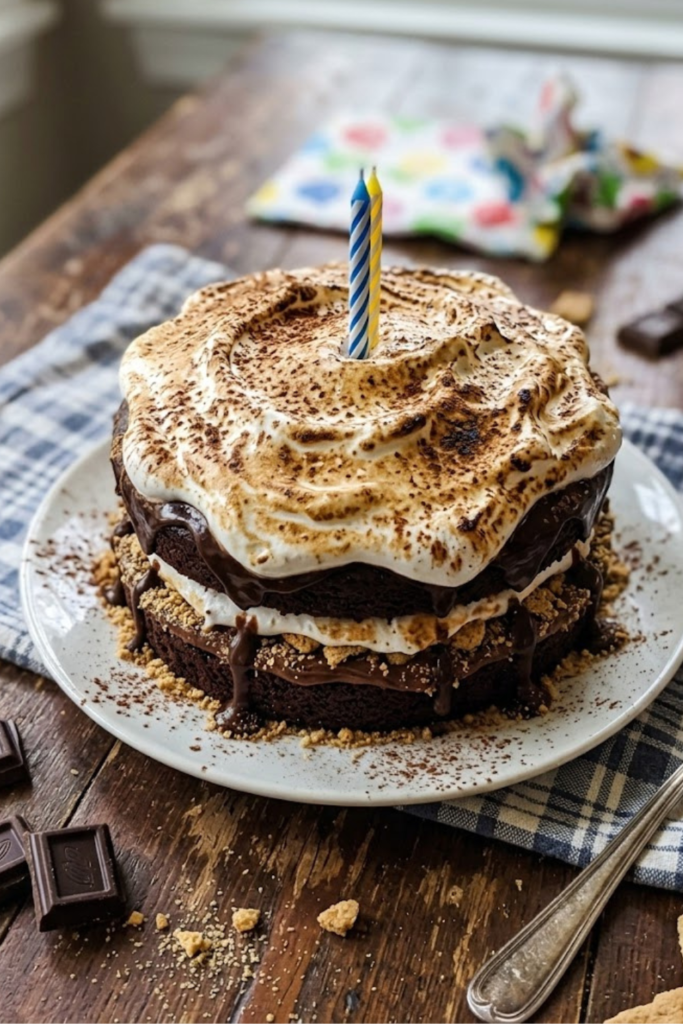
Did you know that over 50 million pounds of marshmallows are toasted every year? That is a ton of sticky goodness! I remember the first time I tried to make a s’mores birthday cake for my nephew. It was a total disaster because the frosting melted into a puddle. But hey, we learn from the mess, right?
Now, I’ve got this recipe down to a science. This cake brings that campfire vibe right into your kitchen without the smoke in your eyes. It’s got layers of graham cracker sponge and a chocolate filling that is to die for. You are going to love how the toasted marshmallow smells while it’s browning. Let’s get baking because life is too short for boring desserts!
The Graham Cracker Cake Base Secrets
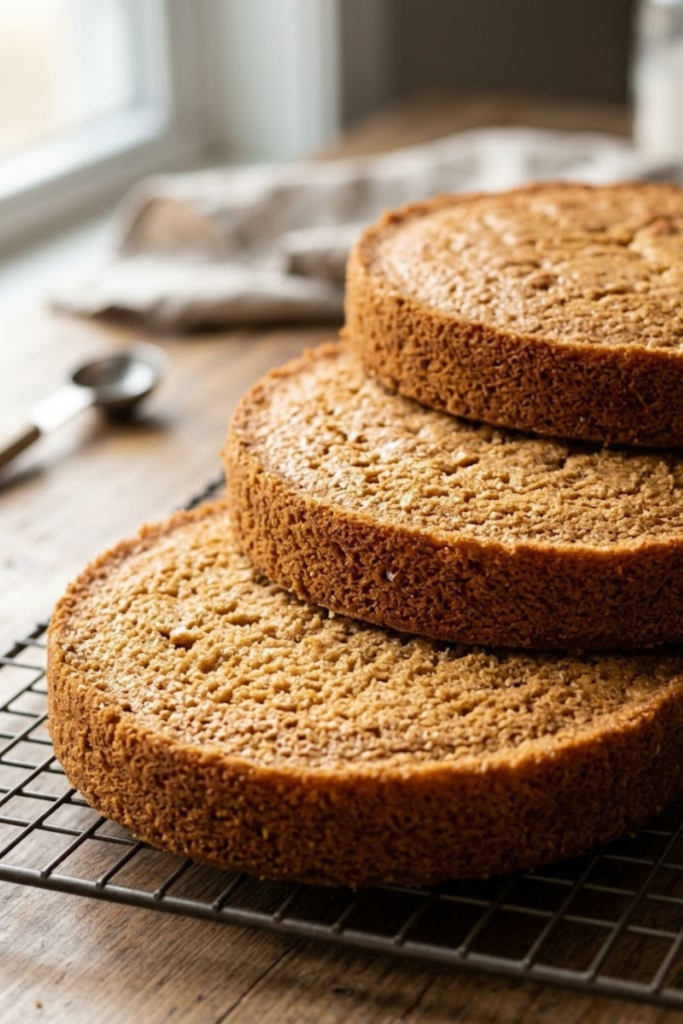
I used to think that a regular yellow cake mix would work just fine for a s’mores birthday cake. Boy, was I wrong. To get that real campfire taste, you have to build the flavor right into the sponge itself. It’s all about making the cake taste like a giant, soft graham cracker. People always ask me what the trick is, and I tell them it’s about not being afraid of a little texture. If the cake is too smooth, it just feels like a regular birthday cake. You want that sandy, honey-sweet vibe in every single bite. This is the foundation of the whole dessert, so don’t skip the small details.
Getting the Crumb Right
The biggest secret is how you handle the graham crackers. Don’t just break them up by hand; they need to be a fine dust. I use my old blender to zip them up until they look like sand from the beach. Then, you swap out some of the flour for these crumbs. If you use too much, the cake gets heavy like a brick. If you use too little, you won’t taste it. I found that about one and a half cups of crumbs is the sweet spot for a standard three-layer cake. It gives you that golden color and a smell that reminds you of sitting by a fire. Crushing your own crackers really makes a difference.
The Secret Ingredients for Moisture
Another thing I learned the hard way is that graham cracker crumbs soak up a lot of liquid. My first few cakes were so dry they practically turned into dust in your mouth. To fix this, I started adding a big dollop of sour cream. It sounds weird for a cake, but it adds a richness that you can’t get from just milk or butter. Also, I use dark brown sugar instead of white sugar. The molasses in the brown sugar really brings out the honey notes in the crackers. It makes the cake look darker and richer too. Just make sure you mix it well so you don’t get big clumps of sugar in your batter.
Success in the Oven
Before you even pour the batter, you’ve got to prep your pans. I always tell people in my baking classes that parchment paper is your best friend. Even if you grease the pans really well, graham cracker cakes love to stick because of the sugar content. I cut out little circles of paper for the bottom of each tin. This way, the cake pops right out every time. Also, don’t overbake these layers. Since they are denser than a normal sponge, they can go from perfect to overdone in just a minute. Check them with a toothpick a few minutes early. If it comes out with a few moist crumbs, it’s done. Let them cool in the pan for about ten minutes before you flip them onto a wire rack.
Making the Rich Chocolate Ganache
Chocolate is the soul of a s’mores birthday cake. If the cake layers are the bones, then the chocolate is the heart. I remember one time I tried to use just regular chocolate syrup because I was in a big rush for a party. That was a huge mistake. It just soaked into the sponge and made a soggy, brown mess that nobody wanted to touch. A real ganache is what you actually need. It’s thick, shiny, and tastes way better than anything you can squeeze out of a plastic bottle. Don’t be scared of making it, though. It’s basically just two ingredients, but you just gotta treat them right to get that perfect finish.
Picking the Best Chocolate
You might think any old candy bar will work, but that’s not really the case. I usually go for the dark chocolate, maybe something around 60% cocoa. If you use milk chocolate, the whole cake ends up being way too sweet and you lose that deep flavor that balances the marshmallows. I like to buy the big bars and chop them up with a big knife. It’s a bit of a workout for your arms, but it’s totally worth the effort. Those little chips you buy in the yellow bags have stuff in them to help them keep their shape in the oven, which can make a ganache feel a bit waxy or stiff. Chopping it yourself makes it melt way smoother. Plus, you get to snack on the little crumbs that fall off the cutting board!
The Heat and Stir Trick
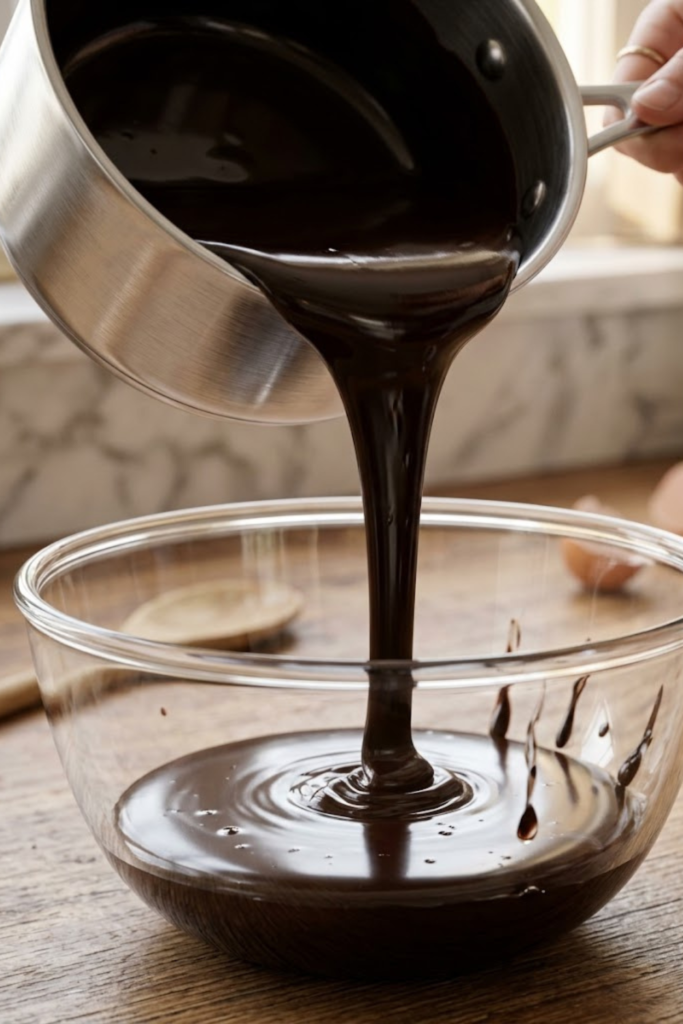
The biggest thing to keep in mind is that heat is your friend but it can also be your enemy if you aren’t careful. You want to heat your heavy cream until it’s just starting to bubble around the edges of the pot. Don’t let it boil over like a volcano or it will burn the chocolate! Once it’s hot, pour it over your bowl of chopped chocolate and just let it sit there. Don’t touch it for at least five minutes. I used to start whisking right away and the texture would get all grainy and weird. Just wait. Let the hot cream do its job. When you finally start to stir it, start in the very middle and make small circles. It’s like watching magic as it turns from white and brown into that deep, dark brown color. It should look like smooth glass when you’re finally finished.
Cooling for the Perfect Pour
This is the part where I usually get impatient and mess things up. If you pour the ganache while it’s still hot, it’ll run right off the cake and make a puddle on the floor. You want it to be thick enough to hang onto the sides of the cake but thin enough to still look smooth and pretty. I usually let it sit on the counter for about twenty minutes or so. Give it a little stir every now and then to see how it feels. If it gets too hard, you can just pop it in the microwave for five seconds to loosen it up. If you’re putting it between the cake layers, make sure it’s chilled a bit so it doesn’t squish out the sides when you stack them. It’s a bit of a balancing act, but you’ll get the hang of it after a try or two.
Mastering the Toasted Marshmallow Frosting
If the cake is the foundation, then the frosting is definitely the star of the show. This is the part that makes everyone go “wow” when you walk into the room. I remember my first try at this—I thought I could just melt big marshmallows in the oven over the cake layers. That was a huge mistake! They just turned into a flat, sticky mess and the cake got way too hot. Now, I use a fluffy marshmallow buttercream that stays put and looks beautiful. It’s got that gooey, stretchy vibe we all love but it’s stable enough to hold up a heavy birthday cake. This part of the job is where you can really get creative and have some fun in the kitchen.
Getting the Base Just Right
To get started, you need a good mix of butter and marshmallow fluff. I usually go for the stuff in the jar because it’s way easier than trying to melt down actual marshmallows. You want your butter to be soft, but not so soft that it’s oily. I usually leave it on the counter for about an hour while I’m doing other things. Beat the butter until it’s really pale and light, then slowly add in the fluff. This makes a frosting that is sweet but also very creamy. It’s much lighter than a standard frosting, which is great because it doesn’t feel as heavy when you’re eating a big slice.
Playing with Fire Safely
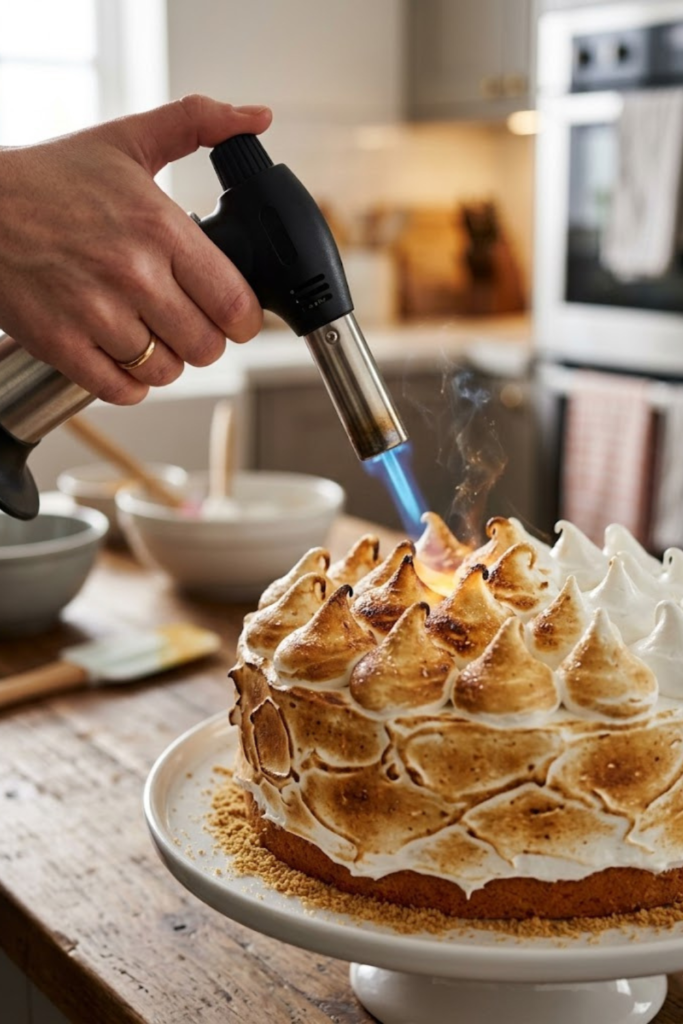
The absolute best part of this whole cake is using the kitchen torch. If you don’t have one, you can find them pretty cheap at most home stores. It feels a bit like a science experiment! You want to hold the flame a few inches away from the frosting and keep it moving in little circles. I once got a bit distracted and stayed in one spot too long, and let’s just say I had a bit of a “charred” situation. Now I take it slow. Watch for the peaks to turn a lovely golden brown. It will smell exactly like a campfire, which is the whole point of this dessert. Just keep a close eye on it so you don’t actually catch anything on fire!
Keeping the Texture Smooth
Sometimes the frosting can get a bit too soft if your kitchen is warm. If that happens, just pop the bowl in the fridge for ten or fifteen minutes. It’ll firm right back up so you can make those pretty swirls on top of the cake. I also like to add a tiny bit of salt to the mix. It might sound funny, but it helps cut through all that sugar so the frosting doesn’t taste too sweet. A little bit of vanilla goes a long way here too. Once you get the texture right, it’s really easy to spread around. It stays nice and fluffy for a long time, so you can even make the cake a few hours before the party starts.
Assembling Your Masterpiece
Putting a cake together is a lot like building a house. If the bottom part isn’t flat, the whole thing is eventually going to lean over. I remember my first big layer cake looked like the Leaning Tower of Pisa because I was way too lazy to trim the tops off. My kids laughed at it, but I was pretty bummed out! Now I take my time to make sure every layer is sitting just right. It makes a big difference in how the cake looks on the party table. You want your friends to be impressed by your skills, not worried the cake is going to fall over into their laps!
Leveling and Stacking
Before you even touch the frosting, you’ve gotta level those cake layers. Most cakes bake up with a little dome on top. If you leave that on, your layers will slide all over the place like they are on a playground slide. I use a long serrated knife—the kind you use for slicing bread—and gently saw off the top of each cake until it’s totally flat. Then, I put a little dollop of frosting on my cake board so the bottom layer doesn’t move around. When you’re stacking, look at the cake from the side to check if it’s straight. I sometimes even use a ruler because my eyes trick me into thinking things are level when they really aren’t!
The Magic of the Crumb Coat
If you’ve ever tried to frost a cake and ended up with brown crumbs all over your white frosting, you know the struggle. The secret is something called the “crumb coat.” This is just a super thin layer of frosting that goes all over the cake to trap those loose bits of sponge. I do a quick coat and then shove the whole cake in the fridge for about thirty minutes. This lets the frosting get firm and cold. Once it’s chilled, you can put the final thick layer of marshmallow frosting on top. It will stay perfectly white and clean. It’s a step that takes some extra time, but it’s the difference between a messy cake and one that looks like it came from a fancy bakery.
Final Touches and Decor
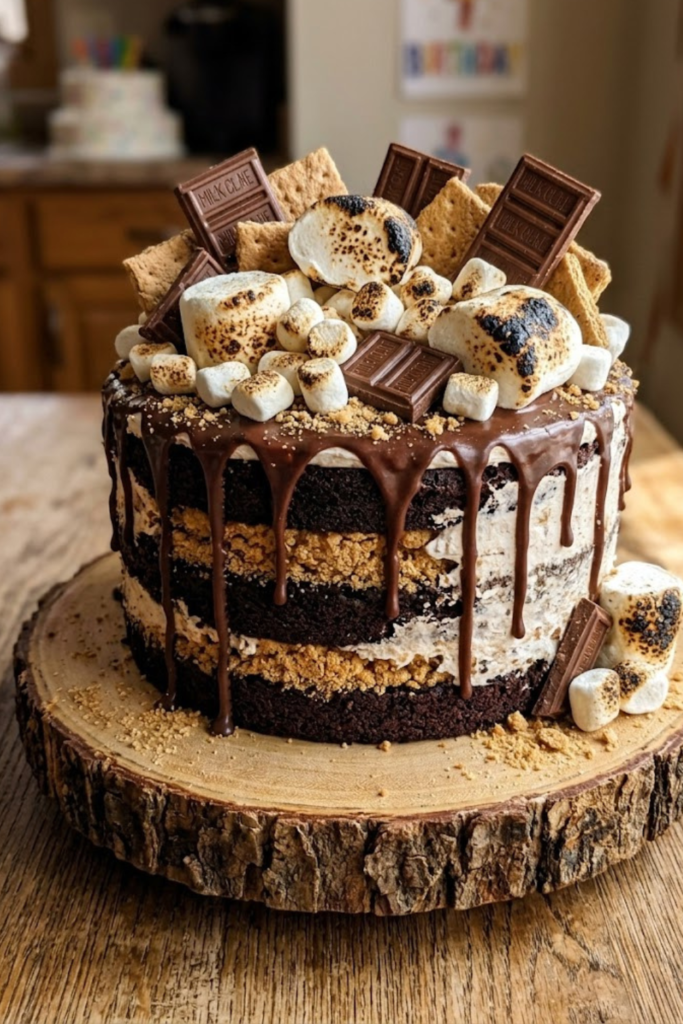
Now for the fun part! Once the cake is fully frosted and torched, it’s time to add the bits that make it look like a real s’more. I like to take some extra graham cracker squares and stick them right into the top at different angles. Then, I break up a few chocolate bars and scatter the pieces around the edges. If you really want to go over the top, you can even drizzle a little bit of that leftover chocolate ganache over the top. It looks so good when it drips down the sides. Don’t worry about making it look perfect; s’mores are supposed to be a little bit messy. That’s what makes them look so tasty and home-made!
Time to Celebrate!
Finally, your s’mores birthday cake is ready for the big reveal. There is nothing quite like the look on someone’s face when they see those toasted marshmallows on top for the first time. I remember one birthday where I brought this out and my friend actually gasped because it looked so professional. It’s funny how a few simple ingredients like crackers and chocolate can turn into something that looks like it cost fifty bucks at a fancy bakery. You should be really proud of yourself for sticking with it. Baking can be a bit of a roller coaster with all the dishes and the timing, but the finish line is always sweet.
Tips for a Great Party
When you are getting ready to serve this cake, I have one big piece of advice: use a hot knife. I learned this from a chef friend of mine years ago. You just dip your knife in a tall jar of hot water, wipe it dry with a towel, and then make your cut. It slices through the sticky marshmallow and thick chocolate like butter. If you don’t do this, the marshmallow tends to stick to the metal blade and pull the whole cake apart. It can get messy real quick and ruin those pretty layers! Also, try to keep the cake out of the direct sun if you are celebrating outside. That ganache and frosting will start to move if it gets too warm. I usually keep mine in the cool shade or inside until it’s time to blow out the candles.
Storing Your Sweet Success
If you actually have any cake left over—which almost never happens at my house—you need to know how to keep it fresh for the next day. I usually just put a piece of plastic wrap right against the cut side of the cake to keep the air out. You can keep it on the counter for a day or two, but if your house is really hot, the fridge is better. Just remember that the fridge can dry out the sponge if you aren’t careful, so make sure it’s covered really well. I’ve even frozen a few slices before. They actually taste pretty good when they are half-frozen, kind of like a cold ice cream sandwich! Just wrap them in foil and they will last for about a month.
Final Thoughts
This cake is more than just a dessert; it’s a way to make some great memories. Every time I smell that toasted marshmallow scent, I think of laughter and good times with my family. I hope this recipe brings a little bit of that campfire magic to your next big celebration. If you had fun making this or if it turned out great for your party, please share it on Pinterest! It helps other bakers find this and join in on the fun. Happy baking, and I hope your birthday person loves every single bite of their special treat!