Did you know that over 60% of home cooks say they make the same three fish recipes every single month?. I used to be just like that! For years, I just threw some lemon and pepper on my fish and called it a day. But then I found this salmon with gochujang glaze and everything changed. It is spicy, sweet, and honestly just hits different when you want a quick meal that feels fancy. In this article, we’re going to look at how to get that perfect crust and why this Korean chili paste is your new best friend in the kitchen!
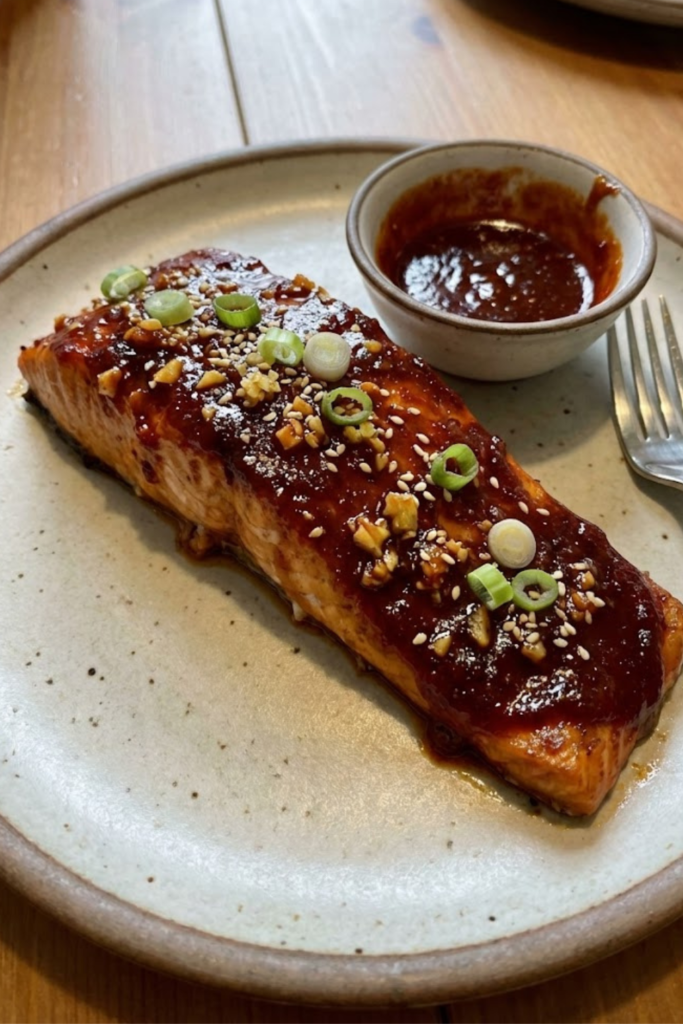
Why Gochujang is the Secret to Better Salmon
I remember the first time I saw a jar of gochujang in the international aisle at the grocery store. I thought it was just another fancy version of ketchup or maybe a weird hot sauce. Boy, was I wrong! As a teacher, I’m always telling my kids that you shouldn’t judge a book by its cover, and that really applies to ingredients too. When you decide to make salmon with gochujang glaze, you aren’t just making a boring Tuesday night dinner; you are creating a flavor explosion that most people don’t get at home.
The Magic of Fermented Flavor
So, what is the big deal? Well, gochujang is a Korean chili paste made from red chili flakes, glutinous rice, and fermented soybeans. That “fermented” part is the key. It gives the paste a deep, savory taste called umami. When you put this on your fish, it adds a layer of depth that you just can’t get from salt and pepper alone. It’s a bit funky, a bit sweet, and has a slow burn that doesn’t just hit you in the face like a jalapeño. For my students, I compare it to a good story—it has layers that keep getting better the more you experience it.
Getting a Better Crust Without the Effort
One thing I used to struggle with was getting my fish to look like it came from a restaurant. My fillets always looked pale and sad. But the thick texture of this paste helps make sure the glaze stays on the fish instead of running off into the pan. Because gochujang has a little bit of natural sugar from the rice, it caramelizes really fast. This helps you get those dark, crispy bits on the edges of the salmon that everyone fights over. You don’t need to be a pro to make it look good; you just need the right sticky sauce to do the work for you.
A Bold Taste That Isn’t Too Spicy
A lot of people are scared of chili paste because they think it will be too hot. I have a pretty low tolerance for heat myself—just ask my wife about the “mild” wings incident of 2019! But this paste is different. It is more about the bold flavor than just making your mouth burn. When you mix it with a little honey, it creates a perfect balance. It’s sweet, salty, and spicy all at the same time. It makes the salmon taste rich and exciting. Honestly, once you try it, going back to plain lemon butter feels like going back to black-and-white TV after seeing 4K.
Choosing the Right Salmon Fillet for High Heat
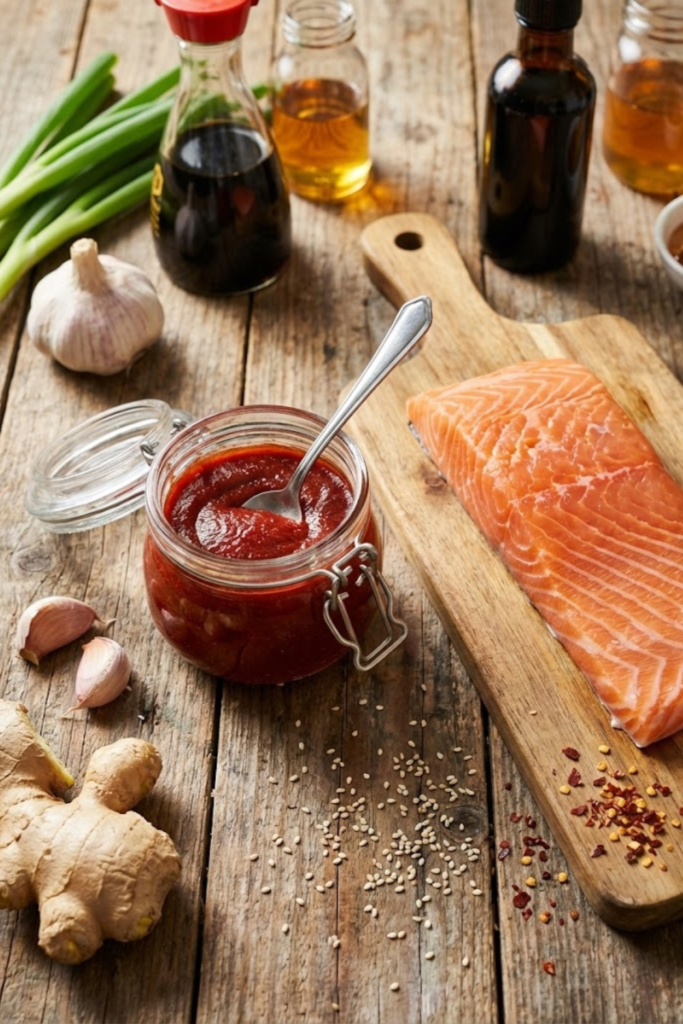
Listen, I’ve made some pretty big mistakes when I first started cooking fish. One time, I bought a “discount” fillet that was so thin it basically turned into salmon jerky by the time the salmon with gochujang glaze was done. It was a total bummer. As a teacher, I tell my students that you can’t build a good house on a shaky foundation. The same goes for dinner. If you pick the wrong piece of fish, even the best glaze in the world won’t save you. You need something that can stand up to the heat without falling apart.
Finding the Right Type of Salmon
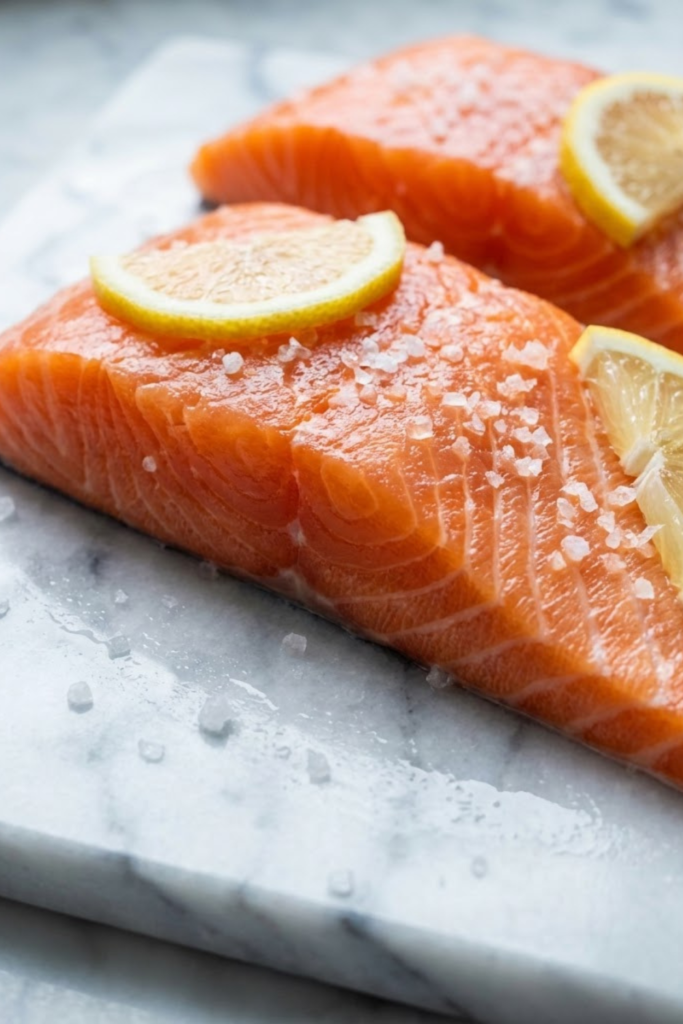
When you are looking at the seafood counter, you’ll usually see a few different kinds. For a high-heat recipe like this, I really suggest getting Atlantic salmon. Why? Because it’s usually thicker and has more fat. That fat is like an insurance policy; it keeps the fish moist while the glaze is bubbling under the broiler. If you go with something really lean, like Sockeye, you have to be super careful because it can get dry in a heartbeat. I’ve definitely overcooked Sockeye before, and it ends up tasting like a pencil eraser. Not great! If you want that juicy, flakey bite, go for the fattier stuff.
Why the Skin Should Stay On
I know some people get weirded out by fish skin, but please, keep it on! When you’re making salmon with gochujang glaze, the skin acts like a little heat shield. It protects the delicate meat from the hot pan. Plus, when it gets crispy, it’s basically like a savory cracker. If you buy skinless fillets, the fish is much more likely to fall apart when you try to flip it. I’ve had many “salmon scrambles” in my life because I tried to be fancy and take the skin off. Just leave it. You can always peel it off after it’s cooked if you really don’t want to eat it.
Checking for Freshness at the Market
Don’t be afraid to use your eyes and nose. Fresh salmon should be bright and firm. If you poke it with your finger and the dent stays there, move on! It should also smell like the ocean, not like… well, old fish. If the package has a lot of cloudy liquid in it, that’s a bad sign. I always try to talk to the guy behind the counter and ask when the fish came in. Most of the time they’re happy to help you find the best piece. It makes a huge difference in how the final dish tastes!
The Perfect Gochujang Glaze Recipe
I’ll be honest with you, I used to think that making a “glaze” was something only fancy chefs on TV did. I figured it involved a bunch of copper pots and hours of stirring. But as a teacher, I’ve learned that the best lessons are usually the simplest ones. When I finally sat down to figure out my own salmon with gochujang glaze sauce, I realized it’s basically just a science experiment in a bowl. You’re just looking for that perfect reaction between sweet, salty, and spicy. Once you get the ratio right, you’ll want to put this stuff on everything—I’ve even tried it on roasted carrots, and it was a total hit!
Finding the Sweet Spot with Your Ratios
The base of this sauce is, of course, the gochujang paste. But you can’t just smear the paste on the fish and call it a day. It’s too thick and a bit too salty on its own. I usually start with two big tablespoons of the paste and mix in about the same amount of honey. If you don’t have honey, maple syrup works just fine too. The sugar is super important because it balances the heat of the peppers. I remember one time I tried to be “healthy” and skipped the sweetener. Big mistake! The fish tasted like a spicy salt lick. You need that sweetness to create the sticky texture that makes salmon with gochujang glaze so good.
The Little Extras That Make It Pop
Once you have your base, you need to add some personality. I always grate in a little bit of fresh ginger and a couple of cloves of garlic. If you’re in a rush, the stuff from a jar is okay, but fresh really wakes up the flavor. Then, I add a splash of soy sauce for extra saltiness and a tiny bit of rice vinegar. The vinegar is the secret ingredient here. It provides a little bit of “zing” that cuts through the fatty salmon. It’s like adding a bright light to a dark room—it just makes everything clearer. I also throw in a drop of toasted sesame oil, but be careful! That stuff is strong. A little bit goes a long way, or it’ll take over the whole dish.
Getting the Right Texture
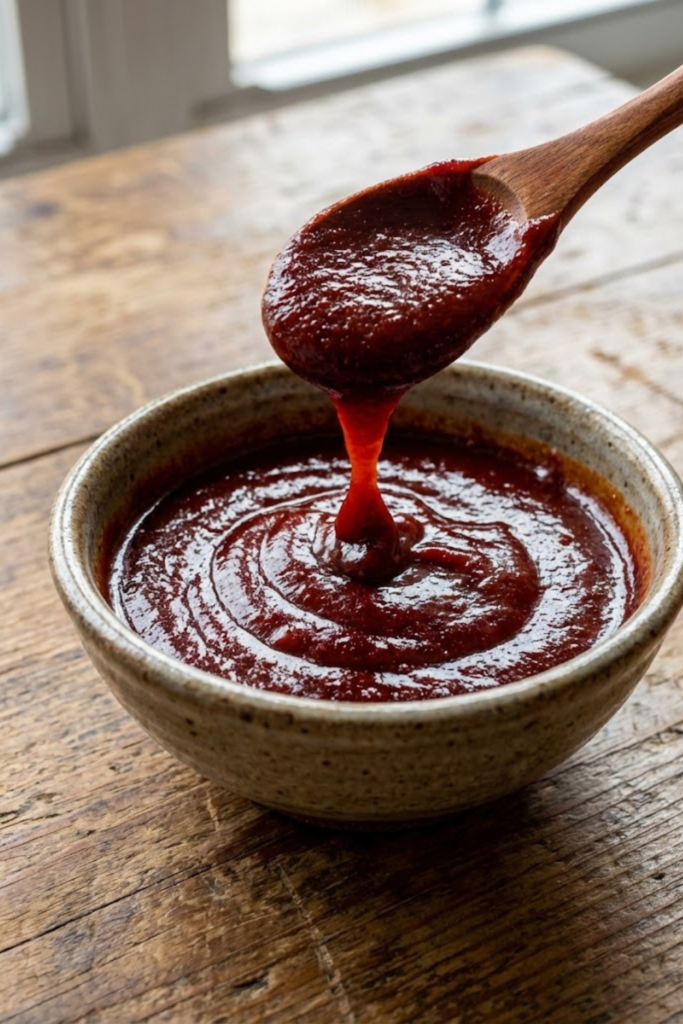
You want your glaze to be thick enough that it coats the back of a spoon. If it feels too runny, just add a tiny bit more gochujang. If it’s like peanut butter, add a teaspoon of water or more vinegar to thin it out. You want it to be “brushable.” I’ve had times where my sauce was too thin, and it all just pooled at the bottom of the pan and started burning. That smell is hard to get out of your curtains, trust me! Aim for a glossy, thick syrup consistency. It should look like liquid rubies by the time you’re done whisking.
Step-by-Step: How to Cook Salmon with Gochujang Glaze
Alright class, listen up because this is the part where most people mess up. I used to be so scared of my stove. I honestly thought if I turned the heat up too high, I’d end up calling the fire department. But once you learn how to handle the heat, making salmon with gochujang glaze becomes a total breeze. You just have to pay attention and not get distracted by your phone or the TV. I remember one time I was trying to cook and grade papers at the same time—huge mistake! I ended up with a piece of fish that looked like a charred hockey puck. Don’t be like me.
Start with a Hot Pan for Crispy Skin
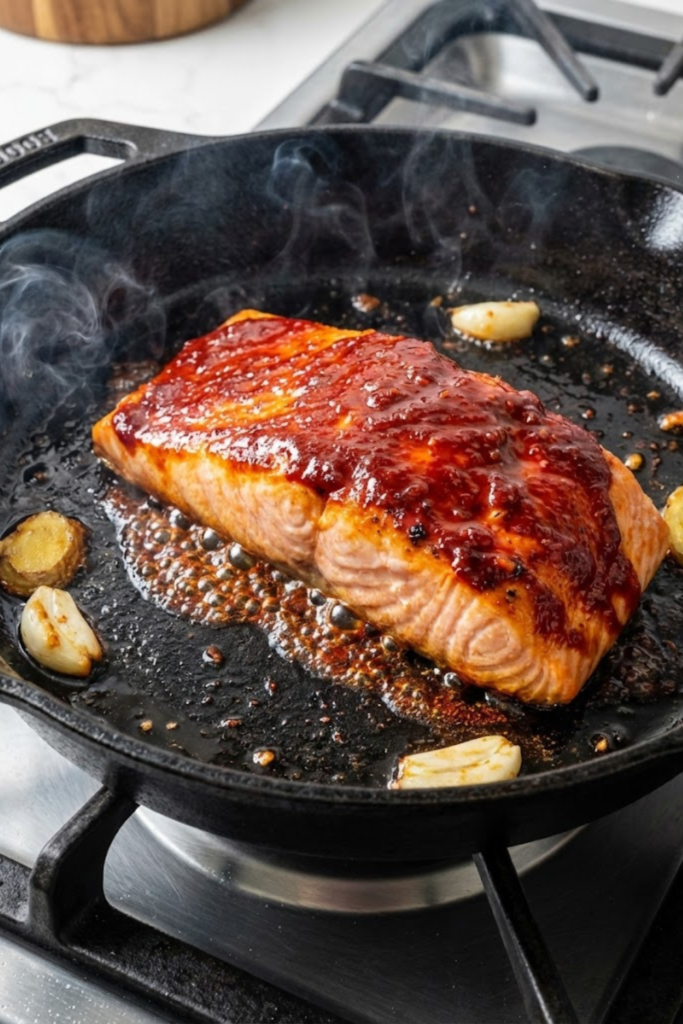
The secret to that restaurant-style crunch is a hot skillet. I always use my cast-iron pan because it holds heat like a champion. Put a little bit of oil in there and wait until it starts to shimmer. Place your fish skin-side down first. You’ll hear a loud sizzle, and that’s a good thing! Let it cook for about three to four minutes without touching it. I know it’s tempting to poke it or move it around, but just leave it alone. This helps the skin get super crispy and prevents it from sticking to the bottom. If you try to move it too early, you’ll just rip the skin off and have a mess.
Brushing on the Goodness and Using the Broiler
Once the skin is crisp, I flip the fillet over very carefully. Now is the time to brush on that beautiful salmon with gochujang glaze we made earlier. Be generous! You want a thick layer of that red sauce all over the top. Then, I move the whole pan into the oven under the broiler. This is where the magic happens. The high heat from the top will make the glaze bubble and char in all the right places. It only takes about two or three minutes, so stay right there and watch it through the oven door. If you walk away to fold laundry, you’re going to regret it because that sugar burns fast!
Checking the Temperature Like a Pro
I tell my kids that guessing is for multiple-choice tests, not for cooking meat. Use a digital thermometer! You want to pull the salmon out when it hits about 125°F (52°C). It will keep cooking a little bit after you take it out of the pan. If you wait until it’s 145°F in the oven, it’ll be way too dry by the time you sit down to eat. A perfect piece of salmon should flake apart easily with a fork but still look a little translucent in the very center. Trust the tool, not your eyes, and you’ll get it right every single time.
Your New Favorite Weeknight Dinner
Well, we made it to the end of the lesson! Cooking fish can feel like a big test, but honestly, this salmon with gochujang glaze is one of those recipes that makes you look like a straight-A student even if you’re just starting out. I remember the first time I served this to some of my fellow teachers at a potluck. They all thought I had ordered it from that expensive place downtown. When I told them I made the sauce in a cereal bowl in about two minutes, they didn’t believe me! It’s funny how something so simple can impress people so much.
One thing I’ve learned over the years is that a good main dish needs some good backup. If you want to make this a full meal, I highly suggest serving it over some simple white rice. The rice is like a sponge; it soaks up all that extra salmon with gochujang glaze that drips off the fish. I also like to throw some baby bok choy or even just some frozen broccoli into the same pan while the fish is under the broiler. It gets a little bit of that spicy flavor too, and it makes cleaning up a lot easier. Who wants to wash five different pots on a school night? Not me, that’s for sure. I always tell my students that working smarter is better than working harder, and one-pan meals are the smartest way to cook.
If you have leftovers—though in my house, that’s pretty rare—this fish is actually really good cold. I’ve flaked it up and put it on a salad the next day for my lunch at school. It beats the cafeteria food by a mile! My students always ask what smells so good when I’m heating up my lunch in the breakroom. It’s funny how a little bit of fermented chili paste can turn a regular lunch into something everyone is jealous of.
Don’t be afraid to make mistakes. If your first batch is a little too spicy or a little too dark, just take a note and try again next week. That is how we learn, right? Cooking is just like any other skill—you get better the more you do it. I really hope you give this a shot tonight. If you do make it and love it, please do me a huge favor and share this post on Pinterest! It really helps out and lets other people find a way to make their dinners a little more exciting. Happy cooking!