Did you know that nearly 70% of home cooks say the worst part of dinner is the cleanup? I totally get it! As a teacher who spends all day grading papers, the last thing I want to do at 6:00 PM is scrub a mountain of pots and pans.
I remember one Tuesday last year when I tried to make a “simple” poached salmon. By the time I was done, I had three different pans in the sink and a very grumpy husband. That’s when I leaned into this Easy Sheet Pan Salmon and Asparagus with Lemon. It changed everything! This recipe is basically a “set it and forget it” situation that delivers flaky, citrus-infused fish and snappy greens every single time.
You’re going to love how the lemon juice cuts through the richness of the salmon. It’s light, it’s healthy, and it’s honestly hard to mess up—even if you’ve had a long day and your brain feels like mush. Let’s get cooking!
Selecting Your Salmon: Fresh vs. Frozen
I’ve spent years teaching middle schoolers, and if there’s one thing I’ve learned, it’s that prep work is everything. The same rule applies to your dinner. If you start with bad fish, no amount of lemon or garlic is going to save it. When I first started making this easy sheet pan salmon and asparagus with lemon, I just grabbed whatever was on sale. That was a big mistake! You want to be picky here so your family actually enjoys the meal.
The Great Debate: Fresh or Frozen?
Most people think fresh is always better, but that’s a bit of a myth. Unless you live right by the ocean, the “fresh” fish in the store might be a few days old already. Frozen salmon is often flash-frozen right on the boat. This locks in the flavor and the nutrients. I usually keep a bag of frozen fillets in my freezer for those nights when I’m too tired to stop at the store. If you go with frozen, just make sure you thaw it in the fridge overnight. Don’t rush it in the microwave or you’ll get mushy fish and nobody wants that.
Look for the Right Cut
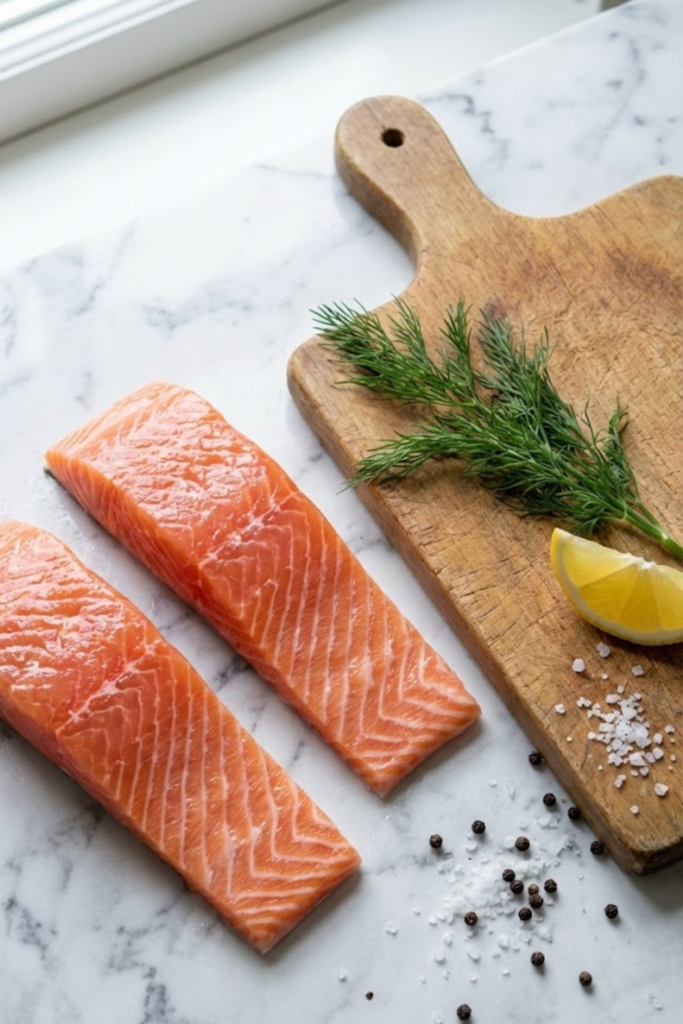
While you are looking at the fish counter, try to get “center-cut” fillets. These are the thicker pieces from the middle of the salmon. They are great because they have a uniform thickness. The tail end is much thinner and it will dry out way before your asparagus is even soft. If you have different sized pieces on one tray, your dinner won’t cook at the same speed. I like my salmon to be about an inch thick. This helps it stay juicy in the middle while the outside gets a nice sear in the oven.
How to Spot the Good Stuff
Don’t be afraid to use your senses. Fresh salmon should have a bright pink or orange color. It shouldn’t look dull or gray around the edges. Give it the “poke test” if you can. The meat should spring back quickly when you touch it. If your finger leaves a dent, it is getting old. Also, it shouldn’t smell “fishy” or sour. It should just smell like the ocean. If it smells strong, put it back. Picking good fish isn’t hard once you know what to look for. It makes a huge difference in the final taste.
Prepping Asparagus for the Perfect Snap
I remember one time a student brought me a bunch of asparagus from their family garden as a gift. I was so touched! But when I got home and tried to cook it, I just chopped off the very tips of the bottoms and threw the rest in a pan. Big mistake. Half the meal felt like I was chewing on a pencil. It was stringy, tough, and honestly pretty gross. That was the day I learned that prepping your veggies is just as important as the main course. If you want this sheet pan salmon and asparagus with lemon to actually taste good, you can’t skip the prep.
The Famous Snap Trick
The best way to get rid of those woody, tough ends is by using the “snap method.” It’s actually kind of fun to do! You just grab a spear of asparagus near the bottom and another hand in the middle, then bend it until it breaks. The vegetable naturally snaps right where the tough, woody part ends and the tender part begins. I usually do this for the first few spears to see where the line is, and then I just line up the rest and cut them with a knife at that same spot to save some time. If you leave those bottoms on, your dinner will be ruined by that chewy texture.
Why Thickness Matters
When you are at the store, try to find a bunch where the spears are all about the same size. If you have some that are thin like a straw and others thick like a thumb, they won’t cook at the same speed. The skinny ones will turn into mush while the thick ones stay raw. For this recipe, I like the medium-sized ones. They hold up well to the high heat of the oven and get those slightly charred tips that taste so amazing with a squeeze of fresh lemon.
The Olive Oil Barrier
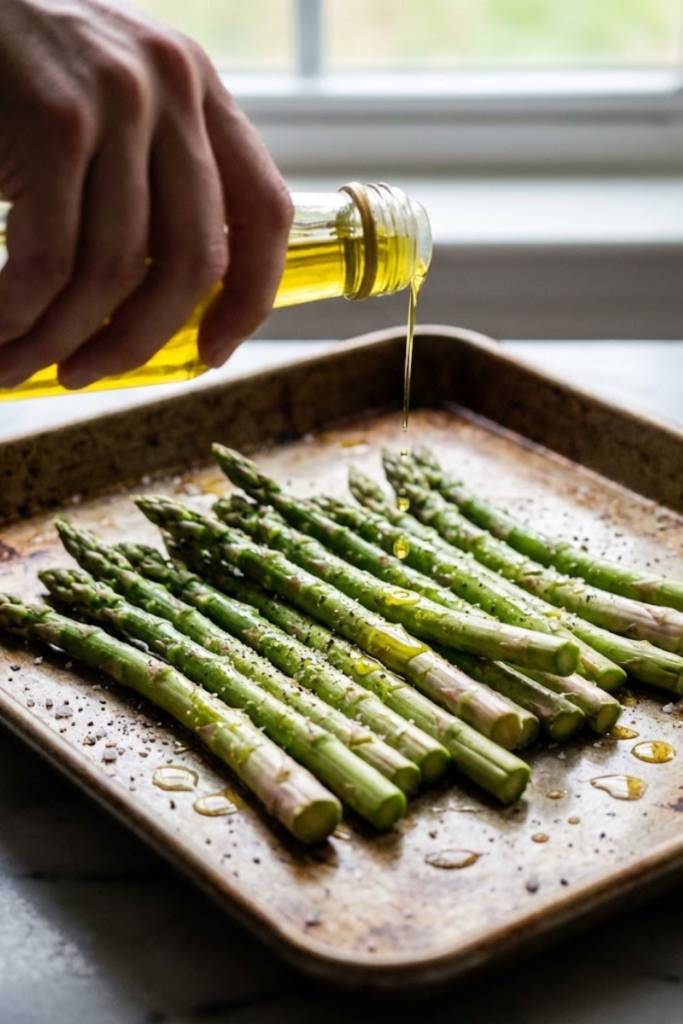
Before you put anything on the tray, you need to give your asparagus a good coat of olive oil. I usually just toss them right on the baking sheet with a drizzle of oil and a pinch of salt. The oil acts like a little shield. It keeps the high heat from drying out the greens and helps the salt and pepper stick. Make sure every spear is shiny with oil. If they look dry before they go in the oven, they will definitely be dry when they come out. Getting this part right makes the whole meal feel much more professional, even if it only took you five minutes to get ready.
The Lemon Garlic Infusion: Flavor Without the Fuss
I remember when I first started cooking, I thought salmon was just… okay. My husband used to say it tasted like “healthy food,” which is his polite way of saying it didn’t have much flavor. I had to fix that. I’m a teacher so I’m used to fixing things that aren’t working right! That’s when I started playing around with this lemon garlic mix. It is so easy but it makes the whole house smell like a fancy restaurant. You don’t need a million ingredients to make this work. Just a few basics from your pantry will do the job perfectly. There is nothing worse then a bland dinner after a long day at school.
Mixing the Good Stuff
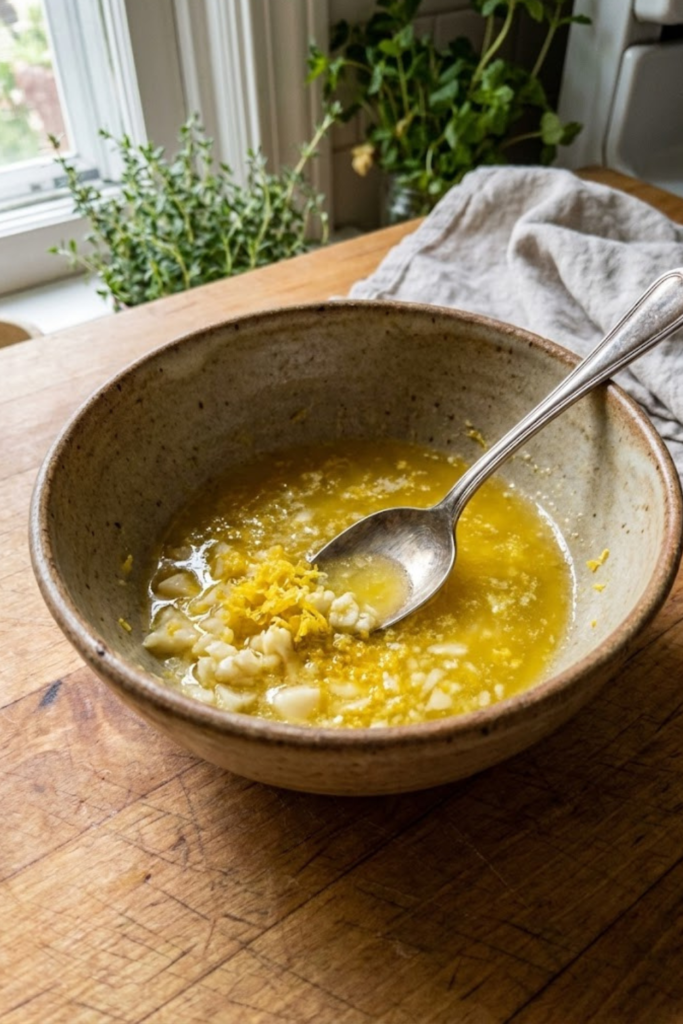
First, you need to get your butter ready. I like to melt a few tablespoons in a small bowl. Then I stir in some minced garlic. You can use the stuff from a jar if you’re in a hurry—honestly, I do that sometimes when I have a huge stack of papers to grade—but fresh garlic really does taste better if you have the time. I also add a lot of lemon zest. If you don’t have a zester, just use the small side of a cheese grater. The zest has all those bright oils that make the flavor really pop. Stir it all together until it looks like yellow, garlicky gold. I usually drizzle this right over the salmon fillets and use the back of a spoon to spread it around so every inch is covered.
The Secret Lemon Layer
Here is a little trick I learned from a cooking show years ago. Don’t just put the lemon on top of the fish. Slice up another lemon and put those rounds right on the baking sheet, then set the salmon on top of them. As the oven heats up, the lemon slices release their juice and steam. This steams the bottom of the fish and helps it stay moist. It also keeps it from sticking to the pan, which is a total win for cleanup later. Plus, those roasted lemon slices look really pretty on the plate when you’re serving dinner to your family. It makes a simple Tuesday night feel a bit special.
A Little Kick
If you like things a bit spicy, you can sprinkle some red pepper flakes on top. I started doing this because my brother loves heat, and now I can’t eat it any other way. It’s not enough to burn your mouth, but it gives a nice contrast to the creamy butter and the sour lemon. Just a tiny pinch is all it takes. If you’re cooking for small kids who hate spice, you might want to skip this part on their pieces. That is the beauty of a sheet pan meal; you can customize each fillet however you want without making extra dishes for yourself!
Master the Roast: Timing and Temperature
Setting the oven correctly is the part that makes most people nervous. I have had many students tell me they are scared of cooking fish because they think it is going to be raw or end up like a piece of rubber. It is really just about the numbers. If you get the heat and the time right, you can’t fail. I usually tell people that cooking salmon is a lot like grading a stack of essays; you have to stay focused and keep a close eye on the clock or things get out of hand fast. This part of the recipe is where the magic happens and your house starts smelling like a lemon grove.
Finding the Sweet Spot at 400°F
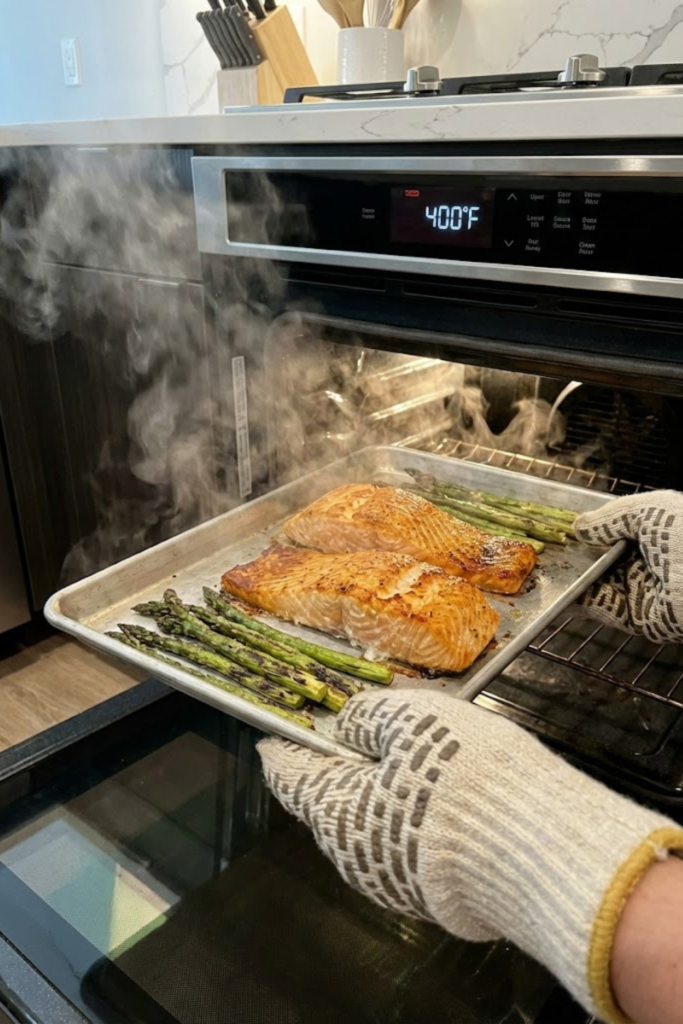
I have tried cooking this at lower temperatures, but 400°F (200°C) is the magic number for a sheet pan dinner. You want it hot enough to sear the outside of the fish and get those asparagus tips a little bit crispy. If the oven is too cold, the fish just sits there and gets mushy. If it’s too hot, the garlic in your butter sauce will burn and taste bitter. I always make sure my oven is fully preheated before the tray goes in. Most ovens beep before they are actually ready, so I usually wait an extra five minutes just to be sure. A hot oven is the best way to make sure your dinner stays juicy.
The Fork-Flake Method
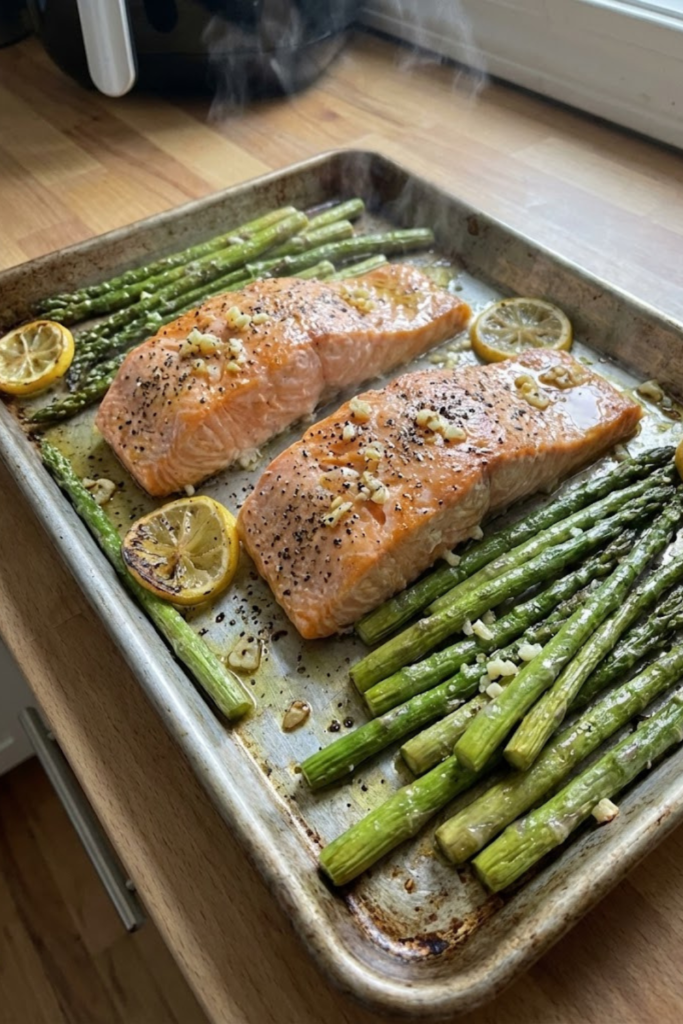
How do you know when it’s done? You don’t want to keep cutting into the fish and letting all the juice out. Instead, use a fork to gently press down on the thickest part of the fillet. If the meat separates easily along the natural white lines—this is called flaking—it is ready to eat. Also, keep an eye out for “white stuff” popping up on the surface. That is just protein called albumin. A little bit is fine, but if the fish is covered in it, you probably left it in a minute too long. I usually pull mine out when it still looks a tiny bit translucent in the very center because it keeps cooking for a few minutes while it rests on the counter.
Timing the Veggies
The asparagus usually takes about the same amount of time as a medium-thick salmon fillet, which is around 12 to 15 minutes. If you have really thin asparagus spears, they might cook faster than the fish. In that case, you can wait five minutes before adding them to the tray. About halfway through, I like to give the pan a little shake. This helps the vegetables get heat on all sides. You want the asparagus to be “tender-crisp,” which means it still has a bit of a bite and isn’t limp or soggy. Once you find that perfect balance, you will feel like a total pro in the kitchen.
Cleanup Secrets and Leftover Magic
I’m a teacher, and I tell my students all the time that a clean workspace is a happy workspace. But honestly? At home, I just want to sit on the couch and watch some TV after I eat. I don’t want to be standing at the sink for half an hour. That is why this easy sheet pan salmon and asparagus with lemon is my absolute favorite. It is basically a “one and done” situation. If you do it right, the only thing you really have to wash is the plate you ate off of. Here are a few tricks I’ve picked up over the years to make the “after-dinner” part even easier.
The Parchment Paper Trick
A lot of people reach for aluminum foil when they make a sheet pan dinner. I used to do that too, but then I realized that salmon skin sometimes sticks to the foil like glue. It’s a mess! Now, I always use heavy-duty parchment paper. It is naturally non-stick, so the fish slides right off. Plus, it handles the lemon juice better than foil does. Sometimes acid from the lemon can react with the metal in the foil, and I don’t really want that in my food. When you are done eating, you just roll up the paper and throw it away. Your pan stays almost perfectly clean. It feels like cheating, but it is a total game changer for busy people who hate dishes.
Leftovers for a “Power Bowl”
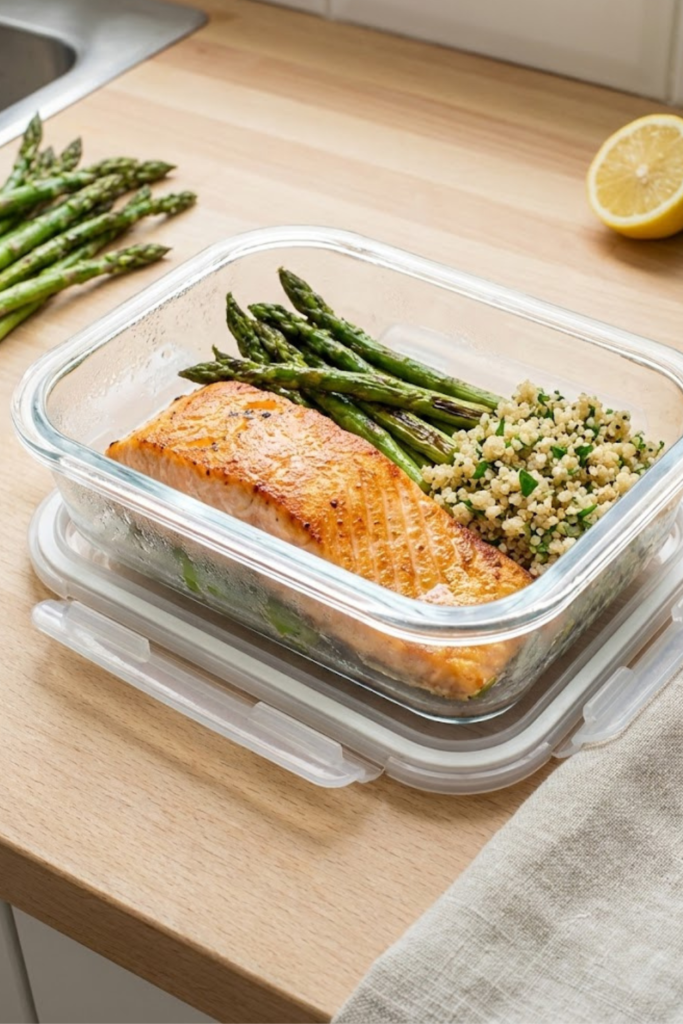
If you are lucky enough to have extra salmon, don’t just throw it in the microwave the next day. Reheated fish can get a bit stinky in the teacher’s lounge, and nobody wants to be that person! Instead, I like to flake the cold salmon over a bowl of quinoa or brown rice. I add the leftover asparagus and maybe a bit of avocado. Since the salmon was cooked with all that lemon and garlic, it tastes great even when it’s cold. It makes a super healthy lunch that keeps me full until my last class of the day. It’s way better than a soggy sandwich.
Keeping It Fresh
To make sure your fish stays good, you need to store it right. I put mine in a glass container with a tight lid. It will stay fresh in the fridge for about two days. If you wait longer than that, it might start to get a bit of a strong smell. I always try to eat the leftovers the very next day. Just remember to keep the lemon slices with the fish to keep it moist while it sits in the fridge. These little steps help you get the most out of your hard work! Dealing with food waste is something I try to avoid, and this is a great way to do it.
Dinner is Served!
I can’t tell you how many times this easy sheet pan salmon and asparagus with lemon has saved my sanity after a long day of teaching. There are nights when my brain feels like it is made of cotton and I just want to order a pizza. But then I remember I have some salmon in the fridge and a bunch of asparagus. Within twenty minutes, I am sitting down to a meal that actually makes me feel good. It is a world away from the greasy takeout I used to settle for. I really hope this guide helps you feel more confident in your kitchen, because cooking shouldn’t be a chore that makes you want to cry.
We have covered a lot today, from picking the right center-cut fillets to that fun trick of snapping the asparagus ends off. Remember, the lemon garlic butter is your best friend. It gives you so much flavor without needing a whole cabinet of spices. And don’t forget those lemon slices under the fish! That little trick is what keeps the salmon from sticking to the pan and makes it so moist. Even if you are a beginner, if you keep your oven at 400 degrees and watch for those white flakes on the fish, you are going to do great. It is all about those simple steps that add up to a really big result.
Eating healthy in 2026 doesn’t have to be hard or expensive. This meal is packed with all the good stuff like omega-3s and vitamins, but it tastes like a treat. Plus, knowing you only have one pan to wipe down at the end of the night is the best feeling ever. I usually spend that extra time reading a book or just relaxing with my family. Dinner time should be about connecting with the people you love, not stressing over a sink full of dirty pots.
If you tried this recipe and it made your weeknight a little bit better, please do me a favor. Save this post and share it on Pinterest! I love seeing other busy families finding ways to eat well without the stress. Sharing it helps other people find these simple tips too. Now, go grab your baking sheet and get started—you’ve got this!