You know, the first time I tried to make pancakes for my wife, it was a total disaster. I’m talking rubbery, burnt discs that looked more like hockey pucks than breakfast. I remember standing there in my tiny apartment kitchen, sweating over a smoking skillet, wondering how something so simple could go so wrong. It was embarrassing! But hey, we learn from our mistakes, right?
After about a hundred Sunday mornings and a lot of wasted flour, I finally cracked the code. It’s not just about the ingredients; it’s about how you treat them. Did you know that over-mixing the batter is the number one reason pancakes turn out tough? It’s true! When you make these fluffy buttermilk pancakes with maple butter, you’re aiming for clouds, not bricks.
I’m gonna walk you through this just like I teach my students—step by step, no fluff, just the good stuff. We’re gonna make a mess, we might spill some milk, but by the end of this, you’ll be the hero of the breakfast table. Let’s get cooking!
Why Buttermilk is the Secret Weapon for Fluffiness
I used to think buttermilk was just a marketing trick to get me to buy a special carton of milk I’d only use once. Honestly, I thought regular milk with a squeeze of lemon was basically the same thing. Boy, was I wrong. If you want fluffy buttermilk pancakes with maple butter that actually stay puffy and don’t turn into flat discs after five minutes, you need the real deal. Buttermilk isn’t just about the flavor—it’s about the science happening inside your mixing bowl. As a teacher, I love a good experiment, and your breakfast plate is basically a delicious lab.
The Science of the Bubbles
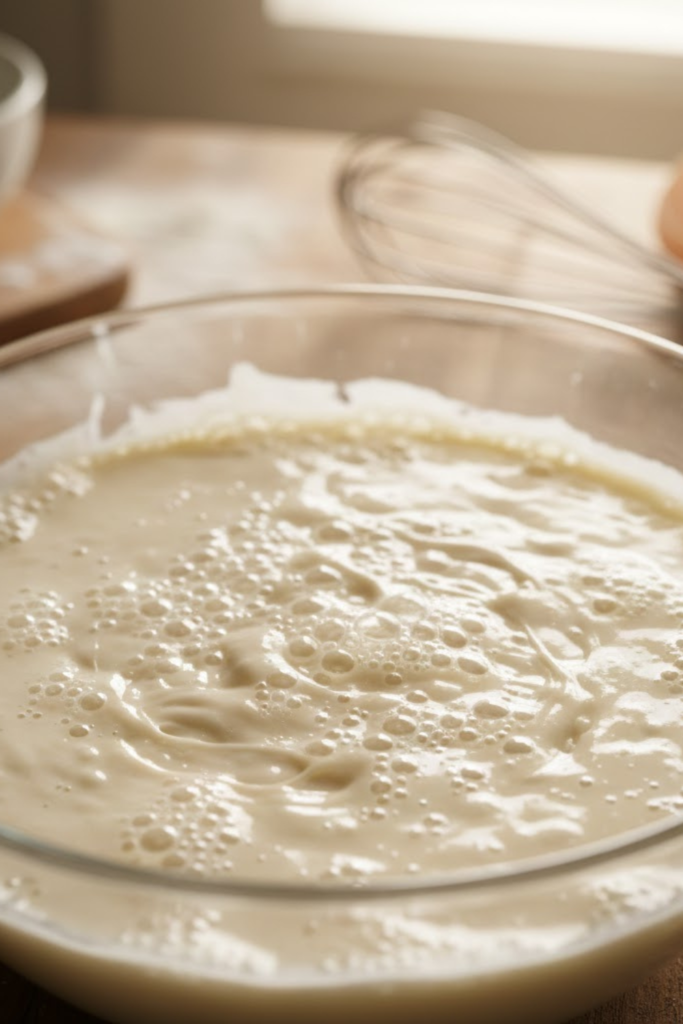
Here is the cool part. Buttermilk is acidic. When you mix that acid with baking soda, it starts a chemical reaction right away. It creates tiny bubbles of carbon dioxide. Think of it like a science fair volcano, but way more delicious. Those bubbles get trapped in the batter as it cooks, which is exactly what gives you that “lift.” Without that acidity, your baking soda doesn’t have a partner to work with, and your pancakes stay sad and flat. I always tell my friends, don’t let the batter sit too long after mixing! You want to get those bubbles onto the griddle while they are still active and full of life.
Breaking Down the Tough Stuff
Another reason buttermilk is the secret is how it treats the flour. Flour has gluten, and gluten is what makes bread chewy. Chewy is great for a loaf of sourdough, but it’s the enemy of a pancake. The acid in the buttermilk helps break down those gluten strands so the final result is tender. It’s like the difference between biting into a cloud versus biting into a piece of gum. I remember one time I ran out of buttermilk and tried to use heavy cream instead. They were rich, but they were so heavy they felt like rocks in my stomach. I learned my lesson: the acidity does the heavy lifting.
Better Color and Taste Balance
You also get a better color with buttermilk. Because of how it reacts with the heat, you get that perfect golden-brown finish that looks like it belongs in a magazine. Plus, that slight tanginess cuts through the sweetness of the maple butter. It’s all about balance. If you just used regular milk, the whole thing might taste a bit boring. But with buttermilk, every bite has a bit of personality. Just make sure you don’t over-mix, or you’ll pop all those bubbles!
Essential Ingredients for the Perfect Stack
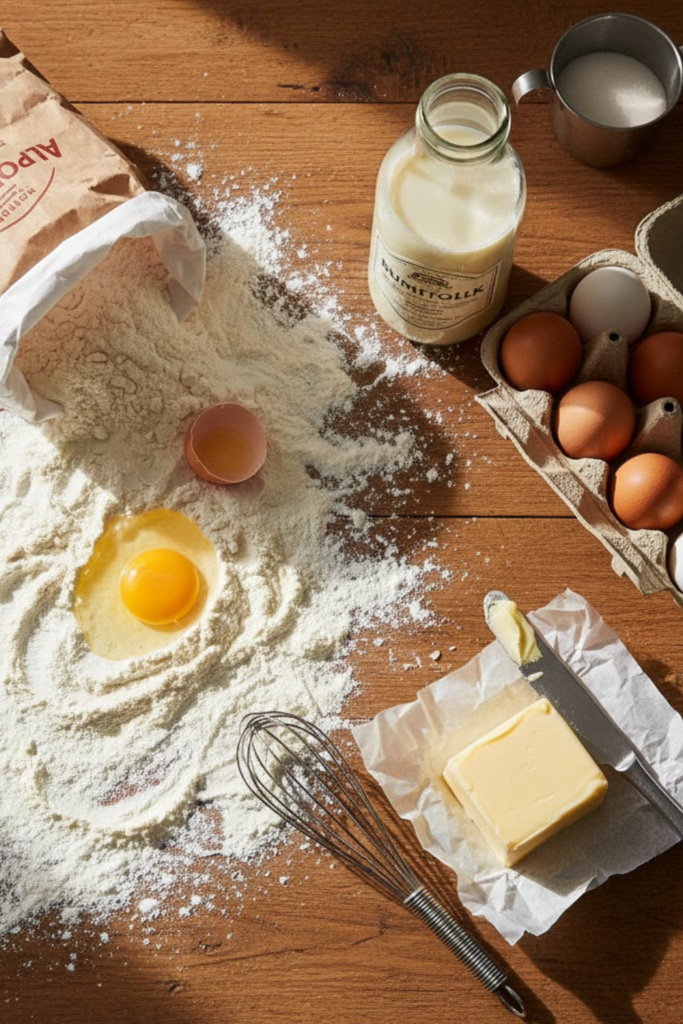
I’ve seen a lot of students try to shortcut things in my life, and I’ve definitely done it myself in the kitchen. For a long time, I just grabbed whatever was in the pantry without thinking twice. But if you want to make fluffy buttermilk pancakes with maple butter, you can’t just wing it with old ingredients. It’s like trying to build a house with rotten wood; it doesn’t matter how good the blueprint is, the whole thing is gonna fall apart. You need the right tools and the right fuel to get that perfect rise.
Why Your Baking Powder Matters
One of the biggest mistakes I see people make is using old baking powder. Most people don’t realize that stuff loses its power after about six months to a year. If yours is sitting in the back of the cupboard and you can’t remember when you bought it, just toss it. I did a little test once where I used old powder in one batch and fresh in the other. The old ones were like sad little crepes. The fresh ones? They puffed up so big they almost looked like muffins. It’s a simple thing, but it’s the difference between a “wow” breakfast and a “meh” breakfast. Always check that expiration date!
Don’t Use Cold Ingredients
Another thing I learned—and I learned this the hard way while making breakfast for my mother-in-law—is that temperature is everything. If you take cold eggs and cold buttermilk straight from the fridge and mix them with melted butter, that butter is going to turn back into solid little chunks. It’s gross. I usually take my eggs and buttermilk out about thirty minutes before I start. This lets everything mix together smooth. When the liquids are room temperature, they blend better and help the air stay inside the batter so your pancakes stay light and airy instead of becoming dense.
The Right Way to Measure Flour
Lastly, please stop scooping your flour directly with the measuring cup. When you do that, you pack the flour down and you end up using way too much. Your pancakes will turn out dry and tough, more like a biscuit than a pancake. I always tell people to use a spoon to fill the cup and then level it off with a knife. It takes an extra ten seconds, but your fluffy buttermilk pancakes with maple butter will thank you for it. Use high-quality butter and real maple syrup too. You deserve better than fake syrup on a Saturday morning!
Whipping Up the Homemade Maple Butter
You might think that after all that work on the batter, you can just slap a cold piece of butter on top and call it a day. I used to do that! I’d take a hard block of butter from the fridge, drop it on the hot stack, and watch it slide right off the pancakes and onto the table. It was a total mess. If you really want to level up your fluffy buttermilk pancakes with maple butter, you have to make the maple butter its own thing. It’s not just a topping; it’s the glue that brings the whole breakfast together. My students always ask why the school lunch isn’t this good, and I tell them it’s because the little details matter.
Soft Butter is Non-Negotiable
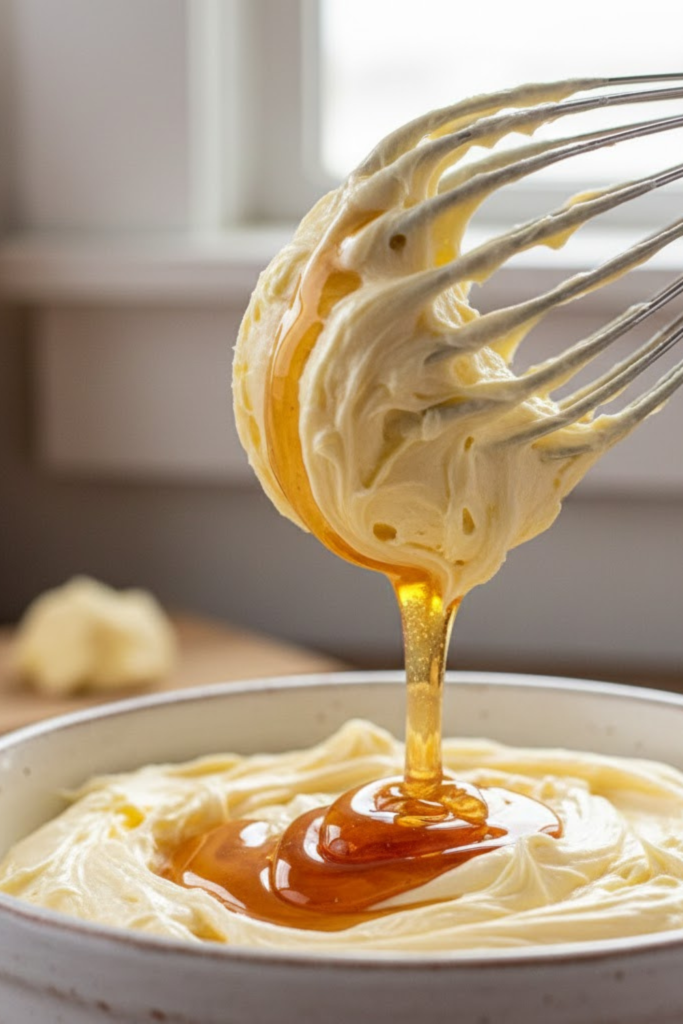
Listen, if you try to mix maple syrup into cold butter, you’re gonna have a bad time. It’s like trying to mix oil and water; they just won’t play nice together. I always leave a stick of unsalted butter out on the counter the night before. If you forgot to do that, don’t you dare microwave it until it’s liquid! That ruins the texture and makes it greasy. Just put it in a bowl and mash it with a fork until it’s soft like cake frosting. I usually use a hand mixer because I’m a bit lazy on Sunday mornings, but a good old-fashioned whisk works too. You want it to be light and airy so it melts the second it hits those warm pancakes.
The Perfect Ratio for Drizzling
I’ve experimented with this a lot over the years. If you add too much syrup, the butter gets runny and gross. If you don’t add enough, you can’t even taste the maple. For one stick of butter, I usually go with about three tablespoons of the real stuff—pure Grade A maple syrup. Don’t use that fake “pancake syrup” that’s mostly just corn syrup; it’s way too thick and tastes like chemicals. Pour a little syrup in, whip it, then pour a little more. It should look like a pale, creamy cloud when you’re done.
Adding a Pinch of Flavor
Here’s a little secret I learned: add a tiny pinch of flaky sea salt. It might sound weird to put salt in your sweet butter, but it makes the maple flavor pop like crazy. If I’m feeling fancy, I’ll even throw in a tiny dash of cinnamon. It makes the whole kitchen smell like a cozy bakery. Just don’t go overboard; you want to help the maple flavor, not bury it under spices. Once it’s mixed, you can keep it in a small jar, but honestly, it never lasts more than ten minutes at my house once the kids see it.
The Art of the Flip: Cooking Techniques
I’ve spent many mornings standing over a stove, spatula in hand, feeling like I was in some kind of high-stakes battle. When I first started making fluffy buttermilk pancakes with maple butter, I messed up the flip almost every single time. One would be raw in the middle, and the next would look like a piece of charcoal. I used to think flipping was just about being fast, but it’s actually about being patient. I tell my students all the time: you can’t rush the process, and that’s especially true for pancakes. If you try to force it, you’ll just end up with a sticky mess on your stovetop instead of a beautiful breakfast.
The Water Droplet Test
Before you even think about pouring that batter, you have to make sure your pan is actually ready. I don’t have a fancy laser thermometer, so I use an old-school trick I learned from my grandma. I just flick a couple of drops of water onto the skillet. If the water just sits there and slowly bubbles, it’s too cold. If it vanishes instantly, it’s way too hot. You want the water to “dance” and sizzle across the surface for a second before it disappears. That’s how you know you’ve hit that perfect medium-low heat. If you start with a cold pan, your pancakes won’t rise, and they’ll soak up all the oil like a sponge. It’s a bad way to start the day.
Watch the Bubbles, Not the Clock
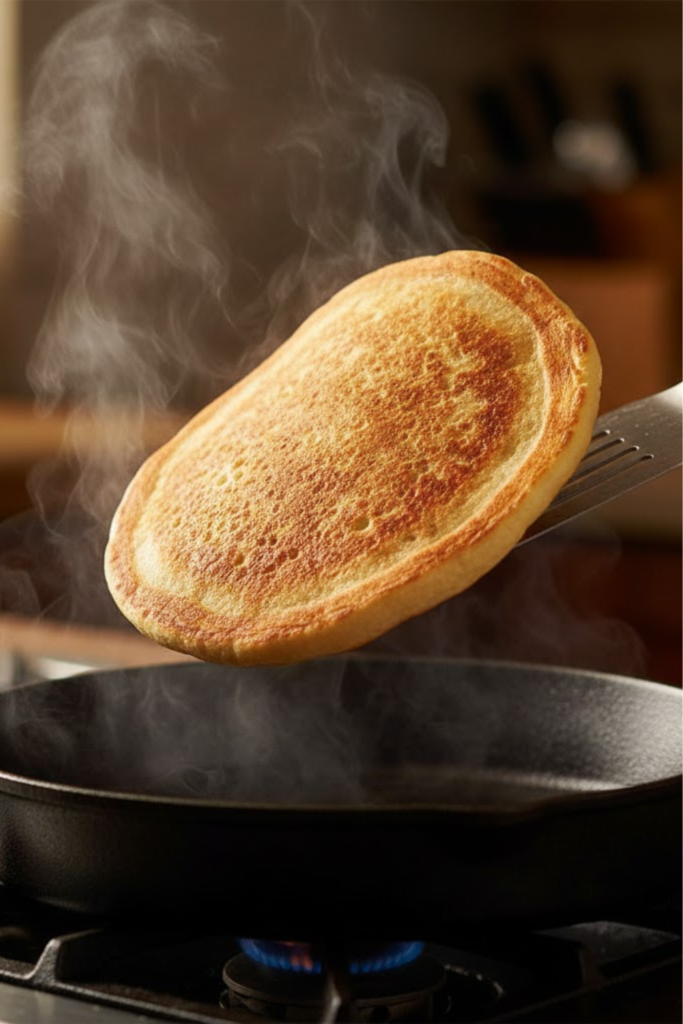
The biggest mistake I see people make is flipping way too early. I get it, you’re hungry and the kitchen smells amazing! But you have to wait for the bubbles. As the pancake cooks, you’ll see tiny bubbles forming on the top of the batter. Don’t move yet. You need to wait until those bubbles actually pop and leave a little hole that doesn’t fill back up with wet batter. That is the “go” signal that the bottom is set and ready to move. Also, try to only flip once. I see people flipping their pancakes back and forth like they’re playing a game, but every time you flip, you lose that fluffiness we worked so hard to create.
The Golden Rule of Spatulas
And please, whatever you do, don’t press down on the pancake with your spatula! I see people do this all the time because they think it helps it cook faster. All you’re doing is squeezing the air out of the center. You want those air pockets to stay there so the pancake stays light. Once you flip it, just let it sit for another minute or two until it’s golden brown on the other side. If you treat them with a little respect and stay patient, you’ll have a stack that looks like it came from a professional chef. It just takes a little practice and a steady hand!
Bringing it All Together at the Breakfast Table
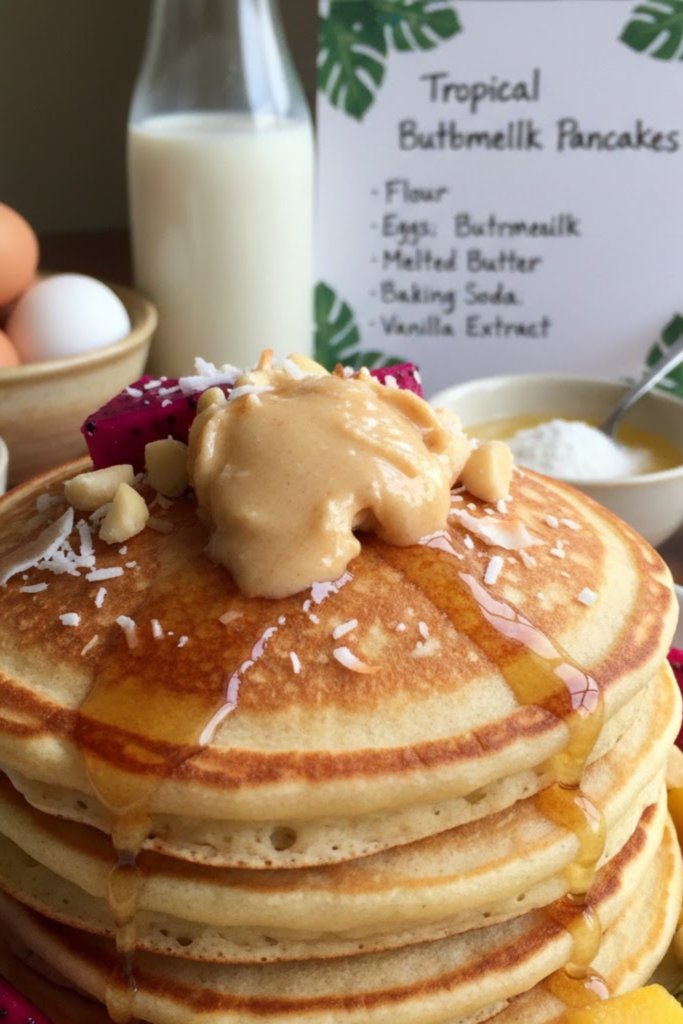
Well, we’ve made it to the end of our lesson today. If there is one thing I want you to take away from this, it’s that you shouldn’t be afraid to make a mess in your kitchen. I tell my students all the time that the best way to learn is by doing, and that goes for making fluffy buttermilk pancakes with maple butter just as much as it does for algebra. You might mess up the first one, or your butter might be a little too cold the first time you try to whip it, but that’s okay. Every mistake is just a step closer to becoming the master of your own kitchen. There is something really special about seeing a tall stack of golden pancakes sitting on the table, knowing you didn’t just pull them out of a cardboard box.
The Sacrifice of the First Pancake
One thing I didn’t mention earlier, but I tell everyone who asks, is that the first pancake is almost always a “throwaway.” I usually eat it myself while I’m standing over the stove. It’s like the rough draft of an essay. You use it to test the heat of the pan and see if your batter is the right thickness. Don’t get discouraged if that first one looks a bit wonky or doesn’t brown perfectly. By the time you get to the second and third ones, you’ll be in a groove. My wife always laughs because she knows by the time I sit down, I’ve already had my fill of the “test” cakes. It’s a cook’s privilege!
Share the Love and the Recipe
Cooking for the people you care about is one of the best ways to show you love them. Whether you are making these for your kids on a snowy Saturday or surprising your partner with breakfast in bed, these pancakes are going to put a smile on their faces. That creamy maple butter melting into the warm, airy centers is a combination that’s hard to beat. I’ve shared this recipe with dozens of fellow teachers and parents, and it never fails to be a hit.
If you enjoyed making these and they turned out as fluffy as a cloud, do me a huge favor. Please share this recipe on Pinterest! It helps other home cooks find these tips so they can ditch the boxed mixes too. I love seeing photos of your stacks, so don’t be shy about showing off your hard work. Now, go grab a fork and dig in while they’re still hot! Enjoy your breakfast!