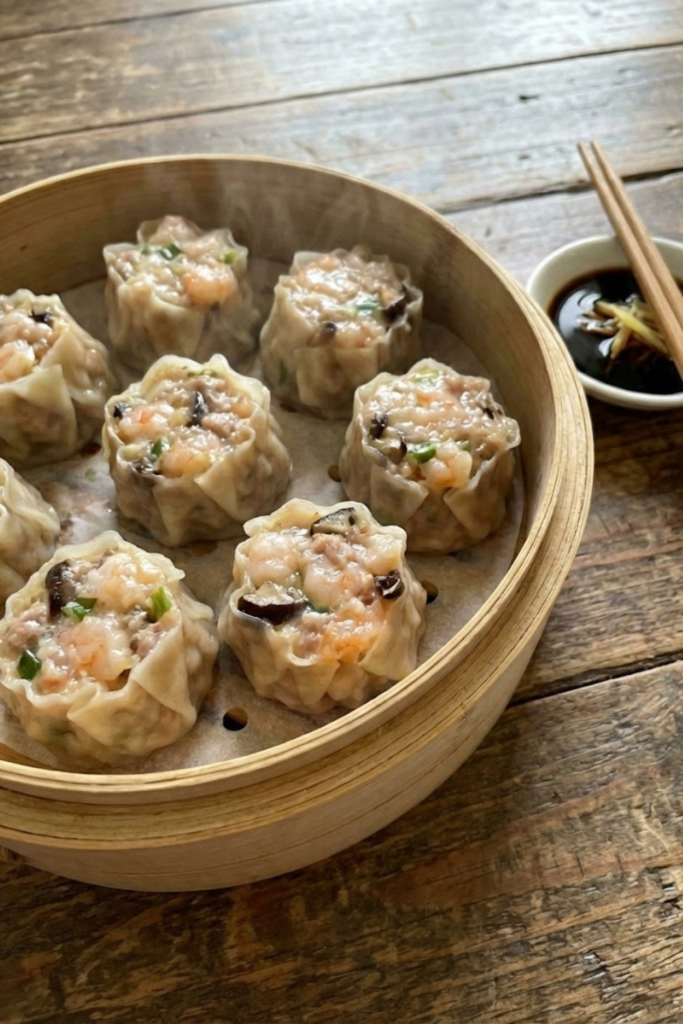
“Did you know that dim sum literally translates to ‘touch the heart’? Well, these little open-faced dumplings have certainly touched mine—and my waistline!”. I remember the first time I tried to make shrimp and pork shumai; I ended up with a sticky mess that looked more like meatballs than delicate dumplings. But after years of testing (and tasting!), I’ve cracked the code. In this article, we aren’t just making dinner; we are creating an experience. Get your steamer ready, because we are bringing the teahouse to your kitchen!
The Holy Trinity of Filling: Pork, Shrimp, and Fat
Let me be real with you for a second—my first batch of shumai was dry as a bone. I thought I was being smart by using super lean pork, but man, was that a big mistake. If you want to make a real shrimp and pork shumai, you gotta understand that fat is your best friend. It’s the difference between a juicy, savory bite and a mouthful of sawdust. I’ve spent years in my own kitchen messing this up so you don’t have to. Think of the filling as the soul of the dumpling. If the soul is dry, the whole thing falls flat.
Don’t Fear the Pork Fat
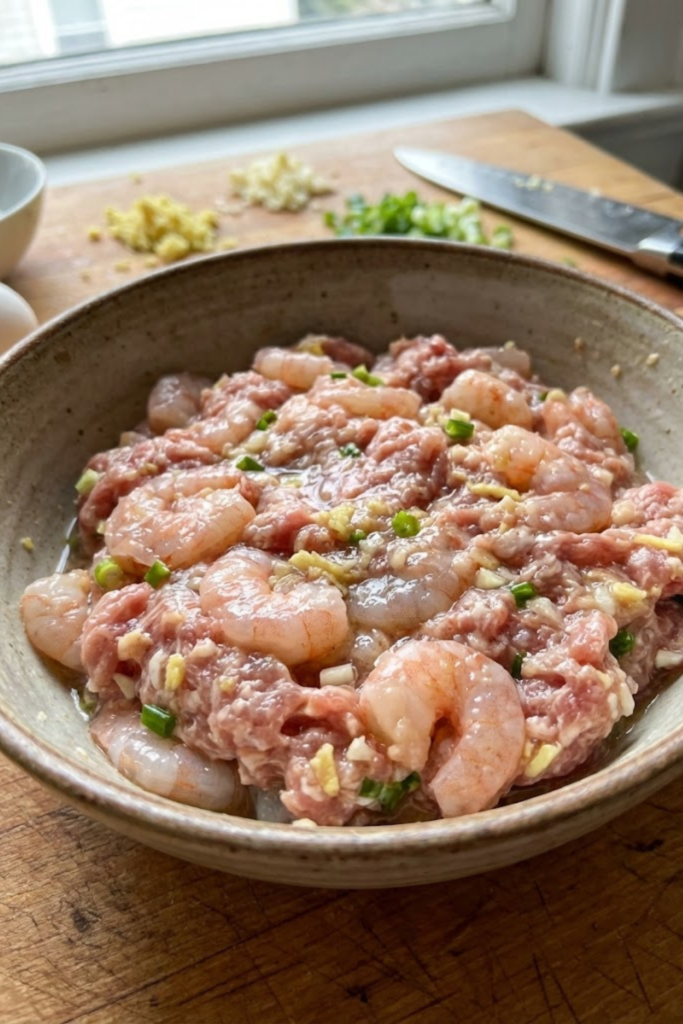
Most people go to the store and pick the leanest ground meat they can find. For a burger? Maybe. For shumai? Absolutely not. You want a ratio that is at least 80% meat and 20% fat. If you can get 70/30, even better. That fat melts inside the wrapper while it steams, creating a little pocket of soup inside the meat. I usually ask the butcher for “fatty pork shoulder” and have them grind it right there. It makes the texture so much softer. Without that fat, the meat gets tough and shrinks away from the wrapper, leaving you with a sad, shriveled dumpling.
Hand-Chopping Your Shrimp
Now, let’s talk about the shrimp. I see a lot of people throw their shrimp into a food processor and whiz it into a gray paste. Please, for the love of good food, don’t do that! You want to hand-chop your shrimp into little chunks. About the size of a pea is perfect. When you bite into a shrimp and pork shumai, you want to actually feel the “pop” of the shrimp. It’s what chefs call a “bouncy” texture. If you grind it up too much, you lose that completely. I like to keep about a third of the shrimp as a rough paste to help hold things together, but the rest should be chunky.
Making the Mix Stick Together
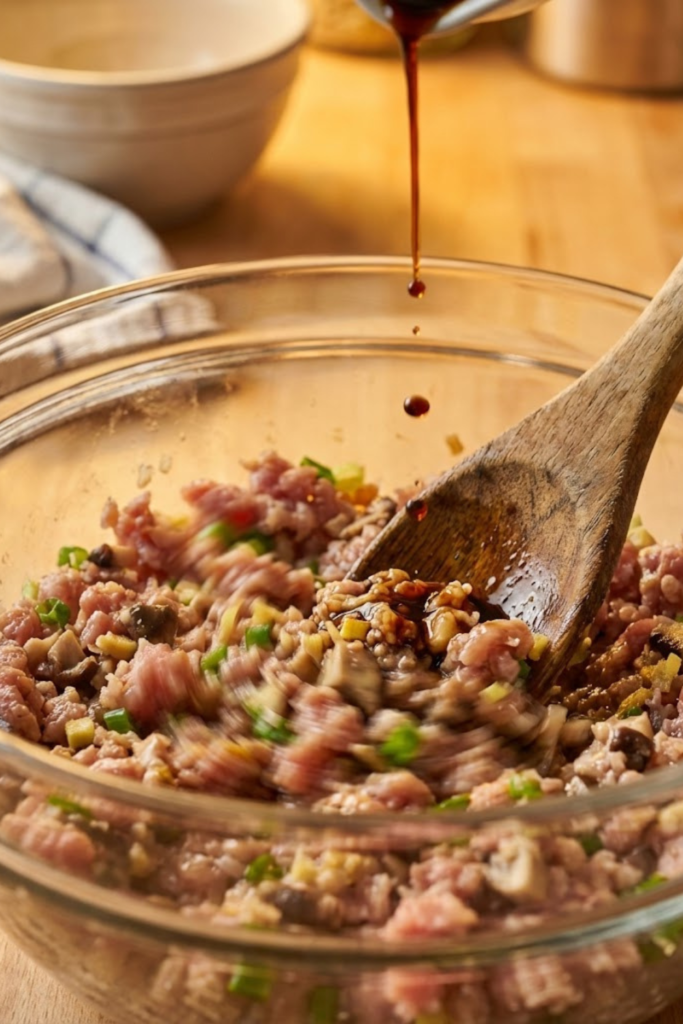
The last part of the trinity is the binder. This is the “glue” that keeps your hard work from falling apart. I use a mix of cornstarch, a splash of water, and one egg white. When you mix the pork and shrimp, you have to stir it in one direction—and only one direction—really fast for about five minutes. This helps the proteins bond. It should look like a sticky paste by the time you’re done. If it looks like loose taco meat, keep stirring! This step is what makes the filling stay together inside that thin yellow wrapper. It’s a bit of a workout for your arm, but the result is a dumpling that stays juicy and firm.
Seasoning Secrets for Authentic Flavor
I used to think that meat was the only thing that mattered in a good dumpling. Boy, was I wrong! If you don’t season it right, you are basically just eating a ball of bland, gray pork. The seasoning is what makes people go “wow” when they take that first bite at a dim sum restaurant. I’ve spent a lot of time trying to get that exact flavor at home, and I finally figured out that it is all about balance. You want it salty, a tiny bit sweet, and you definitely want that nutty smell that makes your mouth water before you even pick up your chopsticks.
The Liquid Gold: Soy, Oyster, and Sesame Sauce
Let’s talk about the liquids first. Soy sauce is a must for saltiness, but you have to be careful. If you put too much in, your filling turns a dark, muddy color and gets way too watery. I always add a big spoonful of oyster sauce too. It adds a thick, savory layer that soy sauce just can’t do on its own. And please, whatever you do, do not skip the sesame oil. I remember one time I ran out and tried to make shrimp and pork shumai without it. The whole batch felt like it was missing its heart. That toasted smell is what really makes it taste authentic. Just a tiny splash is enough to change the whole game.
Fresh Aromatics Make a Huge Difference
Next, you need the fresh stuff. Ginger and scallions (the green onions) are the backbone of this recipe. I like to grate my ginger really fine so it blends into the meat. You don’t want someone biting into a huge chunk of raw ginger; that is a quick way to ruin a nice dinner! For the scallions, I mainly use the white and light green parts because they have a much stronger flavor. I once tried to use onion powder because I was being lazy, and let’s just say, the results were pretty disappointing. Stick to the fresh stuff if you can. It adds a brightness that cuts right through the heavy fat of the pork.
The Pro Chef Secret: Sugar and White Pepper
Finally, there are two tiny ingredients that most people forget: sugar and white pepper. The sugar doesn’t make the meat taste like dessert; it just makes all the other savory flavors stand out more. It’s like a volume knob for taste. And white pepper is traditional for a reason. It has a different kind of heat than black pepper—it’s more earthy and sharp. A lot of pro chefs also throw in a pinch of chicken bouillon powder. It might feel like you’re cheating, but that is how you get that deep, “MSG-style” punch that keeps you coming back for more. Mix all this into your meat until it smells amazing, and you’re halfway to the best meal of your week.
Wrapping and Pleating Shumai Made Easy
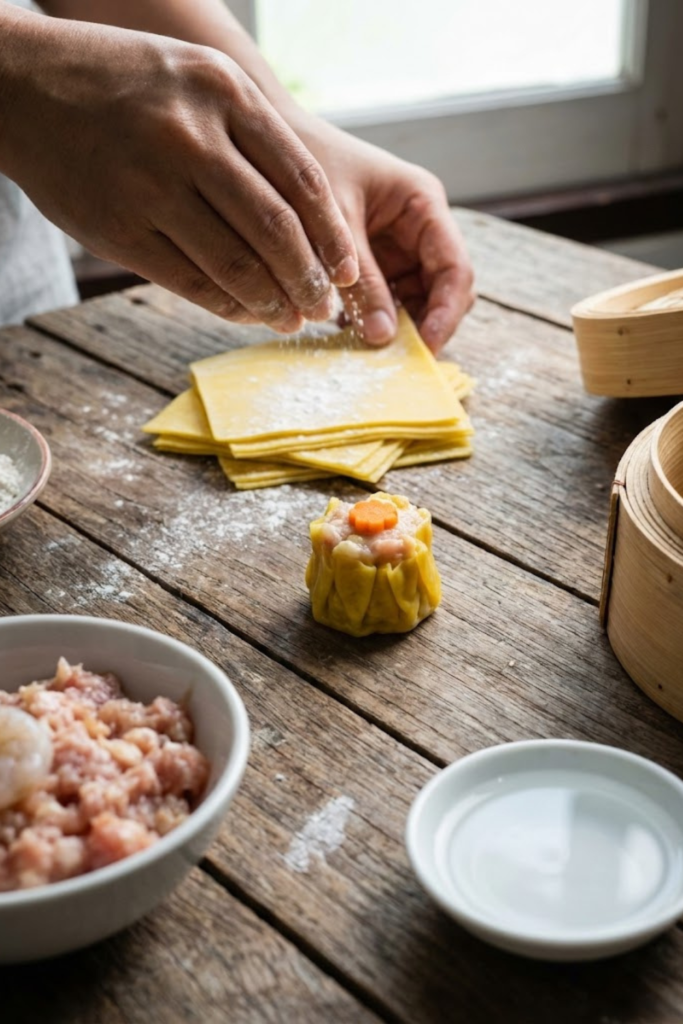
I remember looking at a stack of wonton wrappers for the first time and feeling totally lost. For your shrimp and pork shumai, you really want the yellow ones, which are usually called Hong Kong style wrappers. They are a bit thinner and have that classic look we all love. If you can only find square ones at your local grocery store, don’t sweat it. I used to try to wrap the square ones as-is, but they ended up looking like messy little packages instead of real dim sum. Now, I just take a round cookie cutter or a wide glass and trim them into circles. It makes the pleating part way easier. Just remember to keep a damp paper towel over the stack while you work. I learned that the hard way after a whole pack dried out on me while I was busy chatting!
The Hand “Cradle” Method
Here is the secret to getting that famous open-top shape without losing your mind. You make a circle with your thumb and index finger, kind of like you’re giving someone the “OK” sign. Lay the wrapper over that hole and drop a big spoonful of your shrimp and pork shumai filling right in the middle. Then, you just let the weight of the meat push the wrapper down through your fingers. Use a butter knife or the back of a small spoon to press the top down flat while you squeeze your hand slightly to form the “waist” of the dumpling. I used to try and fold every single pleat by hand, but that takes way too long. This “cradle” method is much faster and gives you those nice ripples on the side.
The Final Finishing Touch
Before you put them in the steamer, you gotta add that little orange dot on top. It’s what makes them look like they came from a fancy teahouse. Traditionally, people use crab roe, but I almost never have that in my fridge. A tiny piece of finely diced carrot or even a single green pea works just as well. It adds a pop of color that makes the whole tray look professional. I’ve even used a little bit of corn or salted egg yolk when I wanted to change things up. Once you finish a whole tray, you’ll feel like a real master. It’s okay if some look a bit lopsided. A few of mine still come out looking a bit funny, but they always disappear from the plate in seconds anyway!
Steaming Your Way to Perfection
You’ve done all the hard work of mixing and wrapping. Now comes the part where your house starts to smell like a five-star restaurant. Steaming is probably the easiest part of making shrimp and pork shumai, but it is also where things can go sideways if you aren’t paying attention. I once forgot to line my steamer, and let me tell you, trying to scrape stuck dumpling skins off bamboo is a nightmare I wouldn’t wish on my worst enemy. I spent twenty minutes scrubbing that basket! This step is all about managing heat and moisture to make sure those little bites stay juicy.
Prepping Your Steamer Basket
Before you even think about turning on the stove, you need to create a barrier between the wood and the wrapper. If you put the dumplings directly on the bamboo, they will stick and tear when you try to pick them up. I usually use parchment paper liners that have little holes poked in them. You can buy these pre-cut, or just fold up a piece of baking paper and snip some holes with scissors. Some of my friends use Napa cabbage leaves or even thin slices of carrot. I like using cabbage because it adds a faint, sweet smell to the steam. Whatever you use, make sure you leave about an inch of space between each shumai. They expand a little when they cook, and if they touch, they will fuse together into one giant meat-blob.
Getting the Heat Right
Wait until the water in your wok or pot is at a full, rolling boil before you put the steamer basket on top. You want that hit of intense heat right away to start cooking the pork through. But here is a big tip: keep an eye on the water level! I’ve definitely scorched a bamboo basket because I let the pot run dry while I was busy setting the table. It smells like a campfire in the kitchen, and not in a good way. I always keep a kettle of hot water nearby so I can refill the pot without dropping the temperature too much. You want a steady, thick cloud of steam the whole time they are cooking.
Timing and the “Done” Test
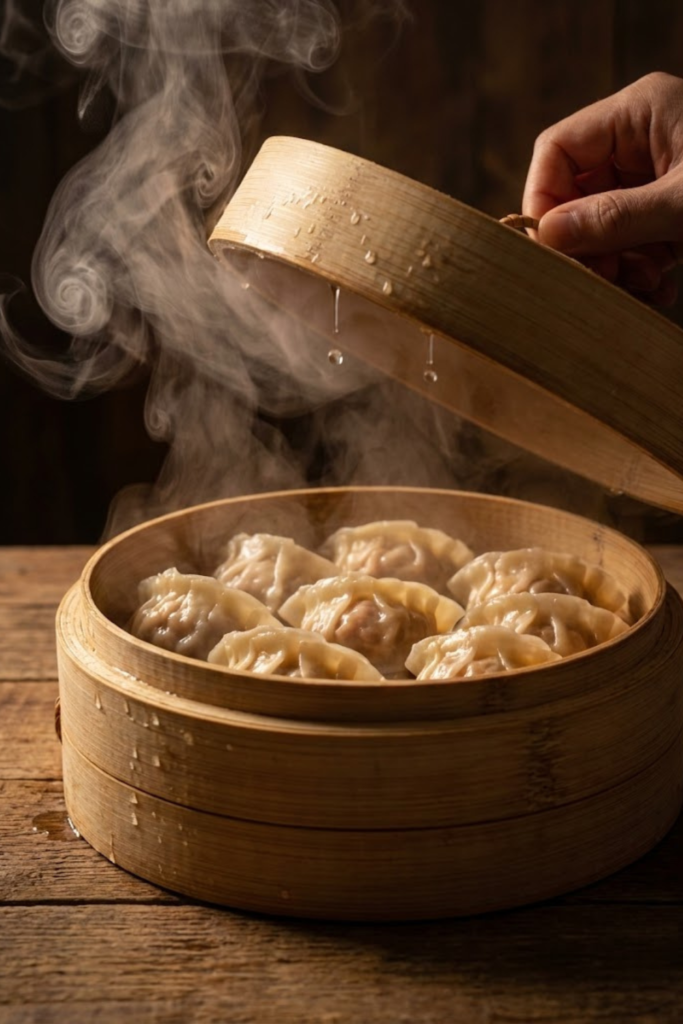
So, how long do they actually take? For fresh shrimp and pork shumai, 8 to 10 minutes is usually the sweet spot. If you are cooking them straight from the freezer, you’ll need to give them about 15 minutes. You will know they are ready when the wrapper looks slightly translucent and the meat feels firm when you give it a gentle poke with a chopstick. The shrimp should be a bright, happy pink. Try not to overcook them! If they stay in too long, the pork gets tough and the wrapper gets mushy and gross. Once the timer goes off, take the basket off the heat immediately. The wait is almost over, and your patience is about to pay off with the best snack ever.
Serving Suggestions and Dipping Sauces
You’ve finally got a steaming hot basket of shrimp and pork shumai sitting on your table. Now what? You can’t just eat them plain! Well, I guess you could, but you’d be missing out on half the fun. Part of the whole dim sum experience is the sauce. I remember going to a little hole-in-the-wall place once where the sauce was so spicy I couldn’t even taste the meat for an hour. I learned a big lesson that day. You want a sauce that helps the flavor, not something that hides all the hard work you put into the filling.
Mixing the Perfect Dipping Sauce
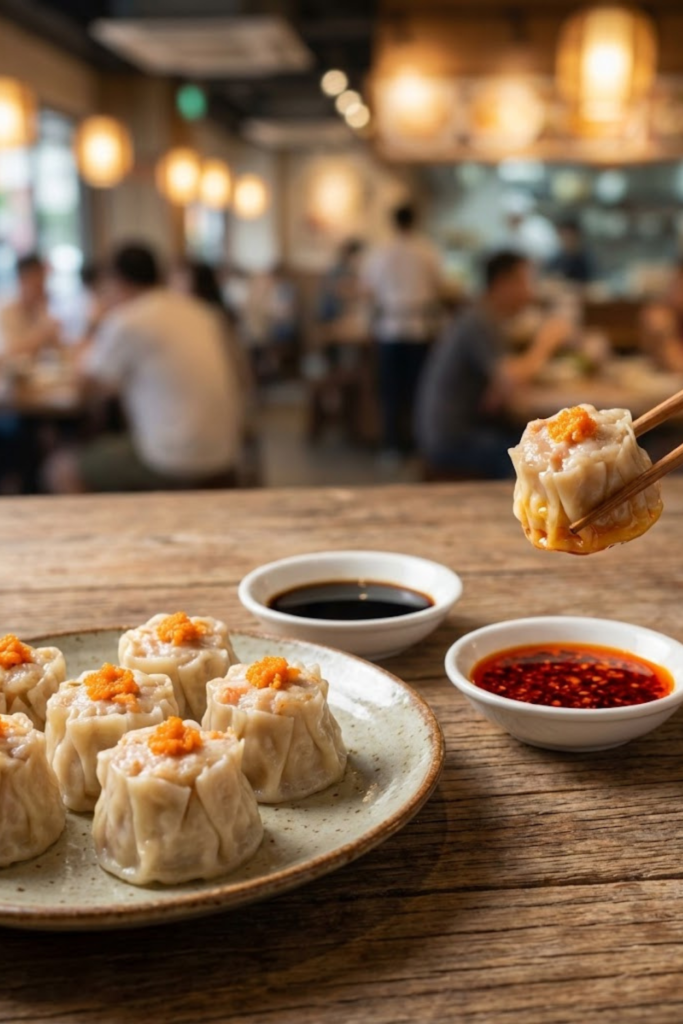
My go-to sauce is super simple and takes about thirty seconds to make. I usually take two parts light soy sauce and one part black vinegar. If you can’t find Chinese black vinegar at your local shop, regular rice vinegar works just fine. The vinegar is the most important part because it cuts right through the richness of the pork fat we used. Without that acid, the dumplings can feel a bit heavy after you eat four or five of them. Then, I add a big spoonful of crispy chili oil. If you like it hot, go ahead and go nuts! If you want it mild, just a tiny drop will give it a nice red color without burning your tongue. Sometimes I throw in some thin ginger strips too. It makes the dish look like it came from a fancy restaurant and adds a fresh crunch that I really love.
What Else to Put on the Table
If you are making this for a full family meal, you probably need a little more than just a tray of dumplings. I usually whip up a quick plate of baby bok choy or Chinese broccoli with a little bit of oyster sauce drizzled on top. It’s green, it’s crunchy, and it makes me feel like I’m actually eating a balanced dinner. Of course, you can’t have a real dim sum spread without tea. I’m a big fan of jasmine or oolong tea for this. The hot tea helps wash down the savory oils from the shrimp and pork shumai. It’s how they do it in the traditional teahouses, and honestly, it just makes the whole meal feel more special.
Saving Some for a Rainy Day
If you are like me, you might have gotten carried away and made way too many. That’s actually a good thing! These dumplings are great for meal prep because they freeze really well. The trick is to freeze them before you cook them. Just put the raw shumai on a tray in the freezer for about an hour until they are hard as rocks, then toss them into a freezer bag. They’ll stay good for a couple of months. When you’re hungry on a busy Tuesday night and don’t feel like cooking, you can just pop them in the steamer for fifteen minutes. It’s way better than ordering takeout, and you get to feel like a pro chef all over again without the mess.
Well, there you have it! You’ve gone from just being a fan of dim sum to knowing all the tricks of a home master. Looking back at everything we covered, I really hope you feel confident enough to start your own batch of shrimp and pork shumai. I know that first time can be a little nerve-wracking, but honestly, once you smell that ginger and sesame oil hitting the air in your own kitchen, you’ll know you’re on the right track. It is such a rewarding feeling to create something that looks and tastes like it came out of a professional kitchen.
The big takeaway I want you to remember is that it’s all about the texture. If you keep your pork fatty and your shrimp chunky, you are already eighty percent of the way there. Don’t worry if your first few dumplings look a little bit lopsided or if the pleats aren’t perfect. My first bunch looked like they had been through a rough storm! But they still tasted great, and that is what actually matters. The more you practice that “cradle” method with your hand, the faster and better you will get. Before you know it, you’ll be whipping these out for every birthday and potluck dinner.
I’ve found that making shrimp and pork shumai is also a great way to slow down and enjoy the process of cooking. There is something really peaceful about sitting at the table and filling those little yellow wrappers. It’s a great activity to do with your family or even just as a way to de-stress after a long day of teaching. Plus, having a stash of these in your freezer is the ultimate “ace up your sleeve” for those nights when you are too tired to do anything but boil a pot of water.
Thank you so much for sticking with me through this guide. I love sharing these kitchen wins with you because I know how good it feels when a recipe finally clicks. If this guide helped you conquer your fear of making dumplings, please share the love! Go ahead and pin this recipe to Pinterest so your friends and family can find it too. I can’t wait to hear how your first batch turns out. Happy steaming!