Ever stared at a gorgeous pink fillet of salmon sitting on your counter and thought, “Now what?” I know I have! We’ve all been there—cooking the fish perfectly only to realize it needs that extra oomph to make it sing. That’s where a killer sauce comes in. Did you know that salmon is one of the most versatile proteins, yet 60% of home cooks only use salt and pepper? Boring!
I remember the first time I tried to whip up a fancy beurre blanc; I practically scrambled the eggs in the butter. It was a disaster! But after years of trial and error in my own kitchen, I’ve found that the right sauce doesn’t have to be complicated to taste gourmet. Whether you’re craving something creamy, zesty, or sweet and sticky, these salmon sauces will take your weeknight dinner from “meh” to “restaurant quality” in minutes. Let’s get cooking!
Creamy Lemon Dill Sauce: The Classic Pair
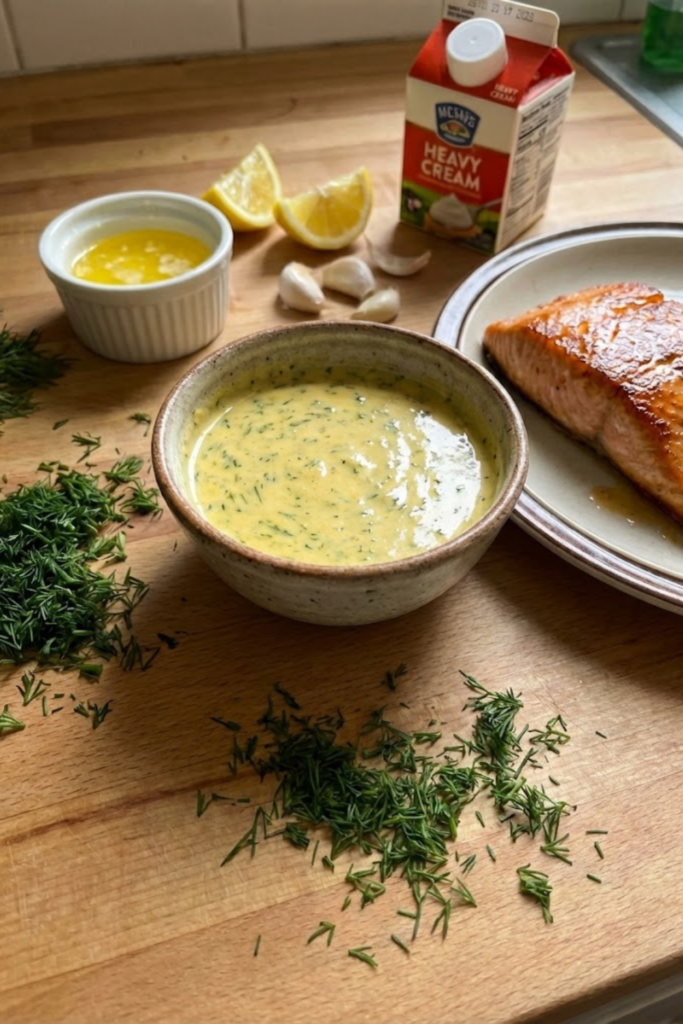
I’ll be honest, the first time I tried to make a creamy lemon sauce, it turned into a hot mess. Literally. I was trying to impress some guests with what I thought was a fancy pan-seared salmon recipe, and I dumped cold lemon juice straight into boiling cream.
Big mistake.
It looked more like cottage cheese than a gourmet sauce. I was so embarrassed I almost scraped it off and served the fish plain! But hey, we learn by doing, right? After a few more tries (and a lot of wasted dairy), I figured out the secret. Now, this sauce is my go-to for easy weeknight meals when I want to feel a little fancy without the stress.
The “Curdle Hurdle”
The biggest lesson I learned the hard way is temperature control. You can’t just blast the heat and hope for the best.
When you are mixing acid (like lemon juice) and dairy, things can get weird fast if the pan is too hot. My advice? Take the pan completely off the burner when you add your heavy cream. Whisk it in slowly with the residual heat. This stops the sauce from breaking and keeps it silky smooth.
It’s actually super satisfying to watch it come together. It goes from a clear liquid to a thick, coat-the-spoon goodness in seconds.
Fresh Herbs Are Non-Negotiable
Okay, I know dried herbs are convenient. I have a cabinet full of them. But for this specific sauce, you really need a fresh herb garnish.
Dried dill just doesn’t have that same bright, grassy punch that cuts through the richness of the salmon. If you absolutely have to use dried, use about a third of what the recipe calls for, or it can taste a bit dusty. Trust me on this one.
When you chop the fresh dill, don’t bruise it. Use a sharp knife and slice it clean. It makes a difference in the presentation, and let’s be real, we eat with our eyes first.
Why This Combo Works
Salmon is a fatty fish. That’s why it’s so good for you, right? All those Omega-3s. But that richness needs something to balance it out.
That is where the lemon comes in. It acts like a palate cleanser. Then the cream ties the fat of the fish to the acid of the lemon. It is basically a perfect circle of flavor.
I usually serve this with some simple roasted asparagus or steamed broccoli. You want the veggies to be simple so they don’t fight with the sauce. And if you have extra sauce left over? It is honestly amazing dipped with crusty bread. Don’t let that liquid gold go to waste!
Next time you are staring at a fillet and wondering how to jazz it up, just remember: low heat, fresh dill, and don’t panic. You got this.
Sticky Honey Garlic Glaze for Pan-Searing
I have a bit of a confession to make. I ruined my favorite stainless steel pan back in 2018 because of a honey garlic salmon marinade gone wrong. I thought I could just toss the honey, soy sauce, and fish into the pan all at once and crank up the heat.
Spoiler alert: Sugar burns. Fast.
I ended up with raw fish and a layer of black, rock-hard caramel stuck to the bottom of my skillet. I scrubbed that thing for three days. It was a total nightmare. But, that kitchen disaster taught me the most important rule about sticky sauces: timing is everything. You have to treat the sauce and the fish as two separate aggressive personalities that only get along at the very end of the party.
The Magic of the “Fond”
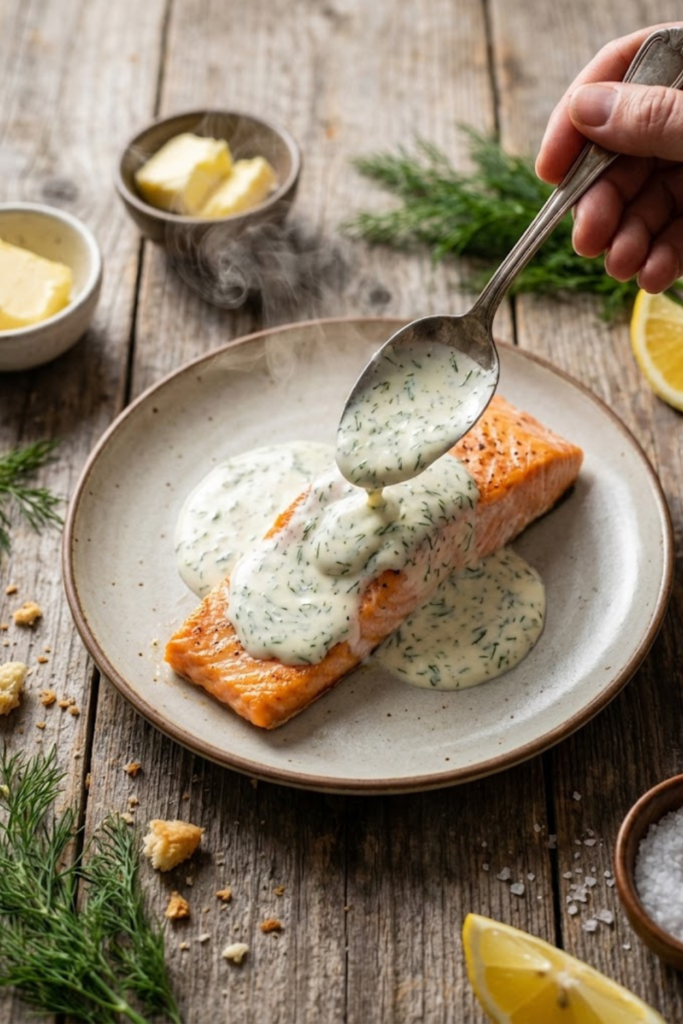
Here is the trick I learned. You cook the salmon first. Get that crispy skin nice and golden, then take the fish out of the pan.
See those little brown bits stuck to the bottom? That is called “fond,” and it is pure flavor. Do not wash it out! That is the base of your sauce.
When I make this now, I lower the heat to medium-low before I even think about adding the garlic. If the pan is smoking hot from the sear, your garlic will burn in two seconds. I usually toss in a splash of water or chicken broth first to deglaze the pan (scrape up those brown bits), and then I add the soy sauce glaze ingredients. It sizzles, it bubbles, and it smells like heaven.
Achieving the “Syrup” Consistency
This part trips people up. You want the sauce to be thick, like syrup, but not like candy.
I let the mixture bubble away for about 2-3 minutes. I always do the “spoon test.” Dip a metal spoon in the sauce and run your finger down the back of it. If the line stays clear and the sauce doesn’t run back together immediately, it is ready.
If you let it go too long, it turns into taffy. If that happens (and it happens to the best of us), just whisk in a teaspoon of hot water to loosen it back up. It’s a forgiving sauce if you catch it in time.
Why It’s a Crowd Pleaser
My kids used to hate fish. They said it tasted “too fishy.” This sticky honey garlic sauce was the game changer. The sweetness of the honey masks that strong ocean flavor, and the garlic gives it a savory kick that makes you want to lick the plate.
Sometimes, if I’m feeling adventurous, I’ll throw in a pinch of red pepper flakes to make a “hot honey” version. It is fantastic over a bowl of steaming white rice with some scallions on top. It honestly tastes better than takeout, and you control the salt, which is a huge plus.
Just remember: watch the heat, scrape the fond, and don’t walk away from the stove!

Fresh Avocado and Mango Salsa
You know those days in July when the air is so thick you feel like you’re swimming just by walking to the mailbox? That is exactly when I discovered this salsa. I had the grill going for some grilled salmon, but the idea of standing over a stove to make a hot cream sauce made me want to cry.
I needed something cold, fast, and fresh.
So, I grabbed whatever fruit was sitting on the counter. It ended up being a total game-changer for my summer menu. The contrast between the hot, smoky fish and the ice-cold, crunchy salsa is just… chef’s kiss. It wakes up your palate in a way a heavy sauce never could.
The Battle with the Avocado
We need to talk about avocados for a second. They are so dramatic!
One minute they are rock hard, and five minutes later they are mush. I’ve ruined so many batches of this salsa by using an avocado that was too soft. It turns into guacamole, which is fine, but not what we want here.
You want firmness.
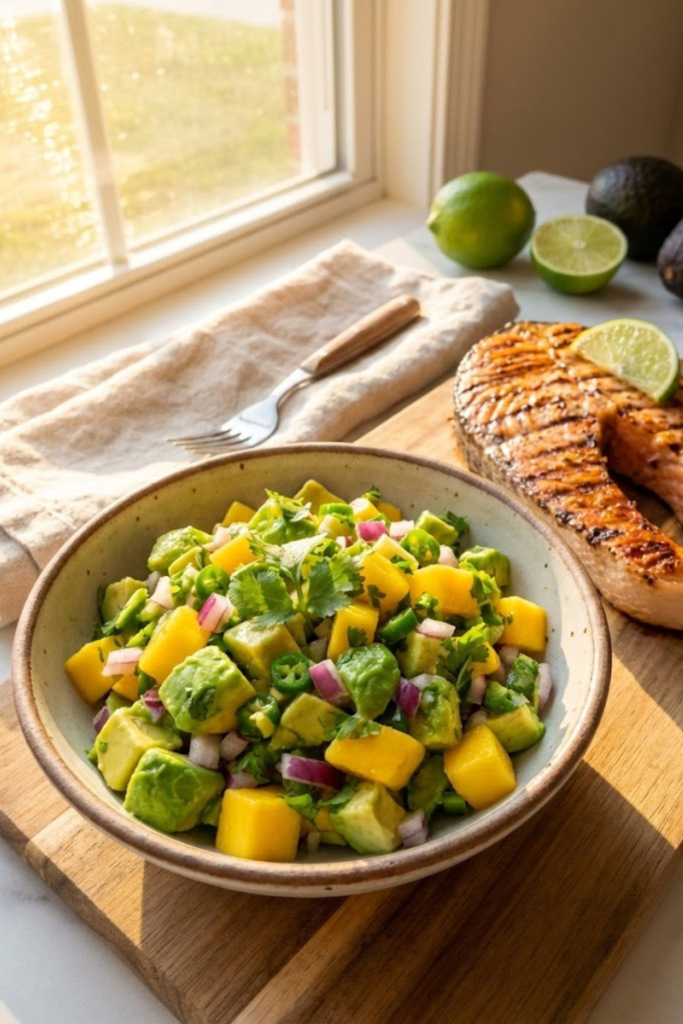
When you are dicing it for this avocado lime dressing style topping, the cubes need to hold their shape. A good tip I learned? Squeeze the lime juice over the avocado immediately after chopping it. Don’t wait until you mix everything else. The acid hits the green flesh and stops it from turning that gross brown color. I once made this an hour ahead without the lime, and let’s just say it looked… unappetizing.
Sweet, Savory, and Spicy
The real magic here is the mango.
You might think fruit on fish sounds weird. I was skeptical too! But the sweetness of a ripe mango balances the saltiness of the fish perfectly. It is one of those healthy fish dinner ideas that doesn’t taste “healthy,” if you know what I mean.
If you like a little kick, leave the seeds in your jalapeño. I usually take them out because my spice tolerance is embarrassing low these days. But definitely don’t skip the red onion. You need that sharp bite to cut through the creamy avocado.
And here is a pro tip: use a serrated knife to cut the mango. The skin is slippery, and I’ve almost lost a finger trying to use a chef’s knife. Safety first, guys! This salsa takes maybe 10 minutes to chop up, and it looks beautiful on the plate.
Rich Garlic Butter Sauce (Beurre Blanc Style)
I used to be terrified of French cooking terms. Whenever I saw “Beurre Blanc” on a menu, I assumed it required a culinary degree and a magic wand to pull off at home. I mean, it sounds so fancy, doesn’t it?
For years, I stuck to basic melted butter because I was too scared to try the real deal. But then I decided to be brave for a dinner party. I wanted to impress my in-laws with a proper white wine sauce for fish.
Let me tell you, my first attempt was a greasy disaster. I dumped all the butter in at once, and the sauce “broke.” That is chef-speak for separating into a pool of oil and some weird milk solids. It looked awful. I panic-served it anyway, and while it tasted okay, it definitely wasn’t the silky, creamy dream I had imagined.
Cold Butter is Your Best Friend
Here is the secret I wish someone had told me back then. The butter needs to be cold.
I know, it sounds backward. Usually, when we cook, we want room-temperature ingredients. But for this beurre blanc technique, you need those cubes of butter to be straight out of the fridge.
If the butter is soft, it melts too fast and turns oily. When it’s cold, it melts slowly, which allows it to emulsify into the wine reduction. That is what gives you that thick, velvety texture that coats the back of a spoon.
I usually cut my stick of butter into small cubes before I even start chopping the garlic. I pop them back in the fridge until the very last second. It makes a huge difference.
The “Whisk and Pray” Method
Okay, maybe not pray, but you definitely need to whisk. A lot.
Once you have simmered your shallots (or garlic) and white wine until the liquid is almost gone, turn the heat down to low. This is the crucial moment. Add the cold butter one cube at a time.
Whisk it constantly. Do not stop. Do not check your phone.
As one cube melts, toss in the next one. It feels like a bit of an arm workout, but it is worth it. You are basically forcing the fat and the liquid to become one happy family.
If you see it starting to look oily around the edges, pull the pan off the heat immediately. Toss in a tiny ice cube—yes, ice!—and whisk like crazy. It brings the temperature down and can save a broken sauce. I’ve saved many baked salmon toppings with that little trick.
Picking the Right Wine
Since there are so few ingredients, quality actually matters here. Don’t use that “cooking wine” from the grocery store shelf that has been there since 2015. It tastes like salt and sadness.
Use a dry white wine that you would actually drink. Sauvignon Blanc or Pinot Grigio are my go-to choices. They have enough acidity to cut through the richness of the butter.
If you don’t do alcohol, you can swap it for lemon juice or a good white wine vinegar, but go easy on it. You don’t want it to be too sour.
This sauce is honestly one of the best garlic lover recipes out there because it feels so indulgent. Pouring this over a simple baked fillet makes you look like a pro chef, even if you are just wearing sweatpants in your kitchen.

Spicy Sriracha Mayo and Asian Influences
I still remember the first time I had a poke bowl at this little hole-in-the-wall spot downtown. I wasn’t even paying attention to the fish; I was obsessed with the orange sauce drizzled all over it. It was creamy, spicy, and addictive. I remember thinking, “I have to figure out how to make this.”
Naturally, I went home and mixed Hellmann’s with Tabasco.
It was… gross. It tasted nothing like the spicy mayo topping I had at the restaurant. I was so frustrated! I wasted a perfectly good piece of fish on a sauce that tasted like spicy sandwich spread. But after obsessing over ingredient labels and doing some late-night Googling, I realized I was using the wrong tools for the job.
The Cult of Kewpie
If you take nothing else from this post, hear me on this: buy the Japanese mayonnaise. It’s called Kewpie, and it comes in a soft squeeze bottle with a red cap.
Regular grocery store mayo is made with whole eggs and vinegar. Japanese mayo is made with just egg yolks and rice vinegar (and usually a little MSG, which is flavor magic). It is richer, creamier, and has a savory depth that Western mayo just doesn’t have.
When I finally switched to Kewpie for my Sriracha salmon bowl, the flavor profile clicked immediately. It was that “aha!” moment where you realize one ingredient can change everything. It costs a few dollars more, but for that authentic sushi-bar taste, it is absolutely worth it.
Balancing the Heat and the Nut
Another mistake I made early on was going overboard with the sesame oil.
I love the smell of toasted sesame oil. It smells like a cozy restaurant. So, naturally, I thought “more is better” and dumped a tablespoon into my sauce. Big mistake. Sesame oil is incredibly potent. It completely overpowered the Sriracha and made the whole dish taste heavy and oily.
Now, I treat sesame oil dressing ingredients like perfume—a little dab will do ya. You literally only need a few drops to get that nutty aroma.
For the heat, I stick to the classic rooster sauce (Sriracha), but if I’m feeling wild, I might swap it for Gochujang (Korean chili paste) for a funkier, deeper spice. Just be careful; different brands have different heat levels. I once burned my mouth off because I switched brands and didn’t taste-test before drenching my dinner. Learn from my pain: taste as you go!
It’s Not Just for Bowls
While this sauce was born for raw fish or rice bowls, I’ve found it is surprisingly versatile. It is my secret weapon for salmon burgers.
Salmon burgers can sometimes be a little dry if you overcook them (guilty!). A big dollop of this spicy, creamy sauce adds that necessary moisture back in. It also works great as a dip for sweet potato fries on the side.
I’ve even thinned it out with a little water and lime juice to make a dressing for a crunchy cabbage slaw. It brings that fusion cooking vibe to a standard Tuesday night dinner without any extra effort.
Just whisk it up in a small bowl—no blender needed. It keeps in the fridge for weeks, though in my house, it rarely lasts that long.

There you have it—five incredible ways to dress up your dinner! Cooking seafood doesn’t have to be intimidating or bland. Whether you chose the rich Garlic Butter or the zesty Mango Salsa, I hope these salmon sauces inspire you to get creative in the kitchen.
Don’t be afraid to experiment with the ingredients you have on hand; sometimes the best recipes are happy accidents . I mean, if I hadn’t messed up that first beurre blanc, I never would have learned the ice cube trick!
Cooking is all about finding what works for you and your family. If the kids love the honey garlic version, stick with that for a while. If you are trying to impress a date, go for the creamy lemon dill. The most important thing is that you are cooking fresh, healthy food at home, and that is a win in my book.
If you tried one of these recipes, I’d love to hear how it turned out! Did you burn the butter or nail the glaze? Let me know in the comments below. And hey, if you found this helpful, save it for later!
Pin this recipe collection to your “Healthy Dinners” board on Pinterest so you never run out of ideas!