Have you ever bitten into something so flavorful it actually made you stop talking? That happened to me the first time I visited a tiny, hole-in-the-wall spot in New Orleans. I was hooked immediately! Did you know that shrimp is the most popular seafood in the United States, with the average American eating nearly 6 pounds of it a year? We are going to bring that authentic Louisiana flair right into your kitchen tonight. It’s going to be messy, spicy, and absolutely delicious. Let’s get cooking!
Essential Ingredients for Authentic Cajun Flavor
Look, I’m gonna be real with you. The first time I tried to make cajun shrimp for a dinner party, it was a total disaster. I was trying to save a few bucks, so I bought those tiny, pre-cooked frozen shrimp—the kind meant for a sad salad bar. The result? Rubber bullets covered in way too much salt. It was embarrassing! I learned the hard way that you can’t hide bad ingredients behind spicy peppers.
Through plenty of trial and error (and a few more rubbery dinners), I’ve figured out that getting that restaurant-quality taste comes down to just a few specific things. You don’t need a fancy kitchen, but you do need the right stuff.
Picking Your Prawns
Size matters here, folks. If you want juicy cajun shrimp that actually hold onto the sauce, you need to go big. I always look for “Jumbo” or “Colossal” on the bag. Specifically, look for the count 16/20 per pound.
Also, please buy them raw. If you buy pre-cooked shrimp, you are basically heating them up twice, and that’s a one-way ticket to tough seafood. I usually grab frozen, wild-caught shrimp because they are flash-frozen right on the boat. It keeps the flavor locked in better than the “fresh” ones sitting behind the glass counter for three days.
The Spice Situation
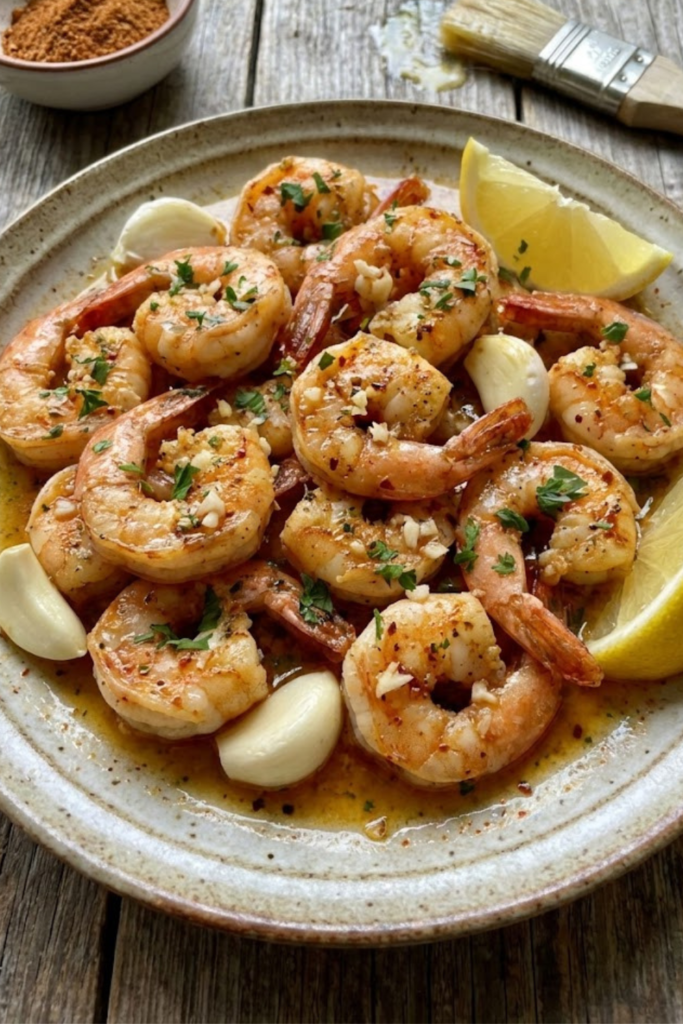
I used to just grab that yellow canister of Creole seasoning from the store. It’s fine in a pinch, but have you looked at the label? It is mostly salt! To get that real depth, you gotta mix your own.
Here is what is usually in my mortar and pestle:
- Smoked Paprika: Regular paprika is okay, but smoked adds that “cooked over a fire” vibe.
- Cayenne: This is where the heat comes from. I go heavy on it, but you do you.
- Garlic Powder & Onion Powder: The base layers.
- Oregano: Dried oregano adds a nice earthy note that people often forget.
Butter vs. Oil: The Great Debate
My grandmother always said, “Butter tastes better, but oil cooks better.” She wasn’t wrong. If you use only butter in a hot skillet, the milk solids will burn before your shrimp are pink. If you use only oil, you miss out on that rich, velvety mouthfeel.
So, I use both. I start with a little olive oil to get the sear, and then I toss in a knob of cold butter at the very end to coat everything. It creates a glossy sauce that makes you want to lick the plate. And don’t skimp on the fresh garlic cloves either; the jarred stuff just doesn’t have the same kick.
How to Make Cajun Shrimp in a Cast Iron Skillet
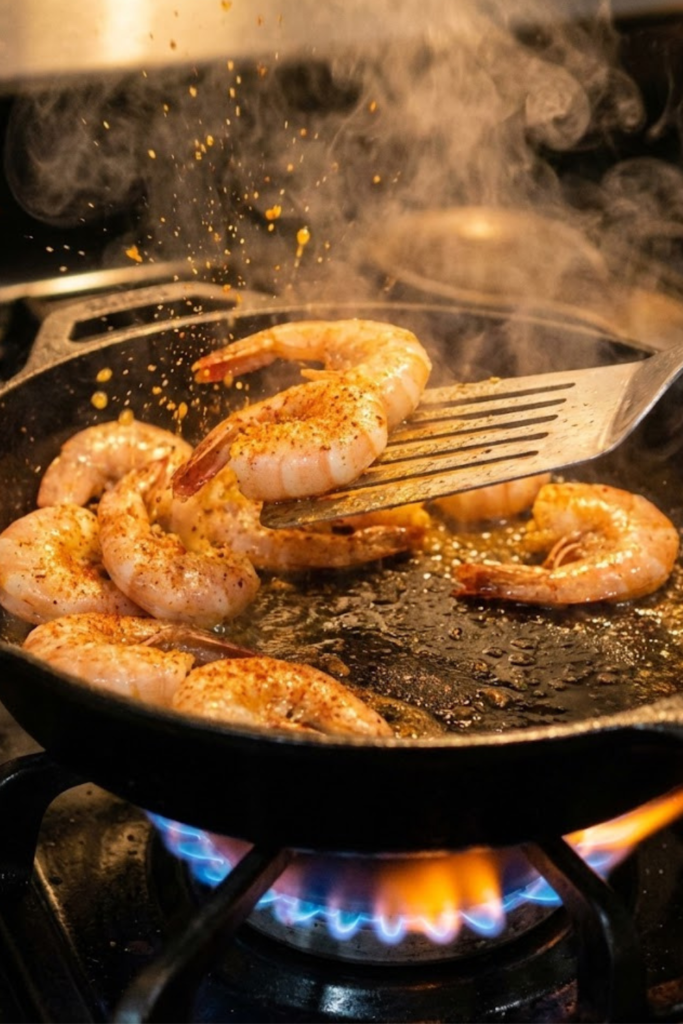
I used to be terrified of my cast iron skillet. Seriously, I let it sit in the back of my cupboard for three years because I was afraid I’d ruin the “seasoning” or everything would stick. But let me tell you, once I finally worked up the courage to use it for cajun shrimp, I realized I had been wasting my time with non-stick pans. You just can’t get that blackened, crusty edge without heavy iron holding the heat.
If you don’t have a cast iron skillet, you can still make this, but you might miss out on a little bit of that smoky magic. Here is exactly how I do it without setting off the smoke alarm (well, usually).
The Boring (But Crucial) Prep
Okay, here is where I messed up for years. I used to rinse my shrimp and toss them straight into the bowl with the spices. Big mistake. Water is the enemy of a good sear. If your shrimp are wet, they are going to steam instead of sear, and you’ll end up with a watery, sad sauce.
So, grab a handful of paper towels and pat those shrimp dry. Like, really dry. You want them to be tacky to the touch. It feels a bit tedious when you just want to get dinner on the table, but it makes a huge difference in the final texture.
Getting the Seasoning Right
Once they are dry, dump them in a bowl and pour your spice blend over them. Don’t be shy here. You want to get your hands in there and toss them until every single shrimp looks red and angry. I usually let them sit for about 5 or 10 minutes while I chop the garlic. This helps the salt penetrate the meat so they are seasoned on the inside, not just the outside.
The Searing Process
Crank your heat up to medium-high. You want the skillet hot enough that you can feel the heat radiating off it when you hold your hand a few inches above the surface. Add your oil and swirl it around.
Here is the golden rule: Do not crowd the pan.
I know, I know. You just want to cook them all at once and be done. I’ve been there. But if you pile them all in, the temperature of the pan drops like a rock, and again—you get steamed shrimp. I usually cook my cajun shrimp in two batches. It takes an extra four minutes, but it’s worth it.
Finishing it Off
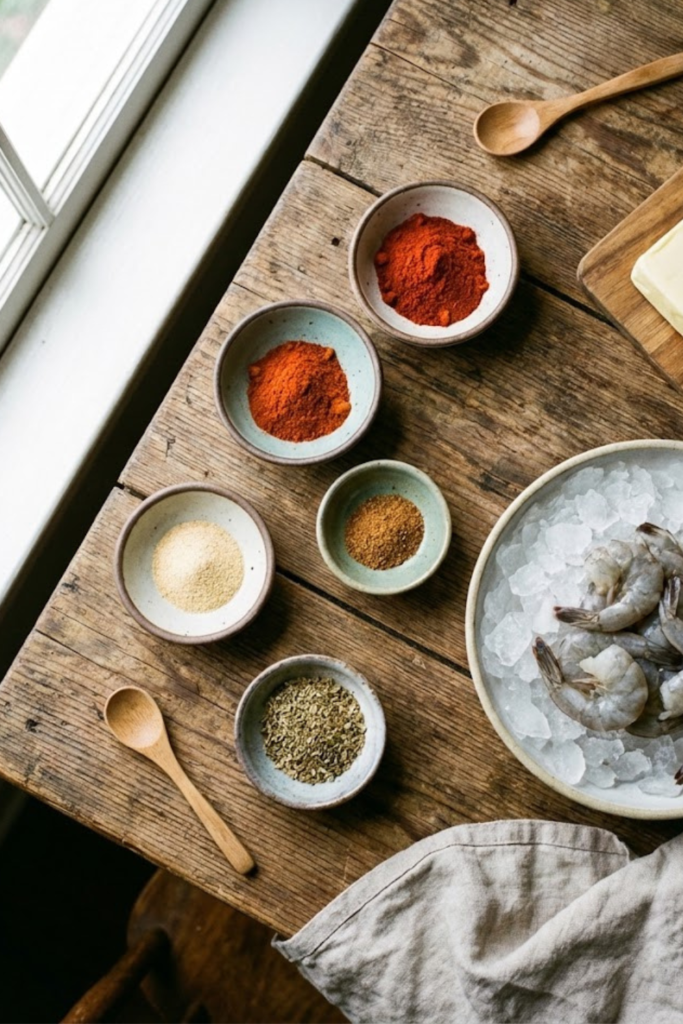
Shrimp cook fast. Like, blink-and-you-miss-it fast. They usually only need about 2 minutes per side. As soon as they curl into a “C” shape and turn opaque, get them out of there. If they curl into an “O”, they’re overcooked (O = Overcooked, C = Cooked perfectly—that’s how I remember it).
In the last 30 seconds of cooking the second batch, I toss the first batch back in, add that knob of butter and the fresh garlic. Stir it constantly so the garlic doesn’t burn. That smell hitting your face? That’s the smell of victory.
Serving Suggestions: What Pairs with Spicy Shrimp?
So, you’ve got a cast iron skillet full of beautiful, spicy shrimp bubbling away on your stove. The kitchen smells amazing. Now what?
Honestly, there have been plenty of nights where I just stood over the stove and ate them straight out of the pan with a fork. Don’t look at me like that; we’ve all done it! But usually, if I’m cooking for my family, they expect an actual “meal” with sides and everything. The great thing about cajun shrimp is that it is surprisingly versatile. It plays nice with heavy comfort food, but it also works if you are trying to eat a bit cleaner.
I used to get stuck in a rut, serving it with plain white rice every single time. That gets boring fast. Over the years, I’ve found a few go-to pairings that turn this from a snack into a proper feast.
Classic Southern Sides
If you want to do this right, you really can’t beat the classics. Shrimp and grits is legendary for a reason. The creamy, cheesy texture of the grits balances out the sharp heat of the cayenne pepper perfectly.
I remember the first time I tried to make grits, I didn’t salt the water. It tasted like wet cardboard. Lesson learned: season your water! I usually stir in a handful of sharp cheddar and a little heavy cream into my grits right at the end. When you pile that spicy seafood on top, the butter sauce mixes with the cheese, and it is just heavenly.
If grits aren’t your thing (or you can’t find them at your local store), dirty rice is another solid option. It’s got that savory, earthy flavor that stands up well to the spices. Just be careful not to make the rice too salty, or the whole meal will be overwhelmed.
Pasta Options for a Carb Feast
Look, sometimes you just need carbs. If I’ve had a long, stressful week, I am absolutely turning this into a cajun shrimp pasta.
You don’t even need a fancy sauce. While the shrimp are resting, I’ll boil some fettuccine or linguine. Reserve a little bit of that starchy pasta water! Once the noodles are done, I toss them right into the skillet with the leftover spicy butter and a splash of that pasta water. It creates a glossy, light sauce that coats every noodle.
If you are feeling ambitious, you can go full cajun alfredo. I’ve done this for birthdays. The rich white sauce cuts the heat, making it a bit more kid-friendly. Just be warned: it is very filling. You might need a nap afterward.
Keeping It Light (Low Carb Ideas)
Okay, let’s be real. I can’t eat pasta every night. Sometimes my pants start fitting a little tight, and I know I need to dial it back. Since shrimp is basically pure protein, it’s actually perfect for low-carb diets.
I was skeptical about zucchini noodles (zoodles) for the longest time. I thought they would be watery and sad. But if you sauté them quickly in the same pan you cooked the shrimp in, they pick up all that flavor. The trick is not to overcook them, or they turn to mush.
Cauliflower rice recipes work well here too. Is it exactly like rice? No. But when it’s covered in garlic and spices, it’s pretty close. It soaks up the sauce nicely, and you don’t feel heavy after eating it. It’s become one of my favorite keto shrimp recipes when I’m trying to be good.
The Dipping Method
If you don’t want to cook a whole separate side dish, just grab a loaf of crusty French bread. I’m serious. The sauce that collects at the bottom of the pan—that mix of butter, oil, lemon juice, and spices—is liquid gold. We call it “sopping” where I’m from. Just tear off a chunk of bread and mop up the juice. It might actually be the best part of the meal.

Storing and Reheating Leftovers Without Rubberiness
I have to be honest with you—leftover shrimp is kind of a rare occurrence in my house. Usually, my family inhales every last bite, leaving nothing but tails on the plates. But every once in a while, my eyes are bigger than my stomach, and I cook way too much.
The first time I tried to eat leftover cajun shrimp the next day, I made a rookie mistake. I just tossed the container in the microwave and hit “1 minute.” Big mistake. Huge. The shrimp actually popped loudly (scaring the cat), and when I took them out, they had the texture of an old tire. It was heartbreaking to see those beautiful, expensive prawns go to waste.
Over the years, I’ve learned that seafood is temperamental. It doesn’t like being ignored, and it definitely hates the microwave. If you want to enjoy your lunch the next day, you have to treat it gently.
The Fridge Rule
First off, let’s talk about storage. You can’t just throw the pan in the fridge with some foil on top. I mean, you can, but your whole fridge is gonna smell like garlic and the ocean. Not great.
I always transfer the extras to an airtight glass container. Plastic containers are okay, but that spicy red oil tends to stain them permanently. Trust me, you don’t want your Tupperware looking orange forever. These will stay good for about 3 days. Any longer than that, and I start to get nervous about the “smell test.” If it smells funky, toss it. It’s not worth the stomach ache.
The Microwave is the Enemy
I cannot stress this enough: do not nuke your shrimp. Just don’t do it. Microwaves cook from the inside out and they vibrate the water molecules so fast that the delicate protein in the shrimp seizes up instantly. That is how you get rubbery spicy seafood.
If you are at work and the microwave is your only option, turn the power down to 50%. Heat them in 30-second intervals and maybe sprinkle a little water on them. It’s not perfect, but it’s better than the explosion method I used to do.
The Skillet Method (The Right Way)
If you are at home, the best way to reheat cajun shrimp is right back where they started—in a pan.
Here is my trick: put a skillet on low heat. Add a splash of water or chicken broth—just a tablespoon or so. Toss the cold shrimp in and cover it with a lid. The steam will gently warm the meat through without actually “cooking” it again. It usually only takes about two or three minutes.
The texture stays snappy and juicy, almost as good as fresh. Plus, the heat wakes up those cajun spices again, so it smells just as good as it did last night.
Cold Pizza Theory
Here is a wild idea that I actually love: just eat them cold. Seriously! If you cooked them right the first time, cold spicy shrimp are delicious.
I’ll chop them up and throw them over a salad for lunch. Since the fat in the butter sauce has solidified a bit, it melts in your mouth as you eat it. It’s a great high-protein lunch that takes zero effort. Sometimes, laziness actually pays off.

There you have it—a lightning-fast dinner that doesn’t sacrifice an ounce of flavor. We’ve covered everything from picking the right jumbo shrimp to mastering that smoky cast iron sear. Whether you decide to serve this over creamy cheese grits, toss it with pasta, or eat it straight out of the pan (I won’t judge!), this cajun shrimp recipe is a keeper. It’s messy, it’s spicy, and it’s exactly the kind of comfort food that makes a Tuesday night feel special.
If you loved this recipe, please save it to your “Dinner Ideas” board on Pinterest so you can find it easily later!.