Have you ever stared at a plain pink slab of fish in your fridge and thought, “Now what?” I’ve been there! You want something healthy, but you also desperately want flavor that kicks you in the taste buds. Well, stop scrolling. Spinach Stuffed Salmon is exactly the hero your kitchen needs right now. It looks incredibly fancy—like “impress your mother-in-law” fancy—but honestly? It is ridiculously easy to throw together. Did you know that salmon is one of the few foods classified as a “superfood” that actually tastes like a cheat meal when prepared right? We are going to transform those fillets into a creamy, cheesy masterpiece. Let’s dive in!
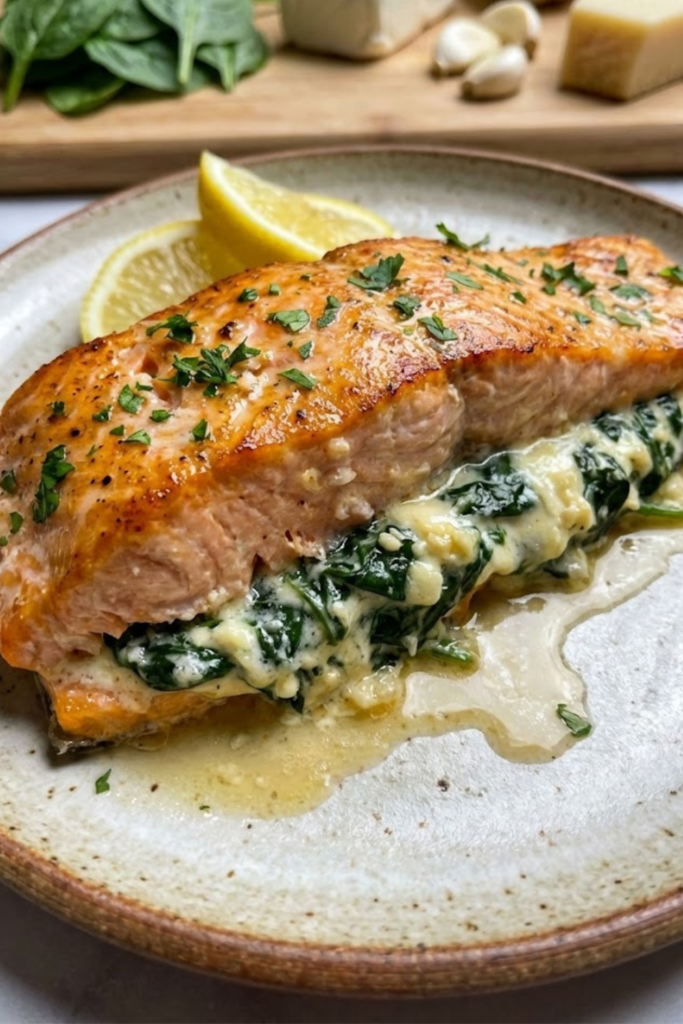
Selecting the Perfect Salmon Fillets
I used to stand at the seafood counter looking totally lost. Honest truth? I was intimidated. I just wanted to make a nice spinach stuffed salmon dinner without feeling like I needed a degree in marine biology. It took me a few failed dinners—and one really sad, mushy meal—to figure this out.
The foundation of this dish is the fish itself. If you start with a bad fillet, no amount of creamy cheesy filling is gonna save it. You need the right canvas for your masterpiece.
The Fresh vs. Frozen Debate
Here is a secret that totally blew my mind: “Fresh” isn’t always better. Unless you live right on the coast and saw the boat come in, that “fresh” fish has probably been sitting out for days. I actually prefer frozen fillets most of the time.
They are flash-frozen right on the boat, which locks in that freshness. Plus, it’s usually cheaper. If you go frozen, just thaw it overnight in the fridge. Do not rush it in the microwave! I did that once and ended up with half-cooked rubber. It was eaten, but not enjoyed.
Picking the Right Cut
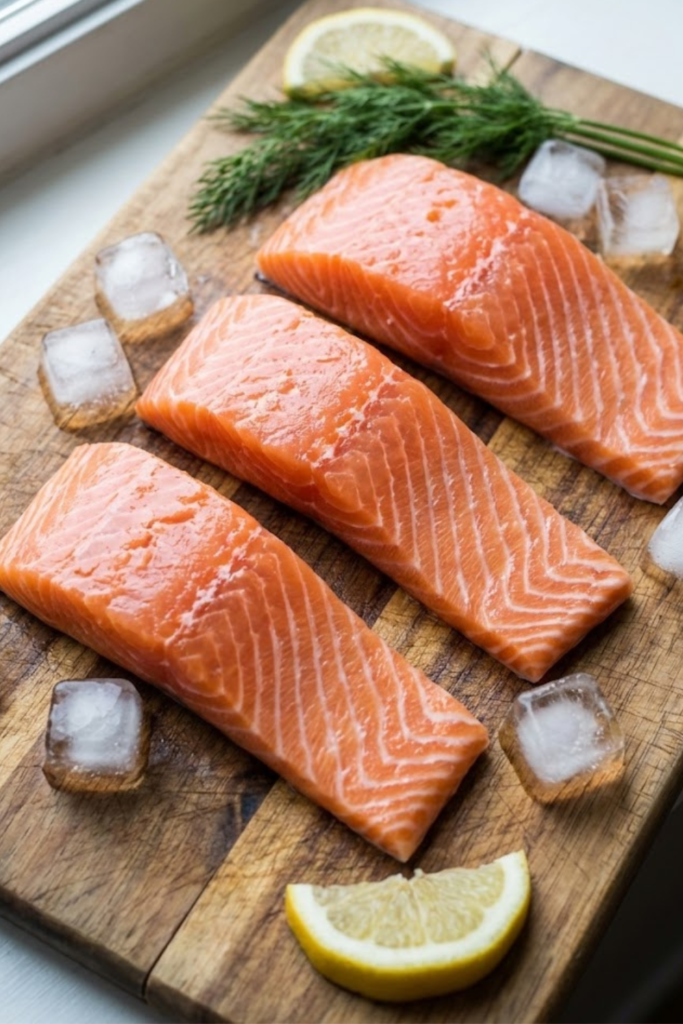
When you are making spinach stuffed salmon, you need room to work. You are literally cutting a pocket into the meat. Avoid the tail pieces. They are way too thin.
I learned this the hard way when I sliced right through a thin tail piece and the stuffing just leaked out everywhere. It was a delicious mess, but still a mess. You want center-cut fillets. These are thick and uniform.
You need a fillet that is at least an inch thick. If it’s paper-thin, good luck getting any spinach in there. Ask your fishmonger specifically for the thickest center cut; they are usually happy to help.
To Skin or Not to Skin?
This is where people fight. Personally? I usually go skin-off for stuffed recipes. It just makes eating it easier, and you don’t have to worry about the skin getting soggy under the stuffing.
But, if you love that crispy skin (and I definitely do sometimes), keep it on! Just make sure you sear the skin side first if you are using a pan. It adds a nice texture contrast to the soft filling.
The Sniff and Look Test
Finally, use your senses. The fish should be a bright, vibrant pink or orange. If it looks dull or has gaps in the flesh, skip it.
And smell it. It should smell like the ocean, salty and clean. If it smells “fishy” or sour, put it back. Trust your nose on this one. It never lies. A bad piece of fish can ruin the whole experience, so don’t be afraid to be picky.
The Creamy Spinach Filling Ingredients
Let’s be honest for a second. The fish is great, sure. But we are all really here for that gooey, cheesy filling inside the spinach stuffed salmon. It is the surprise inside the present.
I remember the first time I tried to wing this part of the recipe without a plan. I just threw some raw leaves and cold cheese into a bowl. The result? A grainy, watery mess that leaked out of the fish and burned on the pan. I was so mad I almost ordered pizza.
You don’t have to suffer like I did. The secret is in the balance of the ingredients.
The Cheesy Foundation
You can’t just use any cheese here. You need a base that melts but stays thick.
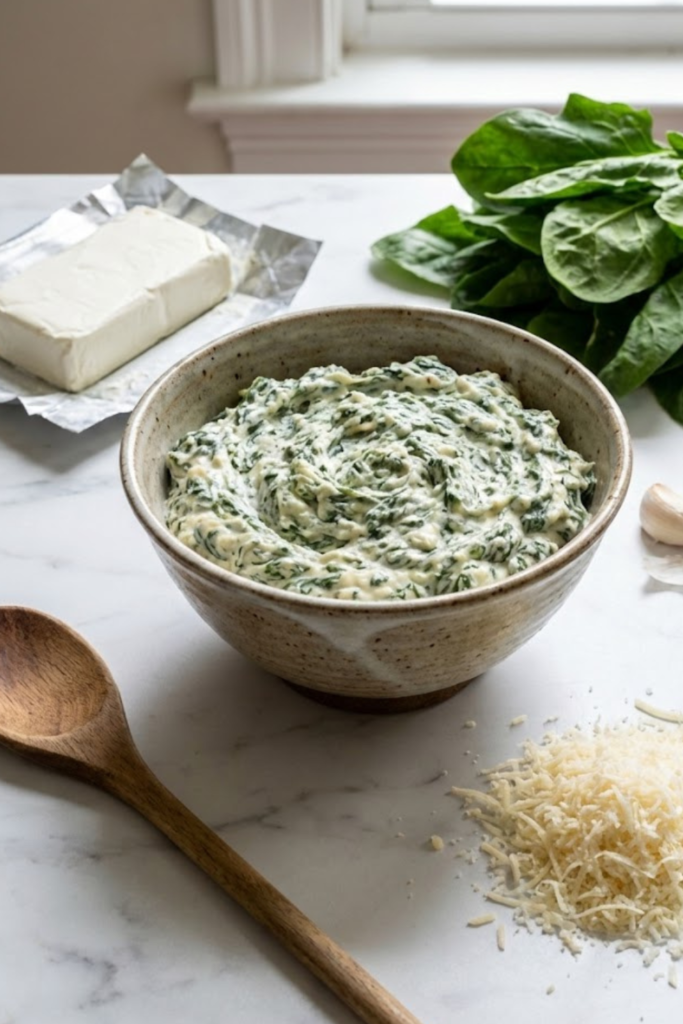
Cream cheese is the MVP (Most Valuable Player) for this. It acts as the glue holding everything together. I’ve tried using ricotta, but it gets too grainy. Stick to full-fat cream cheese.
And please, for the love of your sanity, let it soften to room temperature first. trying to mix cold cream cheese with spinach is a workout I didn’t sign up for. You want it smooth.
I also like to mix in grated Parmesan or Mozzarella. Parmesan adds that salty punch, while Mozzarella gives you that Instagram-worthy cheese pull. Don’t use the green shaker can stuff for the Parmesan if you can help it. The real stuff melts way better.
The Great Spinach Debate: Fresh vs. Frozen
Here is where I have made the most mistakes. You can use either, but they require different treatment.
If you use frozen spinach, you have to squeeze the life out of it. I mean it. Thaw it out, then wrap it in a clean kitchen towel (one you don’t mind staining green) and wring it out until your hands hurt. If you leave that water in, your spinach stuffed salmon will turn into a soggy soup.
I prefer fresh spinach because I think it tastes better. But you can’t just stuff raw leaves in there. They shrink down to nothing!
I usually sauté the fresh spinach quickly in a pan with a little olive oil until it wilts. It takes like 2 minutes. Then—and this is crucial—let it cool down and squeeze any excess liquid out. Liquid is the enemy of a good stuffing.
Flavor Boosters
Spinach and cheese on their own can be a little bland. You need to wake it up.
Garlic is non-negotiable in my house. I use fresh minced garlic, and I use a lot of it. I’d say two cloves is a “suggested serving,” but I usually throw in three or four. I just love that bite.
I also add a pinch of red pepper flakes. It doesn’t make it spicy, just cuts through the richness of the cream cheese. A little onion powder and salt help too.
Sometimes, if I’m feeling fancy, I’ll mix in a spoonful of mayonnaise. I know, it sounds weird. But mayo is basically oil and egg, and it helps the filling stay creamy while the salmon bakes. Just a tablespoon does the trick.
Mix this all up in a bowl until it looks like a dip you’d want to eat with chips. If it tastes good on a cracker, it’s going to taste amazing inside the fish.
How to Prepare and Stuff the Salmon
Okay, deep breaths. This is the part where you feel like a surgeon. I used to be terrified of this step because salmon isn’t exactly cheap, and the idea of butchering a beautiful fillet was stressful. I remember the first time I tried to make spinach stuffed salmon, I used a dull steak knife. It was a disaster. I hacked at the poor fish until it looked like it had been through a shredder.
You don’t have to repeat my mistakes. It is actually way easier than it looks if you have the right tools and a little patience.
The Surgery
First things first, grab the sharpest knife you own. A small paring knife is actually better here than a giant chef’s knife because you have more control. You want to handle the stuffed salmon fillet gently.
Place your hand flat on top of the fillet to hold it steady. Carefully slice horizontally into the thickest part of the fish. You are making a pocket, not cutting it in half!
Stop about half an inch from the edges. You want to create a little cave for all that cheesy goodness. If you cut all the way through to the other side (which I have definitely done), the cheese runs out the back while cooking. It still tastes good, but it looks like a hot mess.
Season Every Layer
Here is a pro tip that most people miss. Do not just season the outside of the fish.
Open up that little pocket you just made and sprinkle some salt and pepper inside the meat. The filling has flavor, sure, but raw salmon is pretty bland on its own. Layering the flavor makes a huge difference.
Then, pat the outside of the fish dry with a paper towel. Wet fish doesn’t brown; it steams. Rub a little olive oil on the skin (or bottom) and the top, then hit it with your salt, pepper, and maybe some paprika for color.
Stuffing Without the Explosion
Now for the fun part. Spoon your cooled spinach mixture into the pocket.
It is so tempting to overstuff it. I always want to cram as much cheese in there as possible. But trust me, resist the urge. If you overfill it, the filling expands when it gets hot and explodes out the sides.
Aim for a nice, full pocket that can still somewhat close. It doesn’t need to seal shut completely, but it shouldn’t look like a bursting suitcase.
Securing the Goods
If you were a little heavy-handed with the knife and made the opening too wide, don’t panic. Grab a couple of toothpicks.
You can “stitch” the opening closed by threading a toothpick through the edges. Just remember to take them out before serving! There is nothing worse than biting into a piece of wood while enjoying your dinner.
Once they are stuffed, they are ready for the heat. It feels like a triumph just looking at them all prepped and pretty on the counter.

Baking vs. Pan-Searing: Cooking Methods
I used to be terrified of cooking fish. I have a vivid memory of setting off the smoke alarm in my first apartment because I was trying to pan-fry a fillet on high heat. My neighbors were not impressed, and neither was I when I scraped the charred remains off the pan.
Choosing how to cook your spinach stuffed salmon can feel like a high-stakes decision. Do you want the crispy skin, or do you want the easy cleanup? I’ve tried every method under the sun, and honestly, they all have their time and place. It really just depends on how much energy you have left in the tank.
The Pan-Sear Method (For the Brave)
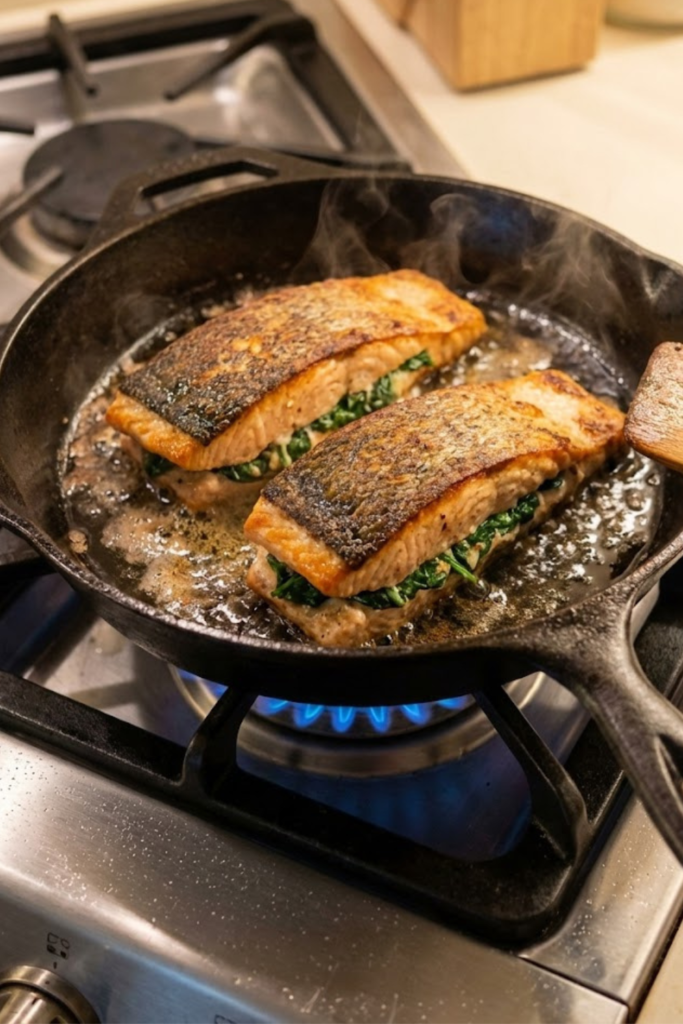
If you want that restaurant-quality crust, you have to use a skillet. Specifically, cast iron salmon is superior. The heavy pan holds heat like a champ.
But here is where I used to mess up: I tried to cook it entirely on the stove. Don’t do that. The filling stays cold while the outside burns.
The trick is the “sear and finish.” I get my skillet screaming hot with a little oil and sear the fish skin-side down (or presentation side down if skinless) for about 3 minutes. Don’t touch it! Let it get golden. Then, I transfer the whole skillet into a hot oven to finish cooking. It gives you the best of both worlds.
The Oven-Baked Method (The Stress-Free Route)
Most weeknights, I don’t have the patience to babysit a sizzling pan. That is when oven baked fish becomes my best friend.
It is arguably the easiest way to do this. I preheat the oven to 400°F (200°C), line a baking sheet with parchment paper (zero cleanup, yes please), and pop them in. It usually takes about 12-15 minutes depending on thickness.
The heat is gentle and even, so the creamy filling gets bubbly without the fish drying out. It might not have that super crispy crust, but it is foolproof. And honestly, when it’s covered in creamy spinach, do you really miss the crust?
The Air Fryer Option
Okay, I was late to the air fryer party. I resisted buying one for years. Now? I use it for everything.
Making air fryer stuffed salmon is a game changer if you are cooking for one or two people. It works fast. Like, really fast.
I set mine to 370°F and let it rip for about 10-12 minutes. The circulating air makes the top of the salmon and the exposed stuffing get a little crispy, almost like it was broiled. Just make sure you spray the basket well, or the skin will stick like glue.
How to Tell It’s Done
Please, I beg you, stop guessing. I used to just poke it and hope for the best.
The “flake test” is okay—if you twist a fork and the meat separates easily along the white lines, it’s done. But the only way to be 100% sure you aren’t serving raw fish (or dry leather) is a meat thermometer.
You are looking for an internal temperature of 145°F (63°C). Insert the probe into the thickest part of the meat, trying not to stick it just in the hot cheese filling. Once it hits that number, pull it out immediately. It will keep cooking a little bit as it rests.
Healthy Side Dishes to Serve
So, you have this beautiful, restaurant-quality fish baking in the oven. The kitchen smells like garlic heaven. But then you look at the rest of the plate and realize you have zero plan for what goes next to it.
I have definitely been guilty of just dumping a bag of sad, plain lettuce on the plate and calling it a day. It felt like putting cheap tires on a Ferrari. The spinach stuffed salmon is rich—like, really rich—so whatever you pair with it needs to either cut through that creaminess or help soak it up.
I remember once serving this with a heavy mac and cheese. Big mistake. It was a “cheese on cheese” tragedy. My stomach was angry at me for hours. You live and you learn, right?
Low-Carb Options That Actually Taste Good
If you are making this because you want healthy side dishes, you probably don’t want to ruin it with a mountain of fries.
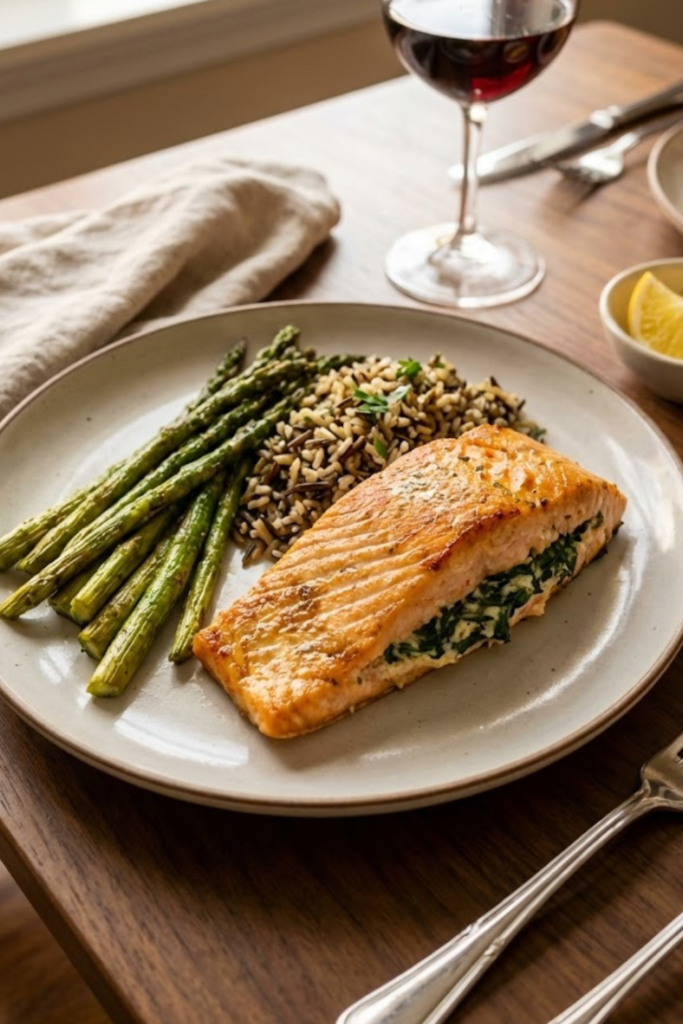
My absolute favorite pairing is roasted asparagus. Since the oven is already hot for the fish, it’s a no-brainer. I just toss the stalks in olive oil, salt, and a little lemon zest. They roast in about 10–12 minutes, which is usually exactly how long the salmon takes. It’s like they were made to be best friends.
If you are doing the keto thing, cauliflower rice is a solid option. But here is the trick: sauté it with a little garlic and herbs. Plain steamed cauliflower smells like old socks to me. When you season it right, it picks up the sauce from the stuffed salmon fillet perfectly.
Another great option is a crisp cucumber salad. I make a quick dressing with vinegar, water, and sugar. The acidity cuts right through the heavy cream cheese filling. It wakes up your palate.
For the Carb Lovers
Sometimes, you just need a hug in food form. On those nights, I am not looking for low carb dinner ideas. I want something to mop up that garlic butter sauce.
Garlic mashed potatoes are the heavy hitter here. I’m talking about the kind with lumps in it, not the instant flakes. The creamy potatoes mixed with the creamy spinach sauce? It is pure comfort food.
If you want to feel a little fancier, try wild rice. It has that nutty flavor and chewy texture that holds up really well against the soft fish. Plus, it looks nice on the plate.
A Note on Wine
Okay, I am not a fancy wine expert. I usually buy whatever has a cool label or is on sale. But I have learned that you cannot drink red wine with this.
The tannins in red wine make the fish taste metallic. It’s gross. You want a crisp white wine. A Sauvignon Blanc is perfect because it’s super acidic and zesty. It acts like a squeeze of lemon juice, cleaning your mouth after a bite of the rich cheese. A Chardonnay works too if you like things buttery, but I think the zestier wines are better here.
Just don’t overthink it. The spinach stuffed salmon is the star of the show; the sides are just the backup dancers. Keep it simple and fresh, and you can’t really go wrong.
Storing and Reheating Leftovers
I used to have a strict “no fish leftovers” rule. Mostly because I had a traumatic experience in my early 20s involving a communal office microwave and some leftover tilapia. Let’s just say I wasn’t the most popular person in the cubicle farm that day.
But with this spinach stuffed salmon, it feels like a crime to throw away perfectly good food. The problem is that reheating fish is tricky. Do it wrong, and you end up with dry, rubbery meat that smells like low tide. But do it right? You have a lunch that beats any sad desk sandwich .
The Fridge Situation
First off, you need to get that fish in the fridge fast. Don’t let it sit out on the counter while you watch two episodes of your favorite show.
I store my leftover salmon ideas in high-quality glass containers with locking lids. Why? because plastic containers hold onto smells forever. If you use plastic, your morning oatmeal might taste like garlic salmon next week.
It will stay good for about 3 days max. After that, I get a little suspicious of it. And honestly, it usually doesn’t last that long because I eat it for lunch the next day .
Reheating Without the “Rubber” Effect
Please, I am begging you, step away from the microwave.
If you nuke this on high, the fats in the salmon explode (gross), the creamy spinach dip filling separates into oil and curds, and the fish turns into a hockey puck. It is a disaster.
The secret to good salmon meal prep reheating is “low and slow.” I put the fillet in a baking dish and add a splash of water or broth to the bottom. Then, I cover it tightly with foil.
I toss it in the oven (or toaster oven) at a low temp, like 275°F (135°C). It takes about 15 minutes, but it steams the fish gently. The result is almost as good as when you first cooked it. The filing gets melty again without breaking, and the fish stays moist .
Can You Freeze It?
I get asked this a lot. Technically? Yes. Should you? probably not.
The problem isn’t the fish; it’s the dairy. Cream cheese and mayo do weird things when they freeze and thaw. The texture gets kind of grainy and watery. It just isn’t the same.
If you are big on meal prepping and really want to freeze it, I’d suggest freezing the raw stuffed salmon fillet before you cook it. That way, you can bake it fresh. But once it is cooked, just eat it within a few days. Your taste buds will thank you .

There you have it—a restaurant-quality meal right in your own kitchen. I told you it wasn’t rocket science.
When I first started cooking fish, I was convinced I needed a white chef’s coat and a fancy culinary degree to pull off something like this. But as we’ve seen, making spinach stuffed salmon is actually pretty forgiving. It looks impressive—like something you’d pay $30 for at a bistro—but it’s really just a matter of cutting a pocket and filling it with cheese.
Let’s recap what we learned today because I know I threw a lot of information at you.
We talked about picking the right fillet (remember: center-cut is king) and why drying your fish before cooking is the secret to avoiding a soggy dinner. We conquered the creamy spinach dip filling by learning that wringing out the spinach is not optional—seriously, don’t skip that step unless you like green water on your plate. And hopefully, I convinced you that using a meat thermometer is the only way to cook oven baked fish without turning it into leather.
This dish has become a staple in my rotation because it checks every single box. It is a high protein dinner, it’s loaded with healthy fats, and it’s ready in under 30 minutes. Whether you are trying to impress a date or just want easy weeknight meals that don’t come out of a cardboard box, this recipe saves the day.
I really hope you give this a try tonight. It is one of those recipes that makes you feel like a pro with minimal effort.
If you found this guide helpful (and I hope you did!), do me a huge favor. Hover over the image below and pin this recipe to your “Healthy Dinners” or “Seafood Recipes” board on Pinterest. It helps me out a ton, and it saves this recipe so you don’t have to frantically search for it next time you have a craving for garlic butter salmon.
Now, go preheat that oven. You’ve got this!