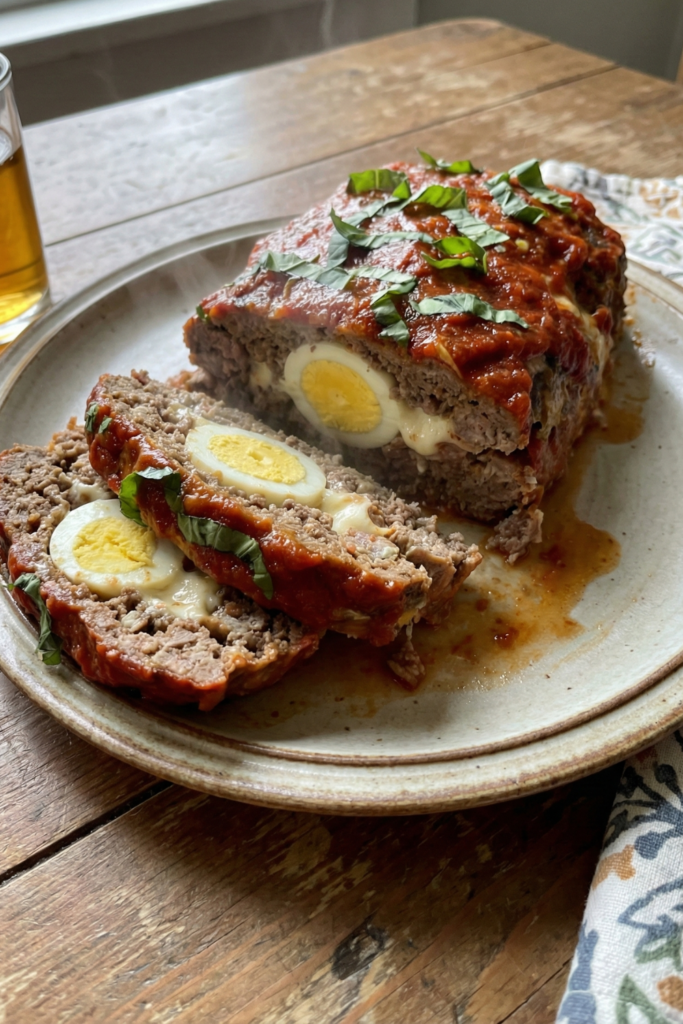
Have you ever bitten into a slice of meatloaf and felt… bored? Forget dry, flavorless bricks of gray meat! I’m talking about a Sicilian meatloaf that sings with the flavors of garlic, pecorino, and robust tomato sauce. It’s not just dinner; it’s an event. Did you know that adding hard-boiled eggs inside—a tradition called farsumagru in some parts of Sicily—changes the game entirely? This recipe is my absolute favorite way to feed a crowd. It’s comforting, savory, and undeniably delicious. We are going to walk through everything you need to know to nail this Italian classic on your first try.
The Secret to Authentic Sicilian Meatloaf Ingredients
I honestly used to think meatloaf was just that sad, gray block of meat they served in the school cafeteria. You know the one—dry as a bone and tasted like absolutely nothing. But then I married into an Italian family, and everything changed. My mother-in-law watched me prepping dinner one Sunday and nearly slapped the canister of dried breadcrumbs out of my hand. She taught me that a real Sicilian meatloaf isn’t just about tossing meat in a pan; it’s about layering flavors so every bite hits you differently.
I’ve messed this up plenty of times, so you don’t have to. The biggest lesson I learned? The quality of your ingredients does about 90% of the work for you. If you buy the cheap stuff, it’s gonna taste cheap.
It Starts With the Meat Blend
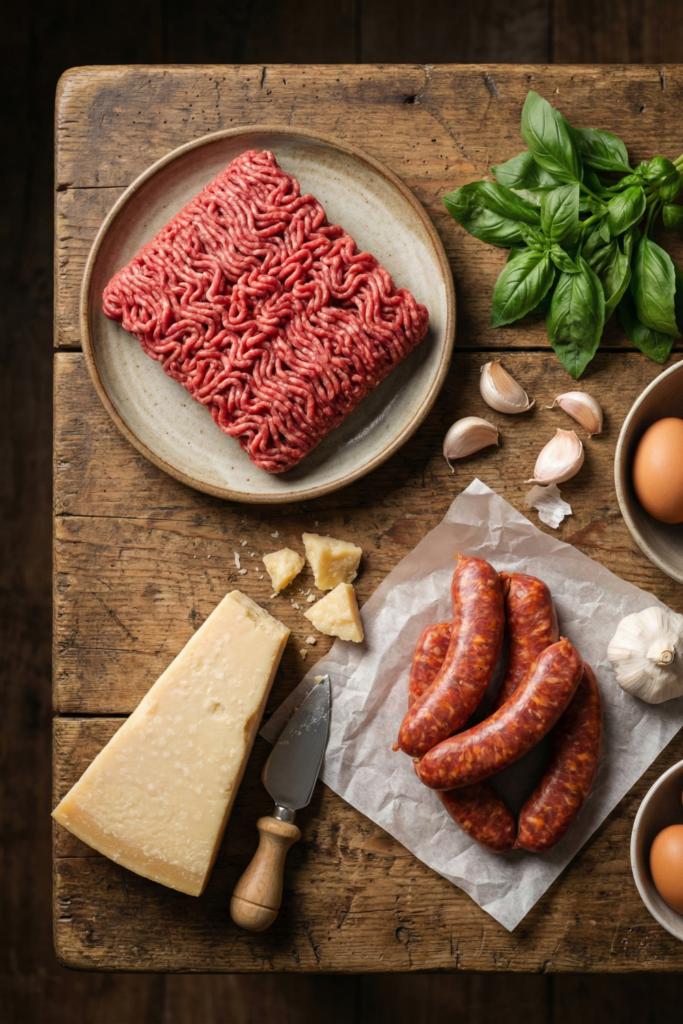
If you are only using ground beef, you are missing out. I used to do that, and it was always just “okay.” The trick I learned is to use a 50/50 mix of ground chuck and Italian sausage.
The sausage brings all the spices—fennel, paprika, garlic—so you don’t have to guess with your spice rack. Plus, the extra fat in the pork sausage keeps the loaf from drying out in the oven. I usually go for the mild sausage because the kids complain if it’s too hot, but if it was just me? I’d use the spicy stuff every single time. Just make sure you take the casings off before mixing it!
The Binder: Ditch the Dry Crumbs
Here is where I made my biggest mistake for years. I used to dump dry, sandy breadcrumbs into the bowl. The result was always a dense brick that sat heavy in your stomach.
You need to make a panade. That’s just a fancy word for tearing up white bread (I use cheap sandwich bread) and soaking it in milk for ten minutes. It turns into a mushy paste. It sounds gross, I know. But when you mix that into the meat, it keeps the Sicilian meatloaf incredibly moist and tender. It literally melts in your mouth.
Cheese and Aromatics
Don’t be shy with the cheese. We aren’t counting calories here; we are making comfort food. I use a mix of creamy mozzarella for the melt and sharp Pecorino Romano for the flavor punch.
I prefer Pecorino over Parmesan because it’s made from sheep’s milk and has a much saltier, earthier kick. And please, grate it yourself. The pre-shredded stuff has a weird coating on it that doesn’t melt right.
For the aromatics, fresh is non-negotiable. I tried using garlic powder once when I was in a rush. Big mistake. It just didn’t have that zing. You need chopped fresh garlic and flat-leaf parsley. It brightens up the heavy meat and cheese combo.
The Surprise Inside: Hard-Boiled Eggs
This is the part that freaks some people out, but it is traditional! In Sicily, they call this style farsumagru. Placing whole hard-boiled eggs in the center looks amazing when you slice it.
My advice? Buy older eggs if you plan to boil them. Fresh eggs are a nightmare to peel, and I’ve ruined many a meatloaf presentation because my eggs looked like the surface of the moon after I hacked the shell off. Boil them, ice bath them immediately, and peel them carefully. When you slice that loaf and see the white and yellow rings, you look like a pro chef.
Step-by-Step Instructions for the Perfect Mix
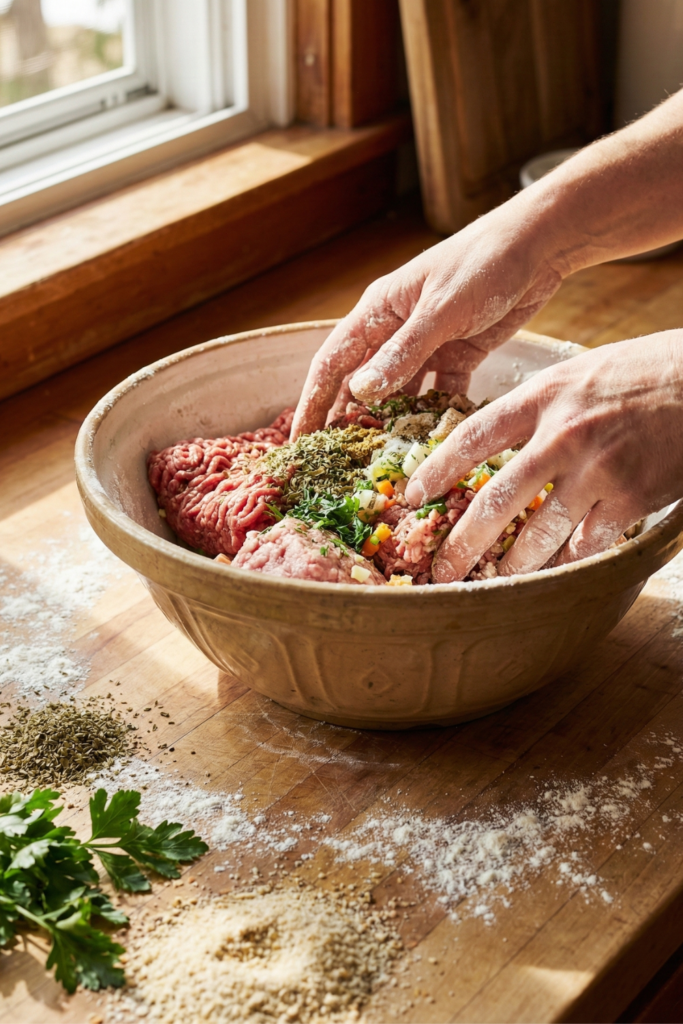
Alright, roll up your sleeves and wash your hands, because we are getting messy. There is something weirdly therapeutic about squishing cold ground meat through your fingers, right? Or maybe that’s just me. But seriously, the way you mix and assemble this Sicilian meatloaf makes the difference between a tender slice of heaven and a rubber hockey puck. I’ve made enough rubber pucks to know.
Don’t Skip the Sauté
Here is a mistake I made for years: throwing raw onions and garlic straight into the bowl. I thought the oven would cook them. Spoiler alert: it doesn’t, at least not enough.
You end up with these crunchy bits of onion that totally ruin the smooth texture of the meatloaf. It’s jarring. Now, I always take five minutes to sauté the chopped onions and garlic in a little olive oil until they are soft and translucent. It brings out the sweetness in the aromatics and stops that sharp, raw onion flavor from overpowering the meat. Let them cool down a bit before adding them to the meat, or you’ll start cooking the eggs prematurely!
The “Gentle Hand” Technique
This is the golden rule of meatloaf. Do not overmix! I used to treat the meat mixture like bread dough, kneading it aggressively to make sure everything was combined. That was dumb.
When you overwork the protein in ground beef, it gets tough. The loaf comes out dense and chewy. Instead, use a “claw” shape with your hand. Gently toss the meat, the panade (that milk-soaked bread), the cheeses, and the veggies together just until they are incorporated. It should look a little loose. If it looks like a solid paste, you’ve gone too far. Trust me, a looser mix holds together fine once it bakes, and the texture is so much better.
Layering the Loaf (The Tricky Part)
Since we are stuffing this bad boy, you can’t just dump it in a loaf pan. I usually do this on a sheet of parchment paper.
- Pat out about half of the meat mixture into a rectangle.
- Layer your ham and cheese slices on top.
- Place your peeled hard-boiled eggs in a row down the center.
- Top it with the rest of the meat and carefully seal the edges.
I used to have trouble with the cheese leaking out the sides. It made a huge mess in the oven. Now, I make sure to really pinch the meat seams closed. It feels like you’re performing surgery, but it keeps all that cheesy goodness inside where it belongs.
The Fry Test
This is the best tip I ever got from an old chef. Once your raw meat is mixed, how do you know if it has enough salt? You can’t exactly taste raw ground beef (unless you have a death wish).
Grab a tiny pinch of the mixture—like the size of a quarter—and fry it up in a pan for a minute. Taste that little cooked patty. Does it need more salt? More pepper? Maybe a little heat? This is your only chance to adjust the seasoning before you commit to baking the whole thing. I’ve saved plenty of dinners this way because, let’s be honest, bland meatloaf is a tragedy.
Baking and Glazing: Marinara vs. Ketchup
Okay, we need to have a serious talk about toppings. I grew up with the classic American meatloaf where you shellac the top with a thick layer of ketchup and brown sugar. It’s nostalgic, sure. But putting ketchup on a Sicilian meatloaf? That feels like a crime against humanity.
I tried it once out of pure habit. I was on autopilot, grabbed the Heinz, and slathered it on. The result was… confusing. The sweetness of the ketchup clashed so hard with the fennel in the sausage and the salty Pecorino. It tasted like a bad pizza experiment.
The Topping: Keep It Italian
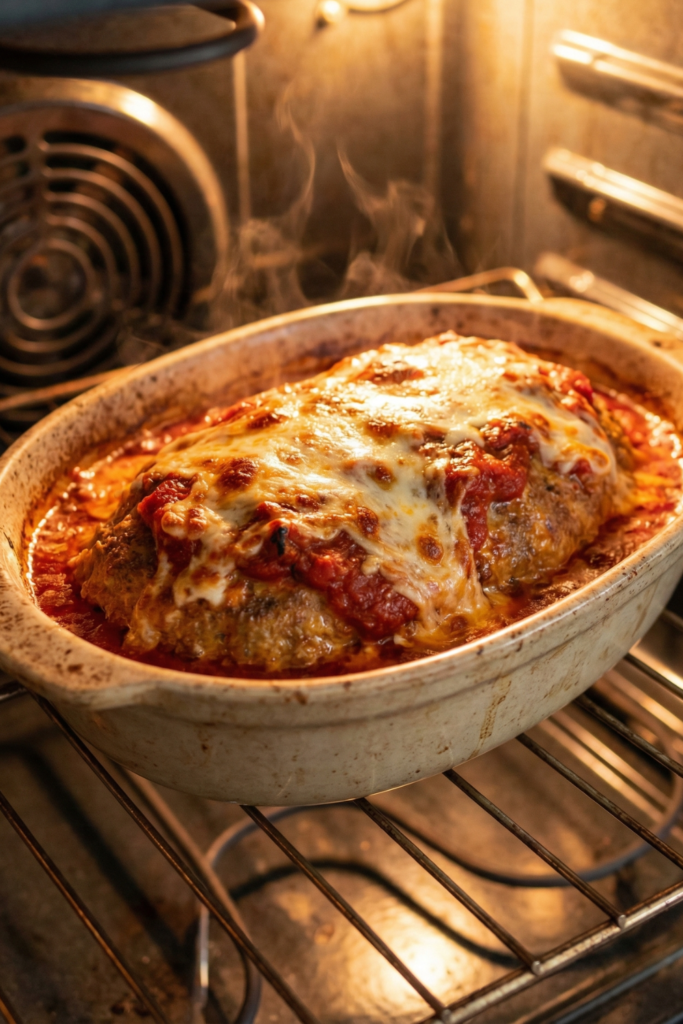
For this recipe, you have to use a quality marinara sauce. It cuts through the richness of the meat and cheese instead of just adding sugar on top.
I usually grab a jar of Rao’s if I’m feeling lazy (which is often), but homemade is obviously better if you have the time. I pour about half the jar over the loaf before it goes into the oven. The sauce bakes down into this sticky, intense tomato glaze that keeps the top from drying out. It’s incredible.
Oven Temperature Matters
Set your oven to 350°F (175°C). I know some people like to blast it at 400°F to get it done faster, but don’t do that.
If the oven is too hot, the outside of your Sicilian meatloaf will burn before the inside is safe to eat. Especially since we have raw pork sausage in the mix, we need a gentle, even heat. I usually bake mine for about an hour, but every oven is different. My old apartment oven ran hot, and I definitely scorched a few dinners before I learned to check it early.
Using a Meat Thermometer
Please, I am begging you, stop guessing. My grandmother could poke a piece of meat and tell you the temperature. I do not have that superpower, and you probably don’t either.
Get a digital meat thermometer. You want to pull the loaf when the internal temperature hits 160°F. I remember one time I just “eyed it” because I couldn’t find my thermometer. We cut into it, and the center was raw. I had to shamefully microwave individual slices while my guests waited. It was humiliating. Don’t be me. Use the thermometer.
The Hardest Step: Resting
Once it hits 160°F, take it out and step away. Do not touch it. Do not slice it.
You need to let the meat rest for at least 15 minutes. This is agony because your kitchen smells amazing, and you just want to eat. But if you cut into it right away, all those hot juices will run out onto the cutting board, and your meatloaf will be dry.
If you let it rest, the juices redistribute into the meat. The cheese firms up just enough so it doesn’t ooze out everywhere. You get a clean, beautiful slice that holds its shape. It is worth the wait.
Serving Suggestions and Italian Side Dishes
So, the meatloaf is resting on the counter, smelling like heaven. Now comes the panic. What on earth do you serve with it? I remember the first time I made this for my in-laws. I was so focused on the meatloaf that I completely forgot about sides until twenty minutes before dinner. I ended up serving it with plain white rice.
Let me tell you, Sicilian meatloaf and plain rice is a weird combo. My father-in-law didn’t say anything, but the look on his face said it all. It was a mismatch of epic proportions. You need sides that can stand up to those bold Italian flavors without getting lost.
Pasta: The Perfect Wingman
In my house, if there isn’t pasta on the table, is it even dinner? Since this meatloaf is pretty heavy, I don’t like to do a heavy baked ziti or lasagna on the side. That’s carb overload, even for me.
I usually whip up a quick aglio e olio—spaghetti with garlic and oil. It’s fast, cheap, and the garlic hits just right with the sausage in the meatloaf. If you have extra marinara sauce (and you should), a simple spaghetti pomodoro works great too. Just toss the pasta with the sauce and a little basil. It feels like a restaurant meal, but it took you ten minutes.
Vegetables That Actually Taste Good
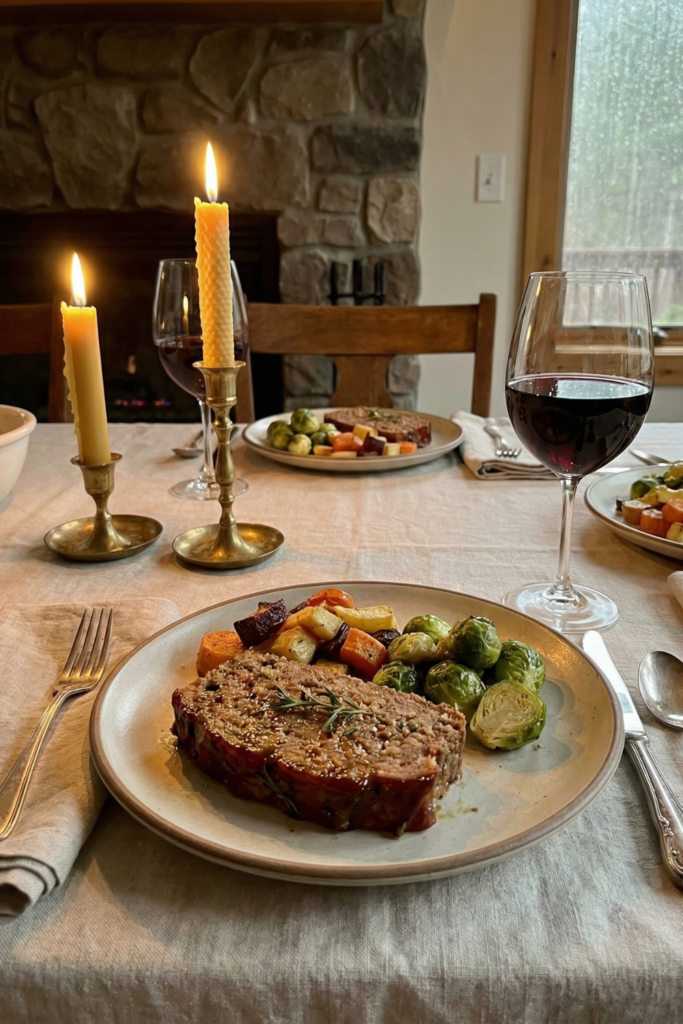
You need something green to cut through all that cheese and meat. My go-to is broccoli rabe (or rapini). It’s got this bitter edge that I used to hate as a kid, but now I’m obsessed with it. Sauté it with olive oil, garlic, and a pinch of red pepper flakes. The bitterness balances out the richness of the meatloaf perfectly.
If you can’t find rabe, roasted balsamic carrots are a solid backup. I toss them on a sheet pan while the meatloaf bakes. The balsamic vinegar gets sticky and sweet in the oven. It’s a flavor bomb. Avoid steaming your veggies; steamed broccoli is just sad next to a glorious meatloaf.
Don’t Forget the Bread
You are going to want bread. There is always extra sauce on the plate, and leaving it there is a sin. Italians have a phrase, fare la scarpetta, which means “make the little shoe.” It’s basically using a piece of crusty bread to mop up the sauce.
I grab a loaf of ciabatta, slice it in half, rub it with a raw garlic clove, and toast it. It’s crunchy, garlicky, and perfect for soaking up every drop of that tomato glaze. Store-bought frozen garlic bread is fine in a pinch, but fresh bread is always better.
What to Drink?
I’m not a sommelier, but I know what I like. You need a red wine that has some acid to it. A big, oaky Cabernet can sometimes overpower the food. I usually grab a Chianti or a Sangiovese.
These Italian reds are acidic enough to cleanse your palate after a bite of cheesy, fatty meatloaf. Plus, the bottle looks nice on the table. If you aren’t doing alcohol, sparkling water with a squeeze of lemon does the trick too. It’s refreshing and keeps things light.
Storage and Reheating Leftovers
Let’s be real for a second. The best part of making a Sicilian meatloaf isn’t actually the dinner itself. It’s the leftovers. I honestly think it tastes better the next day after the flavors have had a chance to get to know each other in the fridge. But, I’ve definitely ruined a good batch by storing it wrong or reheating it until it was dry as a bone.
Fridge Life: The 3-Day Rule
I used to play “fridge roulette” with leftovers. You know, sniffing the container and shrugging? Don’t do that. Since this recipe has hard-boiled eggs inside, you have to be careful.
Store your leftovers in an airtight container. It’ll stay good for about 3 to 4 days. After that, things get a little sketchy. I usually put a layer of parchment paper between the slices so they don’t stick together. It makes grabbing a quick lunch way easier. If you leave it uncovered, the fridge air turns the edges into leather. It’s gross.
The Ultimate Meatloaf Sandwich
If you aren’t making sandwiches with your leftovers, what are you even doing? This is my favorite lunch in the entire world.
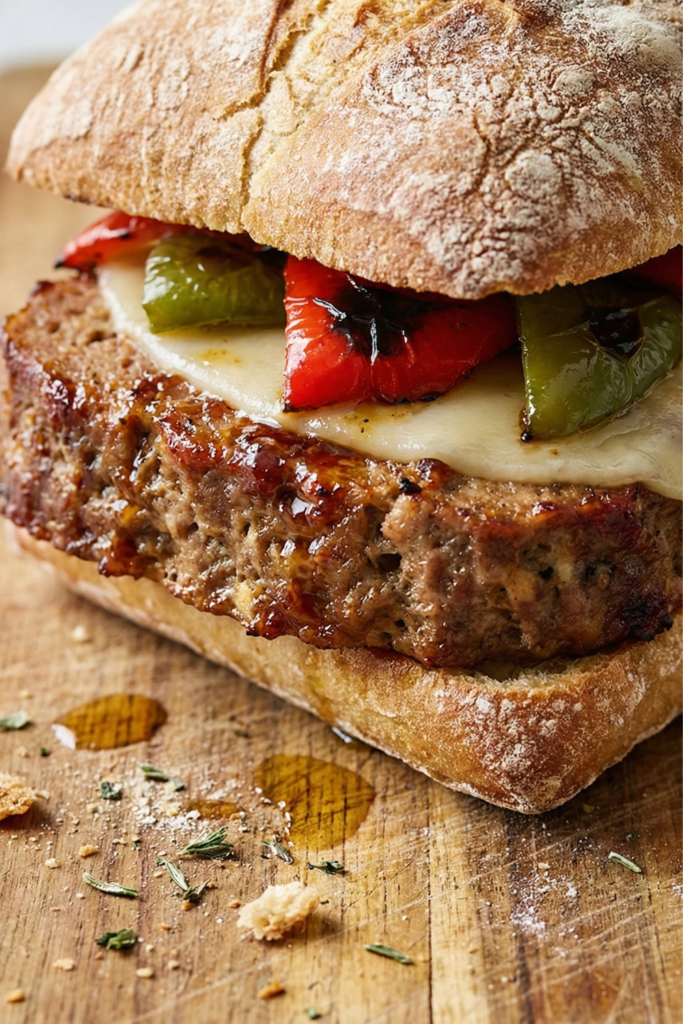
Cold meatloaf sandwich slices are superior to hot ones. Fight me on this. I take two thick slices of ciabatta, slap on some mayo (or pesto if I’m feeling fancy), add a slice of sharp provolone, and pile on the cold meat. The firm texture of the cold meatloaf holds up against the bread perfectly. Sometimes I don’t even make it to the table; I just eat it standing over the sink like a goblin. It’s that good.
Freezing for Future You
I love “Past Me” when he leaves “Future Me” food in the freezer. This Italian meatloaf freezes surprisingly well, but there is a trick to it.
Do not freeze the whole block! I made that mistake once. I had to thaw the entire massive loaf just to eat one slice, and the texture got weird and mushy. Instead, slice it up first. Wrap individual slices in plastic wrap and then toss them in a freezer bag. They keep for about 3 months. When you need a quick dinner, you just pull out exactly what you need. It’s a lifesaver on busy Tuesday nights.
Reheating: Step Away from the Microwave
Look, I love the microwave for popcorn, but it is the enemy of meatloaf. It zaps the moisture right out of it and makes the eggs rubbery.
If you have the time, reheat slices in the oven at 350°F with a splash of water in the pan to create steam. Cover it with foil. This keeps it moist. But my personal favorite way? Pan-fry it. Throw a slice in a non-stick skillet with a little olive oil. Fry it until it gets crispy on the edges and warm in the middle. It tastes like a burger, but better. It changes the texture completely and revives those breadcrumbs so they aren’t soggy.
Making this Sicilian meatloaf is more than just getting dinner on the table; it’s about bringing a hearty, rustic piece of Italy into your home . I used to think meatloaf was boring, but this recipe changed my mind completely. The blend of savory Italian sausage, the sharp bite of Pecorino, and that surprise egg center make every slice a little discovery. It turns a regular Tuesday night into something that feels like a special occasion .
I really hope your family loves this 2026 update to the classic as much as mine does. It took me a few tries to get the meat mixture just right—remember, don’t overmix it!—but once you nail it, you will never go back to plain ground beef again. It’s undeniably the ultimate comfort food.
If you enjoyed this recipe or found my mistakes helpful (so you don’t have to make them), please do me a huge favor. Share this on Pinterest! It helps other home cooks find the recipe and saves it for your next Sunday dinner planning. Buon appetito!