Have you ever stared at a jar of peanut butter and wondered if it actually belongs in your dinner? I have. The first time I tried to make African Chicken, I was totally skeptical. I stood in my kitchen thinking, “There is no way this is going to taste good.” I was wrong. Dead wrong.
I remember sweating over the stove that day. I had actually burned the onions the week before trying a different stew, and the smell lingered for days. It was a disaster. But this time, I was determined. When I finally combined the tomato paste with the peanut butter, the aroma that filled the room was incredible. It was earthy, spicy, and sweet all at once. My kids even came downstairs to ask what was cooking, and getting them to eat anything other than nuggets is usually a losing battle!
Here is the truth: cooking African Chicken isn’t scary. It is actually pretty forgiving if you know a few tricks. You don’t need a culinary degree or fancy equipment. You just need patience and the right spices. In this post, I am going to walk you through exactly how to make a stew that tastes like it came straight from a West African kitchen. We aren’t doing boring chicken tonight. We are making bold, spicy comfort food that warms you up from the inside out.
I have made plenty of mistakes learning this dish—like using way too much scotch bonnet pepper (ouch)—so you don’t have to. We will cover the best cuts of meat to use and why blending your onions is a total game changer for the sauce texture. Let’s get cooking!

Uncovering the Roots of African Chicken Dishes
I used to think that “stew” just meant beef, potatoes, and carrots thrown into a slow cooker for eight hours. Boy, was I wrong. When I first started exploring African Chicken recipes, I felt a bit like a student showing up to class without their homework. I didn’t realize how deep the history went. I remember trying to cook a “generic” version I found online years ago, and it tasted bland. I missed the point entirely.
The truth is, this isn’t just one recipe. It’s a whole collection of traditions. In West African cuisine, specifically, chicken stews are the backbone of family gatherings. I learned this the hard way when I served my first attempt to a friend from Nigeria. She was polite, but I could tell it wasn’t quite hitting the mark. She told me, “It’s good, but it’s not home.” That stung a little, but it was the push I needed to actually learn the roots of what I was cooking.
It’s More Than Just Peanut Butter
A lot of us hear “peanut butter stew” and get confused. I know I did. I thought it would taste like a sandwich! But the dish, often called Groundnut Stew or Mafe, has roots that go way back. It is a staple in places like Mali, Senegal, and Nigeria. It was cooked over open fires long before we had fancy electric stoves.
Learning about the regional variations was a lightbulb moment for me.
- Senegalese Yassa: This one is heavy on onions and lemon. I tried making it once and forgot to caramelize the onions enough—big mistake. It was too sour.
- Nigerian Stew: This is often redder, utilizing a lot of tomato and red peppers.
- Muamba Chicken: This is from Central Africa (like Angola) and uses palm butter.
When you cook African Chicken, you are participating in a culinary tradition that values community. These dishes are meant to be eaten together. I love that. In my house, getting everyone to sit down at the same time is a miracle. But when I make this, the smell of the simmering sauce actually works. It pulls people into the kitchen.
I’ve realized that understanding where the food comes from makes it taste better. It adds respect to the process. You aren’t just dumping ingredients in a pot; you are recreating a piece of culture. It is savory, it is rich, and it has a story. Just don’t rush it like I used to. Good flavor takes time, and this dish deserves your patience.

Gathering Essential Ingredients for Authentic Flavor
I used to be that person who would swap out ingredients because I didn’t feel like running to the store. “No fresh ginger? Powdered is fine,” I’d tell myself. Big mistake. Huge. If there is one thing I have learned from my many kitchen fails, it is that with African Chicken, the fresh ingredients are non-negotiable. You can’t fake the funk here.
I remember one Saturday trying to make a pot of stew with boneless, skinless chicken breast because it was “healthier.” It was dry as a bone. It tasted like cardboard swimming in sauce. My husband ate it, but I could tell he was struggling. Since then, I’ve learned that the secret to that deep, rich flavor starts with the grocery list.
The Protein: Bones Matter
Let’s talk chicken. Please, for the love of flavor, do not use breast meat. I know it’s tempting, but you need fat and bones for this.
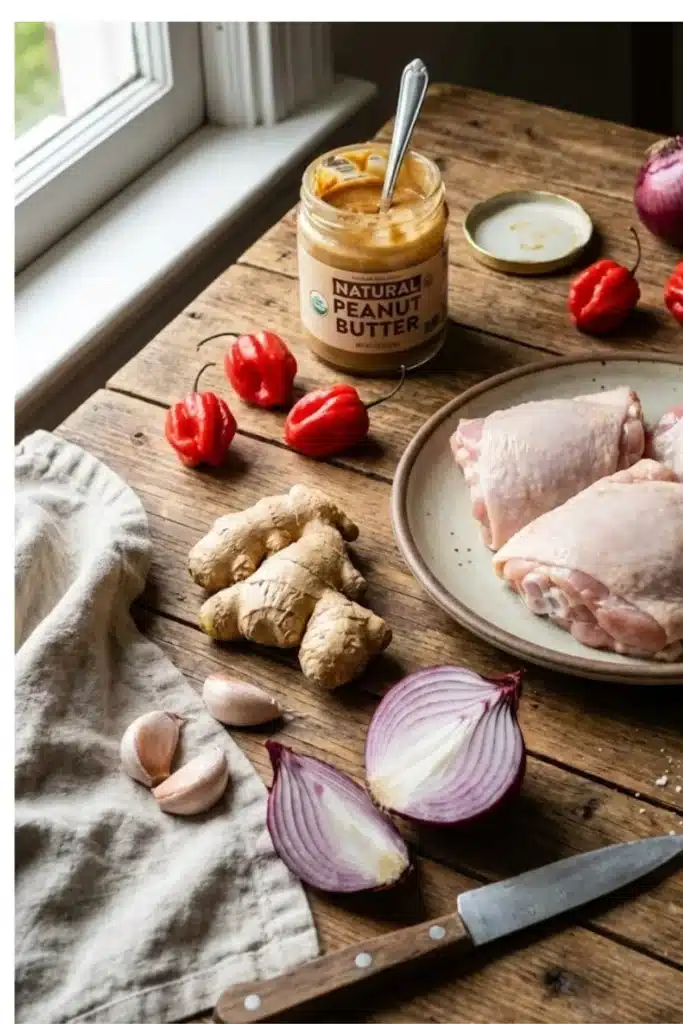
- Chicken Thighs and Drumsticks: This is the gold standard. I always grab bone-in, skin-on pieces. The bones release collagen into the stew as it simmers, making the sauce thick and glossy.
- Hard Chicken (Optional): In many authentic markets, you’ll see “hard chicken” or “hen.” It’s tougher and takes longer to cook, but the flavor is intense. I tried it once, but I didn’t cook it long enough, and it was like chewing rubber. If you use it, be prepared to simmer it for hours.
The Holy Trinity of Sauce
You need a solid base. My early attempts were watery because I skimped on this part.
- Onions: You need lots of them. I usually blend one large red onion into a paste and slice another for texture. It gives sweetness and body.
- Fresh Ginger and Garlic: Don’t use the jarred stuff. It has a weird vinegar taste that ruins the vibe. Grating fresh ginger is a pain—I’ve scraped my knuckles more times than I can count—but the spicy, fresh kick is worth the bandages.
- Tomato Paste: This is the thickener. You have to fry it in the oil first to get rid of that metallic, raw taste. I learned this from a YouTube video after serving a sour stew once.
The Flavor Bombs
This is where the magic happens.
- Peanut Butter: Use the natural, smooth kind. Unsweetened is best. If you use the sugary stuff, your dinner will taste like dessert. I did that once. We ordered pizza.
- Scotch Bonnet Peppers: Handle with care! These little guys are hot. I once rubbed my eye after chopping one. I cried for twenty minutes. If you can’t find them, Habaneros are a decent substitute.
- Smoked Paprika & Thyme: These add that smoky, earthy layer that makes the house smell amazing.
It might seem like a lot of prep, but gathering these specific items is half the battle. Once you have them on the counter, you are basically ready to win dinner.
Mastering the Step-by-Step Cooking Process
Okay, folks, pull up your sleeves. This is where the rubber meets the road. I used to think cooking African Chicken was complicated, like some sort of secret chemistry experiment. It’s not. But I will tell you this: you cannot rush it. I tried to speed-run this recipe once on a Tuesday night after work. We ate at 9:30 PM, the chicken was tough, and I was grumpy. Don’t be like me. This process is about layers. If you just dump everything into a pot, you’re making soup, not stew. There is a big difference. You want that rich, thick consistency that clings to the meat. Here is how I tackle it now, after learning the hard way.
First things first, flavor needs time to get to know the meat, so you have to marinate like you mean it. I try to season my chicken thighs at least an hour before cooking, though overnight is even better if you are organized (I am usually not). I rub the chicken with salt, black pepper, and a bit of smoked paprika. One time, I skipped marinating completely. The sauce was tasty, but the inside of the chicken tasted like nothing. It was disappointing. You want the flavor to penetrate deep into the bone-in meat.
The sear is non-negotiable, so get a heavy pot. A Dutch oven is perfect for this. I used a thin aluminum pot once, and the bottom scorched before the chicken was even done. Heat up your vegetable oil until it shimmers and drop the chicken in, skin side down. This is the hardest part for me because I always want to poke it, but don’t touch it. Let it sizzle for about 5-7 minutes until the skin is golden brown and crispy. My kitchen usually gets a bit smoky here, so I just open a window and keep going. That browning creates “fond” on the bottom of the pot, which is basically concentrated flavor gold. Remove the chicken and set it aside. Do not clean the pot!
Now, lower the heat to build the flavor base because this is where the magic happens. Toss in your onions (sliced and blended paste) and let them sweat. I used to burn the garlic by adding it too early. Now, I wait until the onions are soft and translucent before adding the minced garlic and ginger. Then comes the tomato paste, which is a crucial step for African Chicken. Add the tomato paste to the oil and onions and fry it. It needs to turn from bright red to a deep, dark brick red to remove the sourness. Finally, bloom the spices by adding your curry powder, thyme, and cayenne pepper. Stir them into the hot oil for a minute. You will smell it immediately. It hits you right in the face—in a good way.
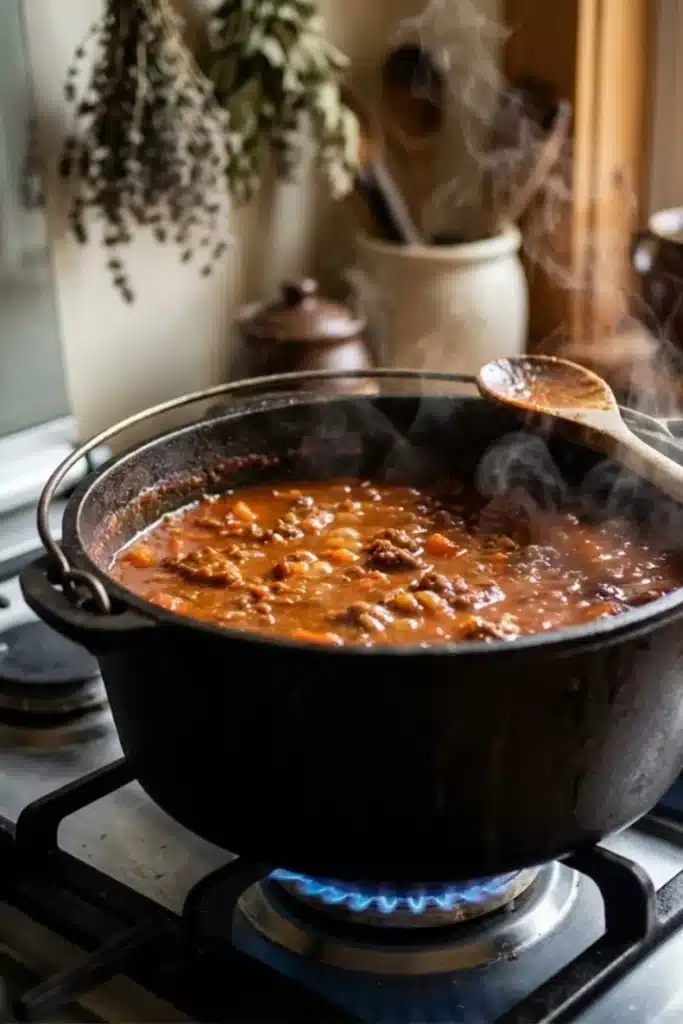
For the simmer down, add your liquids (chicken broth or water) and that glorious peanut butter. Stir it well so the peanut butter dissolves. Put the chicken back in the pot, along with any juices on the plate. Drop the Scotch Bonnet pepper in whole. Do not cut it unless you want your head to explode from the heat. I learned that lesson with a lot of tears. Cover the pot and turn the heat to low. Let it simmer, as I usually give it 45 minutes to an hour. You’ll know it’s done when the oil starts to separate and float on top of the sauce. That is the sign of a proper stew. If the sauce looks too thick, add a splash of water. If it’s too thin, take the lid off and let it reduce. Taste it. Adjust the salt. Then, taste it again. When the meat is falling off the bone, you have officially succeeded.
Serving Suggestions and Perfect Pairings
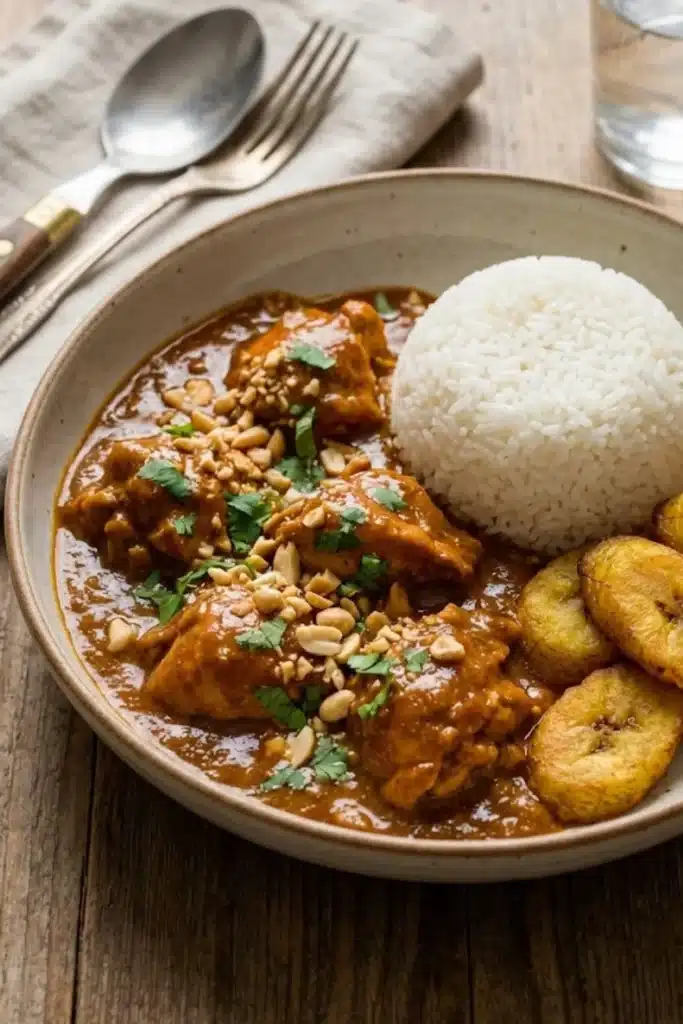
When I finally nailed the stew recipe, I realized I had nothing to serve it with. I just stood there with a spoon, eating it out of the pot like a goblin. Usually, plain white rice is the absolute best vehicle for this sauce. The rich gravy needs something neutral to balance the heat.
I tried serving it with brown rice once to be healthy, but the texture was all wrong. It was too nutty and fought with the peanut flavor. Stick to fluffy jasmine or basmati rice that can soak up every drop of that spicy goodness. It acts like a sponge for the flavor.
Exploring Traditional Swallows
If you want to go full authentic, you have to try what we call “swallows.” I was totally intimidated by Fufu at first because I didn’t know how to eat it. It looked like mashed potatoes but stickier and smoother. The first time I tried to make pounded yam from scratch, I nearly broke my arm mashing it.
Now, I just buy the flour from the local African market to save my energy. It is soft, doughy, and perfect for scooping up the African Chicken without using a fork. Eating with your hands is part of the experience, though my kids make a total mess of it every single time. It just tastes better that way.
The Sweet Contrast of Plantains
You really cannot have this feast without fried plantains on the side. The sweetness of the ripe plantain cuts right through the spicy heat of the scotch bonnet pepper. It is the perfect marriage of flavors on your plate.
I used to burn them black because I had the heat way too high. I learned that the trick is to fry them slowly until they are caramelized and golden. If you skip the plantains, you are honestly missing out on the best part of the meal.
The Final Touch
Visually, the stew can look a bit brown and heavy, so I like to dress it up. A handful of chopped fresh cilantro or parsley adds a necessary pop of color. It makes the dish look as fresh as it tastes.
I also like to crush some roasted peanuts and sprinkle them on top for extra crunch. It adds a texture that the soft stew really needs. Just don’t overdo it, or you lose the beautiful simplicity of the dish.
We have journeyed through the rich history, gathered our spicy ingredients, and simmered our way to perfection. Making African Chicken at home is honestly easier than I thought it would be when I started. It always seemed so intimidating, but once you get that peanut butter and tomato paste bubbling together, it just makes sense. The blend of savory nuttiness and the sharp heat from the peppers creates a flavor profile you just can’t find anywhere else.
I really hope you give this recipe a try this weekend. Your kitchen is going to smell amazing, and your tastebuds will definitely thank you. Even if you make a mistake or two, like I did with the burnt onions, it’s still going to be delicious. It is warm, comforting, and exactly what you need after a long week.
If you loved this recipe or want to save it for your next dinner party, please share it! Pin this recipe on Pinterest so you can find it easily later. I’d love to see your photos if you make it, so don’t be shy about tagging me. Now, go grab a spoon and dig in!